attributes of god
 Call Kai
 Learn
Learn Practice Test
 Spaced Repetition
 Match
Match Flashcards
 Knowt Play
1/39

There's no tags or description
Looks like no tags are added yet.
Name | Mastery | Learn | Test | Matching | Spaced | Call with Kai | Chat |
|---|
No analytics yet
Send a link to your students to track their progress
40 Terms
define omnipotence
belief that god is all powerful
god ius the source of all existence and power
which thinkers agree with this statement? which disagree?
GOD CAN DO LITERALLY ANYTHING
agree- descartes
disagree- swinburne + aquinas
what does descartes think about the statement:
GOD CAN DO LITERALLY ANYTHING
he has the power to do actions that seem logically impossible/contradictory
he could make 1+1=5 just because he has the power
he could change these laws of arithmetic and logic and physics because he made them
he could change anything- universal and unchanging!
humans can’t do that or fathom that because it requires omnipotence that we don’t have
what does swinburne think about the statement:
GOD CAN DO LITERALLY ANYTHING
god can only do things which are logically possible
he couldn’t make a round square or 1+1=5
things can be grammatically correct but they don’t make any logical sense
god not being able to make a round square is because there isn’t an actual task but instead is just nonsense
what does aquinas think about the statement:
GOD CAN DO LITERALLY ANYTHING
“it is better to say that somethings cannot be done rather than that God cannot do them.”
some things are impossible and that’s not because god isn’t powerful, it just cannot be done
what issue comes from this statement:
GOD CAN DO LITERALLY ANYTHING
can god sin?
it is logically possible for God to sin if he’s omnipotent
if god did sin, he wouldn’t be supremely good
god can sin but chooses not to which makes him worth worshipping
god cannot sin as he doesn’t have original sin. perfect nature means he won’t ever be tempted by it (Aquinas)
what does hartsthorne think about god’s omnipotence?
self imposed limitation
after creation, god limited himself since he creates other things that have their own centre of power, which takes away his control
→ e.g. humans have their own centre of power and make choices independently
→ e.g. trees move independently of God
god did this deliberately to allow freedom and free will
what does aquinas believe in response to hartsthrone’s belief about self imposed limitation?
god creating something doesn’t take away his power
he is just as omnipotent as he was before creation
primary causes- ultimate causation → god holds everything in existence and controls everything (shelf on the wall example)
secondary causes- causes we see in the world
a tree has its own secondary powers to be independent in some sense (independently drawing water from roots and resisting the wind)
god creates these secondary causes
gives analogy of saw:
→ someone sawing wood with a saw.
→ without person sawing (god) the wood wouldn’t cut, but the saw is also needed to cut the wood
→ god gives the tree power to do these things
god gives things the power, but the things themselves have their own independent powers
god doesn’t limit himself.
how else could god have been seen as limiting himself other than through creation?
the incarnation
god deliberately limited himself by becoming jesus → humbled himself and became less omnipotent
he became vulnerable to hunger, hurt, tiredness and eventually death on the cross
what is the paradox of the stone and what trait of god does it apply to?
omnipotence
can god create a stone so heavy he can’t lift it?
if he can create it, he can’t lift it, so his power is limited
if he can’t create it, his power is also limited because he’s unable to make it
what does descartes think about paradox of the stone?
god can still do it because he can do anything logically impossible
what do swinburne and aquinas think about the paradox of the stone?
paradox is contradictory
a stone too heavy for an omnipotent to lift is like a square circle
god not being able to create this doesn’t undermine his omnipotence since it doesn’t include meaningless tasks
what is omniscience? (including quote)
god is aware of all that people do and he has complete knowledge of the universe
“before i formed you in the womb, i knew you,” - Jeremiah
name the two types of omniscience
unlimited omniscience
unlimited knowledge including past, present, future
god is outside of time and is eternal - transcendentlimited omniscience
god is limited in what he knows about the future
he is within time the same way we are so his knowledge develops overtime
what does boethius say about god’s omniscience
unlimited omniscience
god is immutable (unchanging) and doesn’t exist in time
his life is not like humans- can’t end, not physical and doesn’t involve change
he experiences all of the past, presence and future at the same time
but he is aware of the problem that:
if god infallibly knows what i do tomorrow, then the future is fixed
if the future is fixed then we don’t have free will since you can’t do anything except that
he thought though:
he observes our free choices and actions rather than forcing anyone into any choices
we make choices freely in the same way that observing someone hit someone doesn’t mean you made them hit that person.
if god was in time with us and infallibly knew, the future must be fixed, but because he is transcendent and outside of it, he isn’t. he sees it in the present moment for him
god doesn’t know beforehand, he knows eternally
he sees it in ‘one glance’
it is like when we watch a film we’ve seen before, except god just sees it at all once. we aren’t forcing the outcome.
what do swinburne and wolterstorff believe about god’s omniscience?
limited omniscience
god is everlasting (within time) not eternal (outside of time)
god being everlasting doesn’t suggest any less power. he exists at all times, just not timelessly
wolterstorff: argued that the only way to understand some of god’s actions like responding to humans is by being within time → prayers being answered and miracles
means god can aquire knew knowledge as time goes on → he can only know what is logically possible to know and it is impossible for future to be known as it doesn’t exist
this means humans can have free will as he doesn’t know the future until it occurs
what quote about the future does jesus make?
mark 8: “the son of man must be killed then rise again after 3 days.”
how does the incarnation show an everlasting (within time) god?
he has come into our space and time. which means he is either able to jump in and out of our time or is always in our time
miracles are also proof he can be in our time as he is needing to be in present world to do this
what did aquinas think about god’s omniscience?
god had knowledge of the entire universe before it was made
god sees what could’ve or should’ve happened for the best things or worst things to happen → but because of free will didn’t.
→ he sees different outcomes
he has an idea, like a painter with their painting, of what he wants to create but free will limits that
name 6 issues of god’s omnibenevolence
miracles
predestination
evil
omnipotence
predestination
hell + omniscience
explain why miracles limit god’s omnibenevolence
why does god perform miracles like water into wine but not help people in auchwitz?
explain why evil limits god’s omnibenevolence
problem of evil→ mill, hume, etc
explain why predestination limits god’s omnibenevolence
calvin- god is loving as he shows his mercy by allowing the elected salvation. we are fallen humans so we don’t deserve this salvation at all
however, allowing a random few to go to heaven regardless of choices in life. this makes god come across as an unpredictable ruler who randomly sends people to hell and has favourites
we are all sinners but we are all forgiven” - Pope Francis
jesus died for us to be forgiven
explain why the euthyphro dilemma limits god’s omnibenevolence
what do descartes and aquinas say about it?
plato- could god ever say that murder was good if he comes up with what is good?
aquinas: god and goodness are the same thing, so since god’s nature is goodness, he only commands what is good
descartes: yes
explain why hell and omniscience limit god’s omnibenevolence + 4 limitations of that belief
how can an omniscient god justly reward or punish? if he knows the sins committed tomorrow, how do we have free will? if no free will, how can god justly punish or reward?
and inflicting an infinite punishment for finite sin without a chance for reform or repentance isn’t loving!!
god sees the future in a different way → boethius
swinburne- god doesn’t know what we will do in the future so there is free will
hell is a place you choose to go, not somewhere you are forced to go
catholic church believes that actions>belief → belief as well as goods actions are just better
“we are all sinners but we are all forgiven” - Pope Francis
jesus died for us to be forgiven
explain why omnipotence limits god’s omnibenevolence
god chooses to limit his power so he can’t intervene
instead he becomes an empathetic sufferer who persuades rather than coerces
but then what is the point in praying? if he can’t change anything why ask for help? why worship him if he has power to help but chooses not to?
what does davies say about god’s omnibenevolence?
god doesn’t have moral rules to follow to be omnibenevolent
he acts out of his nature which is good, so he is good and his actions are good
what does aquinas say about god’s omnibenevolence?
it is not for us to question or understand god’s actions. we need to trust that injustice will be made right in the end. god knows what he is doing
what is the difference between benevolence and beneficence?
benevolence- wishing well, god wants good for us all
beneficence- doing good actions to perform good
most people believe god is both
name 3 ways it is possible or necessary to resolve conflicts between the divine attributes
descartes and omnipotence
god’s divine power means he is able to do anything even things that are logically impossible. for example, it might appear impossible for god to perform certain miracles which go against nature’s laws
however, god is like a designer of a computer games and these rules don’t apply to him, so he can change them. he can do whatever he wants and we don’t have to understand itboethius + anselm and omniscience
attribute of omniscience doesn’t cause problems for human freedom as god has no foreknowledge, he experiences everything eternally. he doesn’t know the future but just everything as one single glance.
augustine- supported it by arguing that god knows our choices but has no control over them
for boethius god knows everything that is true but he doesn’t see it in a particular order, rather all at onceswinburne + wolterstorff and omniscience
god is everlasting rather than timeless. an everlasting god experiences time in the same way we do, and he learns the future as it happens in the present. the past is closed and unchangeable and can’t be different, the future is open and can change. what happens in the future may depend on events occurring now, but what happens in the future remains open
→ luis of molina suggests god’s omniscience includes all possibilities for the future
name 3 ways it is not possible or necessary to resolve conflicts between the divine attributes
kierkegaard- it is unnecessary
he thought we should celebrate puzzles and mysteries about god and that they were evidence for god’s existence. he thought conflicts, paradoxes, and the unknown was an important part of theism- '“i believe because it is absurd.”evil- not possible
how can god be loving and suffering exist?
if god is omnipotent then why does he not prevent evil and suffering?
if god is omniscient, then god would have known the evil that would have occurred as a result of creating the world?
if he was all loving he would stop evil and suffering in the world
so he isn’t omnipotent, omniscient or benevolent→ not worth worshipping.
counterpoint with mill from problem of evilfree will
how can we accept humans have free will if god is omniscient? this would imply he knows what you’re doing at 10.30, and at 11 and at every minute in the day. if this unlimited omniscience is correct, then you don’t have a real choice about what you are doing. we can’t have human freedom this way
counterpoint with boethius’ view but also suggest limited omniscience view
name 2 strengths of descartes view of omnipotence
respects how powerful god is and how he creates not only the world but all the laws of maths and logic and how everything depends on god’s will
god is the designer and the creator of the universe. it is logical for god to be able to control the universe as he sees fit
name 2 strengths and 2 weaknesses of the argument that god can sin but won’t
strength:
it keeps the idea that he is powerful enough to do anything that is logically possible
god is praiseworthy since he consistently refuses to sin
disadvantages:
seems god is tempted by sin and that would make him weak and the devil stronger and more powerful than him
sin is an error or weakness and god cannot have errors or be weak or he wouldn’t be all powerful, so if he has the chance to do this, he isn’t all powerful
name 2 strengths and 2 weaknesses of the argument that god can’t sin
strengths:
we can trust god absolutely because we know he would never do something wrong or evil. matches view of father figure who is all loving and cares for us
god has no weaknesses and is completely reliable
weaknesses:
why praise god for being good when he has no other choice? would he choose evil if he had the chance?
seems strange to say god can do anything else in the world that is logically possible except sinning
name 2 weaknesses of the argument: does god limit himself in creation? (aquinas’ view)
if god is the primary cause of everything, then how can there be free will?
how is there evil in the world if everything’s primary cause is god? is god responsible for causing this evil?
name 2 strengths and weaknesses of the argument: does god limit himself in creation? (harsthone’s view)
strengths:
god leaves room for creatures to be independent of god
free will seems to require that people are primary causes rather than secondary causers of their own actions
weaknesses:
everything is too independent of god if they have their own powers, why do we need him?
he might seem less than god if he limits himself.
name 3 strengths and 2 weaknesses of swinburne’s view on omniscience
strengths:
god is in time and so he seems close and less distant than a timeless god
biblical god doesn’t seem outside of time, it explains miracles, prayers, incarnation
it is easier to see how we have free will as there is no infallible knowledge of our future. god chooses to limit himself to limited omniscience to save free will
weaknesses:
is god too much like us and so not worthy of worship
god cannot know the future of free actions, which means he isn’t fully omniscient because he doesn’t have that power
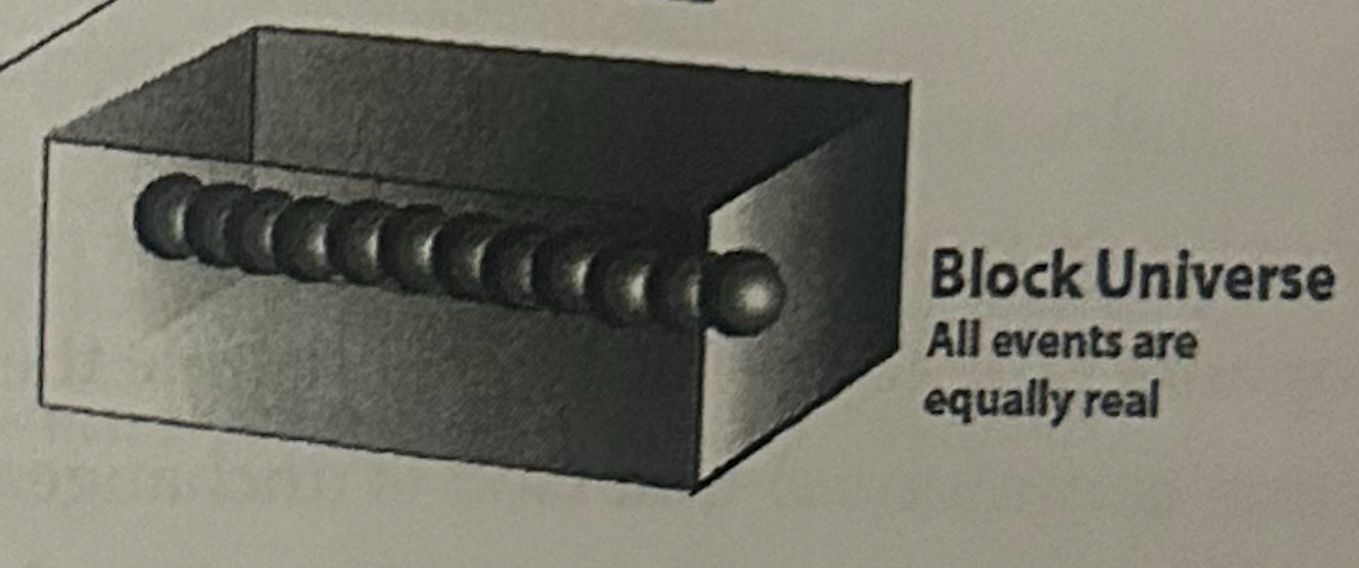
what is four dimensionalism?
all time is equally real
future, past and present all equally exists in a four dimensional block
this is also called the block universe
(earth is the circles)
what does anselm say about four dimensionalism/ divine eternity?
VERY SIMILAR TO BOETHIUS
he argues that god is in all place and time but not confined just to there
he is outside time since he is transcendent yet also present at all times
he sees battles from the past (which to us is gone) and battles in the future timelessly
“all things exist at the same time or place.”
anselm says god knows what you will do tomorrow, but that’s not a threat to freedom because god knows it in a different and timeless way
god knows because he sees it from an eternal perspective
he sees the whole of time because its a four dimensional block with all times being equally real
he sees what is the result of your free choice; if you chose to eat an apple, he’d see you eat an apple. if you chose to eat a pear, he’d see you eat a pear
god sees what you choose to do