L1-7 Clinical
 Call Kai
 Learn
Learn Practice Test
 Spaced Repetition
 Match
Match Flashcards
 Knowt Play
1/291

There's no tags or description
Looks like no tags are added yet.
Name | Mastery | Learn | Test | Matching | Spaced | Call with Kai |
|---|
No analytics yet
Send a link to your students to track their progress
292 Terms
Asylums
Refuges established in Western Europe in the 15th century to confine and provide for people with mental illness; forerunners of the mental hospital.
Behaviourism
An approach originally associated with John B. Watson, who proposed a focus on observable behaviour rather than on consciousness or mental functioning.
Classical Conditioning
A basic form of learning (Pavlovian conditioning) in which a neutral stimulus is repeatedly paired with another stimulus (Unconditioned Stimulus - UCS) that naturally elicits a certain desired response (Unconditioned Response - UCR). After repeated trials, the neutral stimulus becomes a conditioned stimulus (CS) and evokes the same or a similar response, now called the conditioned response (CR).
Clinical Psychologist
An individual who has earned a Ph.D. degree or a Psy.D. degree and whose training has included an internship in a hospital or clinic.
Conditioned Response (CR)
CR - See classical conditioning.
Conditioned Stimulus (CS)
CS - See classical conditioning.
Defence Mechanism
In Freud’s theory, reality-distorting strategies unconsciously adopted to protect the ego from anxiety.
Ego
In Freud’s theory, the predominantly conscious part of the personality, responsible for decision making and for dealing with reality.
Electroconvulsive Therapy (ECT)
A treatment that produces a convulsion by passing electric current through the brain; despite public concerns about this treatment, it can be useful in alleviating severe depression for some people.
Exorcism
The ritualistic casting out of evil spirits.
Extinction
The elimination of a classically conditioned response by the omission of the unconditioned stimulus. In operant conditioning, the elimination of a behaviour by the omission of reinforcement.
Id
In Freud’s theory, that part of the personality present at birth, comprising all the energy of the psyche and expressed as biological urges that strive continually for gratification.
Law of Effect
A principle of learning that holds that behaviour is acquired by virtue of its consequences.
Modeling
Learning by observing and imitating the behaviour of others or teaching by demonstrating and providing opportunities for imitation.
Moral Treatment
A therapeutic regimen (a prescribed course of medical treatment, diet, or exercise for the promotion or restoration of health) whereby mentally ill patients were released from their restraints and were treated with compassion and dignity rather than with contempt and denigration.
Negative Reinforcement
The strengthening of a tendency to exhibit desired behaviour by rewarding responses in that situation with the removal of an aversive stimulus.
Operant Conditioning
The acquisition or elimination of a response as a function of the environmental contingencies of reinforcement and punishment.
Positive Reinforcement
The strengthening of a tendency to exhibit desired behaviour by rewarding responses in that situation with a desired reward.
Psychiatric Nurse
A nurse who receives specialized training in mental illness. An advanced practice psychiatric nurse may prescribe psychiatric medications.
Psychiatrists
A physician (M.D.) who completes medical training and also specialized postdoctoral training, called a residency, in the diagnosis, treatment, and prevention of psychological disorders.
Psychoanalysis
Primarily the therapy procedures pioneered by Freud, entailing free association, dream analysis, and working through transference. The term can also refer to the numerous variations on basic Freudian therapy.
Psychological Disorder
The DSM-5 defines psychological disorder as a clinically significant behavioural or psychological syndrome or pattern. The definition includes a number of key features, including distress, disability or impaired functioning, violation of social norms, and dysfunction.
Psychopathology
The field concerned with the nature, development, and treatment of psychological disorders.
Psychotherapy
A primarily verbal means of helping troubled individuals change their thoughts, feelings, and behaviour to reduce distress and to achieve greater life satisfaction.
Social Workers
A mental health professional who holds a master of social work (M.S.W.) degree.
Stigma
The destructive beliefs and attitudes held by a society about groups considered different in some manner, such as people with mental illness.
Superego
In Freud’s theory, the part of the personality that acts as the conscience and reflects society’s moral standards as learned from parents and teachers.
Transference
A person’s responses to his or her analyst that seem to reflect attitudes and ways of behaving toward important people in the person’s past.
Unconditioned Response (UCR)
UCR - See classical conditioning.
Unconditioned Stimulus (UCS)
UCS - See classical conditioning.
Unconscious
A state of unawareness without sensation or thought; in Freud’s theory, the part of the personality, in particular, the id impulses or energy, of which the ego is unaware.
DSM-5-TR
It is a classification system which clusters symptoms that lead to certain disorders. It does not look at the cause (etiology) of the disorder (except PTSD).
Manic Episodes
Distinct period of abnormally and persistently elevated, expansive, or irritable mood and abnormally and persistently increased activity or energy.
Duration: 1 Week - Bipolar 1 & 4 days for Bipolar 2
Must have 3 of the 7 symptoms listed in the DSM-5(-TR).
Potential Explanations for Increases in Prevalence of Disorders
Individualisation
Social Media
Increases Pressure to Succeed
Housing (Highly Relevant in NL!)
More Recognition/Acceptance of Disorders
Why is it so hard to define when something is a ‘disorder’ or ‘pathological’?
No exact answer, but… There is no single set of markers or properties that indicate a behaviour or state to be pathological.
Allele
Different forms of the same gene.
Amygdala
An important area for attention to emotionally salient stimuli in the brain.
Anterior Cingulate
A frontal brain region located within the limbic system, surrounding the corpus callosum. It acts as a hub for integrating cognitive, emotional, and motor processes, playing a key role in error detection, emotional regulation, pain management, and decision-making.
Autonomic Nervous System (ANS)
Innervates the endocrine glands, the heart, and the smooth muscles that are found in the walls of the blood vessels, stomach, intestines, kidneys, and other organs.
Automatic process!
Behaviour Genetics
The study of the degree genetics and the environment influences behaviour.
Behavioural Activation (BA) Therapy
An action-oriented, structured psychotherapy used primarily to treat depression and anxiety by breaking the cycle of inactivity and avoidance.
Brain Networks
Brain regions that are clustered and activated in tasks to help each other! :D
Cognition
Refers to the mental processes involved in gaining knowledge and comprehension, including thinking, knowing, remembering, judging, and problem-solving.
Cognitive Behaviour Therapy (CBT)
A structured, goal-oriented form of psychotherapy that focuses on modifying dysfunctional emotions, behaviours, and thoughts. Exposure is a large thing here!
Cognitive Restructuring
A core Cognitive Behavioral Therapy (CBT) technique used to identify, challenge, and alter dysfunctional, irrational, or negative automatic thoughts.
Connectivity (+ 3 types!)
An inquiry aiming to identify how brain areas are connected to each other!
Structural (Anatomical) → Brain regions are connected via white matter.
Functional → Brain regions are connected via correlations between their BOLD signals.
Effective → Combines both structural & functional, except it also shows the timing and direction of the activations.
Copy Number Variation (CNV) - 4 Bolded Terms!
This refers to an abnormal copy of one or more sections of DNA within a gene(s). They can either be additions (copies are added) or deletions (copies are missing). They are usually inherited from parents, or can be spontaneous (de novo), meaning appearing in a person for the first time.
Cortisol
The primary steroid hormone, often termed the "stress hormone," produced by the adrenal glands to regulate the body's fight-or-flight response to fear or stress
Cytokines
Small signaling proteins—essentially the "chemical messengers" of the immune system that modulate behaviour, emotions, and cognitive functions.
Dopamine
A "feel-good" neurotransmitter and hormone that acts as the brain's reward and motivation signal. May be involved in depression, mania, and schizophrenia.
Emotion
A complex, temporary state involving subjective experience, physiological responses, and behavioural expressions.
Epigenetics
The study of how the environment can alter gene expression or function.
Exposure
A therapeutic technique where individuals directly confront feared objects, situations, memories, or thoughts in a safe, controlled environment to reduce fear, anxiety, and avoidance behaviours.
Used in CBT!
Gamma-Aminobutyric Acid (GABA)
Inhibits nerve impulses throughout most areas of the brain and may be involved in the anxiety disorders.
Gene-Environment Interaction
This interaction means that a given person’s sensitivity to an environmental event is influenced by genes.
Gene Expression
The switching on and off of genes from proteins.
Genome-Wide Association Studies (GWAS)
Key methods of identifying SNPs (Single Nucleotide Polymorphisms) - uses powerful computers to isolate thousands of genes in people with psychological disorders and those without.
Genotype
The physical sequence of DNA inherited from parents which cannot be outwardly observed (such as Aa or AA or aa or aA).
Grey Matter
The thin outer covering of the brain. Consists of 6 layers. Bumps = gyri, sunken parts = sulci.
Heritability (+ two points)
This term refers to the extent to which variability in a particular behaviour in a population can be accounted for by genetic influences.
It ranges from 0 to 1.
It can only refer to large populations, not individuals.
Hippocampus
A major component of the brain that is associated with memory!
HPA Axis
A major neuroendocrine system that governs the body's response to stress, linking the brain to the endocrine system.
Activated by stressors, it triggers a cascade (hypothalamus pituitary adrenal glands) leading to the release of cortisol, which aids in coping with stress, energy mobilization, and immune modulation.
Hypothalamus
A part of the brain that regulates metabolism, temperature, perspiration, blood pressure, sleeping, and appetite.
Interpersonal Therapy (IPT)
A structured, time-limited psychological treatment (typically 12–16 sessions) focused on improving current relationships and social functioning to relieve mental health symptoms, most notably depression.
Molecular Genetics
Studies that seek to identify genes and their functions.
Neuron
The cells in the nervous system.
Neurotransmitters
Chemicals that allow neurons to send a signal across the synapse to another neuron.
Non-Shared (Unique) Environment
Factors here are those things believed to be distinct among members of a family, such as relationships with friends or specific events unique to a person and these are believed to be important in understanding why two siblings from the same family can be so different.
Norepinephrine
A neurotransmitter that communicates with the sympathetic nervous system, where it is involved in producing states of high arousal and may be involved in the anxiety disorders and other stress-related conditions.
Parasympathetic Nervous System
A division of the autonomic nervous system responsible for the "rest-and-digest" response, which calms the body, conserves energy, and promotes maintenance functions like digestion and urination.
Phenotype
The observable traits of a DNA sequence, for example hair or eye colour, or even anxiety levels.
Interaction of Genotype x Environment.
Polygenic
Traits or conditions are influenced by many different genes, rather than just one.
Polygenic Risk Score
Results from GWAS are translated into estimates of individual genetic risk by the Polygenic Risk Score. They can predict risks of developing things like Alzheimer’s disease.
Polymorphism
Refers to a difference in DNA sequence on a gene that has occurred in a population.
Prefrontal Cortex
The very front of the cortex…
Pruning
The elimination of synaptic connections in the brain.
Reuptake
Some remaining neurotransmitters in the synapse are taken back into the presynaptic cell through this process.
Schema
A cognitive framework or mental structure that organizes information, beliefs, and knowledge about objects, situations, or people, allowing for faster processing of new experiences.
Serotonin
Often called a "mood booster," it helps regulate happiness, sleep, digestion, and appetite. May be involved in depression, mania, and schizophrenia.
Shared Environment
Factors here include those things that members of a family have in common, such as family income level, child-rearing practices, and parents’ marital status and quality.
Single Nucleotide Polymorphism (SNP)
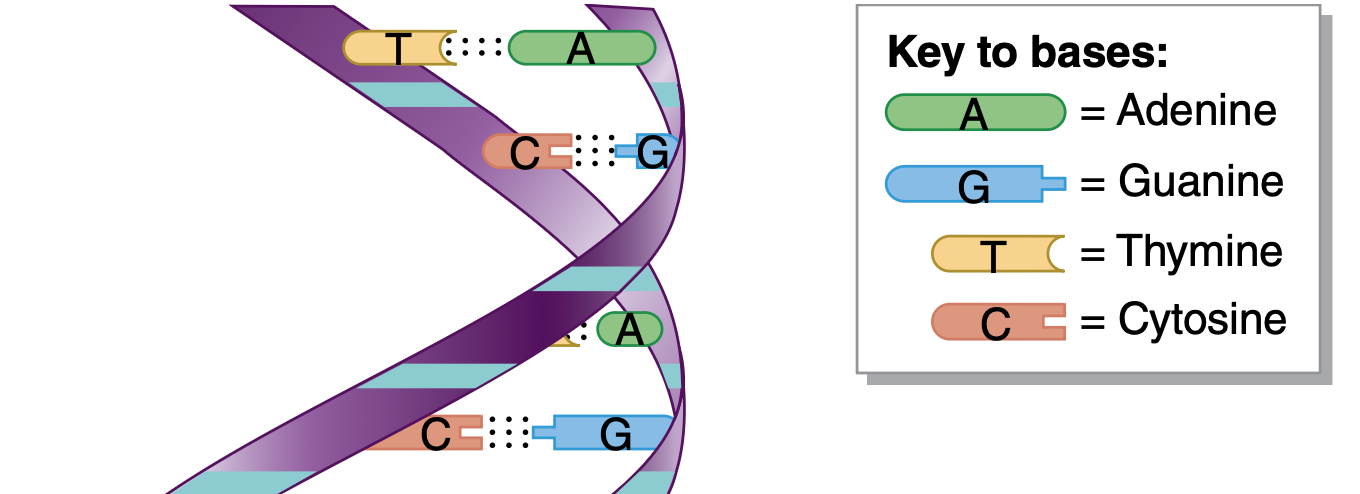
Refers to the difference between people in a single nucleotide (A, T, C, and G in DNA strands) in the DNA sequence of a particular gene.
Stress
The emotional, mental, and physiological response to perceived pressures, demands, or threats that exceed an individual’s available coping resources.
Sympathetic Nervous System
A division of the autonomic nervous system that triggers the body's rapid "fight-or-flight" response to danger, stress, or excitement
Synapse
The gap between the terminal axon of the sending neuron and the membrane of the receiving neuron.
Time-Out
A behavioural therapy technique based on operant conditioning; the consequence for misbehaviour is removal to an environment with no positive reinforcers.
Ventricles
A network of four interconnected, cerebrospinal fluid-filled cavities located within the core of the brain.
White Matter
It is made up of large tracts of myelinated (sheathed) fibres that connect cell bodies in the cortex with those in the spinal cord and in other areas of the brain.
Reliability
The consistency, stability, and repeatability of a measure or assessment tool.
Inter-Rater Reliability
The degree of agreement or consistency between different observers, raters, or judges assessing the same behaviour, subject, or phenomenon.
Test-Retest Reliability
Measures the consistency of a research tool or test over time, determined by administering the same test to the same participants on two separate occasions.
Alternate-Form Reliability
Measures consistency by administering two different but equivalent versions of a test (Form A and Form B) to the same group, usually at different times.
Internal Consistency Reliability
Measures how well different items (questions) on a single test or scale produce similar results, indicating they measure the same underlying construct.
Validity
The accuracy and truthfulness of a test, measurement, or experiment, ensuring it measures what it claims to measure.
Criterion Validity
Evaluates how accurately a test or measure (the predictor) aligns with a concrete, established standard or outcome (the criterion).
Content Validity
Refers to how comprehensively a test or tool measures all relevant facets of a specific construct, such as intelligence or anxiety.
Construct Validity
Measures how accurately a test or tool evaluates the theoretical, non-observable concept (construct) it intends to measure, such as intelligence, anxiety, or personality.
DSM-5-TR
A classification handbook used by clinicians to diagnose, classify, and treat mental health disorders. It sorts disorders through clustering symptoms.
Cultural Concepts of Distress
Culturally specific ways that communities experience, understand, and communicate social, psychological, or physical suffering.
There are 9 cultural concepts of distress used to describe syndromes that are observed within specific regions of the world or cultural groups (in the DMS-5-TR).
Shenjing Shuairuo
A syndrome commonly diagnosed in China, characterized by weakness, mental fatigue, negative emotions, and sleep problems
Taijin Kyofusho (Interpersonal Fear Disorder)
The fear that one could offend others through inappropriate eye contact, blushing, a perceived body deformation, or body odor.