MGT 301- Second Half
 Call Kai
 Learn
Learn Practice Test
 Spaced Repetition
 Match
Match Flashcards
 Knowt Play
1/98

Earn XP
Description and Tags
Name | Mastery | Learn | Test | Matching | Spaced | Call with Kai |
|---|
No analytics yet
Send a link to your students to track their progress
99 Terms
Group
two or more individuals, interacting and interdependent, who have come together to acheive particular objectives
formal groups
those defines by the organization’s structure
informal groups
alliances that are neither formally structured or organizationally determined- voluntarily formed
social identity theory
considers when and why individuals consider themselves members of groups
people have emotional reactions to the failure of success of their group because their self-esteem gets tied into the performance of the group
ingroup
people who share their social identity
outgroups
people from different groups
ingroup favoritism
occurs when we see members of our group as better than other people- social categorization
social identity threat
individuals believe they will be negatively evaluated due to theor association woth a certain devaluated group
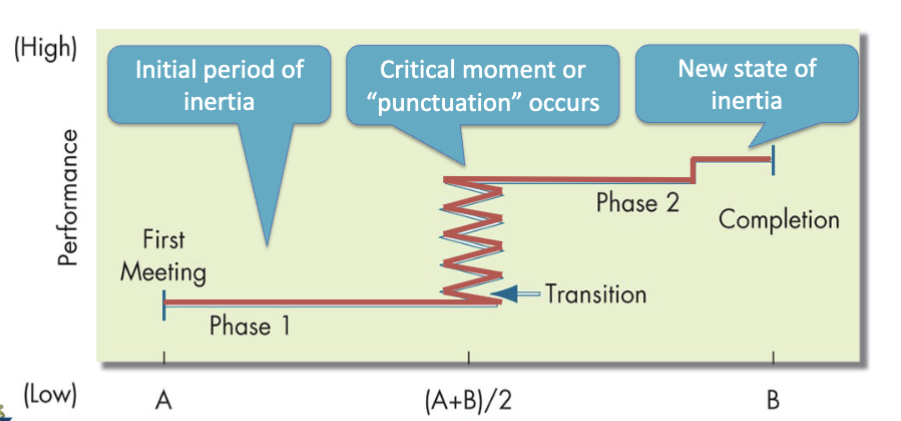
punctuated Equilibrium model
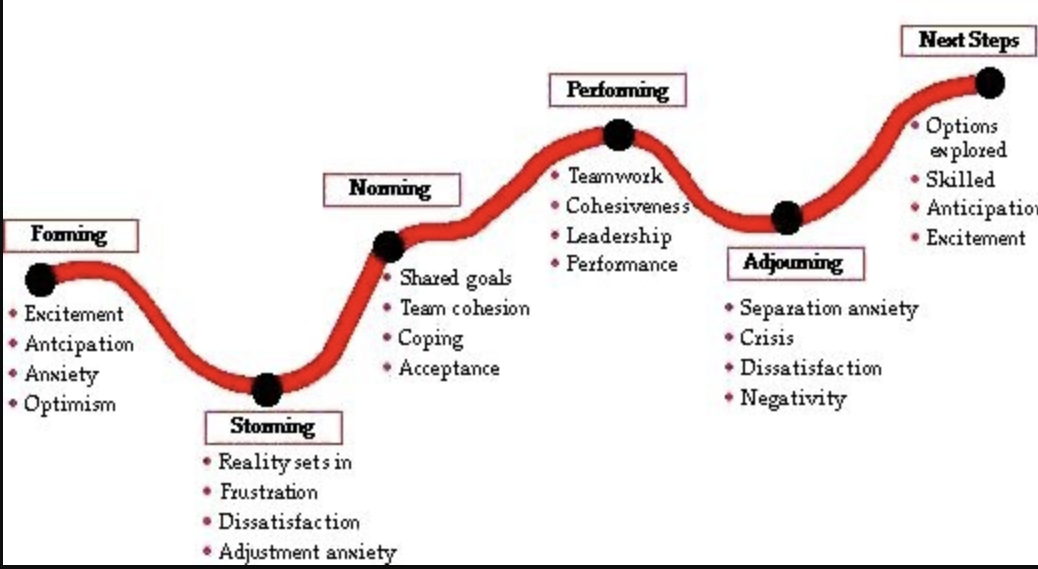
stages of group development- tuckman
roles
a set of expected behavior patterns attributed to someone occupying a given position in a social unit
role perception
one’s perception of how to act in a given situation
role expectations
how others believe one should act iin a goven situation
psychological contract
an unwritten agreement between employees and employers that establishes mutual expectations
norms
acceptable standards of behavior within a group that are shared by the group’s members
groupthink
situations in which group pressures for conformity deter the group deom critically appraising unusual, minority, or unpopular views
group size affects group’s overall behavior because
larger
more capabilities
more resoures
more information and input
more ideas and possible solutions
smaller
more cohesive
higher member satisfaction
faster decision making, consensus
more effective individual contribution
social loafing
people tend to exert less effort to achieve a goal when they work in a group than when working alone
strengths of a group decision making
more complete information and knowledge
increased diversity of views
increased acceptance of solutions
weaknesses of group decision making
time consuming
conformity pressures
dominance of a few members
ambiguous responsibility
team
a group whose individual efforts result in performance that is greater than the sum of the individual inputs
team synergy
the combined effort of a group of individuals that results in a more effective and effiecient outcome than the sum of individual efforts
work groups
share information
neutral (sometimes negative)
individual
random and varied
work teams
collective performance
positive
individual and mutual
complementary
cross-functional work teams
cross functional teams are being used increasingly in organizations to improve coordination of interdependent activities among specialized subunits
team inputs
size, composition, goals, structure
team processes
coordination, psychological safety, conflict, shared mental model
team outcomes
tangible outputs, influences on members
psychological safety
shared belief that the team is safe for interpersonal risk taking
shared mental models
conscious beliefs and implicit assumptions about the cause of performance and the best way to improve it.
oral communication
sychronicity
synchronous communication
asynchrinus communication
conversations, discussions, and listening
active listening
reflective listening
meetings
speeches
sensing
actively sensing oral and nonverbal communication
processing
assigning meaning and value to messages
ascetainign subtle or covert messsages
written communication
email
instant messaging and text messaging
natural language processing
nonverbal communication
nonverbal communication; body language, touch and use of physical space. these run the deepest roots of communication
information overload
a condition in which information inflow exceeds an individuals processing capacity
communication apprehension
undue tension and anxiety about communication
structure
the arrangement of and relations between the parts or elements of something complex
organizational structure
system that defines how job tasks are formally divided, grouped, and coordinated
growth of organizational structure
carve employeed into sub-units
employee knowledge and skills
business function
work process
output
client
location
work specialization
when activities are subdivided into separate jobs
narrow specialization of tasks
departmentalization
the basis on which jobs will be grouped together
functional
divisional
mixed
chain of command
to whom individuals and groups report
narrow vs wide span of control
span of control
amount of indoviduals a manager can efficiently and effectively direct
centralization and decentralization
where decision-making authority lies
formalization
the degree to which there will be rules and regulations to direct employees and managers
procedures and policies
the mechanistic model
high specialization
rigid departmentalization
clear chain of command
narrow spans of control
centralization
high formalization
the organic model
cross functional teams
cross- hierarchical teams
free flow of information
wide spans of control
decentralization
low formalization
organizational culture
a system of shared meaning held by memebrs that distinguishes the organization from other organizations
values
beleifs
assumptions
dominant culture
expresses the corevalues a majority of memebrs share and that gove the organization distinct personality
subcultures
less powerful in organizational culture
strong organizational culture
cohesiveness (+)
loyalty (+)
commitment (+)
intention to leave (-)
how is a culture sustained?
Organizational culture originates from the founders' philosophies,
is shaped by selection criteria and socialization practices,
reinforced by top management, and perpetuated through
structures, systems, and leadership actions.
selection
identify and hire individuals woth the knowledge, skils, and abilities to preform succesfully
person-organization fit theory
a theory that people are attracted to and selected by organizations that match their values and leave when there is no compatibility
top management
establish norms of behavior
socialization
a process which enables new employees to acquire the social knowledge and necessary skills in order to adapt to the organizations culture
organizational climates
establish policies, practices,and procedures that realize organizational values
sustainable culture and climates
companies with a sustainable culture rioritize long-term impact- resorce responsiblility, and practives that balance social and environmental harmony for enduring success
innovative culture and climates
the most innovative companies are often characterized by their open, unconventional, collaborative, visionary, and accelerating cultures.
idea champion
individuals who take an innovation and actively and enthusiastically promote the idea, build support, overcome resistence, and ensure that the idea is implemented
types of changes: developmental
makes improvements or refinements in existing operations
types of changes: transitional
moves from an old state to a new state, abandoning old wats of operating or implementing new way of functioning
types of changes: transformational
requires dramatic shifts in vision, systems, stategy, or structure
change agent
the people who lead or advocated for a change
change target
the people who need to change or adapt as a result for the initiative
how to overcome resistance to change
communication
paticipation
building support and commitment
developing positive relationshops
implementing changes fairly
selecting people who accept change
coercion
lewin’s three-step model
unfreeze
recognice the problems of doing things in old ways
change/movement
look for new ways of doing things
refreeze
new ways of doing things are well established
personality traits of leadership
goodleaders:
assert themselved (extroverted)
are disciplined and able to keep commitments they make (conscientous)
are creative and flexible (open to experience)
empathetic leaders
sense others needs
listen to what followers say
read the reactions of others
initiating stucture
leaders provide structure for subordinates
consideration
leaders nurture subordinates
high-high leader
: soemone who is scored high on both underlying dimensions that are important for leadership
task behaviors
task-oriented leaders are the “doers” on life who tend to facilitate task accomplishment
relationship behaviors
relationship-oriented leaders are not as goal-directed in leadership, they are instead more interested in connecting woth others
universalistic approach
leadership, traits/skills, and behaviours have a direct and pisitive impact on the organizational outcomes
situational leadership model
succesful leadership is acheived by selecting the roght leadership style, which is contingent on the level of the followers’ readiness to accomplish a specific task
followere readiness
the extent to shich followes are commited toward and cometent in accomplishing a specif task
directive behaviors
help group members in goal achievement via one-way communication though
giving directions
establishing goals and how to achieve them
methods of evaluation and time lines
defining roles
supportive behaviors
assist group members via two-way communication in feeling comfortable with themselves, coworkers, and situation
asking for input
problem solving
praising, listening
leader-member exchange theory
describes the role-making processes between a leader and each individual subordinate and the exchange relationship that develops overtime
charismatic leadership theory
followers attribute heroric or extraordinary leadership abilities when they observe certain behaviors and tend to give these leaders power
atriculating an appealing vision
willing to takae on high ppersonal risk
sensitive to follower needs
establishing a new set of values
exhibiting extraordinary behaviors
transformational leadership
process that changes and transforms people
they raise consciousness about the value and importtance of secific and idealized goals
transcending self-interest for the good of the team or organization
addressing higher level needs
become strong role-models of their followers
full range leaderhsip model
active and effective to passive and ineffective ledership
idealized influence
provides vision and sense of mission, instills pride, gains respect and trust.
inspirational motivation
communicates high expectiations, uuseed symbols to focus efforts expresses important purposed in simple ways
intellectual stimualtion
promoted intellegence, rationality, and careful problem solving
individualized consideration
goved personal attention, treats each employee individually, coached, advided
contingent reward
contracts exchange of rewards for effort, promises rewards for good performace, recognizes accomplishments
management by exception (active)
watches and searches for deviations from rules and standards, takes corrective action
management by exception (passive)
intervenes only if standards are not met
laissez-faire
abdicates responsibilities, avoids making decisions