responses of plants and animals to their external enviroments
 Call Kai
 Learn
Learn Practice Test
 Spaced Repetition
 Match
Match Flashcards
 Knowt Play
1/11

There's no tags or description
Looks like no tags are added yet.
Name | Mastery | Learn | Test | Matching | Spaced | Call with Kai |
|---|
No analytics yet
Send a link to your students to track their progress
12 Terms
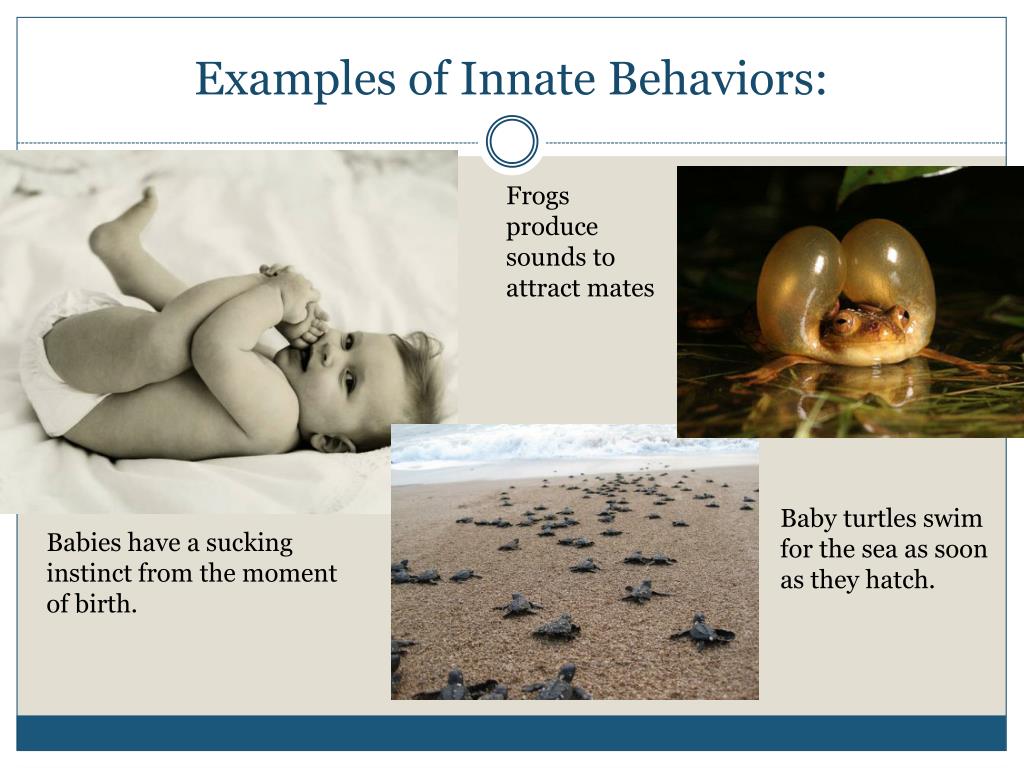
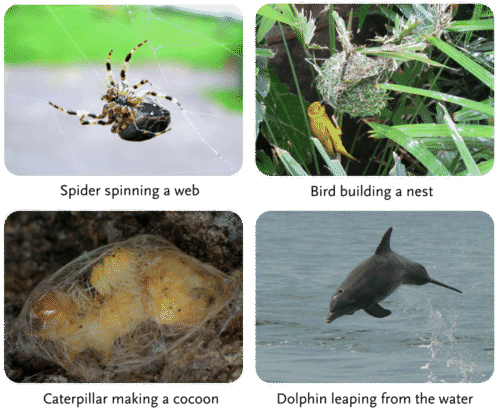
What is innate behavior?
Innate behavior is an automatic, instinctual response to stimuli, not learned or influenced by experience.
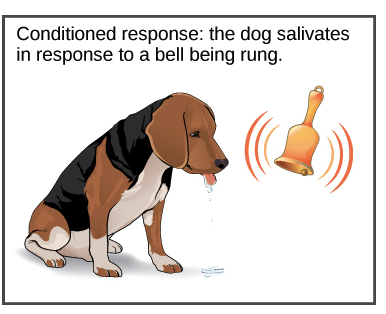
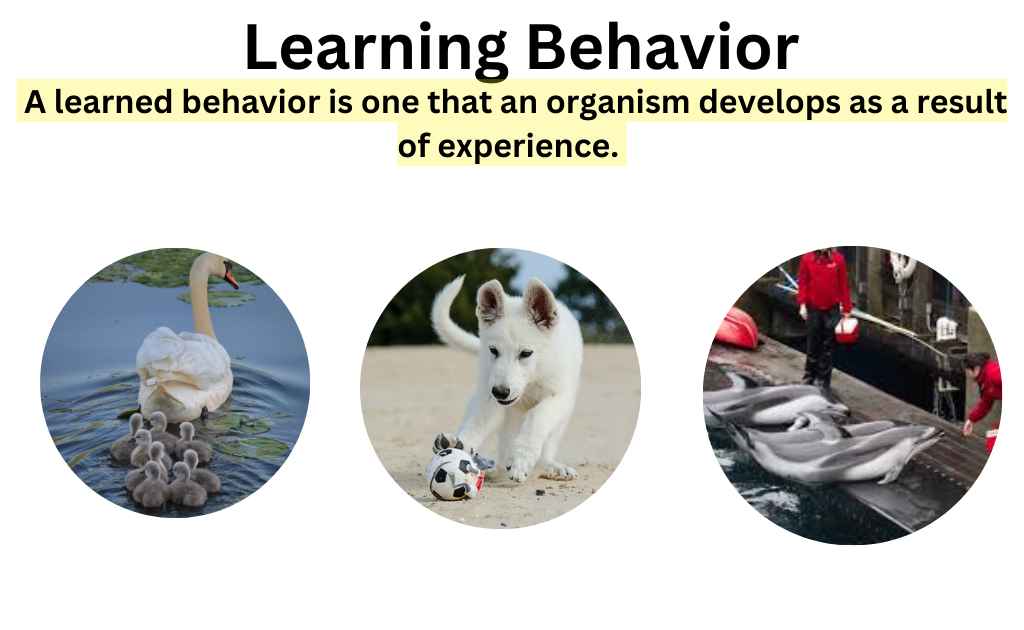
What is learned behavior?
Learned behavior is behavior acquired through experience and the ability to adapt based on interactions with the environment.
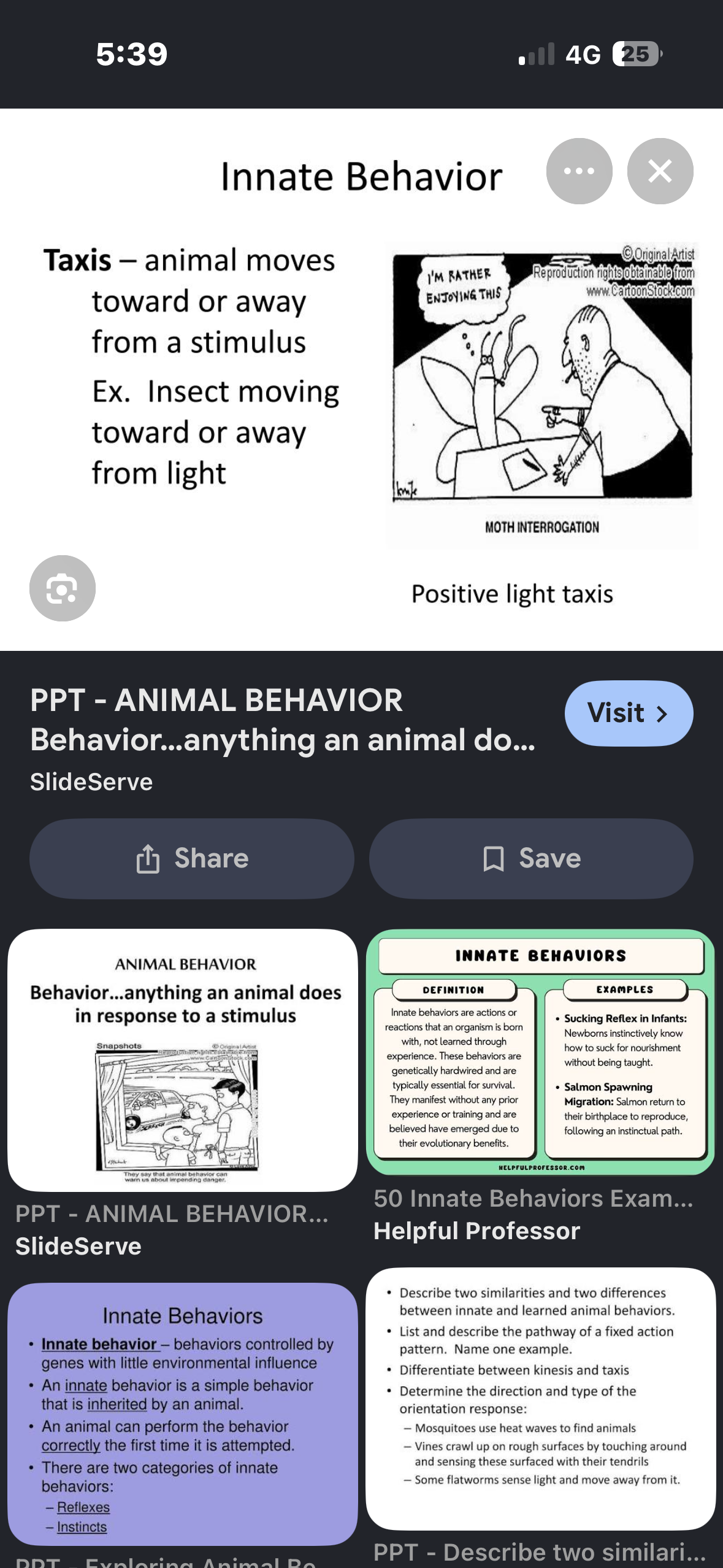
What are taxes in biology?
Taxes are directional movements or responses of organisms toward (positive taxes) or away (negative taxes) from a stimulus.
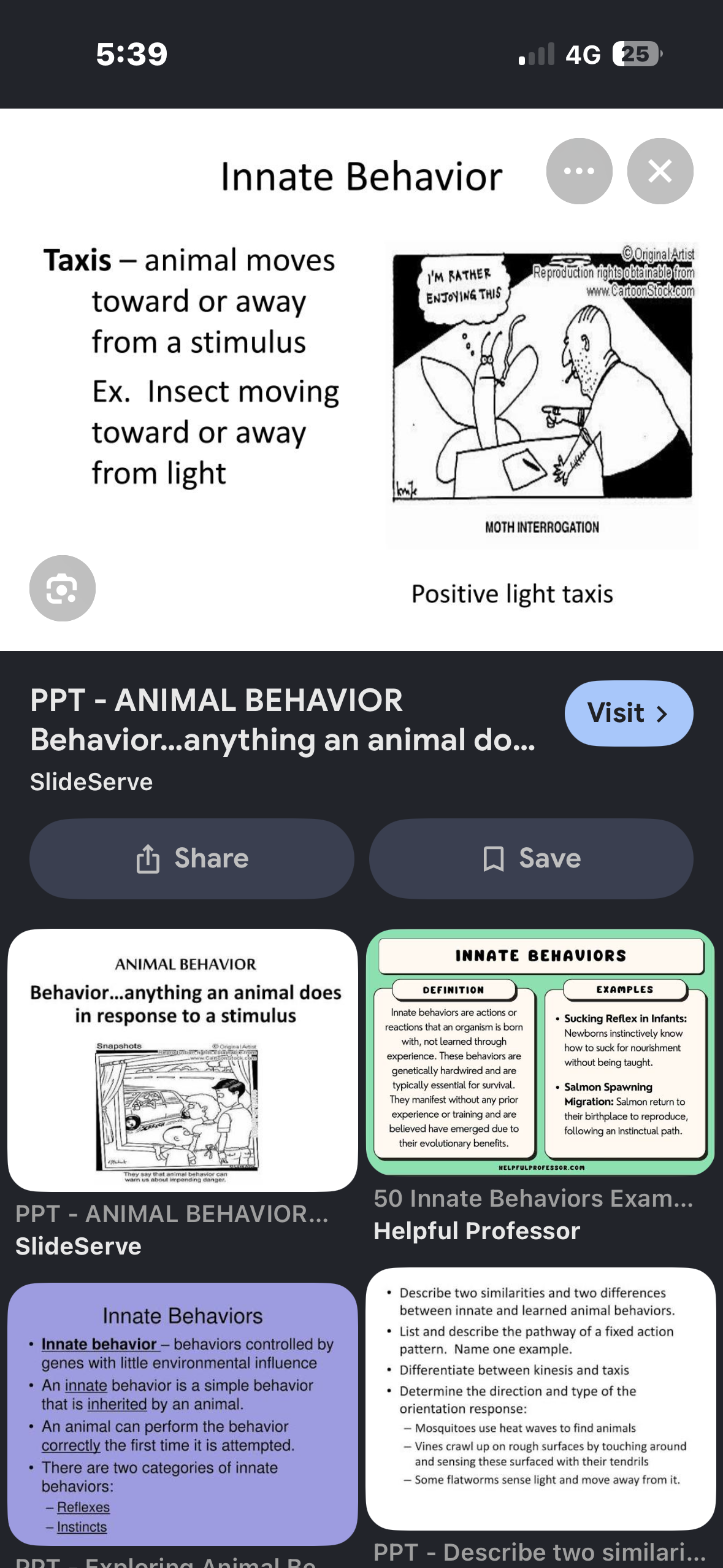
What is phototaxis?
Phototaxis is a movement of an organism in response to light, where positive phototaxis indicates movement towards light and negative phototaxis indicates movement away from light.
What factors can influence migration in animals?
Migration can be influenced by external cues like photoperiod, food availability, season changes, and internal cues such as biological clocks and fat reserves.
What is an example of a photoperiod cue for migration?
Photoperiod cues for migration typically involve changes in daylight length that signal animals to migrate in response to seasonal changes.
Define kineses in biological terms.
Kineses are non-directional movements of an organism in response to a stimulus, where the intensity of the stimulus determines the rate of movement.
What is homing behavior?
Homing behavior is the ability of an organism to return to a specific location, often its birthplace, regardless of the route taken.
What are biological clocks?
Biological clocks are internal mechanisms that regulate biological rhythms, including circadian rhythms, which help organisms synchronize their activities with the day-night cycle.
What is an actogram?
An actogram is a graphical representation showing the activity level of an organism over a set period, typically used to analyze circadian rhythms.
How do circadian rhythms affect animal behavior?
Circadian rhythms govern various behaviors in animals, such as sleep-wake patterns, feeding, and hormone release, which are synchronized with the environmental day-night cycle.
What are internal and external cues for migration?
Internal cues include hormonal changes and fat reserves, while external cues encompass factors like food and water availability, photoperiod, and seasonal temperature changes.