ch 13 - social psychology
 Call Kai
 Learn
Learn Practice Test
 Spaced Repetition
 Match
Match Flashcards
 Knowt Play
1/61

There's no tags or description
Looks like no tags are added yet.
Name | Mastery | Learn | Test | Matching | Spaced | Call with Kai |
|---|
No analytics yet
Send a link to your students to track their progress
62 Terms
social psychology
study of causes and consequences of sociality
how humans solve survival/reproduction problems
social processes (understanding/predicting/influencing behaviours)
aggression (def & types)
purpose = to harm another ; used to achieve goals by animals
proactive aggression: planned, purposeful
reactive aggression: spontaneous response to negative affective state
frustration-aggression hypothesis
all animals aggress when goals are frustrated (all aggression is caused by frustration)
best predictor of kind of aggression employed
gender
hormone associated with aggression
testosterone (higher in males, esp younger males, than females)
how does women’s aggression differ from men’s?
different motivation
different execution: women’s can be more proactive, verbal, social/relational aggression
explain the “I Spy Threat” study
subjects given testosterone needed to see a more threatening expression before they could recognize it as such - can be harmful as it lets situations escalate to higher aggression before resolving
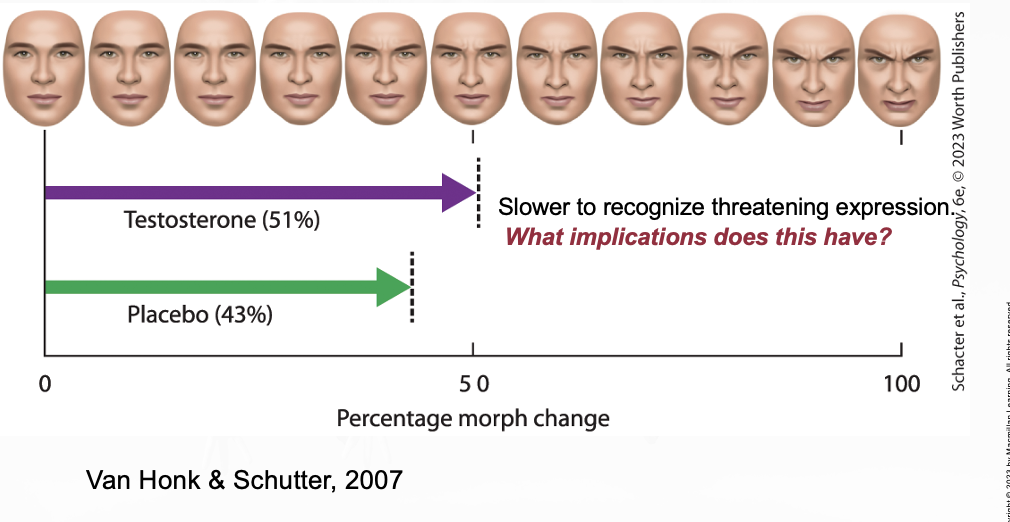
[…] provokes an aggressive response - males with unusually […] are most prone
[challenging beliefs about personal status/dominance] [males with unusually high self-esteem]
does aggression vary across geographic location? [yes / no]
provide an example
yes - southern vs northern men (southern display higher aggression if they feel their status is challenged)
cooperation
behaviour by 2 or more individuals leading to mutual benefit
_____ is more key than cooperation
trustworthiness
explain the prisoner’s dilemma game using the following scenario:
police ask you to sign a document indicating that your partner is guilty
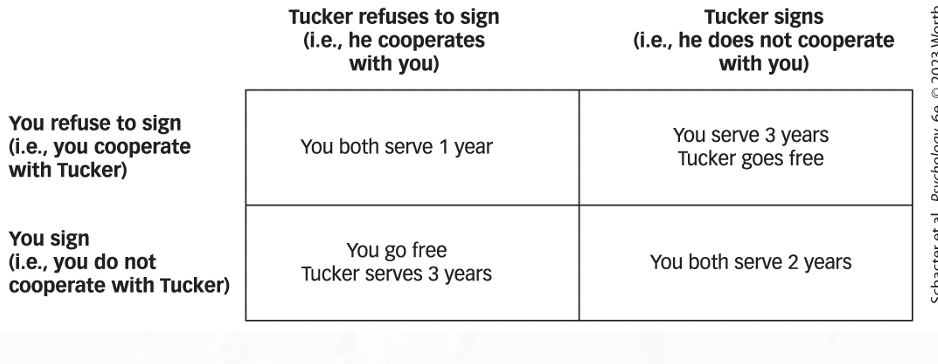
the prisoner’s dilemma game illustrates the […]
[risk of cooperation]
group (def)
collection of people with something in common distinguishing them from others
prejudice
positive/negative evaluation of another person based on group membership
prejudice vs discrimination
prejudice = evaluation
discrimination = action
in-group favouritism / bias (def)
tendency to treat someone better if they are a member of one’s own group
4 factors that hinder group decision making
not capitalizing on expertise of members
common knowledge effect
group polarization
groupthink
common knowledge effect
tendency for group discussion to focus on info that members share
group polarization
tendency for groups to make more extreme decisions than individual members would’ve made by themselves
groupthink
tendency for groups to reach consensus to facilitate interpersonal harmony
deindividuation
group immersion causes others to become less aware of their individual values
ex/ sports rioting
diffusion of responsibility
social loafing
bystander effect
individuals feeling diminished responsibility for their actions when surrounded by others who act the same way
social loafing: expending less effort when in a group that alone
bystander effect: people being less likely to help a stranger in an emergency situation when other bystanders are present
altruism
intentional behaviour benefitting another at a potential cost to oneself
unselfish concern for others, driven by genuity and empathy
kin selection
individuals cooperating with their relatives
not true altruism b/c it’s related to helping your own bloodline
reciprocal altruism
helping someone with the expectation that those benefits will be returned in the future
[women / men] are more selective of sexual partners
why?
[women]
promiscuity reputation in culture
emotional investment?
attraction (def)
feeling of preference to another caused by situational, physical, and psychological factors
situational factors of attraction
those in close proximity - mere exposure effect
misinterpreting physiological arousal with attraction
mere exposure effect
tendency for liking increases with frequency of exposure
physical factors of attraction
body shape
symmetry
age
specifics determined by culture
psychological factors of attraction
preference for mates who are psychologically similar to us (internal and external qualities)
homophily
tendency to like people who are similar to ourselves
differences between human and nonhuman animal relationships
nonhuman
majority relationships only last 10 sec after mating
some last through breeding season
few endure for years
human
newborns need relationships to survive
2 basic kinds of love
passionate love
companionate love
passionate love
experience involving euphoria, intimacy, intense sexual attraction
companionate love
involves affection, trust, concern for partner’s well-being
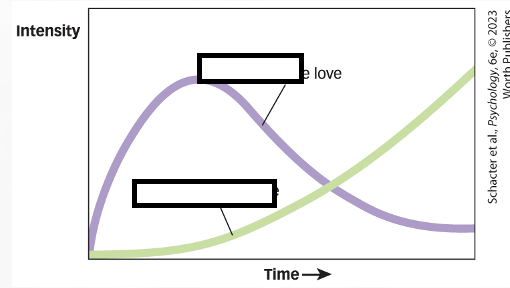
label which trajectory is passionate vs compassionate
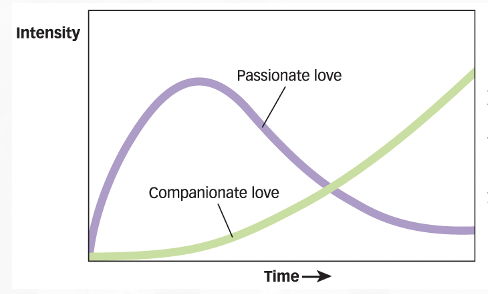
interdependence theory (& 2 things it depends on)
people remain in relationships if they perceive a good cost-benefit ratio based on:
comparison level for alternatives
investment
social cognition
processes by which people come to understand others
category-based vs target-based inferences
category-based: based on info about categories a person belongs
target-based: based on information about an individual’s behaviour (do/say)
stereotyping (def)
drawing inferences about individuals based on their category membership
behavioural confirmation / self-fulfilling prophecy
tendency for people to behave as they are expected to behave
perceptual confirmation
observers perceiving what they expect to perceive
subtyping
tendency for people faced with disconfirming evidence to modify their stereotypes rather than abandon them
most vs least effective specialized training against bias
most: exposure of stereotype-defying individuals
least: encouraging people to feel compassion for / take the alternate perspective of
attribution
inference about the cause of a person’s behaviour
dispositional vs situational attributions
dispositional: attribute internal disposition as cause
situational: attribute external situation as cause
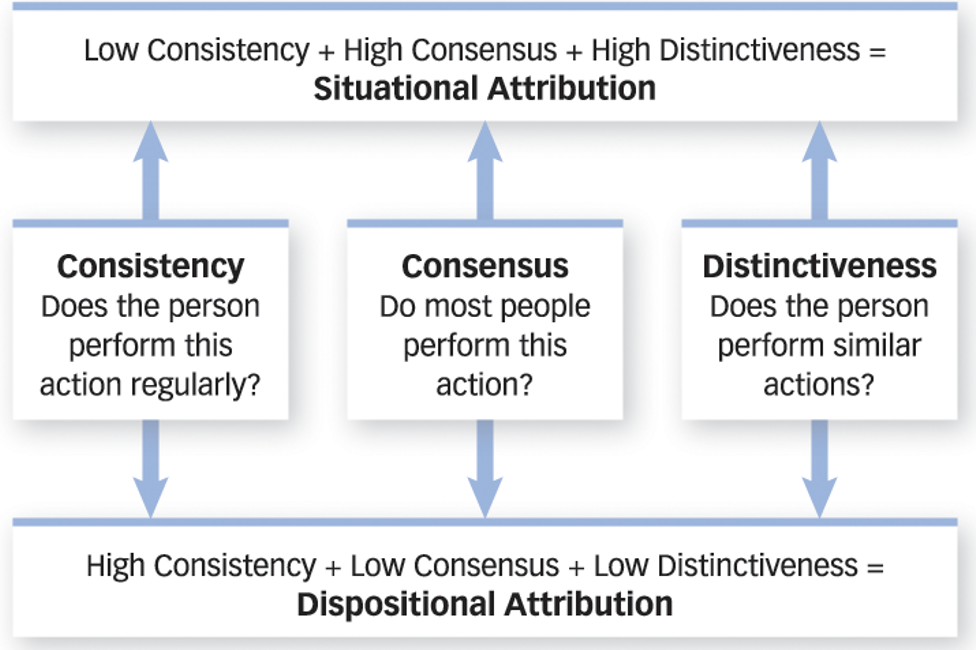
covariation model
claims we rely on consistency, distinctiveness, and consensus when making inferences about attributions
fundamental attribution error
making a dispositional attribution when we should instead make a situational attribution
situational attributions are more difficult to make
fundamental attribution error strength
stronger in some circumstances or cultures
actor-observer effect
making situational attributions for our behaviours while making dispositional attributions for identical behaviours of others
3 basic motivations of social influence (list + defs)
hedonic motive: motive to experience pleasure, avoid pain
approval motive: motive to be accepted, avoid rejection
accuracy motive: motive to believe what is right, avoid believing what is wrong
hedonic motive & ways it can backfire
motivated to experience pleasure, avoid pain
backfire:
overjustification effect: reward decreases intrinsic motivation to perform a behaviour
reactance: unpleasant feeling of being coerced
approval motive:
norms
norm of reciprocity
normative influence
door-in-the-face technique
conformity
obedience
motive to be accepted, avoid rejection
norms: doing what is customary standard for behaviour
norm of reciprocity: unwritten rule that people should return the favour
normative influence: when another’s behaviour provides information about what is appropriate
door-in-the-face technique: strategy of deny initial request to influence behaviour
conformity: doing what we see others do
obedience: tendency to do what powerful people dictate (due to normative pressure)
explain asch’s conformity study
(approval motive)
participants asked to identify what line looks the shortest; actors gave incorrect answer and the real participants also conformed to the incorrect answer due to normative influence
explain milgram’s obedience studies
participants listened to the authority of the experimenter to shock other participants even though it caused pain
once participants began refusing commands and not displaying obedience, the norm was broken
was a study on the readiness to obey authority
60% of participants obeyed highest shock order
the accuracy motive (def)
attitude
belief
informational influence
persuasion
2 “routes”/types
foot-in-the-door technique
cognitive dissonance
consistency
motive to believe what is true, avoid what is false
attitude: lasting positive/negative evaluation of object or event
belief: lasting knowledge about an object or event
informational influence: when another person’s behaviour provides info about what is good/true
persuasion: communication from other person influences attitudes/beliefs
central-route persuasion
peripheral route persuasion
consistency: indicates accuracy, creating opportunity for social influence
foot in the door technique: technique of presenting a small request followed by a large request
cognitive dissonance: unpleasant state arising when person recognizes inconsistency of actions, attitudes, beliefs
elaboration likelihood model of persuasion
2 basic kinds of persuasion/2 routes to being persuaded
central-route: appeals to logic and reason
peripheral-route: appeals to habit and emotion
2 “routes” of persuasion & when each works best
central-route persuasion: process of attitudes/beliefs changed by appeals to reason
works best when evidence/arguments presented are strong
peripheral-route persuasion: process of attitudes/beliefs changed by appealing to habit or emotion
works best when people are not motivated to weigh evidence/analyze argument
cognitive dissonance (def)
(accuracy motive)
unpleasant feeling arising in a person when they hold two contradicting beliefs OR their actions conflict with personal values
how can cognitive dissonance be alleviated?
scenario: