Engineering Lvl.2 Exam
 Call Kai
 Learn
Learn Practice Test
 Spaced Repetition
 Match
Match Flashcards
 Knowt Play
1/24

There's no tags or description
Looks like no tags are added yet.
Name | Mastery | Learn | Test | Matching | Spaced | Call with Kai |
|---|
No analytics yet
Send a link to your students to track their progress
25 Terms
What are the 7 main sectors of engineering?
Aerospace
Automotive
Biomedical
Chemical
Communication
Electrical/electric
Mechanical
Name some types of engineering processes that come under Machining:
Drilling
Turning
Milling
Name some types of engineering processes that come under Forming:
Casting
Forging
Name some types of engineering processes that come under Fabrication:
Welding
Shearing
Name some types of engineering processes that come under Electronics:
Printed Circuit board (PCB) Manufacturing
Surface Mount Technology
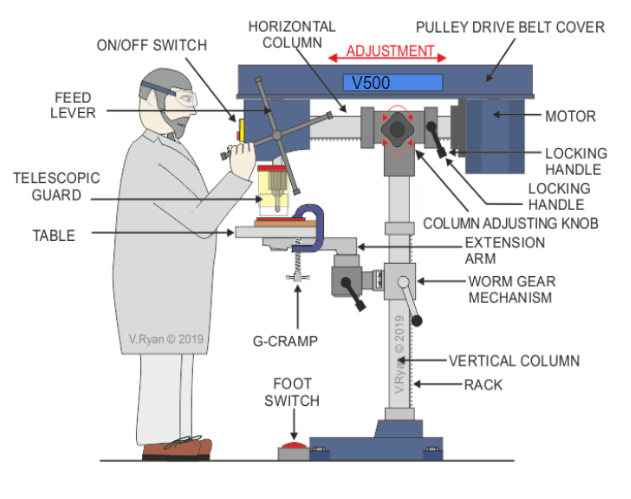
What are the health and safety precautions for drilling?
Remove loose clothing
Tie hair back
Wear PPE (Personal protective equipment)
Lower the guard
Use a G clamp
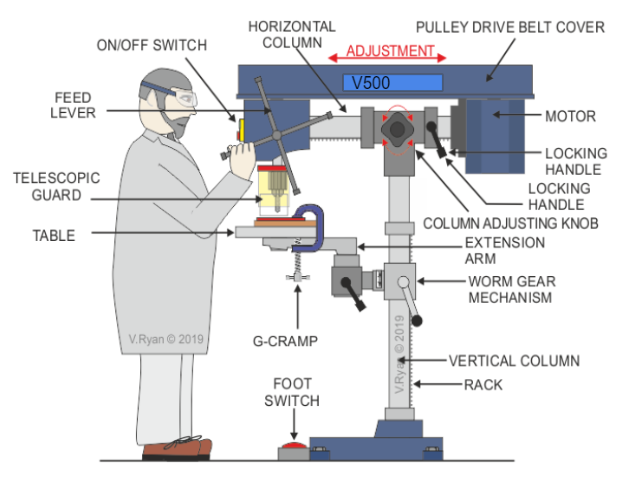
Give 3 advantages and disadvantages of drilling:
Advantages: Adaptable, accurate, reliable
Disadvantages: Minor burns caused by hot materials, Flying pieces of material, Hand or arm could come into contact with revolving parts
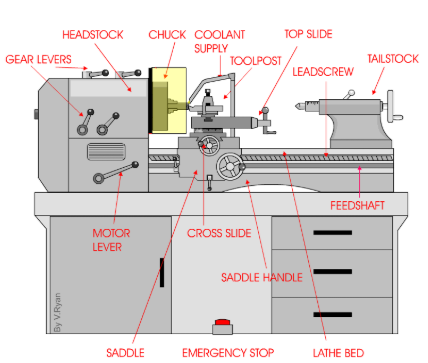
Name 7 processes of the lathe, and what they do:
Turning – To reduce the diameter
Facing – To reduce the part length
Forming – To form / shape
Parting – To cut the part smaller
Threading – To create a screw thread – Helical form used on nuts and bolts
Drilling – To create a hole in the center of the part
Knurling – to create a textured finish on a smooth surface for better grip
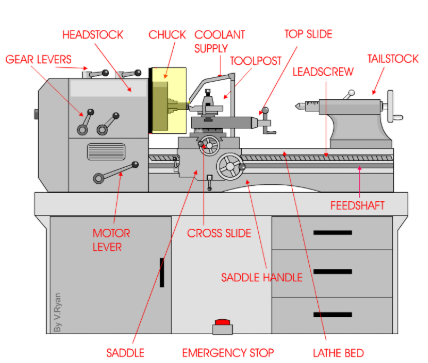
Give 4 advantages and disadvantages to the turning process: (lathe)
Advantages
Perfectly cylindrical parts
Range of tools - a lot of different processes
Can use with a lot of different materials
Accurate
Disadvantages
Health & Safety
Heat created from friction - HOT!
Bits of metal can be thrown away form workpiece
Time consuming due to manual work
What are 4 applications of milling?
Flat surfaces
Grooves and slots
Holes
Finishing off Engine and machine parts
What is sheering and how does it work?
Metal fabrication process for cutting straight lines in sheet or sections of material.
The upper blade and lower blade are forced past each other to cut the metal.
What is drilling?
A process that creates a round hole by removing material
What is a through hole and a blind hole? (drilling)
Through hole - A hole going completely through the component surface.
Blind hole - A hole going into the part but does not go all the way through.
What is turning? (lathe)
A process that rotates the workpiece metal against a cutting tool to create round parts
What is milling and what machine is used?
Process of moving a workpiece in 3 directions around a rotation cutting tool.
Milling machine is used for this process.
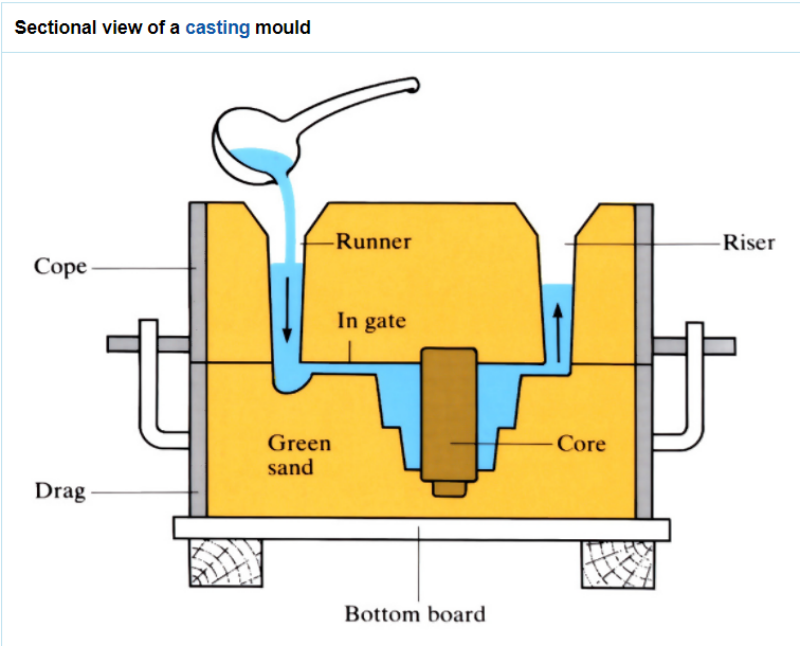
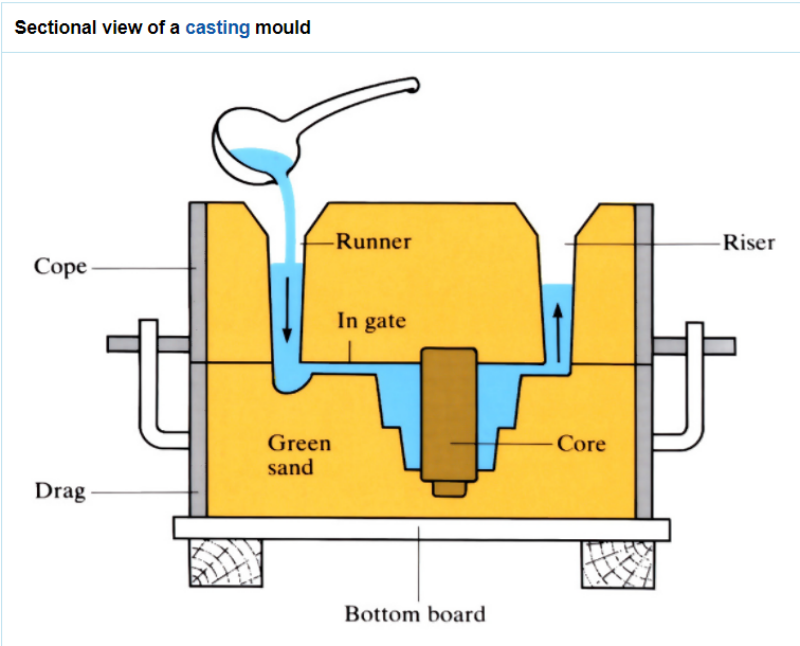
What are the steps of sand casting?
One half of the component is placed in the mould (DRAG)
Sand is packed around the component
Component is removed from the mould
Step 2 and 3 is repeated for the second half runners, risers and gate sections are added in the mould (COPE)
Cores are placed in the void as required
The mould halves are fitted together
Molten metal is poured into the runner
Once the metal has cooled the sand is removed and the component revealed
What is die casting?
Die casting is a metal casting process forces molten metal under high pressure into a mould cavity.
What are 4 advantages of die casting?
Die casting provides complex shapes within closer tolerances than many other mass production processes.
Die castings are produced at high rates of production.
Die casting provides parts which are durable, dimensionally stable, and have the feel and appearance of quality.
Mould can be reused many times
What are 3 disadvantages of Die Casting?
Very high capital costs to startup the process.
Not suitable for low volume of components.
Not as good for casting alloys.
What are the 4 diferent methods of Forging?
Impression Die Forging
Cold Forging
Open Die Forging
Seamless Rolled Ring Forging