Cognitive Neuroscience: Brain Structures, Methods, and Sensory Systems
 Call Kai
 Learn
Learn Practice Test
 Spaced Repetition
 Match
Match Flashcards
 Knowt Play
1/56

There's no tags or description
Looks like no tags are added yet.
Name | Mastery | Learn | Test | Matching | Spaced | Call with Kai |
|---|
No analytics yet
Send a link to your students to track their progress
57 Terms
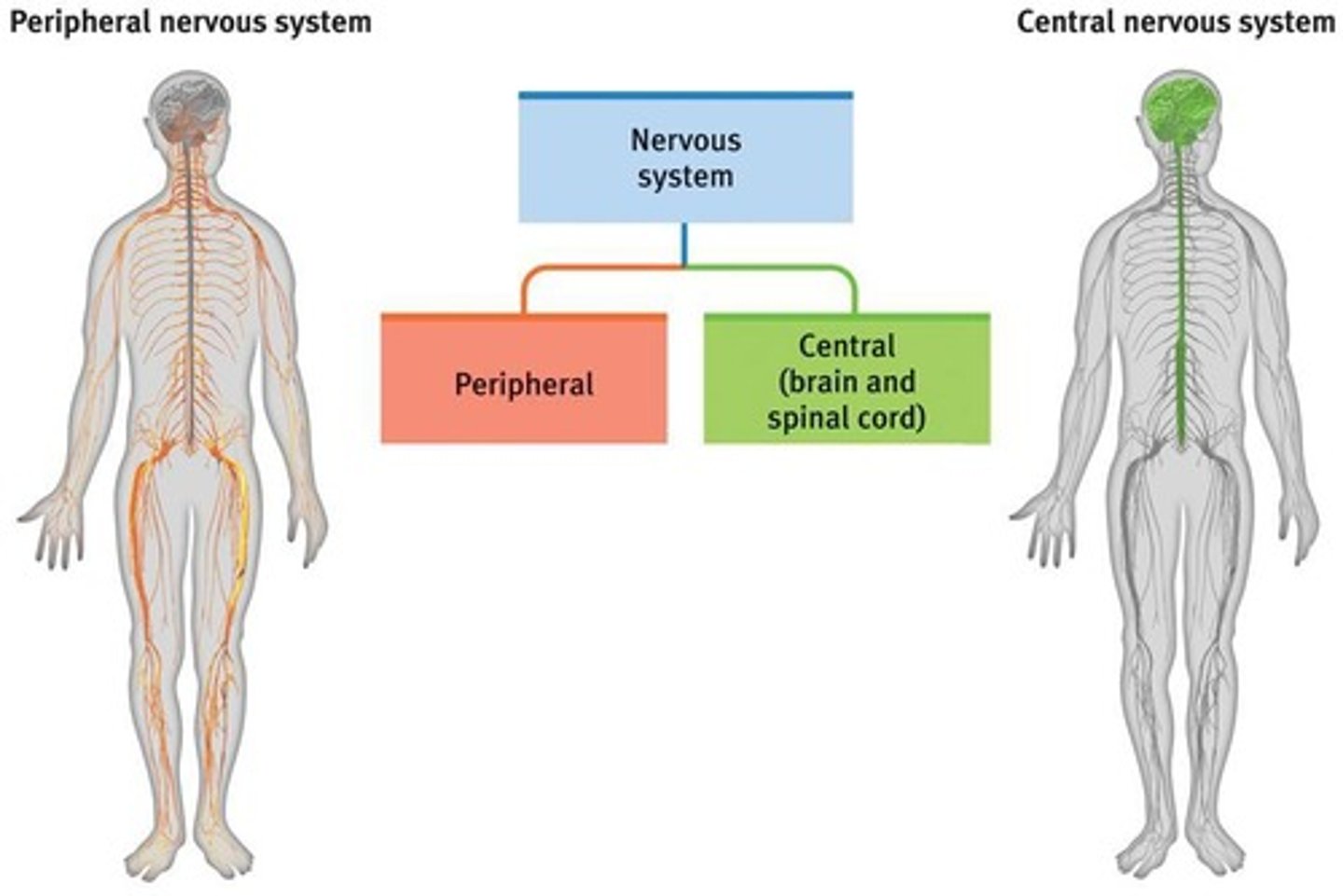
What are the two main divisions of the nervous system?
Peripheral Nervous System (PNS) and Central Nervous System (CNS)
What are nerves composed of?
Bundles of axons
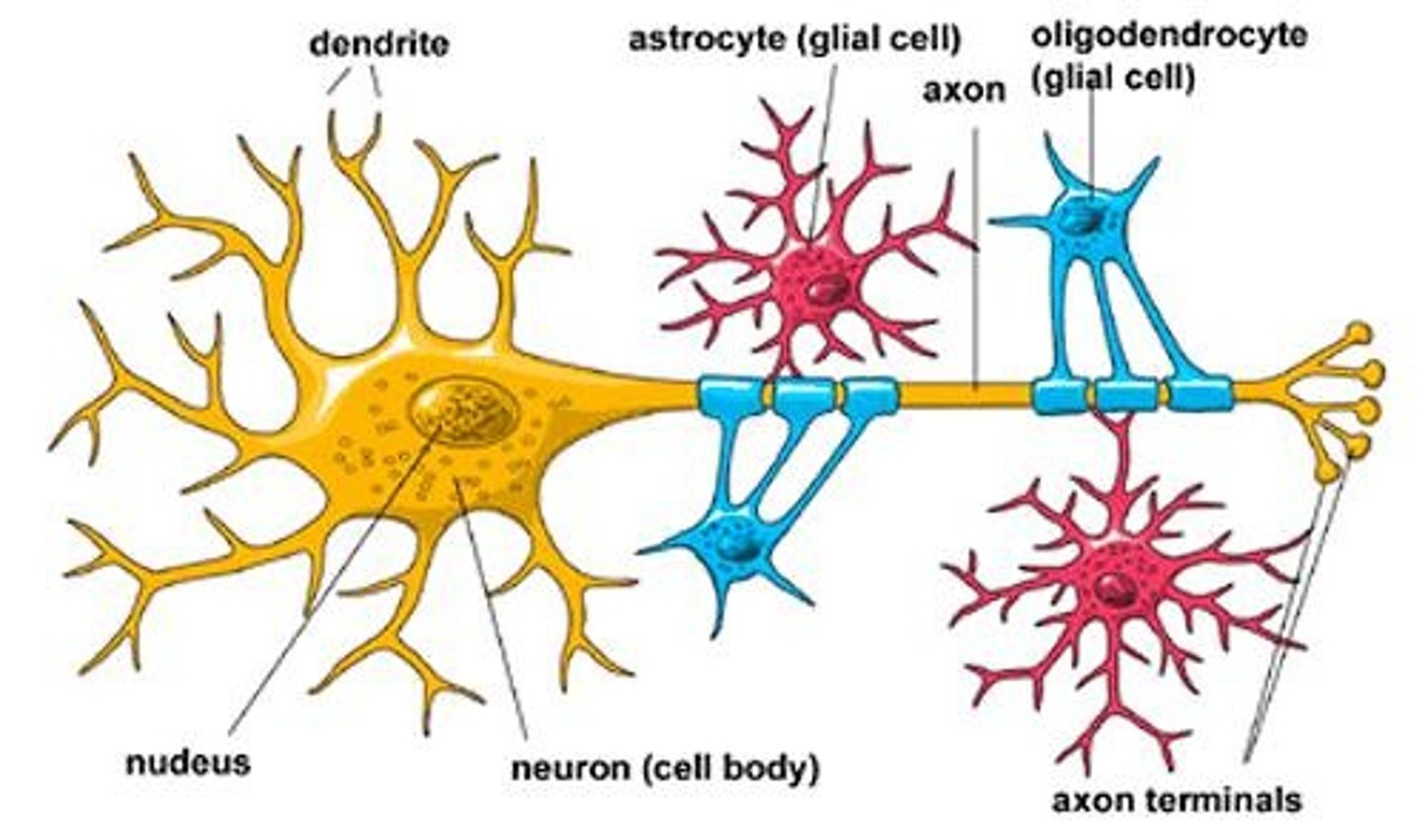
What is the primary function of glial cells?
Support and protect neurons; they make up about 90% of the brain.
What role do astrocytes play in the brain?
They act as 'babysitters' for neurons.
What is the function of oligodendrocytes?
They insulate axons in the Central Nervous System (CNS).
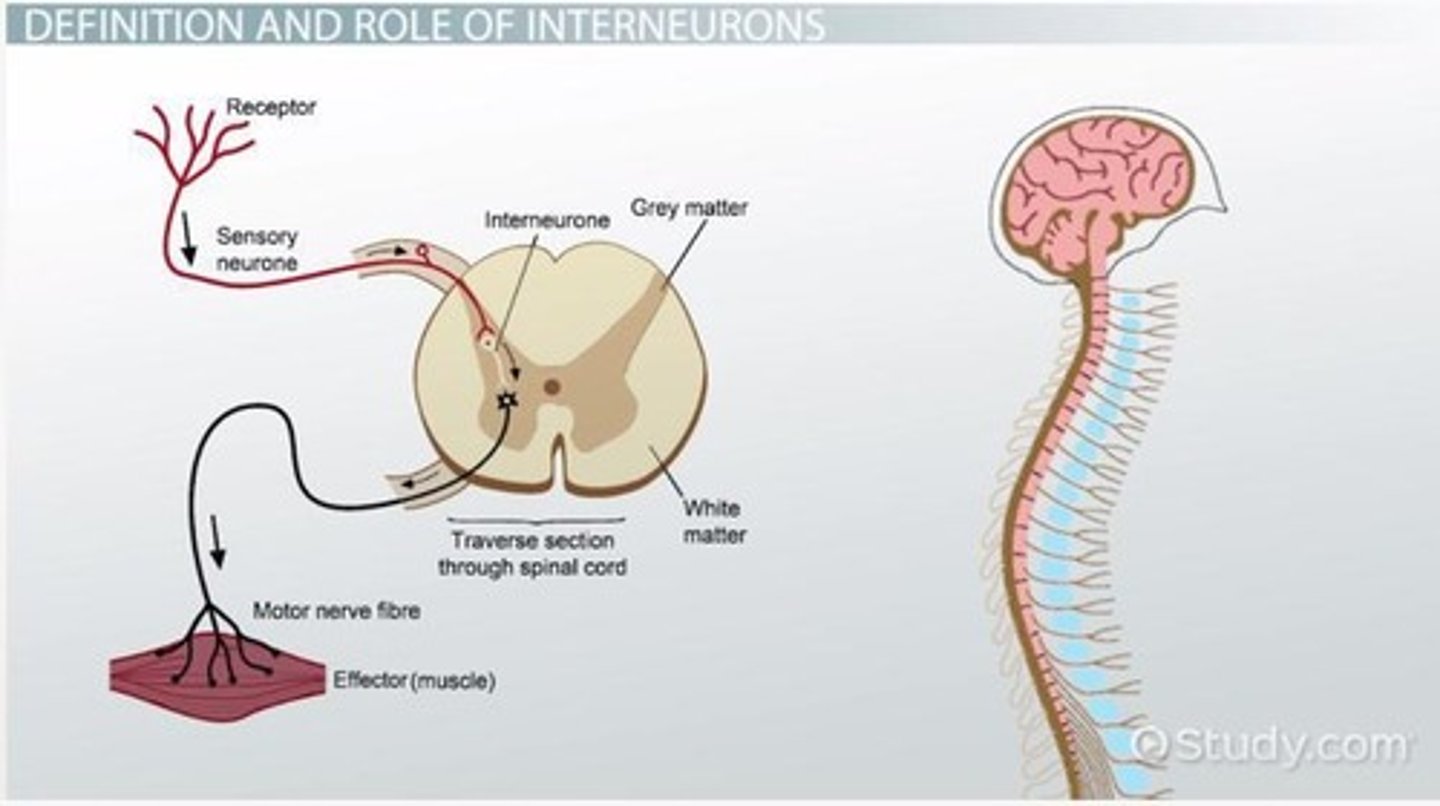
What type of neuron brings in incoming information?
Sensory neurons
What is the role of interneurons?
They connect and process information between sensory and motor neurons.
What happens at the synapse?
Neurotransmitters transmit information across the synaptic gap.
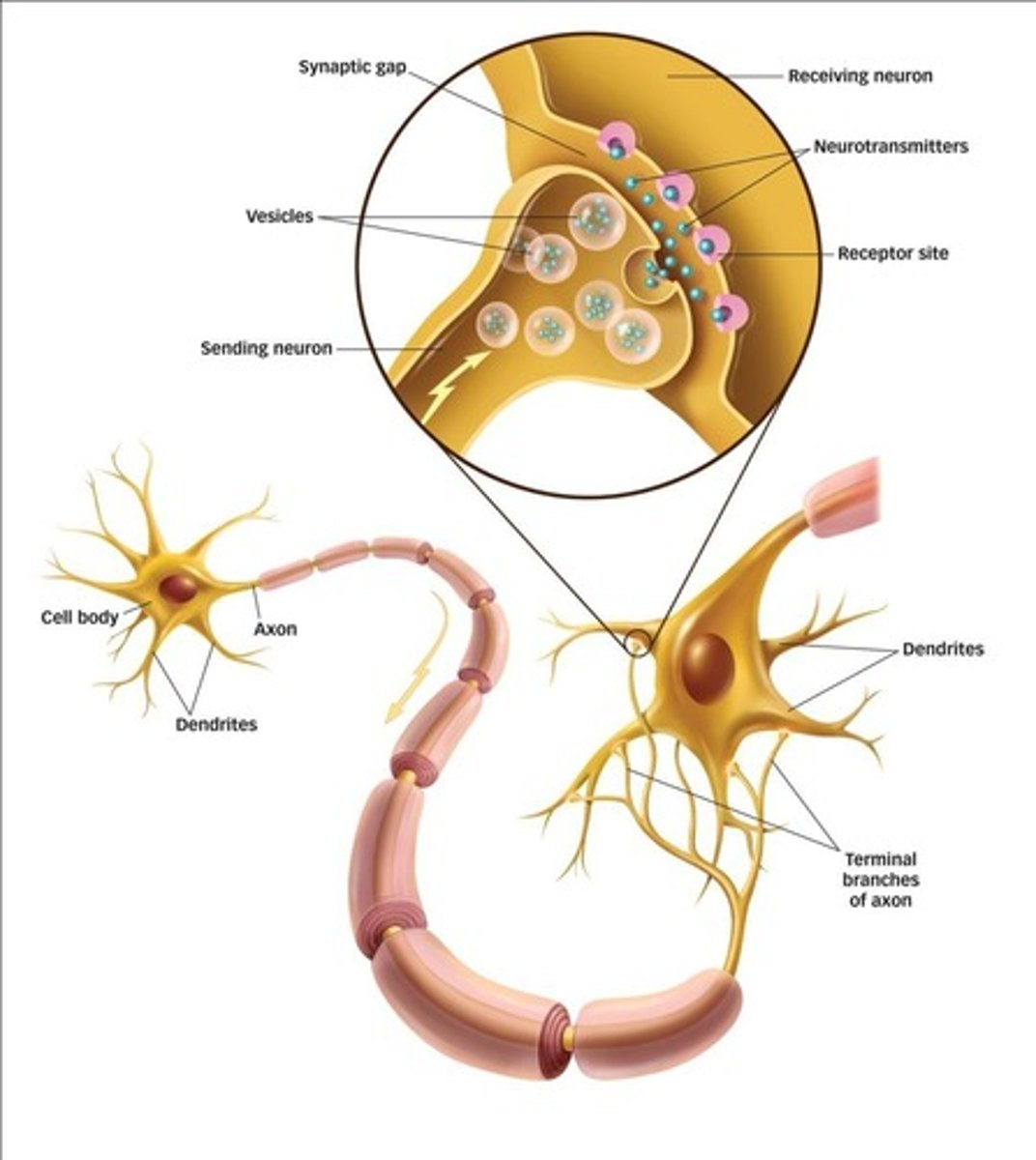
What is reuptake in the context of neurotransmitters?
The process by which neurotransmitters are absorbed back into the presynaptic neuron.
What neurotransmitter is associated with muscle action, learning, and memory?
Acetylcholine (ACh)
Which neurotransmitter is linked to movement, learning, attention, and emotion?
Dopamine
What is the function of serotonin?
It affects mood, hunger, sleep, and arousal.
What is the role of endorphins?
They boost mood and lessen pain.
What is the function of the dorsal nerve root?
It brings sensory information into the spinal cord.
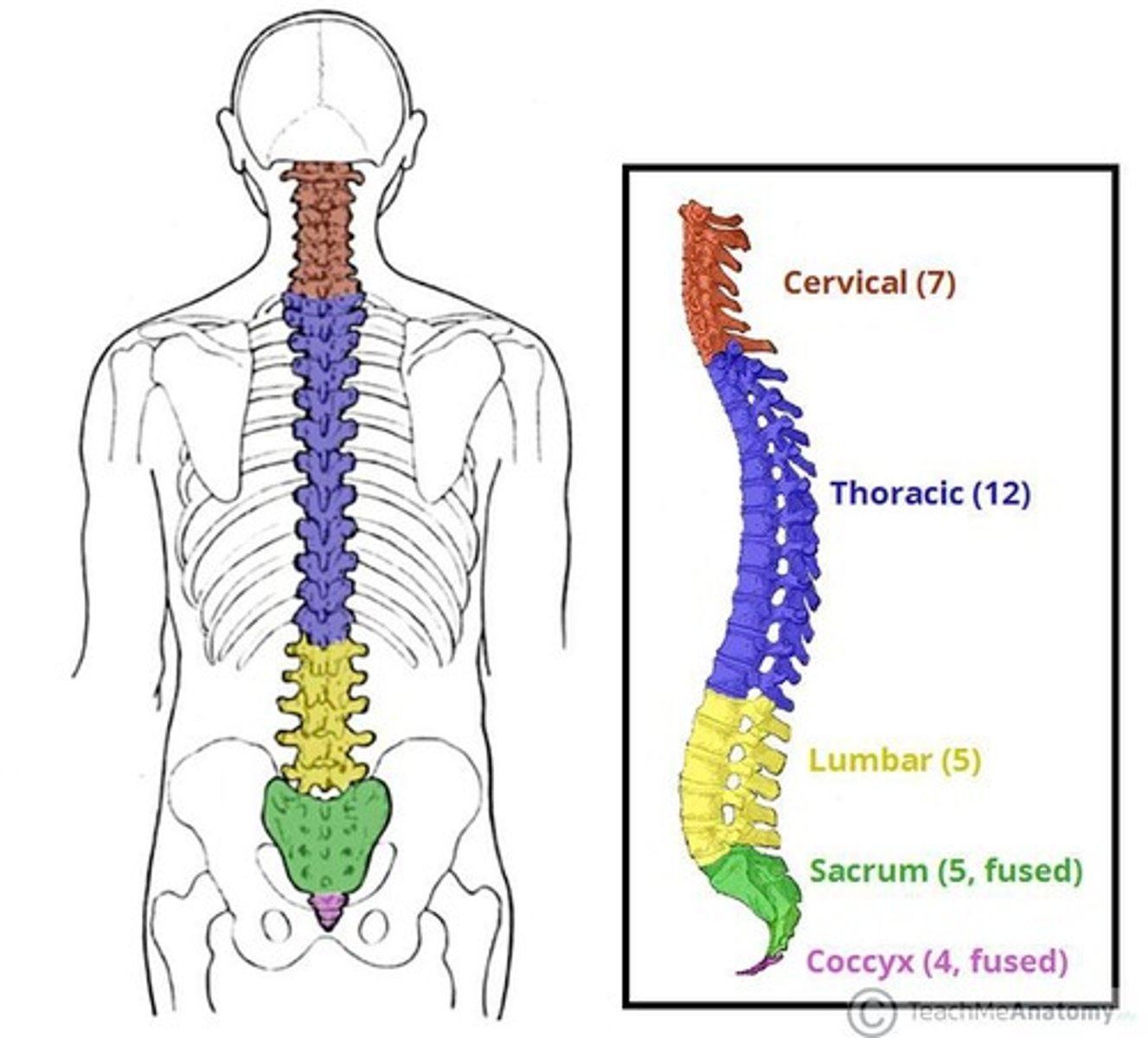
What does the ventral nerve root do?
It sends motor information out of the spinal cord.
What is the telencephalon responsible for?
It includes the cerebral cortex and basal ganglia, associated with higher brain functions.
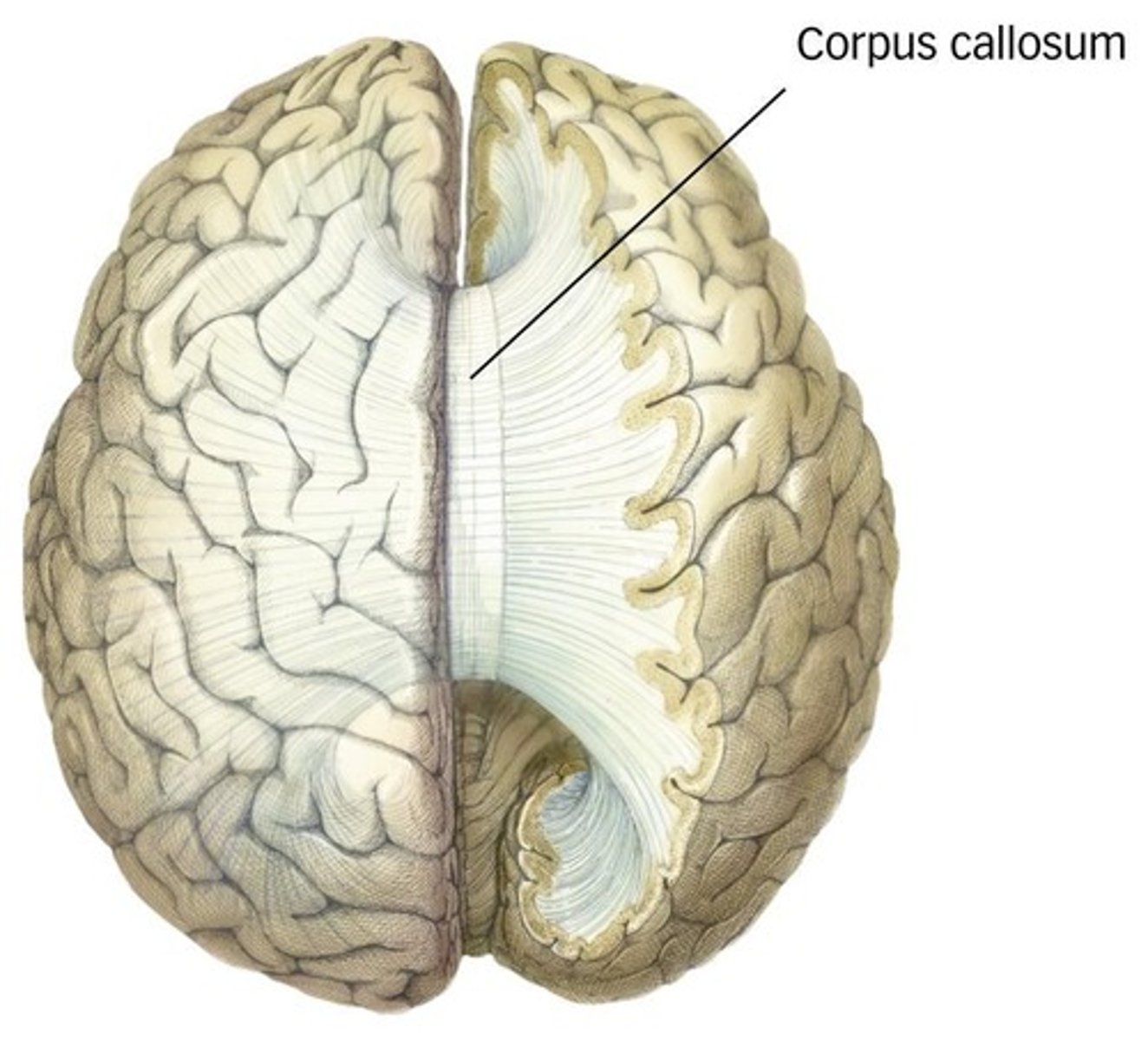
What is the significance of the corpus callosum?
It connects the two cerebral hemispheres.
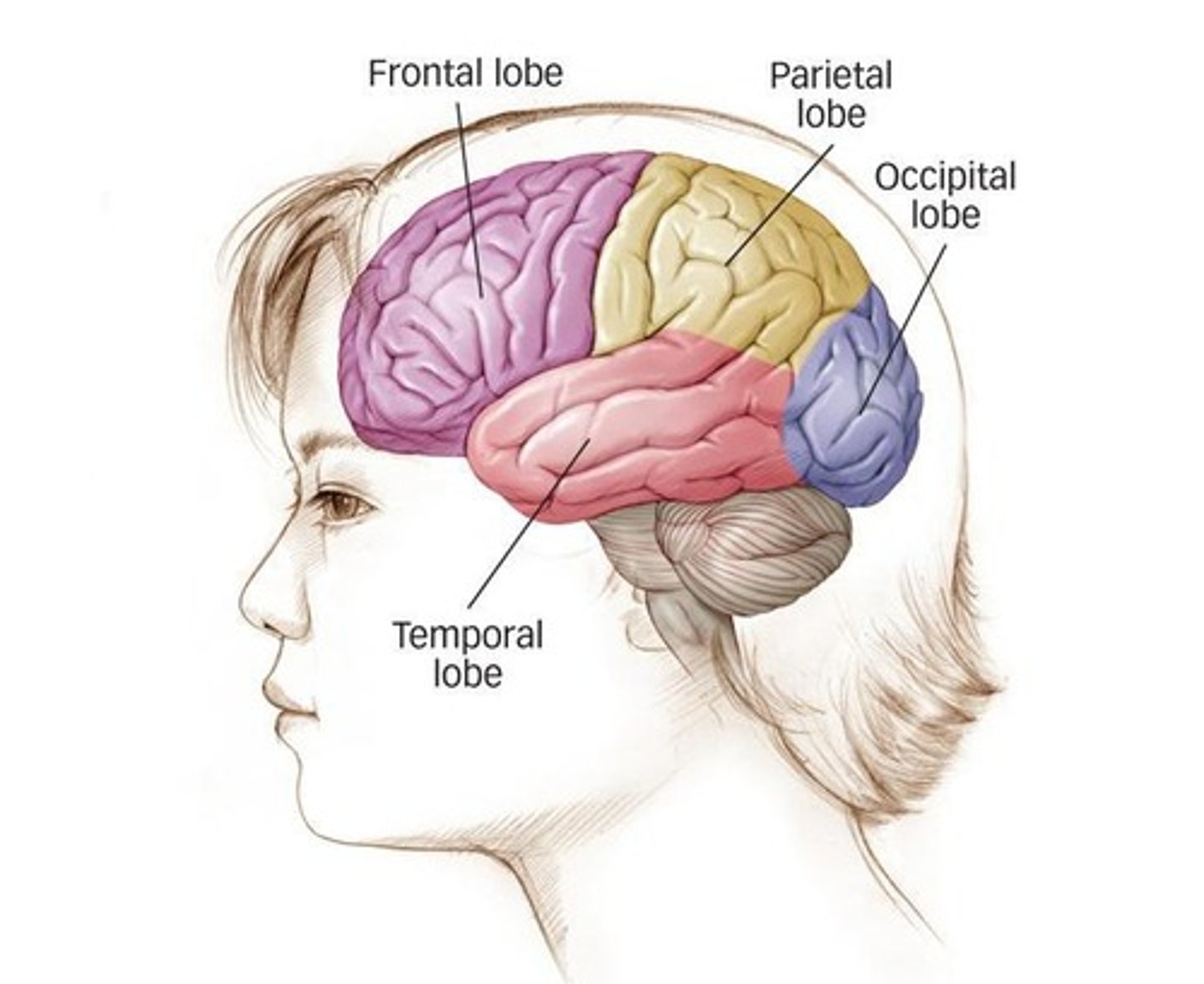
What are the four main cerebral lobes?
Occipital, Parietal, Temporal, and Frontal lobes.
What is the function of the limbic system?
It is involved in emotion and memory generation.
What is an action potential?
An electrical charge that travels down the axon to the synapse.
What does myelin do?
It insulates axons and helps in the efficient transmission of signals.
What is neuroplasticity?
The brain's ability to change and adapt in response to behavior, environment, and injury.
What was the Bucharest Early Intervention Project?
A study on the effects of child abandonment and institutionalization in Romania.
What is the role of the amygdala?
It is involved in emotion regulation.
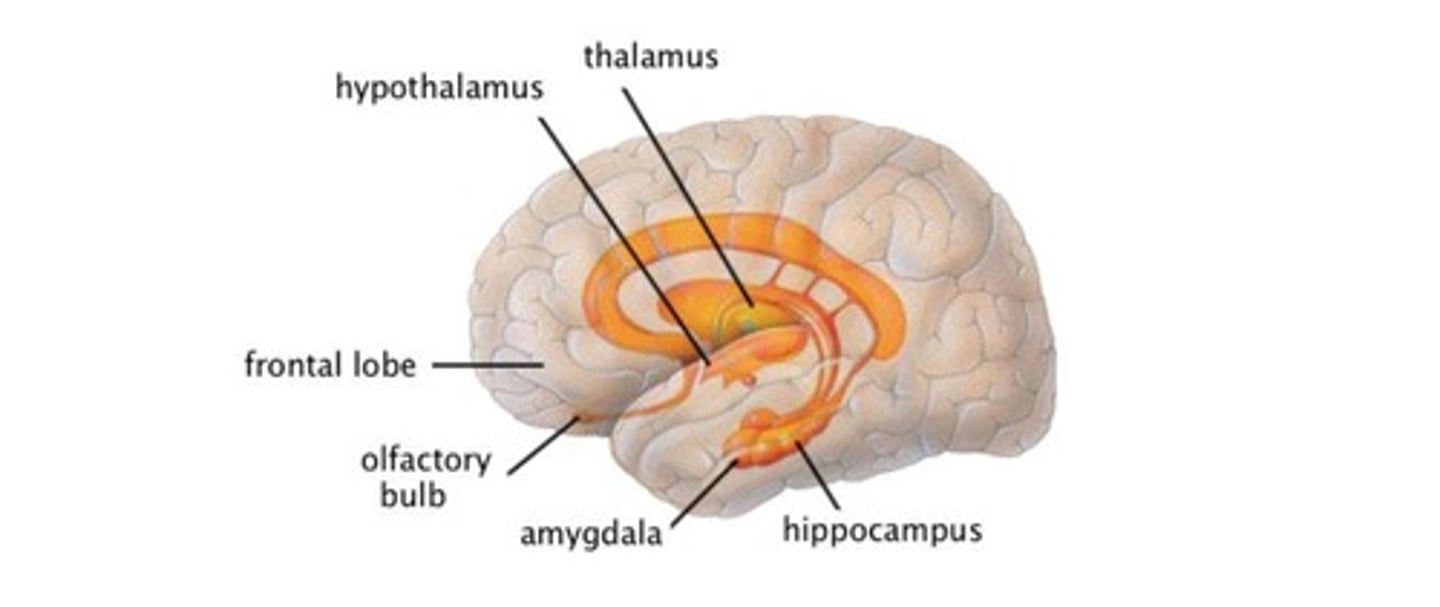
What is the function of the hippocampus?
It is critical for memory formation.
What is the main objective of the Bucharest Early Intervention Project?
To study the effects of foster care as an intervention for abandoned children placed in institutions.
What are some consequences of institutional rearing?
Social problems, trouble with attachment, externalizing problems, inattention/hyperactivity, IQ and cognitive deficits, 'autism-like' syndrome, and growth stunting.
What are the two types of photoreceptors in the human eye?
Rods and cones.
What is the primary function of rods in the visual system?
To detect low light levels and provide scotopic (night) vision.
What is the primary function of cones in the visual system?
To function in bright light conditions and provide photopic (day) vision, sensitive to color.
Where are cones primarily located in the eye?
In the fovea, the center of the retina.
What are the two main theories of color vision?
Trichromatic theory and opponent process theory.
What is the motion aftereffect (MAE)?
An illusion where after staring at a moving object, a stationary object appears to move in the opposite direction.
What did Hubel and Wiesel discover about the visual cortex?
The visual cortex is organized into columns sensitive to similar information such as orientation or contrast.
What is the difference between bottom-up and top-down processing in visual perception?
Bottom-up processing is direct from sensory input, while top-down processing involves cognitive factors and prior knowledge.
What is Biederman's recognition by components theory?
It posits that we recognize objects by breaking them down into geometric components called 'geons'.
What is binocular disparity?
The slight difference between the images projected on one eye versus the other, used for depth perception.
What are some examples of monocular cues for depth perception?
Occlusion, relative image size for familiar objects, and motion parallax.
What are the three parts of the ear and their functions?
Outer ear (collects sound waves), middle ear (amplifies sound waves), inner ear (transduces sound waves into coded neural messages).
What is conduction deafness?
Deafness caused by rigidity of the ossicles, preventing sound waves from being transferred to the inner ear.
What is sensorineural deafness?
Deafness caused by damage to hair cells in the cochlea, which cannot be helped by conventional hearing aids.
How do taste and smell interact?
Taste is largely dependent on the ability to smell; both senses work by chemicals binding to receptors.
What is the filter theory of attention?
The theory that all sensory information is coded, but only certain bits are encoded or attended to.
What is Treisman's attenuation model of attention?
A model allowing some information in the ignored ear to be attended to, analyzing messages for physical characteristics, language, and meaning.
What is the binding problem in perception?
The challenge of the visual system to sort out which features should be bound to which objects when multiple objects activate neurons simultaneously.
What is the significance of Hermann von Helmholtz's work on visual perception?
He suggested that our perception is a combination of properties within the scene and hints about the scene itself.
What is the role of selective attention?
To limit our awareness of a scene by focusing on specific information while ignoring others.
What is change blindness?
The reduced ability to notice changes in a visual scene when attention is focused elsewhere.
What is attentional blink?
A brief period after attending to a specific stimulus during which new information may be missed.
What is the inverse projection problem?
The challenge of determining the actual object from the retinal image, which can be altered at multiple stages.
What are the properties of sound waves related to pitch?
Length of the sound wave is perceived as high and low sounds (pitch).
What are the properties of sound waves related to volume?
Height or intensity of sound wave is perceived as loud and soft (volume).
What is the role of the cochlea in the inner ear?
It transduces sound waves into nerve impulses.
How many taste buds does the human mouth contain?
About 2,000 to 10,000 taste buds.
What is the myth about 'tongue maps'?
The myth that different areas of the tongue are responsible for different tastes; all tastes can be sensed by receptors all over the tongue.
What is the physiological process of sensation?
It involves a physical stimulus influencing activity within the body, leading to a subjective sensory experience.
Still learning (2)
You've started learning these terms. Keep it up!