PPFB 1 - INTRO TO ADMET
 Call Kai
 Learn
Learn Practice Test
 Spaced Repetition
 Match
Match Flashcards
 Knowt Play
1/22

Earn XP
Description and Tags
a drugs journey through the body,processes and factors that affect ADMET and influence of ADMET on drug discovery
Name | Mastery | Learn | Test | Matching | Spaced | Call with Kai | Chat |
|---|
No analytics yet
Send a link to your students to track their progress
23 Terms
What is ADMET ?
Absorption
Distribution
Metabolism
Elimination/Excretion
Toxicity
note : refers to the different phases of life of the drug which are critical for drug development
What is absorption ?
Passage of the drug from the site of administration into the plasma.
Important for all routes except the intravenous route.
What are some main administration routes?
oral, sublingual, rectal, transdermal ( application to epithelial surfaces, inhalation
Injection
(subcutaneous, intramuscular and intrathecal - spinal cord )
Key model for absorption ?
The drug that is best absorbed is in a solution
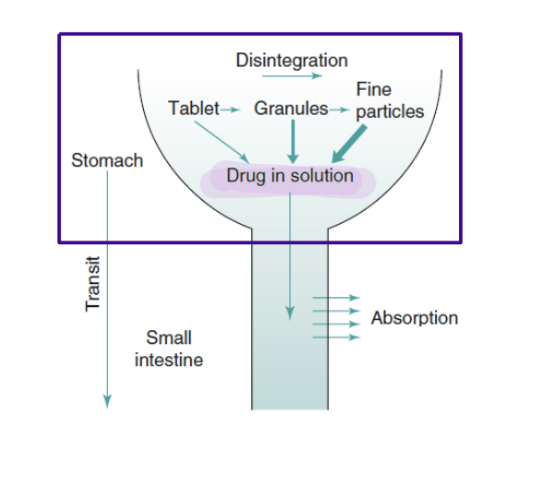
How do particle size and formulation effects absorption?
Smaller particle size increases surface area,increased absorption
suspension is not soluble; it needs to be turned into a solution
faster it is turned into a solution = faster absorption
How does food affect the absorption rate ?
It considers gut content and splanchnic blood flow
different drugs act differently, when taken with food longer in the stomach = not an immediate effect
Depends on gastrointestinal motility = How the GI empties
How do Physicochemical factors affect the rate of absorption?
when the concentration gradient drives diffusion
Drug absorption through epithelial barriers by
passive transfer (diffusion) occur a rate
determined by the ionisation and lipid solubility of
the drug molecules.
Ionisation
uncharged,better absorption across the membrane
What is the first pass effect in the oral routes ?
After absorption, it can go to 2 places
gut wall and hepatic metabolism( liver) , eliminated - FIRST PASS
intact drug in systemic circulation, pharmacological effect
What is distribution ?
Drug distribution is the process by which the drug reversibly leaves the blood streams to other parts of the body and into the tissues
What is volume distribution (Vd)?
The fluid volume that is required to contain the entire drug in the body at the same concentration measured in the plasma (Cp).
What is the single vs 2-compartment model?
2 models apply - see distribution
one compartment model - homogeneously distributed at the same time
2-compartment model - the drug enters the blood vessels, then starts to distribute to the rest of the body
Drugs can enter and leave the peripheral compartment via the central compartment:
Vd= Vi + Vt
What are Key factors of ditribution?
• Blood Flow
• Capillary permeability
• Binding of the drug to plasma and tissue proteins - highly bound to albumin, decreases the volume of distribution
• Lipophilicity and partitioning into body fat
What is a Metabolism ?
Metabolism facilitates the elimination process
It tries to modify, change drugs that aren’t easily excreted by adding groups etc
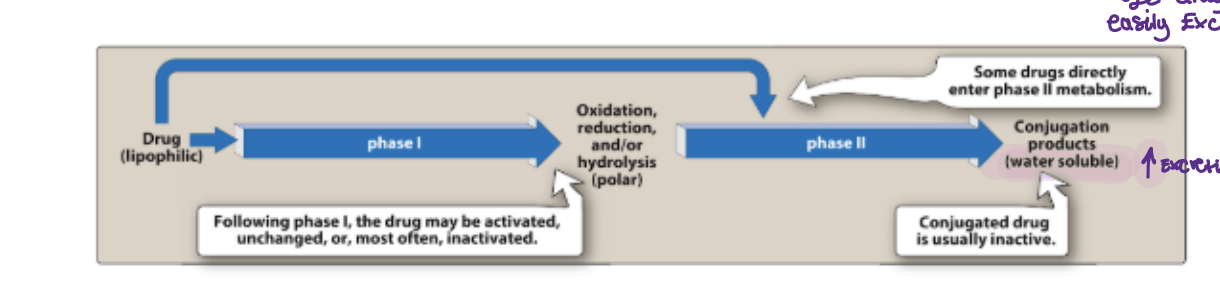
What are some examples of drugs that affect metabolism
These are metabolised by CYP450 isoenzymes.
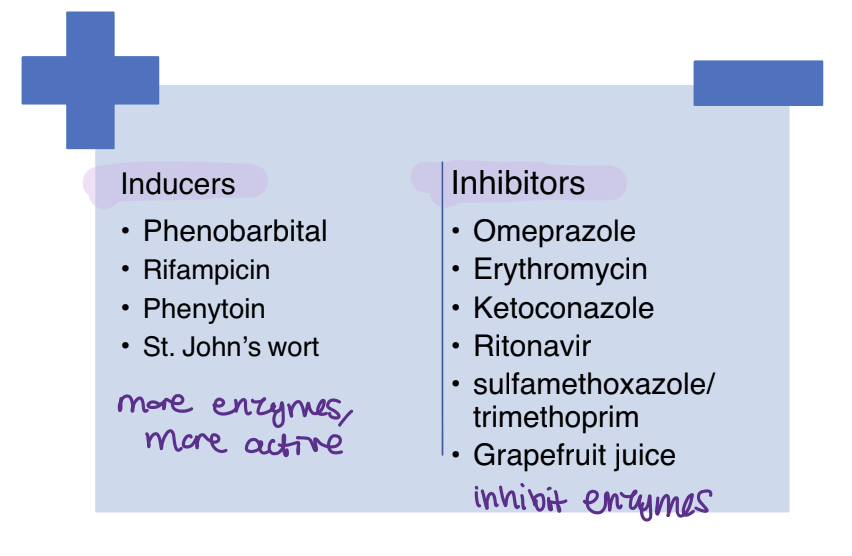
What are drug interactions due to hepatic metabolism?
Nearly always due to interaction at Phase I enzymes, rather than Phase II
Some metabolising enzymes are genetically altered in some individuals
What is the relationship,link between drug and metabolite?
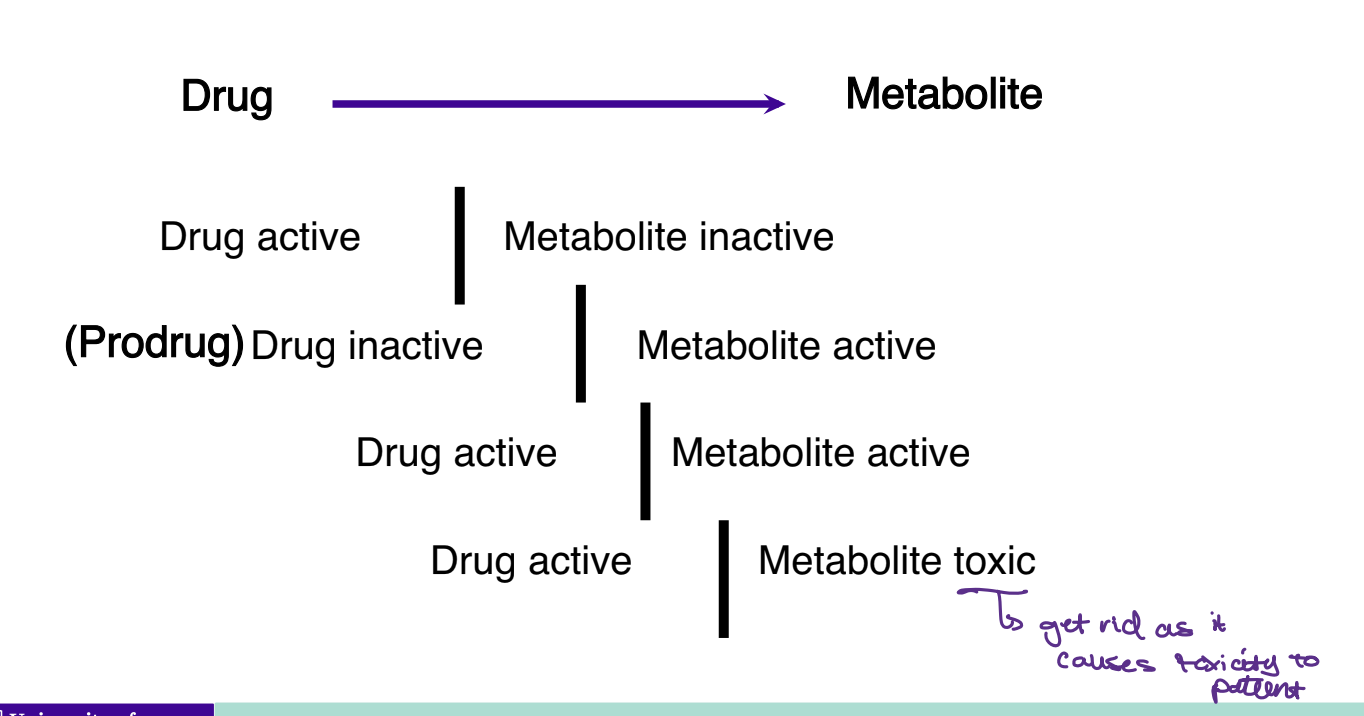
What is drug clearance beyond CYP450?
Phase I reaction not involving CYP450 systems:
Amine oxidation (catecholamine or histamine)
Alcohol dehydrogenation (ethanol)
Esterase (Aspirin metabolism in the liver)
Hydrolysis (procaine)
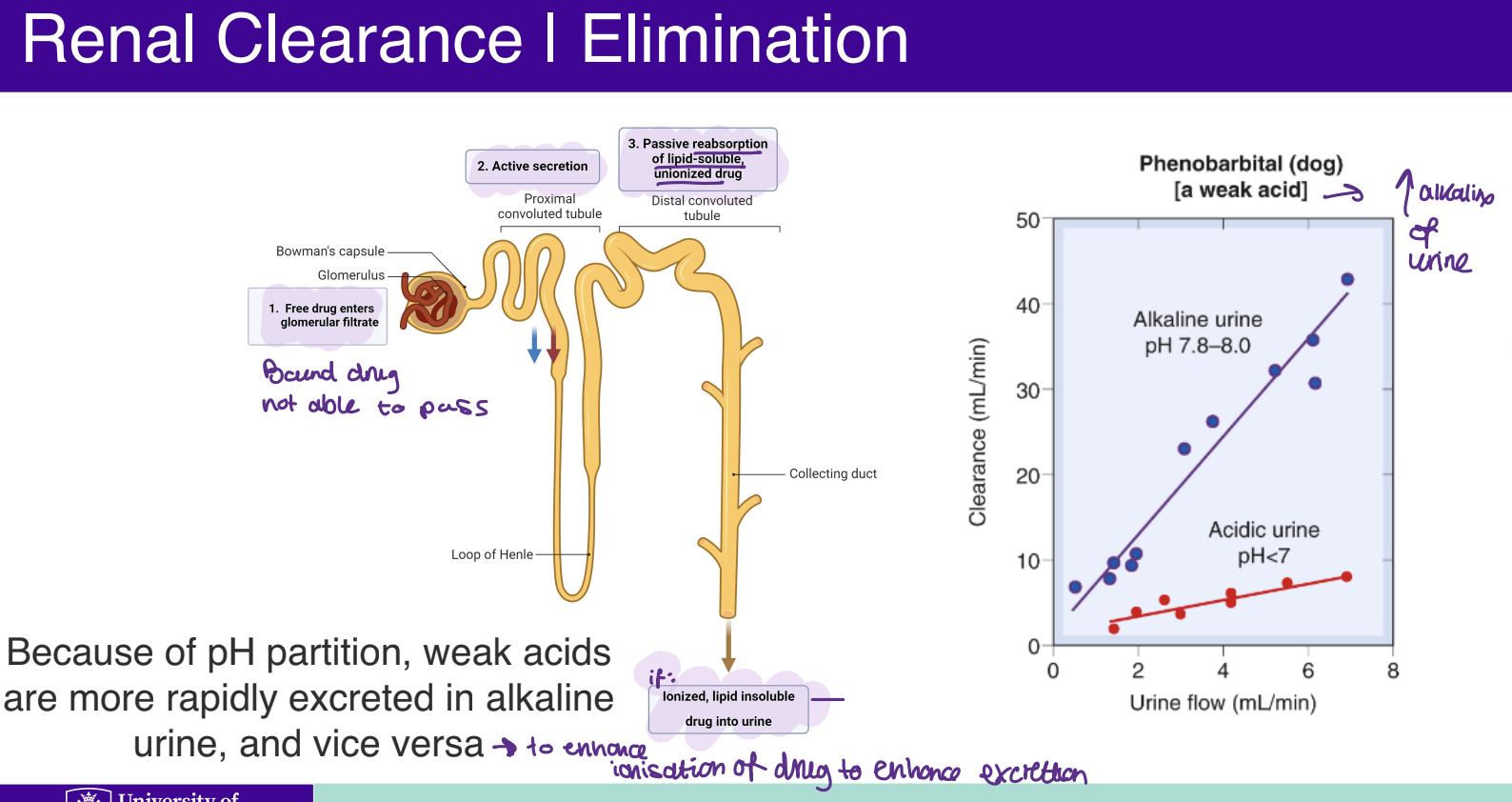
What are the 2 main routes of Elimination?
The two main routes of elimination are:
biliary ( in bile ) excretion and enterohepatic circulation
renal clearance
CL total = Clm ( hepatic ) + Clr ( renal )
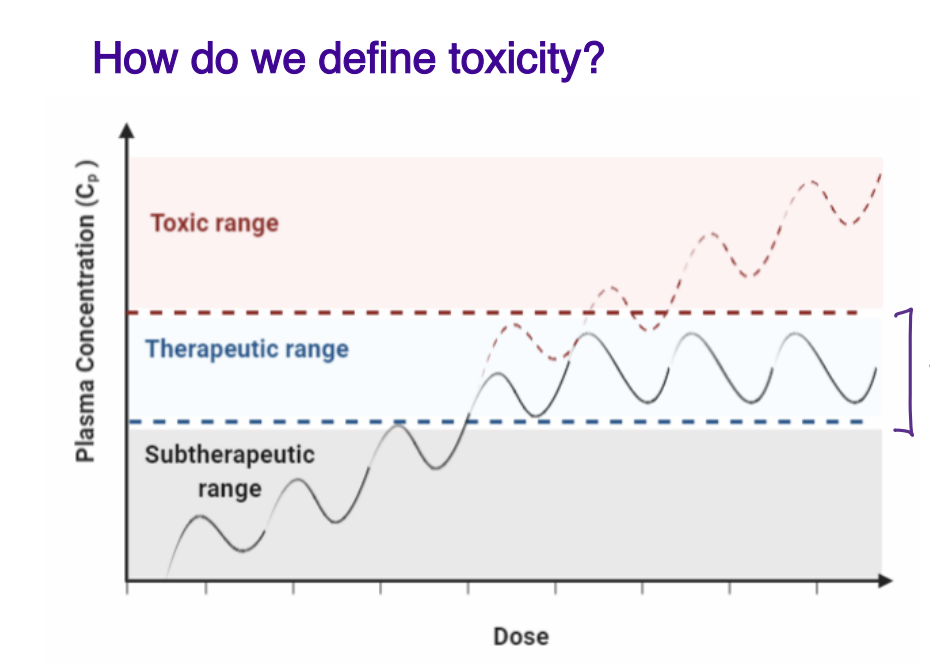
The rate at which a drug is eliminated from the body influences its duration of action and potential accumulation, affecting toxicity levels
Describe renal clearance
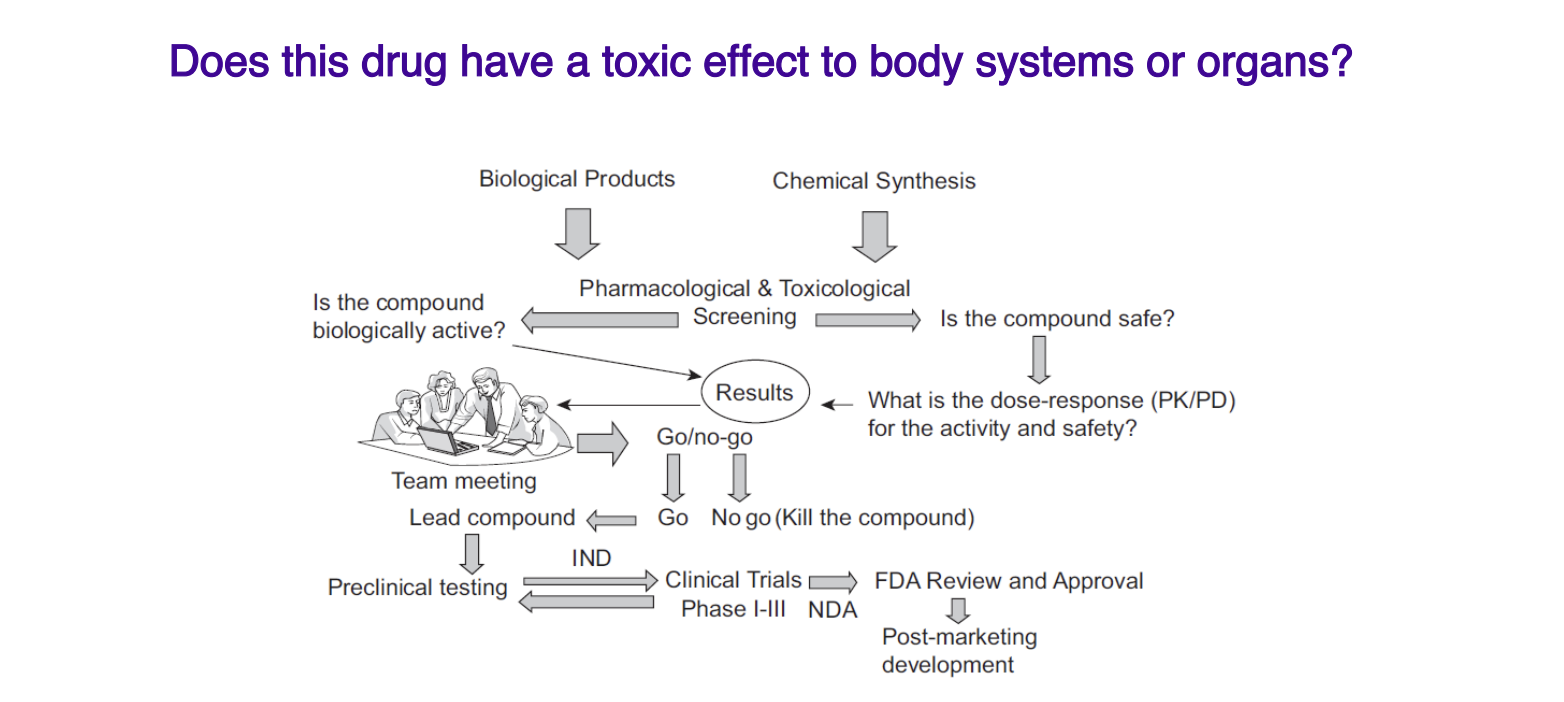
Process/flowchart - drug safety
What can cause toxicity ?
Hepatic dysfunction impairs drug metabolism, exacerbating the potential for toxic effects.
Kidney failure reduces the elimination of drugs that are primarily excreted through the kidneys, leading to drug accumulation and increased risk of toxicity.
What is the therapeutic index/range ?
balance between safe and toxic
What is considered when making a decision?
ADMET and Pharmacist decision point
• Route selection (absorption)
• Food advice (absorption)
• Dose adjustment
(metabolism/elimination)
• Monitoring need (toxicity)
ADMET Knowledge alone is not enough
• ADME tells us what can happen
• PK tells us how much and when