ansc 224: exam 3
 Call Kai
 Learn
Learn Practice Test
 Spaced Repetition
 Match
Match Flashcards
 Knowt Play
1/9

There's no tags or description
Looks like no tags are added yet.
Name | Mastery | Learn | Test | Matching | Spaced | Call with Kai |
|---|
No analytics yet
Send a link to your students to track their progress
10 Terms
describe the development of the posterior & anterior pituitary
posterior pituitary
infundibulum: floor of brain
anterior pituitary
rathke's pouch: derives from roof of mouth
describe why XY chromosomes could lead to ovary formation
deletion or mutation of SRY
proving that SRY is necessary for testis formation
describe why XX chromosomes could lead to testis formation
insertion of SRY via translocation of a piece of Y
proved SRY is sufficient
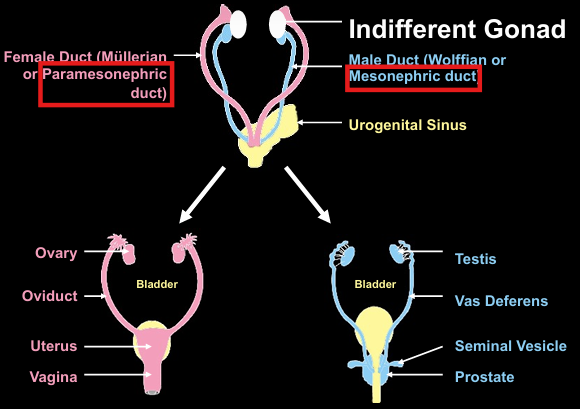
describe the function & purpose of Sox 9
transcription factor (TF) increased by SRY proteins
alters transcription of a variety of genes & turns off SRY gene
in lead, turns on FGF9 & AMH (anti-mullerian hormone)
state location of production of SRY
by testis at time of differentiation by pre-sertoli cells (non-germ cells)
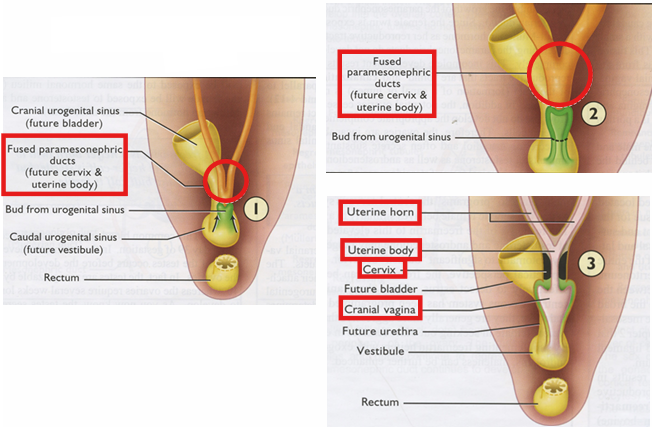
describe female tract develppment
fused paramesonephric ducts to make future cervix & uterine body
describe hormones from fetal testis
anti-mullerian hormone (AMH): regression of mullerian ducts
testosterone: development of mesonephric duct
5a-dihydrotestosterone (5a-DHT): via 5a-reductase, development of external genitalia
estradiol: via aromatase, sexual differentiation of the brain
define true hermaphrodistism
organs of both sexes
define pseudohermaphroditism
phenotype different than gonads
male
a. androgen insensitivity syndrome (AIS): mutation in androgen receptor; no response to testosterone or DHT produced
b. guevodoces: deletion or mutation in 5a-reductase
female
a. congenital adrenal hyperplasia: low glucocorticoids, excess androgen; increase of androgens in response to low glucocorticoids
describe sex differentiation of PGCs
occurs after morphological sex differentiation of gonads
regulated by gonadal environment (testis or ovary)
independent of sex chromosomes (XX, XY) of PGC