Genetics : Unit 2
 Call Kai
 Learn
Learn Practice Test
 Spaced Repetition
 Match
Match Flashcards
 Knowt Play
1/54

There's no tags or description
Looks like no tags are added yet.
Name | Mastery | Learn | Test | Matching | Spaced | Call with Kai |
|---|
No analytics yet
Send a link to your students to track their progress
55 Terms
DNA (Deoxyribonucleic Acid)
The molecule that carries the genetic instructions for the development, functioning, growth, and reproduction of all organisms.
Double Helix
The physical structure of DNA, which resembles a twisted ladder or spiral staircase.
Nucleotides
The basic building blocks of DNA. Each nucleotide consists of a sugar, a phosphate group, and a nitrogenous base.
A,T, G, C
The four nitrogenous bases in DNA that form the "rungs" of the ladder: Adenine, Thymine, Guanine, and Cytosine. A always pairs with T, and G always pairs with C.
Gene
A specific segment of DNA that contains the instructions for making a specific protein, which ultimately determines a trait.
Chromatin
The loose, uncoiled, "spaghetti-like" form of DNA combined with proteins. DNA exists in this state when the cell is performing everyday functions and not actively dividing.
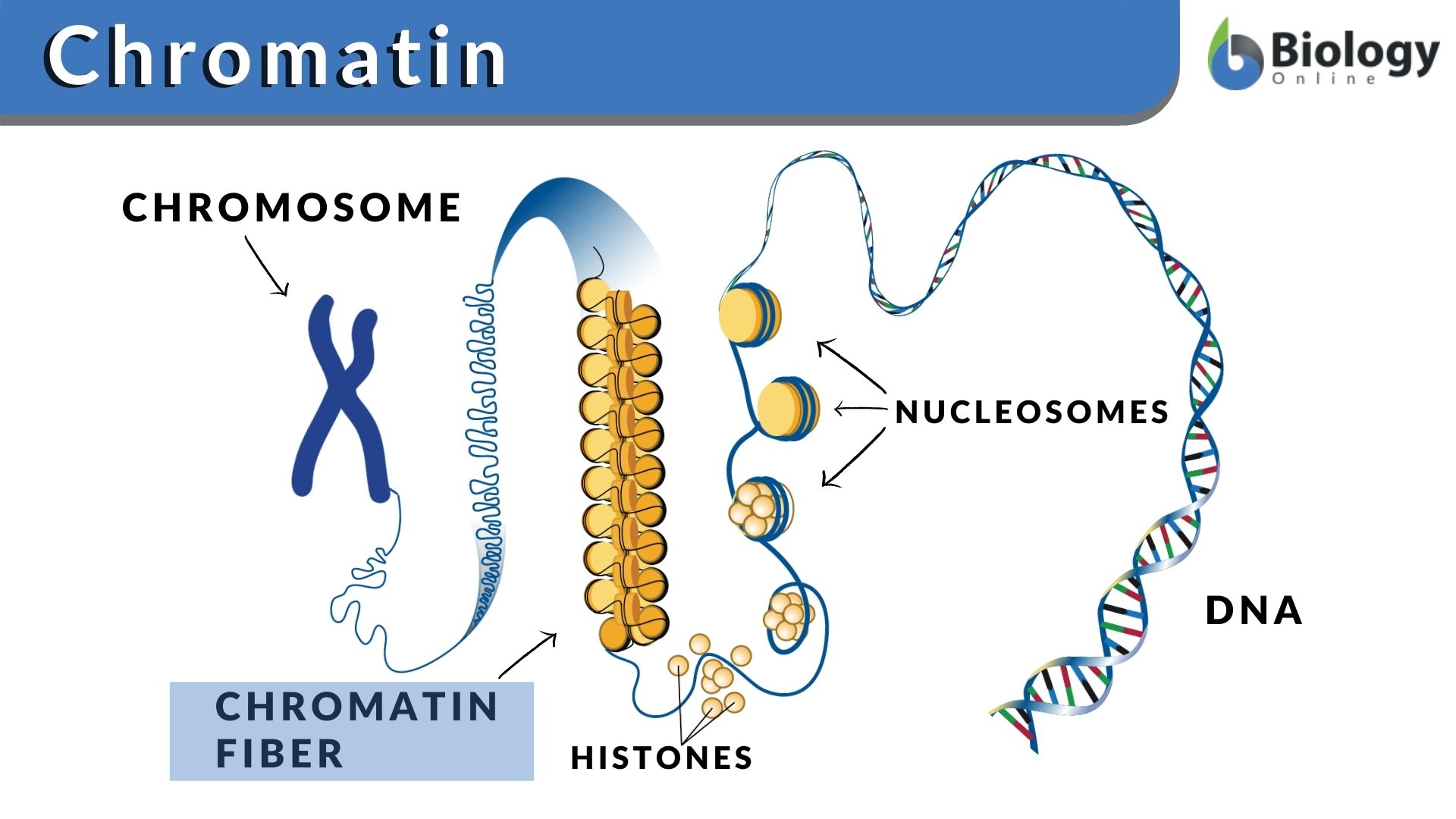
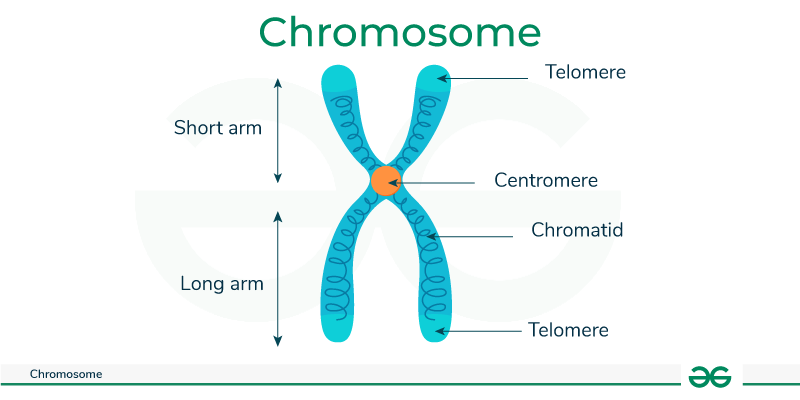
Chromosome
A tightly coiled, condensed structure of DNA and protein formed during cell division, making it easy to move genetic material without tangling.
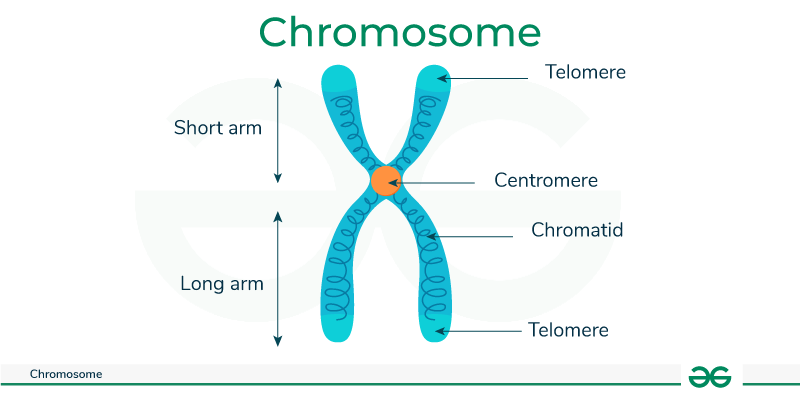
Chromatid
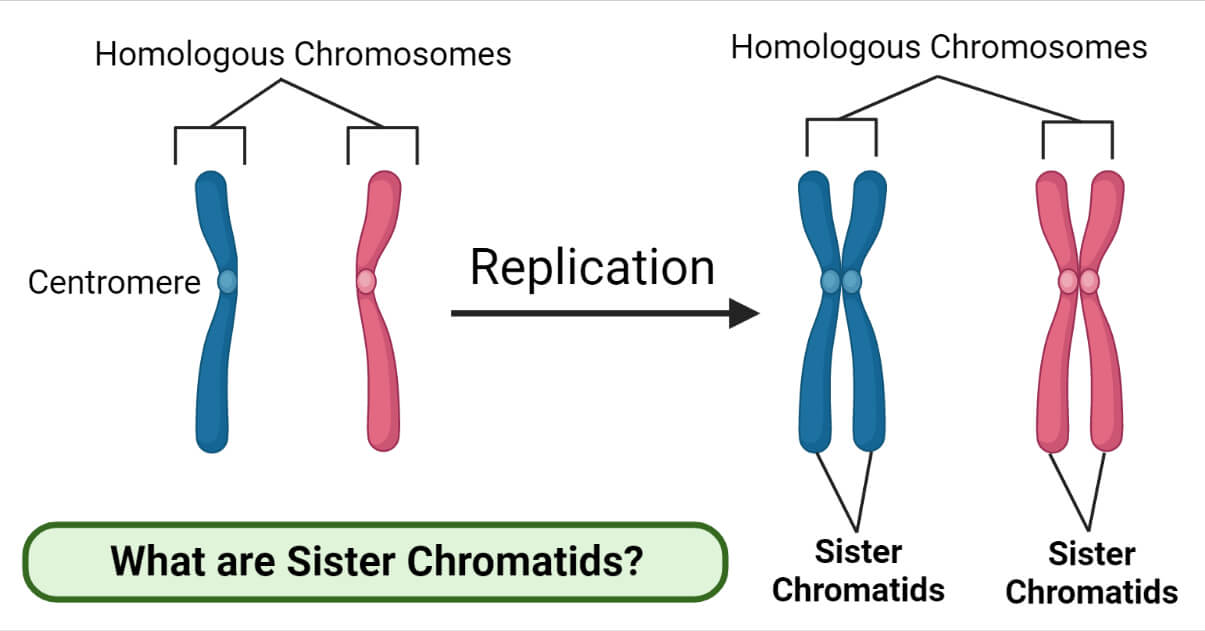
One half of a duplicated chromosome.

Sister Chromatid
Two identical copies of a single chromosome that are connected to each other. They are created during DNA replication.
Centromere
The specialized region of a chromosome where two sister chromatids are held tightly together, and where spindle fibers attach during division.
Cell Cycle
The life cycle of a cell, consisting of growth, DNA replication, and division (includes Interphase, Mitosis, and Cytokinesis).
Asexual reproduction
A type of reproduction involving only one parent, producing offspring that are genetically identical to the parent.
Mitosis
A type of cell division that results in two daughter cells each having the same number and kind of chromosomes as the parent nucleus (used for growth and tissue repair).
Meiosis
A specialized, two-step type of cell division that reduces the chromosome number by half, creating four genetically diverse gametes (sex cells).
Clone
An organism or cell that is genetically identical to the unit from which it was derived.
Gametes
Reproductive cells (sperm and egg cells) that contain half the genetic material of an organism.
Maternal/Paternal
Refers to the origin of genetic material; maternal comes from the mother, paternal comes from the father.
Homologous Pairs
A pair of matching chromosomes (one maternal, one paternal) that are the same size and shape, and carry genes for the same traits at the same locations.
Synapsis
The physical pairing up of homologous chromosomes side-by-side during Prophase I of meiosis.
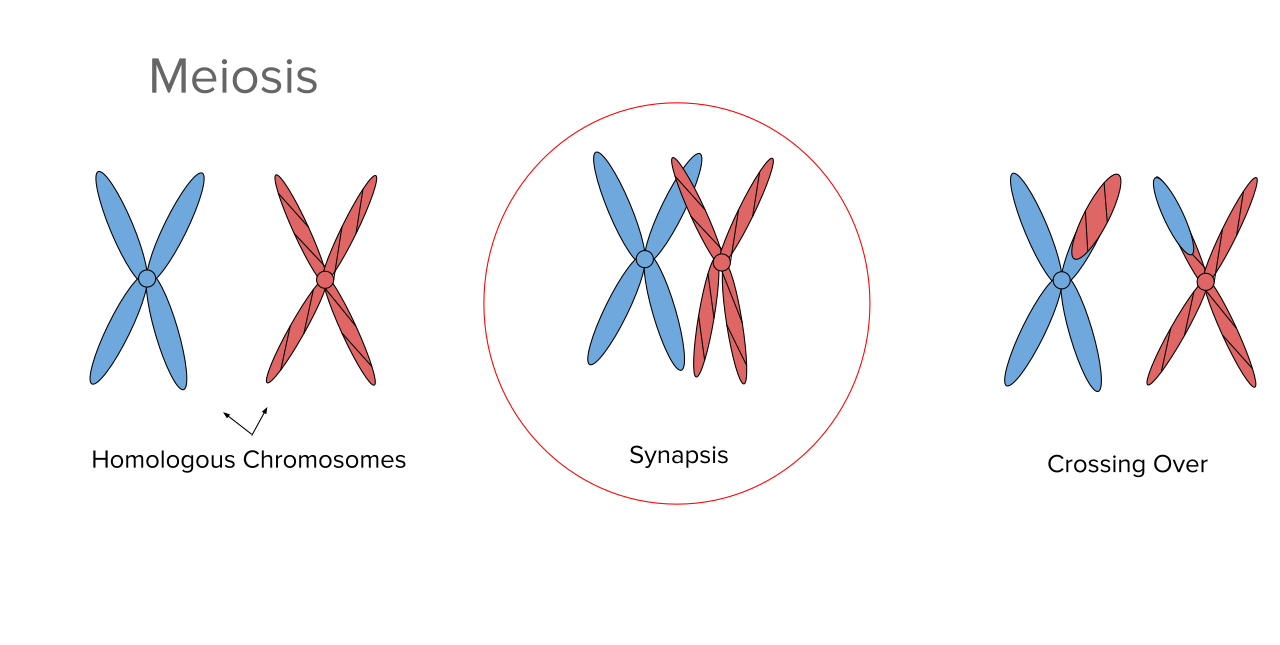
Tetrad
A structure containing four chromatids that forms when homologous chromosomes pair up during synapsis.
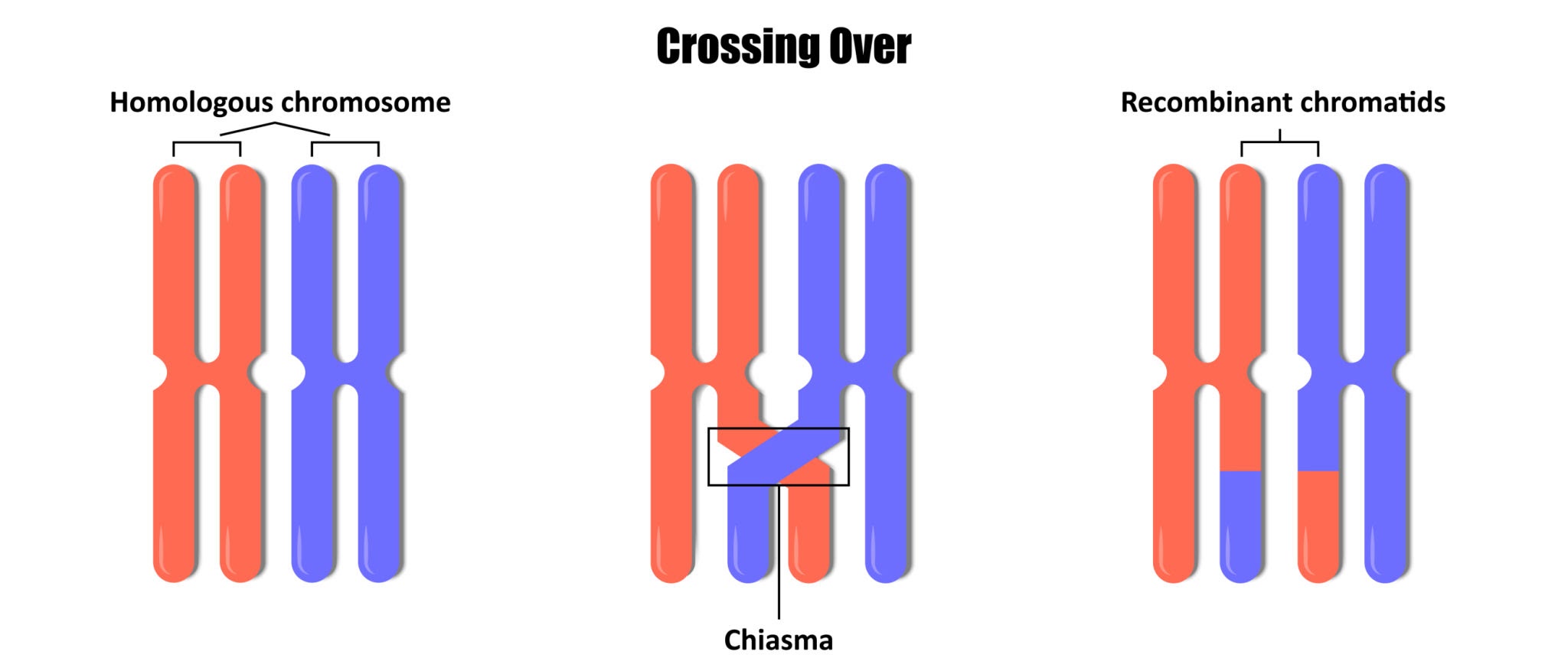
Crossing Over
The exchange of genetic material between non-sister chromatids during synapsis. This breaks up linked genes and is a major source of variation/genetic diversity.
Haploid (n)
A cell containing only one complete set of chromosomes (n). Gametes are haploid. In humans, n = 23.
Diploid (2n)
A cell containing two complete sets of chromosomes (2n), one set inherited from each parent. Somatic (body) cells are diploid. In humans, 2n = 46.
Spermatogenesis
The process of meiotic division in males that produces mature sperm cells.
Spermatocyte
A cell that undergoes meiosis to form spermatids (which develop into sperm).
Oogenesis
The process of meiotic division in females that produces mature egg cells.
Oocyte
An immature egg cell that undergoes meiosis to become a mature ovum.
Polar Bodies
Small, non-functional cells produced during oogenesis. Because the cytoplasm divides unequally to ensure the main egg gets enough nutrients, these extra cells disintegrate.
Trait
A specific characteristic of an individual, such as eye color or height.
Alleles
Alternative forms or versions of a single gene. For example, a gene for pea plant height has a tall allele and a short allele.
Genotype
The genetic makeup of an organism, represented by letters (e.g., BB, Bb, bb).
Phenotype
The physical, observable appearance or physiological expression of a trait (e.g., brown eyes, blue eyes).
Homozygous
Having two identical alleles for a particular gene (e.g., TT or tt).
Heterozygous
Having two different alleles for a particular gene (e.g., Tt).
Dominant
An allele that hides or masks the presence of a recessive allele. It is expressed in the phenotype even if only one copy is present (represented by a capital letter like T).
Recessive
An allele that is masked by a dominant allele. It is only expressed in the phenotype when an organism inherits two copies of it (represented by a lowercase letter like t).
Carrier
An individual who is heterozygous for a recessive trait or disorder (Bb). They do not show symptoms of the trait themselves but can pass the recessive allele to their offspring.
Monohybrid
A genetic cross between two individuals that tracks the inheritance of one single trait (e.g., crossing Tt x Tt).
Dihybrid
A genetic cross between two individuals that tracks the inheritance of two different traits simultaneously (e.g., tracking both seed color and seed shape: RrYy x RrYy).
Punnett Squares
A visual grid tool used to predict the probability of genotypes and phenotypes in the offspring of a specific genetic cross.
Pedigree
A visual chart or family tree that tracks the inheritance of a specific trait through multiple generations of a family.
Autosomal
Refers to genes located on any of the non-sex chromosomes (autosomes). In humans, these are chromosomes 1 through 22.
Sex-linked
Refers to genes located specifically on the sex chromosomes (usually the X chromosome). Traits like colorblindness or hemophilia are sex-linked and appear more frequently in males.
Incomplete Dominance
A pattern of inheritance where neither allele is completely dominant over the other, resulting in a blended phenotype in heterozygous individuals. Example: Red flower (RR) x White flower (WW) = Pink flower (RW).
Co-dominance
A pattern of inheritance where both alleles are fully and equally expressed in the phenotype of a heterozygous individual. Example: A black cow and a white cow producing a speckled black-and-white calf.
Multiple alleles
A situation where a gene has more than two possible alleles existing within a population (though an individual still only inherits two).
Blood Groups
A classic example of both multiple alleles and co-dominance in humans. The ABO blood type gene has three common alleles: iA, iB, and i. iA and iB are co-dominant to each other, and both are dominant over i.
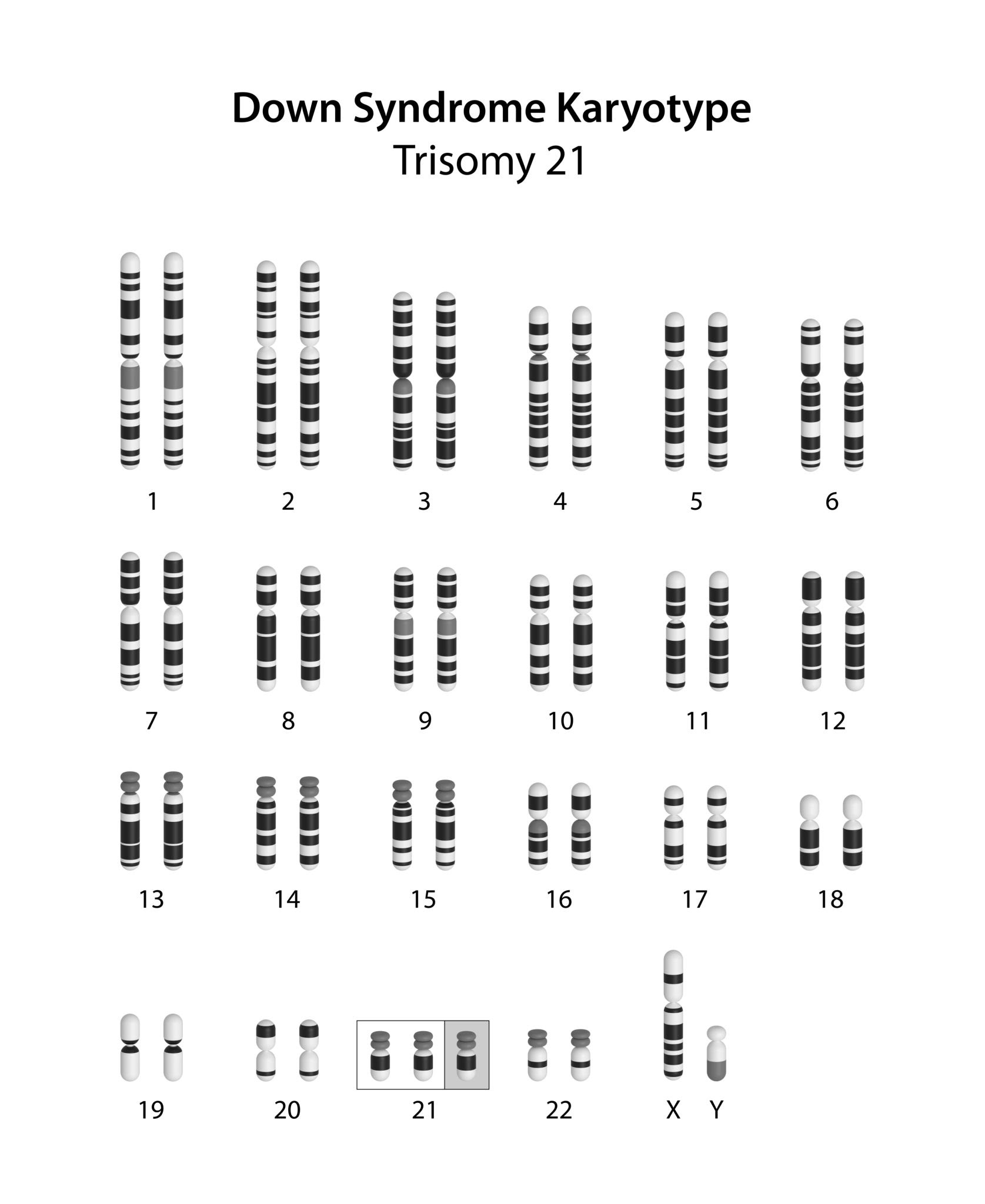
Karyotype
A laboratory photograph or visual chart of an individual’s complete set of chromosomes, arranged in matching pairs from largest to smallest. It is used to check for structural abnormalities or changes in chromosome number.
Nondisjunction
An error during meiosis or mitosis in which homologous chromosomes or sister chromatids fail to separate properly. This leads to gametes with an abnormal number of chromosomes.
Trisomy
A condition where an individual has three copies of a specific chromosome instead of the normal pair (2n + 1). Example: Trisomy 21 causes Down Syndrome
Monosomy
A condition where an individual has only one copy of a specific chromosome instead of the normal pair (2n - 1). Example: Turner Syndrome (Monosomy X)
DNA Fingerprint
A laboratory technique used to link biological evidence to a specific individual by analyzing unique patterns in their DNA sequence (often used in forensics or paternity testing).
Transformation
A process in molecular biology where a cell takes up foreign DNA from its surrounding environment and integrates it into its own genome.
Vector
A vehicle used to transfer foreign genetic material into another cell. Plasmids (circular bacterial DNA) and modified viruses are commonly used as vectors.
Gene Therapy
An experimental technique that uses genes to treat or prevent disease by inserting a functional gene into a patient’s cells to replace a missing or malfunctioning one.