Biochem: FINAL (Ch. 31) - Heme Metabolism
 Call Kai
 Learn
Learn Practice Test
 Spaced Repetition
 Match
Match Flashcards
 Knowt Play
1/35

Earn XP
Description and Tags
All from slide show
Name | Mastery | Learn | Test | Matching | Spaced | Call with Kai |
|---|
No analytics yet
Send a link to your students to track their progress
36 Terms
What are (2) things required for heme synthesis?
glycine and iron
What does heme catabolism produce (2)
bile pigments and iron
What are porphyrias?
group of genetic abnormalities in the synthesis of heme
What is Jaundice?
An elevation of bilirubin in blood caused by over production or reduced excretion and is common in hemolytic or sickle cell anemia and liver failure
What are porphyrins?
Large cyclic molecule formed by the bonding of four smaller pyrrole rings together that form complexes with metal ions at the center and have various side chains that attach to each pyrole ring
What are the 4 possible side chains of Porphyrins?
acetate, propionate, methyl, or vinyl
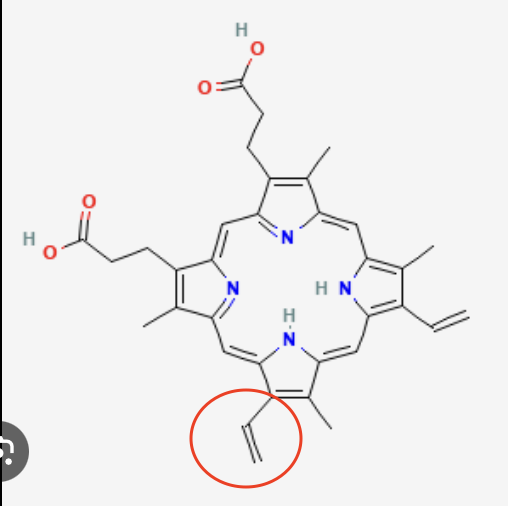
What is this side chain called in Porphyrins?
Vinyl
What are Type 1 porphyrins?
ones that have their side chains attached symmetrically
What are Type 3 porphyrins?
ones that have their side chains attached asymmetrically
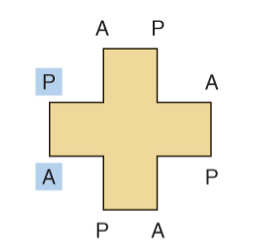
What type of porphyrin is this?
Type 1
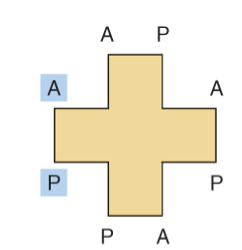
What type of porphyrin is this?
Type 3
Where are Coprophyrins found mainly?
feces
What does ALA synthase do? Where does this happen?
convert Succinyl CoA and glycine into ALA and CO2 in the mitochondria
What does ferrochelatase do?
Convert protoporphyrine III and iron into Heme
Where does heme synthesis take place within the cell?
mitochondria
What is the difference between porphyrins and porphyrinogens?
porphyrins are colored and fluoresce
What bonding system makes up porphyrins?
A conjugated double bond system
What are synthetic porphyrins used for?
Cancer phototherapy as cancer cells take up more porphyrins than normal cells so they charge the porphyrins with light and cause them to be toxic to cancer
What can an accumulation of ALA or PBG cause?
abdominal pain and neuropsychiatric symptoms
What can an accumulation of porphyrinogens cause?
photosensitivity and severe disfigurement
What 3 organs remove old RBCs?
liver, spleen, and bone marrow
Where is global broken down?
liver and spleen
What does heme get broken down into? What happens to these (2) products?
iron and biliverdin; iron reenters the iron pool to be transported as transferrin or stored as ferritin
How does Heme become Ferric heme?
It does it spontaneously when it enters the smooth ER
What is Fe +3?
Ferric heme
What does the enzyme Heme Oxygenase System do?
Converts Ferric Heme into Biliverdin using oxygen and creating CO2 which breaks the bond open and makes it a linear molecule
_____ is a linear tetrapyrrole
Biliverdin
What is Bilirubin made from? What color is it?
Biliverdin and NADPH; orange
What secretes bilirubin? How does it travel in the blood? Who removes it?
The spleen and bone marrow secrete it, it is bound to albumin in the blood, and is removed by the liver
How is bilirubin excreted?
The liver adds 2 molecules of glucuronic acid to bilirubin which allows it to be secreted in bile where colonic bacteria breaks it down into urobilinogens and then further into urobilin and sterocobilin
How is urobilin excreted from the colon?
It is reabsorbed by colon cells and into the blood and removed by the kidneys and secreted in urine
What are considered (4) bile pigments?
biliverdin, bilirubin, stercobilin, and urobilin
What causes Prehepatic Jaundice?
Overproduction of bilirubin from hemolytic and sickle cell anemias
What causes Hepatic Jaundice?
Livers failure due to toxins
What causes Posthepatic Jaundice?
Biliary obstruction and pancreatic cancer
What causes Neonatal “Physiological” Jaundice? What can be a complication?
Normal hemolysis during birth but may cause intellectual disabilities