lecture 3- the anesthesia machine
 Call Kai
 Learn
Learn Practice Test
 Spaced Repetition
 Match
Match Flashcards
 Knowt Play
1/57

Earn XP
Description and Tags
wilson
Name | Mastery | Learn | Test | Matching | Spaced | Call with Kai |
|---|
No analytics yet
Send a link to your students to track their progress
58 Terms
what are the parts of he high pressure system
A. oxygen cylinder
B. cylinder valve
C. cylinder pressure gauge
D. Regulator (or reduction
valve)
what are the intermediate pressure system
oxygen flush/bypass valve
what are the parts of the low pressure system
E. flow meter
F. vaporizer
H. common gas outlet
I. common gas inlet
J. one-way valves
•inspiratory
•expiratory
K. pop-off valve
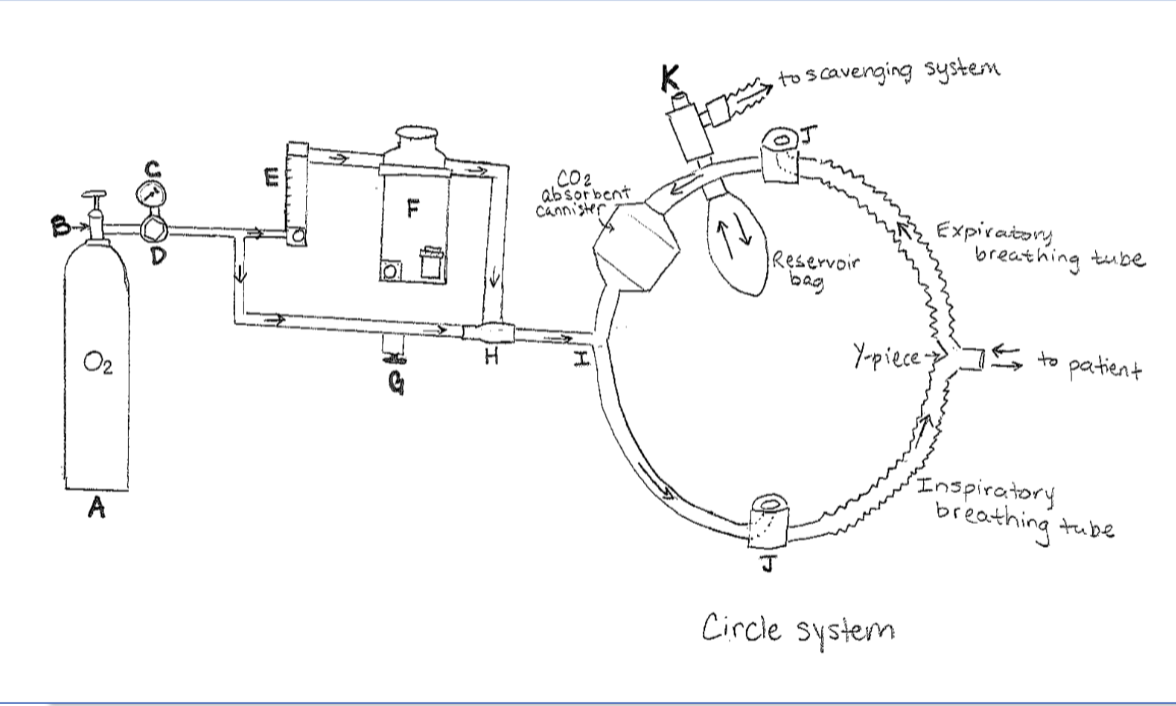
what are parts of the high pressure system
A B C D
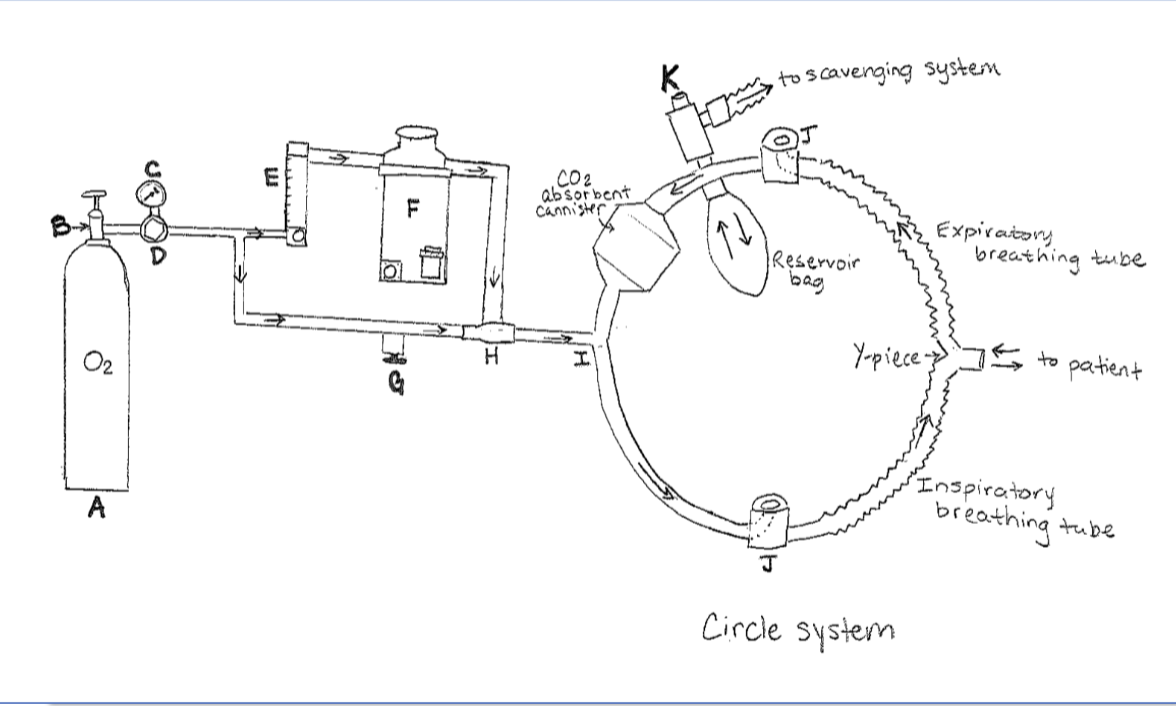
what are parts of the intermediate pressure system
G
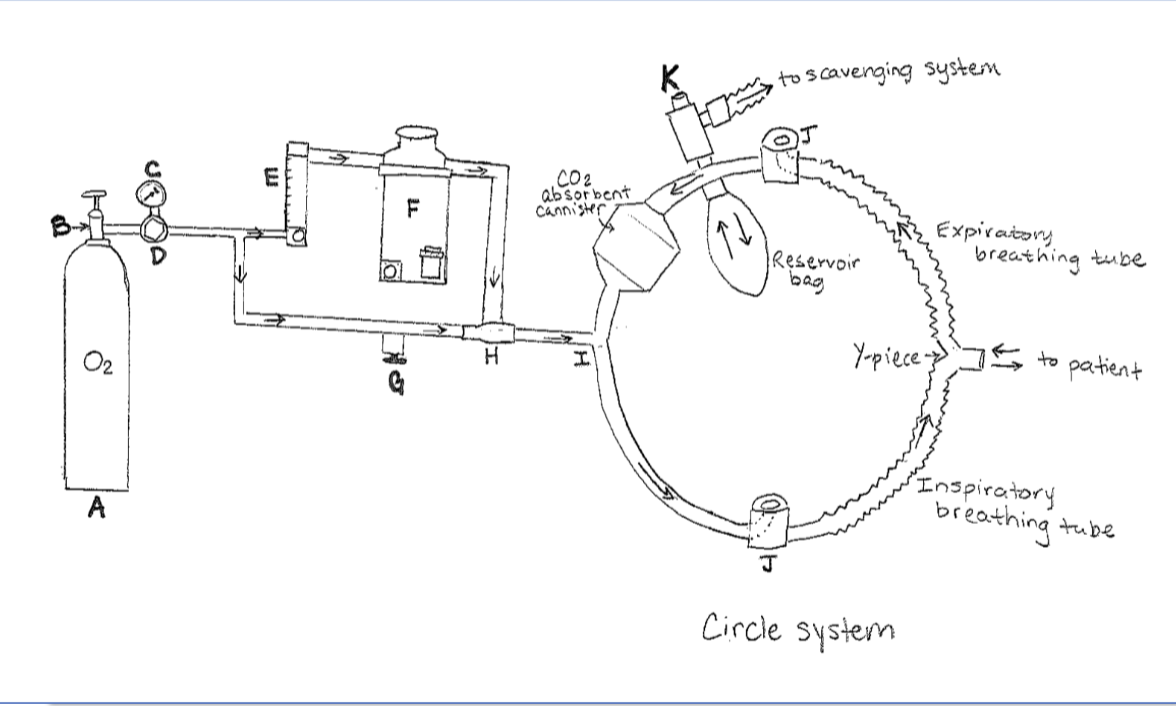
what are parts of the low pressure system
E F H I J K
from the oxygen cylinder to the pressure reducing valve (aka regulator)
high pressure system
from the pressure reducing valve to the flowmeter
intermediate pressure system
from the flowmeter to the common gas outlet
low pressure system
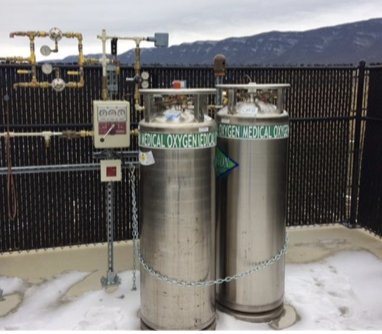
what is this
cryogenic liquid supply
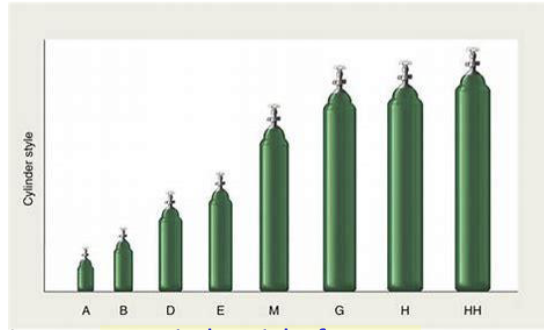
what is this
compressed gas in cylinders
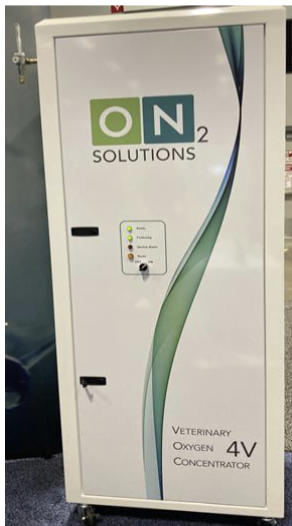
what is this
oxygen concentrator
explain compressed gas in cylinders
E cylinder
G and H will set up as a central supply system
typically 2 banks connected to common manifold that converts them into one continuous supply
large liquid oxygen containers installed at facilities that have a fairly constant demand
cryogenic liquid supply
how do oxygen concentrator increase O2
absorbing nitrogen onto a moleculra sieve and allows O2 and trace gases to pass through —> resulting in O2 concentration of 90-96%
safety to remember for oxygen cylinder
must be inspected and tested at least every 5 years
use color coding oxygen=green in US
what are oxygen cylinder made of
steel, steel carbon fibers, or aluminum
why should you open oxygen cylinder valve slowly
because rapid recompression of gas generates heat
what is the capacity and pressure for E oxygen xylindres
600 L capacity
2200 psi
what is the capacity and pressure limits of H oxygen cylinder
6900 liters
2200 psi
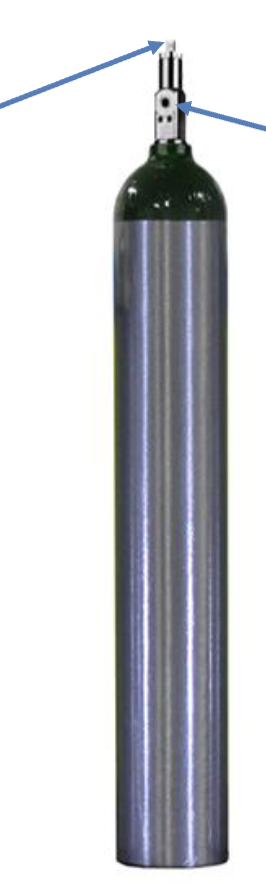
what is the left arrow
handle attach
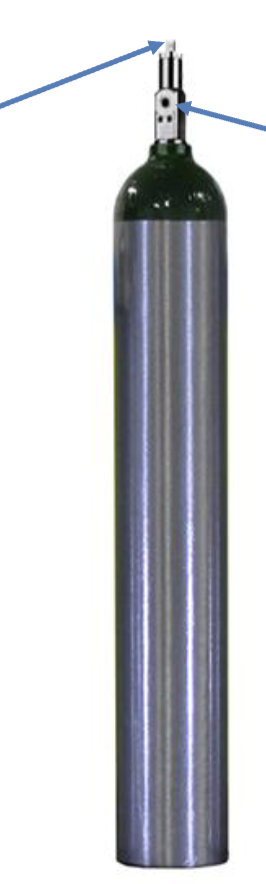
what is the right arrow
port
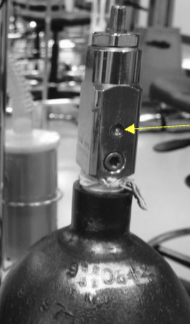
what is this
conical depression to receive yoke retaining screw
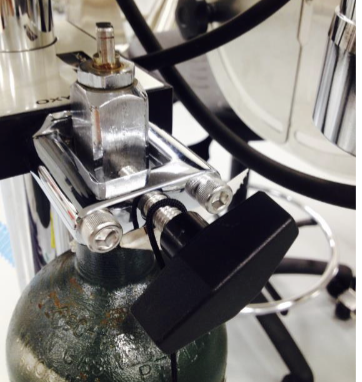
what is this
hanger yoke: orients nad supports cylinder, provides gas-tight seal
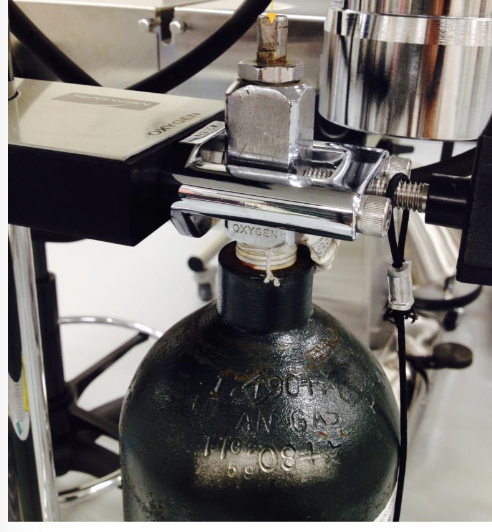
what is this
cylinder valve
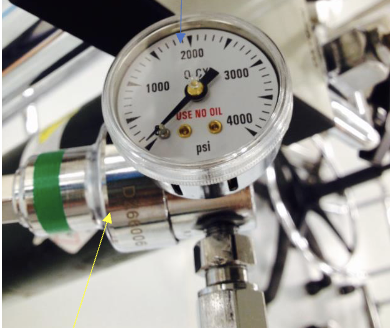
what is the blue arrow
pressure gauge
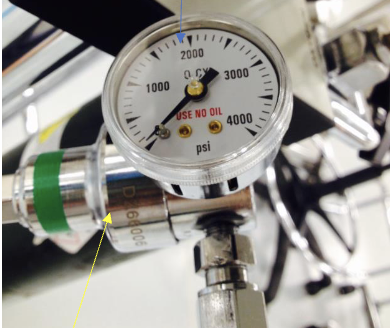
what is the yellow arrow
regulator
what does the regulator do
reduces the gas pressure from the cylinder to a usable level of a constant 50 osi
specific for. gas and tank size
terminates in a gas specific male DISS fitting
what is the cylinder pressure gauge
must be installed down stream of each pressure regulator
calibrated in psi
allows user to calculate remaining liters in tank or pipeline pressure
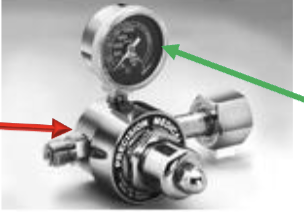
what is the red
regulator
what is the green
cylinder pressure gauge
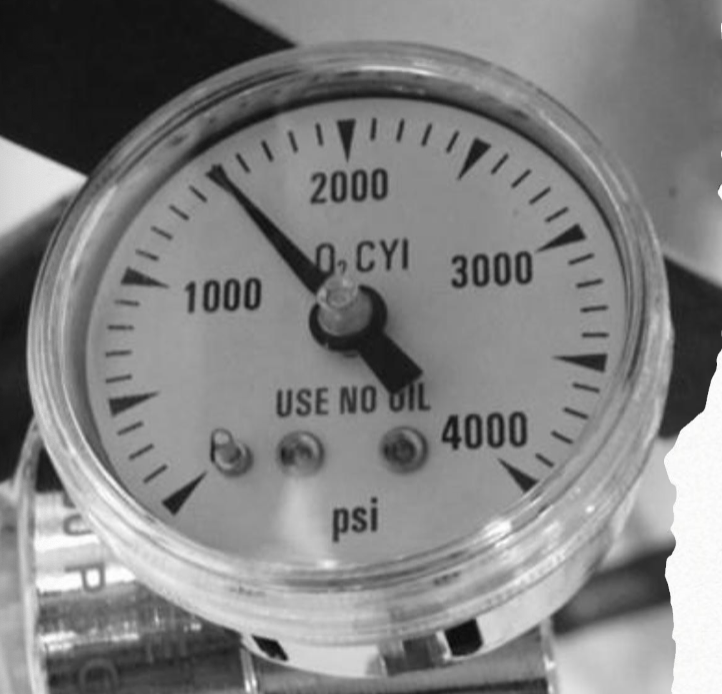
what is this in psi
1500 psi
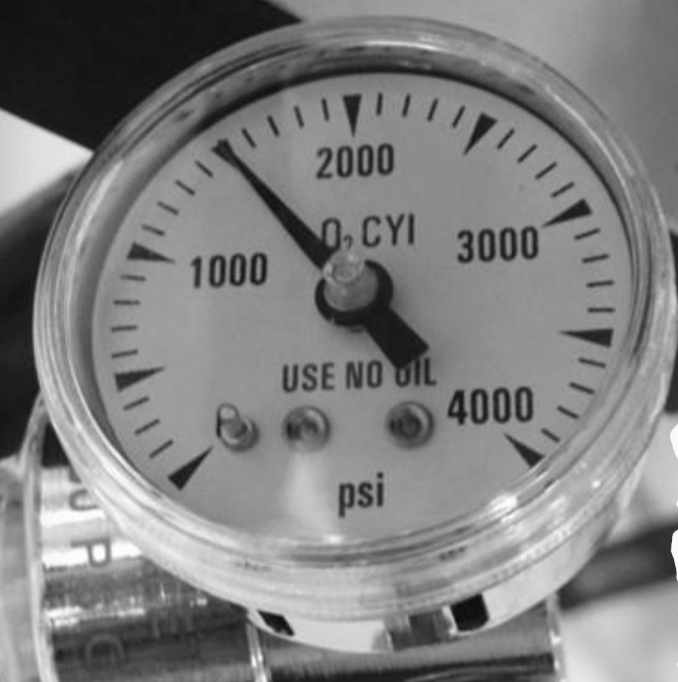
what is this in liters
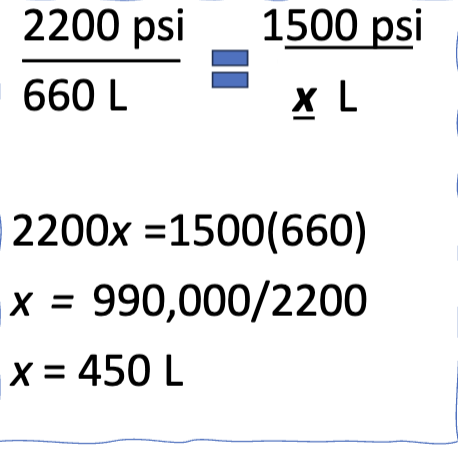
when should you change cylinder
when pressure < 500 psi
what is the oxygen flush valve
receives O2 from the pipline inlet or cylinder pressure regulator and directs a high unmetered flow directly to the common gas outlet
what is the L/min of oxygen flush valve when activated and what can it cause
35 to 75L/min pisslbe bartrauma so nerver use when connected to patient
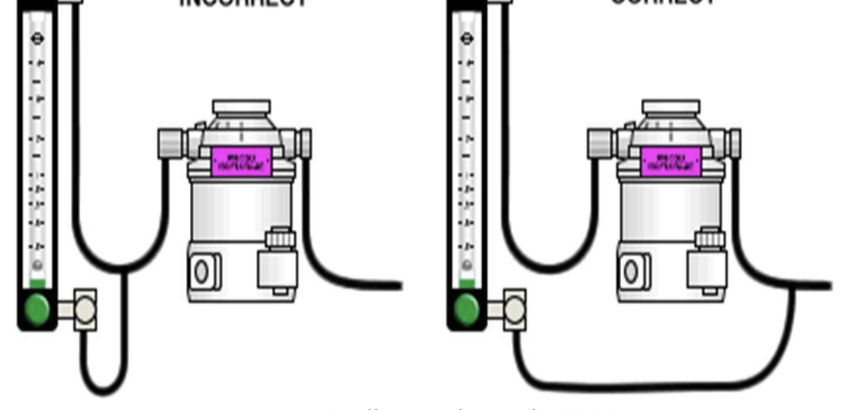
which is correct
right correct
indicates rate of flow of gas passing through
flow meter
directions ot turn flow meter
Turn control knob counterclockwise to increase flow and clockwise to decrease flow (do not over tighten!)
has height of the flow meter increase
more gas flow
• Only present on a rebreathing system – allows gases to travel in one direction as the patient breathes
• Inspiratory valve
• Expiratory valve
unidirectional valves
disadvantages of unidirectional valves
increases resistance to breathing; if one or both valves are leaky ➔ patient will rebreathe CO2
• If valves are sticky, pressure in the system and against breathing in and out!
ways to monitor
assess the machine before and during use
watch your patient closely
capnograph to monitor breaths
• A device that changes a liquid anesthetic agent into its vapor
and adds a controlled amount of that vapor to the fresh gas
flow going into the patient breathing system.
vaporizer
how does a vaporizer dilute vapro
by splitting the gas flow that passes through the vaporizer
by pass the vaporizer outlet
vaporizing chamber
oh no! i knocked over the vaporizer what do I do now
• Generally, if vaporizer is tipped it should be flushed with a high O2 flow rate for the max time recommended by manufacturer. Ideally, vaporizer should be emptied prior to transport, left in upright position, and dial set to “0” position.
• Overfilled vaporizer may deliver lethal concentrations or cause vaporizer failure with zero output.
• If filled with wrong agent, vaporizer must be completely drained and all liquid discarded. O2 should be run through until no agent detected
what is the purple bottle of liquid anesthetic
isoflurane
what is the yellow bottle of anesthetic
sevoflurane
receives all gases and vapors from the machine and delivers the mixture to the breathing system
common/fresh gas inlet and outlet
where does the common/ fresh gas inlet attach
close to the patient on the non-rebreathing system so never activate the oxygen flush valve when using this type of system
when using a reservoir bag how many breaths does this allow
5-6
what are reservoir bags used for
to monitor frequency of respiratroy rate and compliance of patient’s pulmonary system during assisted ventilation
what is the formula to determine what size reservoir bag to use
body weight x tidal volume x 5
what are adjustable pressure limiting (“pop off”) valve used for
to control pressure in the breathing system
transiently close APL to deliver manual ventilation to patient
other wise must be kept open at all time
what are the top 3 killers
closed pop off valve
too little O2
too high vaporizer setting
what are some safety concerns
• Improper cylinder storage
• Tipping over vaporizer
• Wrong inhalant in vaporizer
• Overfilling vaporizer
• Using oxygen flush valve when attached to a patient
• O2 and N2O are flammable
Cylinder valve, pressure regulator, or gauges should never come in contact with
oils, greases, organic lubricants, rubber or combustible substances
how to perform a machine leak test (aka machine pressure check)
make sure O2 flow meter is off
close the APL (pop-off) valve
occlude the patient end of the Y-piece with a hand, finger, or syringe plunger
use O2 flowmeter to fill system can use very short burst from flush to fill large bags
observe the pressure guage for at least 10 seconds (suggest 30 seconds)
If no leak observed, proceed to step 6.
II. If leak observed (i.e. drops > 1 cmH20/sec), slowly titrate the O2 flow meter up to maximum of 300 mL/min:
a) If this stops the leak, the machine and breathing system is acceptable to use.
b) If it takes >300 mL/min of O2 to stop the leak, the machine and breathing system should not be used until the source of the leak is identified.
release APL valve
remove occlusion from Y-piece