PHYL2530 - Foundations of Physical Literacy
 Call Kai
 Learn
Learn Practice Test
 Spaced Repetition
 Match
Match Flashcards
 Knowt Play
1/113

There's no tags or description
Looks like no tags are added yet.
Name | Mastery | Learn | Test | Matching | Spaced | Call with Kai |
|---|
No analytics yet
Send a link to your students to track their progress
114 Terms
Philosophy/Aims of the Alberta Education Curriculums
Consists of the 2000 versus 2022 Curriculums
2000 Curriculum: “…develop the knowledge, skills, and attitudes necessary to lead an active and healthy style” — AB Education
2022 Curriculum: “…to promote the development of the whole individual and nurture students in the pursuit of a healthy and active lifestyle” — PEW
Shift from a focus on “active living”, fundamental skills, and general activity (2000) to a consolidated, holistic approach, merging health and PE to emphasize broader wellness, encompassing physical literacy, mental health, and social-emotional learning
The 2000 curriculum separated Physical Education (K-12) and Health (K-9) whereas the 2022 curriculum combines them into a single “Physical Education and Wellness” subject
Alberta Education — PE Competencies
Competencies: combinations of attitudes, skills, and knowledge that students develop and apply for learning, living, and working
Alberta’s curriculum promotes development of the following competencies: critical thinking, problem-solving, managing information, creativity and innovation, communication, collaboration, cultural and global citizenship, and personal growth/well-being
Alberta Education — ABCD’s
Physical activity key to — cognitive, physical, social, and affective development
Positive experiences support active behaviours
K-12 program inclusive
Has 4 general outcomes, each with specific outcomes
Activity
Benefits of Health
Cooperation
Do It Daily
General Outcomes B, C, and D are interrelated and interdependent and are achieved through involvement in movement activities identified in General Outcome A
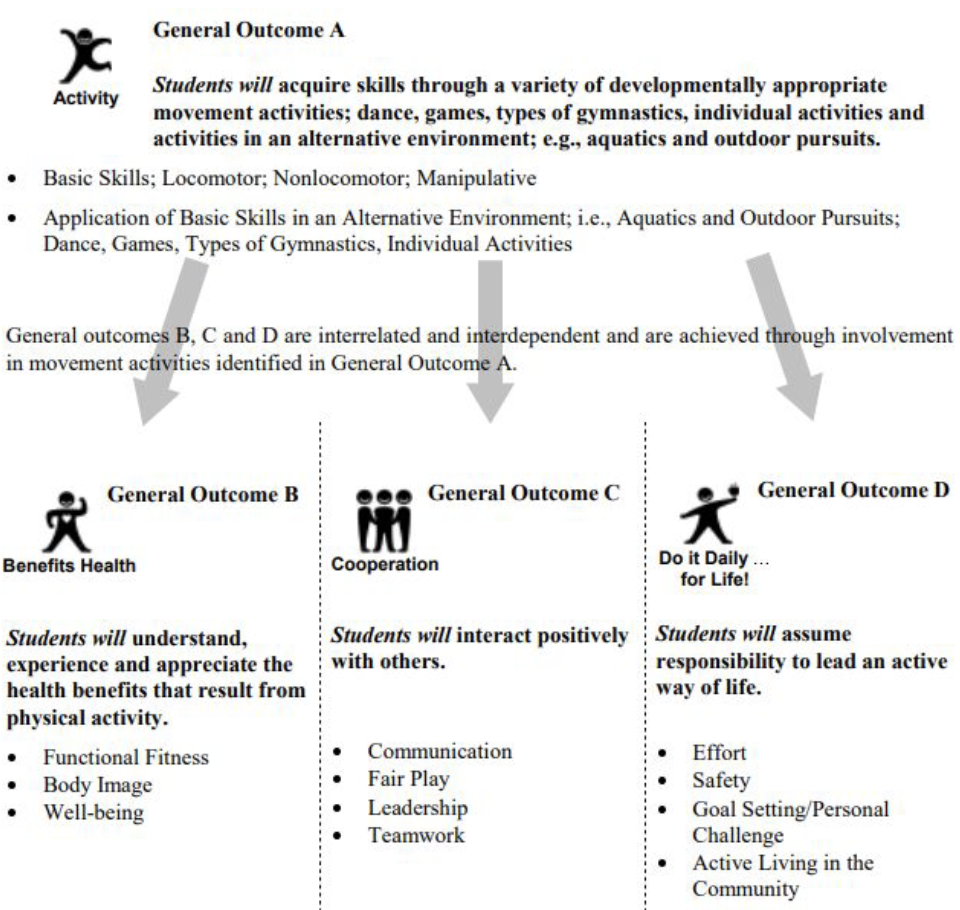
ABCD’s — A
Activity
Involves acquisition of basic skills and application of basic skills
Students acquire Fundamental Movement Skills (FMS) which is categorized into three categories:
Locomotor
Stability Skills (Non-Locomotor)
Objective Manipulation (Manipulative)
The outcomes (ABCD’s) are organized into 5 dimensions:
Games
Dance
Individual Activities
Gymnastics
Alternative Environments
ABCD’s — B
Benefits of Health
Considered an opportune time to introduce physical activity (PA) to children
Inactive children = inactive adults
Organized into three categories:
Functional Fitness
Body Image
Well-Being
ABCD’s — C
Cooperation
Cooperation is considered a learned skill
Children are mixed up during activities
Organized into four categories:
Communication
Fair Play
Leadership
Teamwork
ABCD’s — D
Do It Daily
Physical activity experiences need to be positive and motivating, safe, and pose realistic challenges
Experiences create a desire to participate and community
Organized into four categories:
Effort: commitment to lead an active lifestyle
Safety: safe participation
Setting: motivation (intrinsic/extrinsic)
Active living in the community
Physical Education and Wellness (PEW — 2022)
K-6 curriculum focusing on holistic health to foster active, healthy lives
Promotes the development of the whole individual and aims to nurture students in their pursuit of a healthy and active life
Promotes holistic development of students in eight dimensions: physical, social, emotional, spiritual, environmental, financial, intellectual, and occupational
Daily Physical Activity (DPA) — Goal
To increase student’s physical activity levels
Healthy students = healthy learners
Schools should provide environments and opportunities for students to develop positive healthy habits needed for an active lifestyle
Daily Physical Activity (DPA) — Policy
School authorities will ensure all students in grades 1-9 are physically active for at least 30 minutes each day through activities organized by the school
Should vary in form and intensity
Take each students’ ability into account
Take resources into account that are available within the school and larger community
Allow for student choice
Daily Physical Activity (DPA) — Procedures
Can use instructional or non-instructional hours to implement DPA
P.E. classes are appropriate to meet DPA
DPA should be offered in as large a block as possible but can be in 2-15 minute blocks
Can be incorporated throughout the day and integrated into other subjects
Physical Literacy (PL)
The motivation, confidence, physical competence, knowledge, and understanding to value and take responsibility for engagement in physical activities for life
Term coined by Dr. Margaret Whitehead in 1993, who identified philosophy underpinnings of Physical Literacy
Cornerstones of Physical Literacy
Everyone can be physically literate and it is appropriate to each individual’s endowment or qualities/attributes (i.e., a person with a physical disability being physically literate may appear different compared to a person without a physical disability)
Everyone’s physical literacy journey is unique
The skills that make up physical literacy can vary by location and culture
Physical literacy is relevant and valuable at all stages of life
The concept embraces much more than physical competence
At the heart of the concept is the motivation and commitment to be active (an individual may be physically competent, but having motivation/commitment in order to complete those physical activities is vital in order to receive the most benefits)
The disposition is evidenced by a love of being active, born out of pleasure and satisfaction that individuals experience in participation
A physically literate individual values and takes responsibility for maintaining purposeful physical pursuits throughout their lifecourse
Charting of progress of an individual’s personal journey must be judged against previous achievement and not against any form of national benchmarks (achievements should be held to personal standards)
Philosophy Underpinnings of Physical Literacy
Identified by Dr. Margaret Whitehead
Monism: mind/body as one
Phenomenology: specific to individual (personal experience)
Existentialism: environment and individual (physical literacy is based on what external experiences or opportunities that an individual was given and their interactions with the environment)
Indigenous Perspective(s) on Physical Literacy
Large emphasis on culture and spirituality as part of being active for life
Wisdom is shared through mindful teachings
Integrates physical, emotional, spiritual, and mental health aspects through meaningful movement, land connection, traditional activities, cultural significance, and community relationships — holistic approach
Physical Literacy Consensus Statement — Why?
A consensus term was developed in 2015 due to misuse of the term by interchangeably using it with “physical activity”, “physical education”, “fundamental movement skills”, or “motor skill development”
A broad consultation between sector leaders in Canada suggested that a common definition with consistent language was needed to provide clarity for the development of policy, practice, and research
PL Consensus Statement — Purpose
Promote the value of physical literacy and preserve the integrity of the concept
Advocate for the use of a common definition of physical literacy, as defined by the International Physical Literacy Association
Facilitate alignment within and between the multiple sectors in the physical literacy community
Improve the consistency and clarity of communications relating to physical literacy
Inform the consistent and coordinated development of physical literacy tools and resources created by various stakeholders
PL — Core Principles of Definition
Inclusive concept to all
Represents a unique journey to each individual
Can be enhanced through a variety of experiences in different environments or contexts
Needs to be valued and nurtured throughout life
Contributes to the development of the whole person
Elements of Physical Literacy
Motivation and Confidence (Affective/Attitudes/Knowledge)
Physical Competence (Physical/Psychomotor/Skills)
Knowledge and Understanding (Cognitive/Knowledge)
Engagement in physical activities for life (Behavioural/Attitudes/Knowledge/Skills)
4 Dimensions of Physical Literacy
Physical: Focuses on movement competence, fundamental movement skills, physical fitness, and the development of strength and the manipulation of the body with different objects or in different environments
Cognitive: Involves knowledge, understanding, and critical thinking about how, why, and when to move, and having the ability to reason and make appropriate decisions in regards to movement
Emotional: Relates to motivation, self-confidence, self-efficacy, and the joy derived from physical activity, as well as the ability to manage physical responses (such as fatigue and pain) and understand emotional responses during movement
Social: Encompasses interaction, communication, developing teamwork, and finding a sense of belonging within communities or groups, as well as exhibiting fair play, ethical behaviour, and utilizing the environment for connection with others
Why is Physical Literacy Important to Sport Development?
If a child misses out on learning Fundamental Movement Skills (FMS) or has a negative PE experience, they are unlikely to choose to take part in a sport activity that requires expertise in that skill
Physical Education (PE) acts as the practical, structured venue for developing physical literacy — it provides the essential environment to foster the skills needed to be physically literate, which is where many children tend to learn physical literacy skills first
Recreation
Experience that results from freely chosen participation in physical, social, intellectual, creative, and spiritual pursuits that enhance individual and community well-being
Recreational experiences include participation in physical activity and sport, and in artistic, cultural, social, and intellectual activities
Can be structured and unstructured — many are done with other people while others are done alone
Barriers to Recreation
Economic (certain recreational activities, equipment, admission, and transportation may be too expensive for individuals to pursue)
Environmental (weather, lack of safe environmental spaces available, etc.)
Education (lack of skill, knowledge, and exposure may prevent individuals from engaging in physical activity or other recreational pursuits)
Social/Cognitive (negative social influences, pressure, lack or external encouragement or participation to build motivation)
Language (newcomers and non-native speakers may find it difficult to participate in recreational activities due to difficulty in registering, understanding rules, or navigating safety instructions)
Culture (certain recreational activities may not be culturally-appropriate for specific groups—such as immigrants, ethnic minorities, or women, as well as a lack of culturally-relevant recreational activities or facilities)
Transportation
Time
Access (lack of access to recreational facilities, resources, or activities, such as rural or Indigenous communities)
Canada’s Recreation Framework
Recreation is a fundamental need in all ages and stages of life. It is the pursuit of physical, social, intellectual, creative, and spiritual experiences that enhance individual and community well-being
The Framework for Recreation in Canada was developed to guide public recreation providers in fostering improved health, well-being, and quality of life for all Canadians
It acts as a national, collaborative, and strategic document designed to address key societal challenges—such as sedentary living, inequity, and environment issues—by ensuring equitable access to, and participate in, meaningful recreational experiences
The framework fosters: individual well-being, natural and built environment well-being, and community well-being
Framework for Recreation — Why?
Exists to address or promote:
Risks to mental and physical well-being
Social isolation
Family and community connectedness and resilience
Economic development
Disconnect with nature
Integration of new immigrant population
Goals of Canada’s Recreation Framework
Active Living
Inclusive and Access
Connecting People with Nature
Supportive Environments
Recreation Capacity
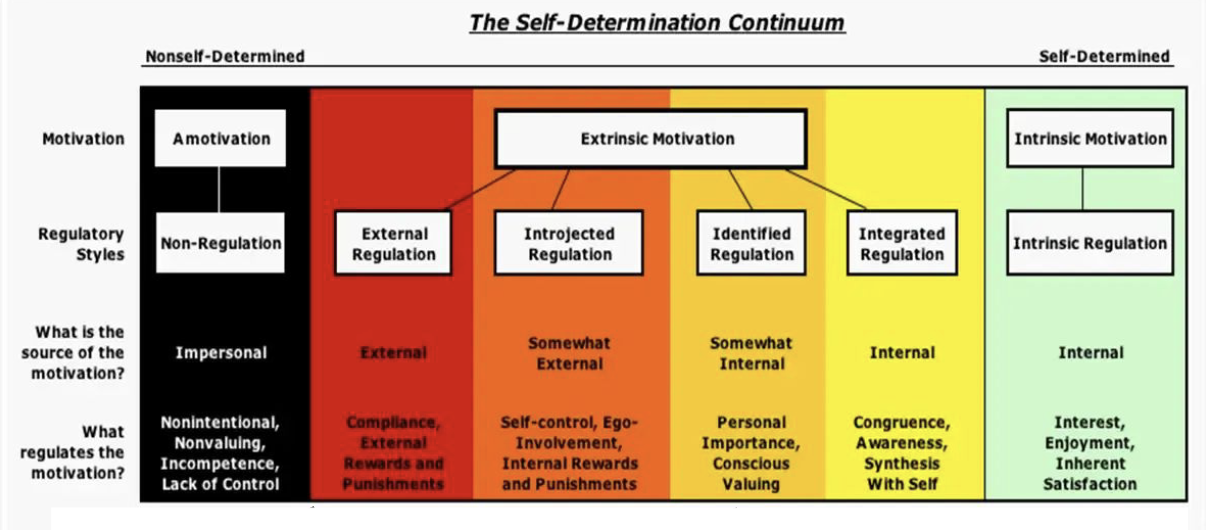
Self-Determination Theory
Suggests that all humans have three basic psychological needs — it exists on a continuum in which different external and internal factors can affect an individual’s motivation (extrinsic/intrinsic)
Involves:
Intrinsic / Extrinsic Motivation which is formed through:
Autonomy: The feeling one has choice and willingly endorsing one’s behaviour
Competence: The experience of mastery and being effective in one’s activity
Relatedness: The need to feel connected and belonging with others
Classification of Movement — Rudolf Laban
Pioneer (dance artist, choreographer, theorist)
Categorized/analyzed movement (not just dance)
Emphasized creativity and expression
Classification of Movement — Movement Education
Body
Space
Effort Quality
Relationships
Classification of Movement — Body
Refers to the ‘what’ — what is the body doing?
Fundamental Movement Skills (body shape, body parts, locomotion, balance)
Expressive
Functional
Objective is to understand and utilize locomotor (traveling), non-locomotor (balancing or hanging in a body shape) and object manipulative skills (stressing a body part) to improve the quality of a movement
Classification of Movement — Space
Refers to the ‘where’ — where is the body moving?
Directions, levels, pathways, planes (side to side, front/back, rotation), extensions
Personal space
General space
Equipment space
Inside/Outside
Objective is to understand and utilize personal and general space, directions, pathways, levels, planes, and extensions appropriately to improve the quality of the movement
Classification of Movement — Effort Quality/Quality (Effort)
Refers to the ‘how’ — how is the body moving?
Fast/slow? Heavy/light?
Straight/flexible (space)?
Flow (ongoing/interrupted)?
Objective is to understand and utilize time, weight, flow, and space appropriately to improve the quality of the movement
Classification of Movement — Relationships
Refers to how the body ‘relates’ — to what or whom is the body relating when it moves?
With others
With equipment
With external objects/stimuli
Objective is to understand and utilize awareness and skill in how the mover related to other individuals, groups, apparatuses, and objects
Fundamental Movement Skills (FMS)
Basic building blocks of physical literacy
Key to ensuring that children have the opportunity to participate in organized, structured, sporting activities
The foundational movements or precursor patterns to more specialized, complex skills used in play, games, sports, dance, gymnastics, outdoor education, and physical recreation activities — involves teaching Fundamental Sport Skills (FSS)
Important to develop as it builds self-esteem, self-confidence, and increases likelihood of lifelong participation in recreational activities, allowing individuals to take more risks and maintain an active and healthy lifestyle
Functional Movements
Real world situational biomechanics involving multi-joint movements
Agility, Balance, Coordination, Speed (ABC’s)
FMS
Categories of FMS Skills
Locomotor: refer to the body being transported in a horizontal or vertical direction from one point to another (i.e., walking, leaping, running, jumping, climbing, cycling, etc.)
Balance/Non-Locomotor (Stability): involve balancing the body in stillness and in motion (i.e., static/dynamic balancing, rolling, stopping, landing, bending, stretching, twisting, turning, etc.)
(Object-) Manipulative: require controlling implements (i.e., bats, racquets, hoops) or objects (such as balls), either by hand or foot (i.e., throwing, catching, kicking, striking, bouncing, dribbling)
Stages of Development
Stages of development are progressive
FMS
Fundamental Sport Skills (FSS) — skills specific to context/activity
Children develop skills at different rates, stages, and time
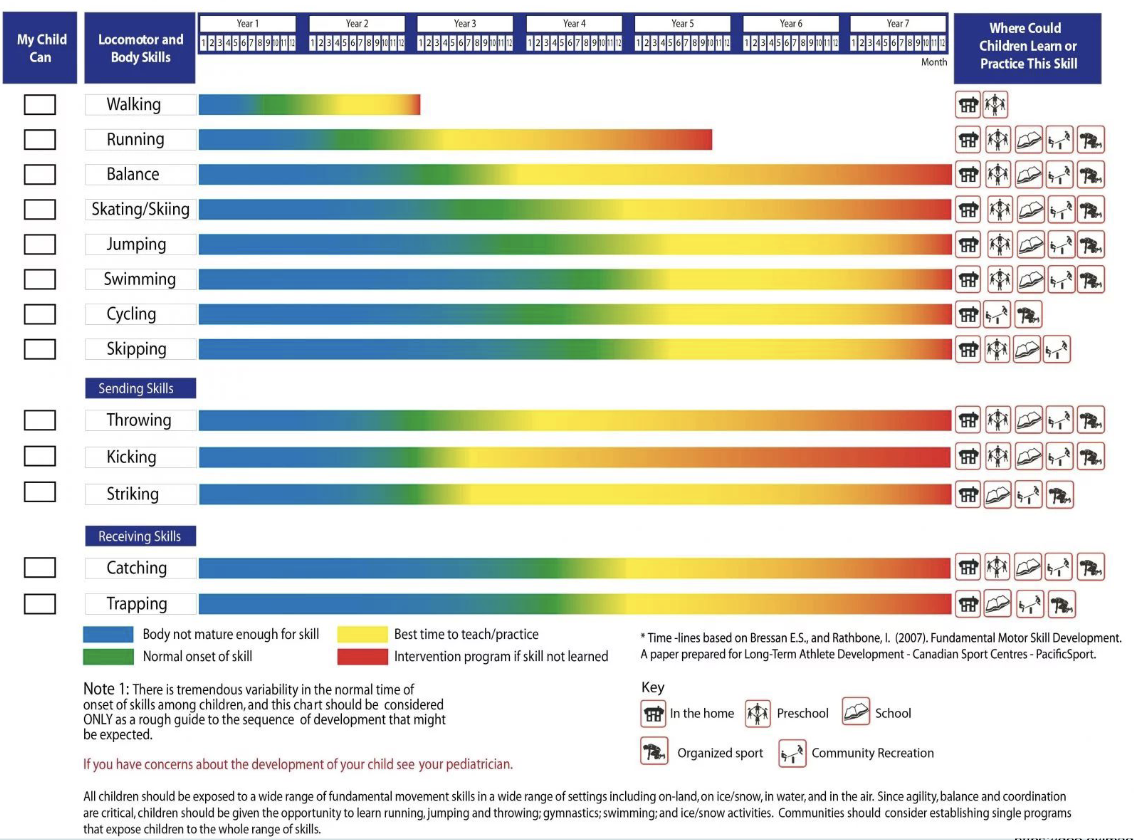
Optimal stages of development — Sport for Life (S4L)
Uses chronological age for 13 FMS (Walking, Running, Balance, Skating/Skiing, Jumping, Swimming, Cycling, Skipping, Throwing, Kicking, Striking, Catching, Trapping)
Functional Movements — ABC’s
Agility, Balance, Coordination, Speed
Valuable for almost all sports — developing the ABC’s is an important part of physical literacy, and there are a number of activities in which they can be learned and refined
Different sports and activities are better at developing one or more of the ABC’s than others (i.e., Gymnastics can help children learn and develop their agility, balance, and coordination, while Athletics like track and field can develop speed and coordination)
Influences That Affect The Development of FMS
A well-planned teaching program considers factors related to the child and the environment in the development of FMS
Child: age, physique, health, physical activities, interests, motivation to practice
Environment: familial/communal/cultural values, expectations, and support, opportunities to practice
Teaching Cues
Short, 1-5 words or simple phrase triggers, or non-verbal signs used to help individuals focus on key techniques, reducing cognitive load and improving motor skill learning
Effective cues are actionable, directly related to the skill, and often, though not always, externally focused to guide attention to the intended outcome rather than internal bodily movements
Example: Walking is a locomotor skill that involves utilizing dynamic balance — an example cue would be saying ‘opposite arm, opposite leg’ to correct a ‘same arm, same leg’ error
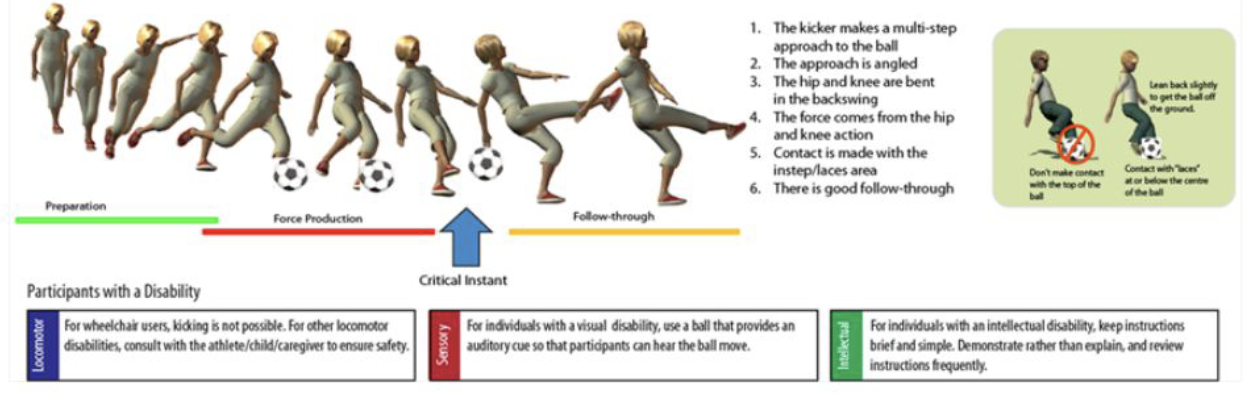
Phases of Movement Skills (NCCP)
Breakdown of athletic skills to maximizing performance performance and minimize injury — ideally, all body parts that can be used are used and it involves using the greatest range of motion
Preparation: Involves setting up for the movement (i.e. footwork, grip, backswing) to align the body and prepare to generate power
Force Production: The action phase where energy is generated through weight transfer, core rotation, and muscles to increase speed and power
Critical Instant: The exact moment the skill is executed — this is the shortest phase but crucial for accuracy and control (i.e., the moment a ball leaves the hand [release] or the bat hitting the ball [contact])
Follow-Through/Recovery: The final, necessary motion that decelerates the body’s movement, ensuring balance and preventing injury by reducing stress on joints after the action
Phases of Movement Example — Kick
Preparation: Running up in the proper position towards the ball, positioning leg backwards and preparing for the swing
Force Production: The movement that occurs after the leg is positioned backwards, wherein force is created through swinging the kicking leg forwards
Critical Instant: The moment the foot comes into contact with the ball, sending the ball flying in a specific direction with accuracy/control
Follow-Through/Recovery: The movements made after the ball has been kicked to land and position yourself safely, and in preparation for the next movement
Where to Observe Movement Skills From
Observing certain movement skills will differ depending on the skill that is being executed so more effective feedback or accurate assessment can be made
For instance, observing a person’s running skill/technique may be more effective from the side view in order to gauge their opposite arm/leg movements or how high their knees are moving
Effective Feedback — Things to Consider
Be specific
Short and simple
Tell them what you want them to do
Make sure they understand what you want them to do
Compliment sandwich approach
Adjust feedback accordingly depending on participants’ age ranges or skill level
Assessment
The collection of information about an individual’s performance — used to determine an individual’s learning and progress; assessments are necessary to ensure that learners are comprehending key concepts or aspects of a course, unit, or activity
2 types: Formative and Summative
Formative: assessments that take place while learning is ongoing to monitor current progress — can be Formative ‘For’ where the instructor does the assessments, or Formative ‘As’ where the learner does the assessments through self-reflections
Summative: used to evaluate student proficiency at the conclusion of learning activities (i.e., final exams)
Systematic Observation (S.O.)
Observation that is conducted to measure specific, well-defined behaviours using structured recording procedures
Involves inferences (casual observation)
Components of S.O.
Structured
Formal
Scientific
Strengths of S.O.
Variety of data
Immediacy of findings (as opposed to a survey, for example, wherein results take time to obtain)
Activities occur in natural environments
Ability to compare environments (i.e., going to different soccer stadiums to observe a soccer practice to see how the environment impacts the same activity)
Triangulate the data (data can be compared or corroborated by others’ data which can help make data more reliable, especially for research purposes)
Limitations of S.O.
Observer interference
Hawthorne effect (witnessing improved behaviour in subjects during observation due to having an observer present)
Difficulties with categorization of data
Reliability of data collection (observer can make mistakes, implicit biases, etc.)
System for Observing Fitness Instruction Time (SOFIT)
Originally designed for P.E.
Involves momentary time sampling to measure PA in children as they are active intermittently rather than in sustained bouts
Broader examples:
SOPARC — System for Observing Play and Recreation in Communities
SOHO — System for Observing Hockey Opportunities
SOFIT Protocols
Multi-factor observation system designed to record several variables (physical activity intensity, lesson context, and instructor interaction) during a PA class in 20-second intervals
Why do we care? Allows for observation of physical activity classes to target inactivity and address increasing number of children and adults who are overweight and obese
Many children do not meet the recommended 60 minutes of moderate-to-vigorous physical activity daily — SOFIT provides objective data on how much time students spend in MVPA, VPA (vigorous) and sedentary behaviours
Sport for Life (S4L)
Educates and informs sector leaders to enable them to better understand and deliver LTAD, quality sport, and physical literacy programming
Long-Term Development (LTD) in Sport and Physical Activity Framework — Why?
Development is a process that takes tme, and that sport and physical activity should look very different, based on the individual’s stage of development
To reinforce the idea that long-term development is important both in sport performance and for life-long engagement in physical activity for health
To broaden the focus. Effective development requires the alignment of ALL parts of the Canadian sport and physical activity ecosystem, from community programming through to targeted high-performance sport excellence, and this involves far more than just sport organizations
Long-Term Development (LTD)
Individuals develop Awareness and First Involvement at any stage of life — additionally, all individuals experience their own unique pathway within long-term develop of sports and physical literacy
Physical Literacy: Active Start, FUNdamentals, Learn to Train
Excellence: Train to Train, Train to Compete, Train to Win
Active for Life: Competitive for Life, Fit for Life, Sport/Physical Activity Leaders
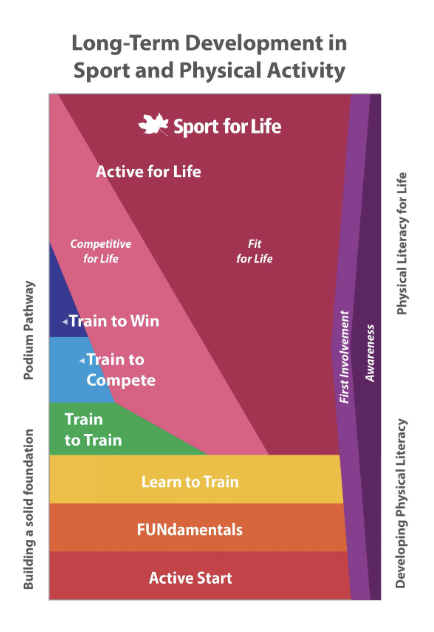
Key Factors of Long-Term Development (LTD)
To help all Canadians enjoy and reach their potential in sport and physical activity, three factors are essential:
Personal Factors
Organizational Factors
System Factors
Key Factors of Long-Term Development (LTD) — Personal
Factors for parents, caregivers, teachers, instructors, and coaches to consider as they plan quality programs for young participants and athletes
Involves:
Developing Physical Literacy in the early stages which lays the foundation for later success and life-long engagement in PA
Providing Quality Environments to promote enhanced learning and training
Developing Age
Sensitive Periods
Predisposition
Excellence Takes Time
For Life
Key Factors of Long-Term Development (LTD) — Organizational
Inform the ways that sport, recreation, education and other organizations create and deliver programs for their participants and athletes
Involves ensuring that sports update their Long-Term Development framework to ensure they are incorporating the latest sport, societal, and science developments
Ensuring that the LTD model is fully embedded
Awareness and First Involvement: Ensuring that participants are made aware of a wide range of sporting/physical activity opportunities
Providing different activities to meet different demands/pathways
Appropriate Specialization, Periodization, Competition, Transitions
Key Factors of Long-Term Development (LTD) — System
Important for policy-makers and organizations to consider in informing the ways organizations cooperate and collaborate to build an optimal system
Involves:
Collaboration (establishing collaborations and connections with other organizations)
Alignment (content provided and language used is consistent across all documents to avoid confusion)
Safe and Welcoming
Diversification
LTD
Continuous Improvement
Evidence-Based
Potential Issues in Sports
Coaches/Facilitators/Practitioners
Perpetuating old ways
Lack of PD/education
Hyperfocus on winning at all costs
Influenced by past experiences
Parents/Guardians
Specialization (imbalanced FMS proficiency/development)
Overcompeting
System
Lack of education/introduction to FMS in early years
Programming based on age
Lack of programming for equity-owed groups
Social Determinants of Health That Influence Sport Participation
Income and/or Unemployment
(Lack of) Awareness and/or Education
Language Barriers
Food Insecurity
Community Environment and Safety
Transportation
Accessibility
Parents/Guardians as Gatekeepers
Quality Sport
Based on Long-Term Development in Sport and Physical Activity
Involves:
Good programs that are developmentally appropriate (participant-centred, progressive and challenging, well-planned, designed for meaningful competition)
Good places that have safe and inclusive programs (inclusive and welcoming, fun and fair, holistic, safe)
Good people who develop well-run programs (leaders, coaches, officials, instructors and teachers, parents and caregivers, partners)
Leads to individual excellence and optimal health
Canadian Physical Literacy Assessment Tools
Canadian Assessment of Physical Literacy (CAPL)
Physical Literacy Assessment of Youth (PLAY)
Canadian Assessment of Physical Literacy (CAPL)
Developed by Healthy Active Living Obesity Lab (HALO) at the Children’s Hospital of Eastern Ontario (CHEO)
First comprehensive protocol
Includes 4 Areas of Measurement:
1. Daily Behaviour (sedentary score, pedometer steps)
2. Motivation and Confidence (adequacy, predilection, self-report PA, benefits:barriers)
3. Knowledge and Understanding (sum of all questions)
4. Physical Competence (PACER, plank, agility course, BMI z scores)
CAPL Scoring
4 Different Categories:
1. Beginning: Limited PL compared to same-age peers — just starting to acquire the physical competence, knowledge, motivation, or daily behaviours needed for a physically active lifestyle
2. Progressing: Similar to same-age peers — have the physical competence, knowledge, motivation, or daily behaviours that are typical for children of the same age; progress towards greater physical literacy enhances health benefits
3. Achieving: Meets minimum level — have the physical competence, knowledge, motivation or daily behaviours that are usually associated with the health benefits of a physically active lifestyle
4. Excelling: Exceeds minimum level — have the physical competence, knowledge, motivation or daily behaviours that are associated with substantial health benefits
Snapshot in time
CAPL (1) — Daily Behaviour
Measure of children’s total active and sedentary time daily
2 types of measurement used: pedometers and questionnaires (self-report)
CAPL (2) — Motivation and Confidence
The motivation and confidence domain assesses a child’s confidence in their ability to be physically active
Assesses their motivation to participate in physical activity
Measured via 2 Questionnaires: Physical Activity Questionnaire and CSAPPA Questionnaire (Children’s Self-Perceptions of Adequacy in and Predilection for Physical Activity)
CAPL (3) — Knowledge and Understanding
The knowledge and understanding domain assesses a child’s knowledge about physical activity, sedentary behaviour, physical fitness, and safety during activity
A measure of a child’s understanding and knowledge base of being Physically Active (via questionnaires)
i.e., what pieces of equipment should you wear when ice skating? How active should I be on a daily basis?
CAPL (4) — Physical Competence
Assesses a child’s ability to engage in physical activities
Incorporates measures of physical fitness and motor performance
Physical Activity Assessments:
1. Shuttle Run (aerobic fitness)
2. Obstacle Course (motor competence)
3. Sit & Reach (flex)
4. Plank (core strength)
Anthropometric Measures
1. Height (body composition)
2. Weight
3. Waist Circumference
4. Grip Strength
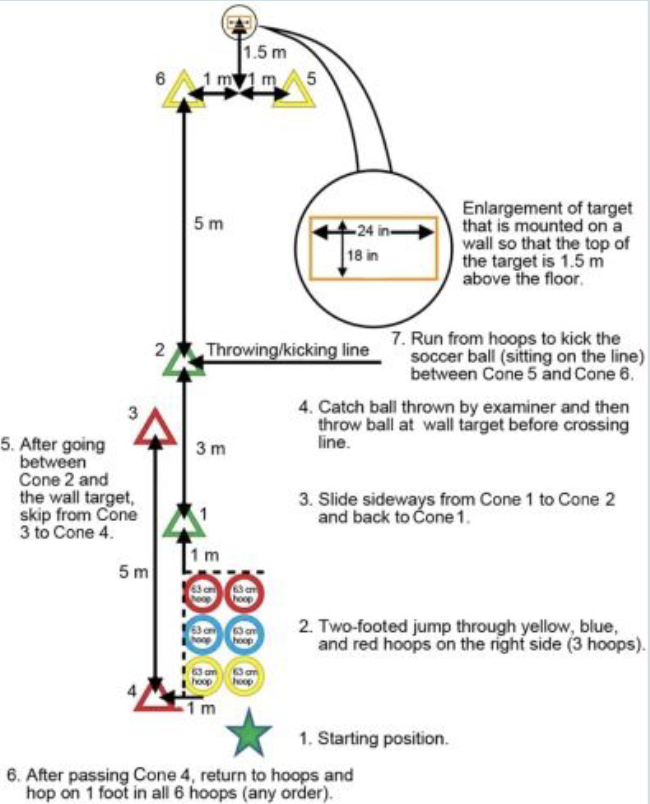
Canadian Agility & Movement Skill Assessment (CAMSA)
A measure of selected fundamental, complex, and combined movement skills, which are an important building block for childhood physical literacy
Includes a scoring sheet (CAMSA Score Sheet) that assesses different movement skills
Future Directions
Help inform the Active Healthy Kids Report Card for Canada
Provides information for future direction for education/recreation sector
Provides information for future direction for provincial and national sporting agendas
Physical Literacy Assessment for Youth (PLAY) Tools
PLAYfun: tool used by trained professionals to observe 18 fundamental movement skills, such as running, throwing, and balancing
PLAYself: simplified, quick-assessment version of PLAYfun focusing on 8 key tasks across four areas: locomotor, throwing, kicking, and balance
PLAYbasic: assessment of key movement skills performed by the child
PLAYcoach: used by coaches and professionals to record their professional perception of a child’s competence
PLAYparent: allows parents to assess their child’s physical literacy level
PLAYinventory: desgiend to track a child’s regularly participated-in leisure-time activities over the past year
Pre-Play (designed for educations observing children aged 18 months to kindergarten) & Adapted Play
PLAY Tools — Playbasic
Locomotor: run there and back/hopping
Throwing: overhand throw
Kicking
Balance: walk toe-to-heel backward
PLAY Tools: Assessment
Assessment for PLAY is based on a scoring system (four-point rubric) in two different categories: Developing and Acquired
Developing
1. Initial
2. Emerging
Acquired
3. Competent
4. Proficient
Confidence: Indicate whether the child had low confidence when performing each task
Comprehension: Prompt, Mimic, Describe, Demo
PL — Multidisciplinary
Physical competence, motivation, and confidence, knowledge and understanding create a physically literate child to be active for life
All disciplines are necessary in order to be physically literate
FMS vs Fundamental Movement Patterns (FMPs)
Fundamental Movement Patterns (FMPs) are essential, daily functional movements (squat, hinge, lunge, push, pull, carry, and rotate) that form the basis of safe, efficient physical activity and strength training
Statics, springs, swings, locomotion, landings, rotations
Movement Safety — Types of Landings
On feet
On hands
With rotation
On back
Fundamentals: Landings
Land like Cats
2 Mechanical Principles:
Absorb impact over greatest amount of time
Absorb impact over greatest amount of surface area
Landings on Feet
Toe-Ball-Heel Action = Absorption
Feet are shoulder width apart
Arms are out for balance
Shaped Jumps
3 Basic Shapes
Tuck: vertical jump in which the knees are raised to your chest as you rise into the air
Pike: vertical jump where the body hinges at the waist to form an “L” shape mid-air; legs remain straight and parallel to the floor, while arms reach forward to touch toes
Straddle: dynamic gymnastics and dance move requiring explosive power to jump high, lifting straight legs parallel to or above the floor in a wide, 180-degree side-split position, with toes pointed, hips rotated outwardly, and a secure landing
Landing on Hands
Forwards (finger, palm, on heel of hand)
Backwards: (from knees, from straddle, from stand)
Landings with Rotations
Shoulder Rolls
Forwards
Sideways
Backwards
Shoulder Rotations: roll occurs over shoulder (barrel position)
Should not hurt or roll over head
Forwards and backwards rotations occur on diagonal
Functional Gymnastics
Combines gymnastics techniques with strength and conditioning to improve daily life, fitness, and body control
Focuses on functional movement patterns like pushing, pulling, squatting, and core stability, often utilizing body weight to build strength, balance, and coordination
Children who possess high levels of movement skill have been found to have increased health and physical activity benefits during childhood — as such, in the participation of gymnastics, children can develop FMS and achieve these benefits
FMS and Functional Gymnastics
Functional Gymnastics involves several Fundamental Movement Skills (FMS) — gymnastics develops several essential FMS (locomotor, stability, and manipulative skills) needed for overall physical literacy
Gymnastics is considered a foundation sport, as it teaches children how to control their body in space, which is required for advanced sport-specific actions
Stability Skills
Dynamic vs Static
Maintaining balance and control while the body is in motion or transitioning between positions (dynamic) and maintaining a desired body position or posture while remaining in place (static)
i.e., (dynamic) walking along a balance beam, riding a bike, running and (static) standing on one leg, holding a plank, sitting on a balance ball
Stable (Static) vs Unstable (Dynamic)
Centre of Mass: the average point of total body mass and its base of support — an object is considered stable when the vertical line drawn from its CoM falls within its base of support
Movement Sentences
Used in physical education to help children combine different movements
Includes a beginning, middle, and final movement
i.e., Run (start) → Jump (middle) → Land/Pose (end)
Putting movements together can develop cognitive skills of movement
Connected to Laban’s Classification of Movement
Object Manipulative Skills
Propulsive Skills (Sending)
Receptive Skills (Receiving)
Retentive Skills (Retaining)
When assessing object manipulative skills for an individual with disability (i.e., someone in a wheelchair), their assessment should be adjusted accordingly to meet their capabilities
Object Manipulative Skills: Propulsive
The ability to send an object away
Two elements to consider when teaching (power + directional control/accuracy)
Connected to Phases of Movement (Preparation, Force Production, Critical Instant, Recovery/Follow Through)
Object Manipulative Skills: Receptive
Can receive objects with:
Hands
Feet
Implements
Ideally, when receiving an object, an individual is focused, reaches for the object, but also protects their body while absorbing the object’s force
Object Manipulative Skills: Retentive Skills
Ability to maintain control of an object while traveling
Important in several different ball sports
Inclusion
Full Inclusion: A child with a disability participates in the least restrictive environment
Includes social opportunities and opportunities to participate in the same PA as others
Promoting Inclusion
Encourage inclusive culture
Facilitate social interactions
Find areas of strength
Opportunities to learn activities that are valued by other children
Tips for Inclusion
Celebrate success
Avoid looking for issues
Involve the participant
Provide opportunities for participants to shine
Use instructional support
Foster equal relationships
Adaptations for Inclusion
Task/Curriculum: adjust tasks or lesson plan activities to be inclusive to all participants
Equipment: adjust equipment to suit the abilities of all participants involved (size, difficulty, etc.)
Environment: adjust environment to be inclusive for participants (i.e., increasing or decreasing activity areas, removing obstacles, etc.)
Instructions: ensure instructions are understood by all participants and are appropriate for their age group
Rules: adjust rules accordingly so all participants can participate an equal amount
Games
Activities in which one or more children engage in cooperative, collaborative, or competitive play with or without an object, within the structure of certain rules and boundaries
4 Categories
Game Forms
Movement Skills
Basic Strategies/Tactics
Criteria for assessing the value of a game
Games develop the Social and Emotional Development elements of PL by allowing participants to manage different emotions (i.e., happy, frustrated, angry) while developing self-esteem, teamwork, good sportsmanship, and understanding with others
Games: Game Forms
Conventional games
Original games
Games: Movement Skills
Include FMS
Locomotor
Stability
Object Manipulative
Games: Basic Strategies/Tactics
Rules, strategies
Boundaries
Basic elements that make a game
Require participants to make decisions
Games can be modified (increase or decrease difficulty) based on changing rules or boundaries within the game
Games: Criteria for Assessing Value of the Game
Are all participants included?
Does the game work?
Is learning occurring?
Why are you playing the game?
Games: Things to Consider
FUN
Inclusion
Elimination
Safety (Walls)
Progressive
When to stop an activity
Class Management
Establishing protocols and routines (4)
Entering physical activity space
Stop/Start signals
Equipment protocols
Partner protocols
Games: Hall of Shame
Picking team ‘captains’
Elimination games
Waiting in line
Fitness as punishment
Focus on ‘star’ athletes