Back & Vertebral Column
 Call Kai
 Learn
Learn Practice Test
 Spaced Repetition
 Match
Match Flashcards
 Knowt Play
1/41

There's no tags or description
Looks like no tags are added yet.
Name | Mastery | Learn | Test | Matching | Spaced | Call with Kai |
|---|
No analytics yet
Send a link to your students to track their progress
42 Terms
What are some of the main functions of the vertebral column?
Protect the spinal cord
Structure support (i.e. posture)
Pathway for neurons to communicate with the spinal cord (provision of entry & exit points for nerves)
What are the implications of fused vertebra in the sacrum & coccyx?
Allows for collective movement
What are the implications of stacked vertebra in the cervical, thoracic, & lumbar regions of the vertebral column?
Allows for different movements to be produced;
Cervical vertebrae → twisting of the neck
Thoracic vertebrae → limited movement (more bones/ribs attached → more restriction)
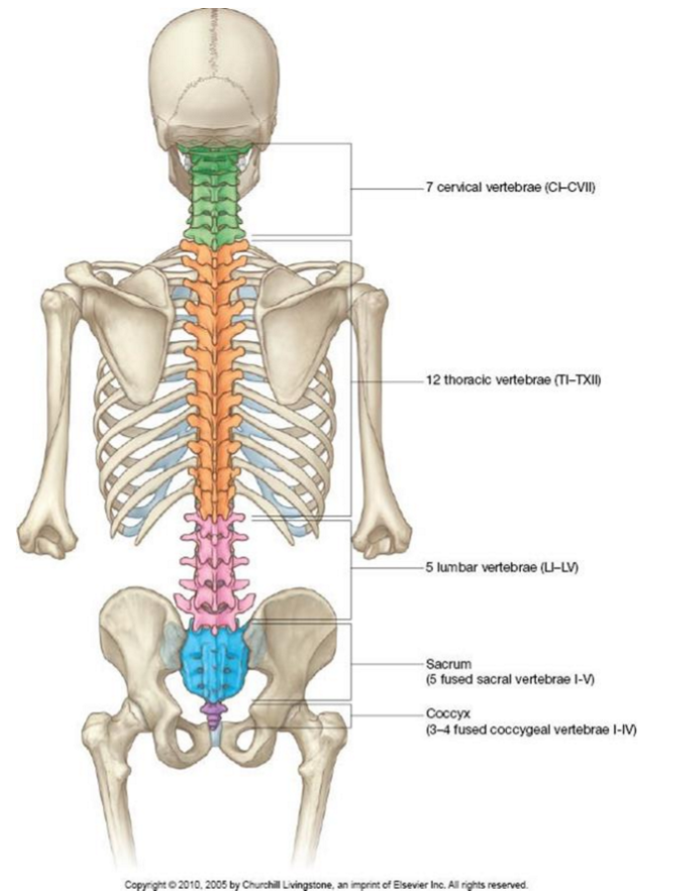
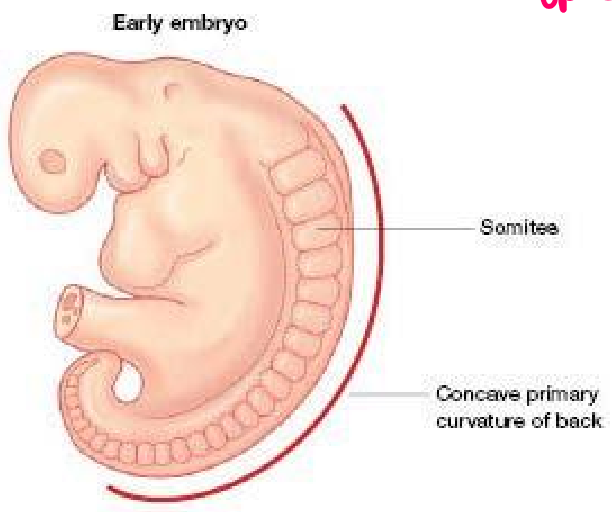
What does the term kyphosis/kyphotic refer to?
Primary curvatures of the vertebral column
Primary ‘C’ - shapes curvature seen in foetus
Why is tummy time important for babies?
Trains their tissues to change the kyphotic position of the vertebral column to a lordotic position
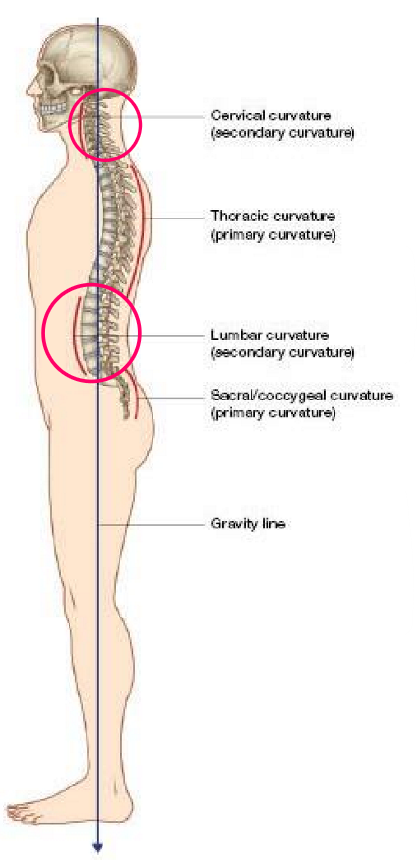
What does the term lordotic refer to?
Secondary curvatures of the vertebral column
Found in the cervical & lumbar regions
Allow us to maintain our posture for a long period of time
What is the difference between the terms ‘atypical’ & ‘abnormal’
Atypical: different from what is most common/expected
Abnormal: something which is not necessarily right and may cause impaired functioning
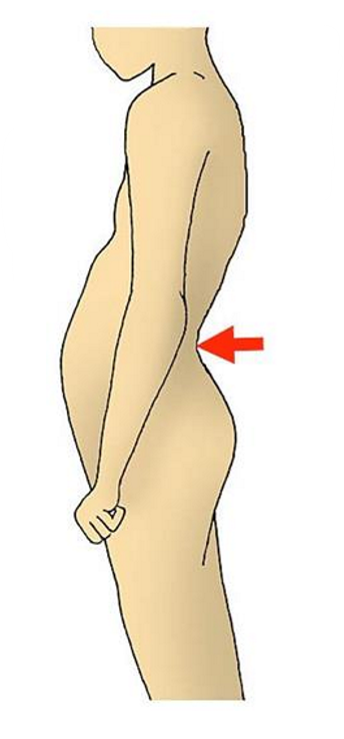
What does the following image display an example of, & how might this occur?
Excessive lordosis: increased secondary curvature in the lumbar region
Possible causes:
Differences in pelvic posture
Pregnancy → changes in weight-bearing across the body
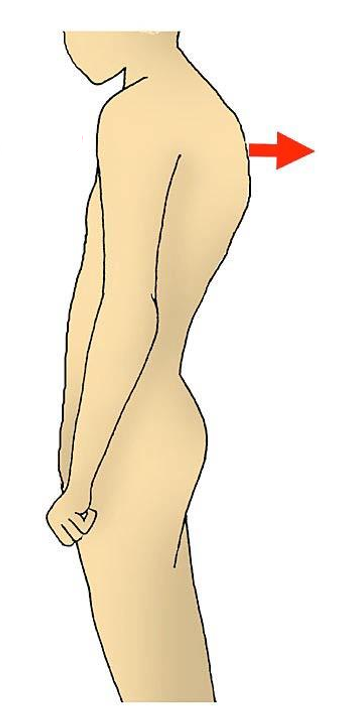
What does the following image display an example of, & how might this occur?
Excessive kyphosis: increased primary curvature in the thoracic region
Possible causes:
Excessive weight-bearing
Being nervous (emotional state)
Puberty
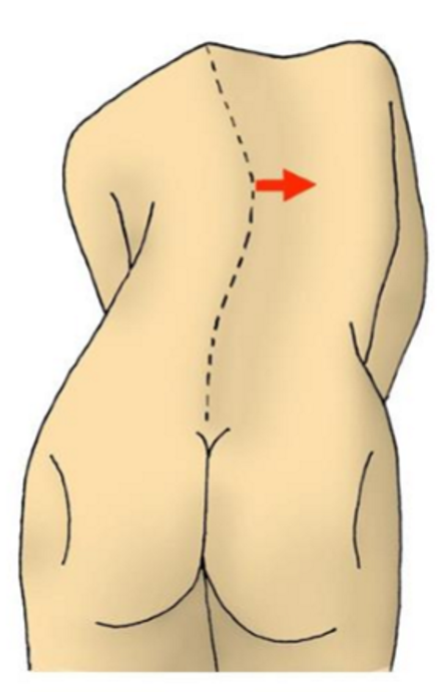
What does the following image display an example of, & how might this occur? What are some implications of severity of this condition?
Scoliosis: abnormal side-to-side curvature of the vertebral column
Possible cause: differences in repeated postural positions (e.g. curvature of the spine in a violin player due to repeated posture in which a violin was held)
Severe scoliosis may affect the viscera → may need to be corrected by surgery

Label the following diagram of sections of lumbar vertebrae
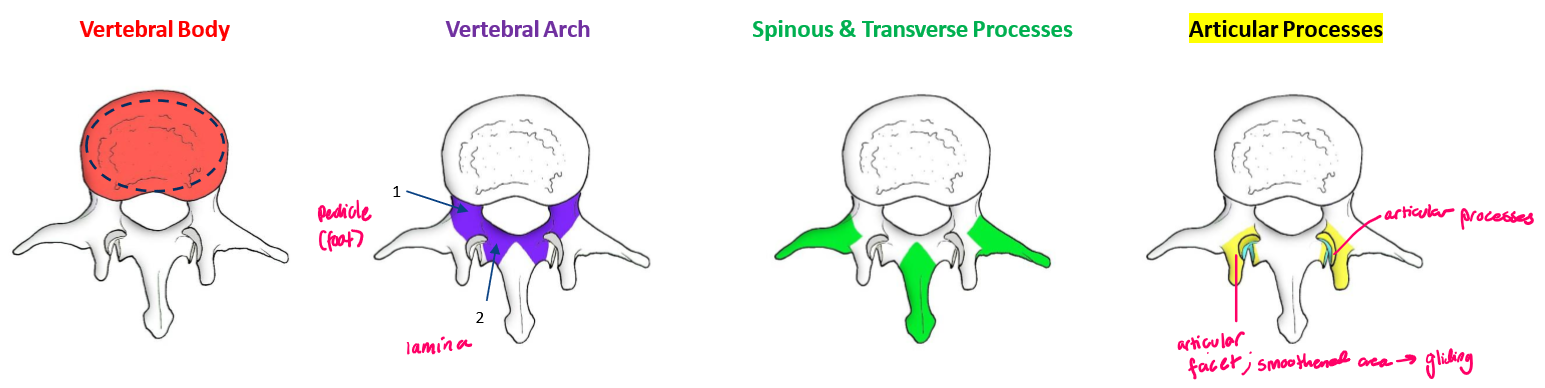
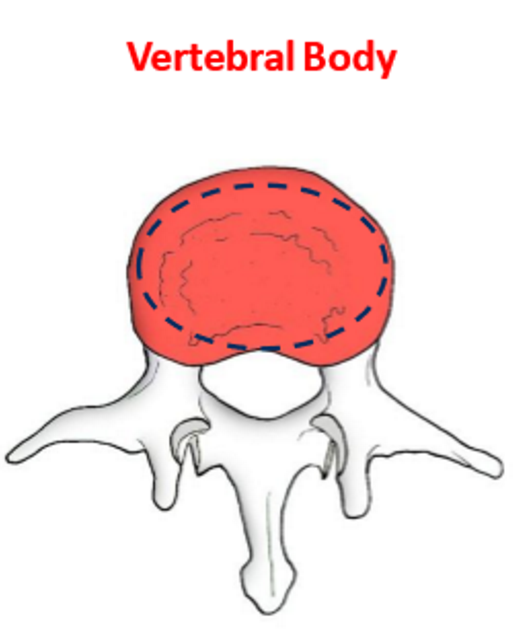
What are the roles of the vertebral body?
Weight bearing
Superior & inferior articulation
Anchorage of articular discs to the vertebrae via an epiphyseal ring
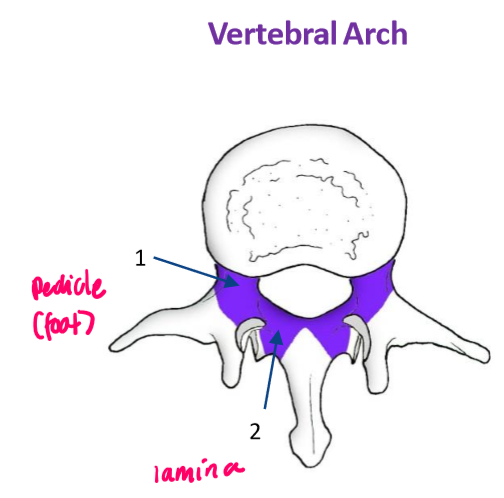
What are the roles of the vertebral arch?
Formation of the vertebral foramen = passageway for the spinal cord
Protection of the spinal cord
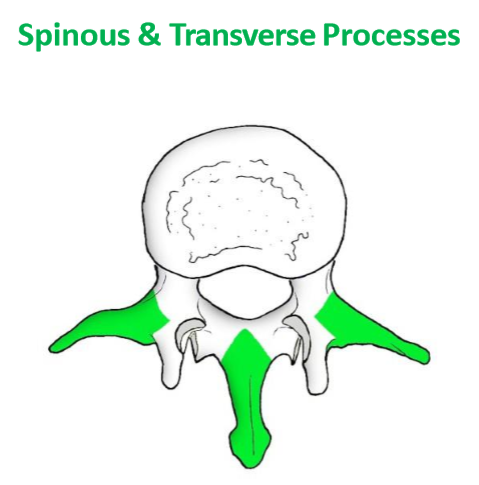
What are the roles of the spinous & transverse processes?
Levers for muscle & ligamentous attachment
Because we need to be able to support joints, connect tissues, & move these regions
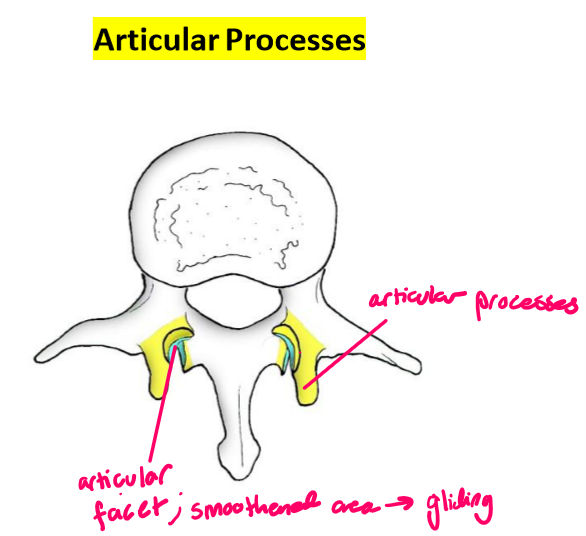
What are the roles of articular processes & articular facets?
Project superiorly & inferiorly → superior & inferior articulations
Project with articular facets (cyan): smoothened areas which allow for gliding movements
The directions facets are facing guides the movements that different regions of the vertebral column can achieve
Controls direction & extent of movement (unlike the vertebral body)
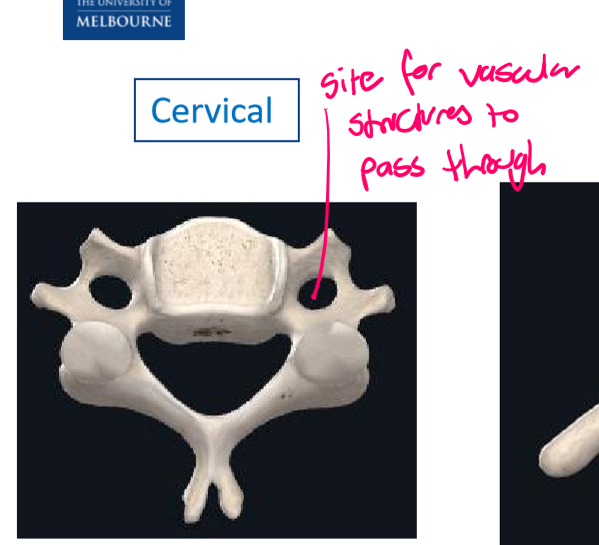
What is a distinct feature of cervical vertebrae?
‘Eyes’ in the vertebral column = site for vascular structures to pass through
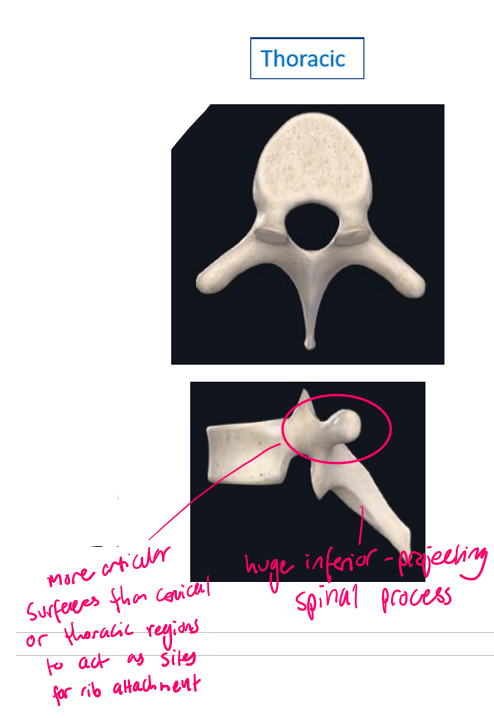
What are two distinct features of thoracic vertebrae?
Huge inferior-projecting spinal processes
More articular surfaces than cervical & lumbar (accidentally wrote thoracic on diagram) → sites for rib attachment
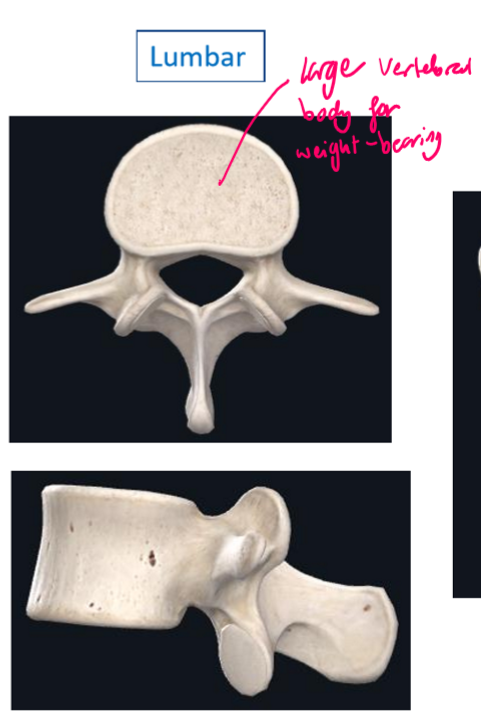
What is a distinct feature of lumbar vertebrae?
Large vertebral body for weight-bearing
Why are the superior & inferior vertebral notches labelled as such, & not as foramen?
Formen produce continuous complete holes (e.g. vertebral canal), whereas notches produces incomplete holes (intervertebral foramen - idk why they are called foramen)
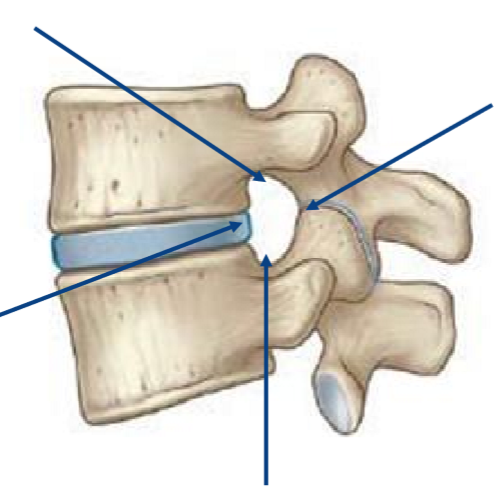
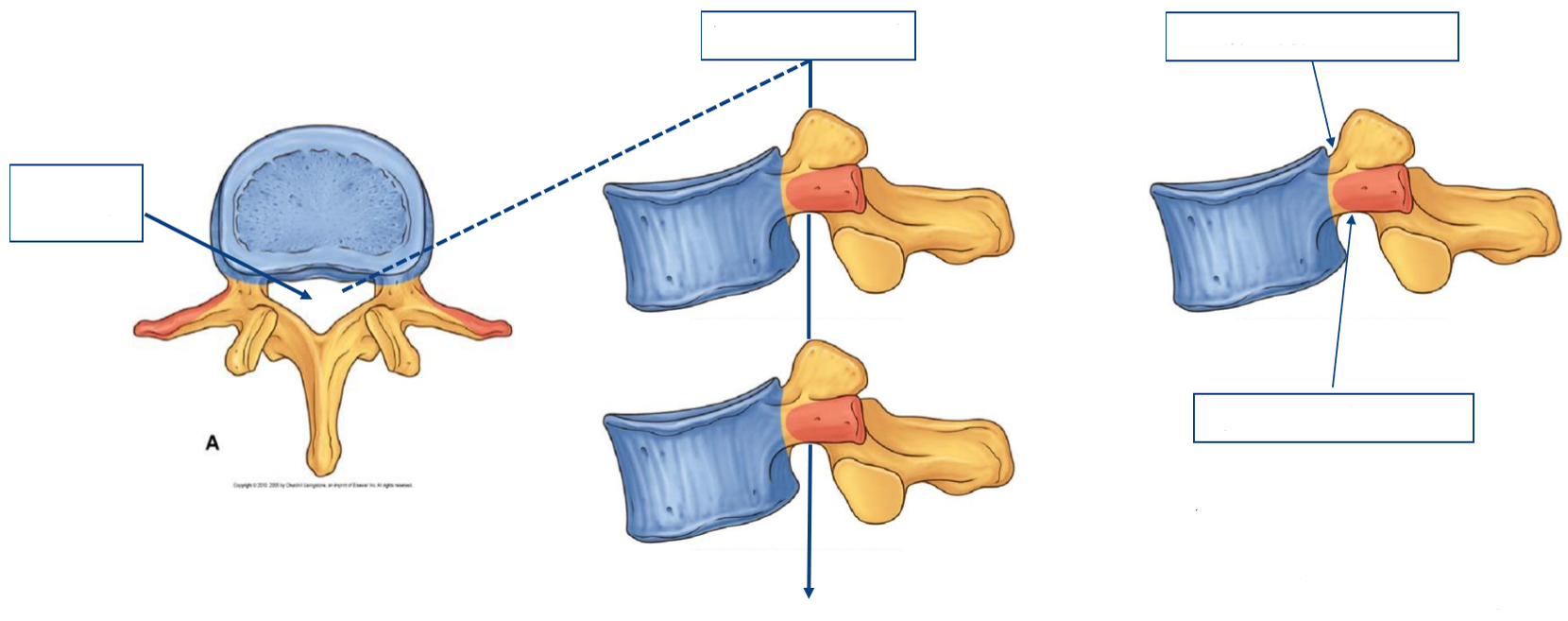
Label the following diagram
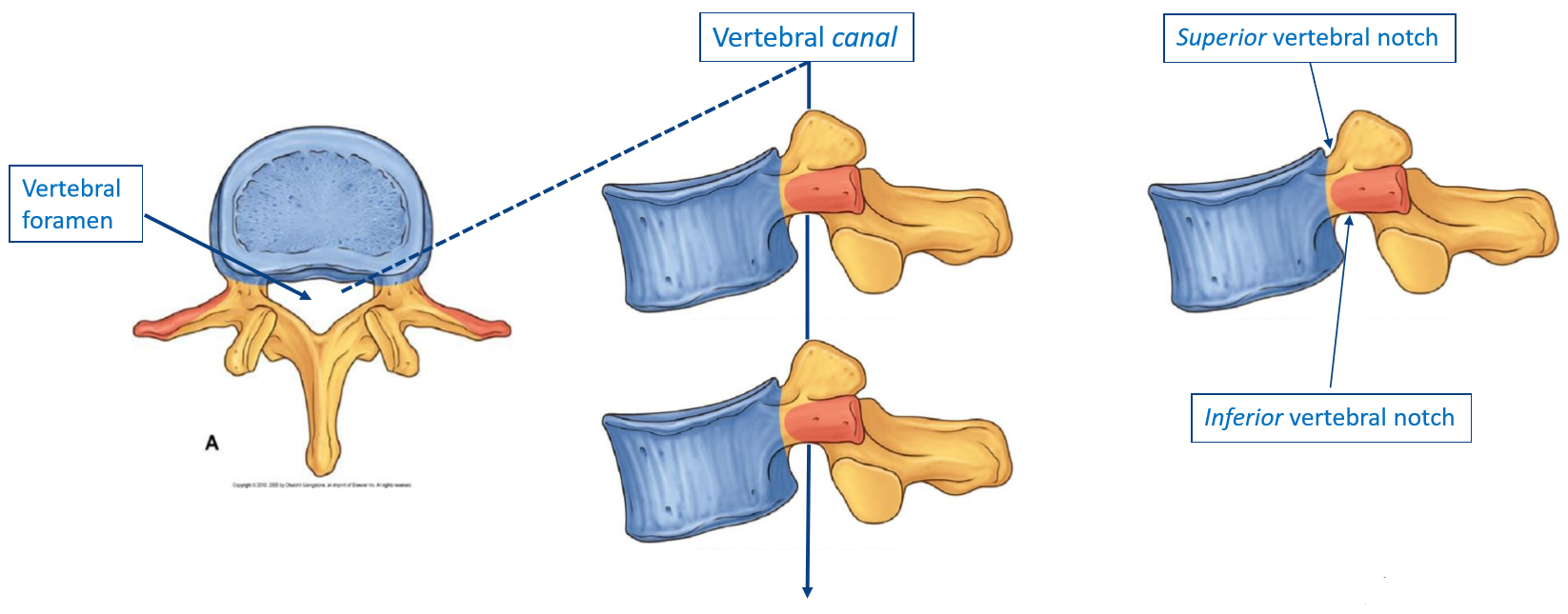
What are intervertebral foramen?
Holes in the vertebral column which are pathways for nerve projections of the spinal cord
What are the 3 intervertebral contents?
Spinal nerve roots
Dorsal root ganglia
Vessels
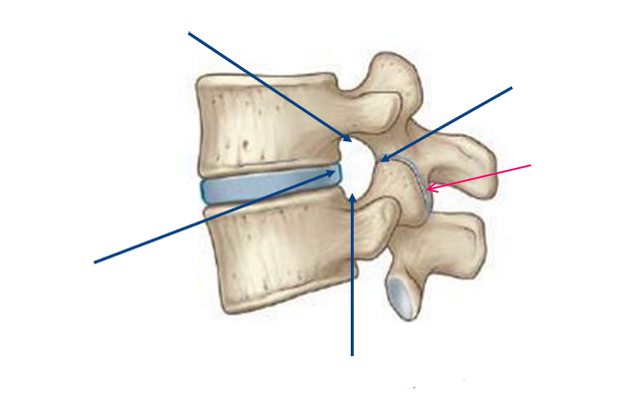
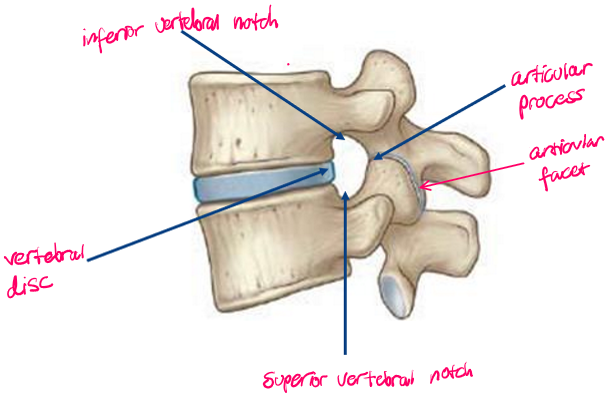
What are the boundaries of the intervertebral foramen? Label them in this diagram
Inferior vertebral notch
Superior vertebral notch
Articular process
Vertebral disc
*Articular facet isn’t a boundary of the intervertebral foramen
What is an intervertebral joint?
The vertebral disc and its associated vertebral body
NOT all the joints associated from one vertebra to the next
What type of joint is an intervertebral joint?
Symphysis; secondary cartilaginous joint
Brings force down & disperses weight onto the vertebra
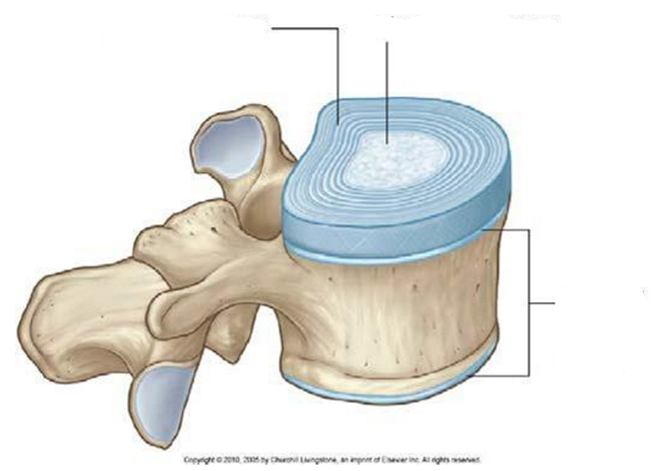
Label the following diagram
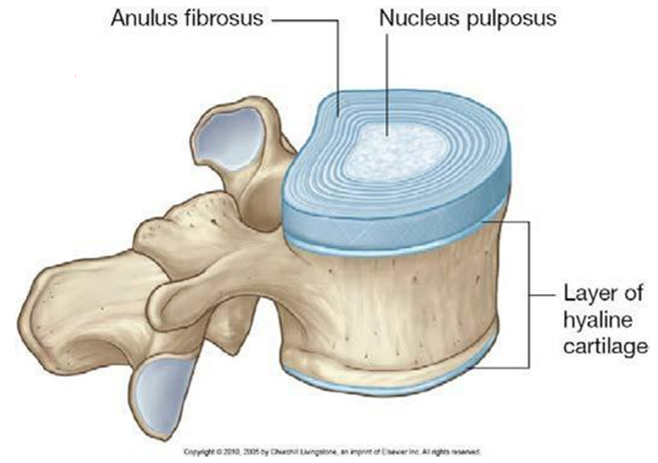
State the two components of the vertebral disc
Annulus fibrosus
Nucleus pulposus
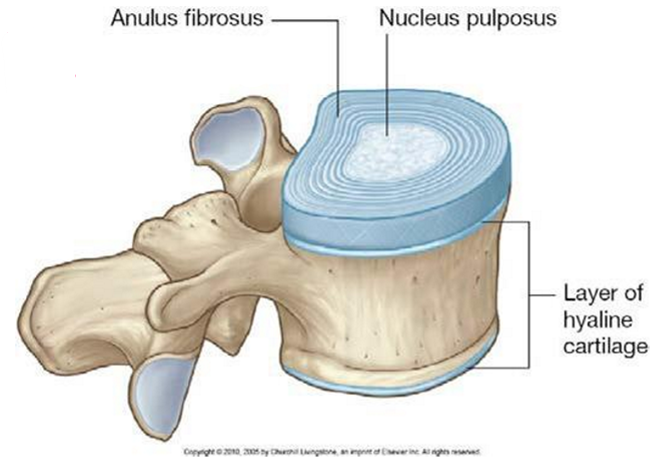
Describe the annulus fibrosus
Concentric lamellae/angulations of collagen fibres
Permits movement in all directions
Resists excessive rotation
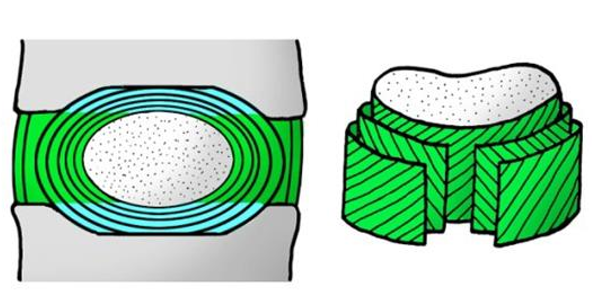
Describe the nucleus pulposus
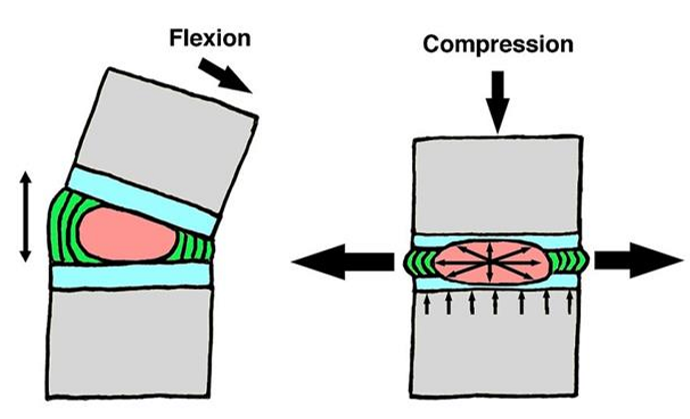
Gelatinous consistency
Shock absorber → disperses compressive forces
Deforms but is not compressible
Ability to hold water (why we are 1-2 cm taller in the morning - water retained in the nucleus pulposus when we sleep)
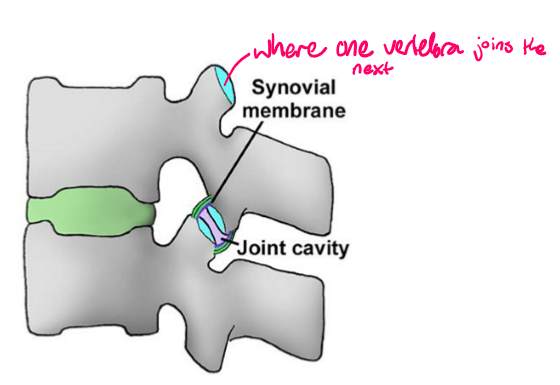
What are zygapophyseal joints?
Plane synovial joints relating to gliding movements
Movement depends on the orientation of the articular surfaces involved
Superior & inferior processes have ‘facets’/articular surfaces
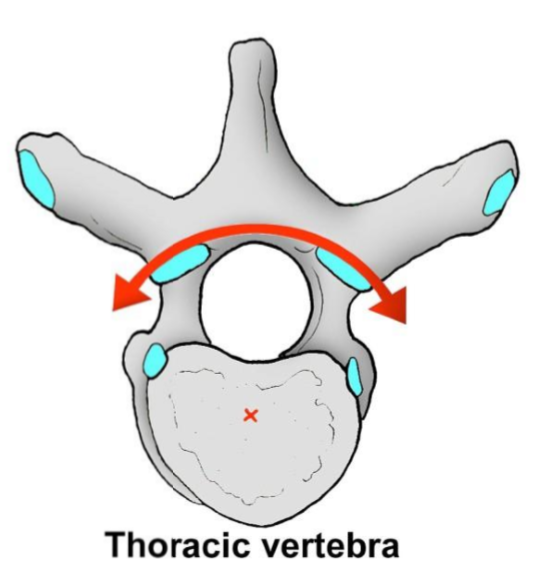
What type of movement is permitted by the thoracic zygapophyseal joints?
Rotation & side-bending
Movement in the coronal plane
Range of motion is restricted by the ribs
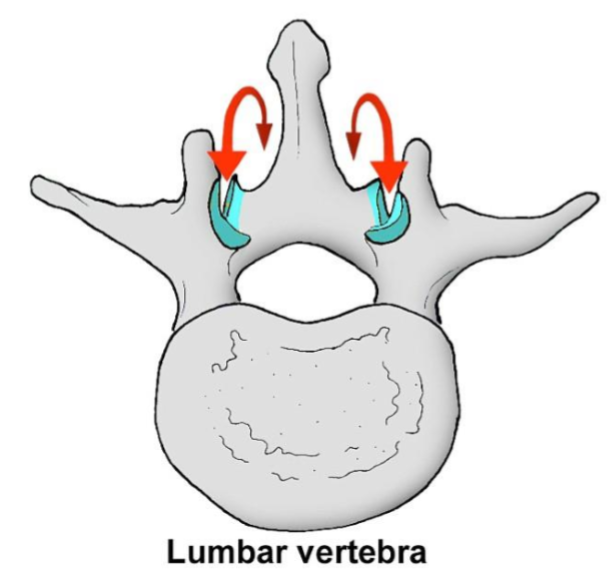
What type of movement is permitted by the lumbar zygapophyseal joints?
Flexion & extension
Movement in the sagittal plane
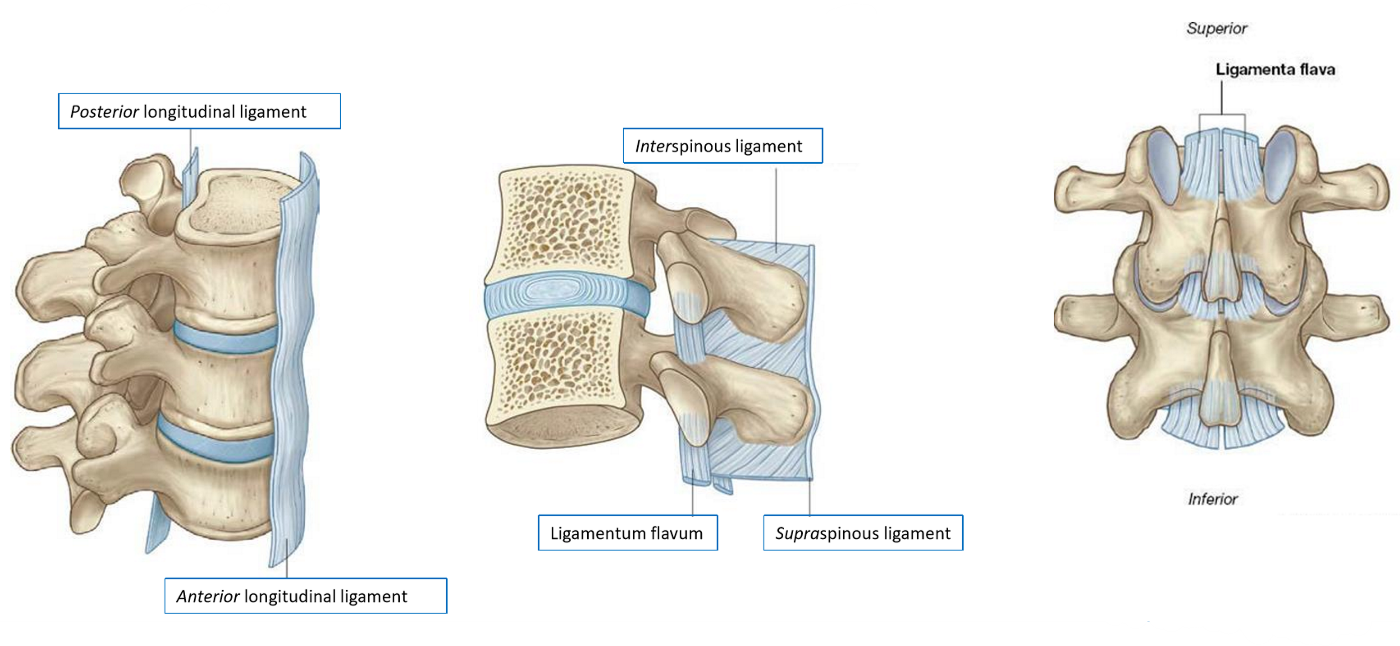
What do the posterior longitudinal ligament & anterior longitudinal ligament attach to?
The vertebral body
What properties does the ligamentum flavum have that other vertebral column ligaments don’t have, & what is the implication of this property
More elastin than other vertebral column ligaments
Permits more stretch & movement
Not as continuous as interspinous & supraspinous ligaments
Extends from one vertebra to the next & then stops
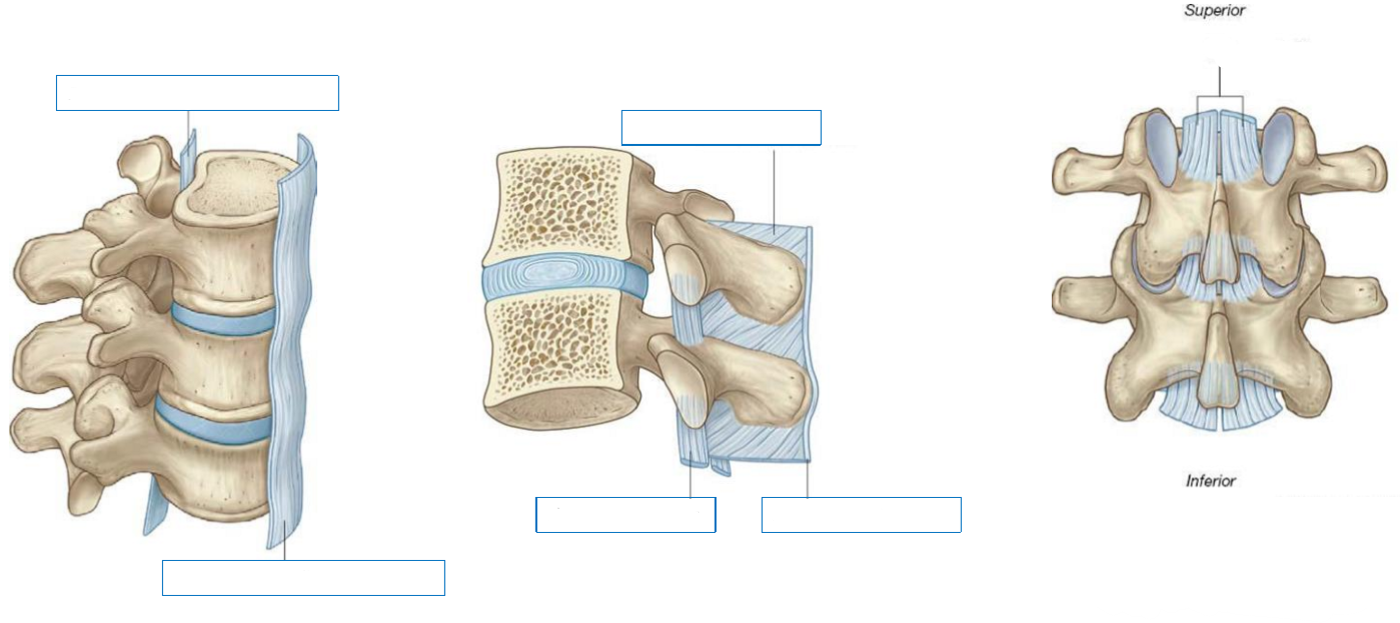
Label the following diagram of the major vertebral column ligaments
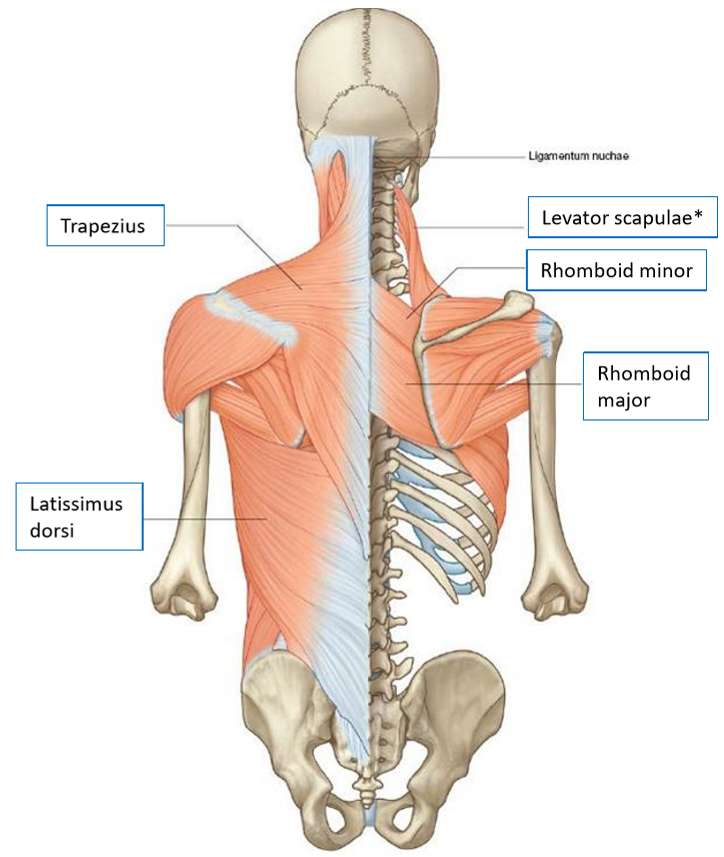
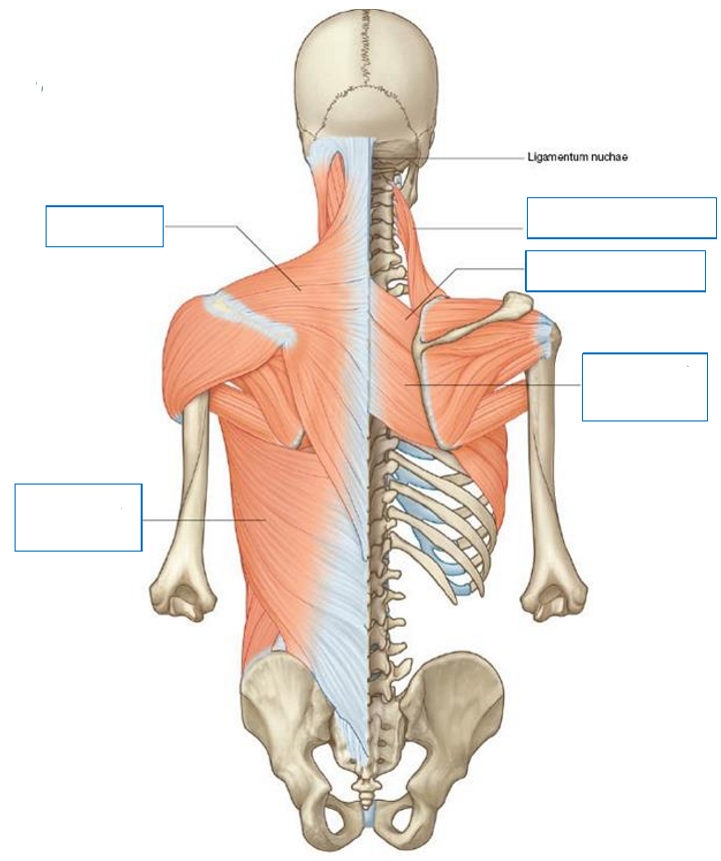
What are the extrinsic back muscles?
Attach to & act on the upper limb
Describe properties of extrinsic back muscles & provide some examples
Trapezoid & rhomboid shapes
'Major’ (large) & ‘minor’ (small)
Examples:
Latissimus Dorsi (broadest back)
Levator Scapulae (elevate scapula)
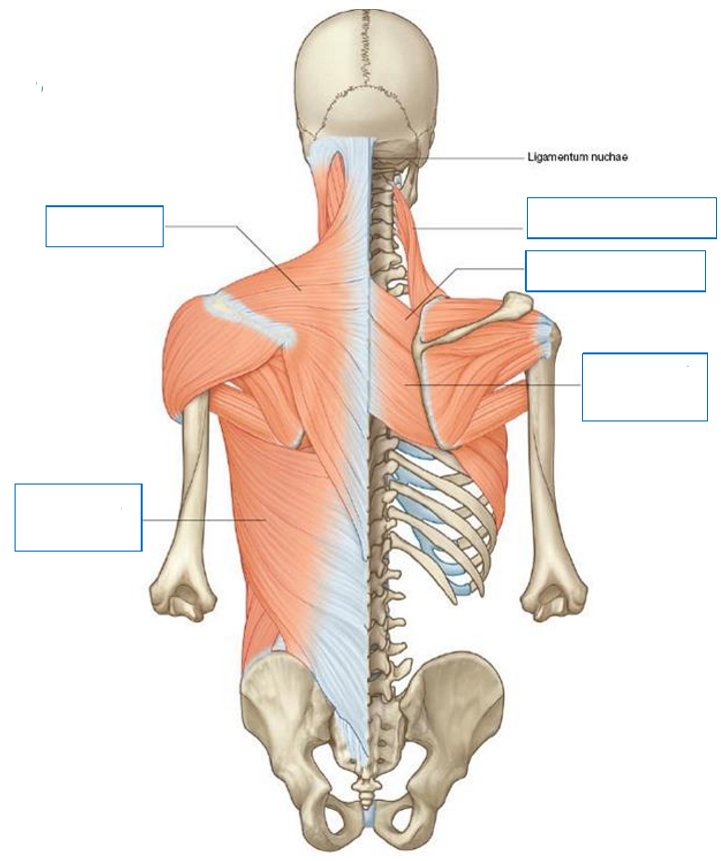
Label the following diagram of extrinsic back muscles
What are intrinsic back muscles?
Primarily attach to & act on the back (localised function)
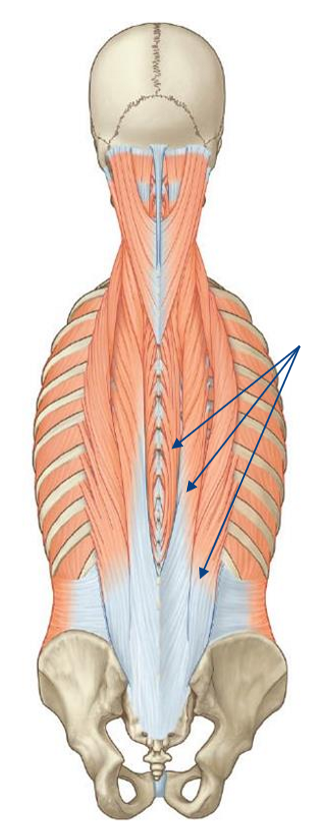
What are the prime movers of the back, & what plane do they permit movement in?
Erector spinae → movement primarily in the sagittal plane
Concentrically extend the trunk
Eccentrically flex the trunk
Commonly implicated w/ postural issues when they become tired & fatigued from constantly being worked
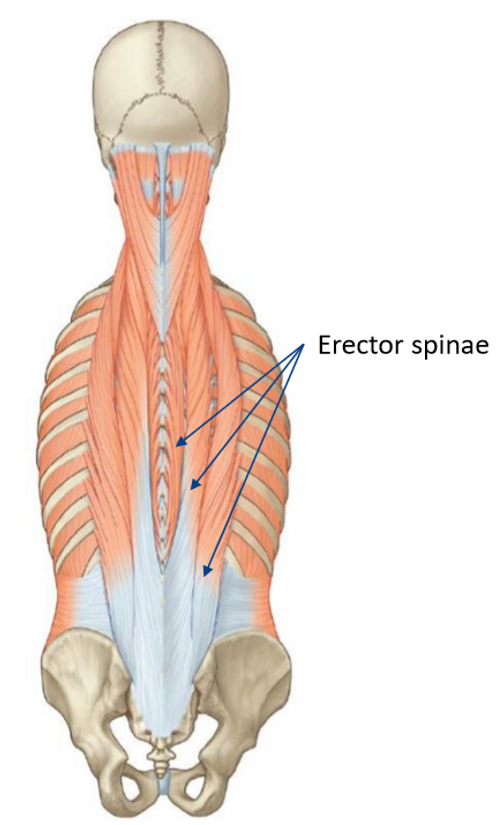
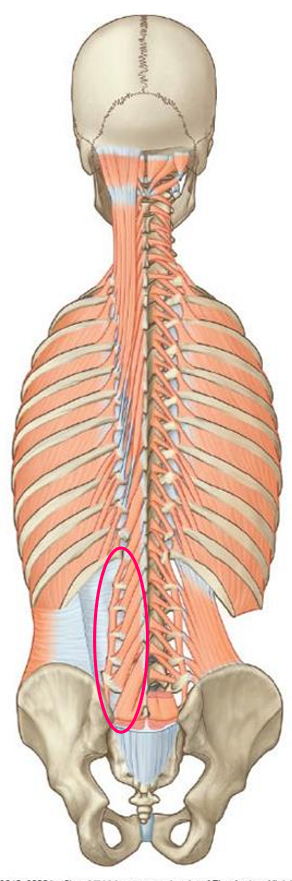
Describe the structure, location & function of transversospinalis muscles
Structure: group of short muscles which extend from one vertebra to the next
Location: deep to the erector spinae, localised to the vertebral column
Function:
Control of ‘fine’ movements @ vertebral segments
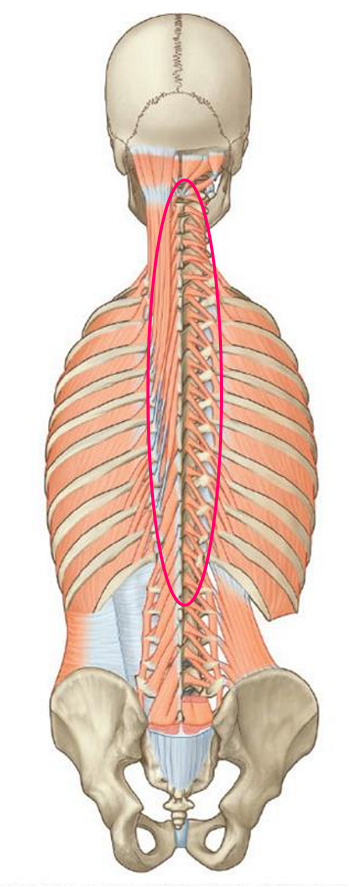
What are multifidus muscles?
Thicker transversospinalis muscles attached to the lumbar region of the vertebral column
Allow for finer control of movement
Important in rehabilitation; improve smaller ‘segmental’ movements
Injuries may arise if the multifidus is not supporting the spine at a local, controlled level