General Examination
 Call Kai
 Learn
Learn Practice Test
 Spaced Repetition
 Match
Match Flashcards
 Knowt Play
1/19

There's no tags or description
Looks like no tags are added yet.
Name | Mastery | Learn | Test | Matching | Spaced | Call with Kai |
|---|
No analytics yet
Send a link to your students to track their progress
20 Terms
Mention items of general examination.
A. General look
Posture and gait (like scissoring in spastic CP)
Nutritional status
Hydration status
Signs of Respiratory distress
Respiratory Noises
Anthropometric measurements
Vital signs
Skin, hair and nails.
Mention comments for general look.
Note whether the child looks well or ill, calm or irritable.
Level of consciousness: conscious, lethargic, apathetic or unconscious.
Look for dysmorphic features.
Assess pallor, jaundice and cyanosis.
What to look for for assessment of nutritional status?
Face: “moon face” (in kwashiorkor) or have “monkey facies” or old man face appearance (in marasmus) or signs of vitamin deficiency ex: angular cheilosis.
Visible severe muscle wasting: Loose skin folds or severe muscle wasting may be visible at the thighs, buttocks (Look from the side), shoulders, arms, ribs, and scapulae.
Edema of both feet
Inspect both of the child’s feet (dorsum) to determine the presence of edema.
Expose the lower limb. Press gently but firmly on the dorsum of
each foot for 10 seconds and release, using your thumb. A residual dent in the child’s foot points to the presence of pitting edema.
o Behind the medial malleoli, or lateral malleoli
o Shin of tibia of both lower limbs
o Sacral
o Genital edema (labial, clitoral in females, scrotal, penile in males)Comment on edema (laterality, pitting, tenderness and level)
Check for presence of eye puffiness, anterior abdominal wall edema and ascites.
Mention causes of generalized edema.
Renal (nephrotic syndrome, nephritis, renal failure)
Nutritional (PEM: kwashiorkor)
Hepatic (liver cirrhosis)
Cardiac (heart failure)
Allergic (angioedema)
Others: Protein-losing enteropathy, Myxedema coma, Henoch– Schönlein purpura.
Mention signs of dehydration.
Level of consciousness: irritability, lethargic or unconsciousness
Drinks eagerly or not able to drink or breast feed
Depressed anterior fontanelle
Sunken Eyes
Dry tongue
Delayed skin pinch: returns back slowly 1-2 sec or very slowly >2 sec
Diminished urine output
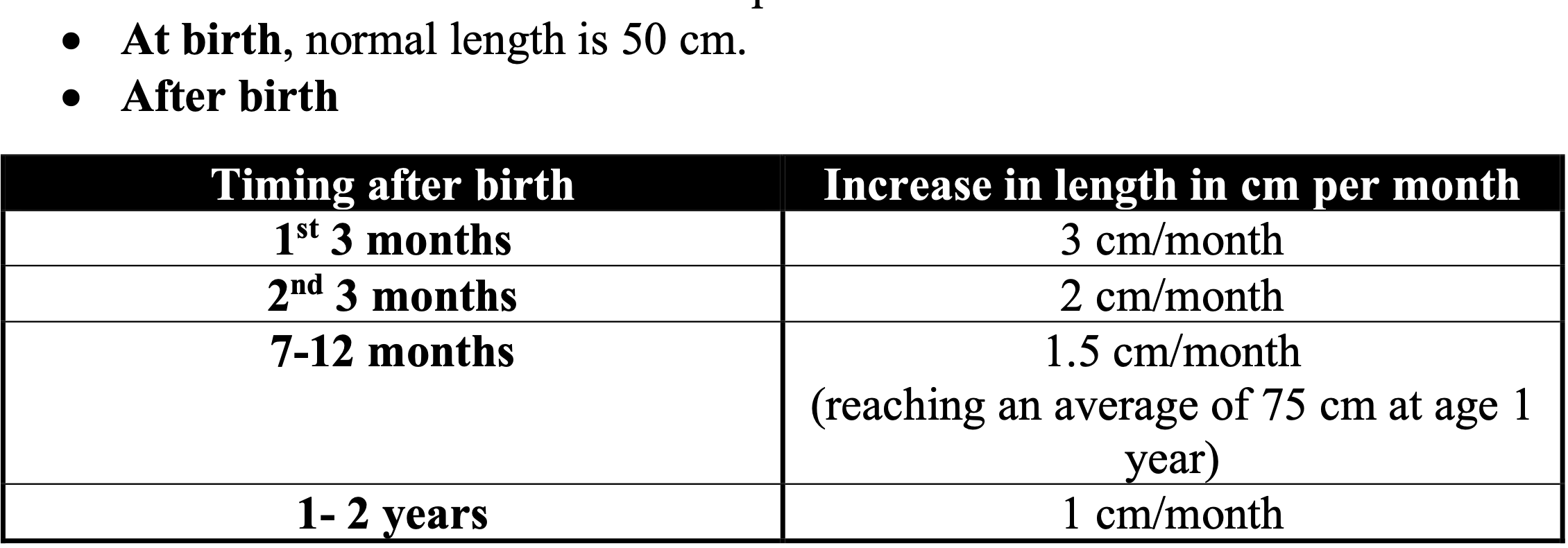
Mention normal length values.
How to measure child’s height?
Use a stadiometer to measure the standing height of children older than 2 years of age. The child should stand erect with the feet bare and the occiput, scapulae, buttocks, and heels all touching the backboard; the knees should be straight. The head with the corners of their eyes horizontal to external auditory meatus, looking straight ahead “Frankfurt plane”.
How to measure head circumference?
Use a flexible, non-stretchable tape to measure the maximum occipitofrontal
circumference in children under 36 months or in patients with developmental
delay or suspected hydrocephalus.
The landmarks for measurement are the superior orbital ridge (just above the eyes) at the front, and the external occipital protuberance at the back.
At birth, normal head circumference (HC) is 35 cm.
After birth, HC increases by 2 cm in the 1st 3 months, then 0.5 cm afterwards
reaching an average of 45 cm at 1 year of age.
Plot measured head circumference on percentile chart.
What is microcephaly and mention its causes?
head circumference 3 Standard deviations below the mean for age and sex.
Causes of microcephaly:
1. 1ry (genetic):
o Autosomal recessive with typical appearance of slanted forehead, prominent nose and ears, severe mental retardation and seizures.
o Autosomal dominant
o Genetic syndromes: Trisomy 18, 21, Cornelia de Lange.
2. 2ry (non-genetic)
o Congenital infections: ToRCHS
o Maternal: phenylketonuria, exposure to radiation, drug abuse, Fetal alcohol syndrome.
o Acquired after an insult to the developing brain, e.g. perinatal hypoxia, hypoglycemia, or meningitis.
What is small head and mention its causes?
head circumference 2 Standard deviations below the mean for age and sex.
Causes of small head:
1.Familial(present from birth and development is usually normal)
2. Microcephaly
3. Craniosynostosis
What is macrocephaly?
head circumference 2 Standard deviations above the mean for age and sex.
Causes of large head:
Benign Familial macrocephaly
Raised intracranial pressure:
a. Hydrocephalus
b. Chronic subdural haematoma
c. brain tumour
d. neurofibromatosisCerebral gigantism (Sotos syndrome)
CNS storage disorders, e.g. mucopolysaccharidosis (Hurler
syndrome)
How to measure mid arm circumference and mention normal values?
Use a non-stretchable tape to measure the mid-upper arm circumference (MUAC) at the midpoint between the tip of the shoulder (the acromion) and the tip of the elbow (the olecranon process).
It is relatively constant in children between 6 months - 5 years, ranging from 16 to 17 cm. Measurements of >13.5 cm are considered normal.
MUAC is a useful screening tool to detect malnutrition, where a measure of <11.5 cm indicates severe malnutrition.
How to measure Upper segment/Lower segment ratio, and mention normal values.
By using the following steps:
a. Upper body segment by measuring the sitting height (from the vertex of the head to the buttocks)
b. Lower body segment: Standing height - Upper body segment c. Calculate the Upper to Lower segment ratio
The mean of normal US/LS ratio:
o at birth: 1.7
o at 3 years: 1.3
o >7 year: 1.1
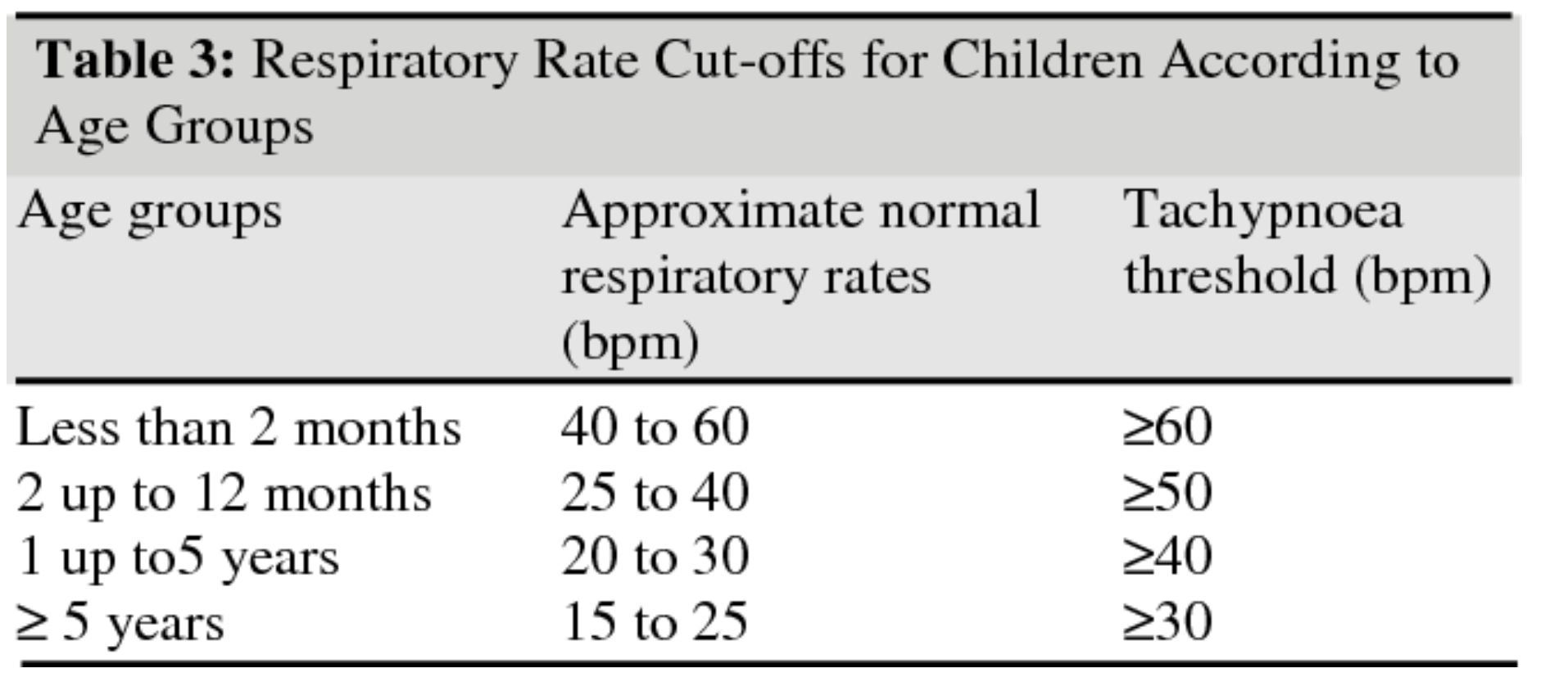
What is the use of upper segment/lower segment ratio?
• It is used to differentiate proportionate and disproportionate causes of short stature.
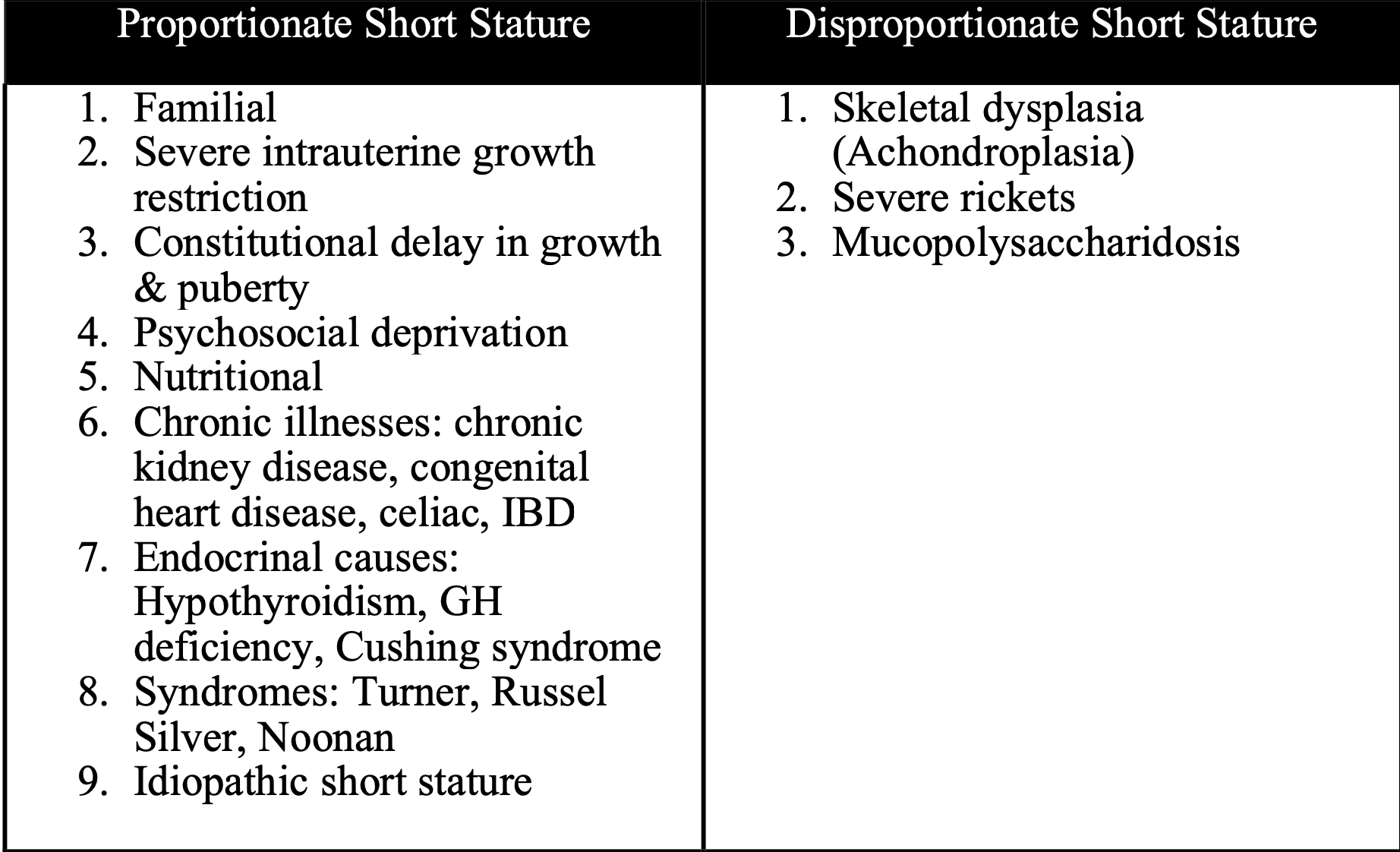
Mention normal heart rate according to age.
How to assess femoral pulse?
Position: The hips are in mild abduction and extension. Palpate mid-way between anterior superior iliac spine and symphysis pubis.
What artery to assess pulse in different pediatric age groups?
Assess the pulse by palpation of the peripheral arterial pulses (the brachial artery in infants and radial artery in older children) and central pulsations (femoral pulse, carotid).
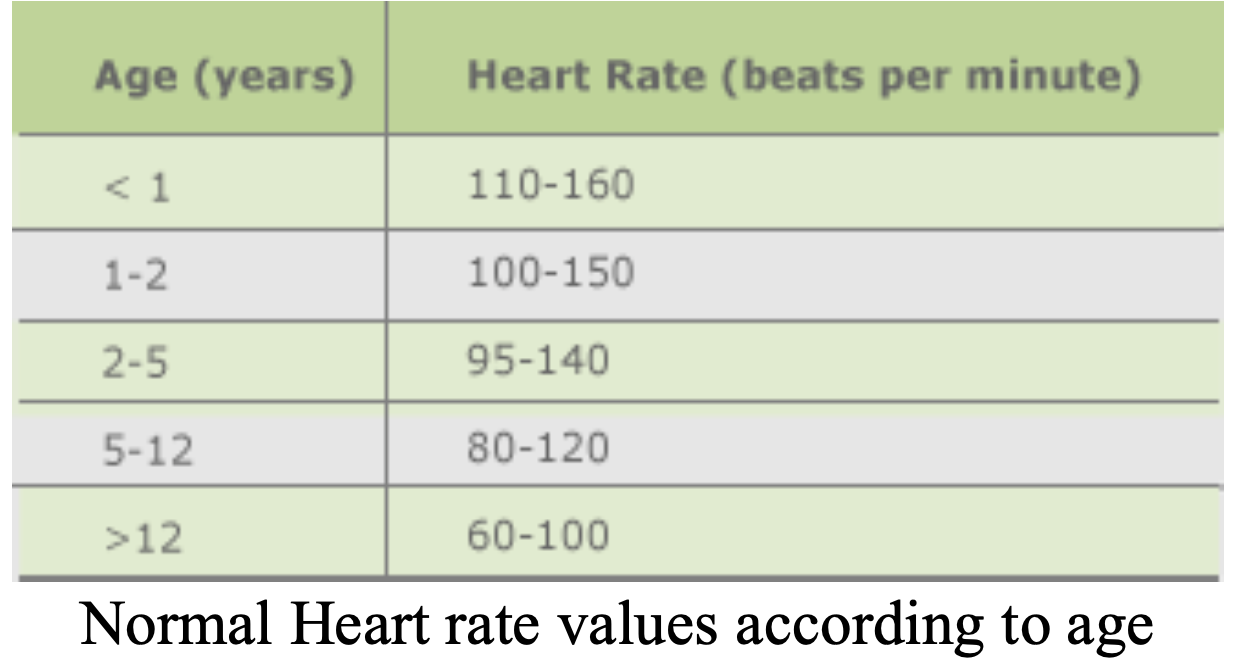
How to measure rr in children and measure normal values?
Observe chest movements (in older children) or abdominal movements (in infants and young children), and count the number of respirations over 1 min- as infants have irregular respirations.
In older children, pretend to be measuring the child’s radial pulse while observing the respiration.
What is Infrared Tympanic Membrane Thermometry?
Infrared tympanic membrane thermometry is an easy, safe, fast, and practical method to take a child’s temperature, with no risk of cross- infection, and it can accurately reflect the core body temperature.
o Method of Measurement
1. Retract the pinna gently and insert the disposable probe into the external
auditory canal. Then watch for the digital readout (after about 2–3 s).
2. Then remove the tympanic thermometer and read the temperature and Repeat the measurement twice and record the higher one.
What does fever of unknown origin refer to?
Fever of unknown origin refers to subacute presentation of a single illness with temperature >38.3°C >3 weeks (out-patient >2 visits) present for most days or > 1 week in hospital.
- Most common causes are infections, inflammatory/vasculitic disorders, and malignancies.