My Neuro Exam 1 Set
 Call Kai
 Learn
Learn Practice Test
 Spaced Repetition
 Match
Match Flashcards
 Knowt Play
1/219

There's no tags or description
Looks like no tags are added yet.
Name | Mastery | Learn | Test | Matching | Spaced | Call with Kai |
|---|
No analytics yet
Send a link to your students to track their progress
220 Terms
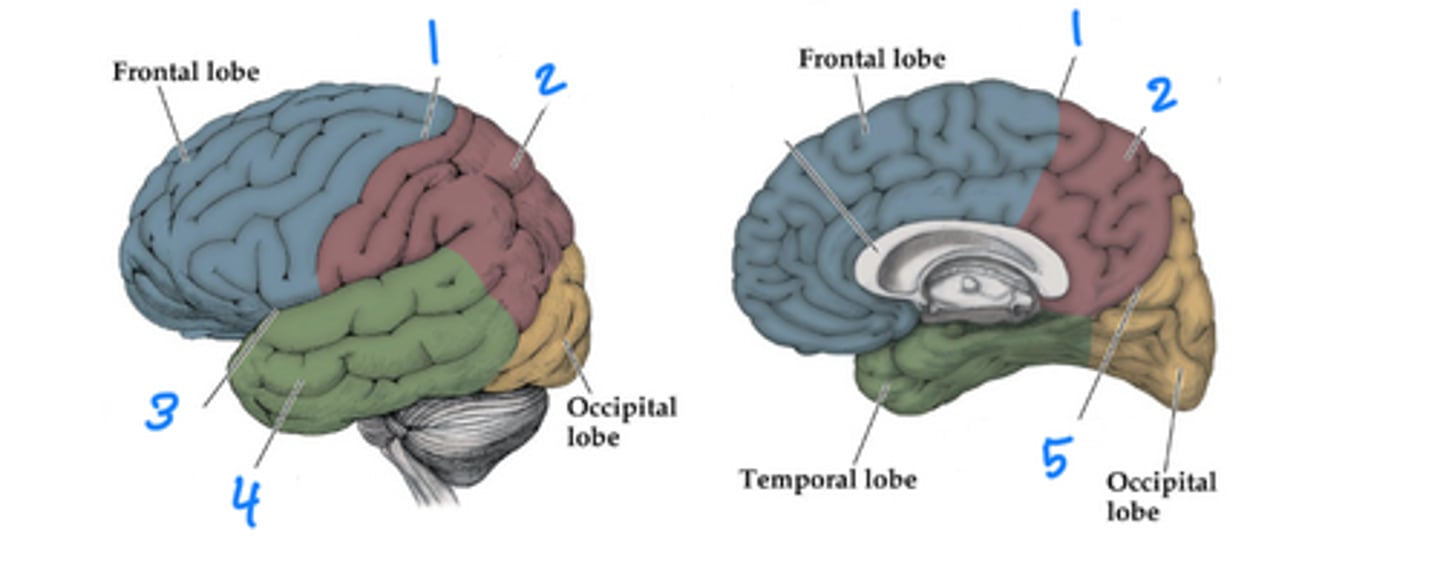
1
Central sulcus
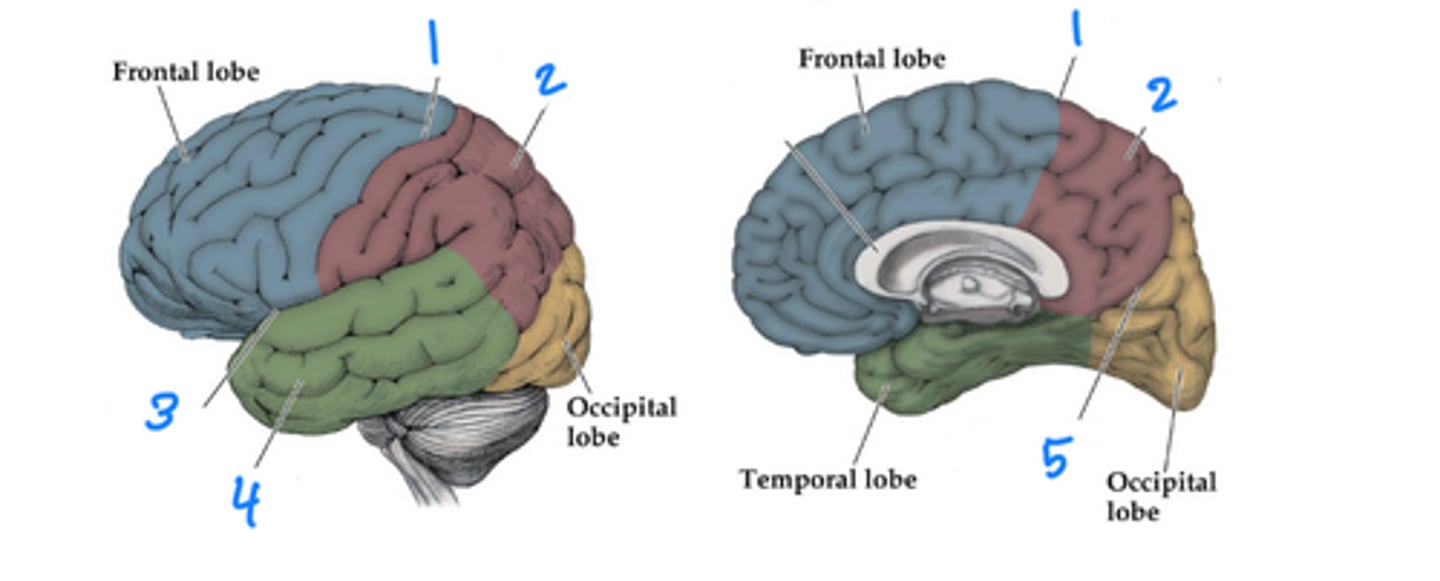
2
Parietal love
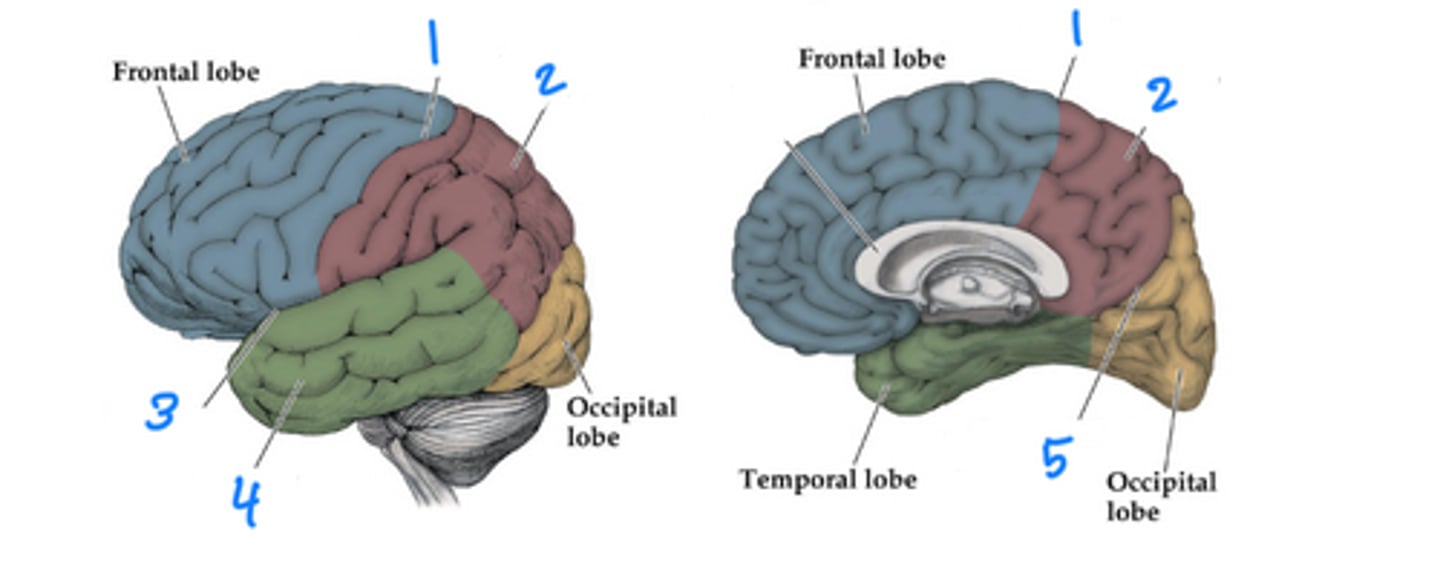
3
Sylvian fissure
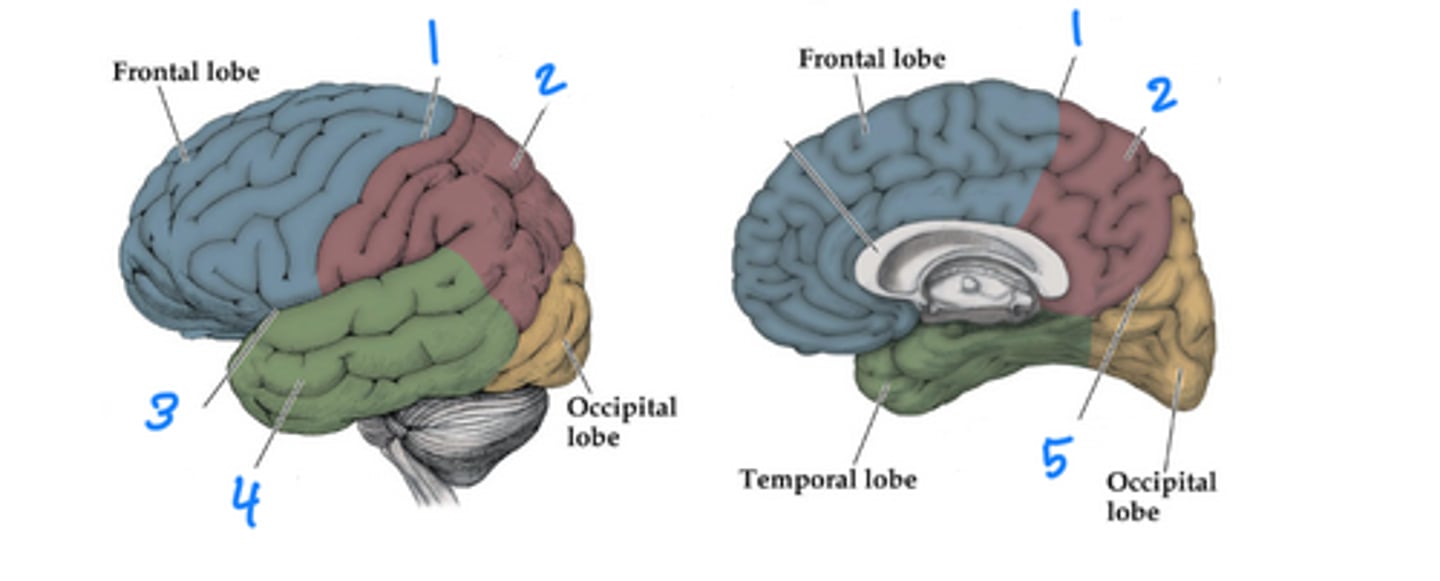
4
temporal love
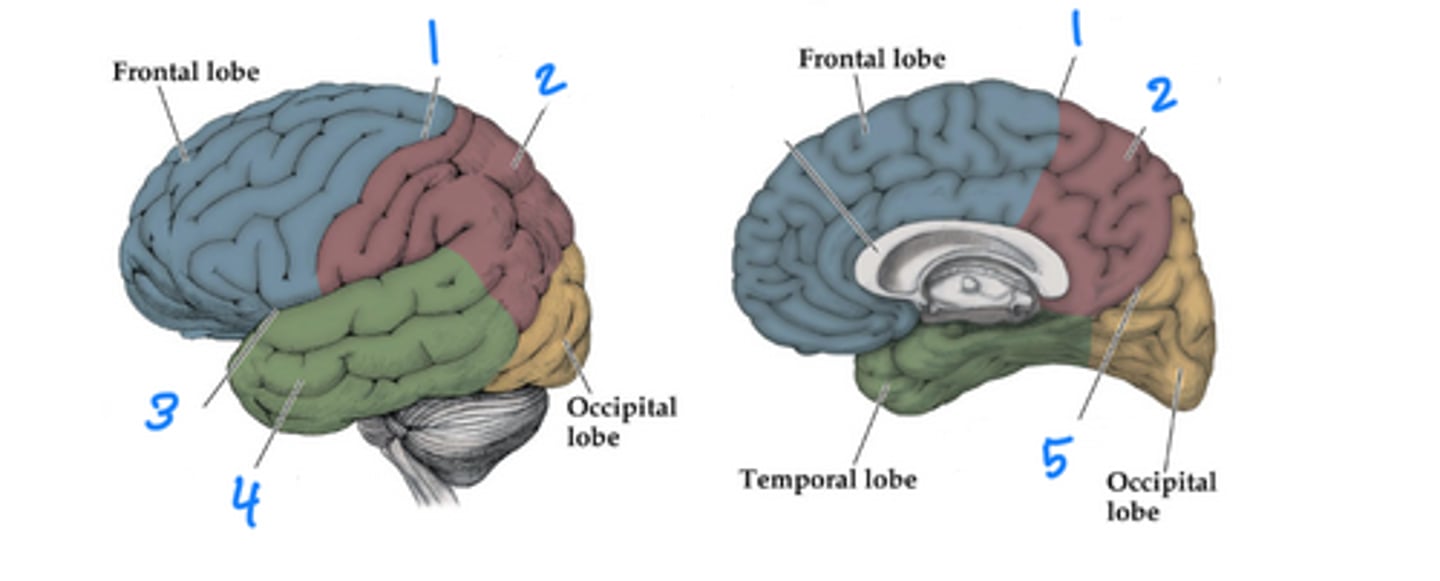
5
Parieto occipital sulcus
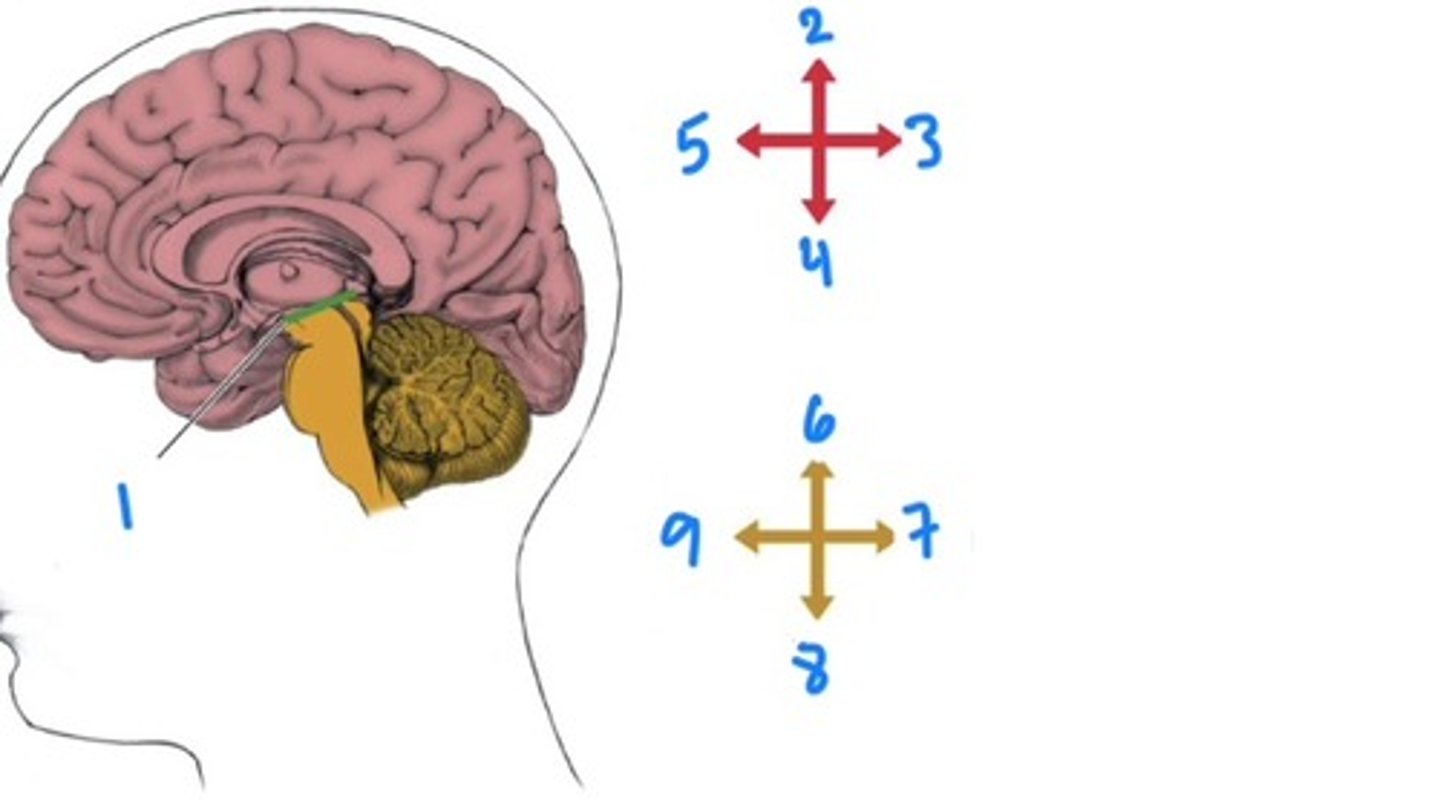
1
midbrain diencephalic junction
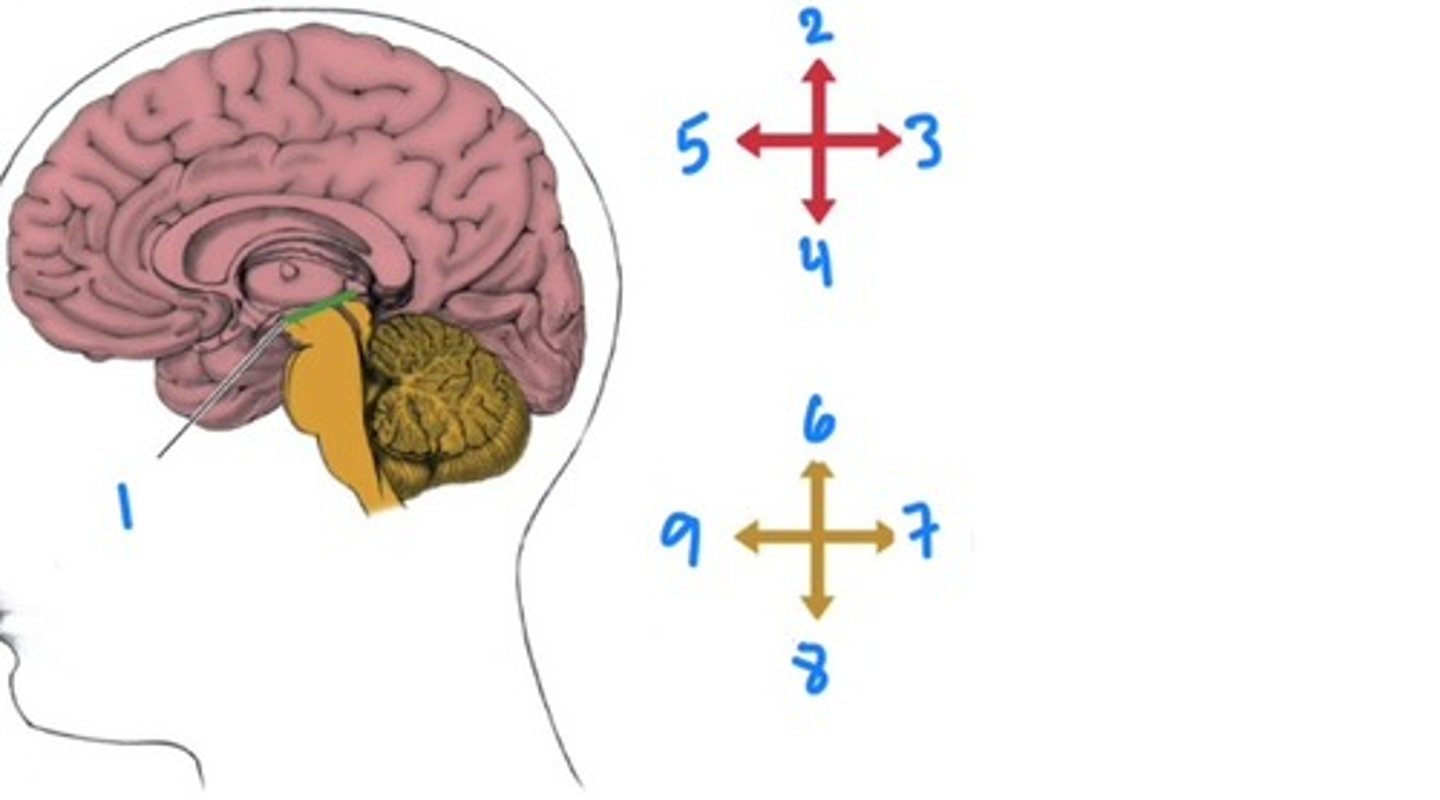
2
dorsal
3
caudal
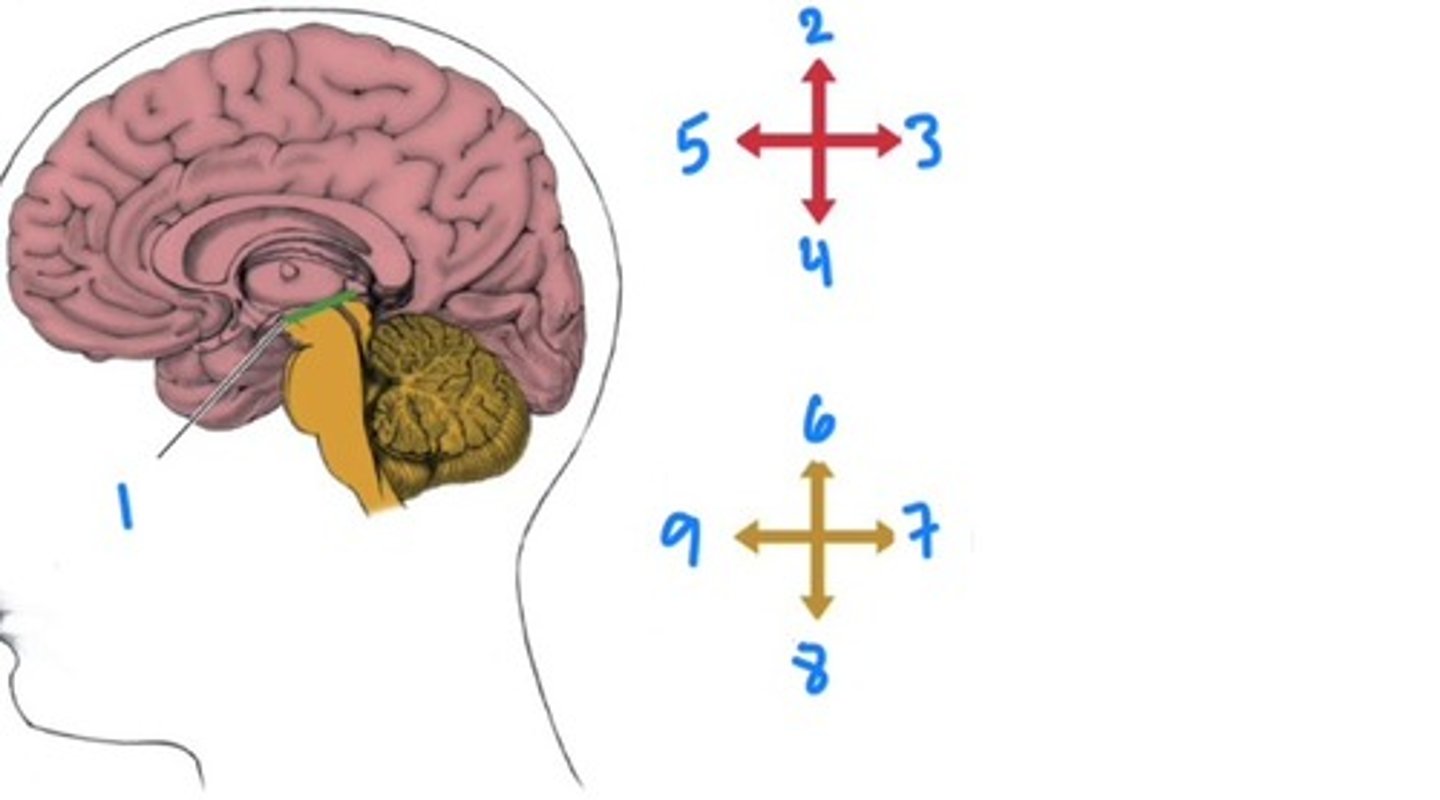
4
ventral
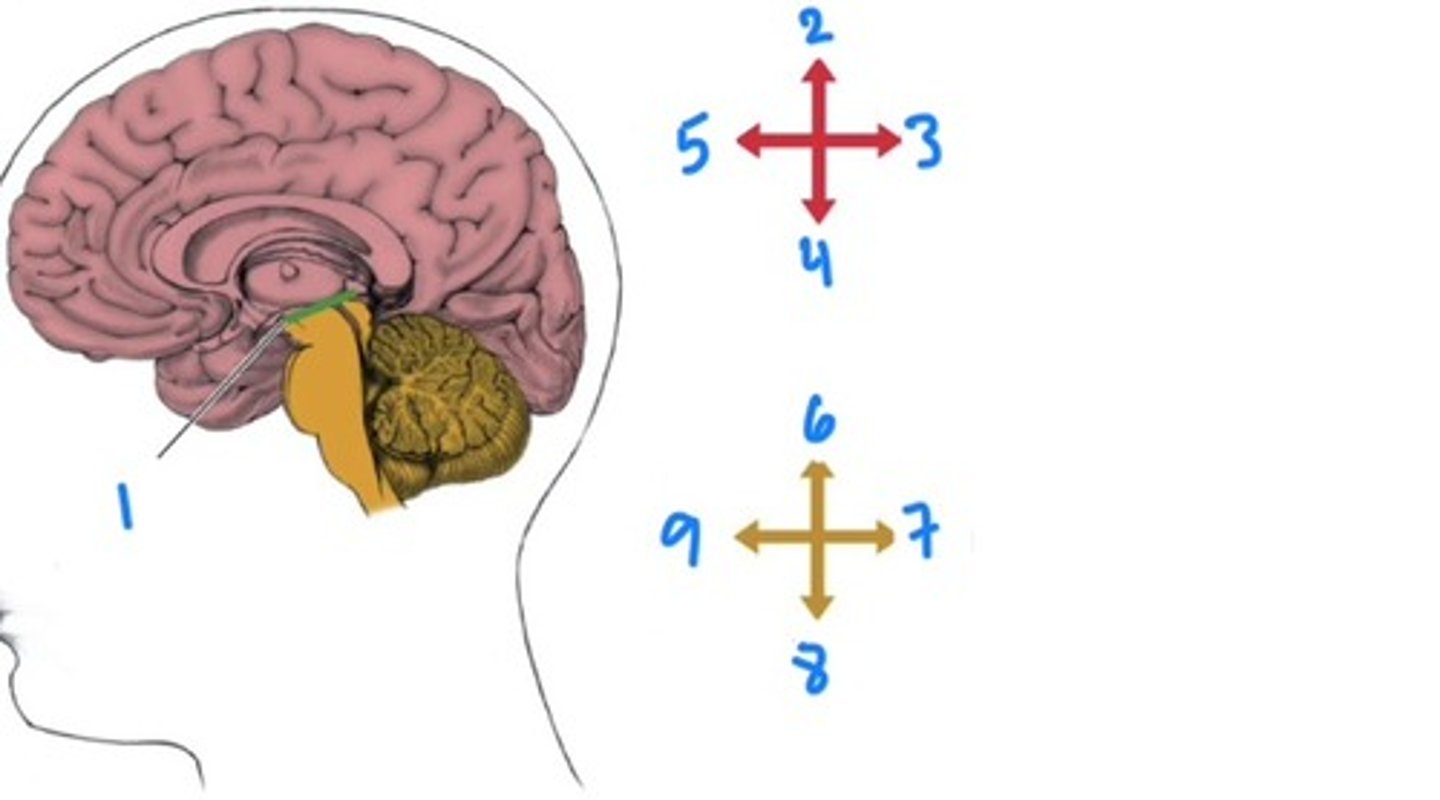
5
rostral
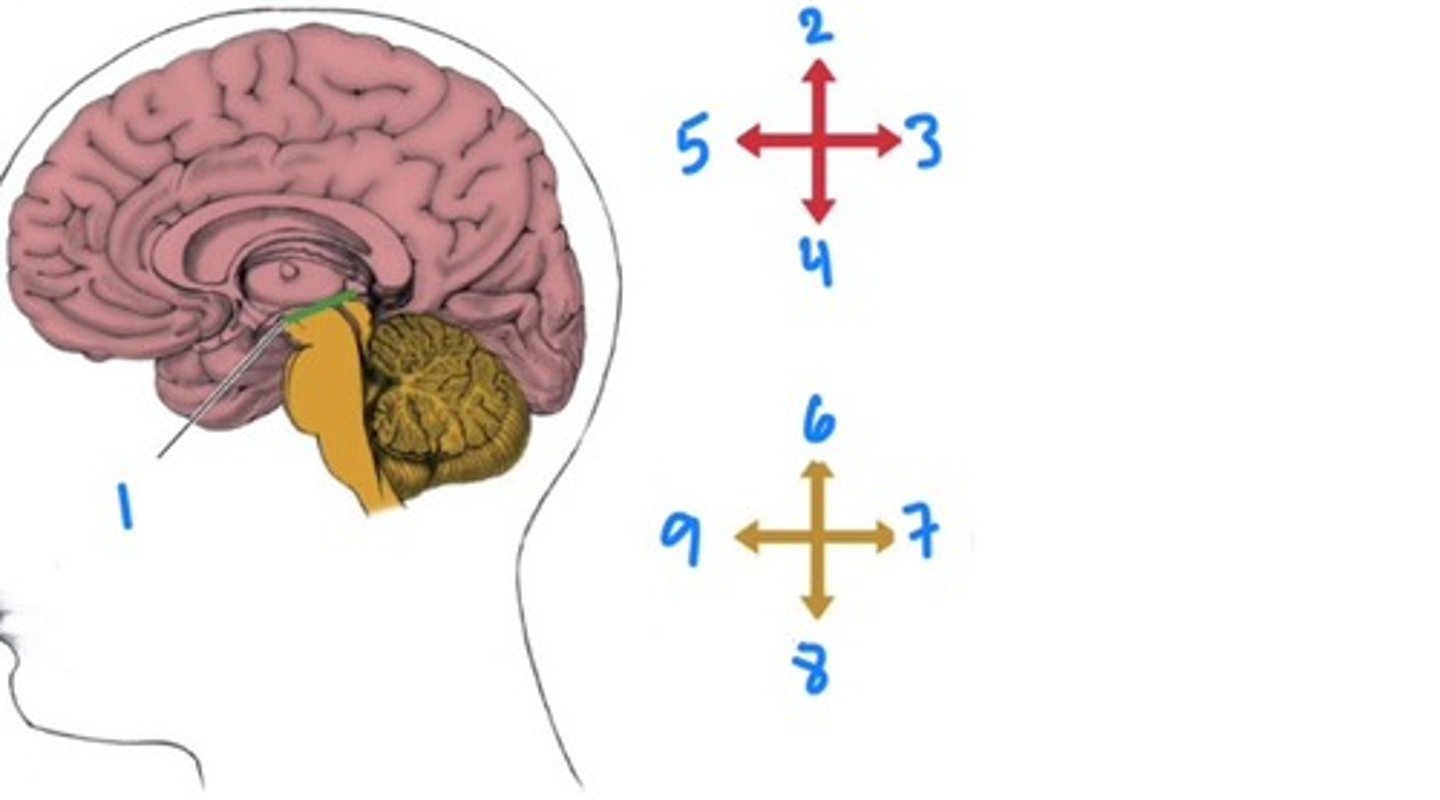
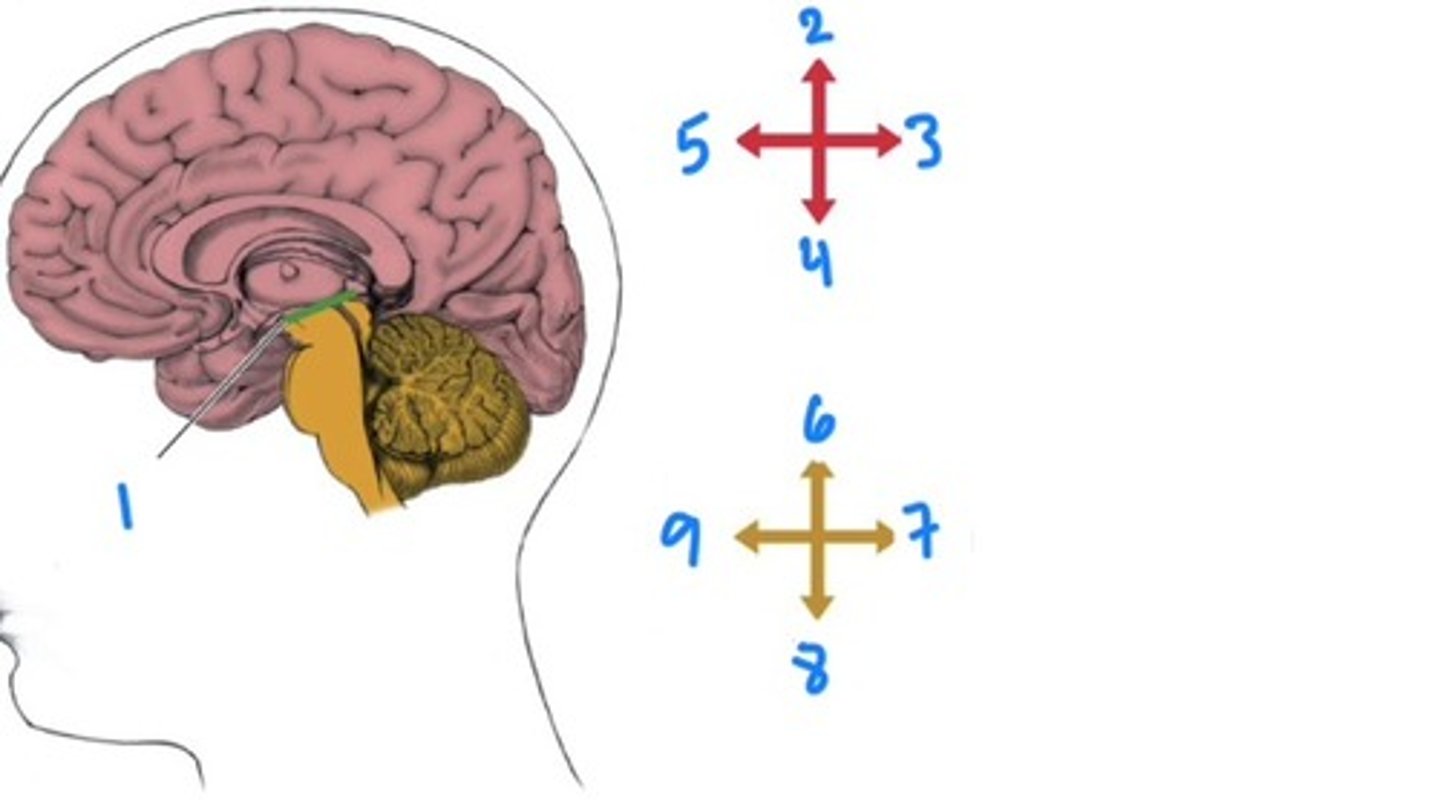
6
rostral.
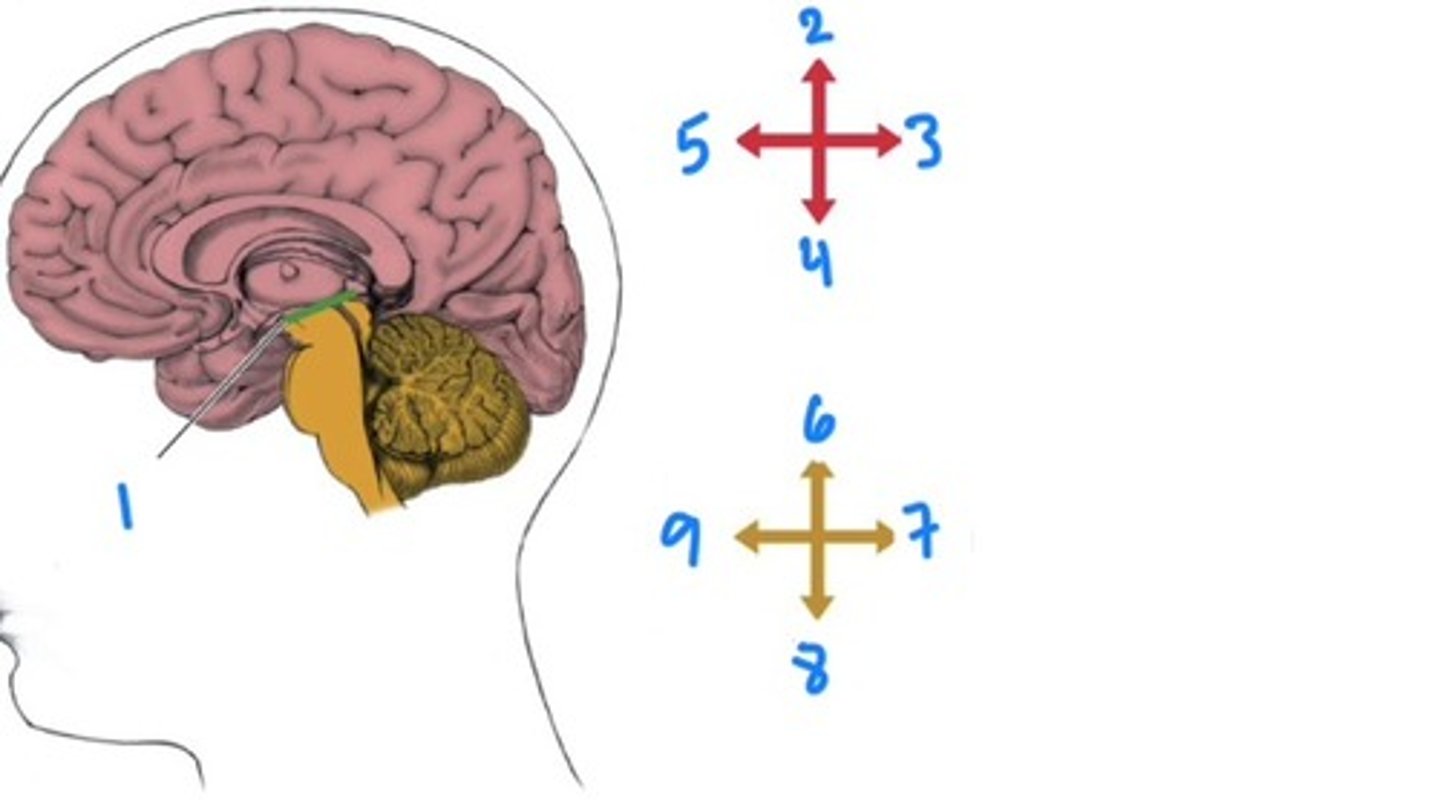
7
dorsal.
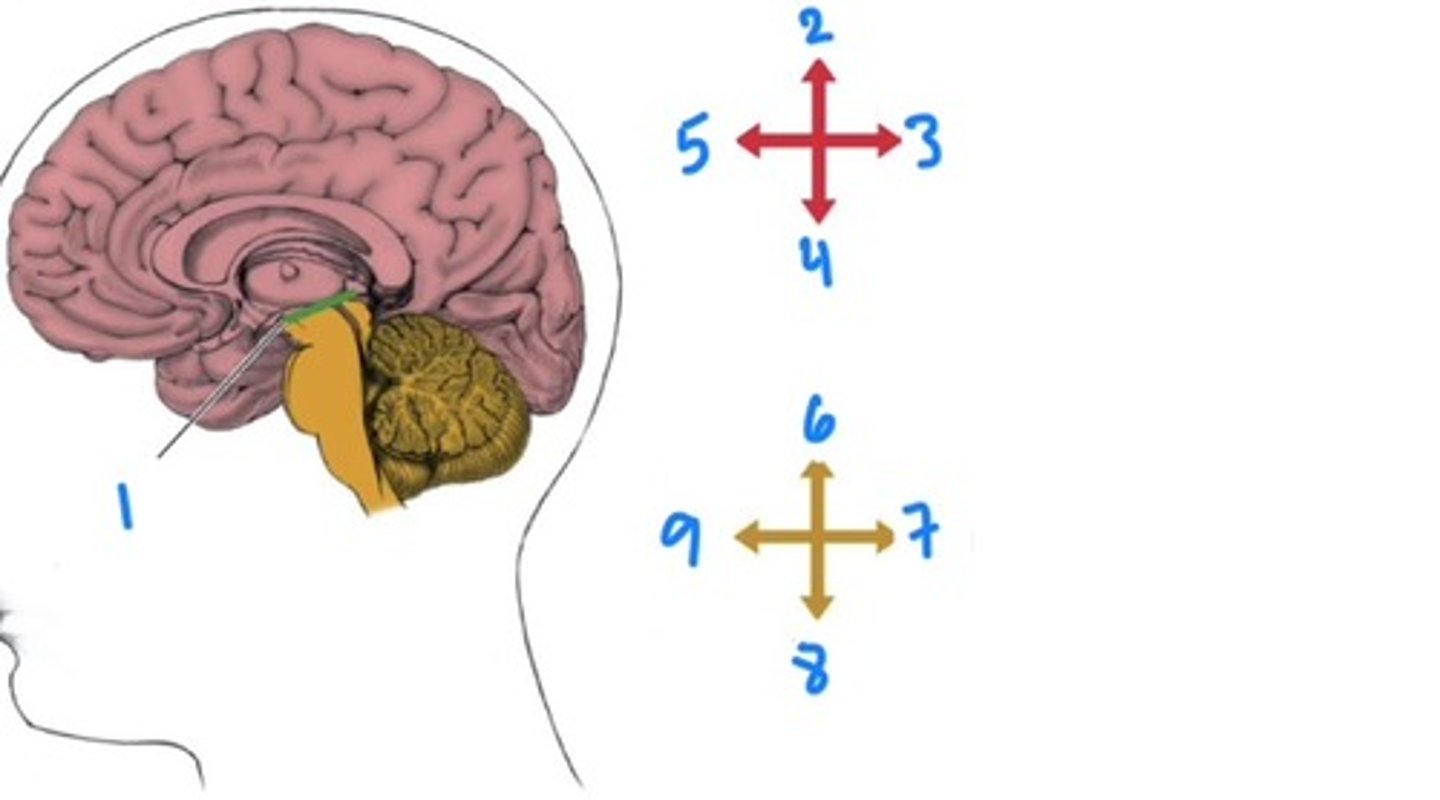
8
caudal.
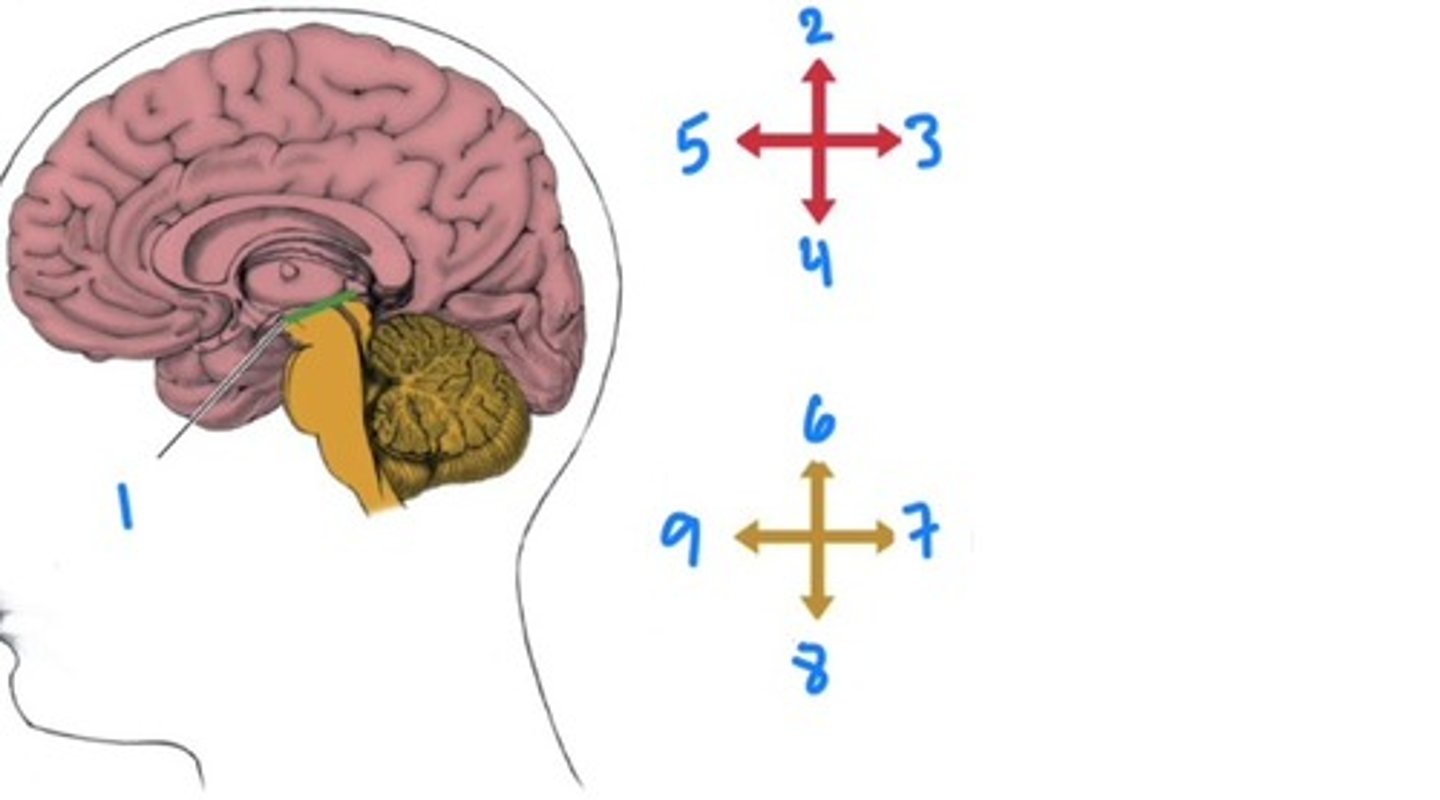
9
ventral.
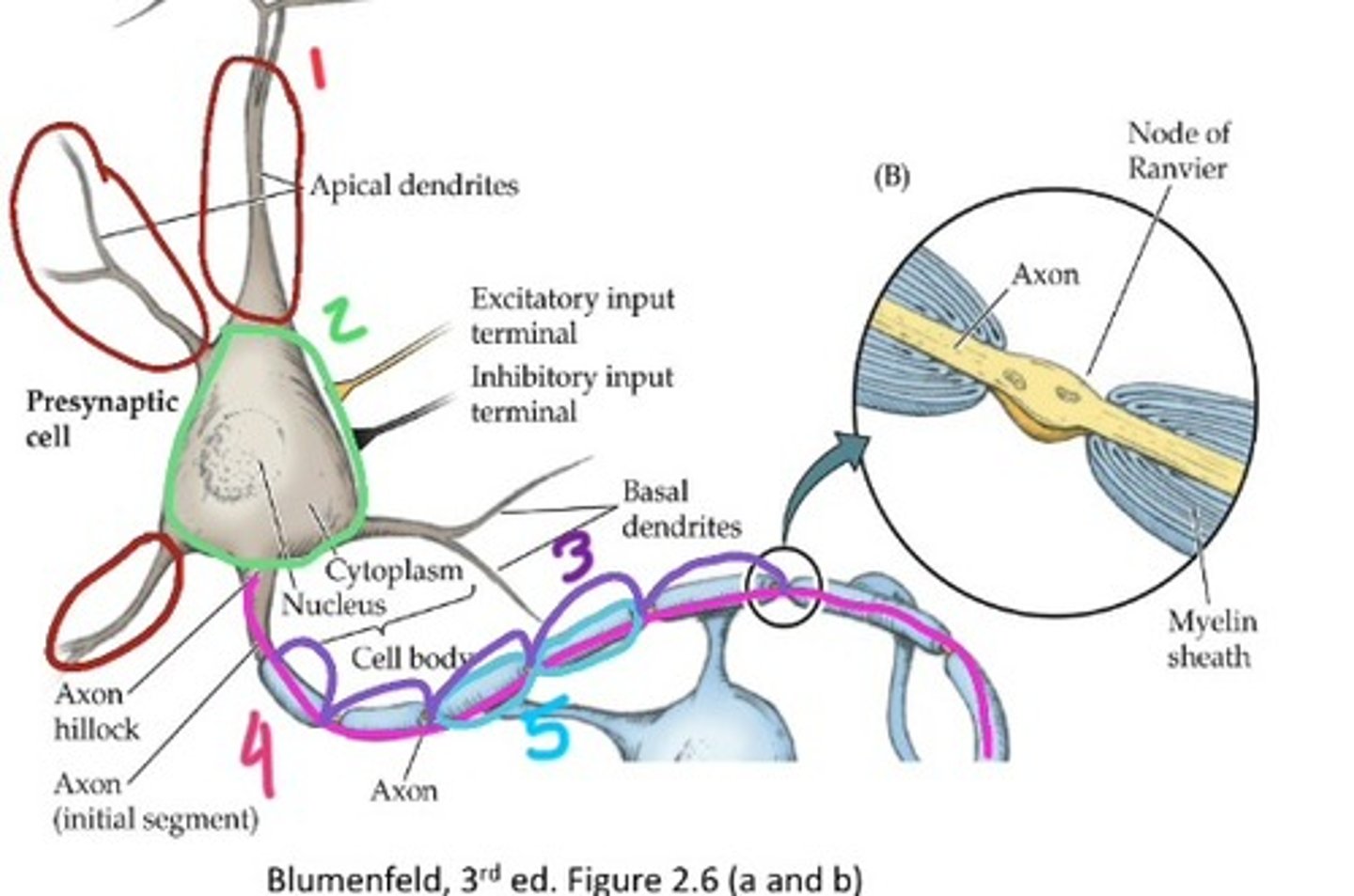
1
dendrites
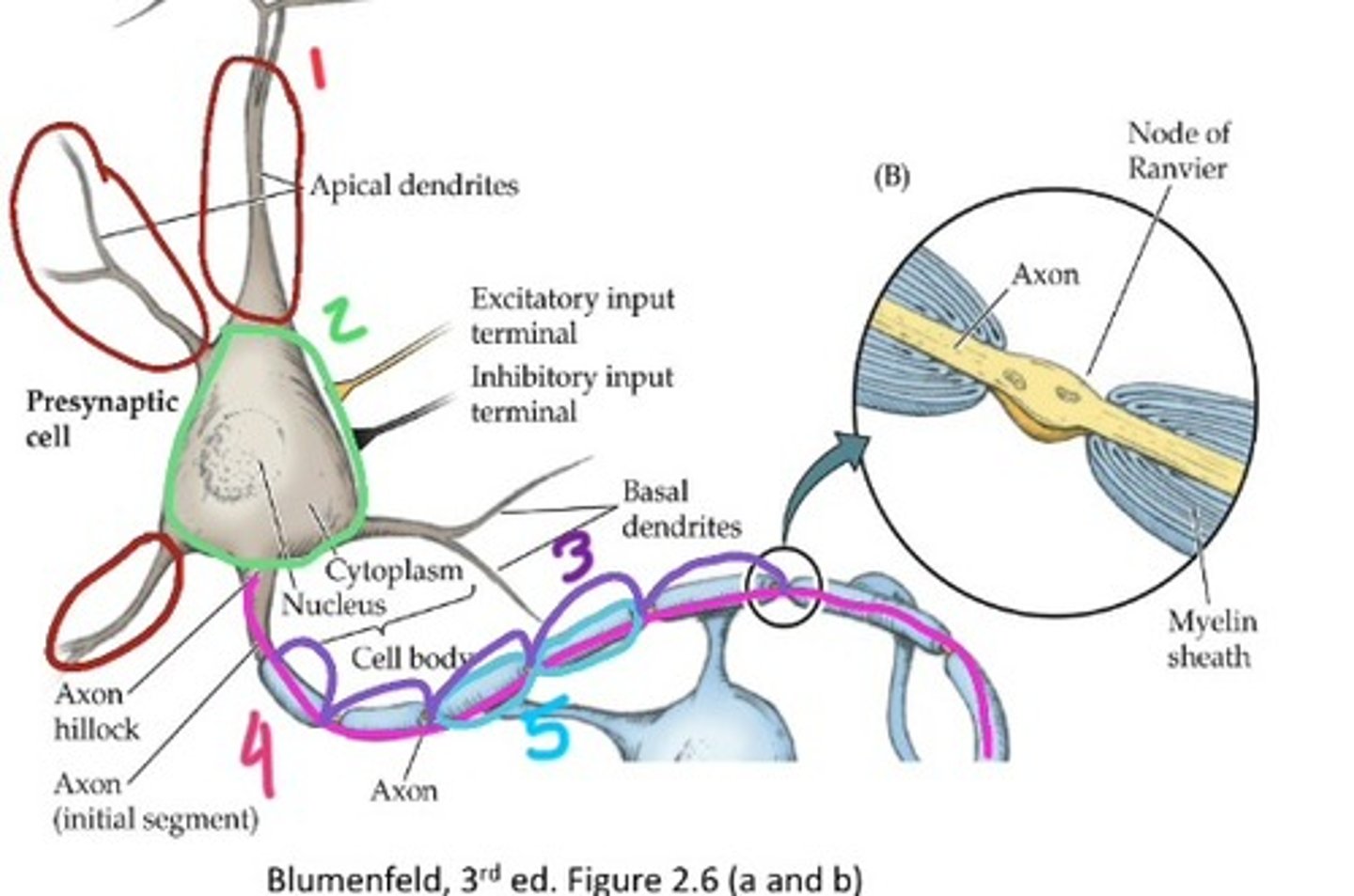
2
cell body
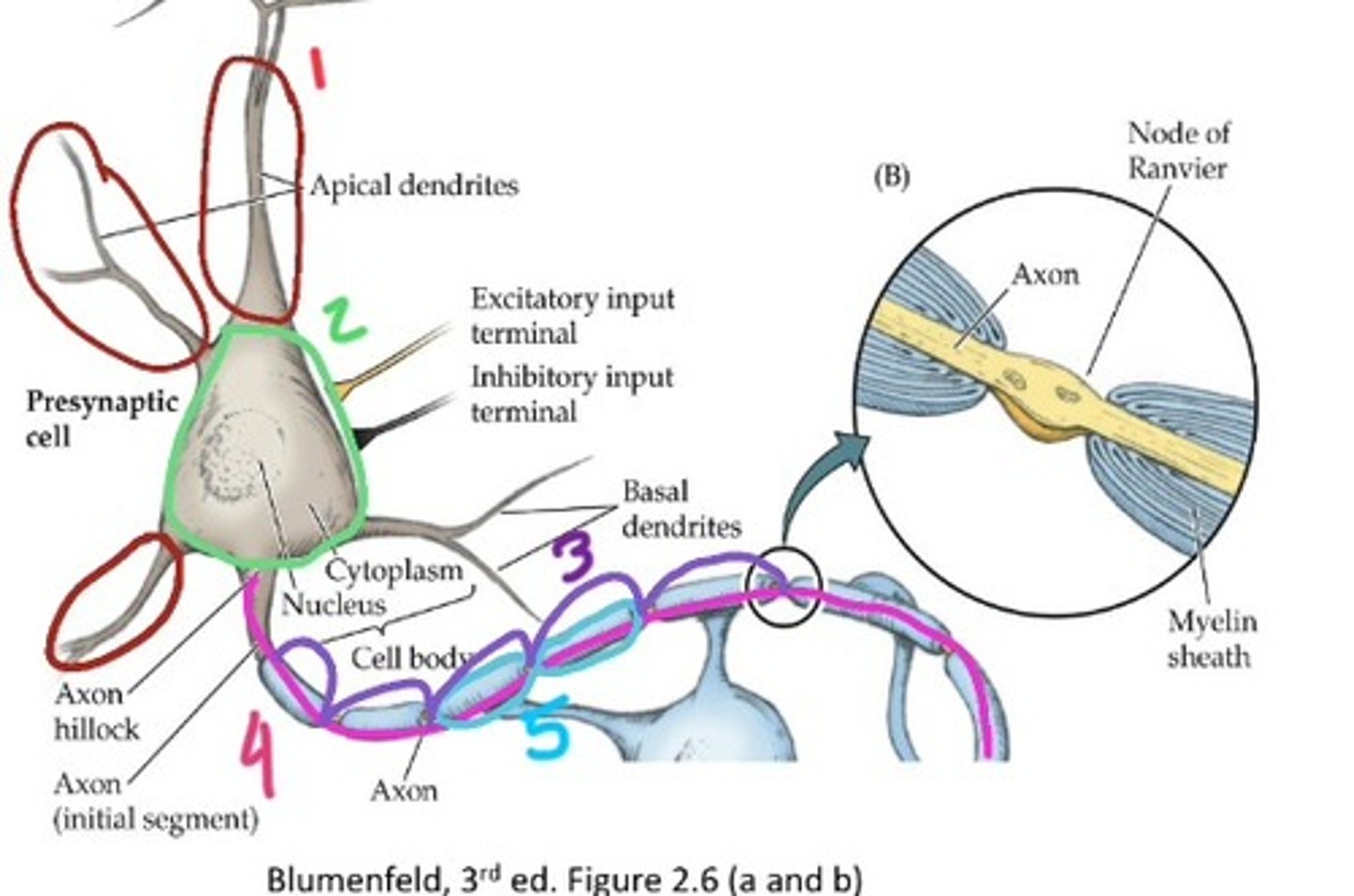
3
saltory conduction
what is the saltory conduction
action potential jumps from node to node - very fast
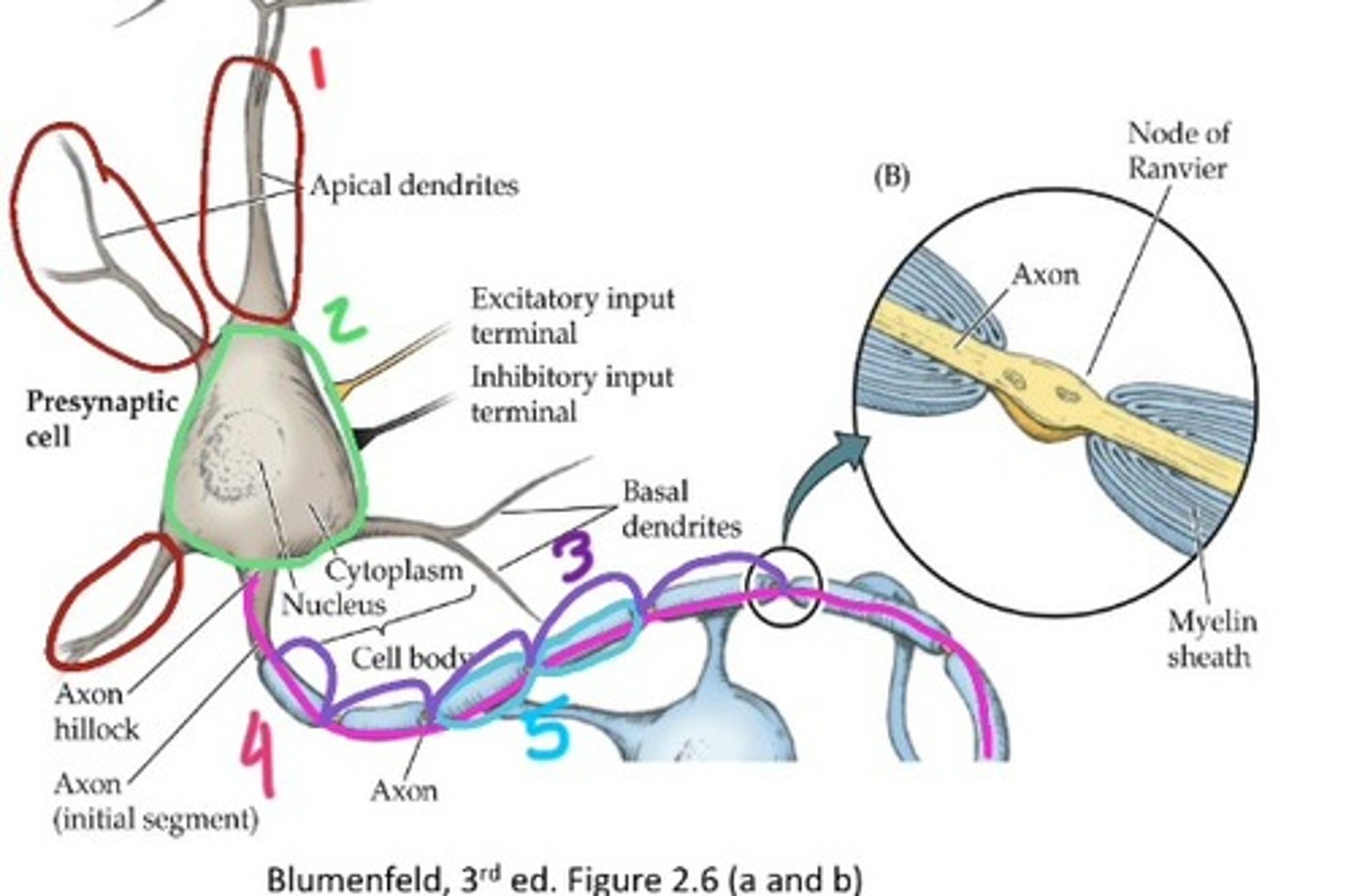
4
axon
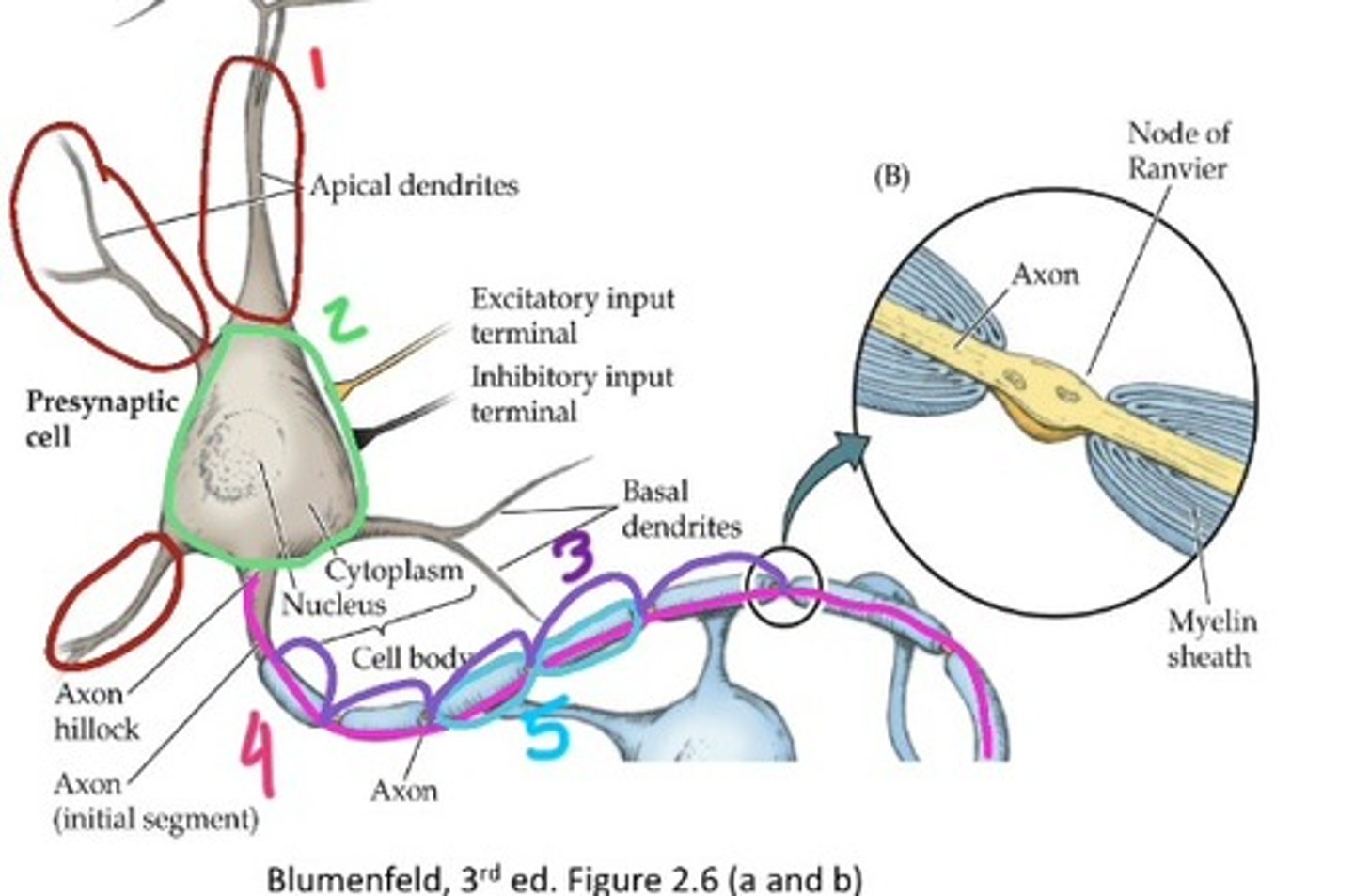
5
mylein sheath
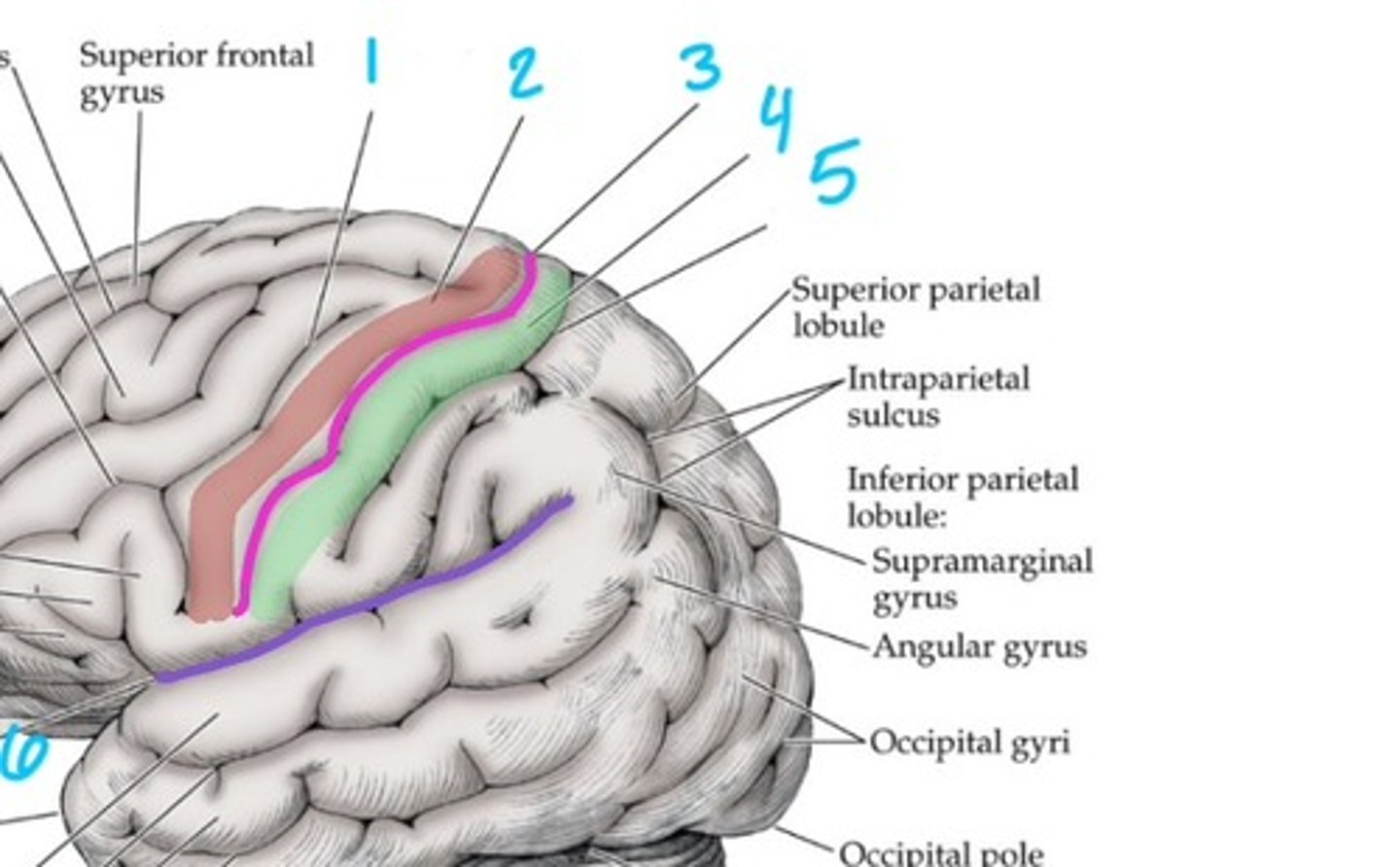
1
precentral sulcus
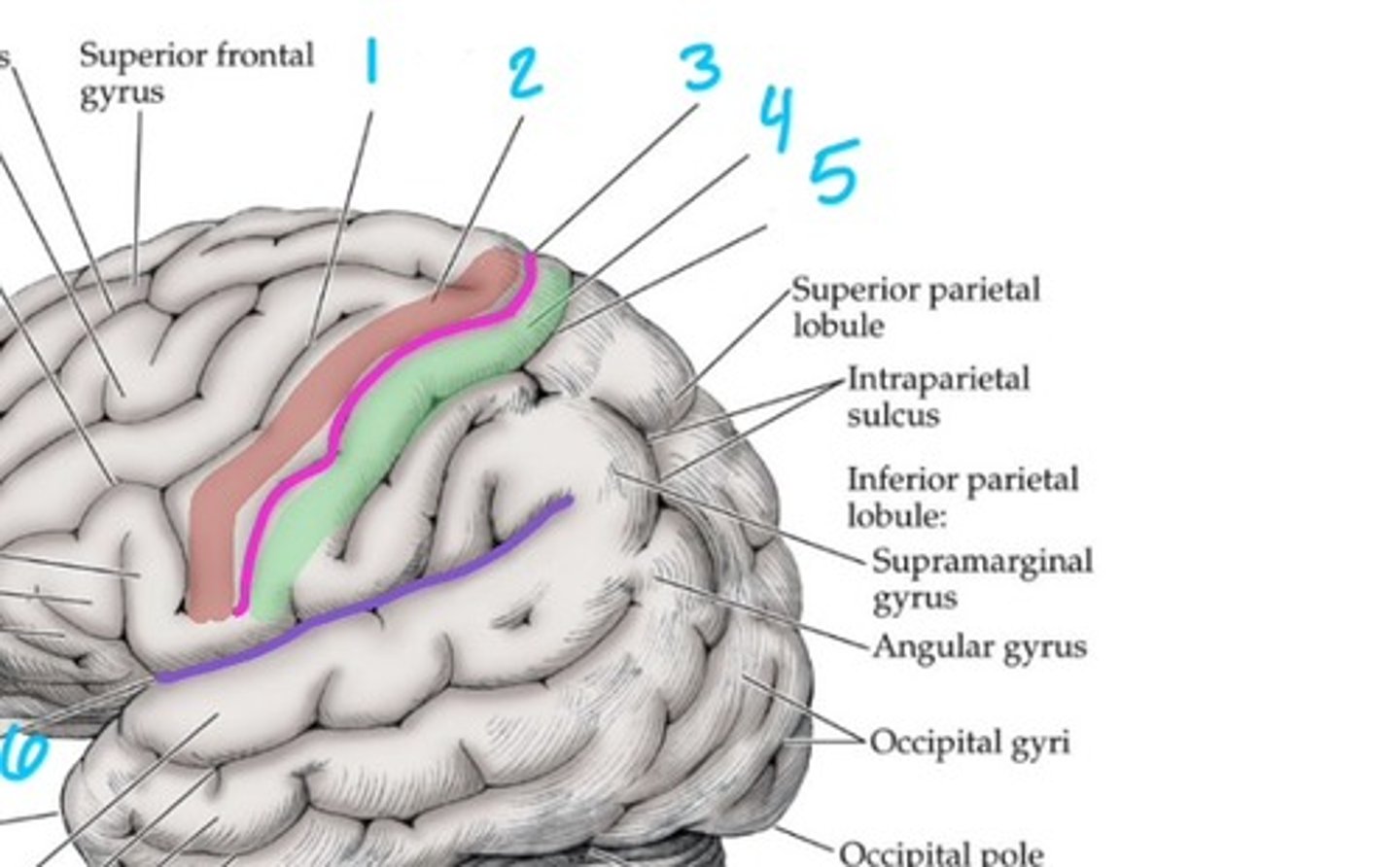
2
precenral gyrus
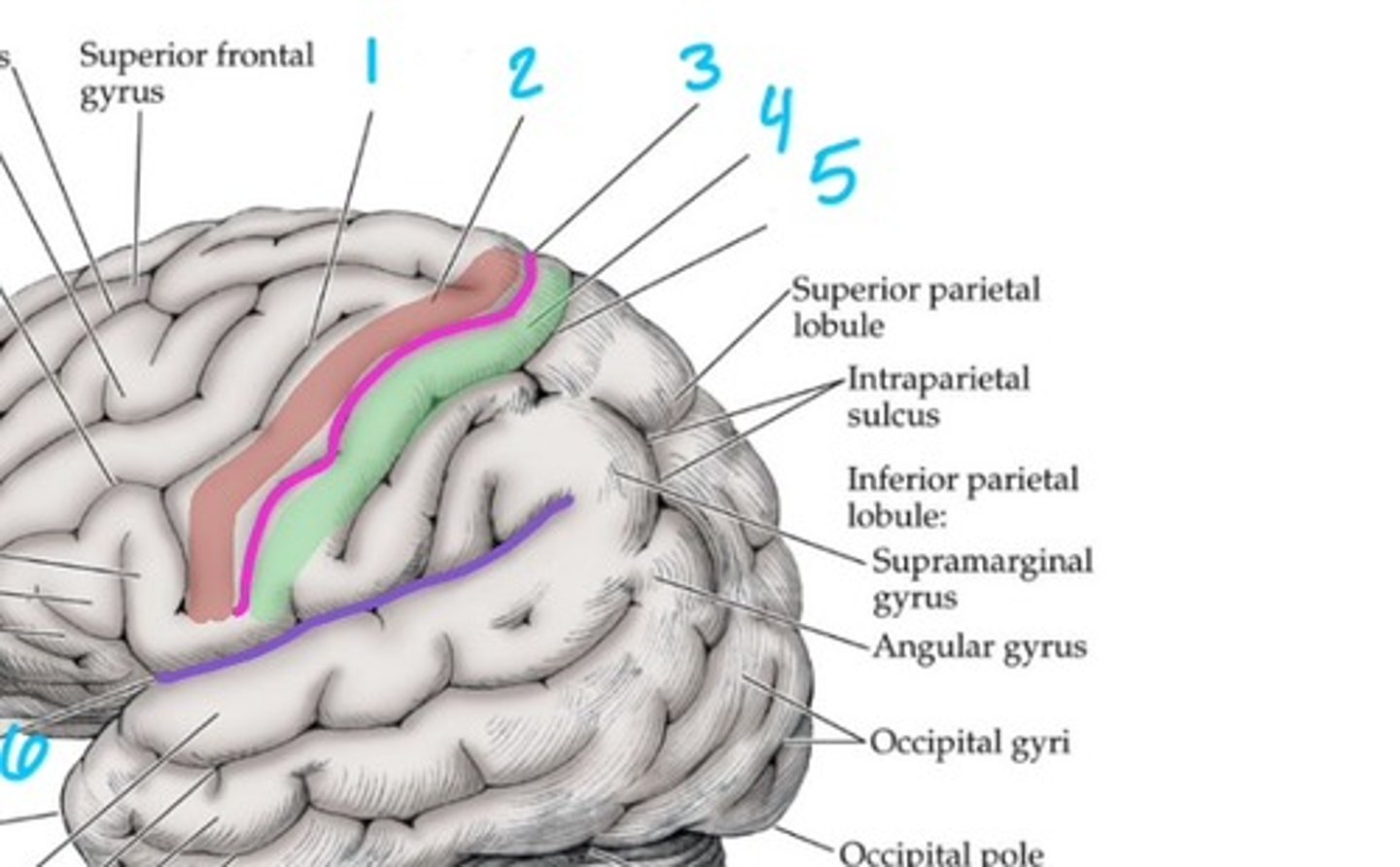
3
central sulcus
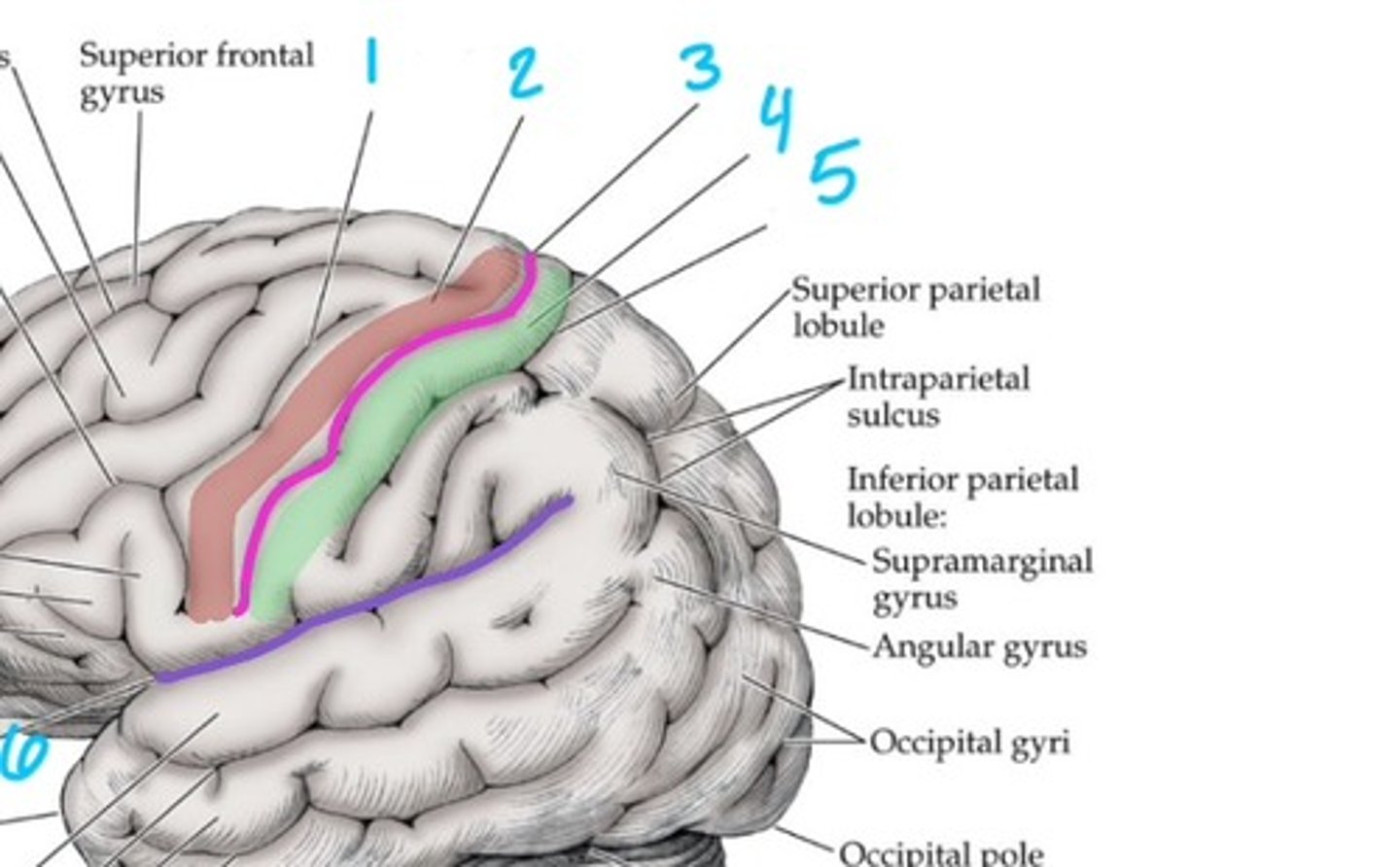
4
postcentral gyrus
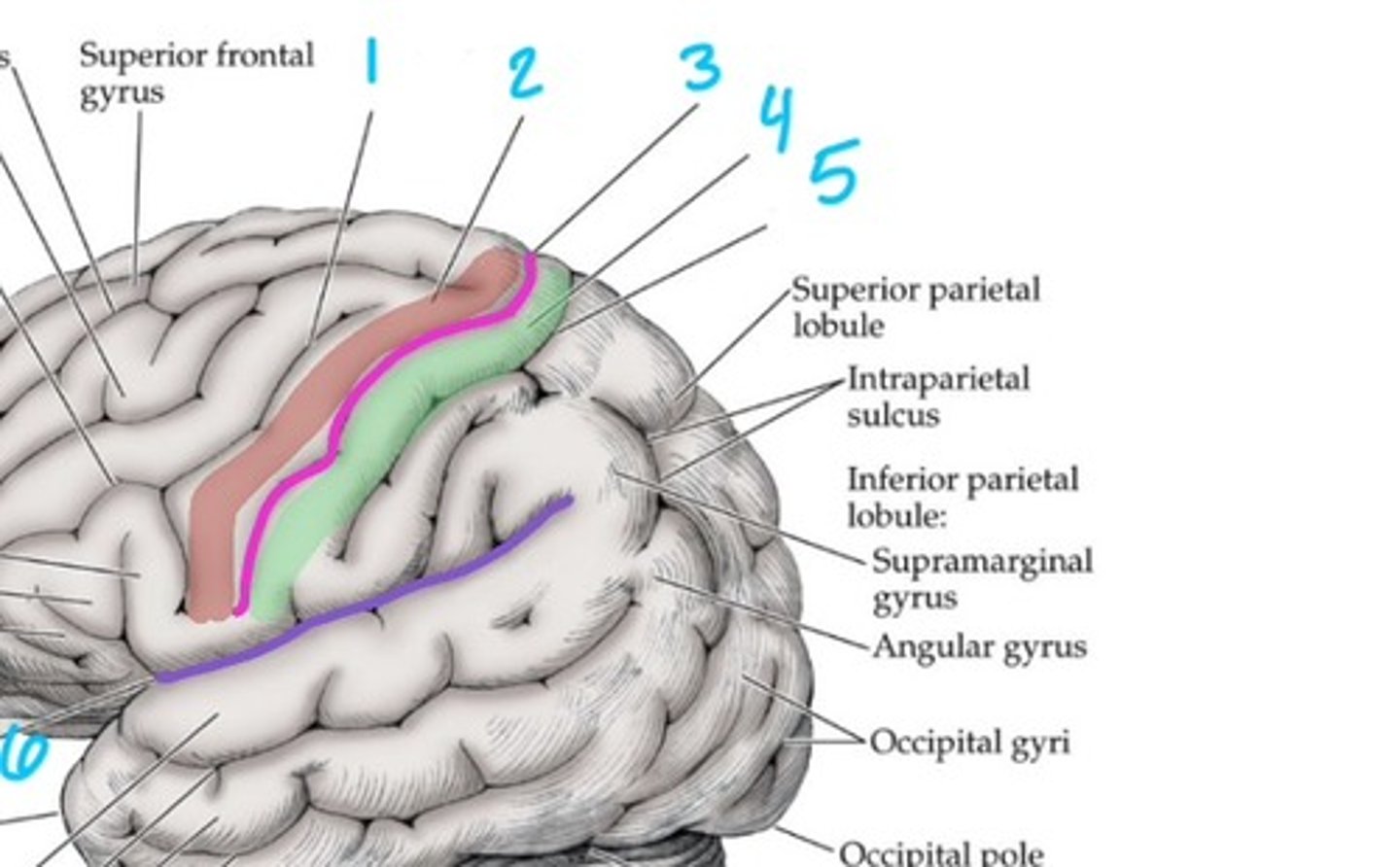
5
postcentral sulcus
multipolat axon
having several dendrites & axons
bipolar axon
single dendrite & axon - in retinas
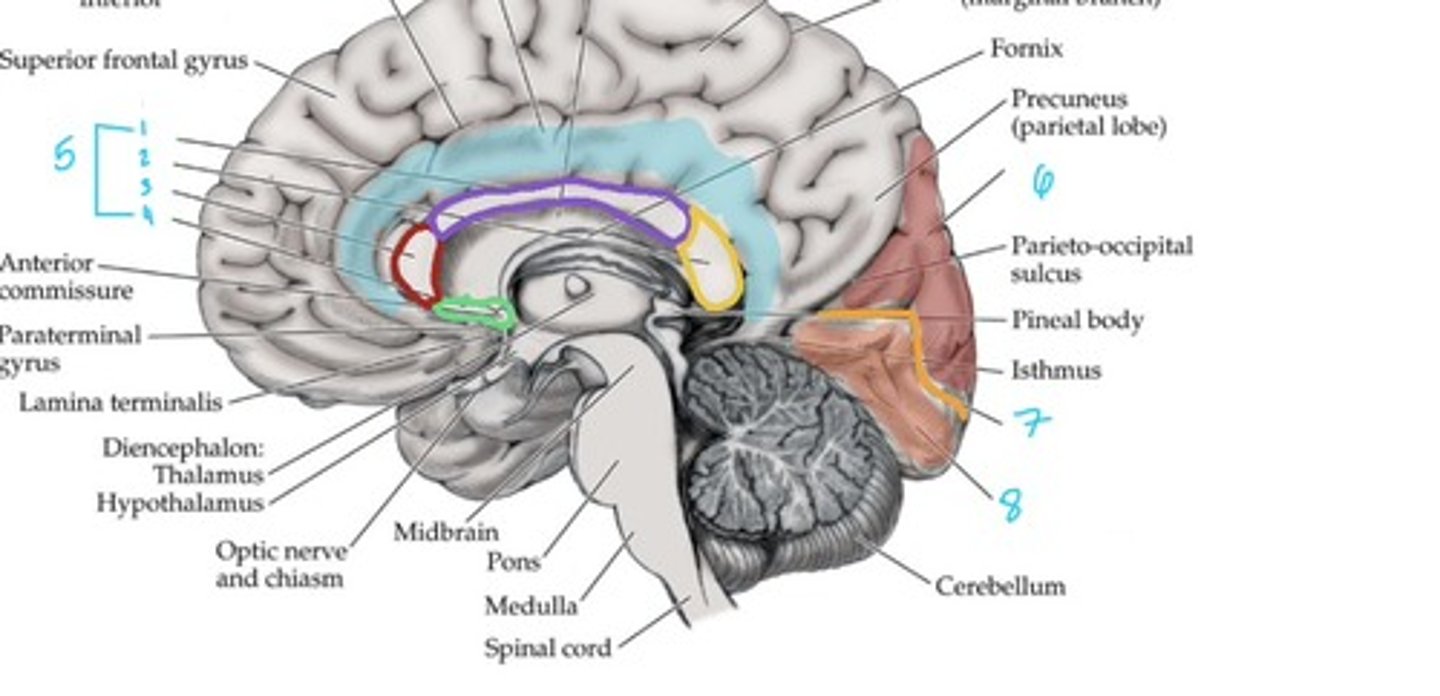
1 - purple
body
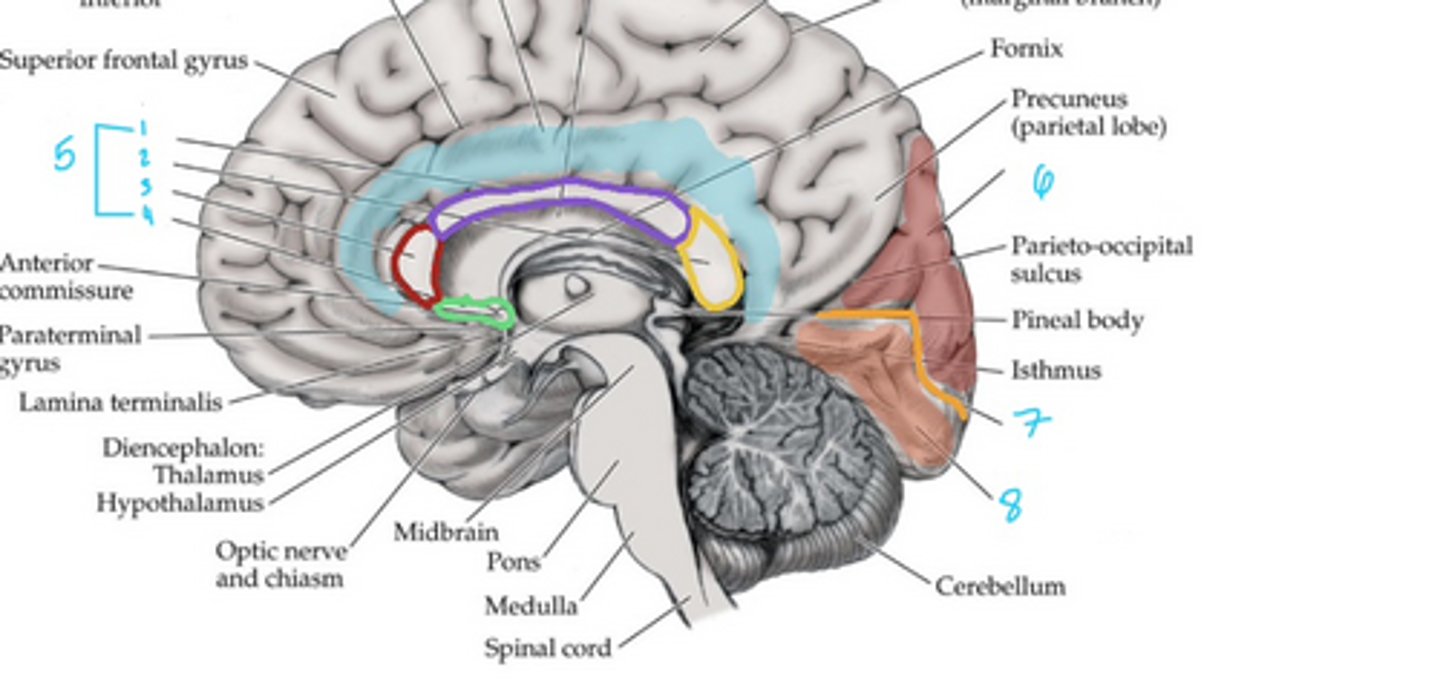
2 - yellow
splenium
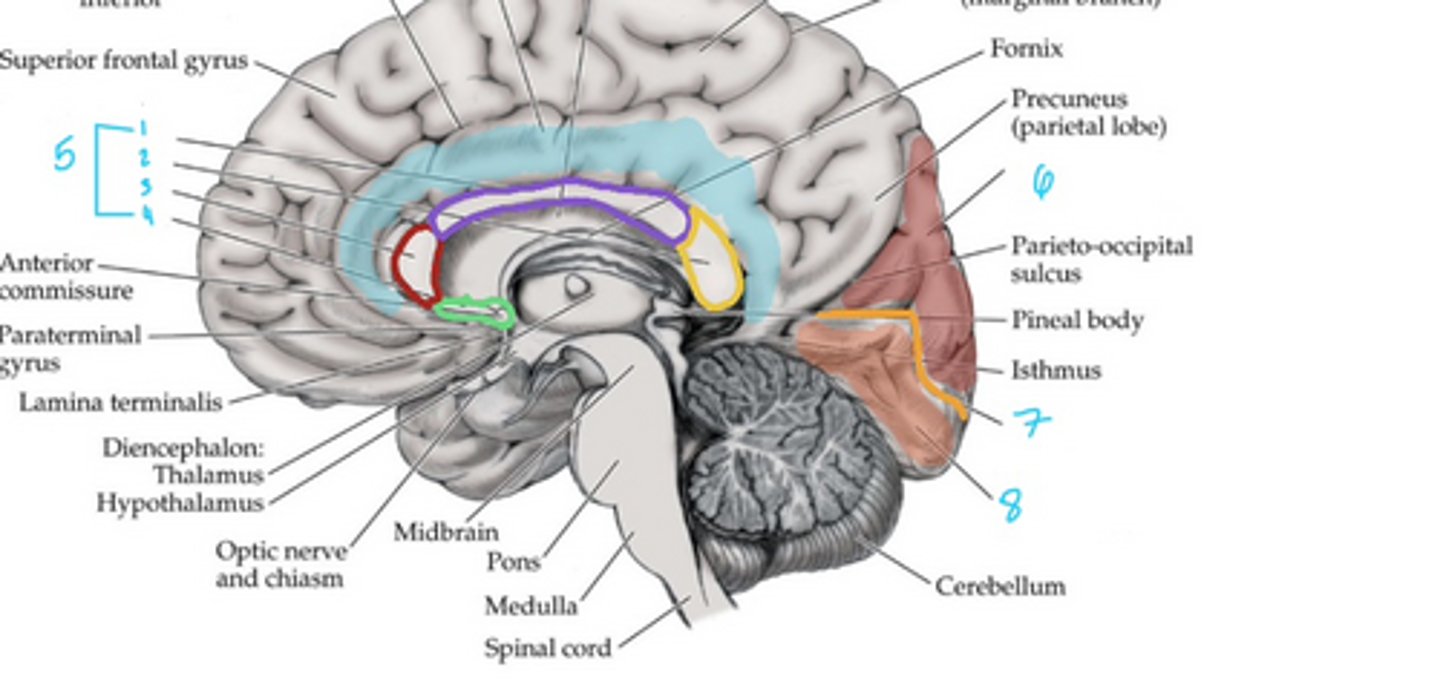
3 - red
genu
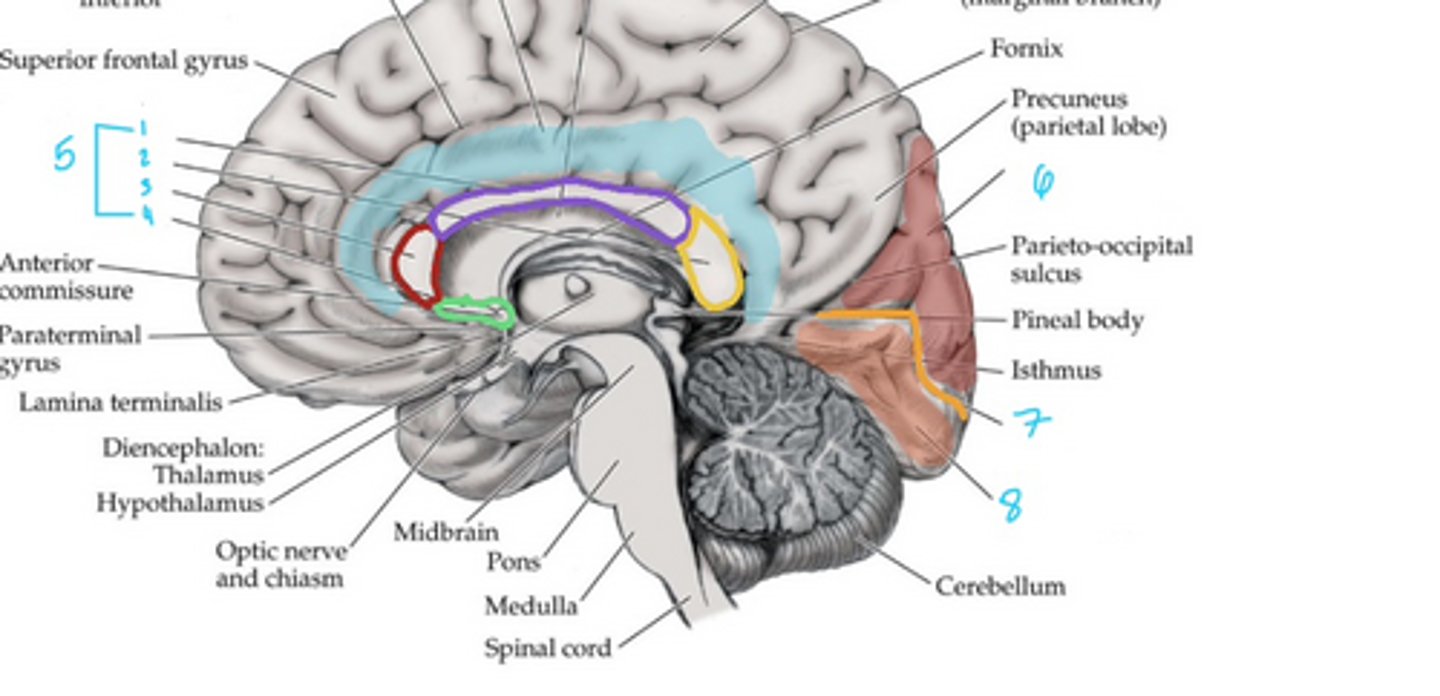
4 - green
rostrum
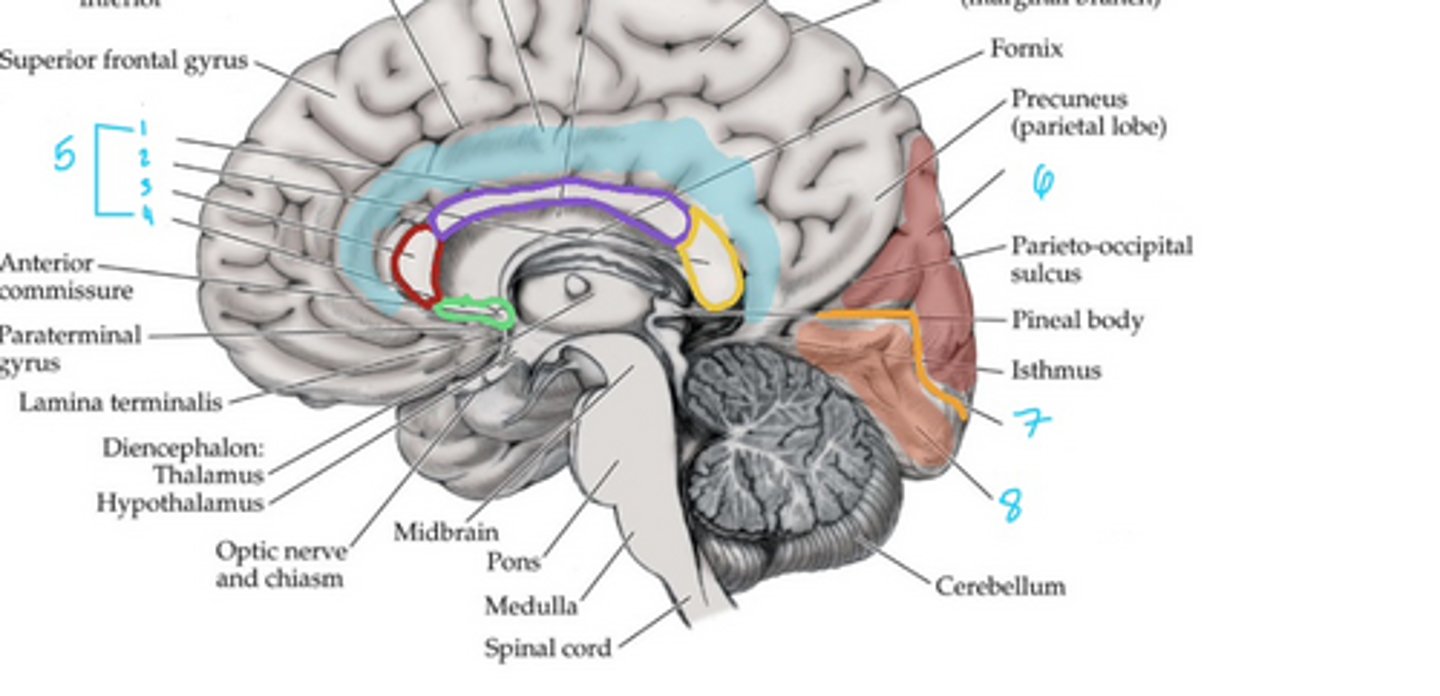
5
corpus callosum
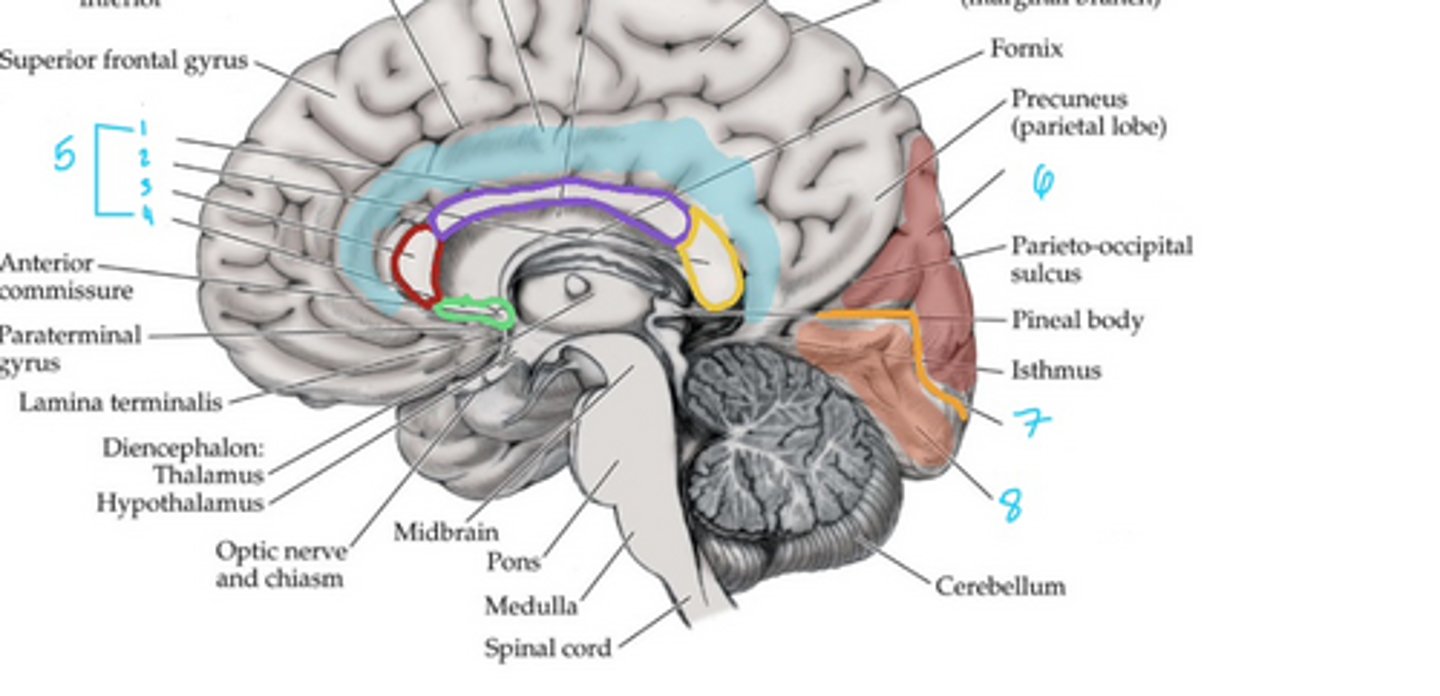
6
cuneus
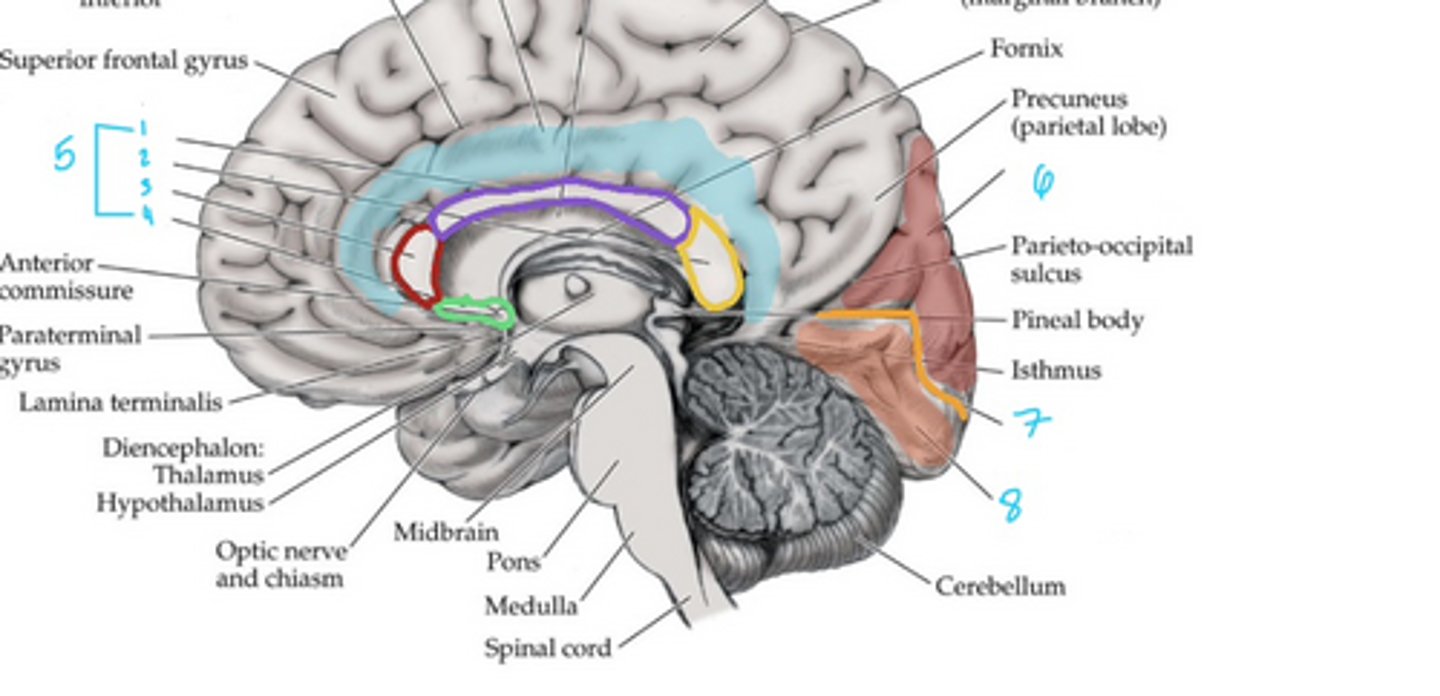
7
calcarine fissure
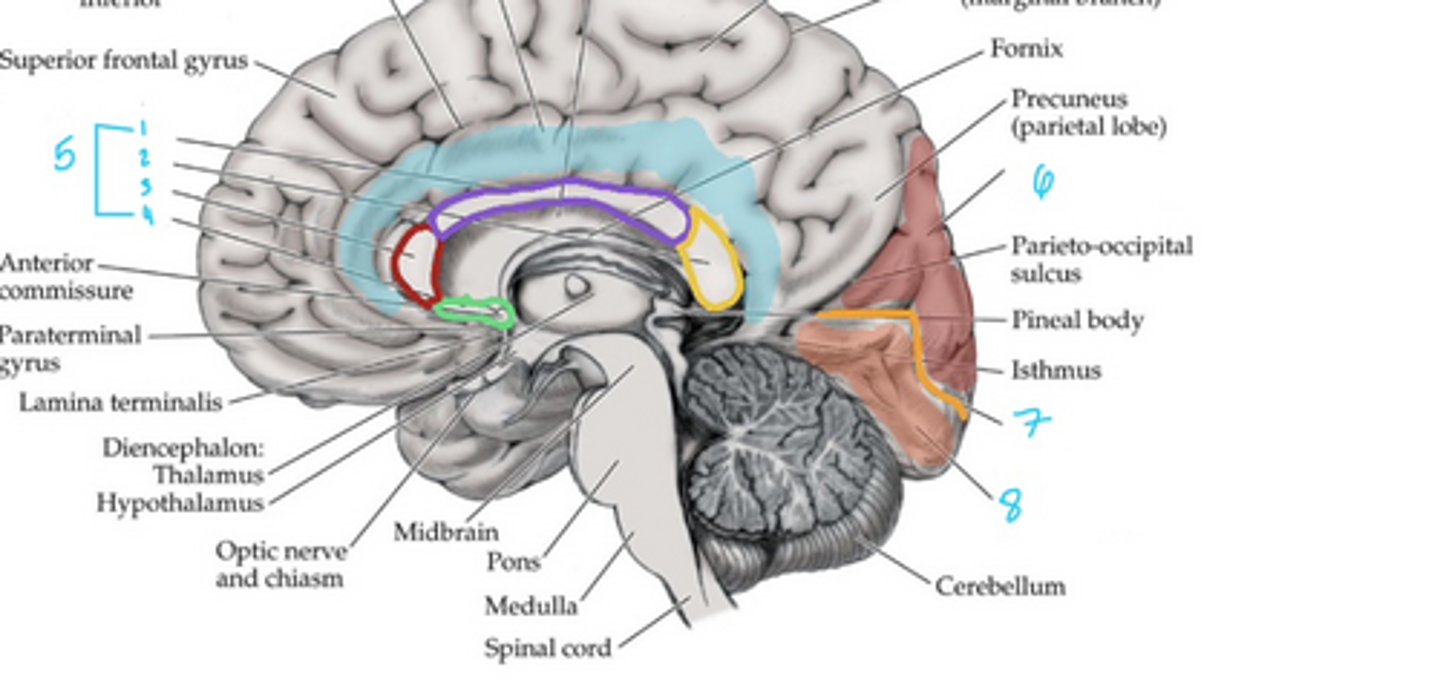
8
lingula
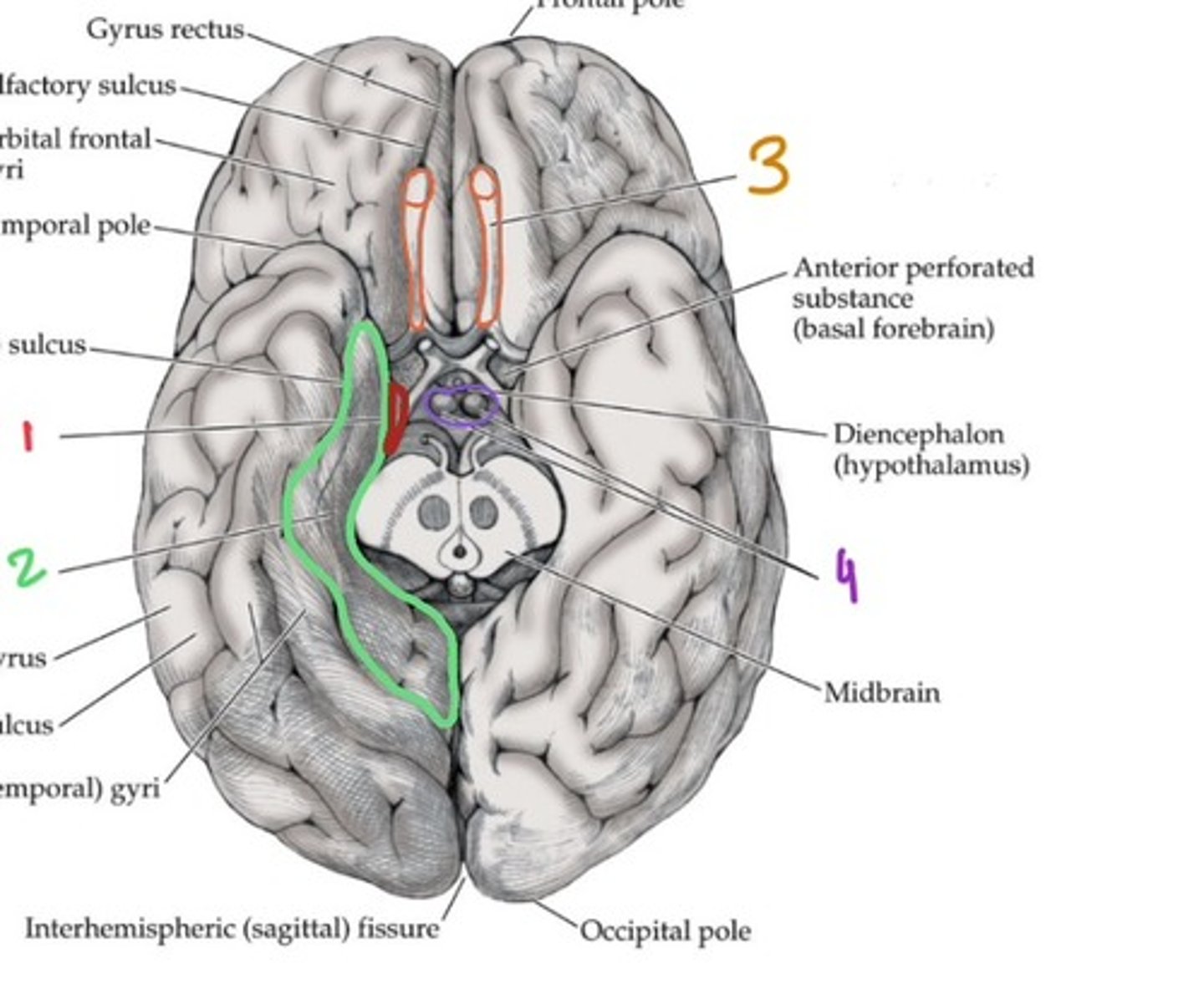
1 - lymbic system: memory, encoding, retrieving
Parahippocampal gyrus
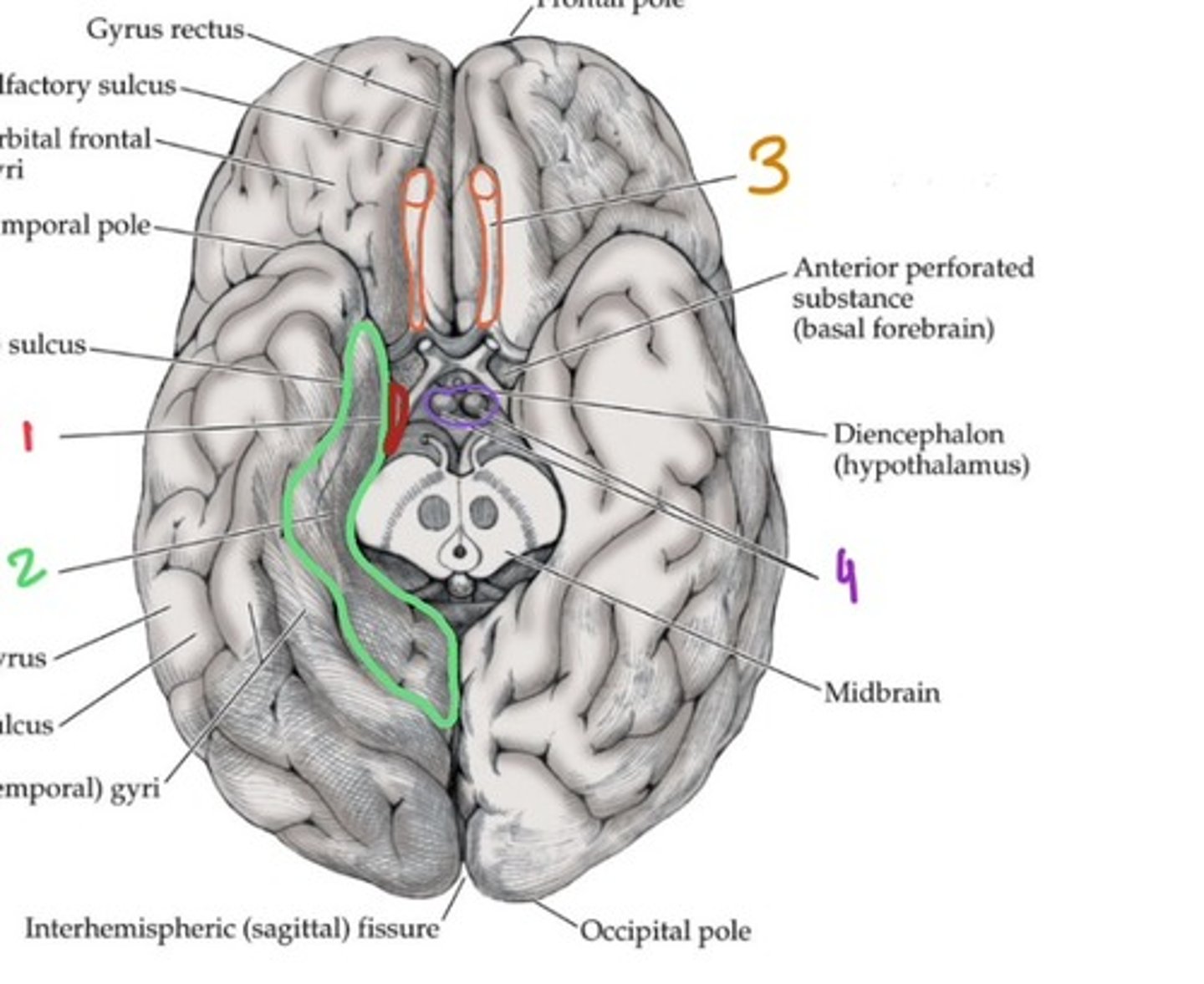
2 - lymbic system: processing olfactory, new memories, emotions
uncus
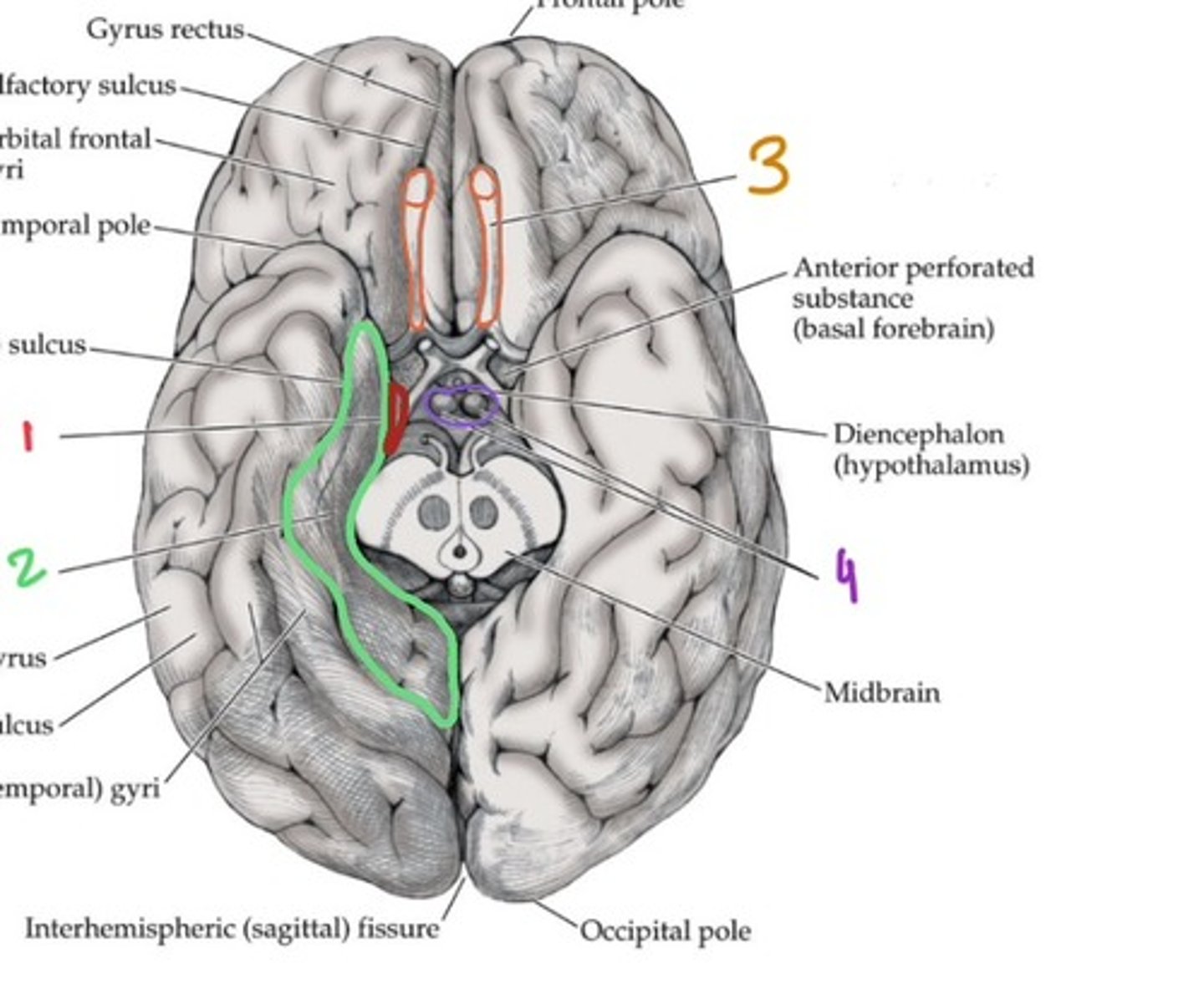
3
olfactory tract and bulb
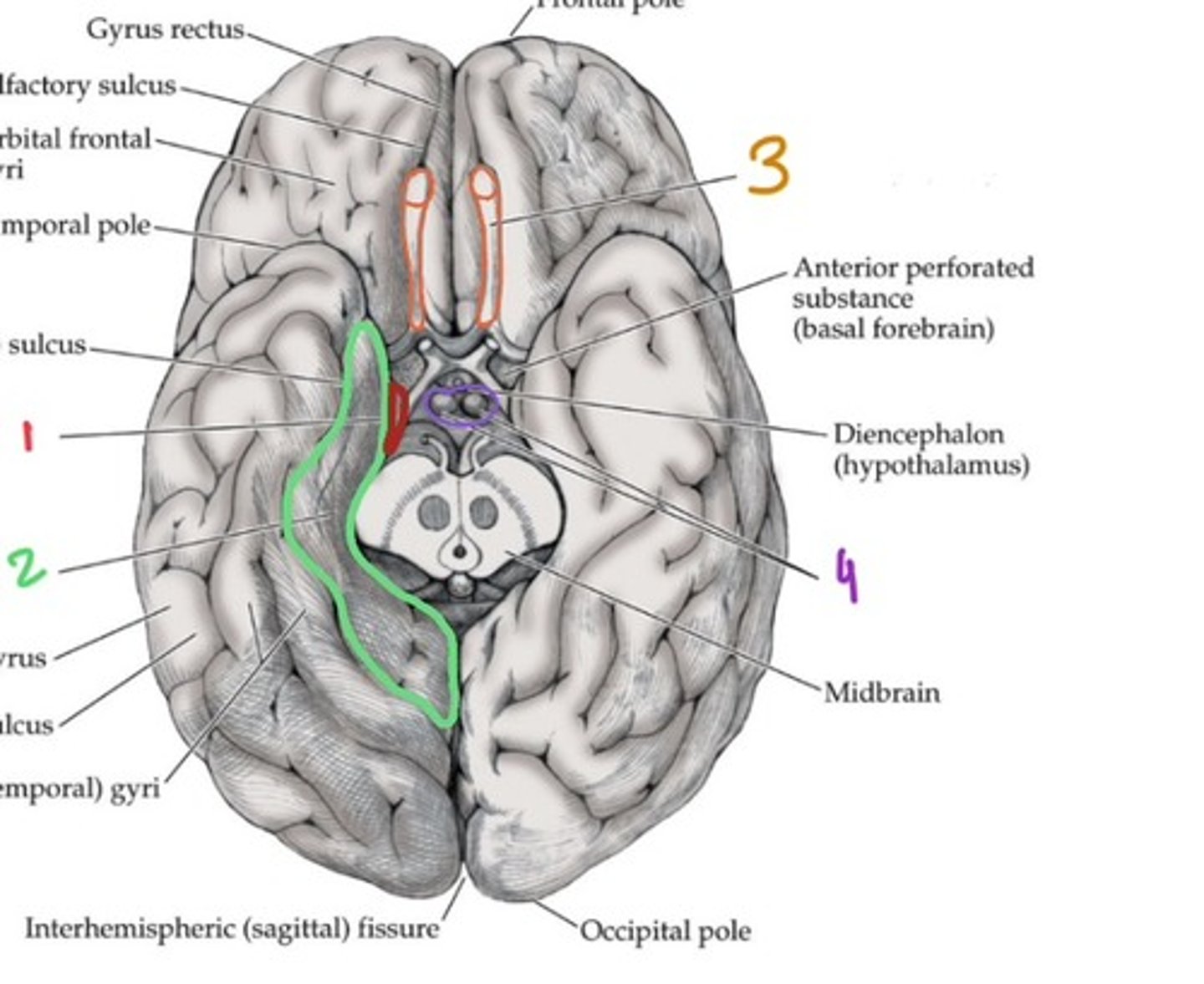
4
mammillary bodies
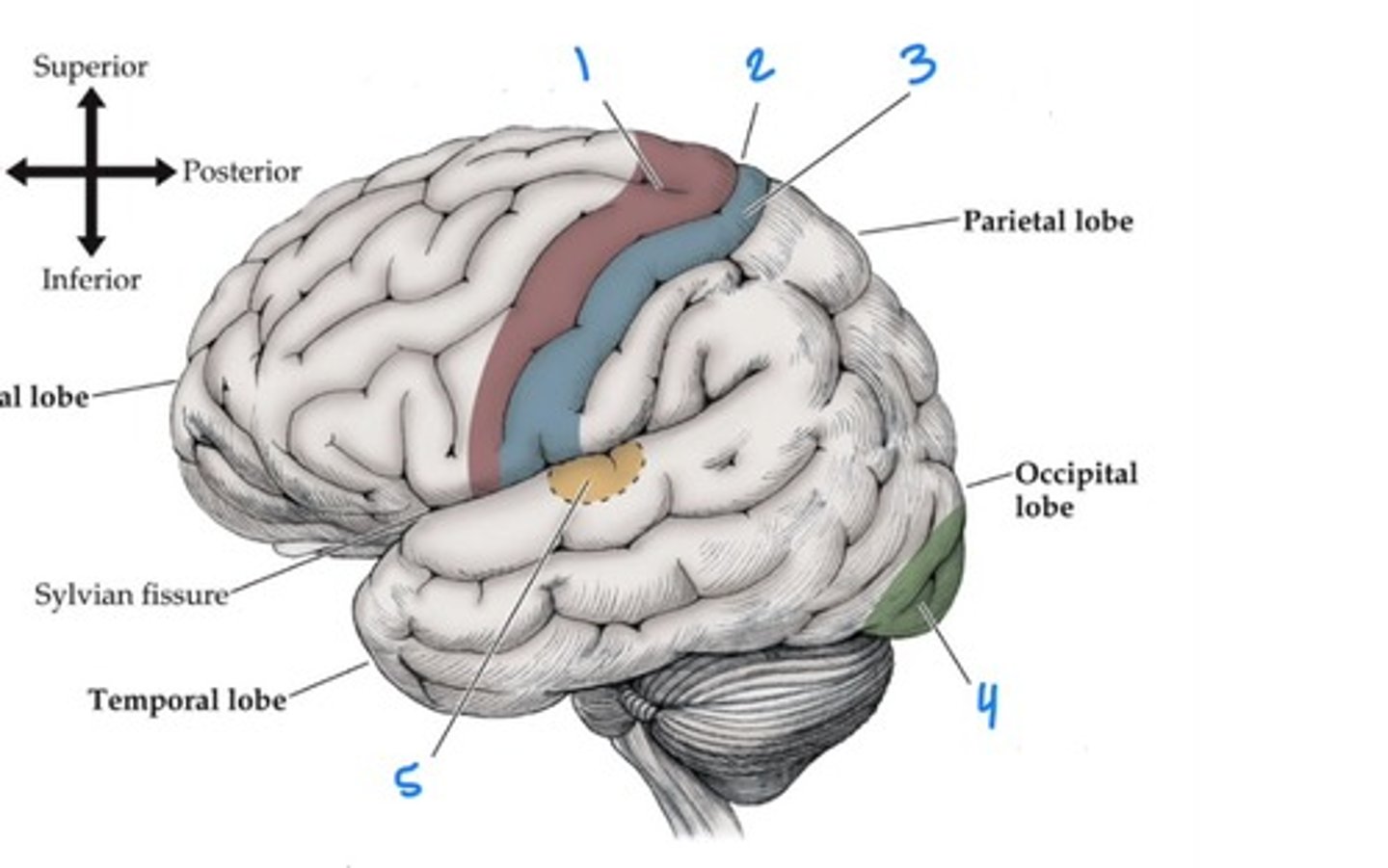
1
primary motor cortex
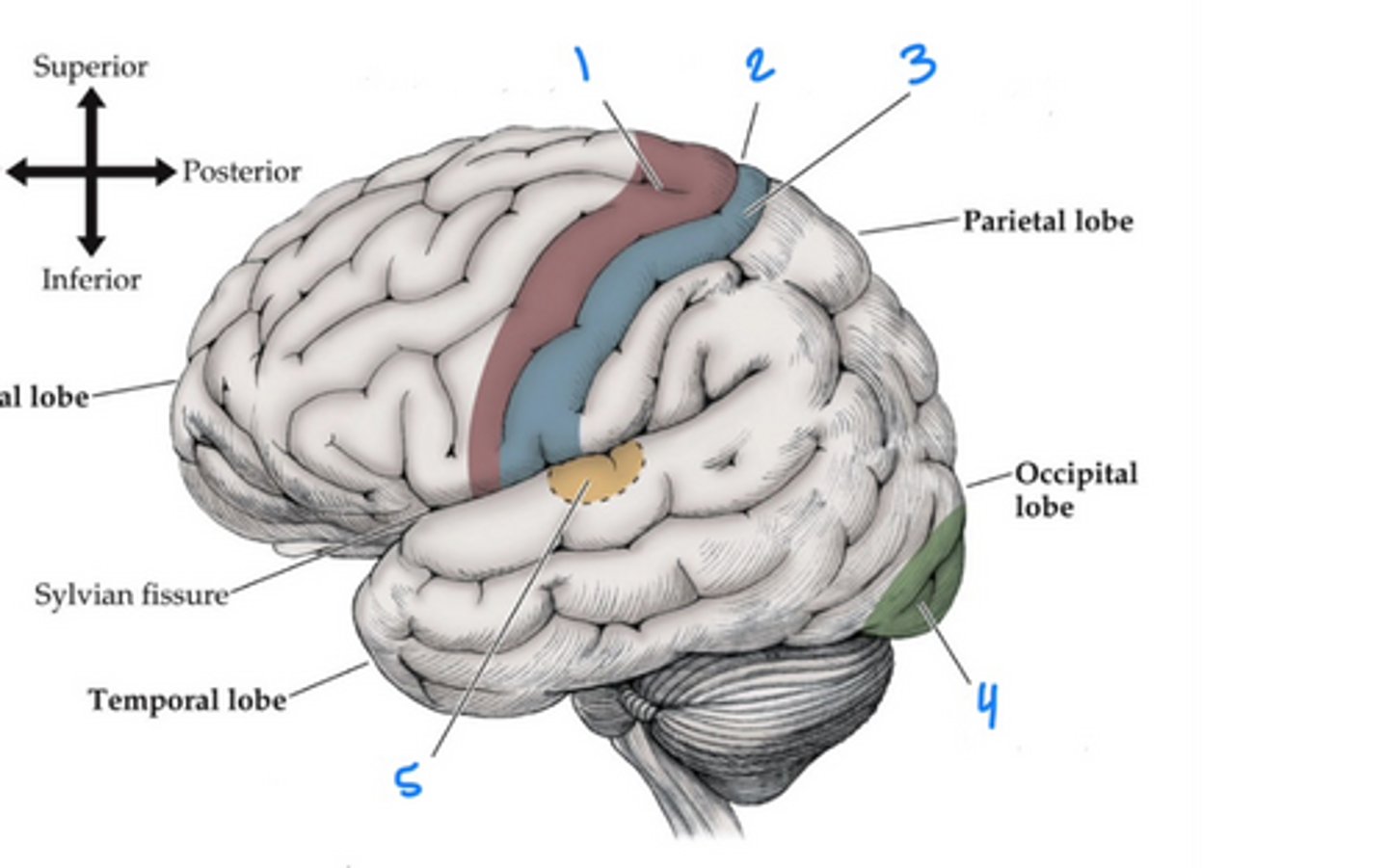
3
primary somoato sensory cortex
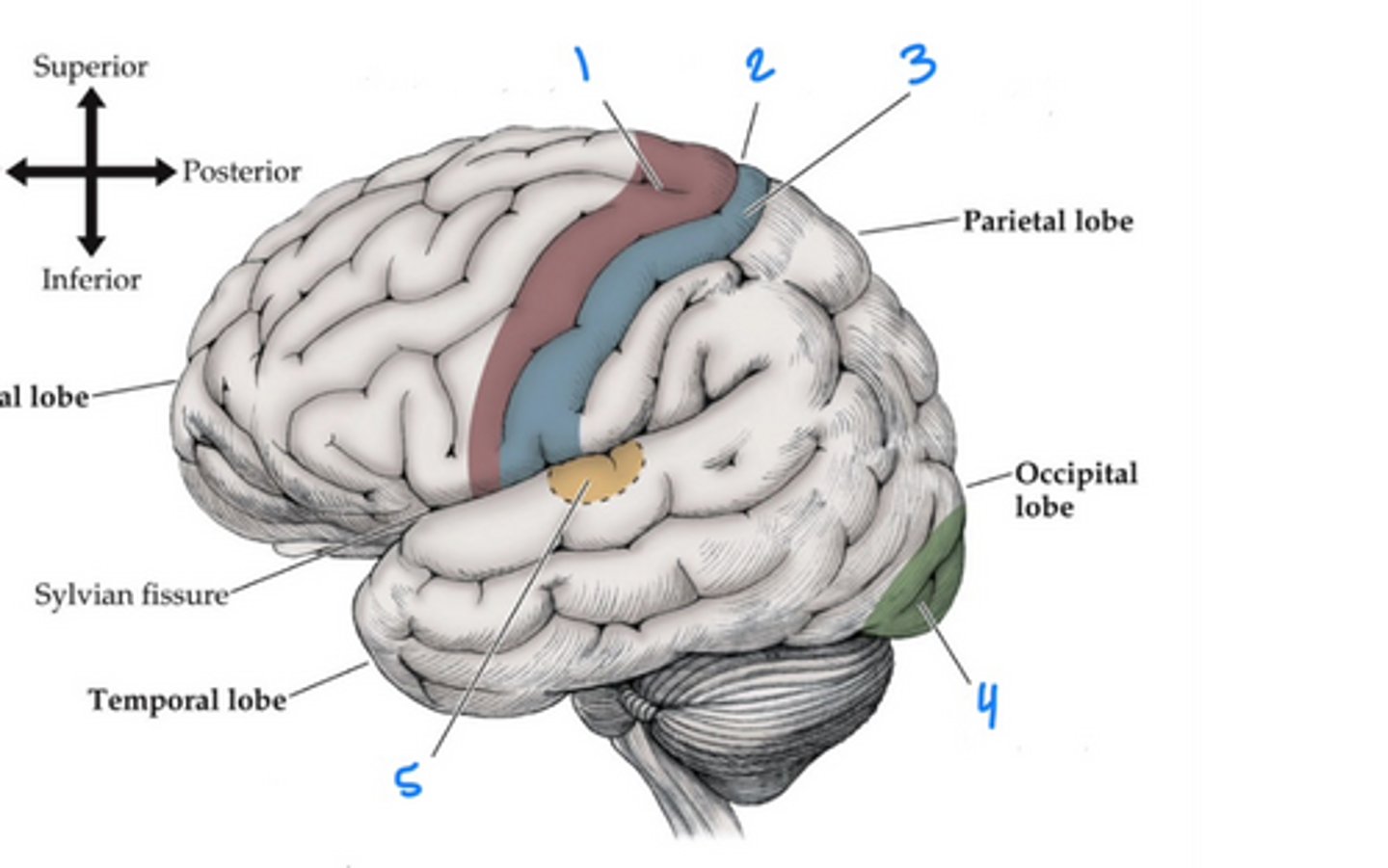
4
primary visual cortex
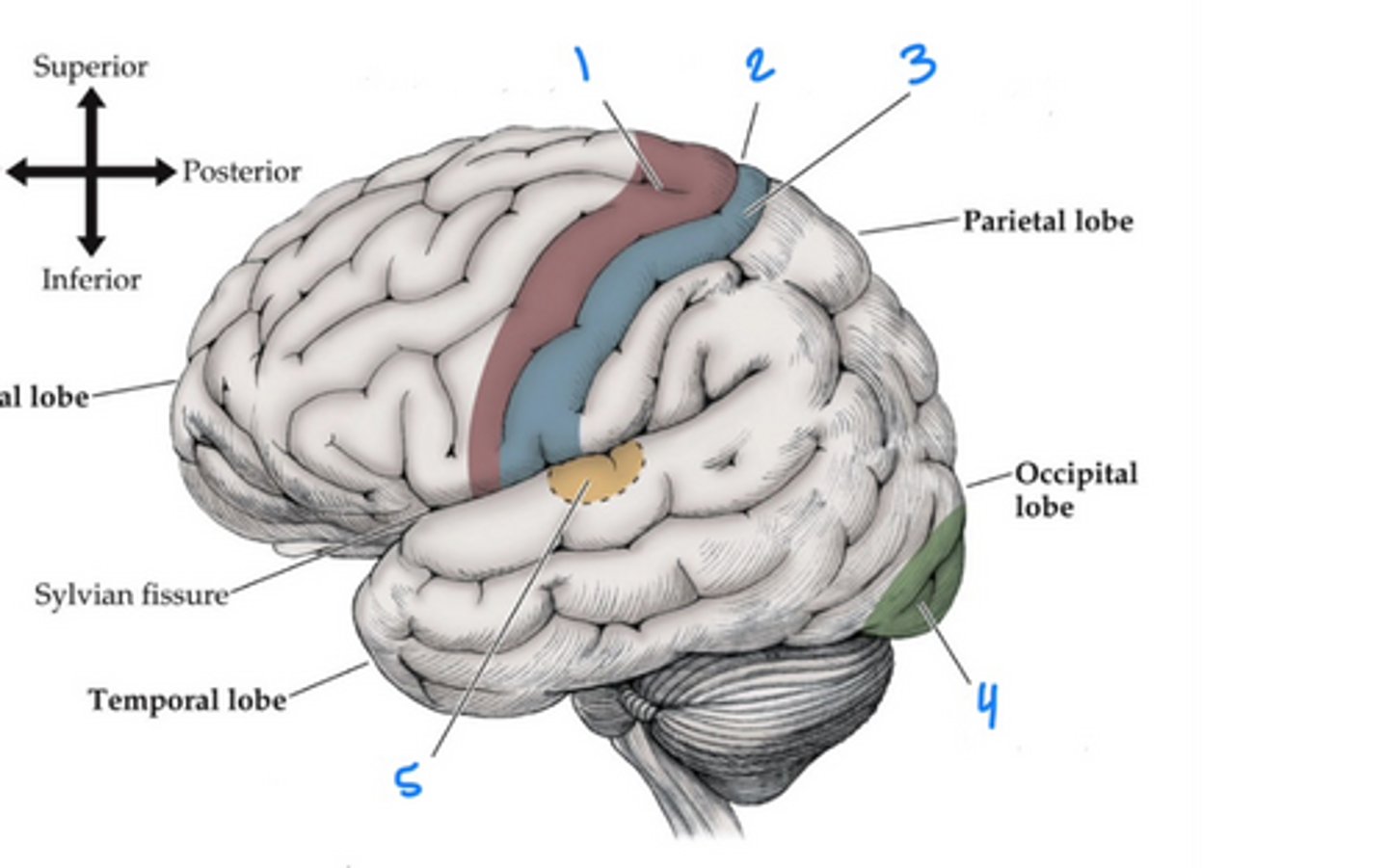
5
primary auditory cortex
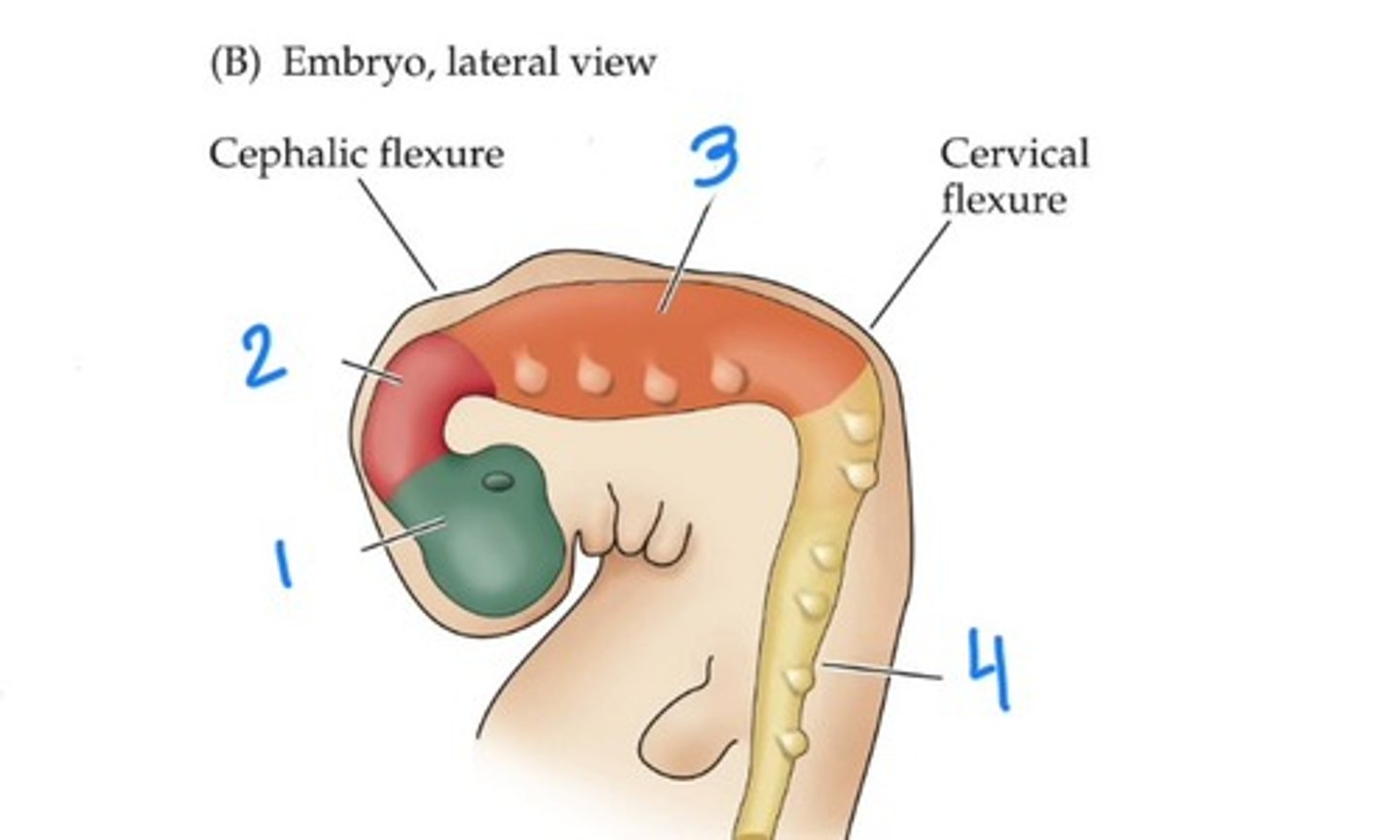
1
prosencephalon
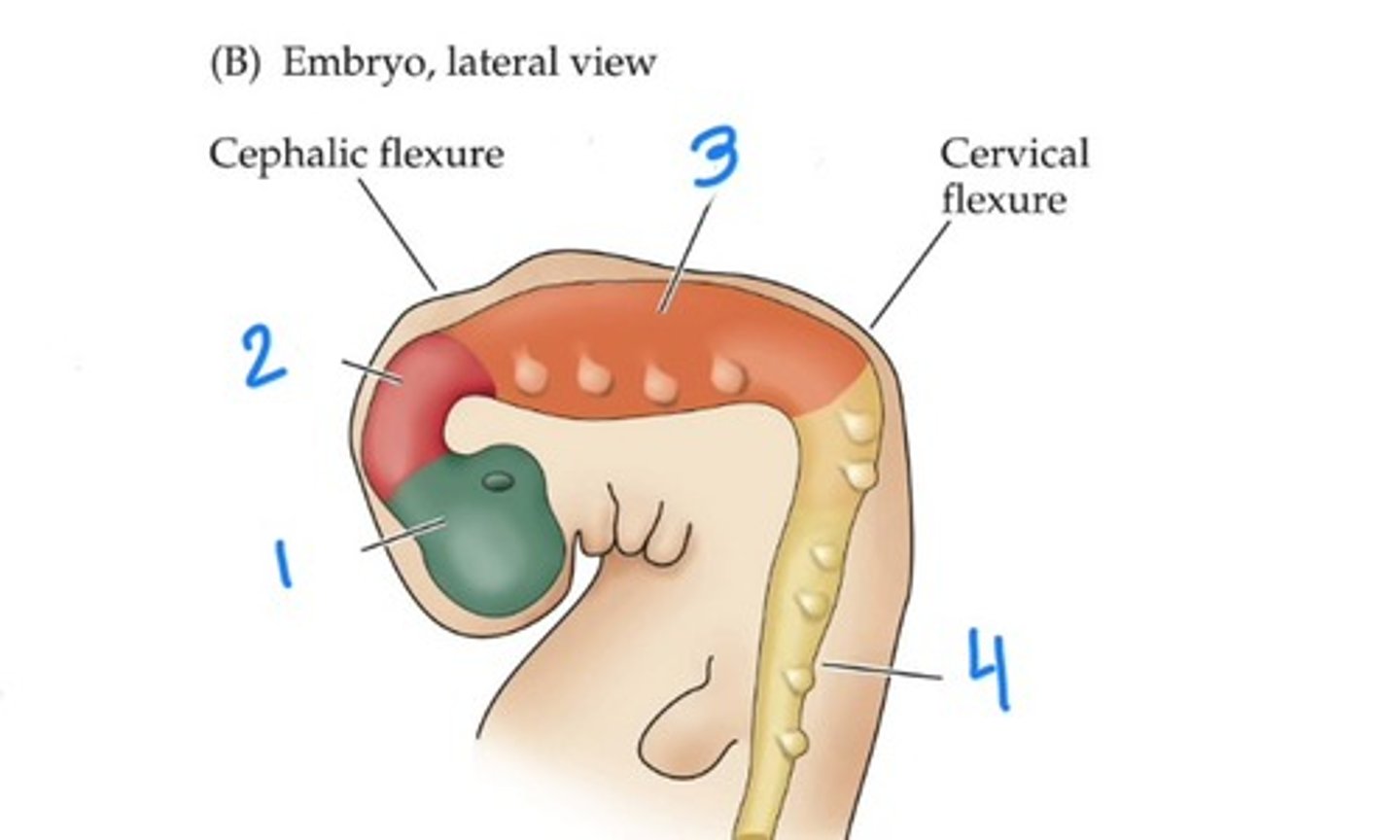
2
mesencephalon
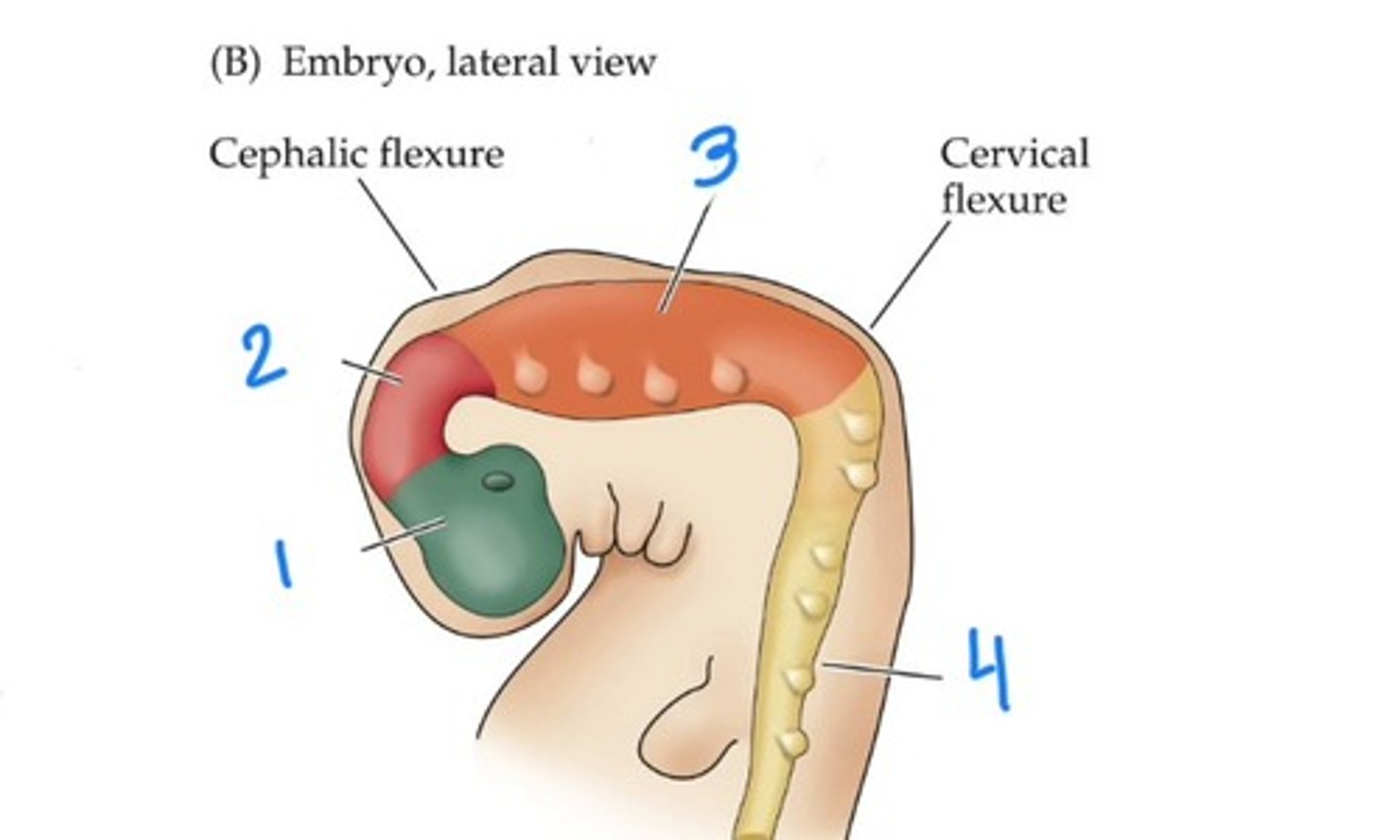
3
rhombencephalon
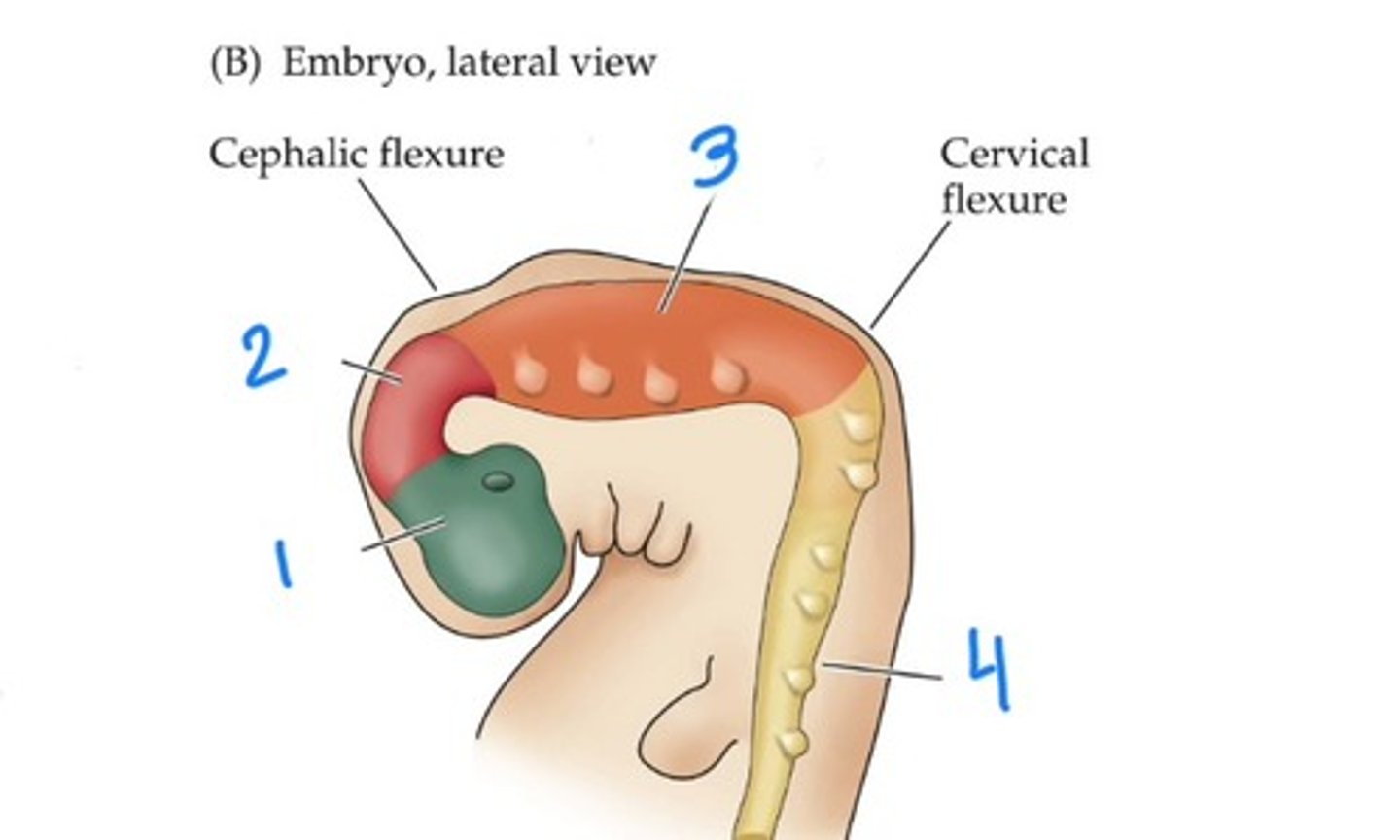
4
SC
what makes up the forebrain
telencephalon and diencephalon
what makes up the midbrain
mesencephalon
what makes up the hindbrain
medulla, pons, cerebellum
is lateral corticospinal tract lateral or medial, descending or ascending
lateral, descending
is rubrospinal tract lateral or medial, descending or ascending
lateral, descending
is corticobulbar lateral or medial, descending or ascending
lateral, descending
anterior corticospinal tract lateral or medial, descending or ascending
medial, descending
med / lat vestibulospinal tract lateral or medial, descending or ascending
medial, descending
pontien / medullary reticulospnal tract lateral or medial, descending or ascending
medial, descending
tectospinal tract lateral or medial, descending or ascending
medial, descending
Is DCML descending or ascending
ascending
is ALS descending or ascending
ascending
first order neuron of DCML
dorsal root ganglion
second order neuron of DCML
nucleus gracilis / cuneatus medulla
third order neuron of DCML
thalamus to primary somatosensory cortex (upper limb, trunk, and lower limb representations)
first order neuron of spinothalmaic
dorsal root ganglion of SC
second order neuron of spinothalamic
crosses in SC to lissaurs tract to ALS
third order neuron of spinothalamic
cell body in VPL nucleus of thalamus (upper limb, trunk, and lower limb representations)
first order neuron of trigeminal N
enter pons
second order neuron of trigeminal N
down to medulla
third order neuron of trigeminal N
VPM of thalamus then to face region in the somatosensory cortex
VPL
ventral posteroLateral nucleus of the thalamus
VPM
Ventral posteroMedial nucleus of the thalamus
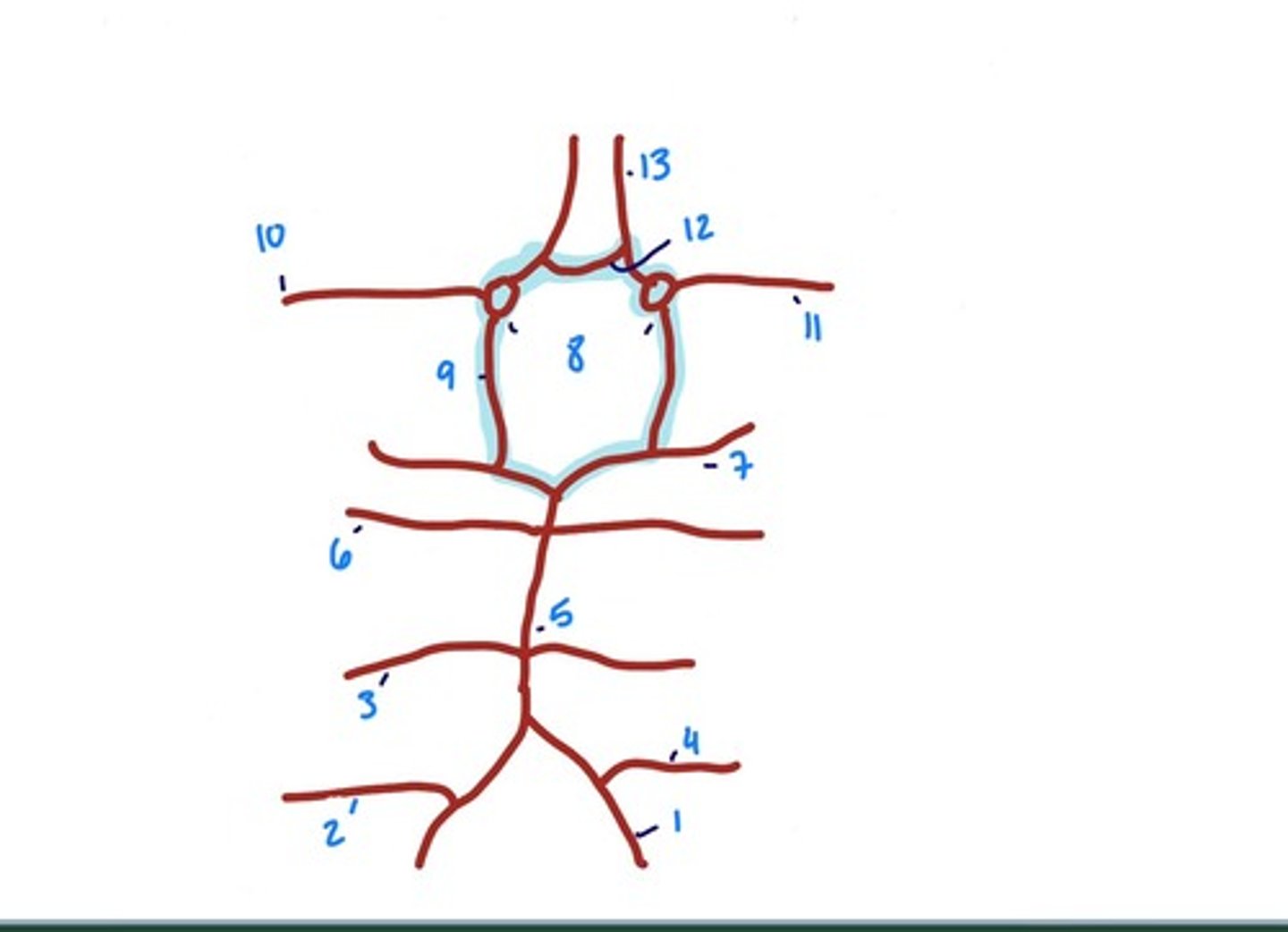
1
vertebral a
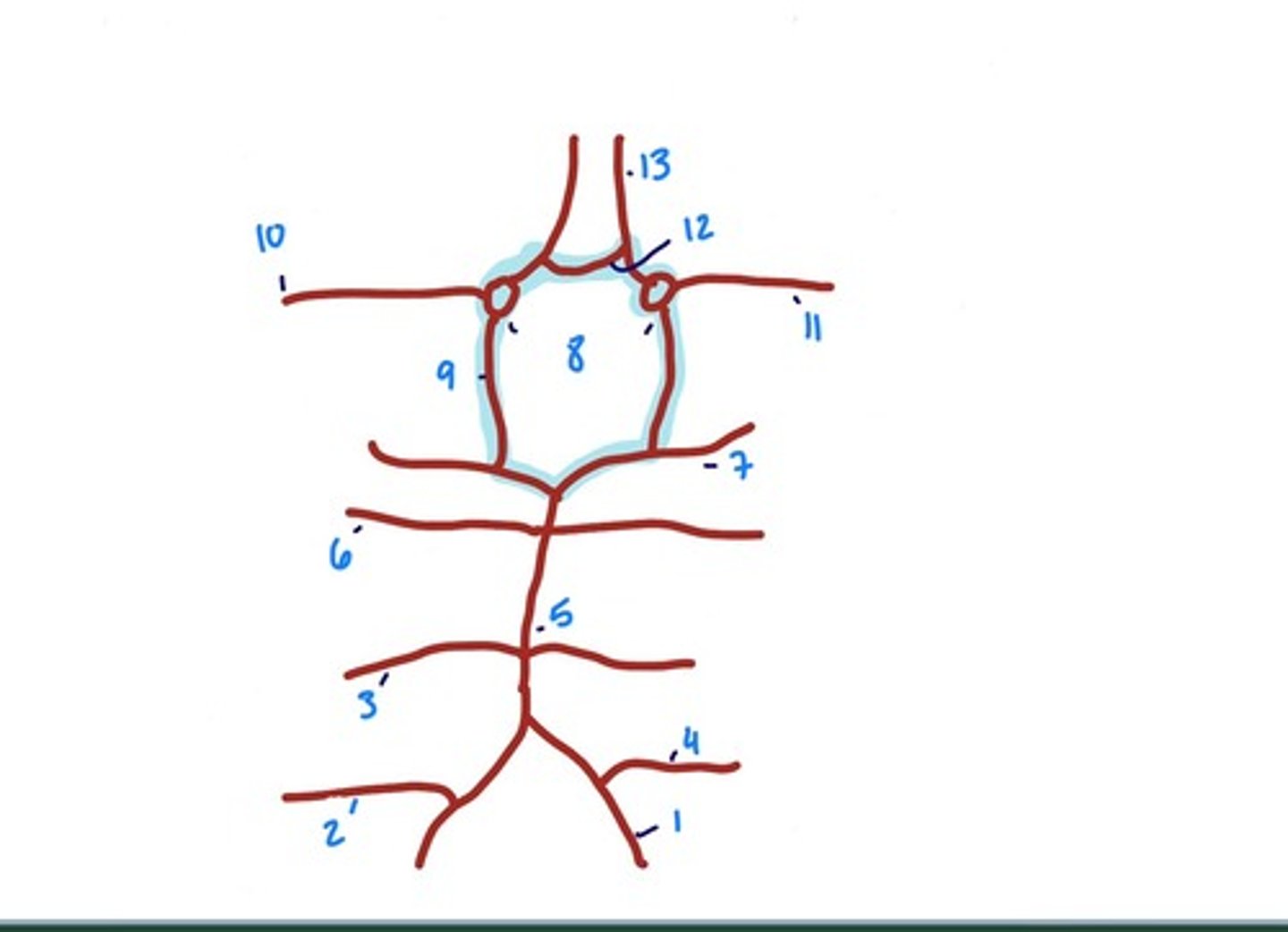
2 & 4
Post Inf Cerebellar A (PICA)
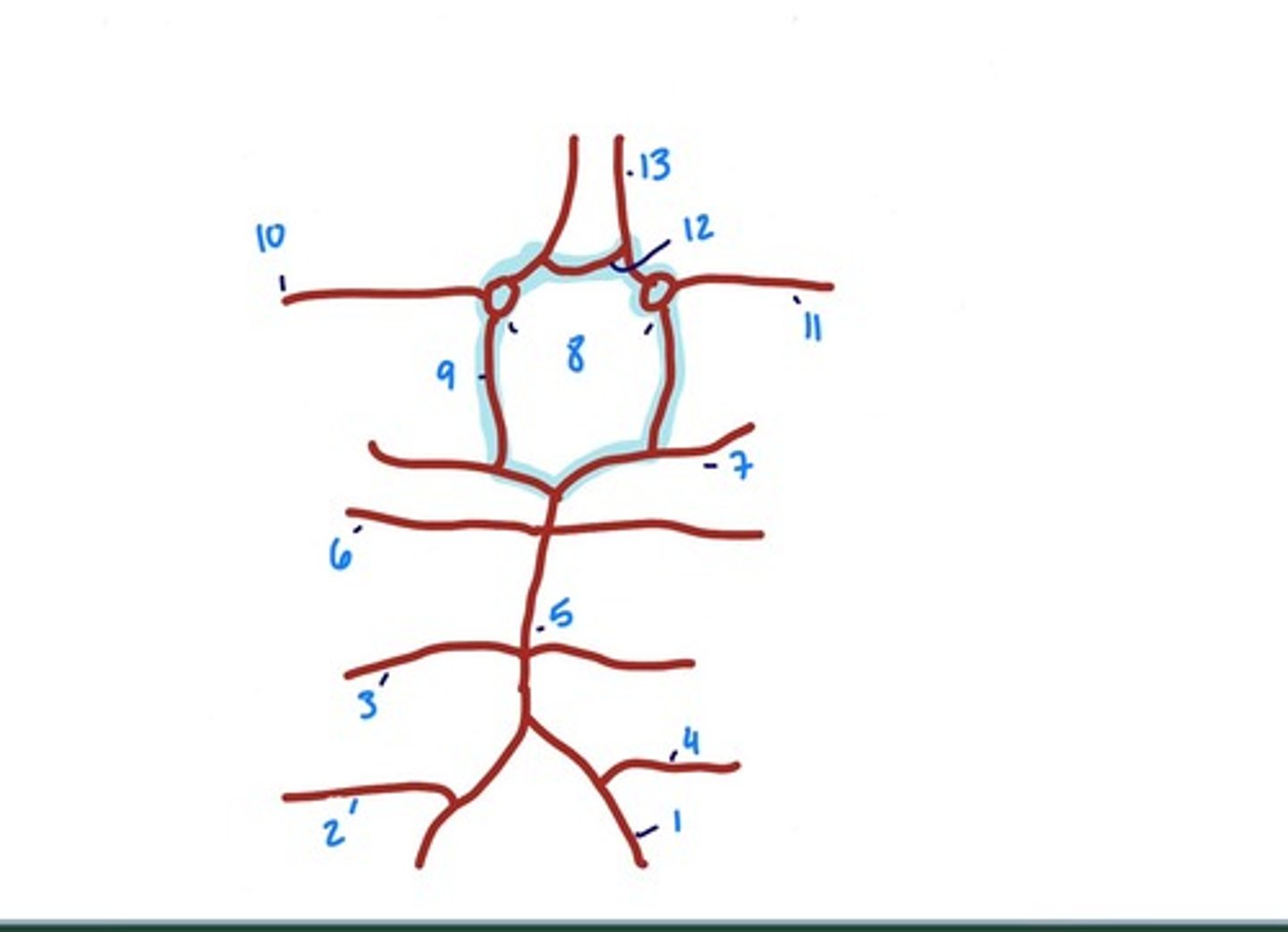
3
Ant. inf. cerebellar a. (AICA)
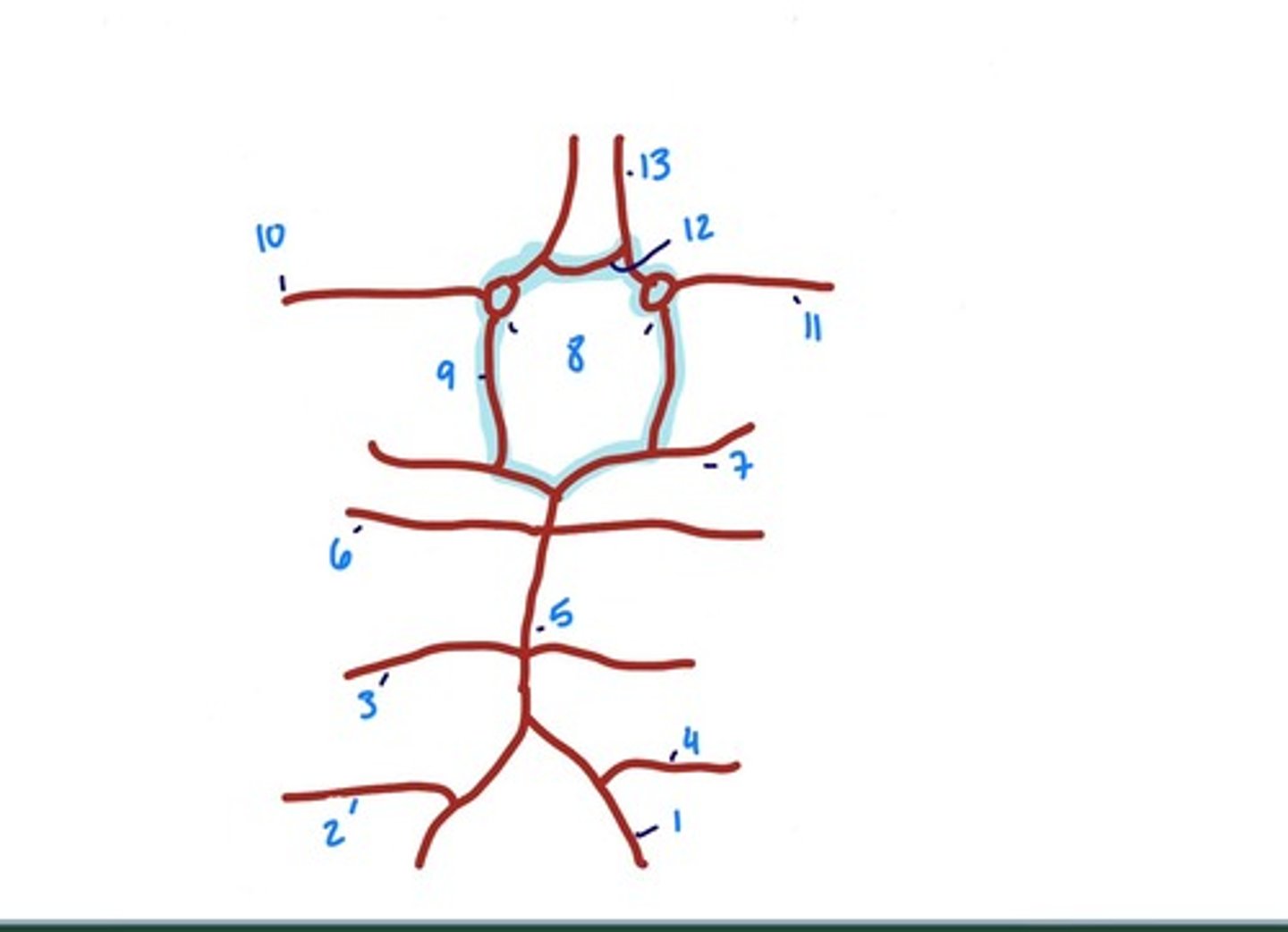
5
basilar A
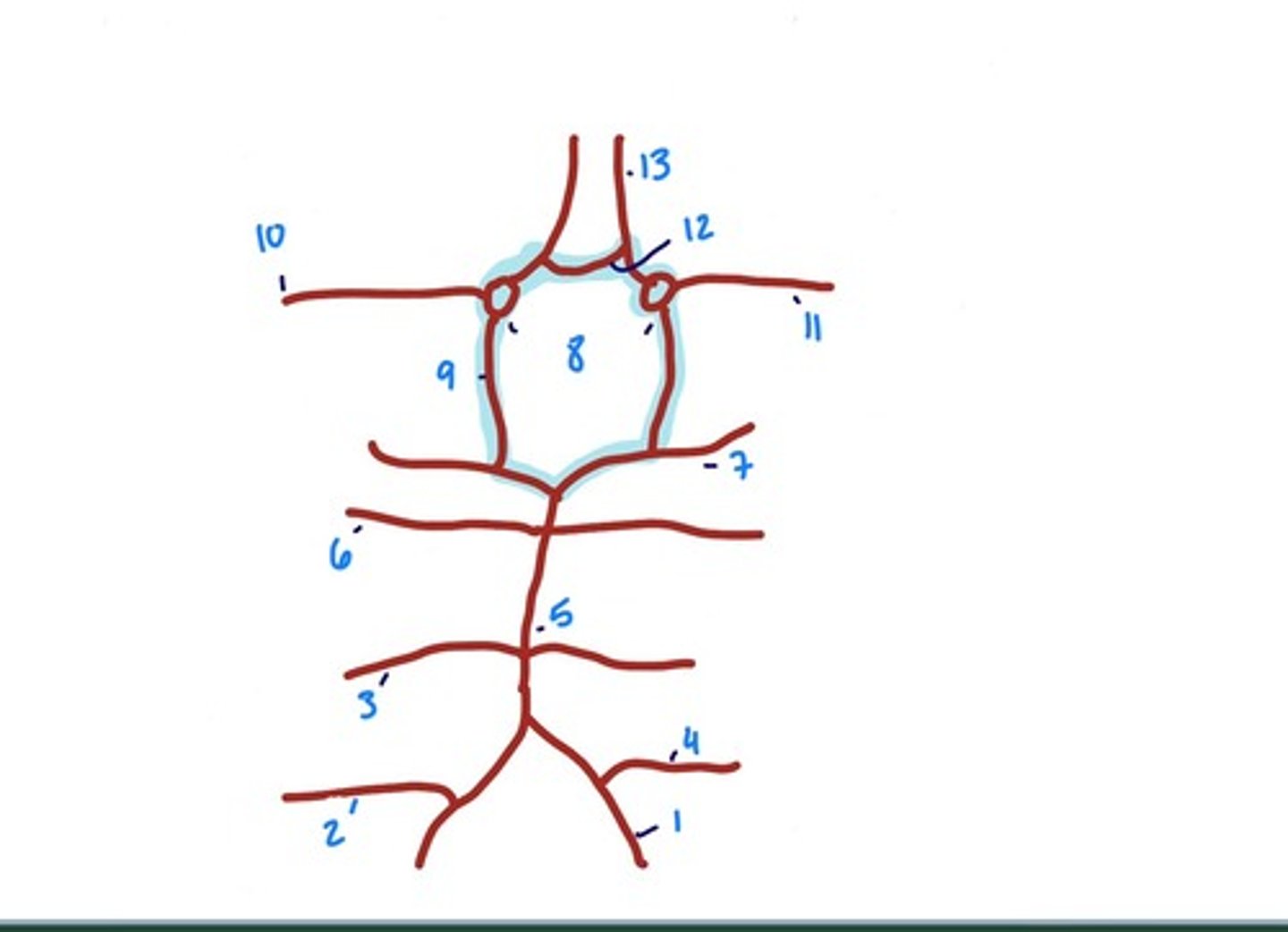
6
Sup Cerebellar A (SCA)
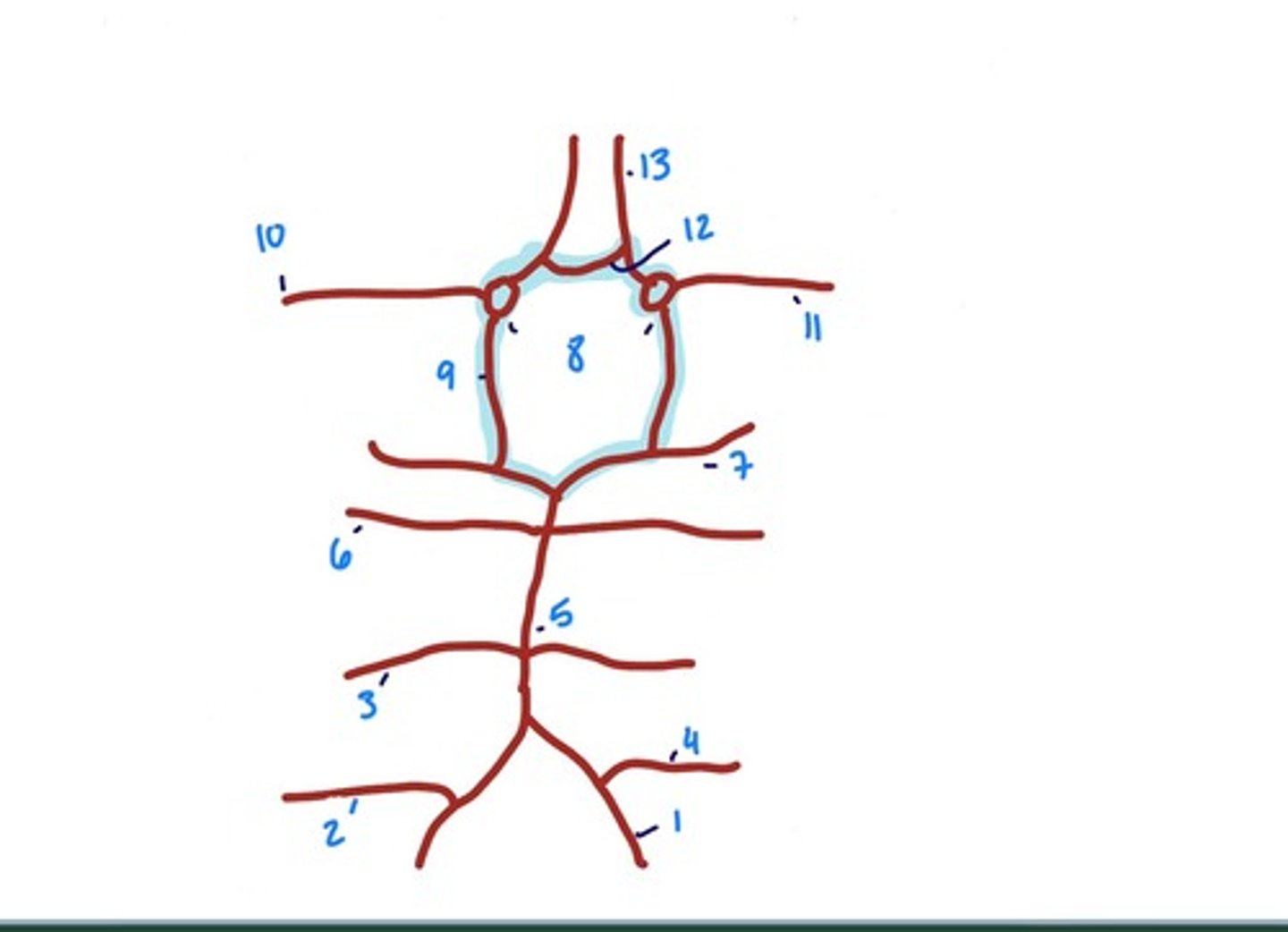
7
Post cerebral A (PCA)
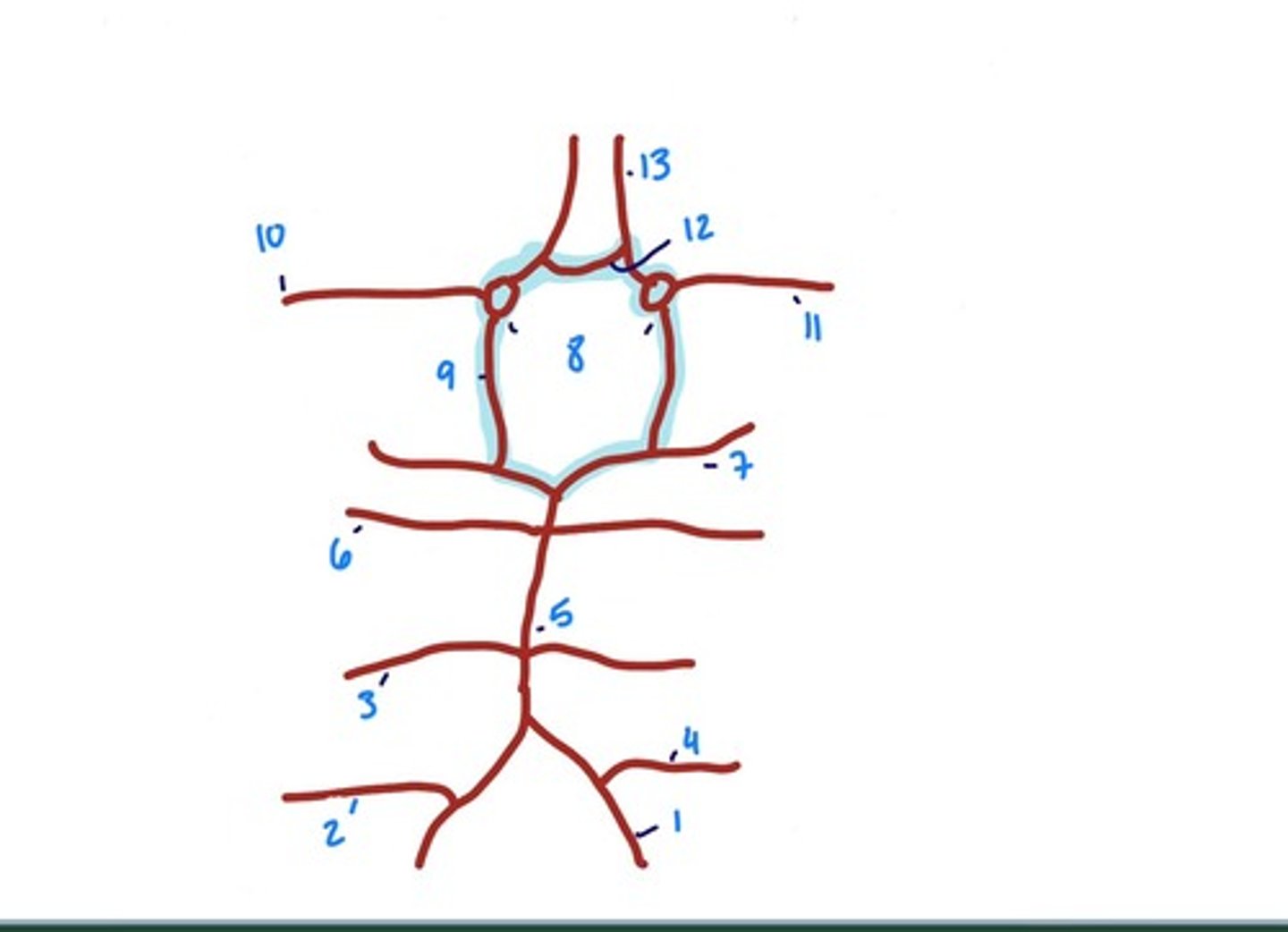
8
Internal Carotid A
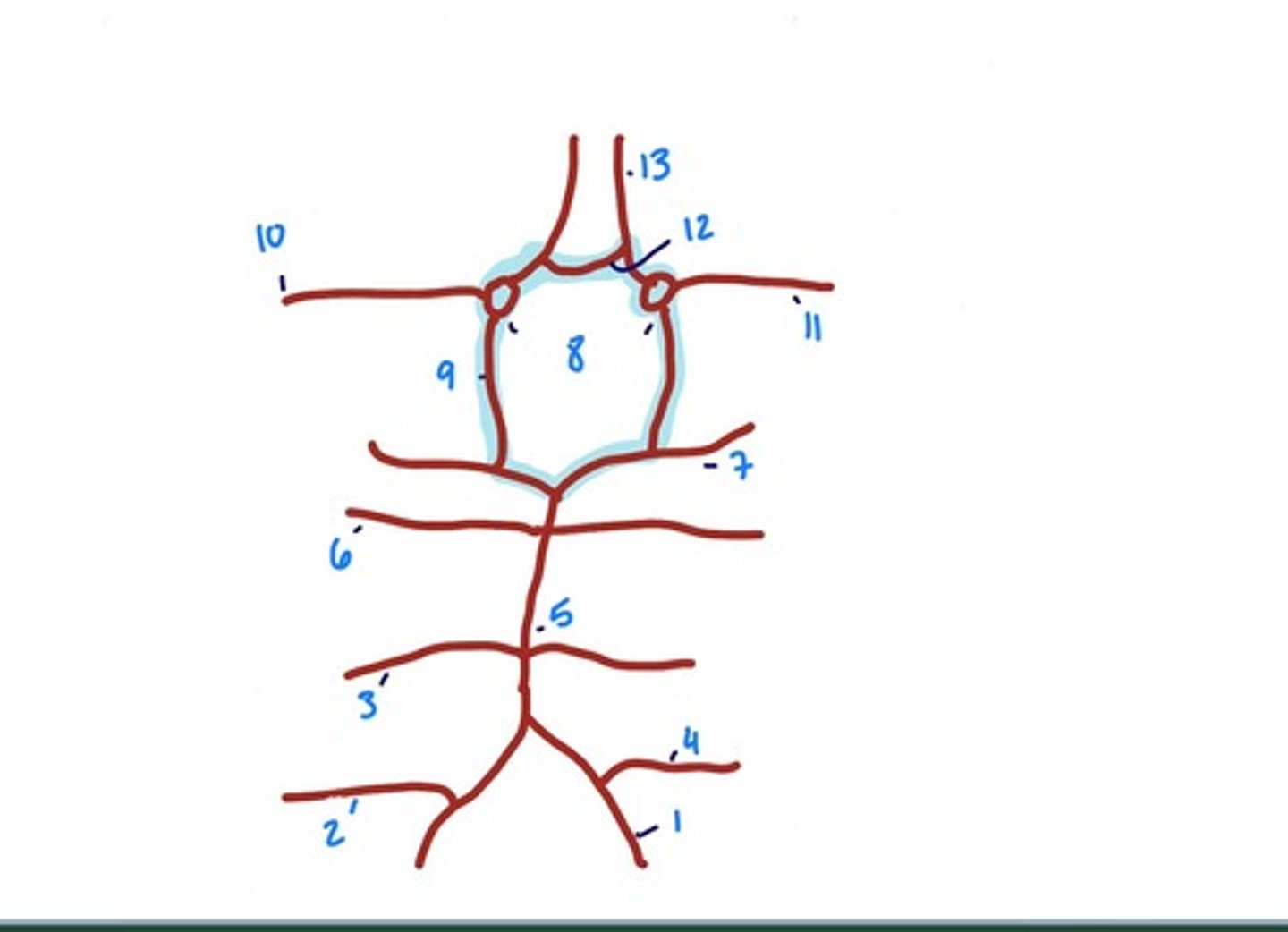
9
Post. Comm. A (P Comm)
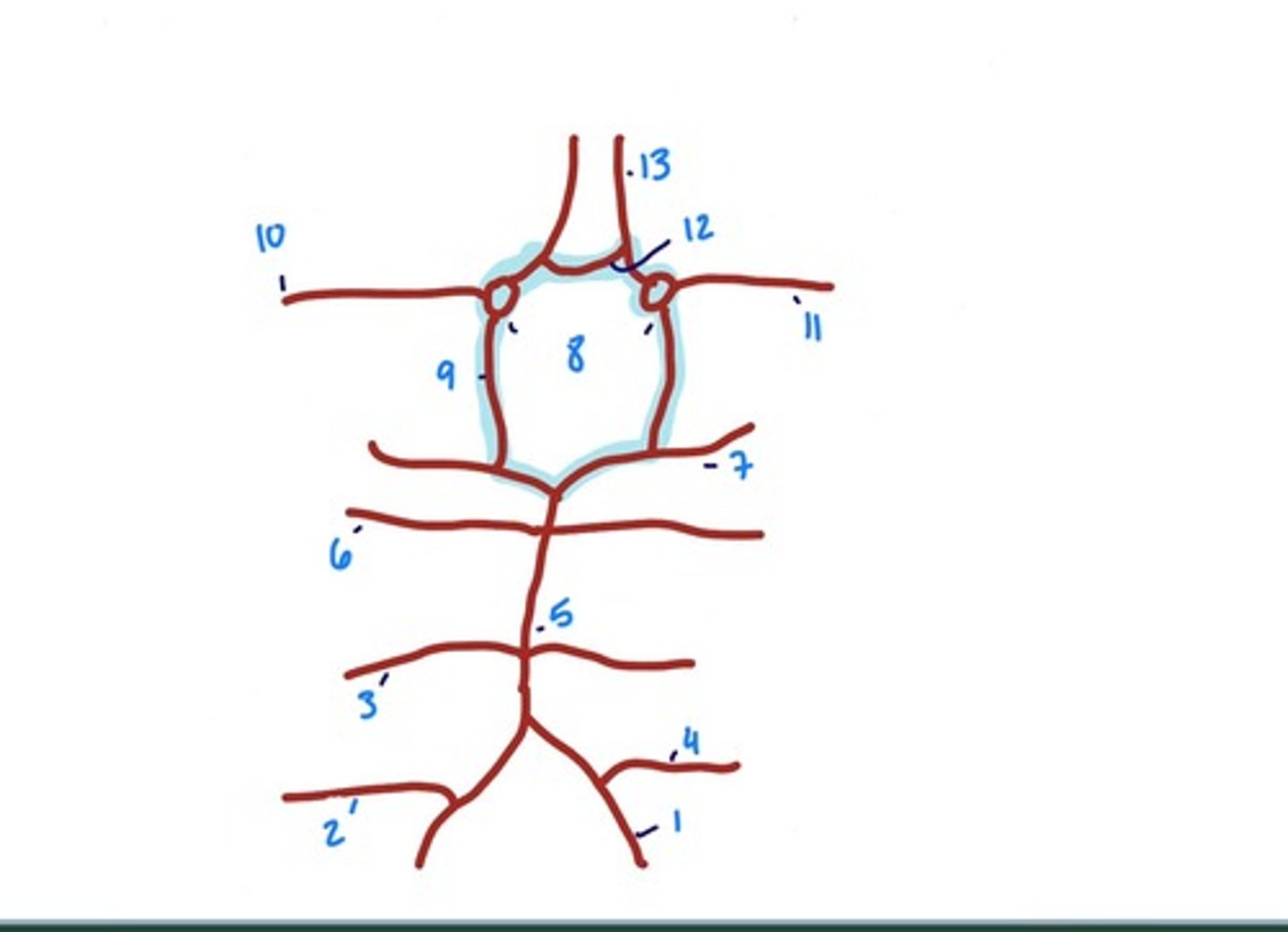
10 & 11
Middle Cerebral A (MCA)
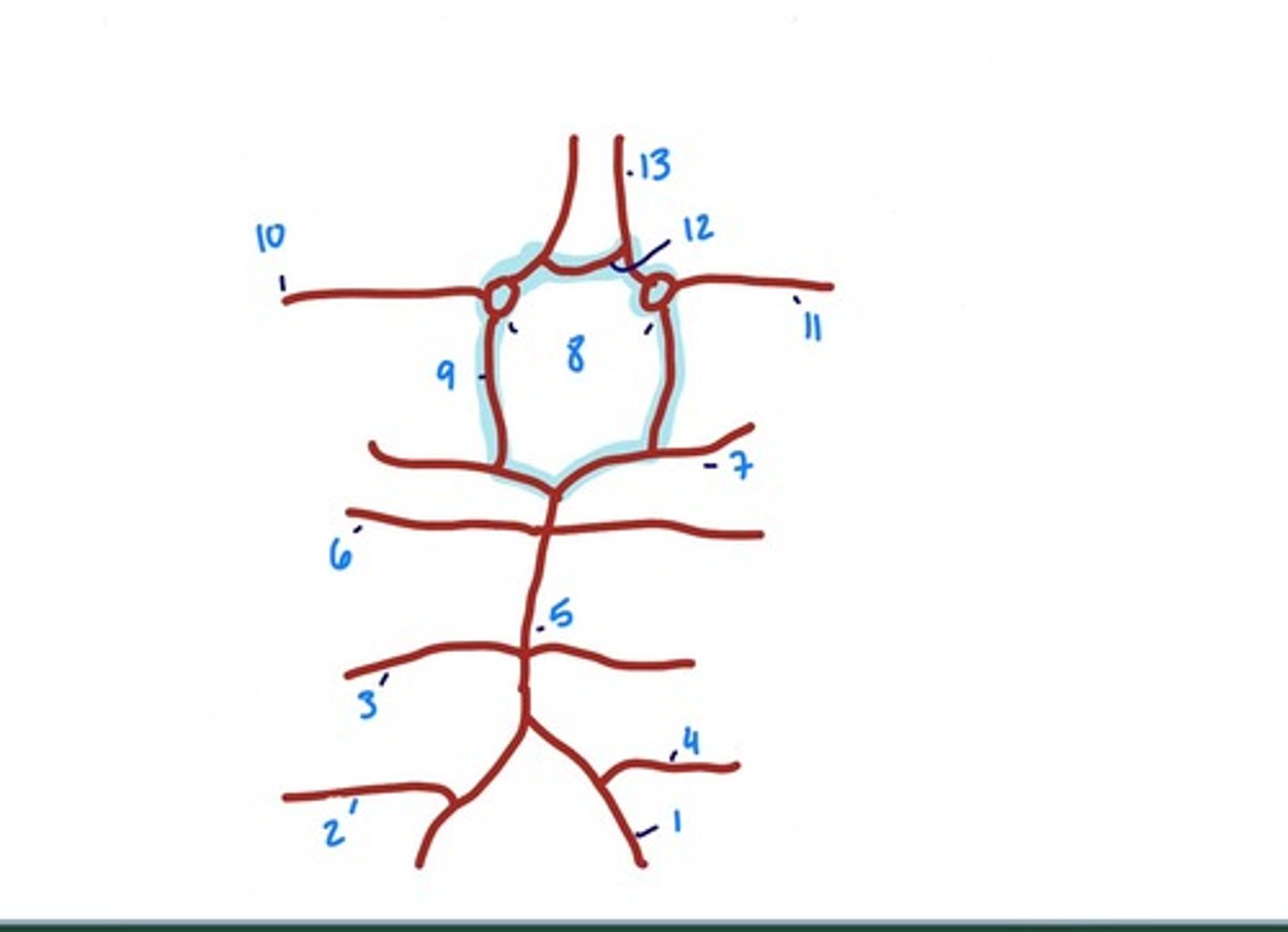
12
Ant. Comm. A (ACA)
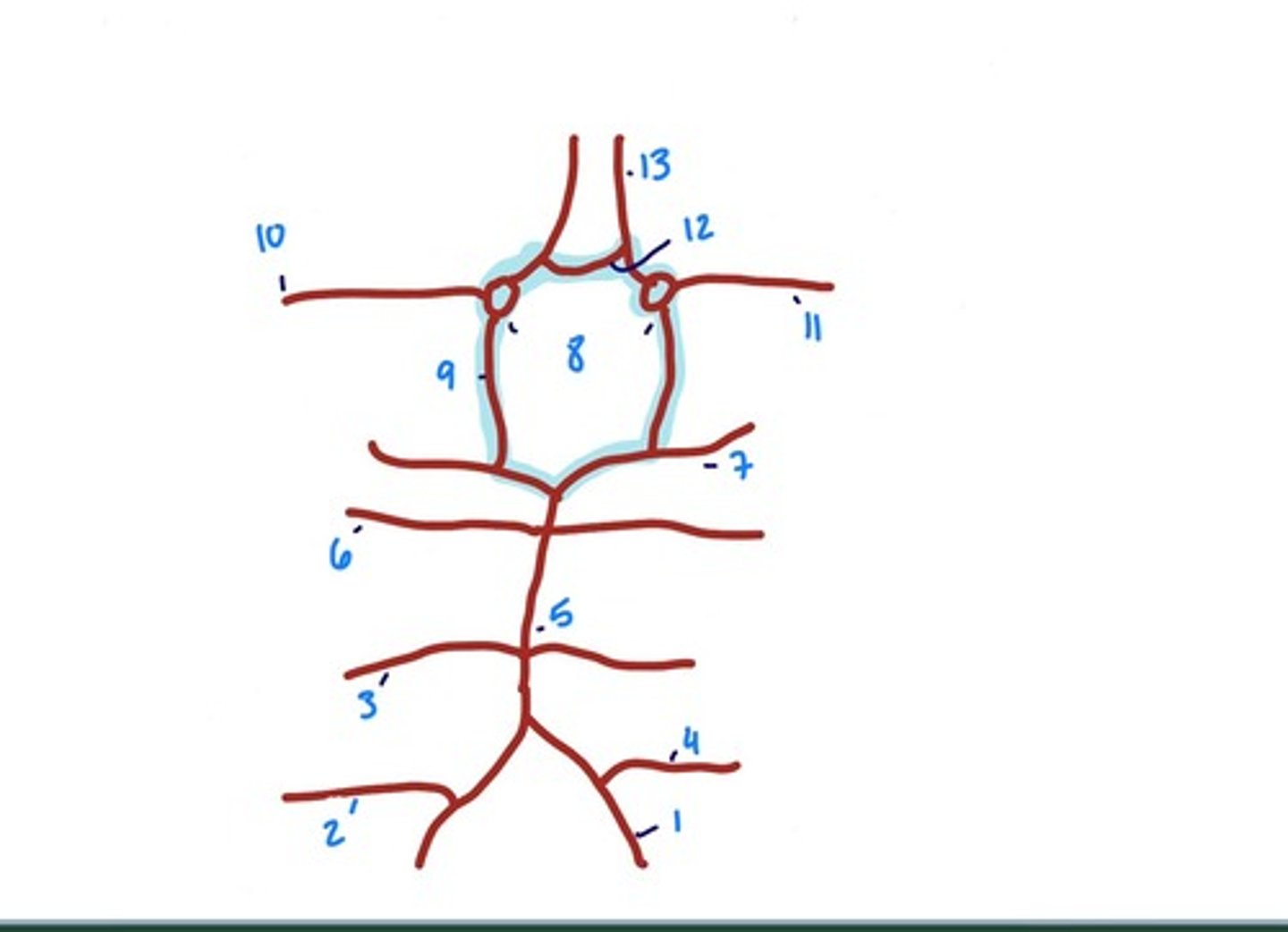
13
Ant. Cerebral A (ACA)
Unipolar axon
both axon &dendrite from a single process coming off cell body
What type of sensory information does conscious relay provide?
Highly accurate, detailed, and precise sensory information.
What are the functions of the sensory information transmitted by conscious relay?
Localization and discrimination.
What pathway(s) is/are related to conscious
- DCML
- spinalthalamic
- trigeminal
What is the primary purpose of divergent thinking?
To grab your attention, elicit arousal, and generate emotional/affective responses.
How does information function in divergent thinking?
It 'diverges' (spreads out) to multiple brain areas.
Is divergent thinking more or less precise?
Less precise.
what pathways are related to divergent
- spinolimbic
-spinoreticular
- spinomesencephalic
What do unconscious pathways transmit?
Sensory information that does not reach conscious awareness.
Which part of the brain primarily uses information from unconscious pathways?
The cerebellum.
unconscious pathways
- Anterior Spinocerebellar Tract
- Posterior Spinocerebellar Tract
- Cuneocerebellar Tract
- Rostrospinocerebellar Tract
What functions are coordinated by the cerebellum using unconscious pathways?
Automatic coordination of movement, posture, and balance.
Posterior Spinocerebellar Tract
legs and lower body, high fideltiy. internal feedback, sensory ascending
Cuneocerebellar Tract
internal feedback, sensory ascending. arms and upper body, high fidelity
Anterior Spinocerebellar Tract
internal feedback, sensory ascending. thoroacolumbar SC, low fidelity, internal feedback
Rostrospinocerebellar Tract
internal feedback, sensory ascending. cervical SC, low fidelity, internal feedback
ataxia
coordination problems
Apraxia
difficulty with planning muscle movements
1st route in CSF
made in chorioid plexus