Iowa CNA State Testing
 Call Kai
 Learn
Learn Practice Test
 Spaced Repetition
 Match
Match Flashcards
 Knowt Play
1/89

There's no tags or description
Looks like no tags are added yet.
Name | Mastery | Learn | Test | Matching | Spaced | Call with Kai |
|---|
No analytics yet
Send a link to your students to track their progress
90 Terms
Long Term Care
Residents who need 24 hour care are placed into...
Skilled Care
Medically necessary care given by a skilled nurse or therapist; available 24 hours a day
Terminal Illness
a disease or condition that will eventually cause death
Chronic
Condition lasts a long period of time; even a lifetime
Medicare
federal health insurance program for people aged 65 or older
Medicaid
a medical assistance program for people with low incomes, as well as for people with disabilities
Liability
Legal term; someone can be held responsible for harming someone else
Scope of Practice
Defines the tasks that healthcare providers are legally allowed to do as permitted by state of federal law
Care Plan
A plan developed for each resident to achieve certain goals; it outlines the steps and tasks that the care team must perform.
Ethics
Knowledge of right and wrong
OBRA
Set minimum standards of care, which included standardized training of nursing assistants.
Residents Rights
Specify how residents must be treated while living in a facility
Neglect (Active and Passive)
failure to provide needed care that results in physical, mental, or emotional harm to a person
Negligence
Actions, or the failure to act or provide the proper care for a resident.
Ombudsman
Legal advocate for residents
HIPPA
Keeps health information private and secure
PHI
information that an be used to identify a person and relates to the patient's condition, any health care the person has had, and payment for that healthcare.
Objective information
based on what a person sees, hears, touches, or smells
Subjective information
information a person cannot or did not observe; it is resident reported and may or may not be true
Incontinence
inability to control bladder and/or bowels
Culture
system of learned beliefs and behaviors that is practiced by a group of people
Body Mechanics
the way the parts of the body work together when a person moves
Abrasion
an injury that rubs off the surface of the skin
Cyanotic
Blue-tinged skin
Shock
occurs when organs and tissues in the body do not receive an adequate blood supply
Myocardial Infarction
heart attack
Dyspnea
difficulty breathing
Syncope
fainting
insulin reaction (hypoglycemia)
can result from either too much insulin or too little food
Cerebrovascular Accident (CVA)
Stroke; blood supply to a part of the brain is blocked or a blood vessel leaks or ruptures.
Transient Ischemic Attack (TIA)
a warning sign of a CVA/stroke resulting from a temporary lack of oxygen in the brain; symptoms may last up to 24 hours
Hemiplegia
Paralysis on one side of the body
Hemiparesis
weakness on one side of the body
Expressive aphasia
The inability to produce language ( despite being able to understand language)
receptive aphasia
inability to understand spoken or written words
Systemic infection
an infection throughout the body
Medical Asepsis
practices designed to reduce the number and transfer of pathogens; synonym for clean technique
Standard Precautions
treating all blood, body fluids, non-intact skin and mucous membranes as if they are infected (Does not include sweat) - MUST be used with every resident
Sterilization
Complete destruction of all forms of microbial life
Disinfection
a process that kills pathogens but does not destroy all pathogens
transmission-based precautions
special precautions implemented on the basis of how the disease spreads; added in addition to standard precautions
Hepititis
inflammation of the liver
Hepatitis B
Bloodborne pathogen; Spread through sexual contact, sharing infected needles, and from mother --> baby. There is a vaccine
Hepatitis C
Bloodborne Pathogen; can lead to cirrhosis and liver cancer and can even cause death. There is no vaccine
Tuberculosis
Caused by a bacterium and is carried on mucous droplets suspended in the air. Usually affects the lungs; airborne disease.
MRSA
Infection that is resistant to methicillin; no drugs can kill the bacteria. Often occurs in people who have not been recently admitted to healthcare facilities.
C. diff
spore forming bacterium which can be part of the normal intestinal flora
Holistic Care
Means caring for the whole person the mind as well as the body
Advance Directives
A legal document designed to indicate a person's wishes regarding care in case of a terminal illness or during the dying process
Living will
A document that indicates what medical intervention an individual wants if he or she becomes incapable of expressing those wishes.
Cheyne-Stokes respiration
an irregular pattern of breathing characterized by alternating rapid or shallow respiration followed by slower respiration or apnea
Palliative Care
Care designed not to treat an illness but to provide physical and emotional comfort to the patient and support and guidance to his or her family.
Dialate
to widen
Contrict
narrow
Atrophy
to waste away
Contracture
the permanent tightening of fascia, muscles, tendons, ligaments, or skin that occurs when normally elastic connective tissues are replaced with nonelastic fibrous tissues
Autoimmune Illness
an illness in which the body's immune system attacks normal tissue in the body
rheumatoid arthritis
a chronic autoimmune disorder in which the joints and some organs of other body systems are attacked
Osteoarthritis
degenerative joint disease; affects the elderly
Osteoporosis
A condition in which the body's bones become weak and break easily.
Weaker side
When assisting a patient, always stand on the...
Hypertension
high blood pressure, 130/80 or higher
Diuretics
medications that reduce fluid volume in the body
Coronary Artery Disease
blood vessels in coronary arteries narrow = reduce oxygen and blood to the heart muscle
fatty deposits block the artery = tissue death
Angina Pectoris
chest pain
congestive heart failure
heart is unable to pump its required amount of blood
peripheral vascular disease
Vascular disease affecting blood vessels outside of the heart and especially those vessels supplying the extremities. Fatty deposits in the blood vessels that harden over time
COPD
Causes trouble with breathing
Ostomy
Surgical creation of an opening from an area inside the body to the outside
Stoma
The end of the intestine is brought outside of the body through an artificial opening in the abdomen
Diabetes
A condition in which the body is unable to produce enough insulin, the hormone required for the metabolism of sugar
Dementia
the serious loss of mental abilities, such as thinking, remembering, reasoning, and communicating
Alzheimer's disease
Tangled nerve fibers and protein deposits form in the brain; eventually cause dementia.
Sundowning
becoming restless and agitated in the late afternoon, evening, or night
Pressure injuries
injuries or wounds that result from skin deterioration and shearing
Shearing
rubbing or friction resulting from the skin moving one way and the bone underneath it remaining fixed or moving in the opposite direction
Pediculosis
infestation with lice
Embolism
obstruction of a blood vessel
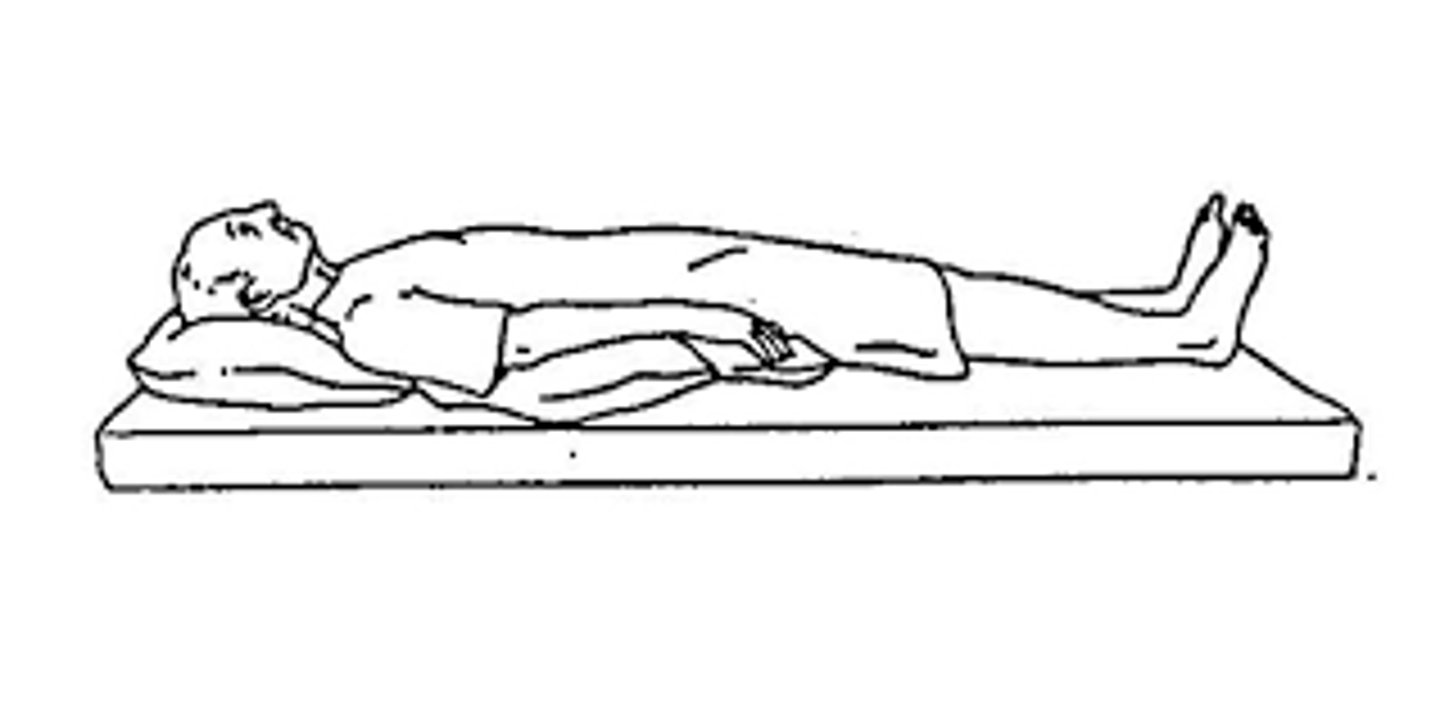
Supine
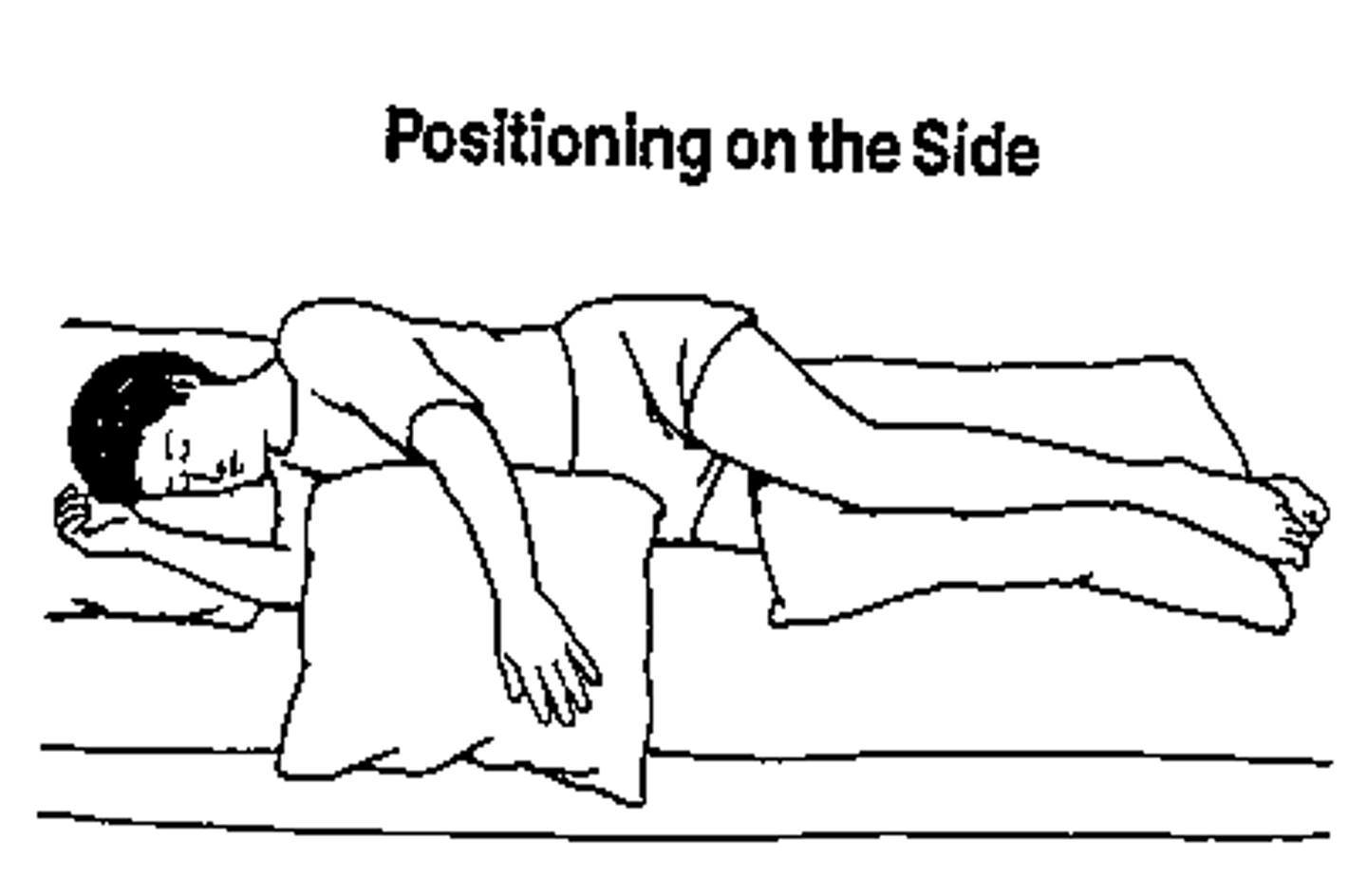
Lateral
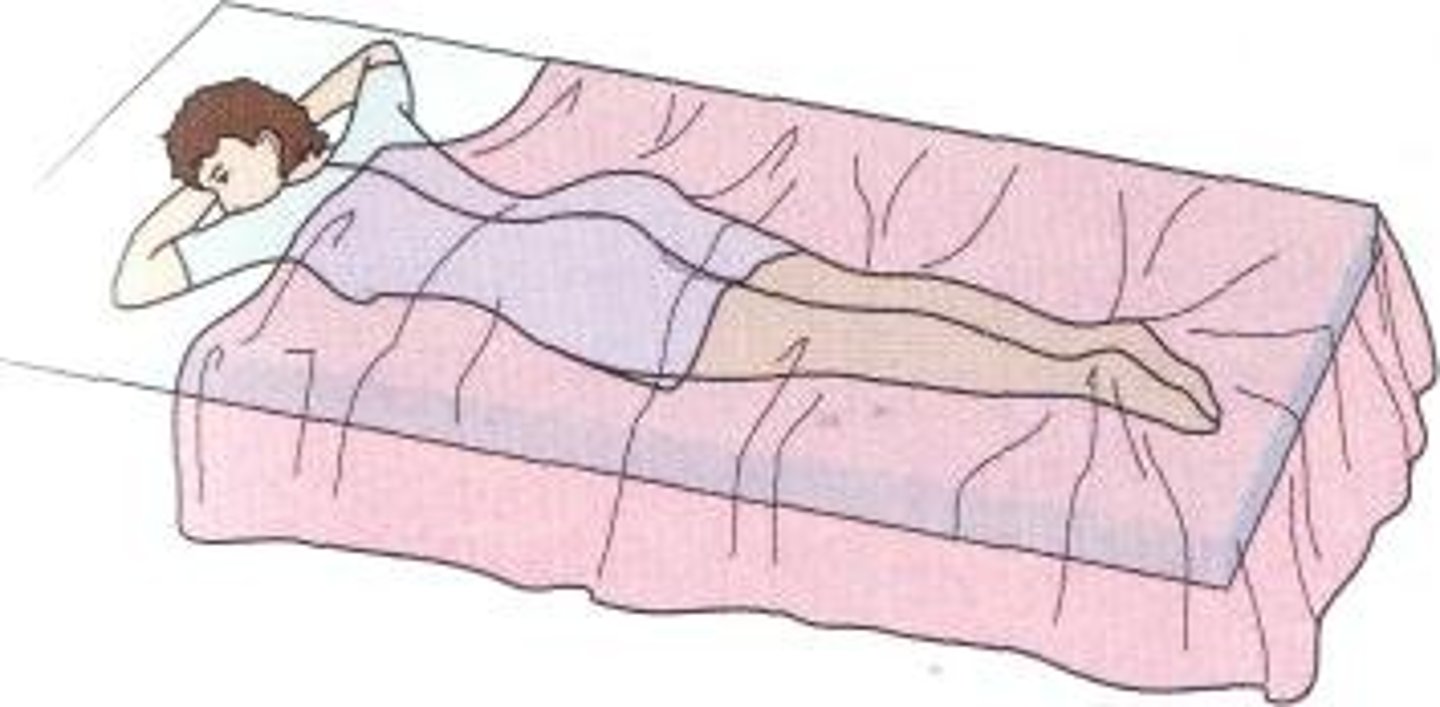
Prone
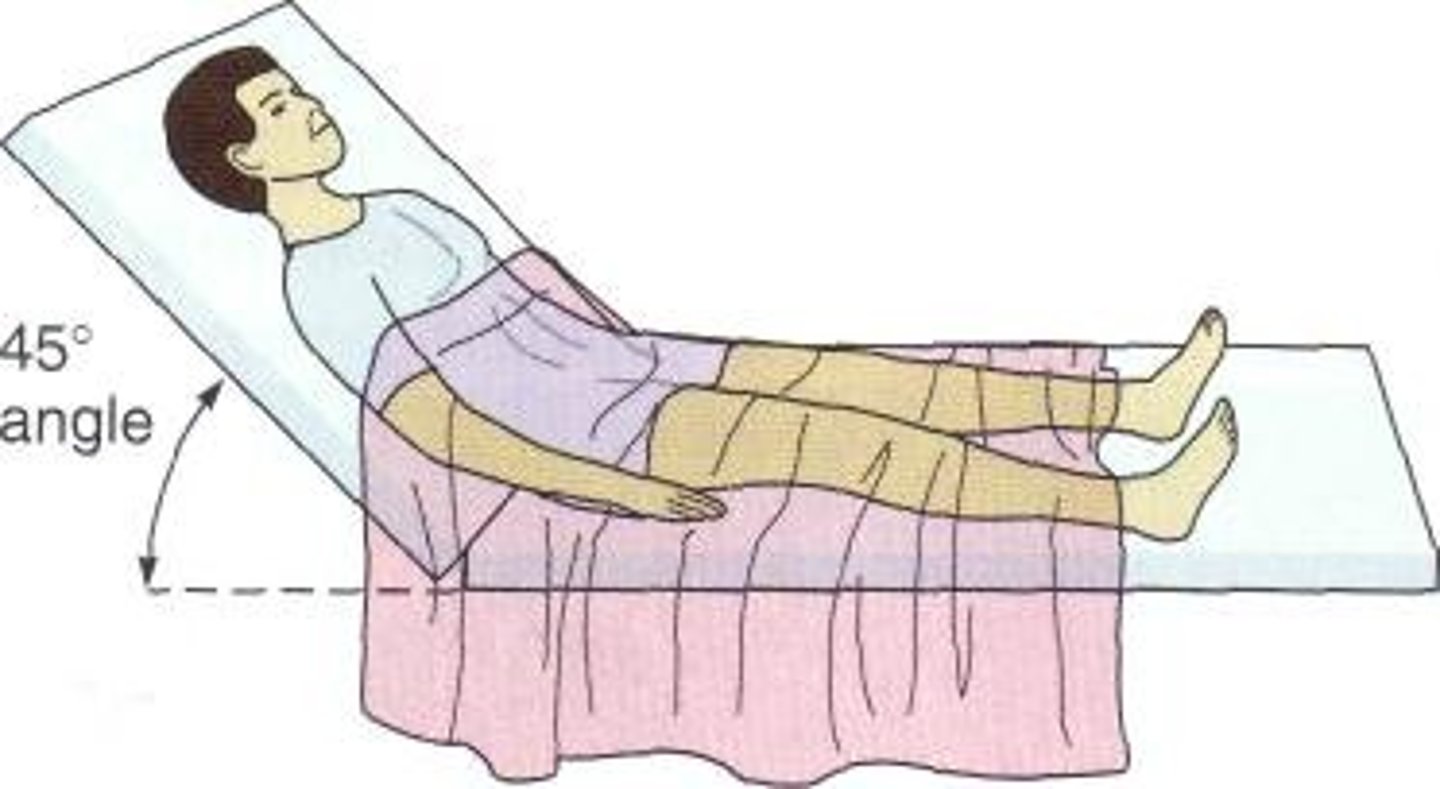
Fowler's
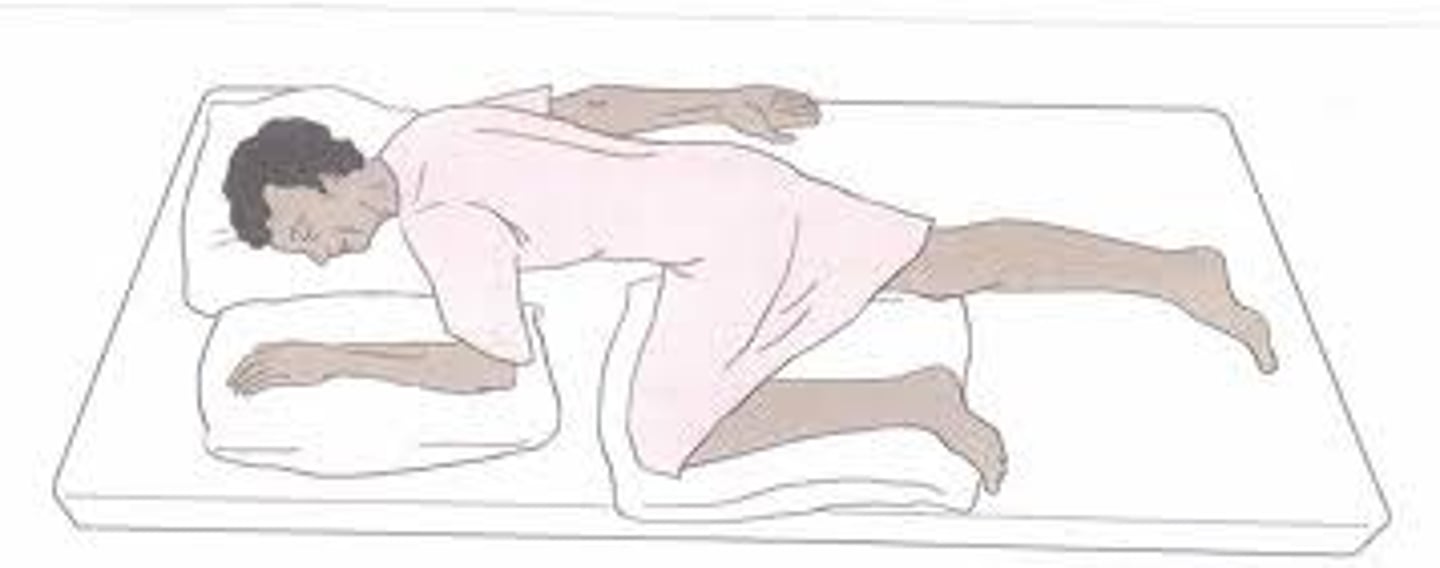
Sims'
98.6 or 37
Normal Body Temp
Rectal Temperature
What type of temperature is the most accurate?
Systolic
Blood pressure in the arteries during contraction of the ventricles.
Diastolic
Blood pressure that remains between heart contractions.
NPO
nothing by mouth
Edema
puffy swelling of tissue from the accumulation of fluid
Dysphagia
difficulty swallowing