GEOL 1010 - Lab Midterm
 Call Kai
 Learn
Learn Practice Test
 Spaced Repetition
 Match
Match Flashcards
 Knowt Play
1/79

Earn XP
Description and Tags
Name | Mastery | Learn | Test | Matching | Spaced | Call with Kai |
|---|
No analytics yet
Send a link to your students to track their progress
80 Terms
What is the difference between a rock and a mineral?
Minerals have an orderly structure and characteristic chemical composition. Rocks are a mix of two or more minerals.
For minerals, what does the Mohs scale mean?
Hardness
What is a streak?
The color of a mineral’s powder when it is rubbed against a textile plate.
A mineral that breaks cleanly along smooth plane lines has
Cleavage
Which of these is NOT a mineral property?
Shape
Which of the following is NOT a mineral?
Calcite, Sandstone, Hematite, Halite
Sandstone
What is luster?
The way a mineral reflects light
Which mineral could you scratch with your fingernail (aka, which a hardness or <2)?
Talc
What property is the LEAST helpful for identifying a mineral?
Color
When a mineral has cleavage, what causes breakage to occur in a certain way?
The relative weakness of some atomic bonds compared to other, stronger bonds in the mineral’s crystalline structure.
Which of the following is NOT a component texture?
Color
Materials with low viscosity
Flow easily
Minerals that are cooled at slow rate usually have
Larger crystals
Light-colored minerals (typically made of silica) are referred to as?
Felsic
Which of these options is NOT one of the main components of magma?
Melt (liquids), Felsics, Solids, Volatiles (gases)
Felsics
Sedimentary rocks form when sediments are:
Compressed and Cemented
Which of the following is a category of sedimentary rocks?
Phaneritic, Sandstone, Chemical, Mud
Chemical
Which of the following is an example of an organic sedimentary rock?
Shale, Coal, Chert, Conglomerate
Coal
Clastic rocks are classified by:
Grain shape, Grain size, Sorting
Fossils are most commonly found in:
Sedimentary rocks
Processes that produce metamorphic rocks include:
Elevated levels of temperature, changes in pressure, chemically active fluids
When individual mineral grains become parallel to one and other due to increased pressure, it is known as:
Foliation
Which of the following is NOT a metamorphic rock?
Shale, Schist, Slate, Marble
Shale
During metamorphosis, minerals in the rock are often altered/changed. Why does this change occur?
Minerals change in order to become more stable at new conditions
Metamorphic rocks:
Form when existing rocks are transformed
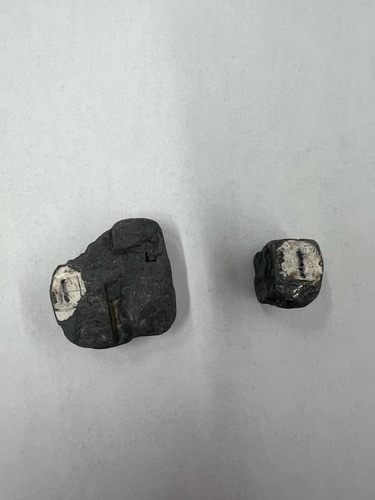
Dark Grey
Metallic
3 planes of cleavage at 90 degrees
Hardness: 2.5
Galena
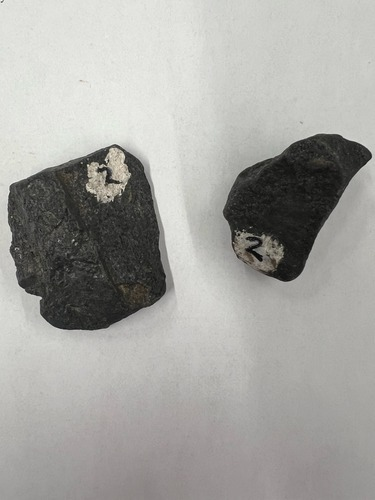
Black
Submetallic
Magnetic
Hardness: 5.5-6
Magnetite
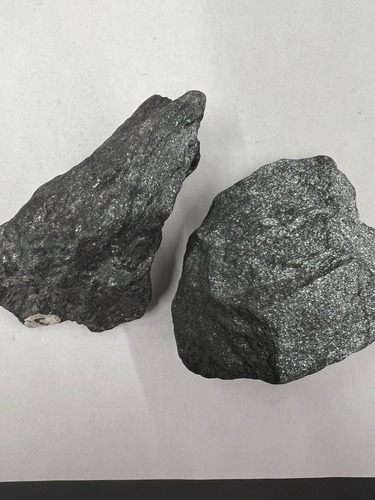
Grey
Metallic
Hardness: 5.5-6.5
Hematite (specular)
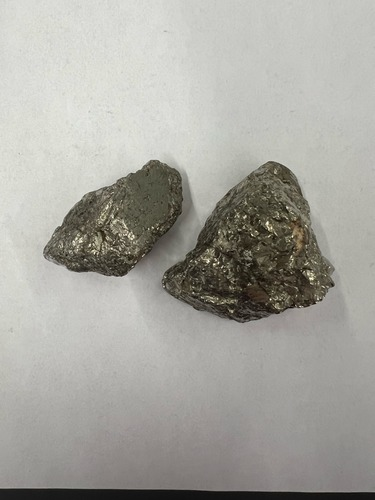
Gold
Metallic
Hardness: 6-6.5
Pyrite
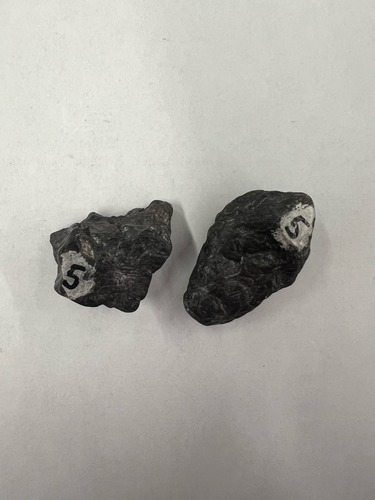
Black
Metallic
Cleavage in 1 direction
Makes marks are paper
Hardness: 1-2
Graphite
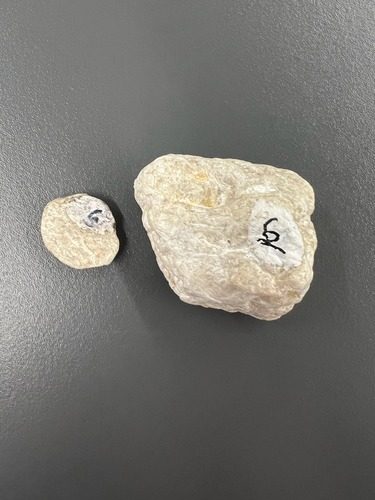
white/pearly
Chalky
1 plane of cleavage
Hardness: 1
Talc
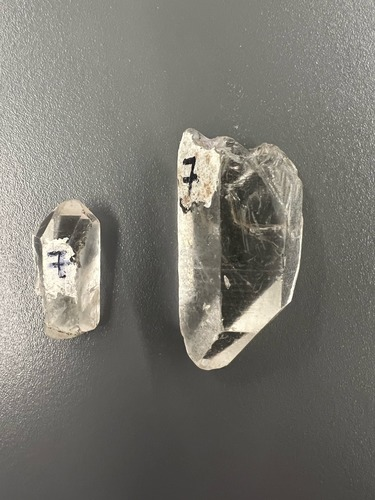
Clear
Glassy
Hardness: 7
Quartz
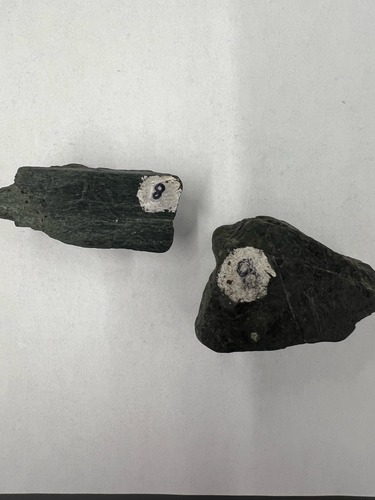
Greenish black (more green than amphibole)
2 planes of cleavage at 87 and 93 degrees
Hardness 5-6
Pyroxene
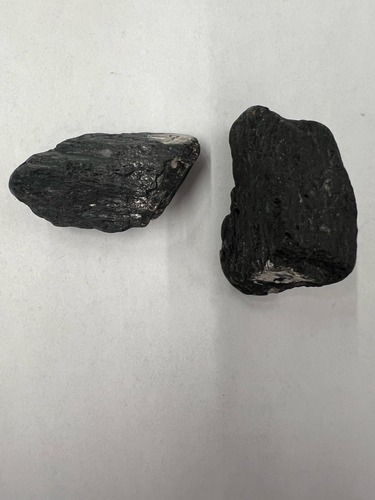
Black
metallic
2 planes of cleavage at 124 and 54 degrees
Hardness: 5-6
Amphibole
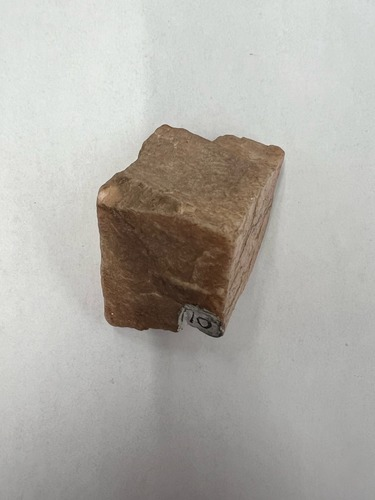
Pinkish orange
Non-metallic
Hardness: 6
Potassium Feldspar
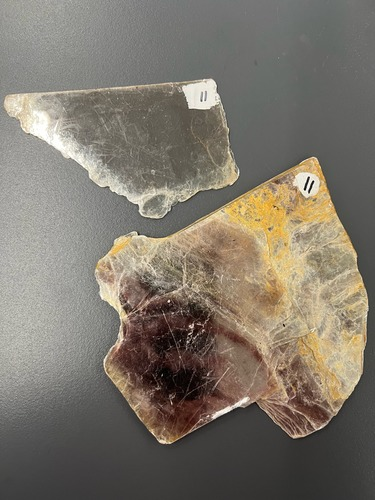
clear and brown
1 plane of cleavage
Breaks apart in sheets
Hardness 2.5-3
Muscovite
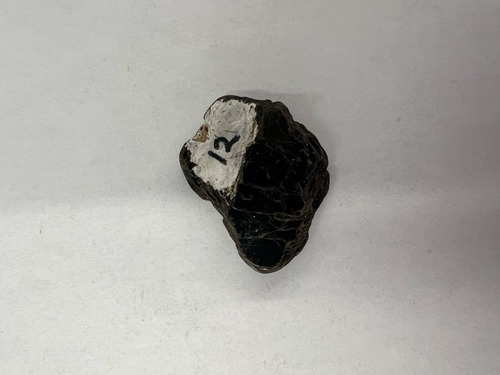
Black
Non-metallic
Hardness: 2.5-3
Biotite
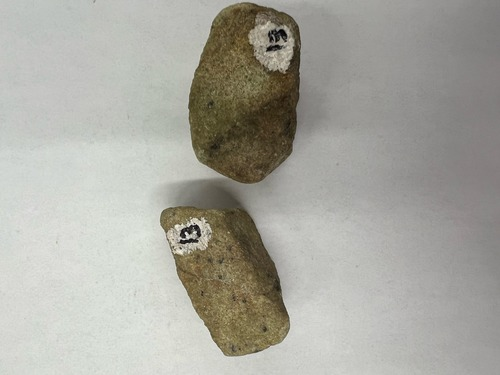
Green with small black specks
Non-metallic
Hardness: 6-6.5
Olivine
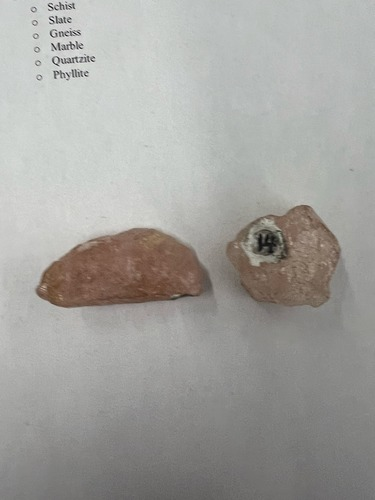
Light pink
Glassy
Hardness: 7
Rose Quartz
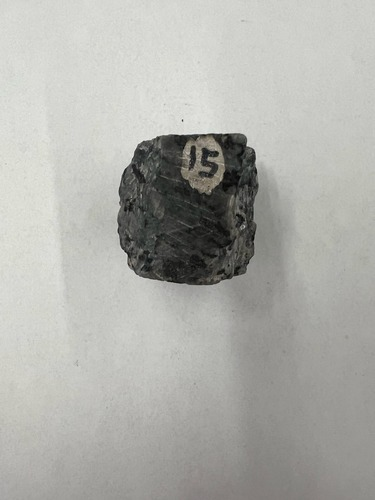
Grey/black
Labradorescence
Perfect cleavage in 2 directions intersecting at 86 degrees
Hardness: 6-6.5
Calcium Plagioclase (Labradorite)
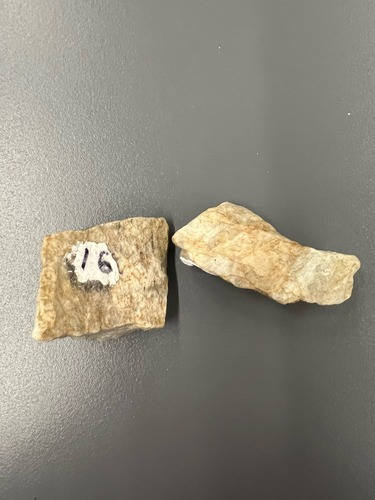
White/grey/brown
Perfect cleavage in 1 direction, good cleavage at 90 degrees
Hardness: 6-6.5
Sodium Plagioclase
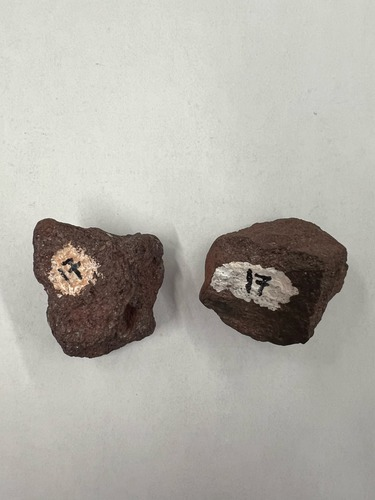
Reddish brown
Solidified rust
Hardness: 5.5-6.5
Hematite
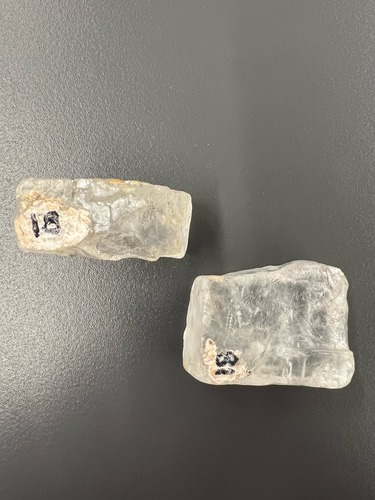
Clear
Type of salt
Perfect cleavage in 3 directions
Hardness: 2.5
Halite
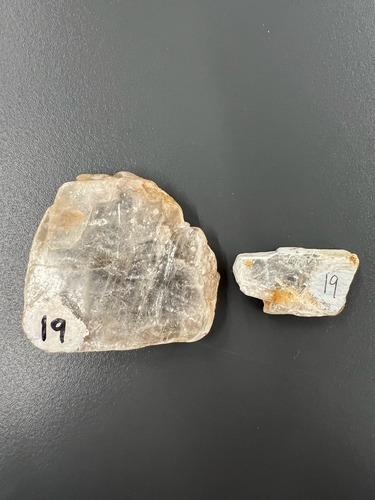
clear/white
pearly 3 planes of cleavage
Hardness: 1.5-2
Gypsum
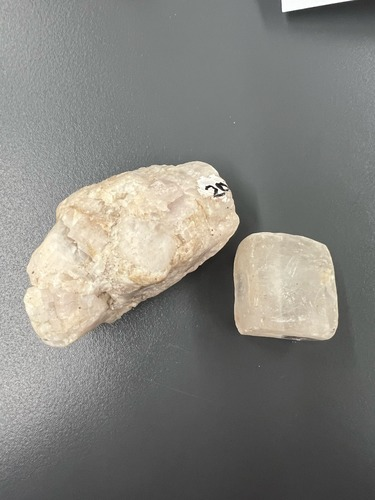
White/off-white
3 planes of cleavage
Reacts to acid
Hardness: 3
Calcite
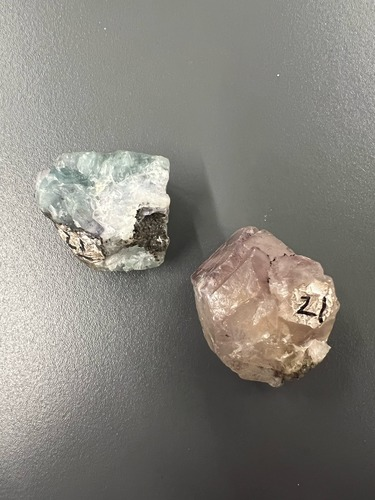
Purple, blue, white, clear
4 planes of cleavage
Hardness: 4
Fluorite
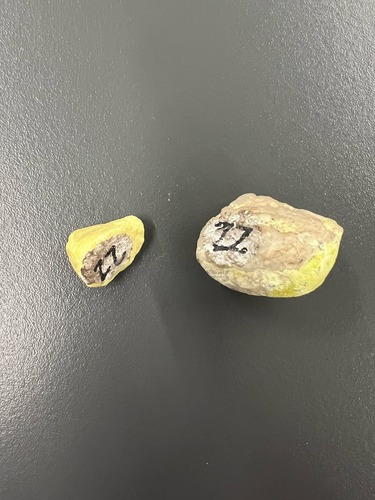
Yellow
Hardness: 1.5-2.5
Sulfur
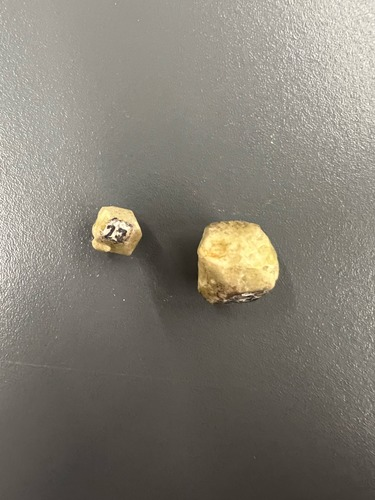
Tan
Hardness: 6.5-7
Garnet
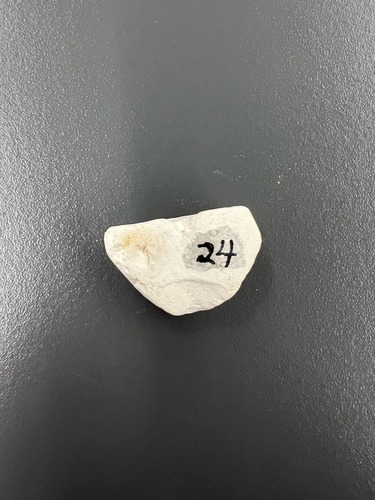
White
1 plane of cleavage
Hardness: 2-2.5
Kaolinite
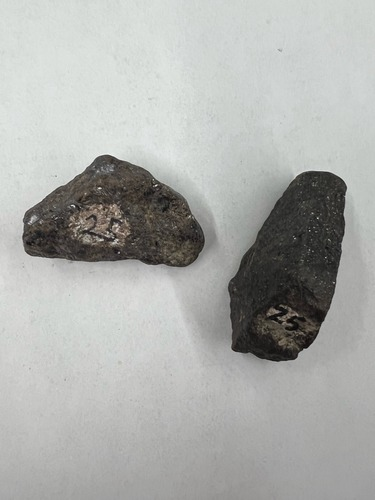
Brown/black
Submetallic
6 planes of cleavage
Hardness: 3.5-4
Sphalerite
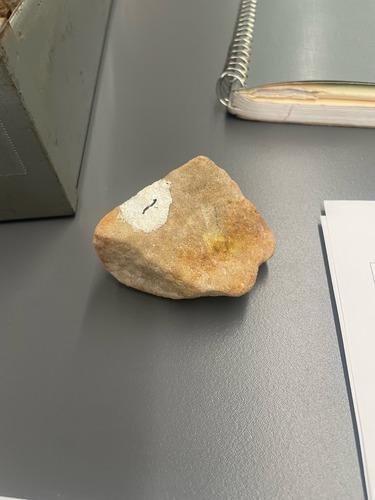
Tan
Detrital
Fine grains
Well sorted
Sandstone Quartz Arenite
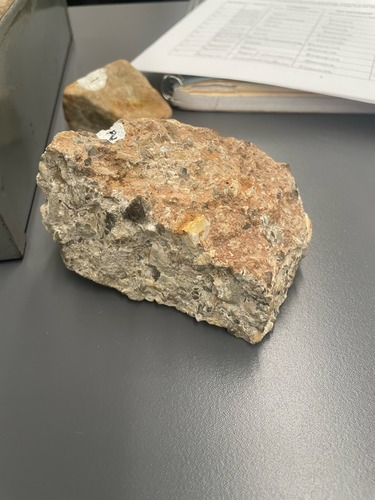
Grey/tan
Detrital
Coarse grains
Poorly sorted, big pebbles mixed with other grain sizes
Breccia
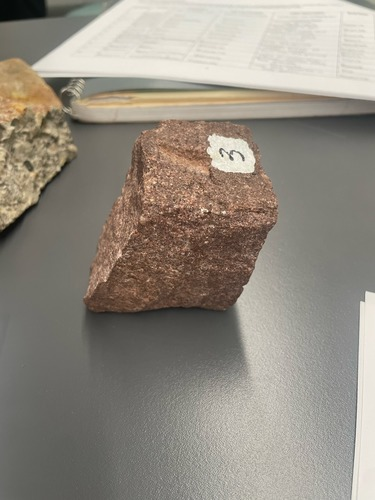
Brown/red
Detrital
Mix of fine and medium sized grains
Sandstone Arkose
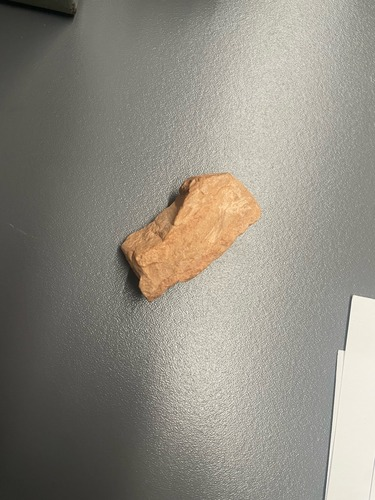
Light brown
Detrital
very fine grains, silt/clay
Breaks very easily
Mudstone
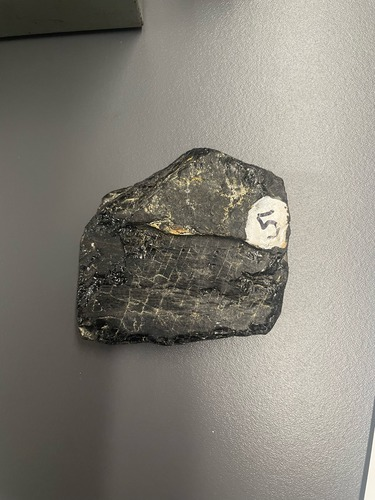
Black
Organic
Lustrous
Lightweight
Coal
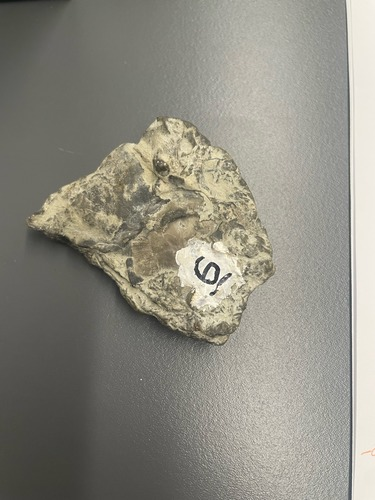
Fossils
Chemical
Reacts with acid
Mix of grain size
Limestone Fossiliferous
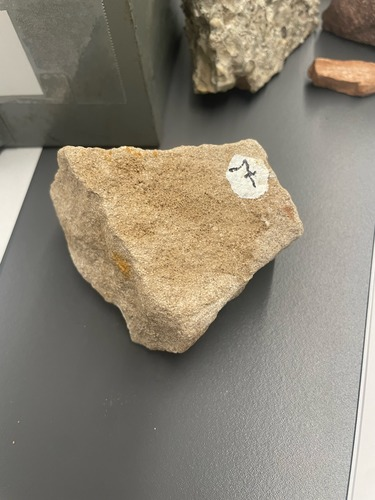
Tan
Chemical
reacts with acid
Tiny holes
Limestone Ooids
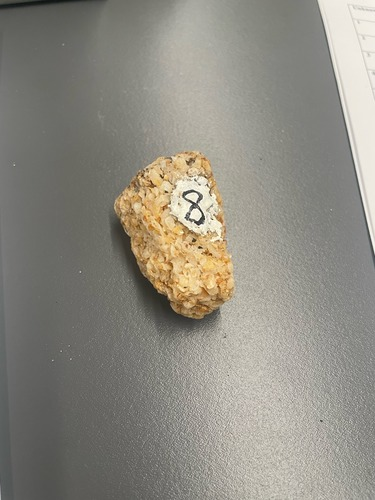
Made of fossils (shells)
Chemical
Reacts with acid
Coquina
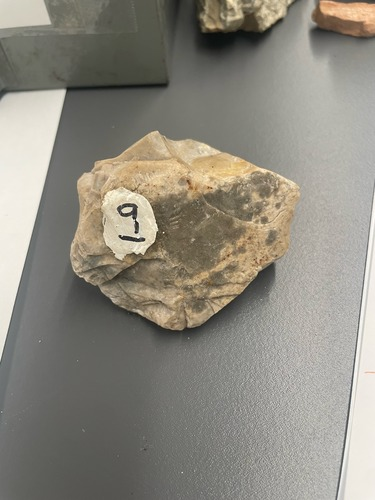
Tan and grey
Chemical
Smooth
Chert
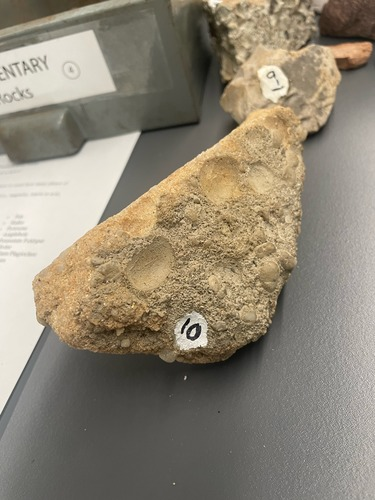
Variety of grain sizes
Detrital
Reacts with acid
Conglomerate
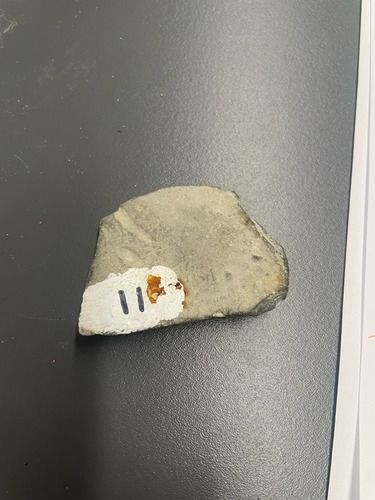
Grey/Black
Detrital
Smooth
Fine grains, slit/clay
Shale
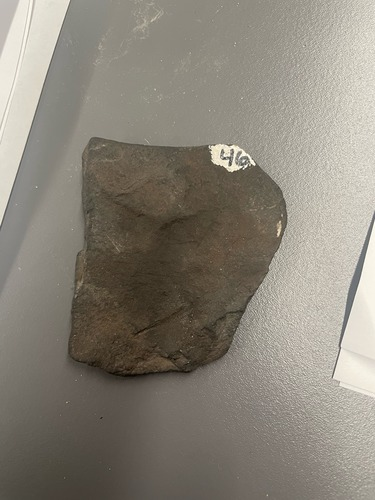
Grey/black
Foliated, slaty cleavage
low metamorphic grade
fine grained
dull
Slate
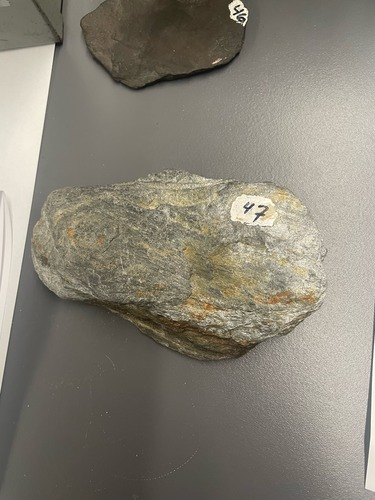
Slivery
Fine crystals
Foliated phyllitic (flakes)
Medium metamorphic grade
Phyllite
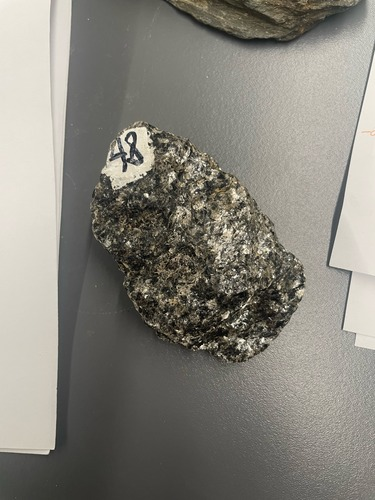
Light and dark minerals
Coarse-grained
Foliated, schistosity
Medium metamorphic grade
Schist
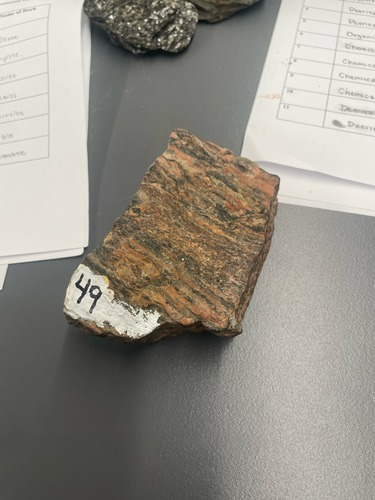
Striped with light and dark minerals
Coarse grained
Foliated, gneissic banding
High metamorphic grade
Gneiss
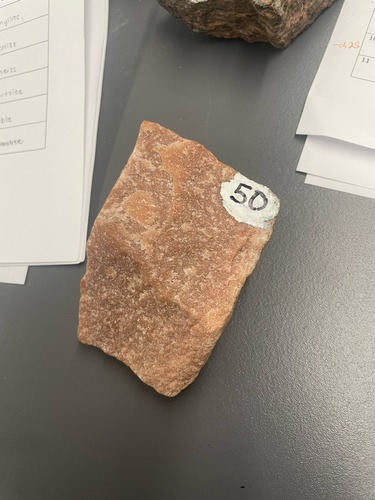
Tan/orange
Medium sized crystal grains
Quartzite
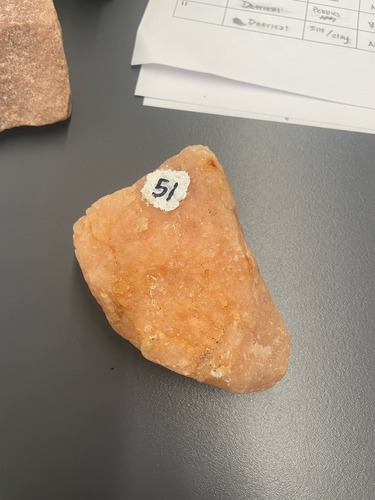
Pink/orange
reacts with acid
Large crystal grains
Marble
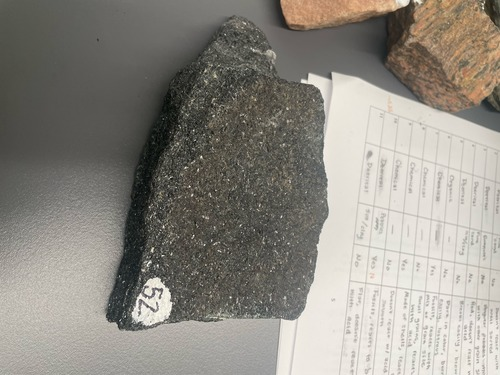
black
small glitter crystals
Coarse grain size
Foliated, schistosity
Amphibolite
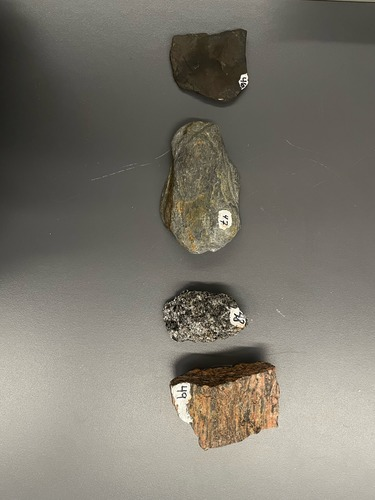
Metamorphic grades of Shale
Prolith → Low grade → medium grade → medium grade → high grade
Shale → Slate → Phyllite → Schist → Gneiss
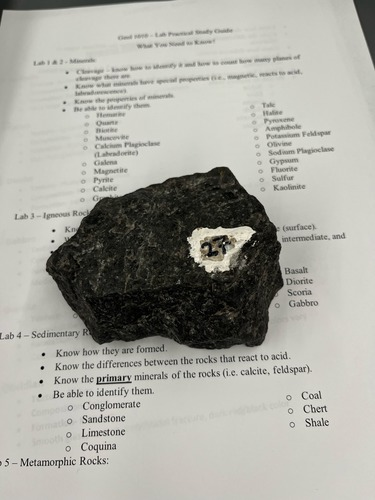
phaneritic/crystalline
Mafic, dark in color
Intrusive
Medium grains
Gabbro
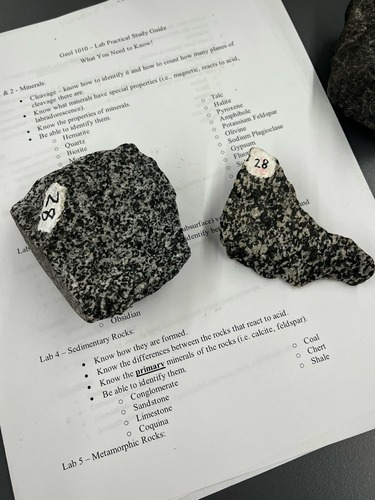
Phaneritic/crystalline
intermediate
intrusive
dark and light minerals
salt and pepper appearance
Diorite
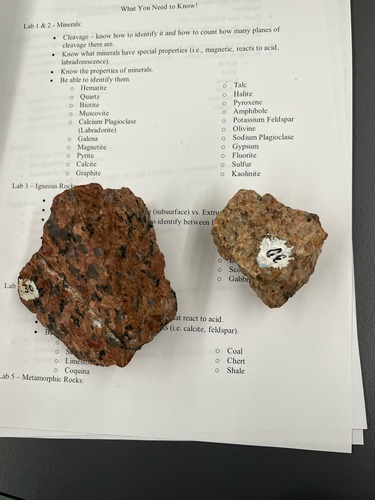
Phaneritic/crystalline
Felsic
Intrusive
Red and black grains
very coarse
Granite
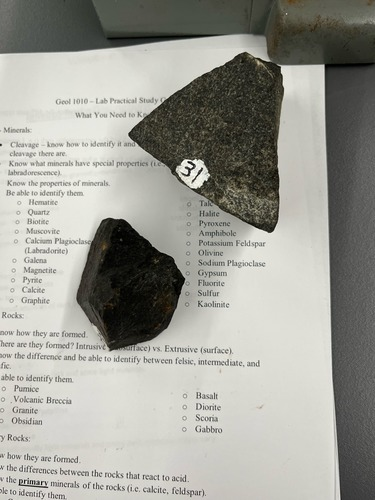
Aphaneritic/crystalline
Mafic, dark in color
Extrusive
Fine grains
Basalt
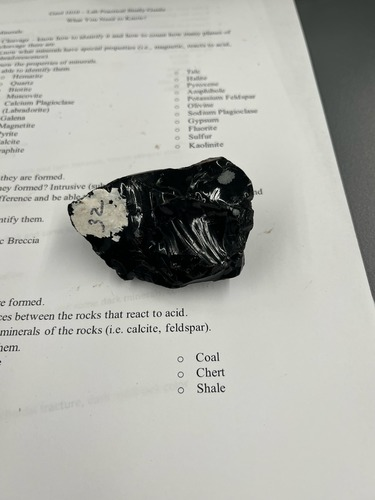
Glassy
Felsic (still dark in color)
Extrusive
Smooth
Obsidian
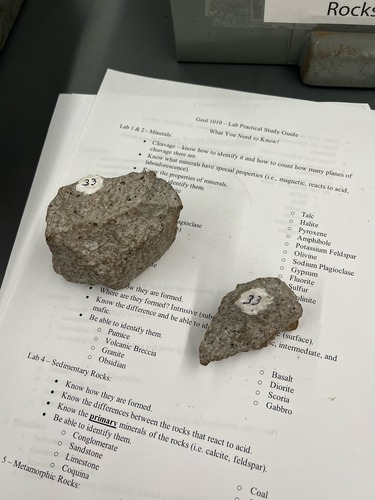
Aphanitic/crystalline
Felsic, light grey
Extrusive
Fine-grained
Rhyolite
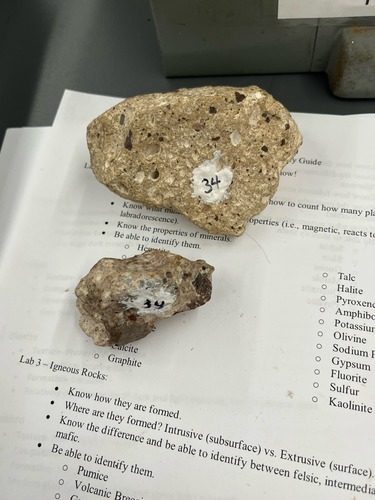
Tan with darker fragments
Fragmental/pyroclastic
Felsic/intermediate
Extrusive
Random pieces of other rocks
Volcanic Breccia
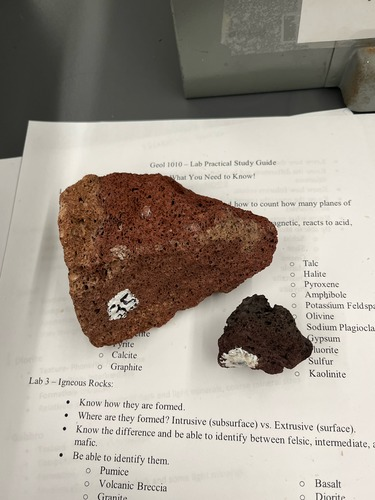
Vesicular
Mafic, dark brown or red
Extrusive
Fine grained
lightweight
Scoria
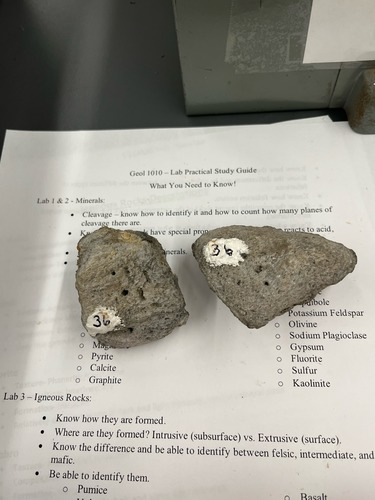
Vesicular
Felsic, light grey
Extrusive
Fine grained
Pumice
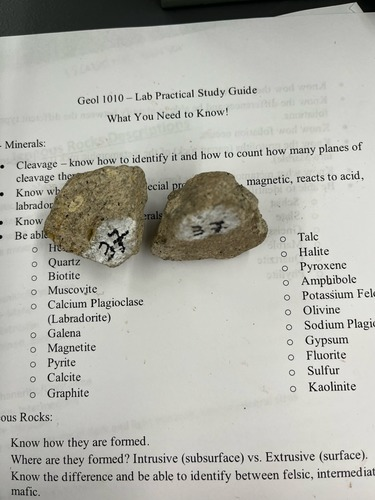
Pyroclastic
Felsic/intermediate
Extrusive
Fine grained
Vesicular
Tuff
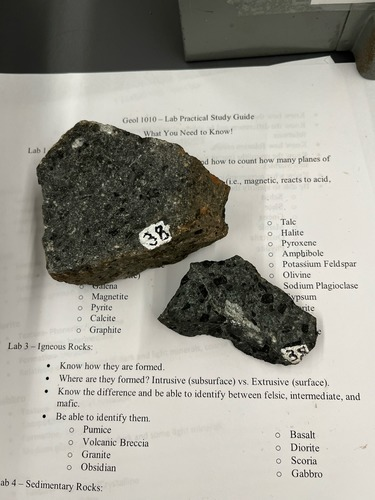
Porphyritic
Intermediate/mafic
Extrusive
Large dark minerals in fine grains
Andesite