structure and action of neurons
 Call Kai
 Learn
Learn Practice Test
 Spaced Repetition
 Match
Match Flashcards
 Knowt Play
1/26

There's no tags or description
Looks like no tags are added yet.
Name | Mastery | Learn | Test | Matching | Spaced | Call with Kai |
|---|
No analytics yet
Send a link to your students to track their progress
27 Terms
action potential
rapid change in membrane potential of the neuron caused by the movement of ions.
key ions
Na+ Sodium, Cl- Chloride, K+ Potassium
Cytoplasm + extracellular space. More sodium on inside. More potassium outside
resting membrane potential
-70mV
what happens when positive Na⁺ ions flow into the cell?
membrane potential depolarises, (potential moves from -70mV to 0mV
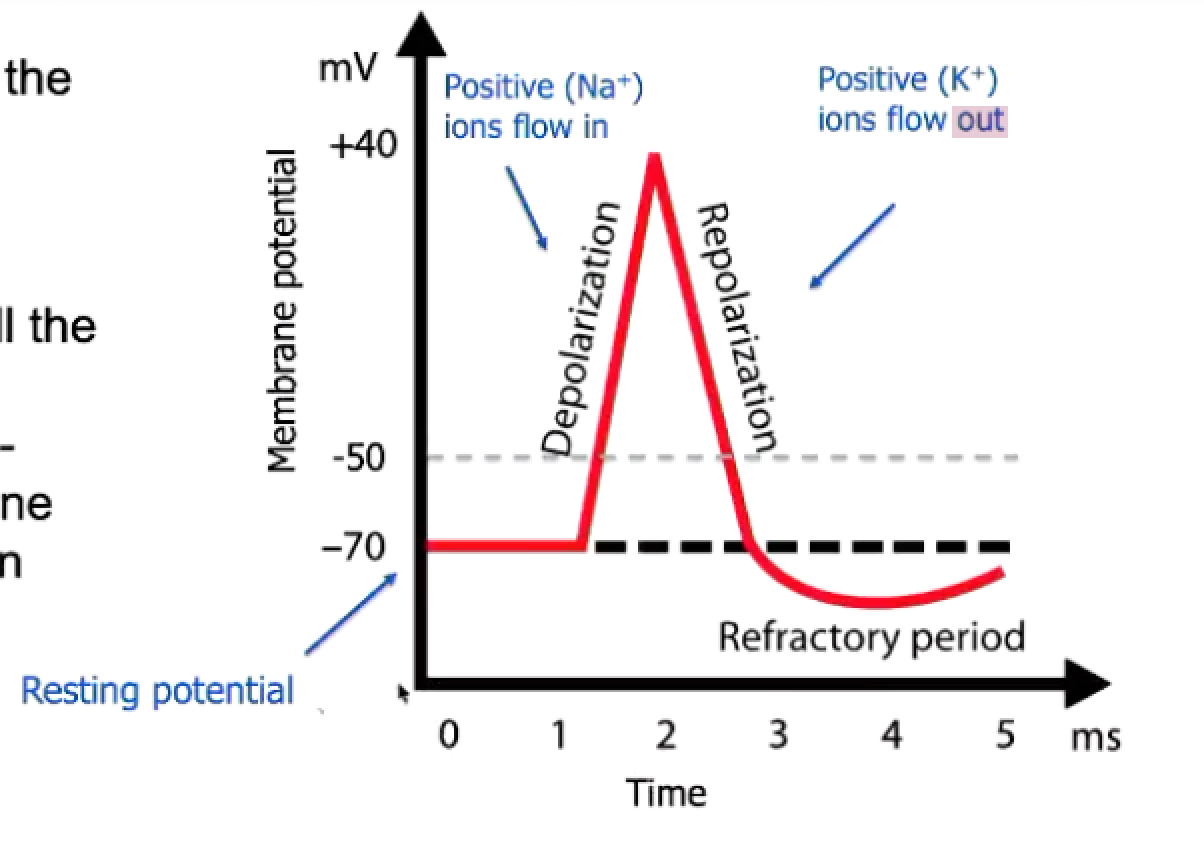
refractory period
membrane potential is hyperpolarised. becomes even further from the threshold of activation. neuron will be less likely to trigger another action potential
rate law of action potentials
neuron firing is ‘all or none’. thus frequency of firing determines strength of neural signal
strong stimulus → faster threshold of activation → more frequent action potential
synapse
allows for communication between neurons
terminal button
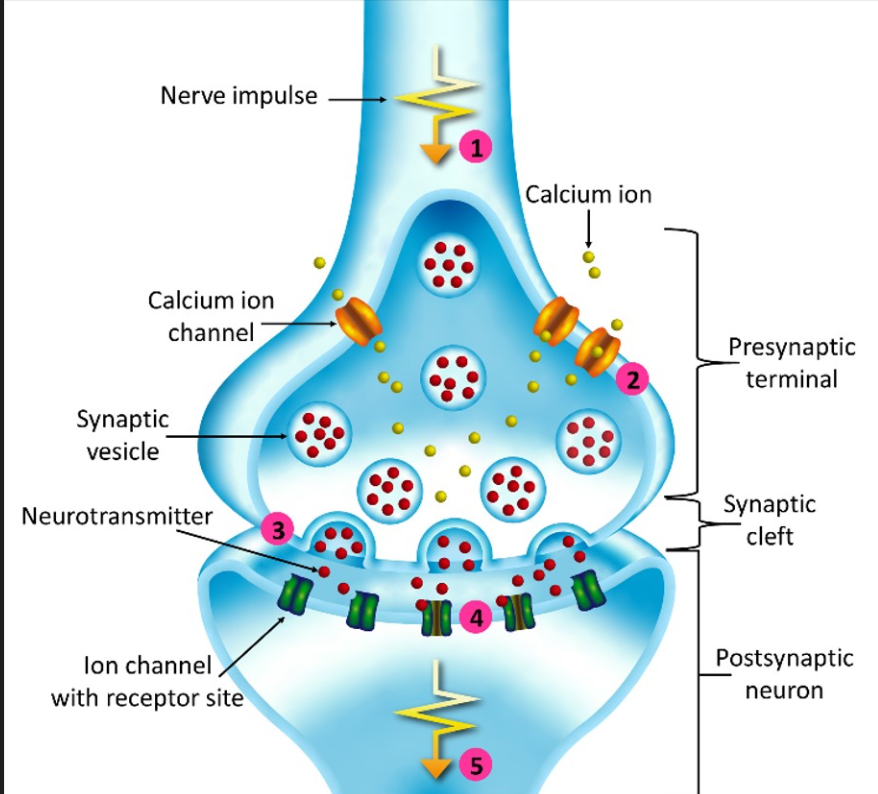
projections from the axon that send excitatory or inhibitory messages to the next neuron. small bulb like structure. release neurotransmitters into synaptic cleft
synaptic cleft
microscopic gap between neurons that facilitates chemical communication (~20-40 nm). separates pre-synaptic and post-synaptic neuron
pre synaptic membrane
specialised plasma membrane of the axon terminal that releases neurotransmitters into the synapses. cell membrane of an axon terminal that faces the recieving cell
post-synaptic membrane
specialised thickened region of receiving cell’s surface. contains high densities of receptors, ion channels and signalling molecules
synaptic vesicles
~35-50 nm membrane-bound sacs in presynaptic axon terminals. store, transport and release neurotransmitters
neurotransmitters
chemicals that are synthesised within the brain/neurons. often referred to as ‘chemical messengers’
steps of chemical signalling in the brain
action potential is PRESN triggers synaptic vesicles to move towards membrane
fusion of two membranes
neurotransmitters released
neurotransmitters flow in synaptic cleft, where they bind to receptors on the post synaptic membrane (lock and key)
neurotransmitter release
when synaptic vesicle merges with presynaptic membrane, contents released in the synaptic cleft. ‘kiss and run’
neurotransmitter re-uptake
synapse has ability to reuse neurotransmittes molecules after release
endocytosis
process of reabsorption into synapse
neural excitation
excitatory post-synaptic potentials depolarise post-synaptic membrane
ESPS (excitator post-synaptic potentials) increase the likelihood that an action potential will be triggered in post-synaptic neuron (eg. glutamate)
neural inhibition
inhibitory post-synaptic potentials (IPSP) hyperpolarise post synaptic cell membrane
decrease likelyhood that an action potential will be triggered in the post-synaptic neuron (eg. glutamate)
neural integration
combined effect of EPSP + IPSP
a single neuron can simultaneously receive excitatory and inhibitory inputs, with impact flow of ions into the neurons
THE NEURON WILL ONLY FIRE IF THE SUM OF THE EXCITATORY INPUTS IS SUFFICIENTLY GREATER THAN THE INHIBITORY INPUTS IN ORDER TO CAUSE THE MEMBRANE POTENTIAL TO PASS THE THRESHOLD OF ACTIVATION
neuromodulators
substances or devices that alter nerve activity and synaptic transmission in the body
examples of neuromodulators
serotonin, dopamine, histamine
action of neurotransmitters at receptors
transmitters don’t usually enter PSN directly. to cause effect on PSN, chemical message recieved by attaching to binding site of receptor sensitive to tranmitter
→ opening ion chanel is one example of the effect caused by neurotransmitter binding to receptor. ‘
lock and key mechanism
how do drugs work?
mimick natural neurotransmitters and neuromodulators
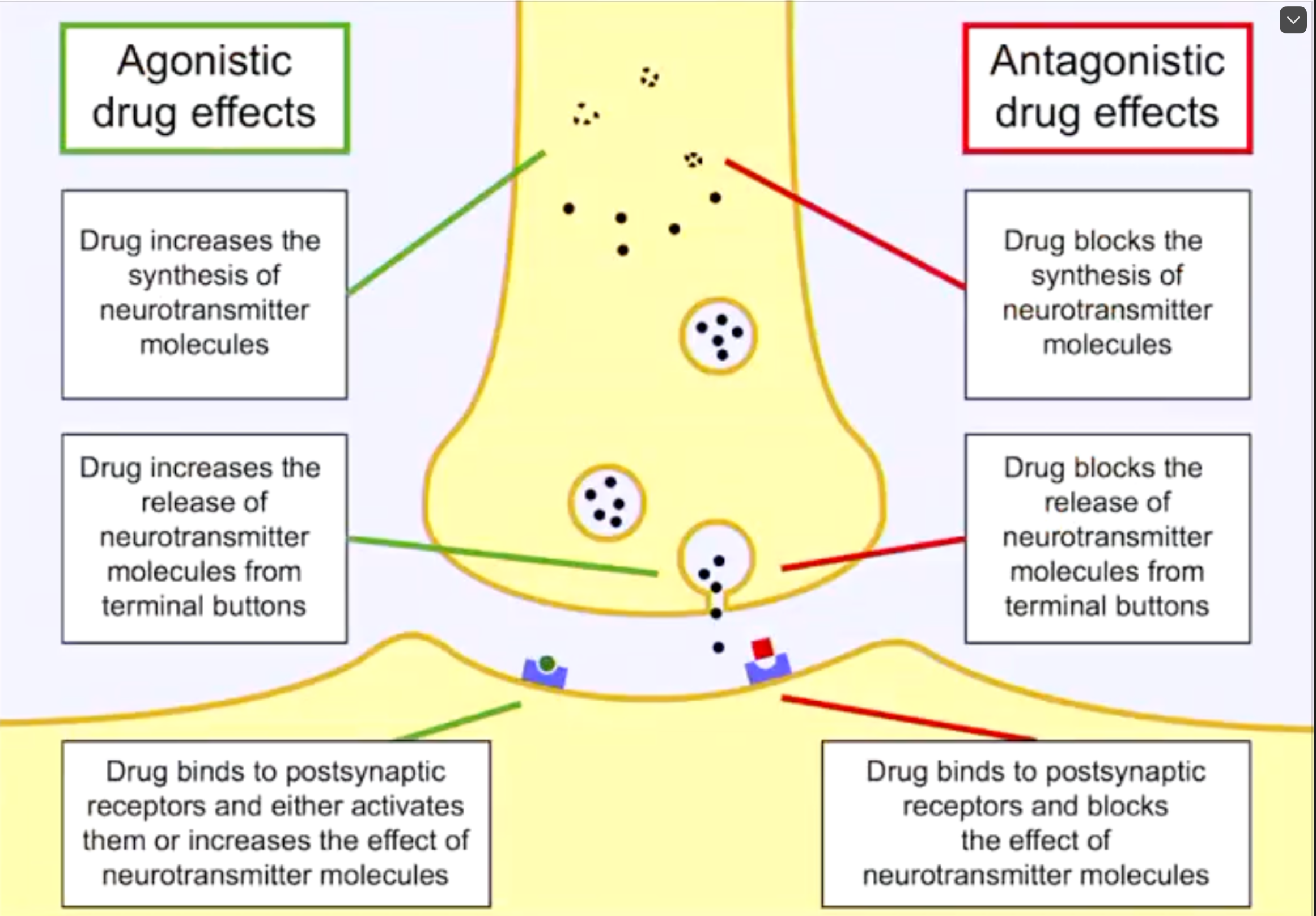
agonists
activating receptor like the natural compound
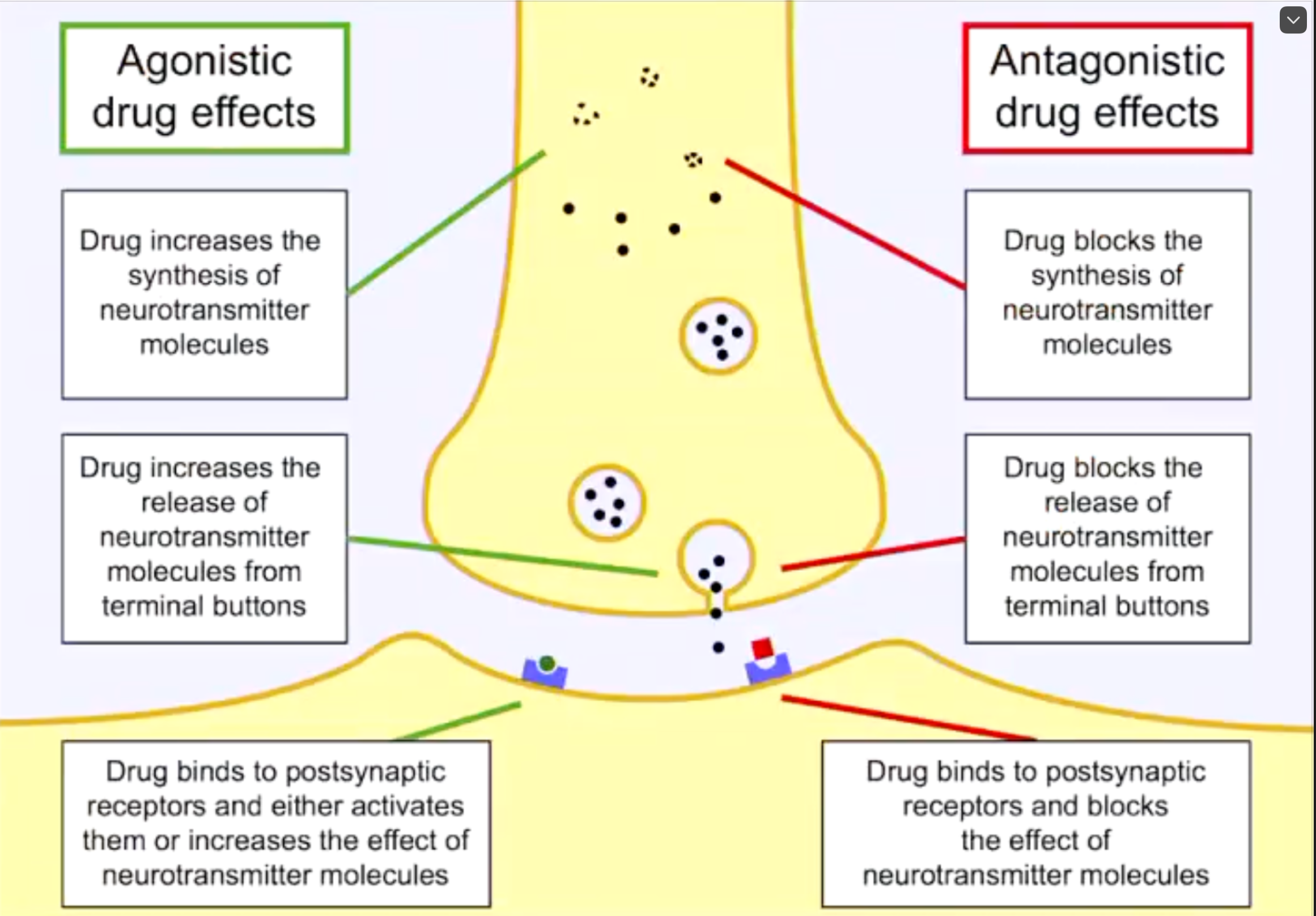
antagonist
blocking receptor + preventing natural compound from activating
why do drugs impact psychological processes?
ONLY because they mimic. trigger same biological responses triggered by naturally occuring substances