DH 228 M8 KC - Chapter 9, DH228 M8 Pathology knowledge check , M8 Oral Pathology K.C., Path Chapter 9
 Call Kai
 Learn
Learn Practice Test
 Spaced Repetition
 Match
Match Flashcards
 Knowt Play
1/169

There's no tags or description
Looks like no tags are added yet.
Name | Mastery | Learn | Test | Matching | Spaced | Call with Kai |
|---|
No analytics yet
Send a link to your students to track their progress
170 Terms
Persons with acromegaly may experience an enlargement of the maxillary sinuses that may lead to what condition?
Deeper voice
Nasal septum deformities
Perforation of the oral mucosa
Maxillary molars requiring endodontic treatment
Deeper voice
An enlargement of the maxillary sinus causes a characteristically deep voice. Acromegaly may cause an enlargement of the nasal bones but not septum deformities. Perforation of the oral mucosa is not seen in persons with acromegaly. Maxillary molars do not require endodontic therapy in cases of acromegaly.
Oral manifestations of a person with Addison disease include which finding?
Intraoral melanotic macules
Gingival hyperplasia
Tooth mobility
Macroglossia
Intraoral melanotic macules
Stimulation of melanocytes occurs causing bronzing of the skin and melanotic macules on the oral mucosa. Addison disease is not associated with gingival hyperplasia. Tooth mobility is not a feature of Addison disease. Macroglossia is not an oral manifestation of Addison disease.
Plummer-Vinson syndrome can develop as a result of long-standing __________ anemia.
pernicious
iron-deficiency
thalassemia
aplastic
iron-deficiency
Plummer–Vinson syndrome can develop as a result of long-standing iron deficiency anemia. This syndrome includes dysphagia, atrophy of the upper alimentary tract, and a predisposition to the development of oral cancer. Pernicious anemia is a vitamin B12 deficiency caused by a deficiency of intrinsic factor, which is secreted by the parietal cells of the stomach. Thalassemia is the name of a group of inherited disorders of hemoglobin synthesis. Aplastic anemia results in a dramatic decrease in all the circulating blood cells because of a severe depression of bone marrow activity.
Which type of hyperparathyroidism is the result of an overproduction of parathyroid hormone (PTH) in response to long-term decreased levels of serum calcium often associated with chronic renal disease?
Primary hyperparathyroidism
Secondary hyperparathyroidism
Tertiary hyperparathyroidism
Familial hyperparathyroidism
Secondary hyperparathyroidism
Secondary hyperparathyroidism is the result of an overproduction of PTH in response to long-term decreased levels of serum calcium often associated with chronic renal disease. Primary hyperparathyroidism may be the result of hyperplasia of the parathyroid glands, a benign tumor of one or more of the parathyroid glands, or a malignant parathyroid tumor. It is not the result of an overproduction of PTH in response to long-term decreased levels of serum calcium often associated with chronic renal disease. Tertiary hyperparathyroidism is not a type of hyperparathyroidism. Familial hyperparathyroidism is not a designated type of hyperparathyroidism. However, studies show that some hyperparathyroidism may be familial.
3 multiple choice options
An enlarged tongue is associated with
hyperpituitarism.
hyperthyroidism.
hypothyroidism.
hyperparathyroidism.
hypothyroidism.
An enlarged tongue is associated with hypothyroidism. Causes of hypothyroidism include developmental disturbances, autoimmune disease, iodine deficiency, drugs, and pituitary disease. In infants, facial and oral changes include thickened lips, enlarged tongue, and delayed eruption of teeth. Clinical features of hyperpituitarism include gigantism if the increase in growth hormone production occurs before the closure of long bones and acromegaly after the closure of long bones. Clinical features of hyperthyroidism include rosy complexion, erythema of the palms, excessive sweating, fine hair, and softened nails. Clinical manifestations associated with hyperparathyroidism are varied. Joint pain or stiffness may be present. The disease can affect the kidneys, skeletal system, and gastrointestinal system. Lethargy and coma can occur in severe disease.
Thalassemia is
caused by an abnormal type of hemoglobin in red blood cells.
a disorder of hemoglobin synthesis.
caused by a severe depression of bone marrow activity.
caused by an increase in the number of circulating red blood cells.
a disorder of hemoglobin synthesis.
Thalassemia is a disorder of hemoglobin synthesis. It has an autosomal inheritance pattern; no predilection for either sex is seen. Sickle cell anemia is caused by an abnormal type of hemoglobin in red blood cells. Aplastic anemia is caused by a severe depression in bone marrow activity. Polycythemia is caused by an increase in the number of circulating red blood cells.
Polycythemia vera is caused by
Correct! a neoplastic proliferation of bone marrow stem cells.
a physiologic response to decreased oxygen.
decreased plasma volume.
smoking.
a neoplastic proliferation of bone marrow stem cells.
Polycythemia vera is caused by a neoplastic proliferation of bone marrow stem cells. It results in an abnormally high number of circulating red blood cells. The production of red blood cells is uncontrolled. It is not caused by a physiologic response to decreased oxygen. It is not caused by decreased plasma volume. It is not caused by smoking.
The red blood cells appear __________ and __________ in cases of iron deficiency anemia.
microcytic; hypochromic
microcytic; hyperchromic
macrocytic; hypochromic
macrocytic; hyperchromic
microcytic; hypochromic
The red blood cells appear microcytic and hypochromic in cases of iron deficiency anemia. Microcytic means smaller than normal, and hypochromic means lighter in color than normal. The red blood cells appear microcytic and hypochromic rather than hyperchromic in cases of iron deficiency anemia. The red blood cells appear microcytic rather than macrocytic and hypochromic in cases of iron deficiency anemia. The red blood cells appear microcytic rather than macrocytic and hypochromic rather than hyperchromic in cases of iron deficiency anemia.
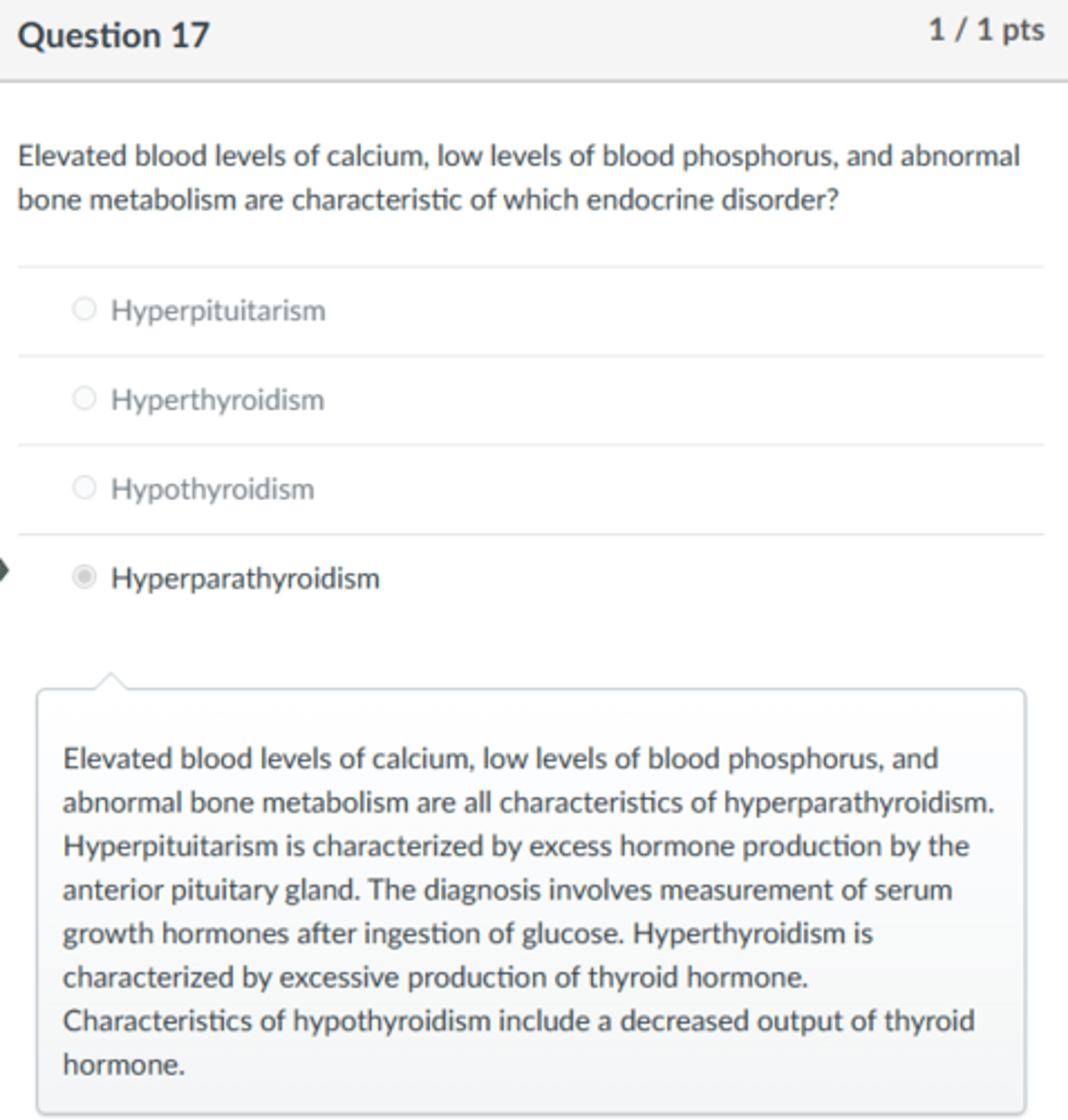
Which statement concerning polycythemia vera is true?
It may be caused by living at high altitudes or by an elevation in carbon monoxide.
Causes include use of diuretics, vomiting, diarrhea, and excessive sweating.
It occurs primarily in children.
Correct! The cause is unknown.
The cause is unknown.
The cause of polycythemia vera is unknown. It is somewhat more common in men than in women, and the age of onset is usually between 40 and 60 years of age. Symptoms include headache, dizziness, and itching. Pulmonary disease, heart disease, living at high altitudes, and an elevation in carbon monoxide are all associated with secondary polycythemia rather than polycythemia vera. Causes of acute relative polycythemia rather than polycythemia vera include use of diuretics, vomiting, diarrhea, and excessive sweating. Polycythemia vera is somewhat more common in men than in women, and the age of onset is usually between 40 and 60 years of age.
The most common cause of hyperpituitarism is
hepatomegaly.
hypercalcemia.
pituitary adenoma.
hyperglycemia.
pituitary adenoma.
The most common cause of hyperpituitarism is pituitary adenoma. Hepatomegaly is an enlargement of the liver. Hypercalcemia is an excess of calcium in the blood. Hyperglycemia is an excess of glucose in the blood.
Children affected with hyperthyroidism may demonstrate which characteristic?
Lack of energy
Fatigue
Correct! Hyperactivity
Dry skin
Hyperactivity
Too much thyroid hormone is produced causing an increase in metabolism that may mimic hyperactivity, especially in children. Hyperthyroidism is characterized by excessive thyroid hormone production; a lack of energy is not seen. The increased thyroid hormone levels increase the patient metabolism; fatigue is not a characteristic finding. Dry skin is not related to hyperthyroidism.
Which statement about type 1 diabetes is true?
It is called non-insulin–dependent diabetes mellitus.
About 30% of all patients with diabetes have type 1 diabetes.
The onset of this type of diabetes is gradual and usually occurs in patients who are 35 to 40 years of age or older.
Correct! It can be complicated by polydipsia, polyuria, and polyphagia.
It can be complicated by polydipsia, polyuria, and polyphagia.
Type 1 diabetes can be complicated by polydipsia (excessive thirst and intake of fluid), polyuria (excessive urination), and polyphagia (excessive appetite). It is called insulin-dependent diabetes mellitus. Only 3% of all diabetic patients have this type of diabetes. Type 1 diabetes can occur at any age, but its time of onset is usually at a peak age of 20 years. The onset is abrupt.
All statements are true regarding type 2 diabetes mellitus except one. Which is the exception?
It is non-insulin–dependent.
The majority of patients are diagnosed with type 2 diabetes.
Contributing factors include a decrease in metabolic rate and weight gain.
Correct! Complications include polydipsia, polyuria, and polyphagia.
Complications include polydipsia, polyuria, and polyphagia.
Type 1 diabetes can be complicated by polydipsia (excessive thirst and intake of fluid), polyuria (excessive urination), and polyphagia (excessive appetite). These complications are not commonly found in type 2 diabetes. It is also referred to as non-insulin-dependent diabetes mellitus. Approximately 95% of all diabetic patients have type 2 diabetes. Contributing factors include a decrease in metabolic rate and weight gain.
The Philadelphia chromosome is associated with _____________________ leukemia.
acute lymphoblastic
acute nonlymphoblastic
chronic lymphoblastic
Correct! chronic granulocytic
chronic granulocytic
The Philadelphia chromosome is associated with chronic granulocytic (myeloid) leukemia. Chronic lymphocytic leukemia is the most common form and accounts for about one quarter of the total cases of leukemia. About half of the patients with this type of leukemia have abnormal karyotypes; however, the abnormality is different from the Philadelphia chromosome. The Philadelphia chromosome is associated with chronic granulocytic (myeloid) leukemia, not acute lymphoblastic leukemia. The Philadelphia chromosome is associated with chronic granulocytic (myeloid) leukemia, not acute nonlymphoblastic leukemia. The Philadelphia chromosome is associated with chronic granulocytic (myeloid) leukemia, not chronic lymphoblastic leukemia.
The production of adrenal steroids is normally stimulated by release of ___________ hormone from the pituitary gland.
follicle-stimulating
luteinizing
adrenocorticotropic
growth
adrenocorticotropic
The production of adrenal steroids is normally stimulated by release of adrenocorticotropic hormone from the pituitary gland. As a result of decreased production of adrenal steroids caused by Addison disease, the pituitary gland increases its production of adrenocorticotropic hormone. This hormone is similar to melanin-stimulating hormone and causes stimulation of melanocytes. Brown pigmentation (bronzing) of the skin occurs, and melanotic macules can appear on the oral mucosa. Follicle-stimulating hormone and luteinizing hormone stimulate the release of estrogen and progesterone in females and testosterone in males. Growth hormone is also released by the pituitary gland.
Iron deficiency anemia may first result in loss of __________ papillae on the dorsum of the tongue because these papillae have the highest metabolic requirement.
Correct! filiform
fungiform
circumvallate
foliate
filiform
Iron deficiency anemia may first result in loss of filiform papillae on the dorsum of the tongue because these papillae have the highest metabolic requirement. Disappearance of the fungiform papillae can also occur in chronic and severe cases. Disappearance of the fungiform papillae can also occur in chronic and severe cases; however, the filiform papillae on the dorsum of the tongue disappear first because these papillae have the highest metabolic requirement. Iron deficiency anemia may first result in loss of filiform papillae on the dorsum of the tongue rather than circumvallate papillae because filiform papillae have the highest metabolic requirement. Iron deficiency anemia may first result in loss of filiform papillae on the dorsum of the tongue rather than foliate papillae because filiform papillae have the highest metabolic requirement.
Type A hemophilia is less common than type B hemophilia. Type A hemophilia is caused by a deficiency of the clotting factor called plasma thromboplastinogen or factor VIII.
Both statements are true.
Both statements are false.
The first statement is true; the second is false.
Correct! The first statement is false; the second is true.
The first statement is false; the second is true.
The first statement is false; type A hemophilia is more common than type B hemophilia. The second statement is true; type A hemophilia is caused by a deficiency of the clotting factor called plasma thromboplastinogen or factor VIII. The first statement is false; type A hemophilia is more common than type B hemophilia. The second statement is true; type A hemophilia is caused by a deficiency of the clotting factor called plasma thromboplastinogen or factor VIII. The first statement is false; the second is true.
The most common cause of hyperthyroidism is
hyperplasia of the gland.
benign and malignant tumors of the gland.
pituitary gland disease.
Correct! an autoimmune disorder.
an autoimmune disorder.
The most common cause of hyperthyroidism is an autoimmune disorder called Graves' disease. The exact cause of Graves' disease is not clear, but a substance is produced that abnormally stimulates the thyroid gland. Other causes of hyperthyroidism include hyperplasia of the gland, benign and malignant tumors of the thyroid, pituitary gland disease, and metastatic tumors. Hyperplasia of the thyroid gland is one of the causes of hyperthyroidism; however, the most common cause of hyperthyroidism is an autoimmune disorder called Graves' disease. Benign and malignant tumors of the thyroid gland are one of the causes of hyperthyroidism; however, the most common cause of hyperthyroidism is an autoimmune disorder called Graves' disease. Pituitary gland disease is one of the causes of hyperthyroidism; however, the most common cause of hyperthyroidism is an autoimmune disorder called Graves' disease.
A megaloblastic anemia is characterized by red blood cells that are
hypochromic and macrocytic.
hyperchromic and macrocytic.
microcytic and have nuclei.
Correct! macrocytic and have nuclei.
macrocytic and have nuclei.
A megaloblastic anemia is characterized by red blood cells that are immature, macrocytic (abnormally large), and have nuclei (megaloblasts). Immature neutrophils and platelets are also seen both in the bone marrow and the circulating blood. A megaloblastic anemia is characterized by red blood cells that are macrocytic and have nuclei. In iron deficiency anemia the red blood cells appear lighter in color (hypochromic) and smaller than normal (microcytic). A megaloblastic anemia is characterized by red blood cells that are macrocytic and have nuclei. In iron deficiency anemia, the red blood cells appear lighter in color (hypochromic) and smaller than normal (microcytic). A megaloblastic anemia is characterized by red blood cells that are immature, macrocytic (abnormally large), and have nuclei (megaloblasts).
Thrombocytopenic purpura results from a
defect in the capillary walls.
disorder of platelet function.
severe reduction in circulating platelets.
reduction in white blood cells.
severe reduction in circulating platelets.
Thrombocytopenic purpura results from a severe reduction in circulating platelets. When the cause is unknown, the condition is called idiopathic thrombocytopenic purpura. Nonthrombocytopenic purpuras are bleeding disorders that can result from either a defect in the capillary walls or disorders of platelet function. Nonthrombocytopenic purpuras are bleeding disorders that can result from either a defect in the capillary walls or disorders of platelet function. Nonthrombocytopenic purpuras are bleeding disorders that can result from either a defect in the capillary walls or disorders of platelet function. Thrombocytopenic purpura results from a severe reduction in circulating platelets rather than a reduction in white blood cells.
The most common cause of death among patients with diabetes is
stroke.
gangrene.
heart attack.
kidney failure.
heart attack.
The most common cause of death among diabetics is heart attack. Atherosclerosis of the coronary arteries increases the risk of ulceration and gangrene of the feet, high blood pressure, kidney failure, and stroke. Gangrene of the lower extremities is about 100 times more common in patients with diabetes than in the general population. The most common cause of death among patients with diabetes is heart attack and not stroke. Heart attack is caused by atherosclerosis of the coronary arteries, which also increases the risk for stroke. The most common cause of death among patients with diabetes is heart attack and not gangrene. Heart attack is caused by atherosclerosis of the coronary arteries, which also increases the risk for gangrene of the feet. The most common cause of death among patients with diabetes is heart attack and not kidney failure. Heart attack is caused by atherosclerosis of the coronary arteries, which also increases the risk for kidney failure.
Which is not a chronic disorder associated with sensitivity to dietary gluten?
Celiac disease
Gluten-sensitive enteropathy
Celiac sprue
Correct! Sickle cell trait
Sickle cell trait
Sickle cell trait is an inherited disorder of blood and not a chronic disorder associated with sensitivity to dietary gluten. Celiac disease is a chronic disorder associated with sensitivity to dietary gluten. Gluten-sensitive enteropathy is another name for celiac disease and is a chronic disorder associated with sensitivity to dietary gluten. Celiac sprue is another name for celiac disease and is a chronic disorder associated with sensitivity to dietary gluten.
All terms describe a decrease in circulating red or white blood cells except one. Which is the exception?
Thrombocytopenia
Anemia
Correct! Hypochromic
Neutropenia
Hypochromic
Hypochromic refers to being stained less intensely than normal; this term does not relate to a decrease in cells. Thrombocytopenia is a decrease in the number of platelets in circulating blood. Anemia is a reduction of the number of red blood cells to less than normal. Neutropenia is a decreased number of neutrophils in the blood.
The Schilling test detects an inability to absorb an oral dose of vitamin _____.
B6
Correct! B12
C
E
B12
The Schilling test detects an inability to absorb an oral dose of vitamin B12. It may be used in the diagnosis of pernicious anemia. Diagnostic features of pernicious anemia include low serum vitamin B12 levels and gastric achlorhydria. The treatment of pernicious anemia consists of injections of vitamin B12. The oral mucosa improves in time, but the papillae on the dorsum of the tongue may not completely regenerate. The Schilling test detects an inability to absorb an oral dose of vitamin B12 rather than vitamin B6. The Schilling test detects an inability to absorb an oral dose of vitamin B12 rather than vitamin C. The Schilling test detects an inability to absorb an oral dose of vitamin B12 rather than vitamin E.
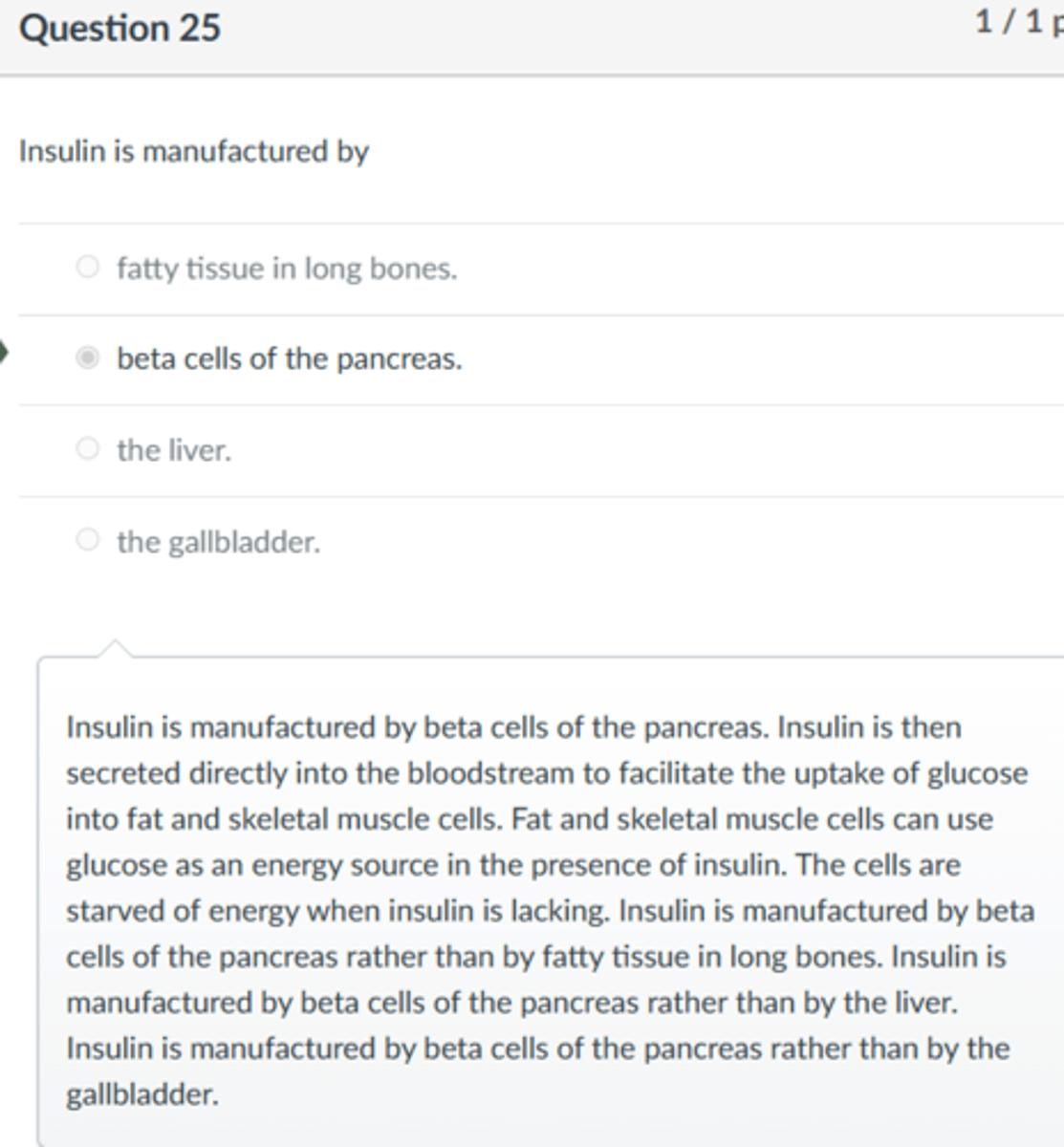
Insulin is manufactured by
fatty tissue in long bones.
beta cells of the pancreas.
the liver.
the gallbladder.
beta cells of the pancreas.
Insulin is manufactured by beta cells of the pancreas. Insulin is then secreted directly into the bloodstream to facilitate the uptake of glucose into fat and skeletal muscle cells. Fat and skeletal muscle cells can use glucose as an energy source in the presence of insulin. The cells are starved of energy when insulin is lacking. Insulin is manufactured by beta cells of the pancreas rather than by fatty tissue in long bones. Insulin is manufactured by beta cells of the pancreas rather than by the liver. Insulin is manufactured by beta cells of the pancreas rather than by the gallbladder.
Iron deficiency anemia may first result in loss of __________ papillae on the dorsum of the tongue because these papillae have the highest metabolic requirement.
filiform
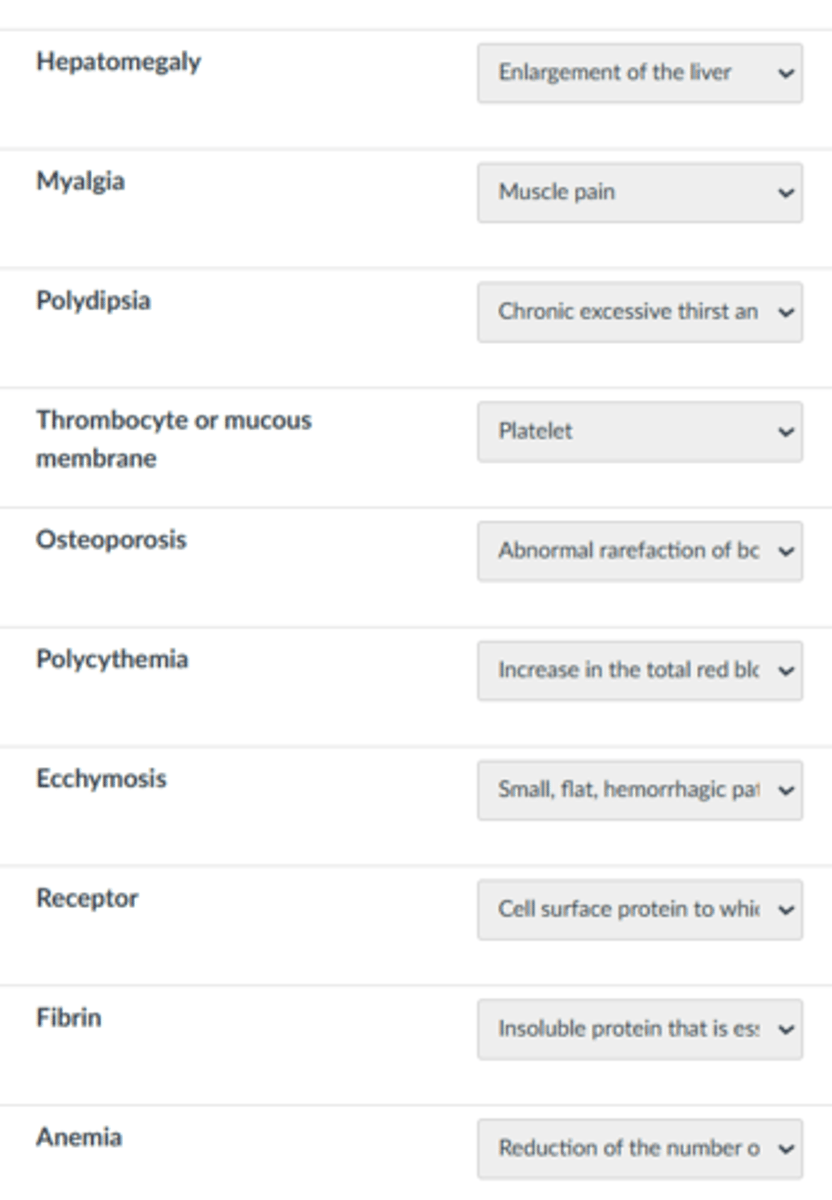
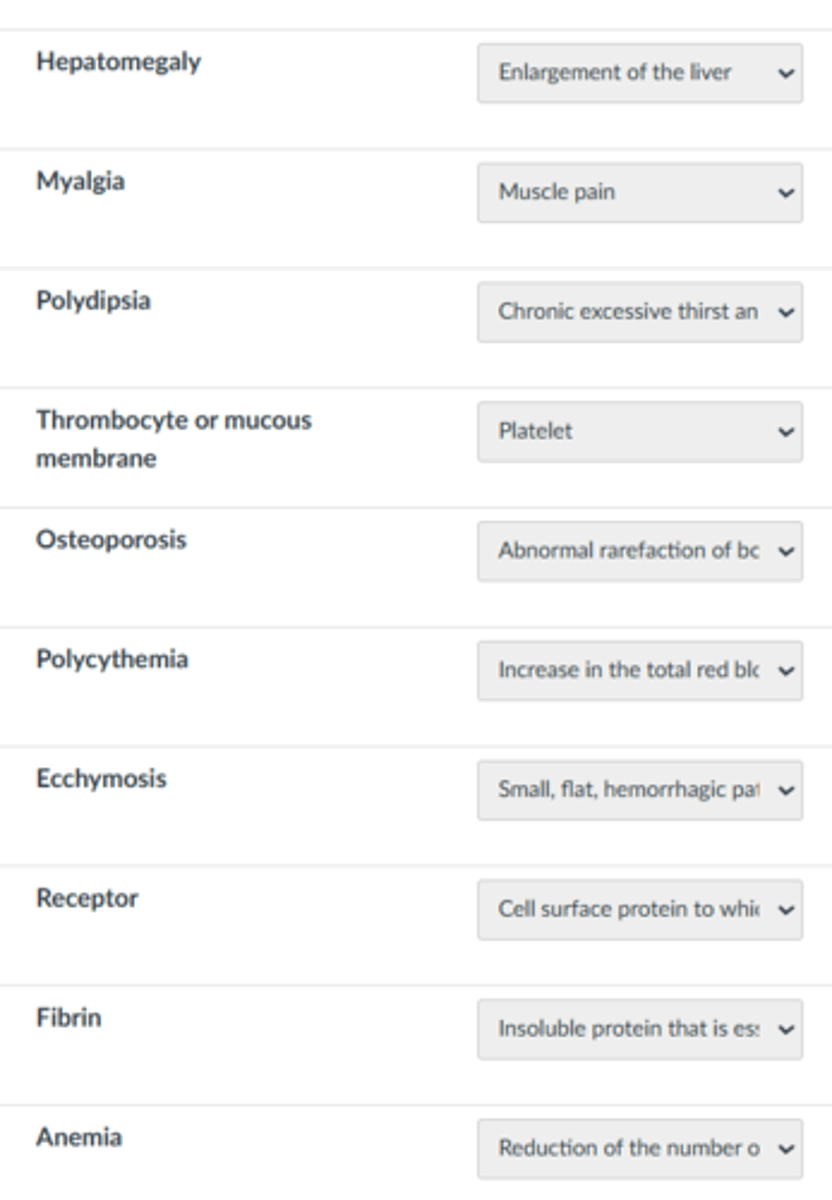
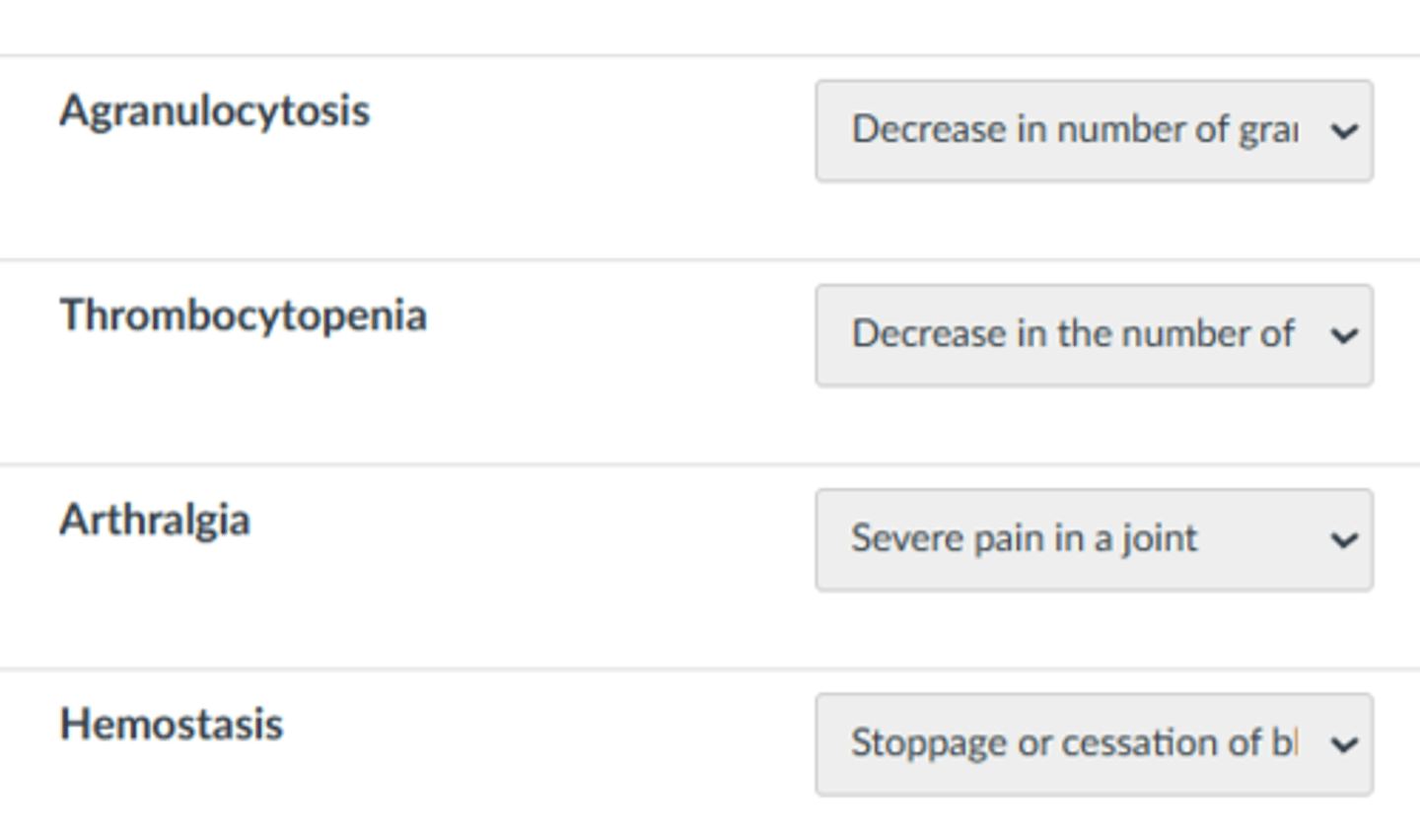
A small, flat, hemorrhagic patch larger than a petechia on the skin or mucous membrane
ecchymosis
Chronic excessive thirst and intake of fluid
polydipsia
Reduction of the number of red blood cells
anemia
Increase in the total red blood cell mass in the blood
polycythemia
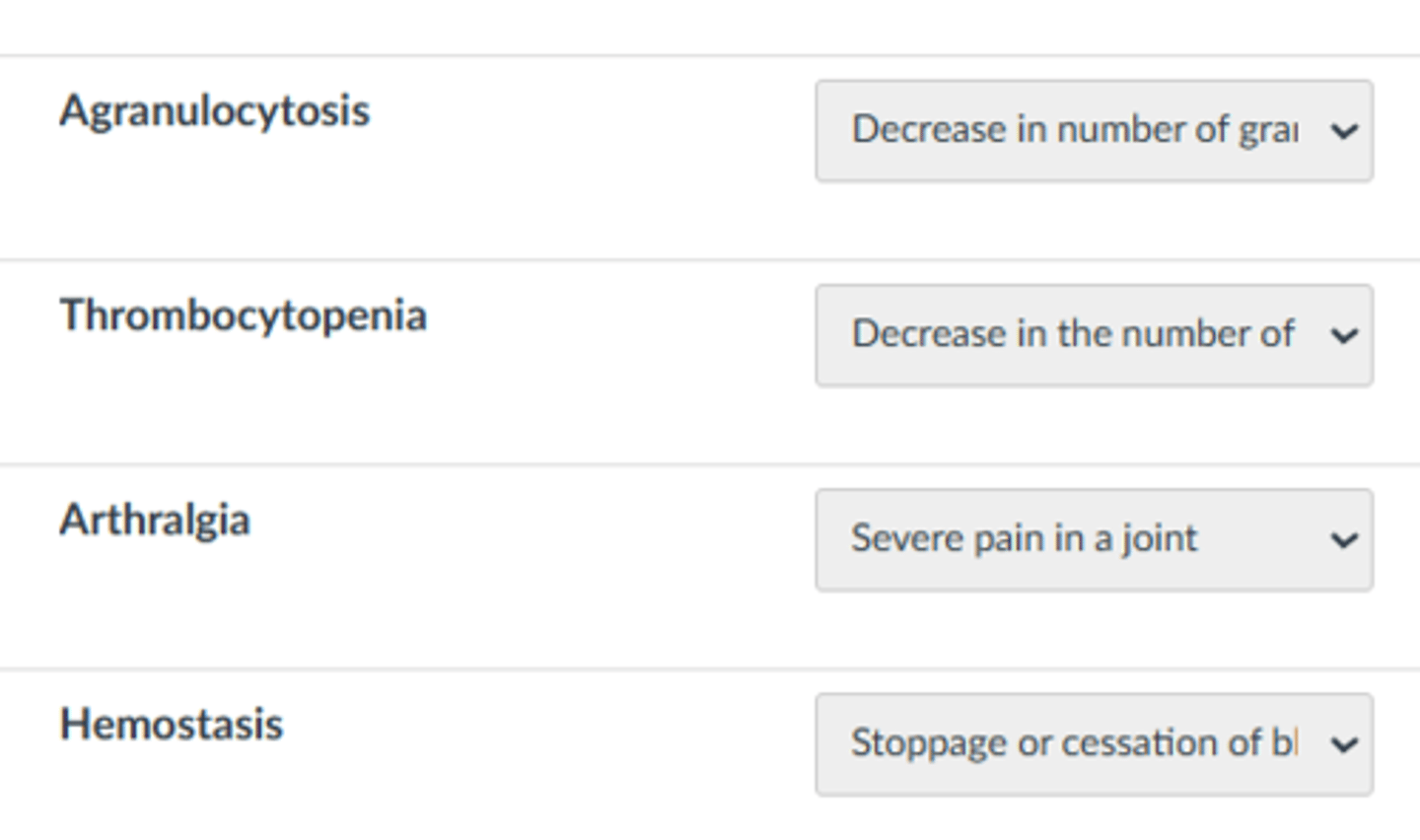
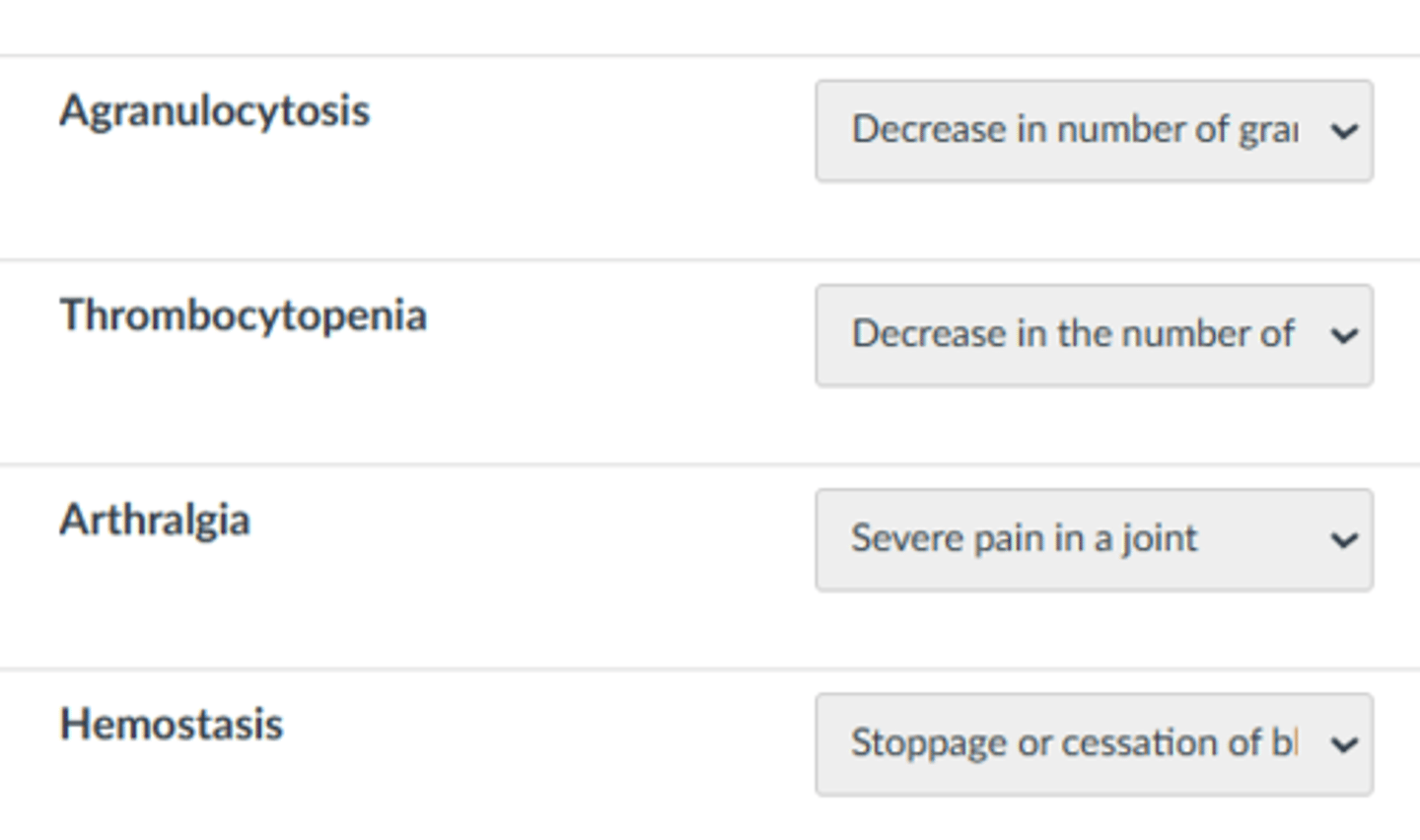
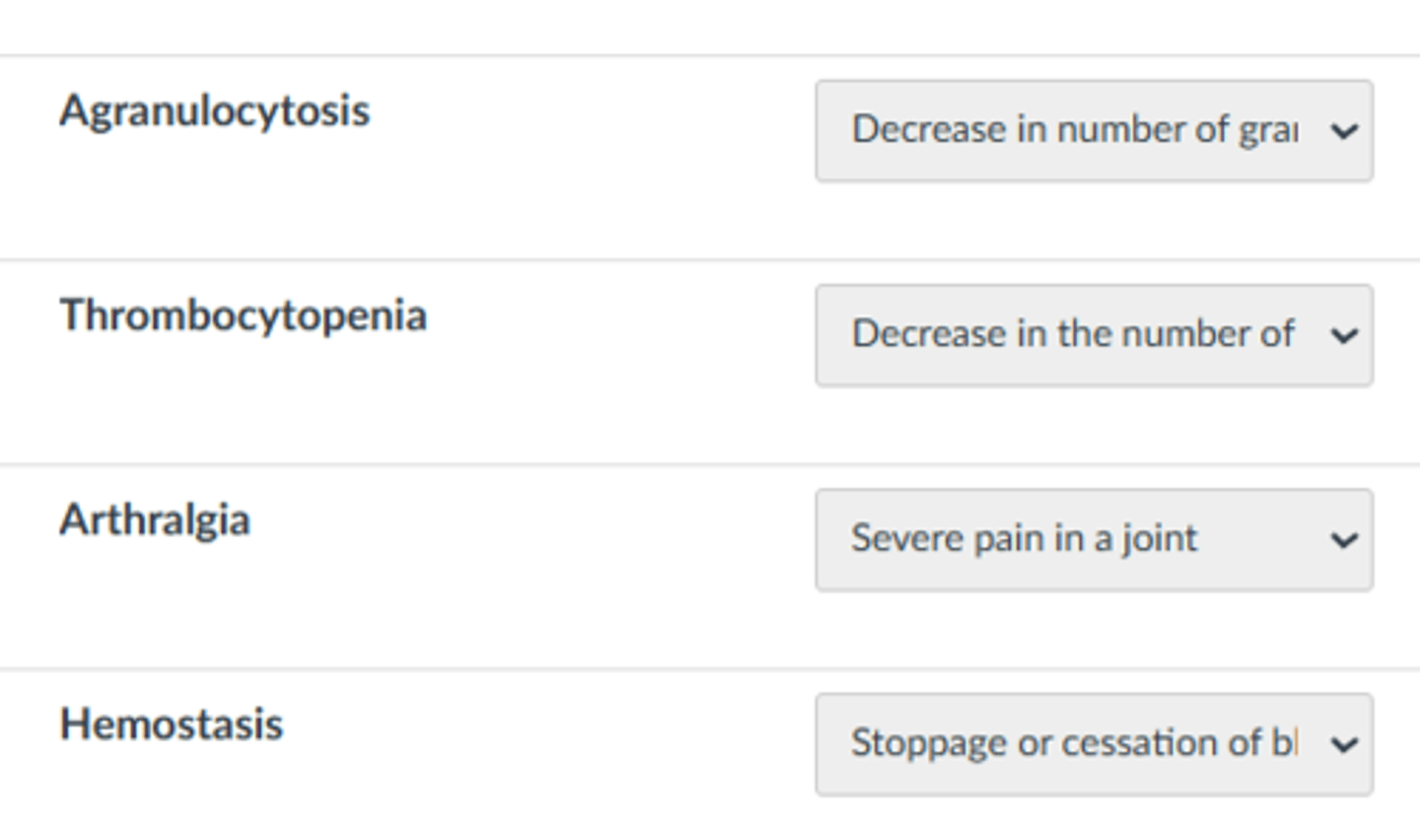
Decrease in the number of platelets circulating the blood
thrombocytopenia
Cell surface protein to which a specific molecule (e.g., a hormone) can bind
receptor
Stoppage or cessation of bleeding
hemostasis
Abnormal rarefaction of bone
osteoporosis
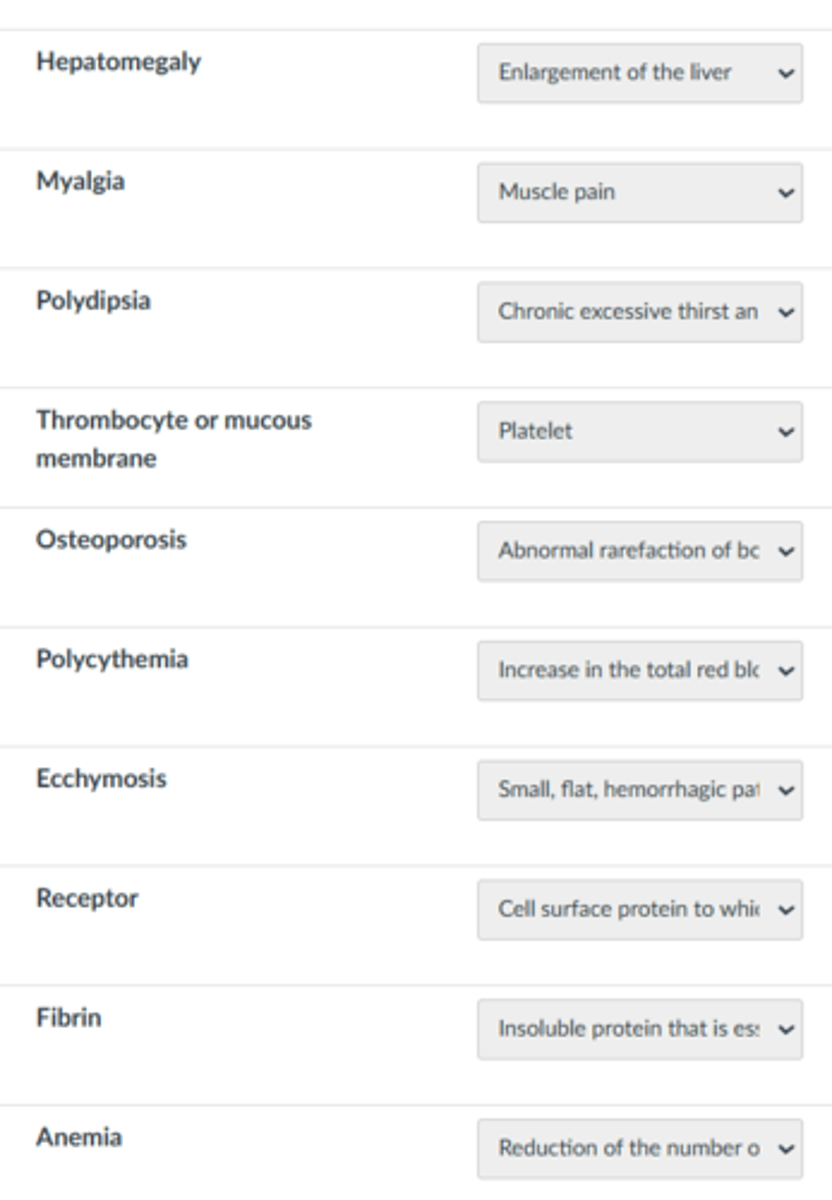
Insoluble protein that is essential for the clotting of blood
fibrin
Severe pain in a joint
arthralgia
Muscle pain
myalgia
Decrease in number of granulocytes
Agranulocytosis
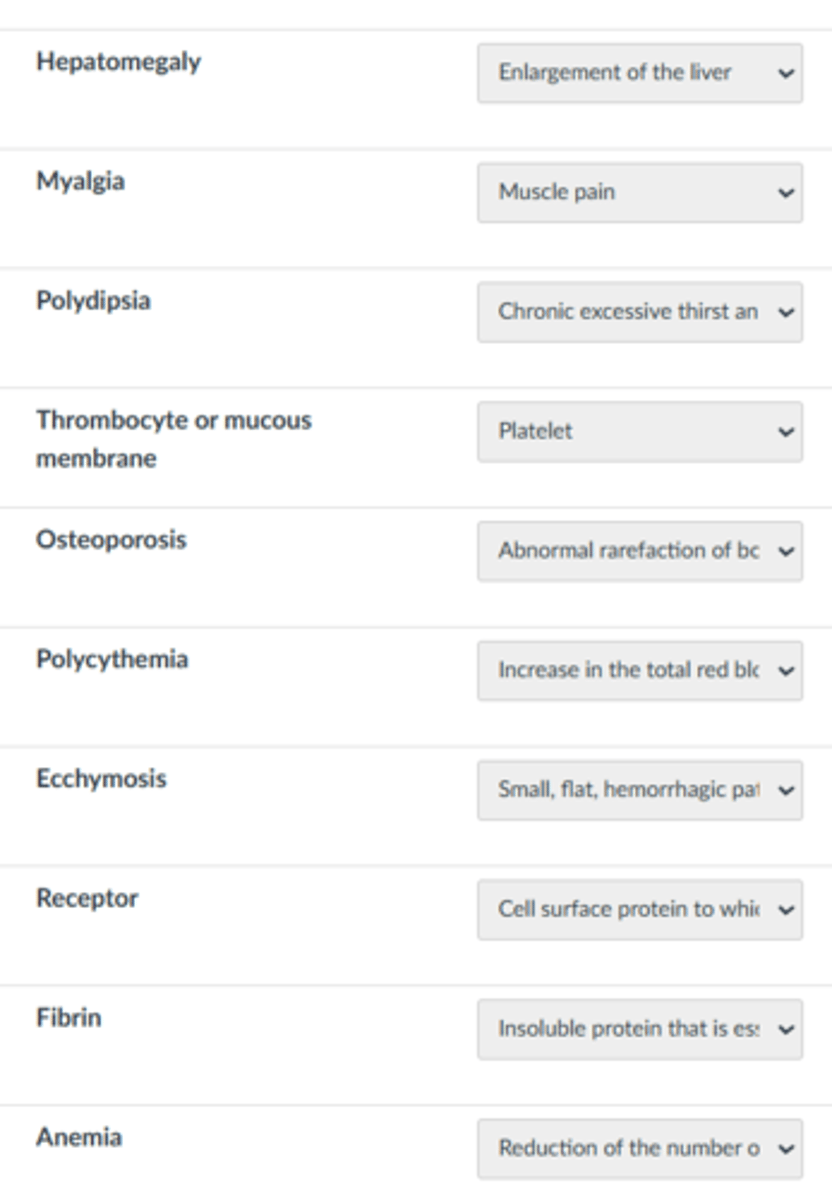
enlargement of the liver
hepatomegaly
platelet
thrombocyte
Osteonecrosis of the maxilla and mandible is a complication associated with what type of drug?
a. phenytoin
b. nifedipine
c bisphosphonate
d. cyclosporine
c. bisphosphonate
A platelet count of less than ________/mm3 is considered thrombocytopenia.
100,000
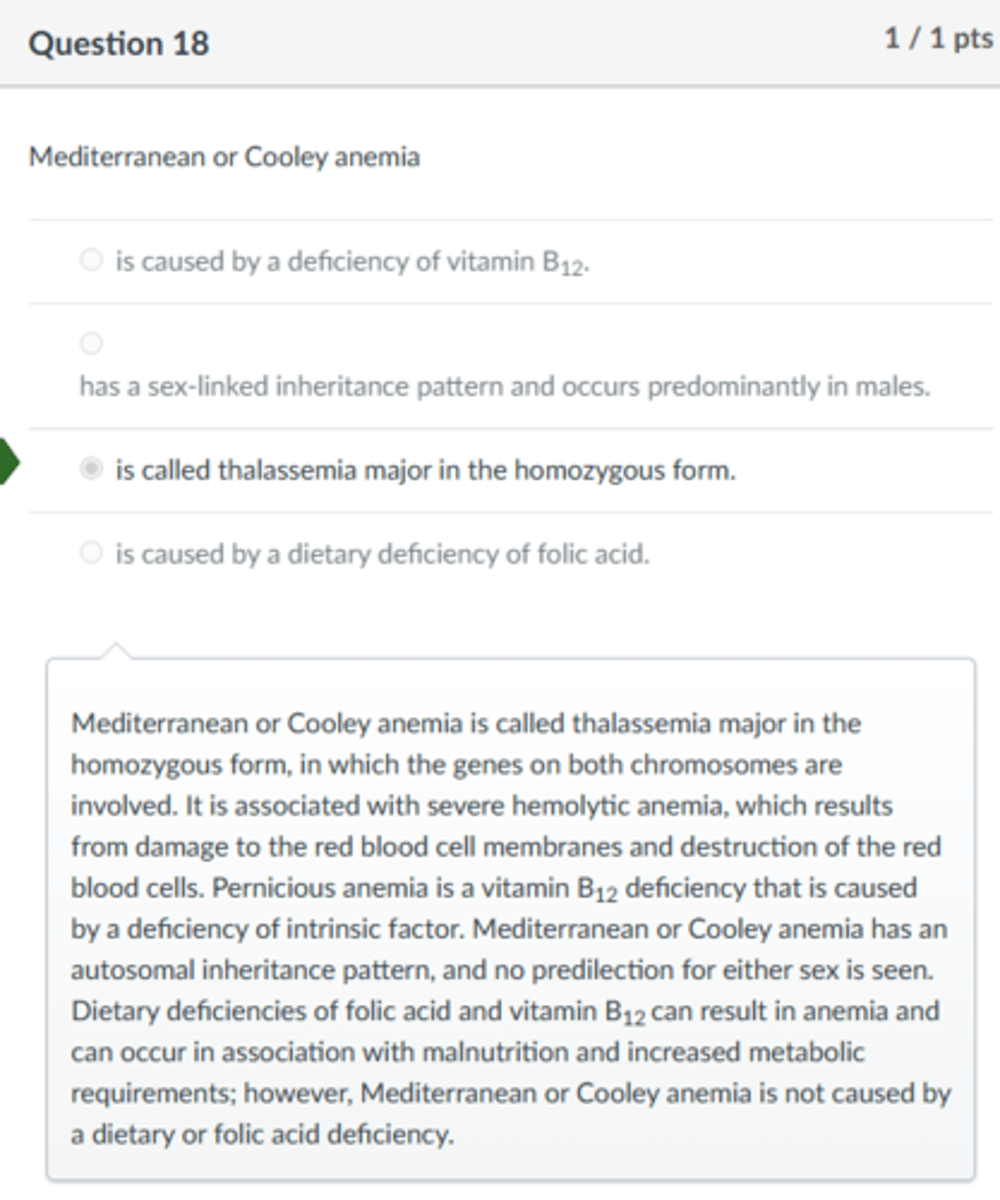
#18 - Mediterranean or Cooley anemia
is caused by a deficiency of vitamin B12.
has a sex-linked inheritance pattern and occurs predominantly in males.
is called thalassemia major in the homozygous form.
is caused by a dietary deficiency of folic acid.
is called thalassemia major in the homozygous form.
Mediterranean or Cooley anemia is called thalassemia major in the homozygous form, in which the genes on both chromosomes are involved. It is associated with severe hemolytic anemia, which results from damage to the red blood cell membranes and destruction of the red blood cells. Pernicious anemia is a vitamin B12 deficiency that is caused by a deficiency of intrinsic factor. Mediterranean or Cooley anemia has an autosomal inheritance pattern, and no predilection for either sex is seen. Dietary deficiencies of folic acid and vitamin B12 can result in anemia and can occur in association with malnutrition and increased metabolic requirements; however, Mediterranean or Cooley anemia is not caused by a dietary or folic acid deficiency.
# 8 - A reddish-blue or purple discoloration of the skin or mucosa that results from spontaneous extravasation of blood and is caused by an increase in capillary fragility or a deficiency in blood platelets is termed
hemophilia.
Bruton disease.
purpura.
pernicious anemia.
purpura
Purpura is a reddish-blue or purple discoloration of the skin or mucosa that results from spontaneous extravasation of blood and is caused by an increase in capillary fragility or a deficiency in blood platelets. Hemophilia is a disorder of blood coagulation that results in severely prolonged clotting time. Bruton disease is a disorder in which B cells do not mature and plasma cells are deficient. Pernicious anemia is a vitamin B12 deficiency that is caused by a deficiency of intrinsic factor, a substance secreted by the parietal cells of the stomach.
Which statement is true concerning acute lymphoblastic leukemia versus acute myeloblastic leukemia?
Acute lymphoblastic leukemia primarily affects children and young adults and has a poor prognosis.
Acute myeloblastic leukemia primarily affects children and young adults and has a poor prognosis.
Correct! Acute lymphoblastic leukemia primarily affects children and young adults and has a good prognosis.
Acute myeloblastic leukemia primarily affects children and young adults and has a good prognosis.
Acute lymphoblastic leukemia primarily affects children and young adults and has a good prognosis.
Acute lymphoblastic leukemia primarily affects children and young adults and has a good prognosis. Acute myeloblastic leukemia involves adolescents and young adults (age range, 15 to 39 years), and the prognosis is not as good. Acute myeloblastic leukemia involves adolescents and young adults (age range, 15 to 39 years), and the prognosis is not as good as with acute lymphoblastic leukemia. Acute myeloblastic leukemia involves adolescents and young adults (age range, 15 to 39 years), and the prognosis is not as good.
Which statement about type 1 diabetes is true?
It is called non-insulin–dependent diabetes mellitus.
About 30% of all patients with diabetes have type 1 diabetes.
The onset of this type of diabetes is gradual and usually occurs in patients who are 35 to 40 years of age or older.
Correct! It can be complicated by polydipsia, polyuria, and polyphagia.
It can be complicated by polydipsia, polyuria, and polyphagia.
Type 1 diabetes can be complicated by polydipsia (excessive thirst and intake of fluid), polyuria (excessive urination), and polyphagia (excessive appetite). It is called insulin-dependent diabetes mellitus. Only 3% of all diabetic patients have this type of diabetes. Type 1 diabetes can occur at any age, but its time of onset is usually at a peak age of 20 years. The onset is abrupt.
Children affected with hyperthyroidism may demonstrate which characteristic?
hyperactivity
Which condition necessitates emergency intervention?
Hemostasis
Ketoacidosis
Correct! Insulin shock
Myalgia
insulin shock
Insulin shock refers to a state of profound hypoglycemia (or low blood sugar) that necessitates emergency intervention. Hemostasis is the stoppage or cessation of bleeding. Ketoacidosis is the accumulation of acid in the body resulting from the accumulation of ketone bodies. Myalgia is a term to describe muscle pain.
When a patient is taking long-term antibiotic therapy, what is a common oral manifestation that may be seen?
Risk of candidiasis
Which disorder of red blood cells and hemoglobin is associated with sensitivity to dietary gluten found in wheat and wheat products?
Aplastic anemia
Polycythemia vera
Secondary polycythemia
Correct! Celiac sprue
Celiac sprue
Celiac sprue is associated with sensitivity to dietary gluten found in wheat and wheat products. When gluten is ingested, injury to the intestinal mucosa results. Malabsorption of other nutrients such as vitamin B12 and folic acid occurs as a result of mucosal injury. Aplastic anemia is characterized by a generalized decrease in circulating blood cells. Polycythemia vera is characterized by a neoplastic proliferation of bone marrow stem cells resulting in an abnormally high number of circulating red blood cells. Secondary polycythemia is characterized by an increase in red blood cells caused by a physiologic response to decreased oxygen. A decrease in oxygen in blood cells triggers an increase in erythropoietin by the kidneys, which results in increased production of red blood cells.
The recommended treatment for folic acid and vitamin B12 deficiency anemias is
surgery.
Correct! dietary supplements.
medications.
radiation therapy.
dietary supplements
Dietary supplements of folic acid and vitamin B12 are recommended for these anemias. Surgery is not the recommended treatment for folic acid and vitamin B12 deficiency anemias. Medications are not the recommended treatment for folic acid and vitamin B12 deficiency anemias. Radiation therapy is not the recommended treatment for folic acid and vitamin B12 deficiency anemias.
# 9 - Which vitamin is needed for deoxyribonucleic acid (DNA) synthesis and, when lacking, affects the development of rapidly dividing cells in bone marrow and epithelium?
Thiamin
Vitamin B12
Riboflavin
Vitamin C
Vitamin B12
Vitamin B12 is needed for deoxyribonucleic acid (DNA) synthesis and, when lacking, affects the development of rapidly dividing cells in bone marrow and epithelium. Thiamin is needed for energy metabolism and is important in nerve function. Riboflavin is needed for energy metabolism and is important for vision and skin health. Vitamin C is an antioxidant. It is needed for protein metabolism and is important for immune system health and iron absorption.
All statements are true regarding type 2 diabetes mellitus except one. Which is the exception?
Complications include polydipsia, polyuria, and polyphagia.
# 15 - Which term describes an opposite condition to anemia?
Polycythemia
Arthralgia
Hemolysis
Neutropenia
polycythemia
Anemia is the reduction of the number of red blood cells, and polycythemia is the increase in the total red blood cell mass in the blood. Arthralgia is severe pain in a joint. Hemolysis is the release of hemoglobin from red blood cells by destruction of the cells. Neutropenia is a decreased number of neutrophils in the blood.
Which statement is characteristic of hyperparathyroidism?
It is characterized by low blood levels of calcium.
It is characterized by high levels of blood phosphorus.
Primary hyperparathyroidism occurs when calcium is abnormally excreted by the kidneys and the parathyroid glands increase their production of parathyroid hormone to maintain adequate blood levels of calcium.
Correct! Kidney failure is the most common cause of secondary hyperparathyroidism.
Kidney failure is the most common cause of secondary hyperparathyroidism.
Kidney failure is the most common cause of secondary hyperparathyroidism. Hyperparathyroidism is characterized by elevated blood levels of calcium. Hyperparathyroidism is characterized by low levels of blood phosphorus. Primary hyperparathyroidism results from an abnormality of the parathyroid glands. Secondary hyperparathyroidism occurs when calcium is abnormally excreted by the kidneys and the parathyroid glands increase their production of parathyroid hormone to maintain adequate blood levels of calcium.
The Schilling test detects an inability to absorb an oral dose of vitamin _____.
B6
Correct! B12
C
E
B12
The Schilling test detects an inability to absorb an oral dose of vitamin B12. It may be used in the diagnosis of pernicious anemia. Diagnostic features of pernicious anemia include low serum vitamin B12 levels and gastric achlorhydria. The treatment of pernicious anemia consists of injections of vitamin B12. The oral mucosa improves in time, but the papillae on the dorsum of the tongue may not completely regenerate. The Schilling test detects an inability to absorb an oral dose of vitamin B12 rather than vitamin B6. The Schilling test detects an inability to absorb an oral dose of vitamin B12 rather than vitamin C. The Schilling test detects an inability to absorb an oral dose of vitamin B12 rather than vitamin E.
A megaloblastic anemia is characterized by red blood cells that are
macrocytic and have nuclei.
Characteristics of acromegaly include
enlargement of the maxilla and mandible, resulting in separation of the teeth and malocclusion.
Bisphosphonate therapy is used to treat all diseases except one. Which is the exception?
Hyperparathyroidism
Hyperparathyroidism may result in bone lesions that appear microscopically to be indistinguishable from a(n)
osteogenic sarcoma.
osteoma.
cemento-osseous dysplasia.
Correct! central giant cell granuloma.
central giant cell granuloma.
Hyperparathyroidism may result in bone lesions that appear microscopically to be indistinguishable from a central giant cell granuloma. Other radiographic changes that occur in hyperparathyroidism include a generalized mottled appearance of the bone and partial loss of the lamina dura. Loosening of teeth can also occur. Hyperparathyroidism may result in bone lesions that appear microscopically to be indistinguishable from a central giant cell granuloma rather than osteogenic sarcoma. Hyperparathyroidism may result in bone lesions that appear microscopically to be indistinguishable from a central giant cell granuloma rather than osteoma. Hyperparathyroidism may result in bone lesions that appear microscopically to be indistinguishable from a central giant cell granuloma rather than cemento-osseous dysplasia.
Diabetes is characterized by abnormally high blood _________ levels.
phosphorus
calcium
Correct! glucose
neutrophil
glucose
Diabetes is characterized by abnormally high blood glucose levels. These high levels result from a lack of the hormone insulin, defective insulin that does not work effectively to lower blood glucose levels, or increased insulin resistance because of obesity. Diabetes is characterized by abnormally high blood glucose and not phosphorus levels. Hyperparathyroidism is characterized by elevated levels of blood calcium and low levels of blood phosphorus. Diabetes is characterized by abnormally high blood glucose and not calcium levels. Diabetes is characterized by abnormally high blood glucose and not neutrophil levels. Leukemia is characterized by an overproduction of atypical white blood cells.
Advantages of an insulin pump for therapy of type 1 diabetes include
blood sugar levels no longer need to be monitored.
the pump is internal.
Correct! the pump can maintain a more predictable control of blood sugar levels than multiple insulin injections.
the insulin dosage with the pump is limited to once-a-day dosing.
the pump can maintain a more predictable control of blood sugar levels than multiple insulin injections.
Advantages of an insulin pump for therapy of type 1 diabetes include the ability of the pump to maintain more predictable control of blood sugar levels than multiple insulin injections. The patient must still monitor blood sugar levels by testing several times a day. The insulin pump is external and approximately the size of a pager; it delivers insulin through plastic tubing placed under the skin. The patient programs the pump to deliver small amounts of rapidly acting insulin on the hour over a 24-hour period according to the patient’s metabolic needs.
Excess production by the anterior pituitary gland is termed
hyperparathyroidism.
hyperthyroidism.
Correct! hyperpituitarism.
hyperglycemia.
hyperpituitarism.
Excess production by the anterior pituitary gland is termed hyperpituitarism. Hyperparathyroidism results from excess secretion of parathyroid hormone, which is secreted by the parathyroid glands. Hyperthyroidism is characterized by excessive production of thyroid hormone. Hyperglycemia can result from a lack of the hormone insulin, defective insulin that does not work effectively to lower blood glucose levels, or increased insulin resistance because of obesity.
Because of an abnormal type of hemoglobin in the red blood cells of a patient with sickle cell anemia, the cells develop a sickle shape in the presence of
low blood sugar.
Correct! decreased oxygen.
wheat gluten.
increased carbon dioxide.
decreased oxygen.
Because of an abnormal type of hemoglobin in the red blood cells of a patient with sickle cell anemia, the cells develop a sickle shape in the presence of decreased oxygen. Exercise, exertion, administration of a general anesthetic, pregnancy, or even sleep can trigger a sickling of the red blood cells. Low blood sugar is associated with insulin and diabetes. Celiac sprue is a chronic disorder associated with a sensitivity to dietary gluten, a protein found in wheat and wheat products. The cells develop a sickle shape in the presence of decreased oxygen rather than increased carbon dioxide.
______________ is characterized by insufficient production of adrenal steroids.
Addison disease
Addison syndrome
Cushing disease
Cushing syndrome
Addison disease
Addison disease is characterized by insufficient production of adrenal steroids. Addison disease, rather than Addison syndrome, is characterized by insufficient production of adrenal steroids. Addison syndrome does not exist. Cushing syndrome, rather than Cushing disease, is characterized by excess production of adrenal steroids. Cushing syndrome rather than Cushing disease is characterized by excess production of adrenal steroids.
In aplastic anemia, patients experience a dramatic decrease in all the circulating blood cells because of a severe depression of bone marrow activity.
Both the statement and reason are correct and related.
Both the statement and reason are correct but not related.
The statement is correct, but the reason is not.
The statement is not correct, but the reason is correct.
Neither the statement nor the reason is correct.
Both the statement and reason are correct and related.
In aplastic anemia, patients experience a dramatic decrease in all the circulating blood cells because of a severe depression of bone marrow activity. Both the statement and reason are correct and related. Both the statement and reason are correct and related. Both the statement and reason are correct and related. Both the statement and reason are correct and related.
Leukopenia most commonly involves
Correct! neutrophils.
basophils.
eosinophils.
monocytes.
neutrophils.
Leukopenia most commonly involves neutrophils, although any of the white blood cells can be involved. Leukopenia most commonly involves neutrophils rather than basophils, although any of the white blood cells can be involved. Leukopenia most commonly involves neutrophils rather than eosinophils, although any of the white blood cells can be involved. Leukopenia most commonly involves neutrophils rather than monocytes, although any of the white blood cells can be involved.
In infants, facial and oral changes in hypothyroidism include these characteristics except one. Which is the exception?
Thickened lips
Delayed eruption of teeth
Macroglossia
Correct! Exophthalmos
Exophthalmos
Exophthalmos is a significant clinical characteristic of hyperthyroidism. Thickened lips may be seen in infants with hypothyroidism. Delayed eruption of teeth may be seen as the child grows to ages 2 to 4. Macroglossia is another oral manifestation of hypothyroidism.
Which clinical feature is associated with hyperthyroidism?
Gigantism
Exophthalmos
Myxedema
Hypercalcemia
Exophthalmos
In addition to exophthalmos, clinical features of hyperthyroidism include rosy complexion, erythema of the palms, excessive sweating, fine hair, and softened nails. Anxiety, weakness, restlessness, and cardiac problems may be associated with the disorder. Gigantism results if an increase in growth hormone production occurs before the closure of long bones. Myxedema occurs when a decreased output of thyroid hormone in older children and adults exists. When hypothyroidism is present during infancy and childhood, it is known as cretinism. Hypercalcemia is associated with hyperparathyroidism.
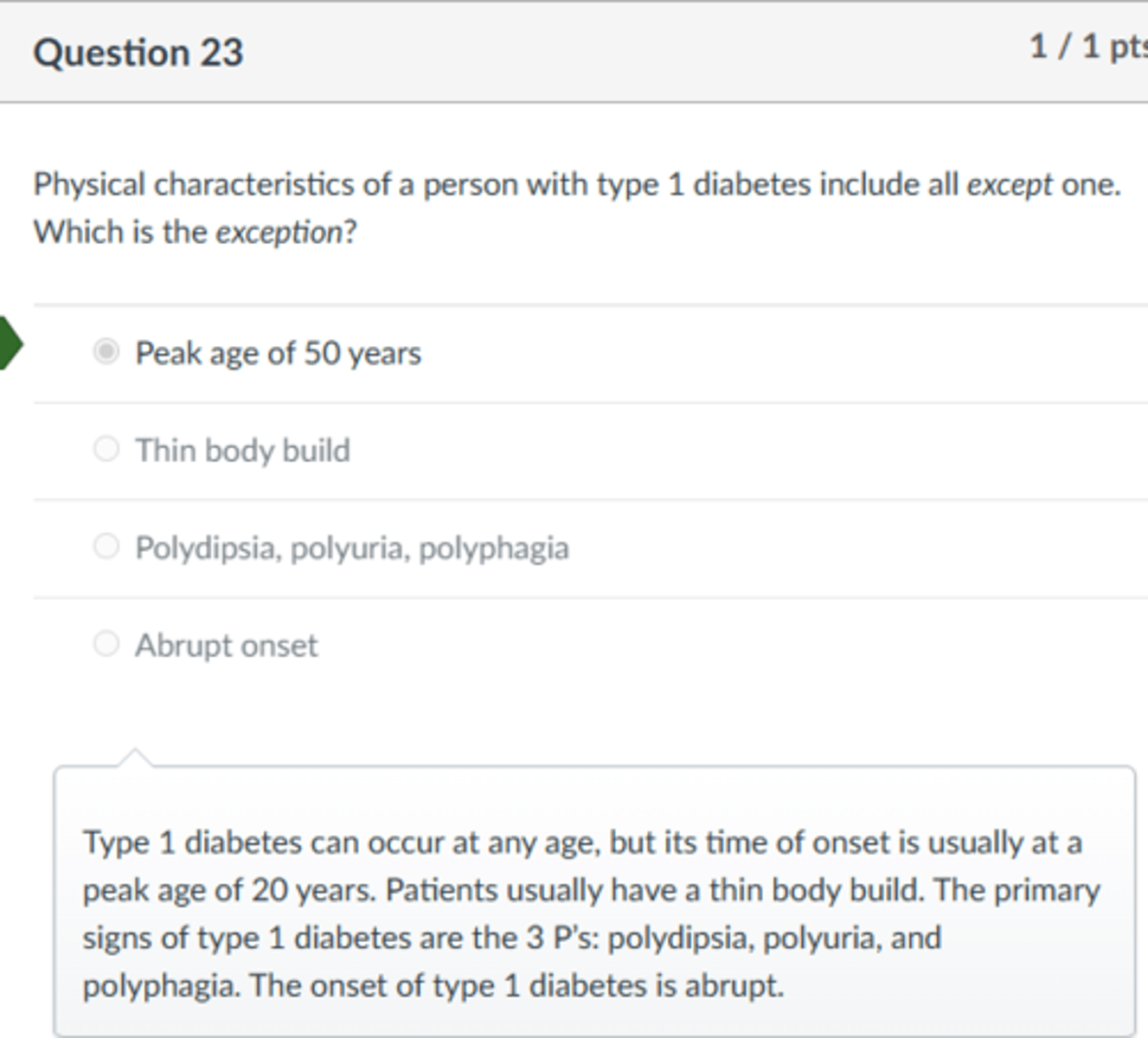
Elevated blood levels of calcium, low levels of blood phosphorus, and abnormal bone metabolism are characteristic of which endocrine disorder?
Hyperpituitarism
Hyperthyroidism
Hypothyroidism
Correct! Hyperparathyroidism
Hyperparathyroidism
Elevated blood levels of calcium, low levels of blood phosphorus, and abnormal bone metabolism are all characteristics of hyperparathyroidism. Hyperpituitarism is characterized by excess hormone production by the anterior pituitary gland. The diagnosis involves measurement of serum growth hormones after ingestion of glucose. Hyperthyroidism is characterized by excessive production of thyroid hormone. Characteristics of hypothyroidism include a decreased output of thyroid hormone.
Which statement concerning polycythemia vera is true?
It may be caused by living at high altitudes or by an elevation in carbon monoxide.
Causes include use of diuretics, vomiting, diarrhea, and excessive sweating.
It occurs primarily in children.
Correct! The cause is unknown.
The cause is unknown.
The cause of polycythemia vera is unknown. It is somewhat more common in men than in women, and the age of onset is usually between 40 and 60 years of age. Symptoms include headache, dizziness, and itching. Pulmonary disease, heart disease, living at high altitudes, and an elevation in carbon monoxide are all associated with secondary polycythemia rather than polycythemia vera. Causes of acute relative polycythemia rather than polycythemia vera include use of diuretics, vomiting, diarrhea, and excessive sweating. Polycythemia vera is somewhat more common in men than in women, and the age of onset is usually between 40 and 60 years of age.
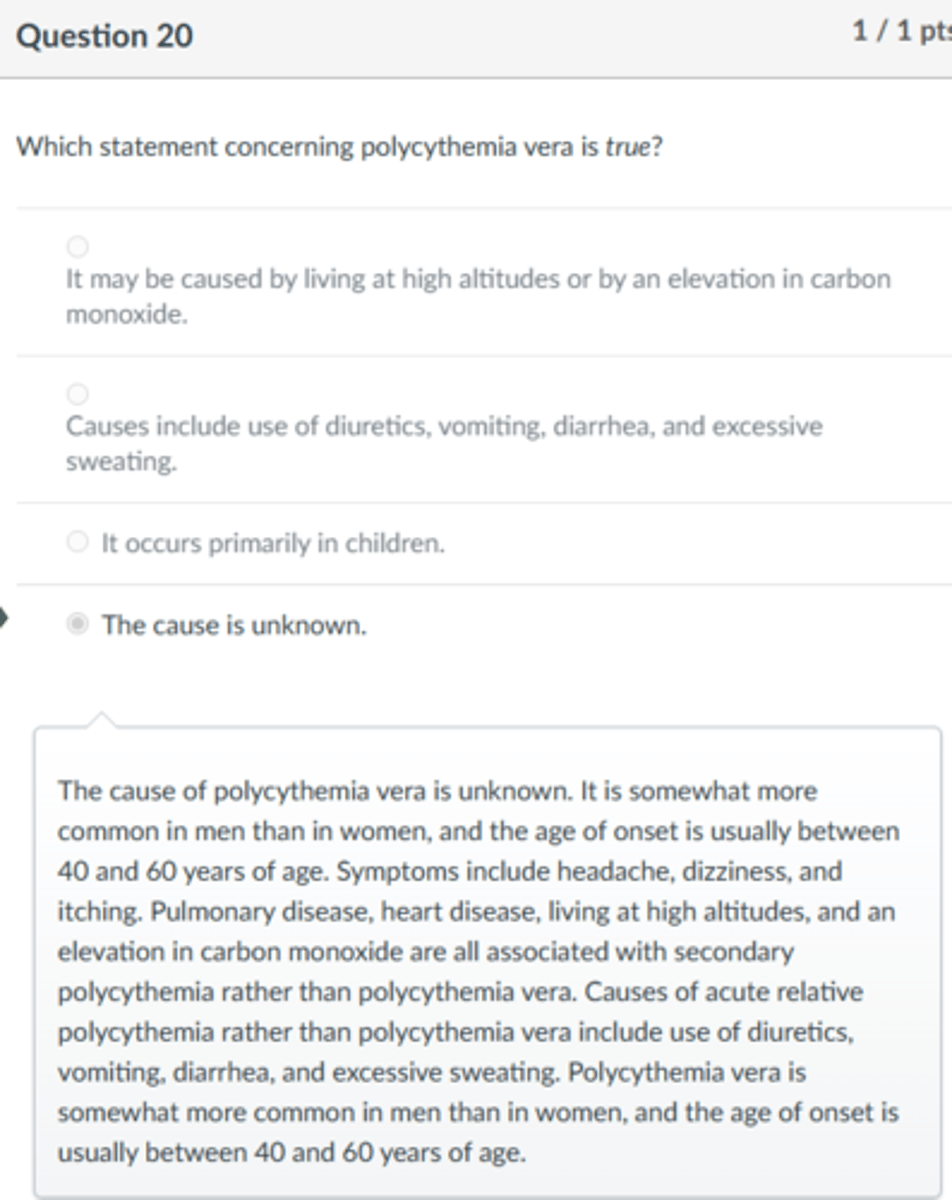
All are clinical features of gigantism except one. Which is the exception?
Headache
Chronic fatigue
Extreme height
Correct! Gastrointestinal issues
Gastrointestinal issues
Gastrointestinal issues are not typically seen in cases of gigantism. Persons affected with gigantism experience headaches. Persons affected with gigantism experience chronic fatigue. Gigantism includes excessive growth of the overall skeleton, and individuals may be over 7 feet tall.
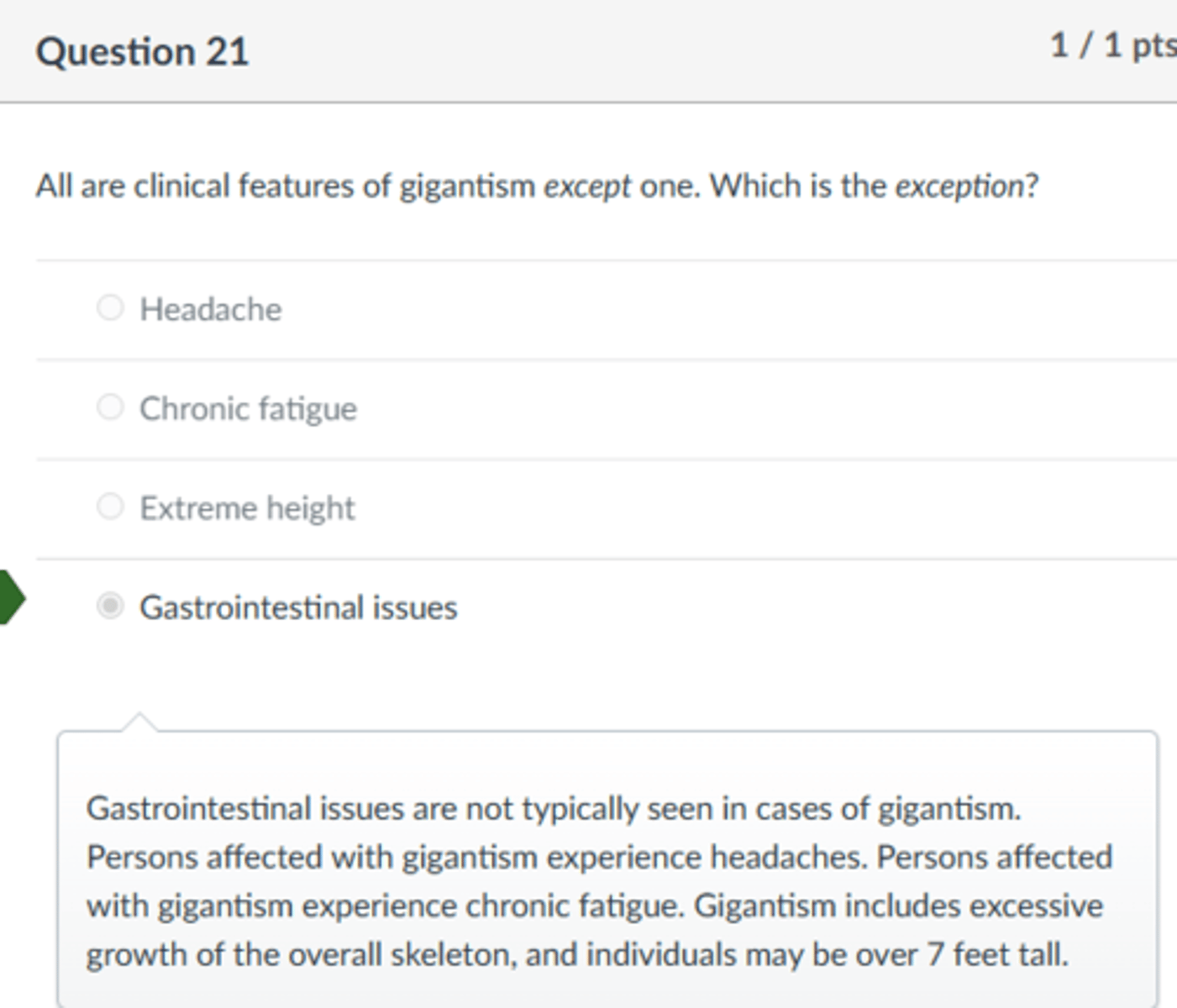
Physical characteristics of a person with type 1 diabetes include all except one. Which is the exception?
Correct! Peak age of 50 years
Thin body build
Polydipsia, polyuria, polyphagia
Abrupt onset
Peak age of 50 years
Type 1 diabetes can occur at any age, but its time of onset is usually at a peak age of 20 years. Patients usually have a thin body build. The primary signs of type 1 diabetes are the 3 P's: polydipsia, polyuria, and polyphagia. The onset of type 1 diabetes is abrupt.
Exophthalmos
In infants, facial and oral changes in hypothyroidism include these characteristics except one. Which is the exception?
enlargement of the maxilla and mandible, resulting in separation of the teeth and malocclusion.
Characteristics of acromegaly include
decreased oxygen.
Because of an abnormal type of hemoglobin in the red blood cells of a patient with sickle cell anemia, the cells develop a sickle shape in the presence of
a neoplastic proliferation of bone marrow stem cells.
Polycythemia vera is caused by
Complications include polydipsia, polyuria, and polyphagia.
All statements are true regarding type 2 diabetes mellitus except one. Which is the exception?
central giant cell granuloma.
Hyperparathyroidism may result in bone lesions that appear microscopically to be indistinguishable from a(n)
iron-deficiency
Plummer-Vinson syndrome can develop as a result of long-standing __________ anemia.
Bisphosphonate
Osteonecrosis of the maxilla and mandible is a complication associated with what type of drug?
Gastrointestinal issues
All are clinical features of gigantism except one. Which is the exception?
Pilocarpine hydrochloride
Which drug may be taken during the course of radiation treatment to reduce the severity of radiation-induced xerostomia?
sickle cell anemia.
A "hair-on-end" pattern may be noted on skull radiographic images of a patient with
glucose
Diabetes is characterized by abnormally high blood _________ levels.
hyperpituitarism.
Excess production by the anterior pituitary gland is termed
Insulin shock
Which condition necessitates emergency intervention?
chronic granulocytic
The Philadelphia chromosome is associated with _____________________ leukemia.
Celiac sprue
Which disorder of red blood cells and hemoglobin is associated with sensitivity to dietary gluten found in wheat and wheat products?
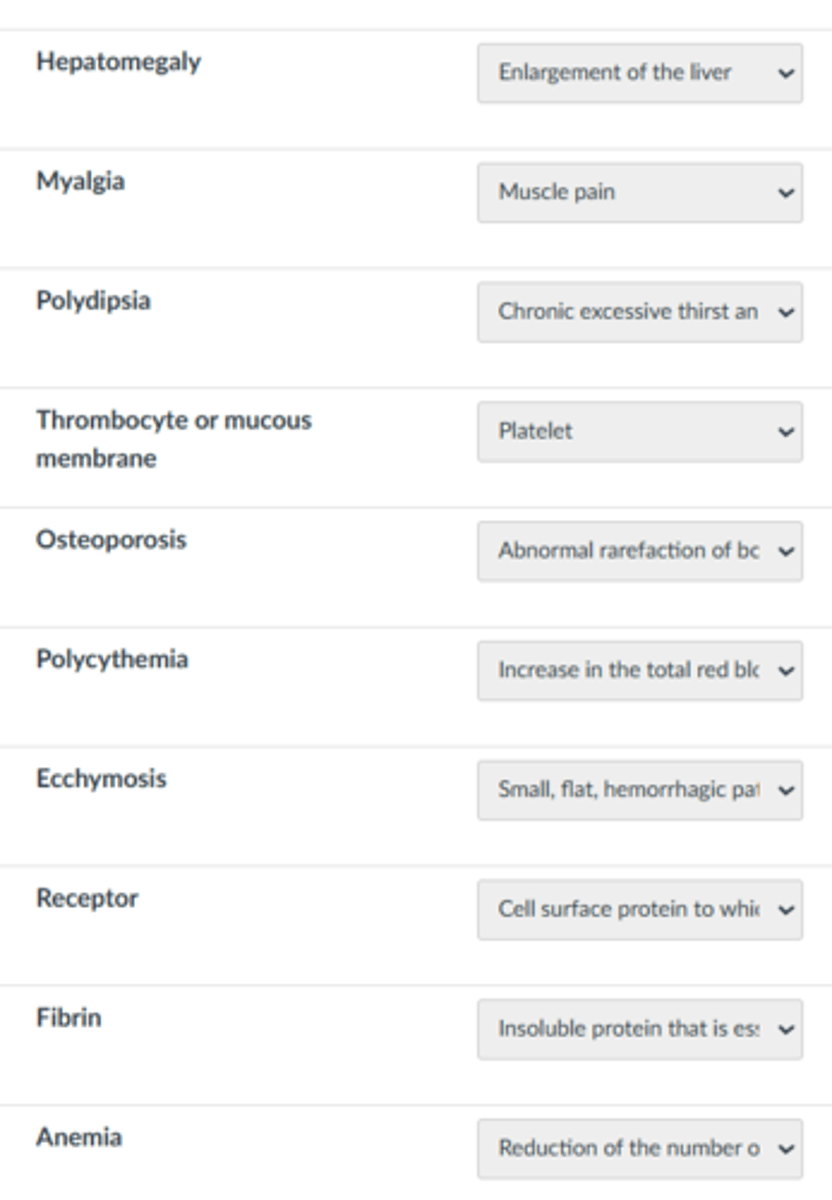
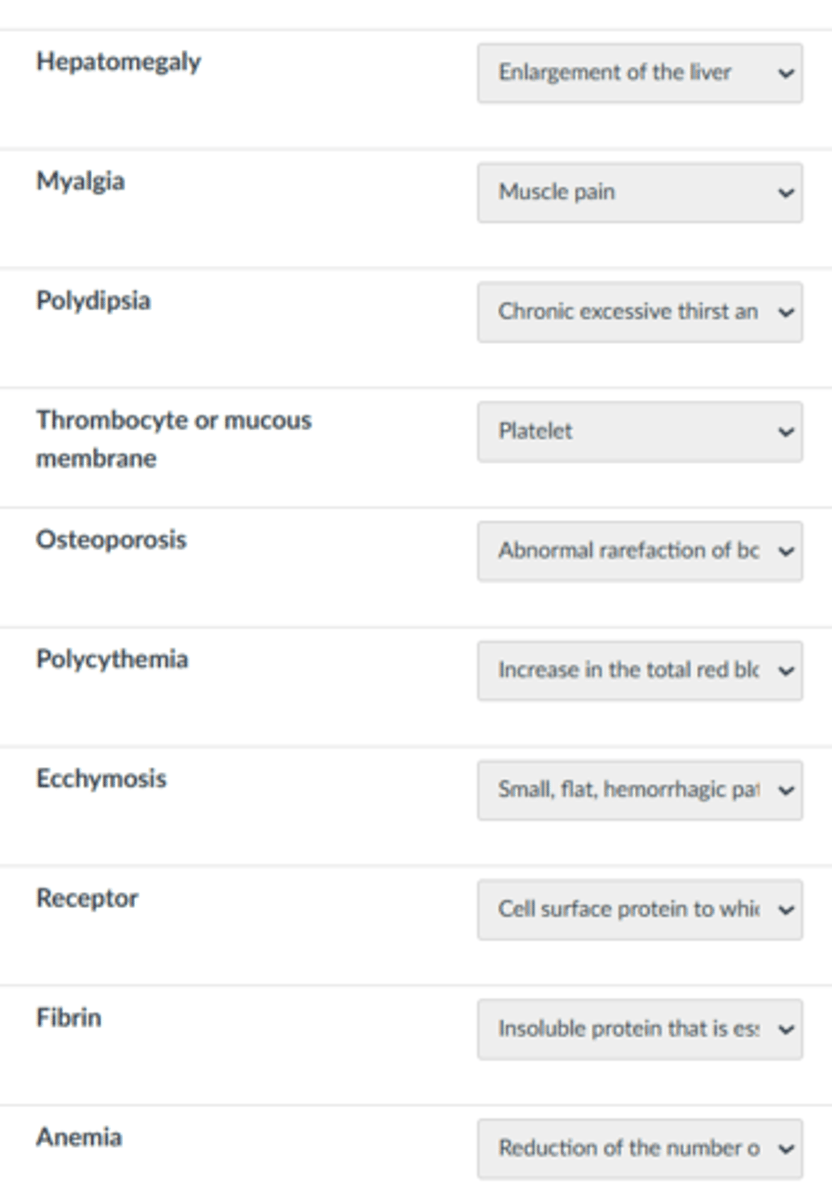
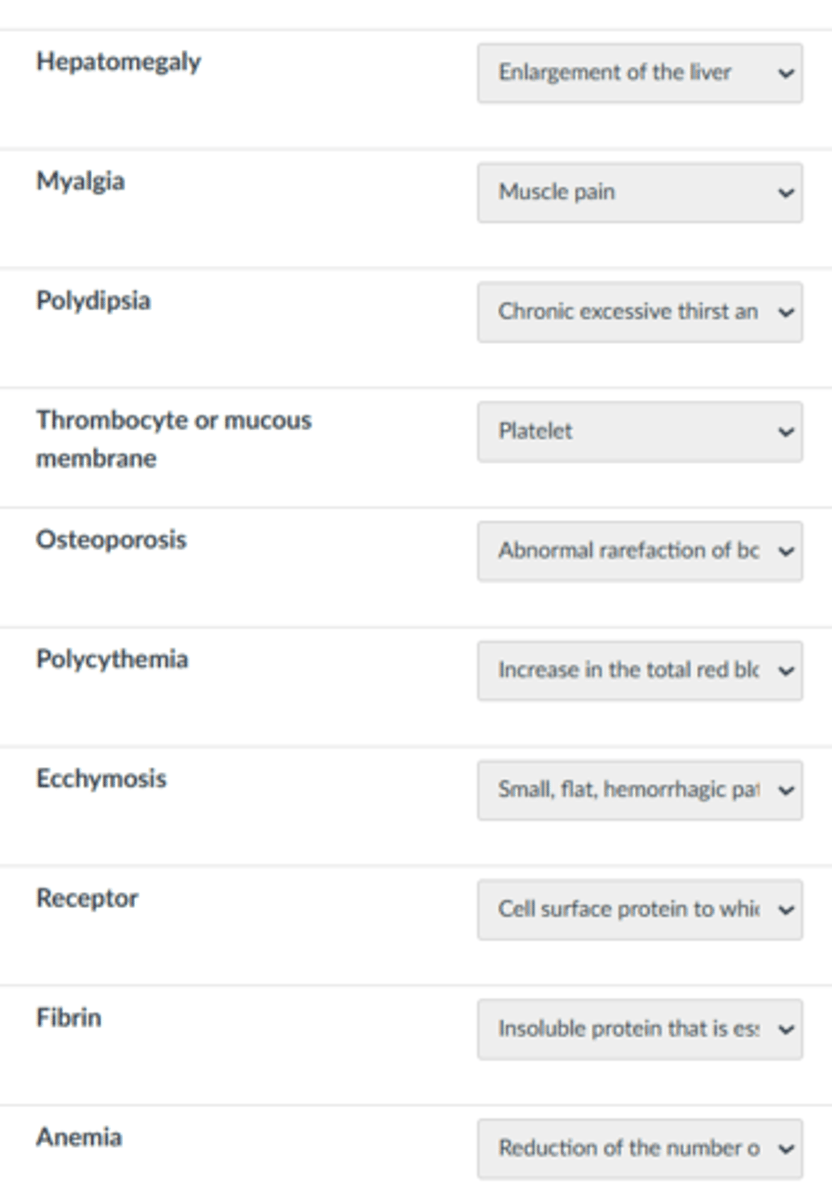
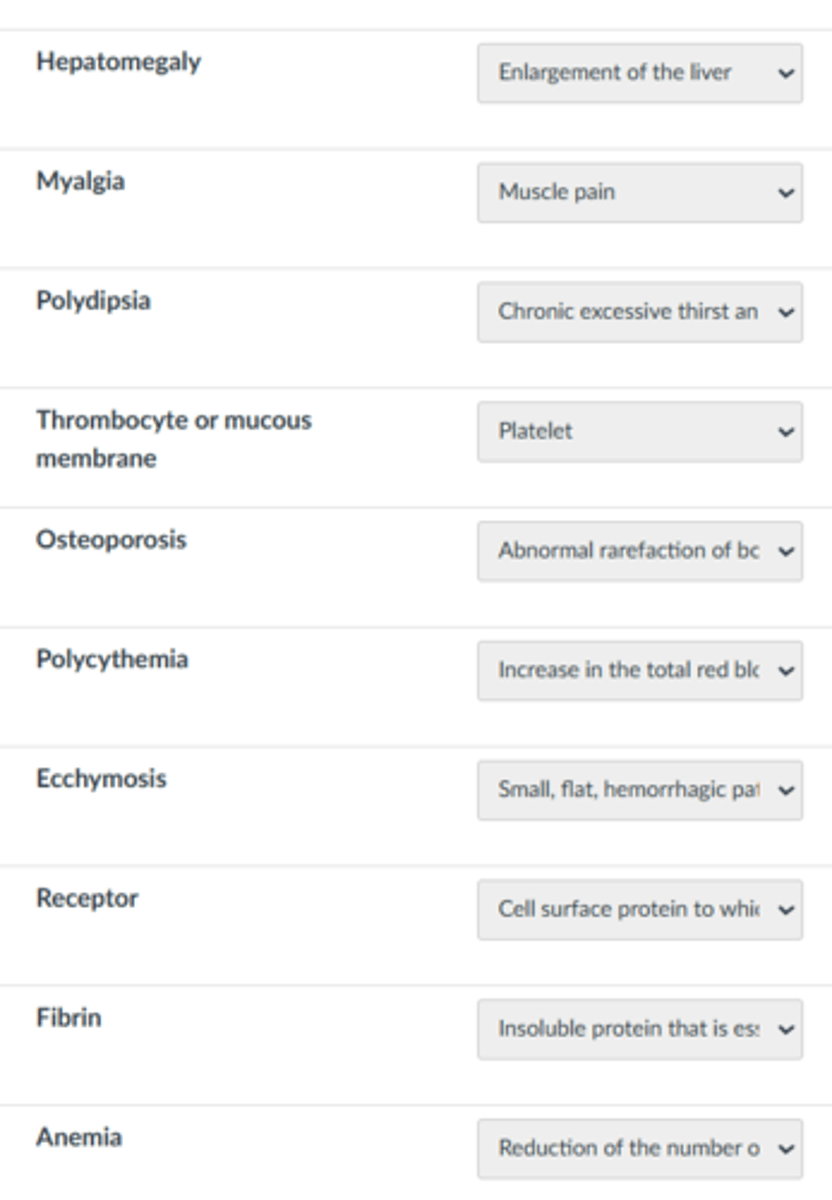
Enlargement of the liver
Hepatomegaly
Muscle pain
Myalgia
Chronic excessive thirst and intake of fluid
Polydipsia
Platelet
Thrombocyte or mucous membrane
Abnormal refraction of bone
Osteoporosis
Increase in the total red blood cell mass in the blood
Polycythemia
A small, flat, hemorrhagic patch larger than a petechia on the skin or mucous membrane
Ecchymosis
Cell surface protein to which a specific molecule can bind
Receptor
Insoluble protein that is essential for the clotting of blood
Fibrin
Reduction of the number of red blood cells
Anemia
Decrease in the number of granulocytes
Agranulocytosis