Small animal oestrus cycle & sterilisation
 Call Kai
 Learn
Learn Practice Test
 Spaced Repetition
 Match
Match Flashcards
 Knowt Play
1/49

There's no tags or description
Looks like no tags are added yet.
Name | Mastery | Learn | Test | Matching | Spaced | Call with Kai |
|---|
No analytics yet
Send a link to your students to track their progress
50 Terms
When do bitches start their oestrus cycle?
6-18 months.
What type of oestrus pattern do dogs have?
Monoestrus, non seasonal, spontaneous ovulators (no need for copulation)
Give the main stages of the oestrus cycle in dogs
Anoestrus (3-4 months)
Proestrus (9d)
Oestrus (9d)
Diestrus (60 days)
Which phases of the oestrus cycle make up 'heat'?
Proestrus & oestrus.
(both typically 9 days)
What are the clinical signs of proestrus in dogs?
Serosanguinous vulval discharge
Vuvlal sweling
Male attracted but rejected
Behaviour such as urine marking & roaming
Describe the hormones involved in pro-oestrus
Follicle development —> FSH & LH, growing follicle produces oestrogen
Rising oestrogen levels, peak @ end of pro-oestrus
What are the clinical signs of oestrus in dogs?
Reduction in vulval swelling
Vulval discharge becomes serous/brownish
Willing to accept male
Movement of tail to uncover vulva ('flagging')
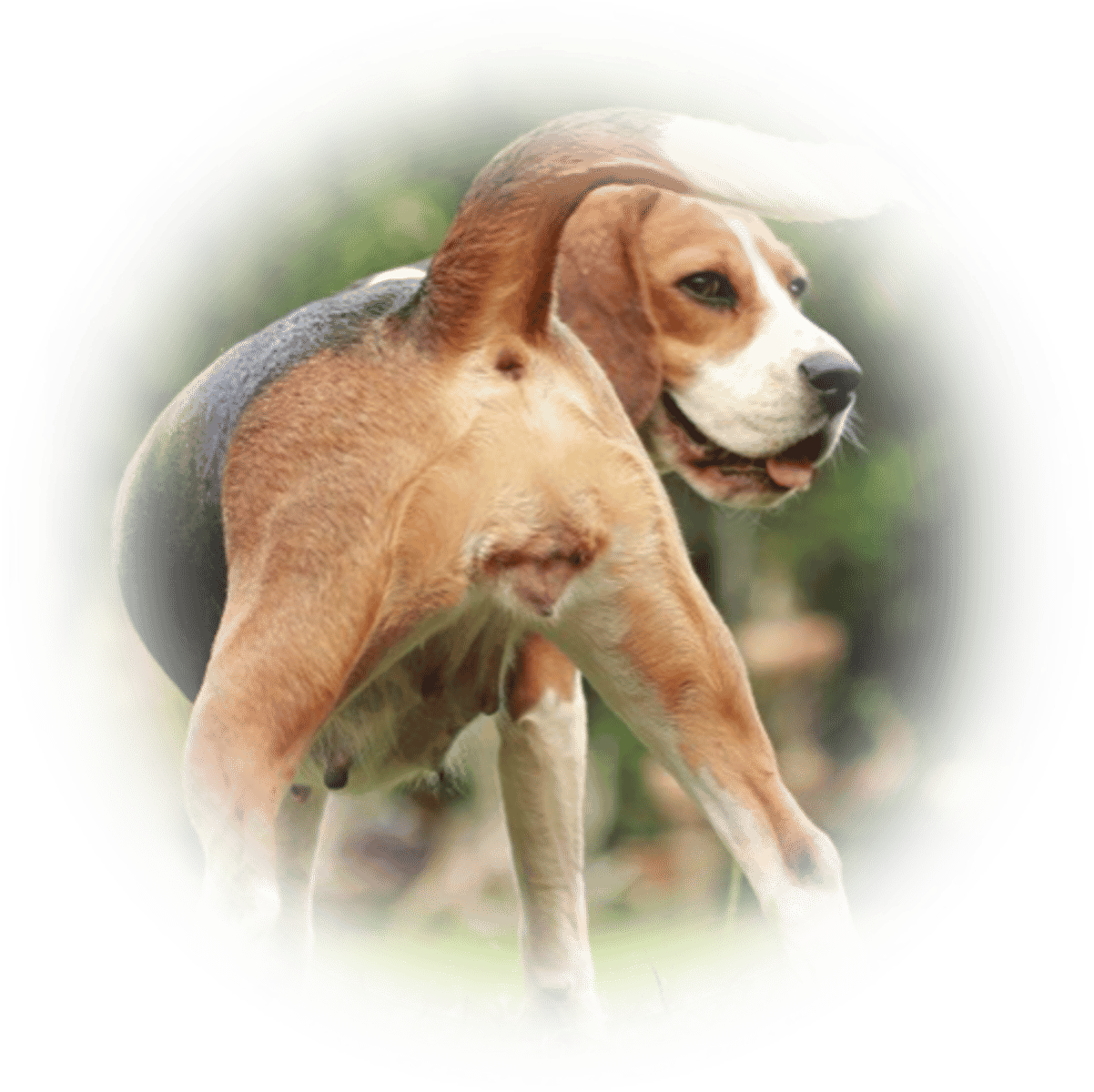
What are the hormones involved in oestrus?
Oestrogen peak in proestrus → LH surge (~48hrs into oestrus)
Progesterone starts to rise (about to ovulate)
Primary oocyte ovulated —> must undergo 2 meiotic divisions to mature (48hrs)
Oocyte fertile for 48-72hrs
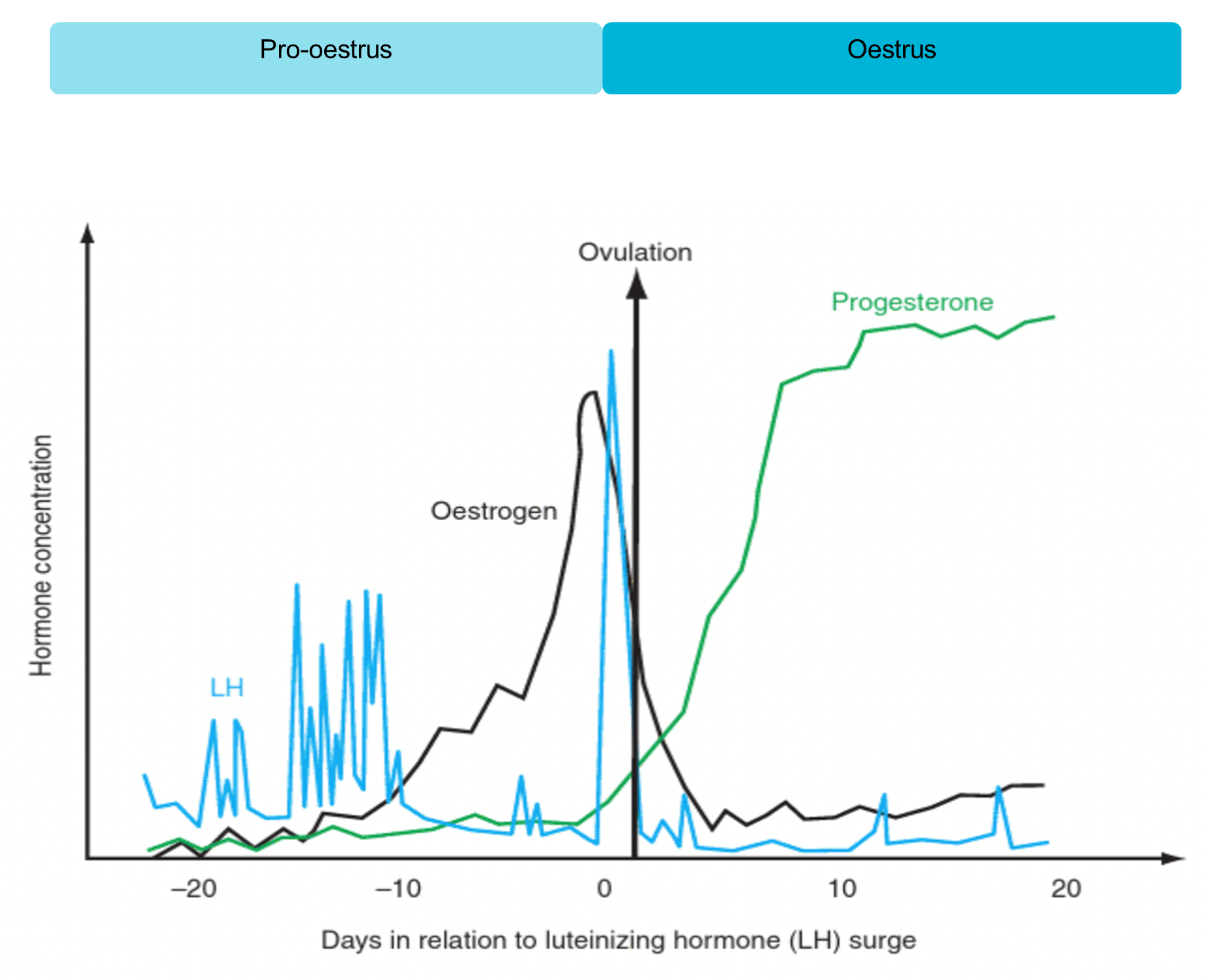
Gradual elevation in the oestrogen produced by developing follicle → GnRH pulses → surge in LH (positive feedback) → ovulation.
After ovulation the CL produces progesterone.
This elevation is responsible for the behavioral changes we see in diestrus
What is the most common oestrus phase for pyometra?
Dioestrus.
What is the optimum phase for spay?
Anoestrus.
Describe the hormonal changes during proestrus in dogs
Stimulation of follicle by FSH and LH pulses
Oestrogen secreted by growing follicles
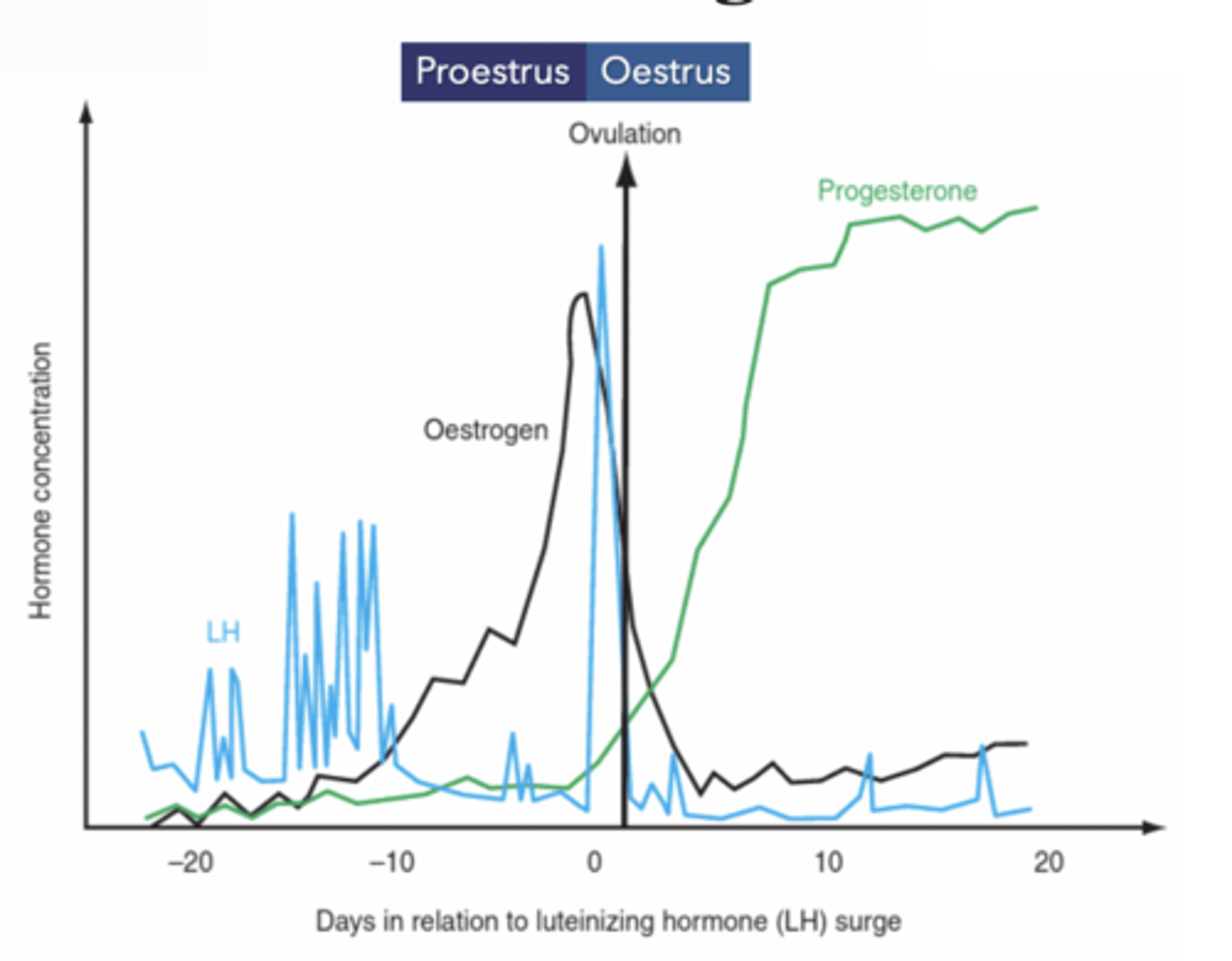
When does oestrogen peak during the proestrus phase?
End.
What signifies the end of proestrus?
Oestrus peak.
What hormonal changes occur in oestrus?
Oestrogen peak causes LH surge (24-48 hours into oestrus)
Progesterone starts to rise after LH surge
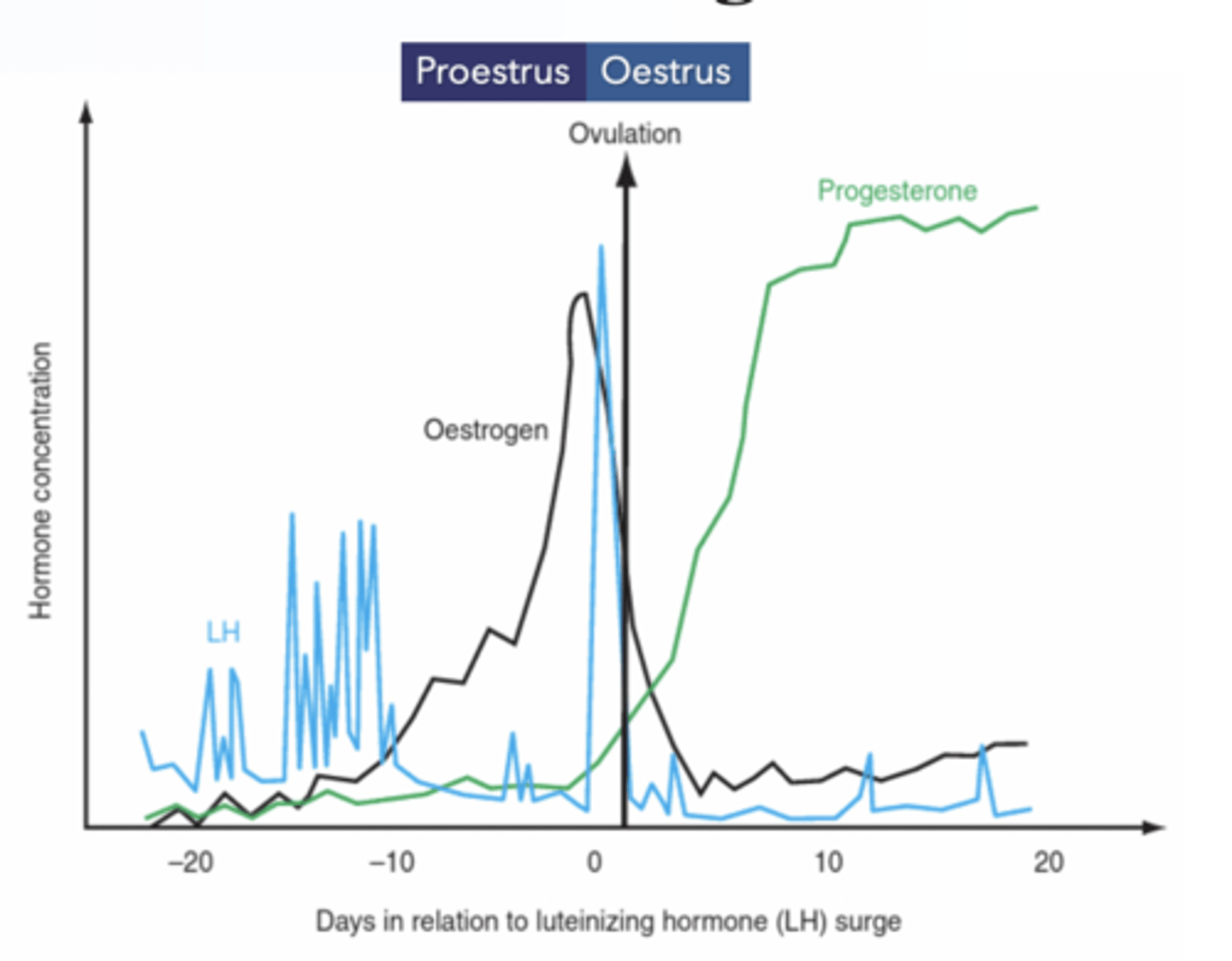
What causes ovulation to take place in the bitch? When does this happen?
LH surge —> occurs 24-48 hours after.
Which has the shorter ovulation period (closer to 24 hours): younger bitches and older bitches?
Younger.
How long does the oocyte remain fertile after maturation (in the bitch)?
48-72 hours
When does proestrus end?
Peak of LH.
What hormone predominates in diestrus?
Progesterone.
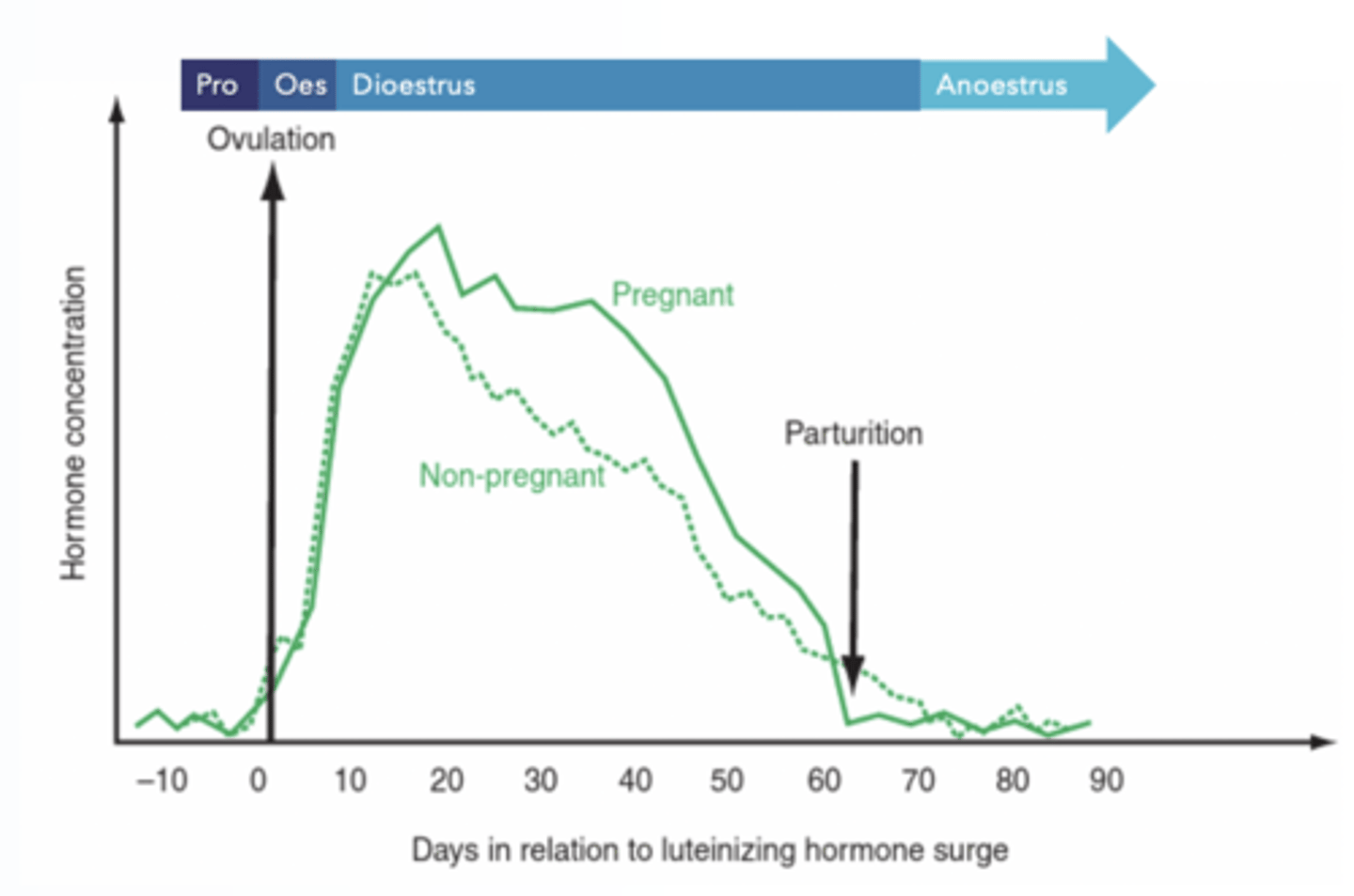
What hormone predominates during anoestrus?
(Basal levels) oestrogen and progesterone.
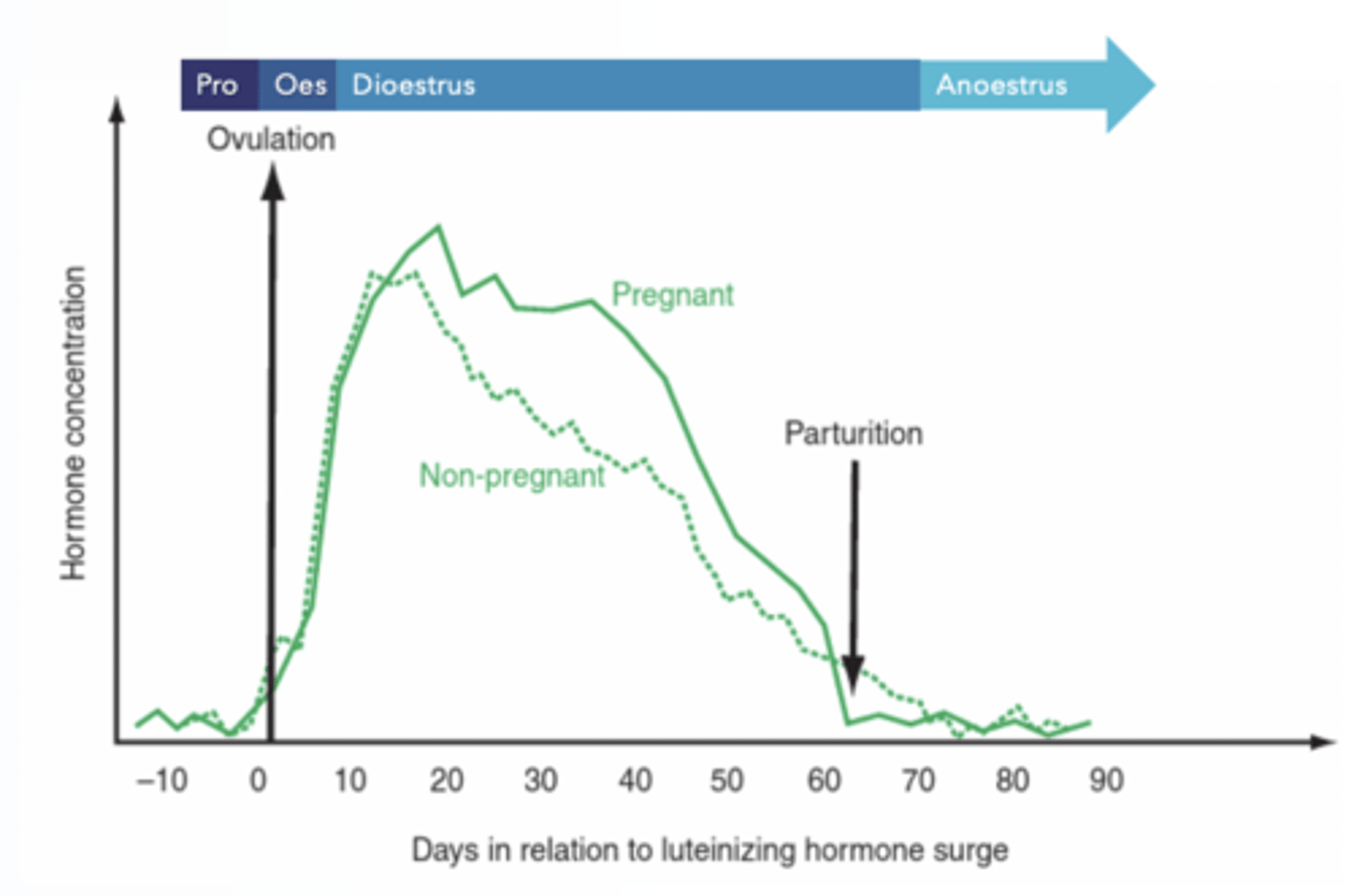
What are the hormonal signs that a bitch is in late anoestrus?
LH pulsing and FSH pulsing.
How do progesterone levels vary between pregnancy and non-pregnancy?
In pregnancy, remain higher for longer and then suddenly drop at parturition.
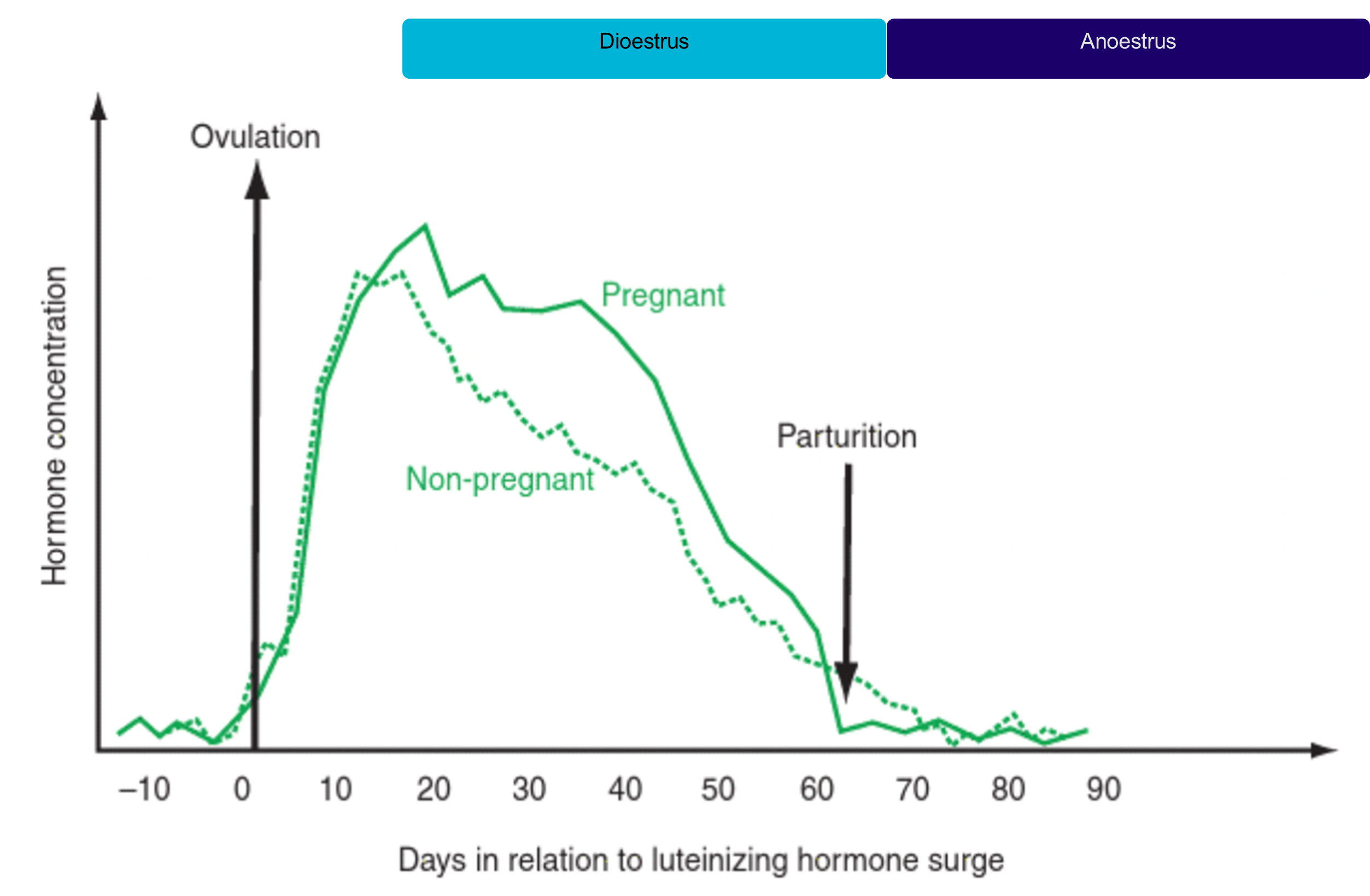
What would you ask during taking a history in terms of monitoring the oestrus cycle?
Last season?
Males showing interest? Willing to accept mating?
interest but refusal during pro-oestrus
interest & acceptance during oestrus
Vulva swelling?
begins during pro-oestrus, decreases during oestrus
Vaginal discharge?
seroanguinous during pro-oestrus, brown during oestrus
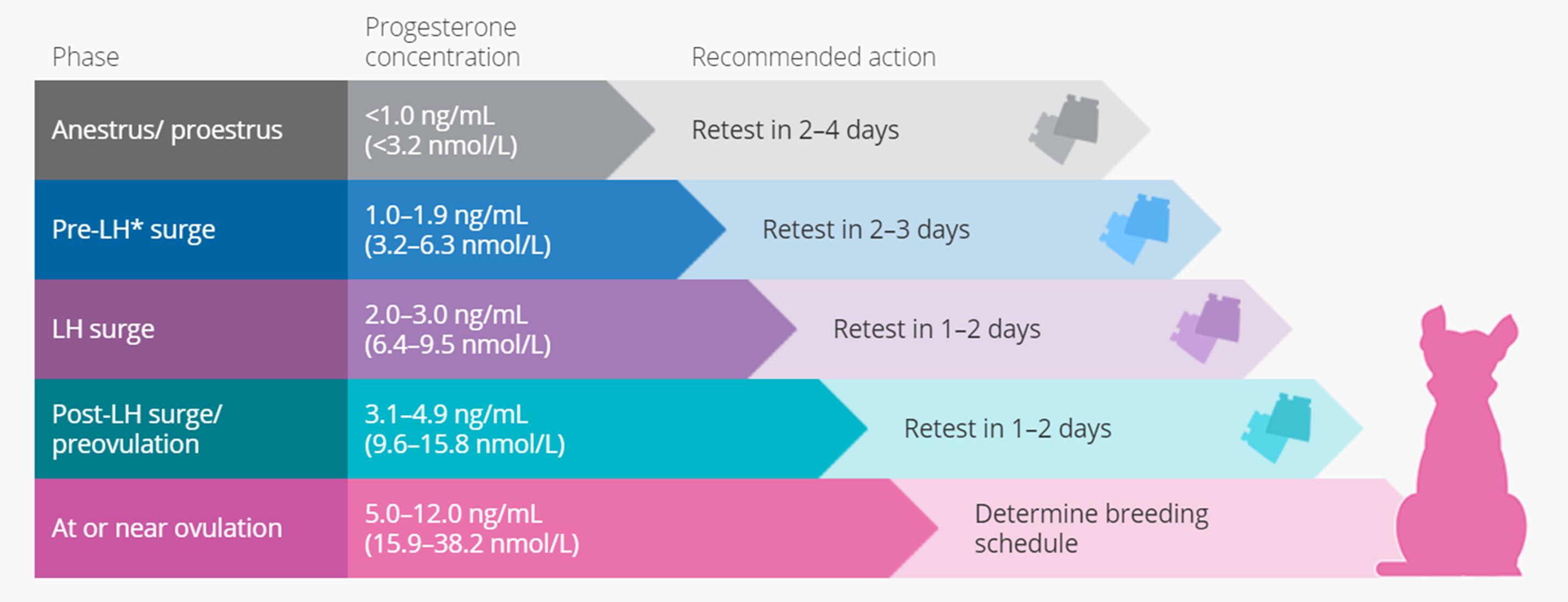
Which hormone assay can be done to monitor oestrus cycle?
Progesterone —> blood sample
First sample taken and then repeated a few days later —> rise in progesterone before ovulation = ovulation in next couple days → can then mate
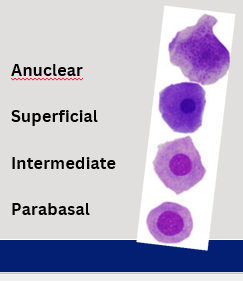
Describe the vaginal cytology characteristics in proestrus
Plump round parabasal cells (& intermediate cells = not as round)
Contain RBCs & neutrophils (due to seroanguinous discharge)
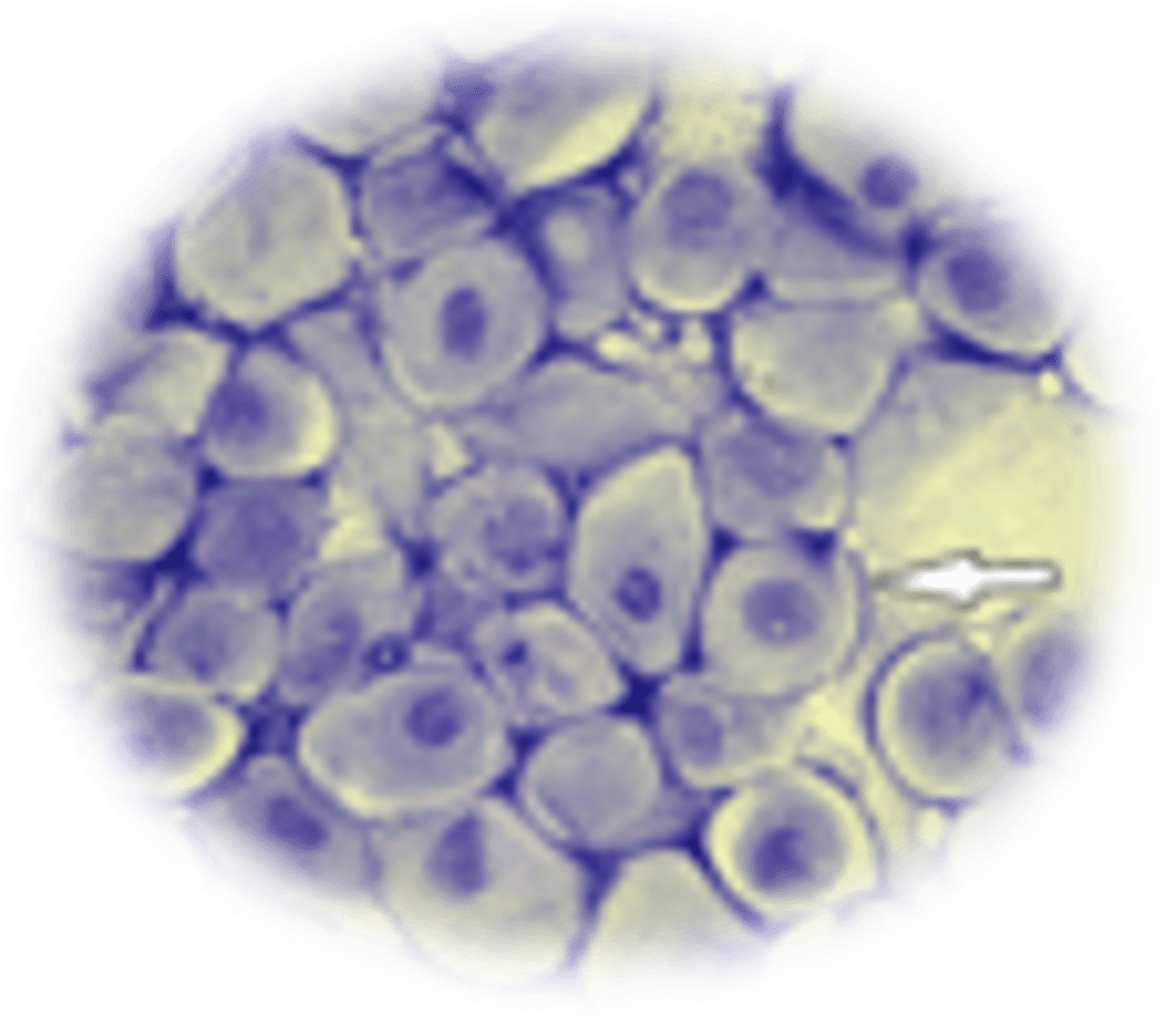
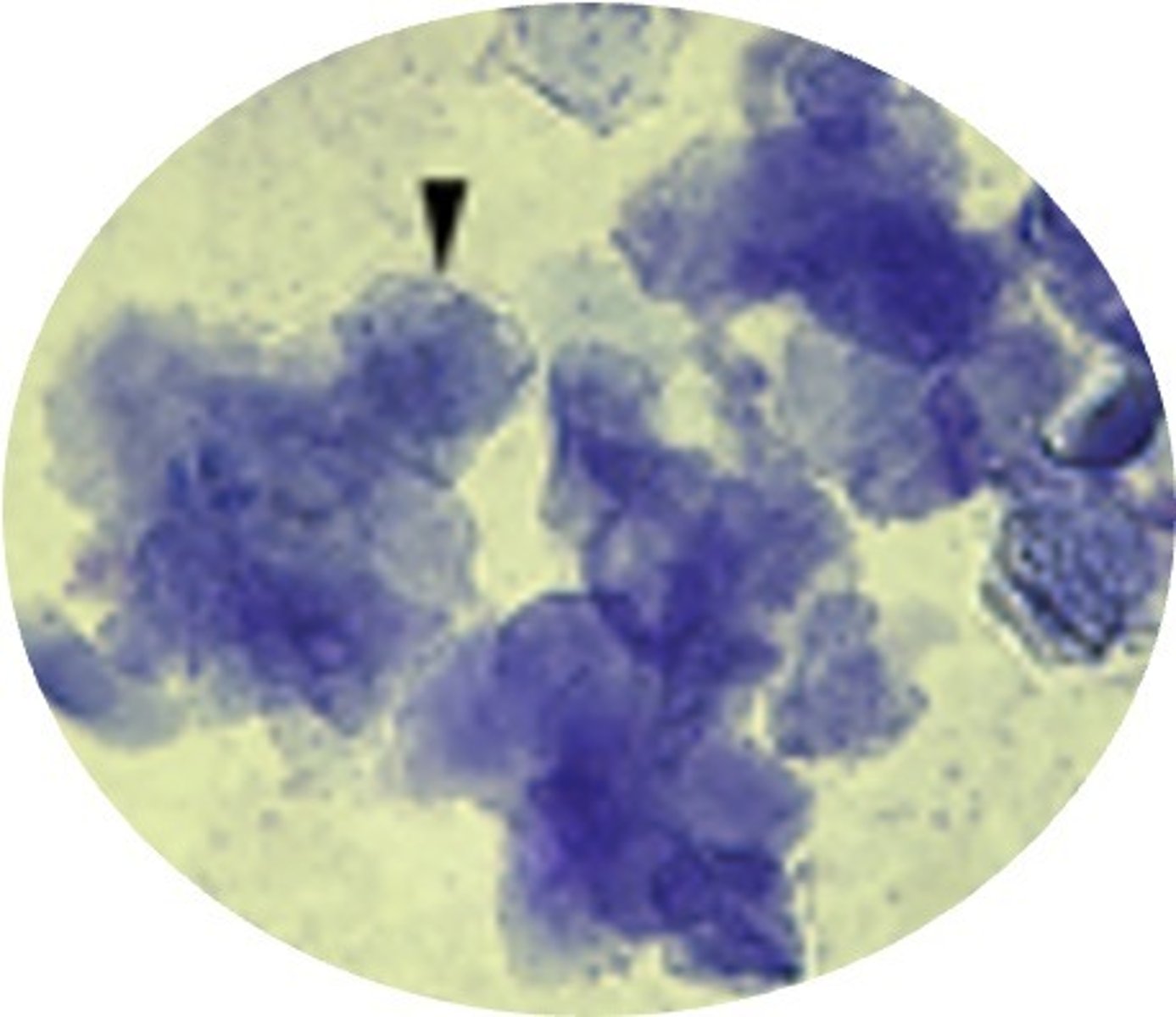
Describe the vaginal cytology characteristics in oestrus
Almost 70-100% cornfield cell (anuclear and superficial)
No neutrophils & very clear background
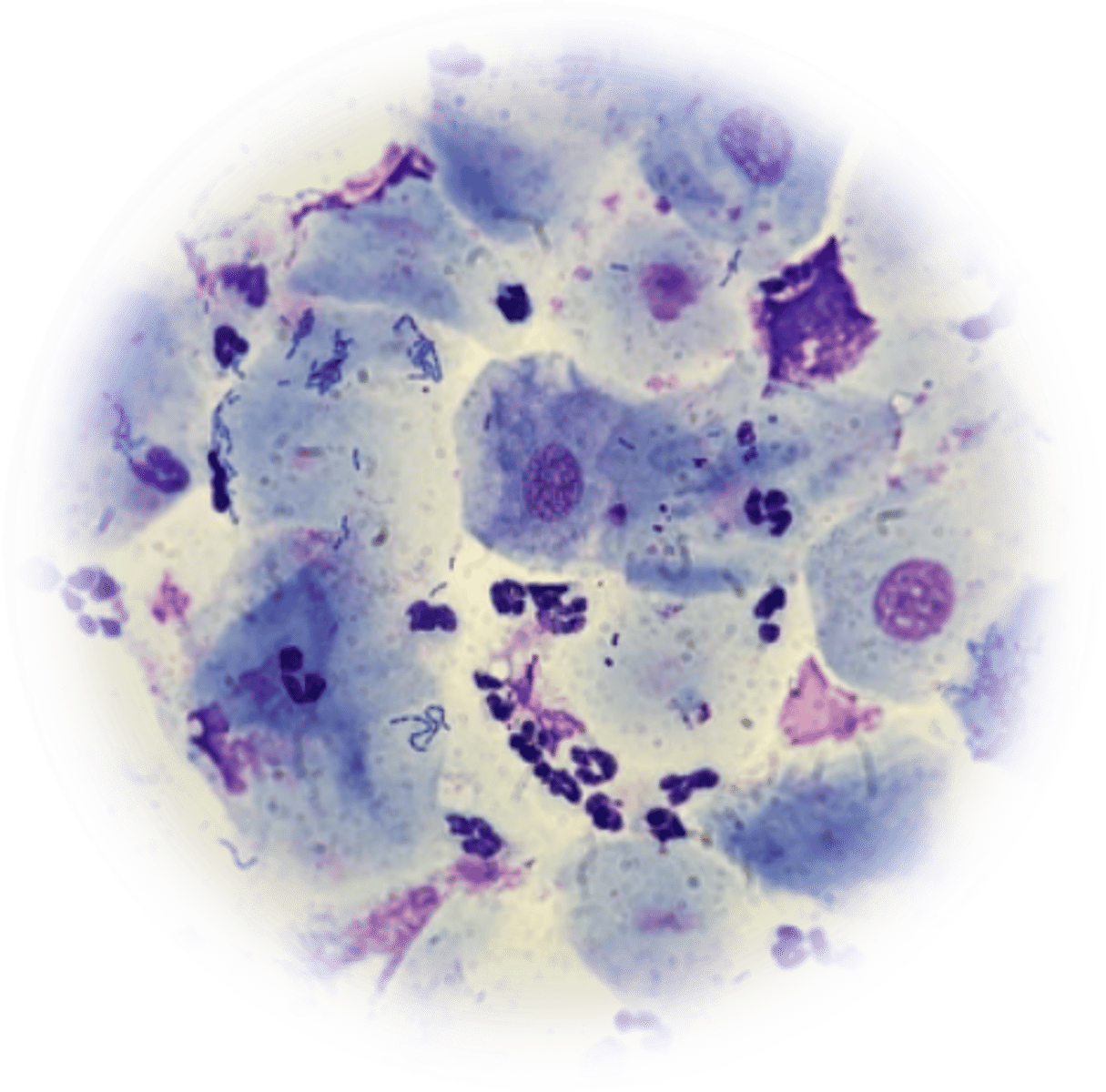
Describe the vaginal cytology characteristics in diestrus
Abrupt drop in cornified cells from 100% to 30%
Other 70% are parabasal cells & neutrophils
What is the point of vaginal cytology (for oestrus)?
Determines whether a bitch/queen is in oestrus or not.
Swab inside vagina, rolled onto slide
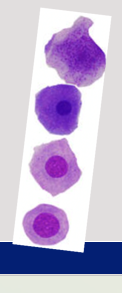
Which cell is which?
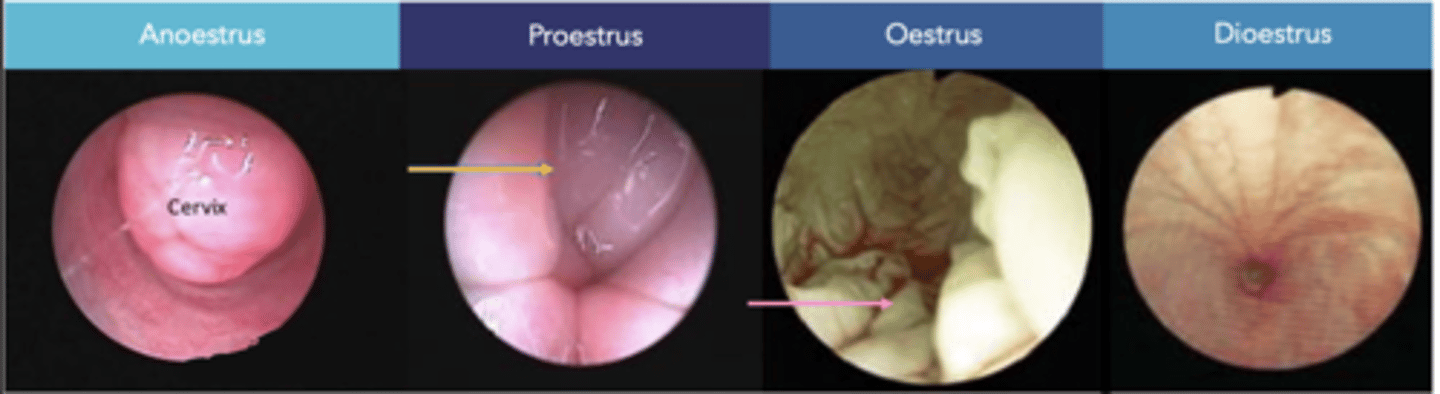
What is an expensive and rarely used method of oestrus detection in dogs?
Vaginoscopy.
Summarise the key aspects of the feline oestrous cycle
Seasonally polyoestrus
Induced ovulators
How often can cats cycle?
2-3 weeks.
What is required for ovulation in cats?
A male cat present + copulation
Mating → GnRH release from hypothalamus → LH surge (may need several copulations)
What are the hormonal changes of interoestrus phase in cats?
Drop in projesterone and oestrous.
(If not induced to ovulate)
What are the hormonal changes of dioestrus phase in cats?
Increased progesterone if induced to ovulate
When does seasonal anoestrus occur in cats?
September/October = reduced daylight (less than 8hrs)
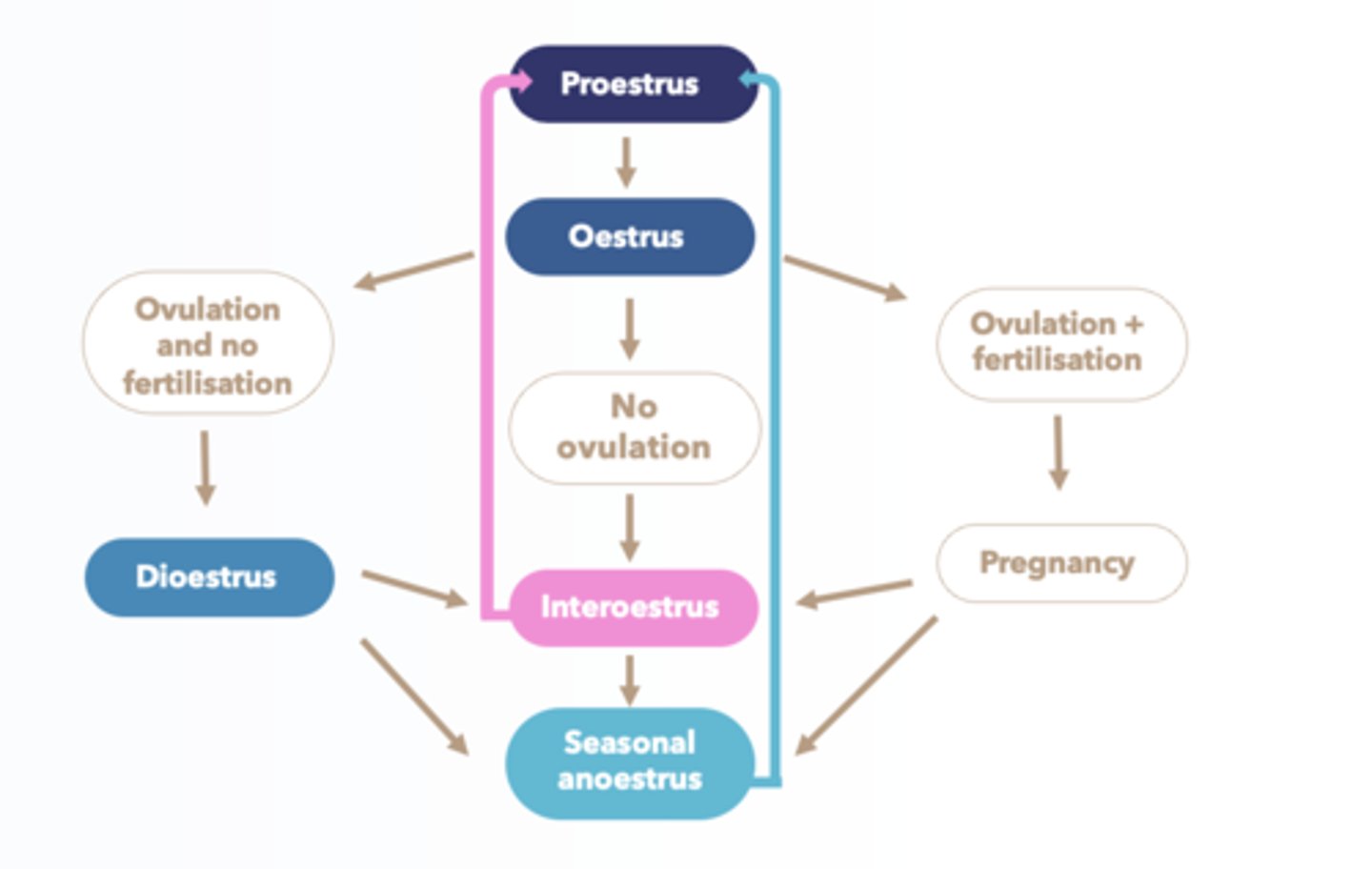
What is the typical pathway of oestrus cycling for outdoor cats?
Proestrus then oestrus then ovulation (+/- fertilisation) then dioestrus or pregnancy then return to interoestrus or seasonal anoestrus (dependant on time)
Ovariectomy vs ovariohysterectomy vs “ovary sparing” spay
Ovariectomy = just removal of ovaries (done laparoscopically)
Ovariohysterectomy = removal of ovaries + entire uterus
Ovary sparing = uterine body ties (only small portion removed)
Removal of hormones otherwise risk of pyometra & pseudopregnancy
What are the benefits of neutering female dogs?
Population control
Prevention of pyometra (progesterone-driven)
Reduced risk of mammary tumours (if spayed early on)
Diabetes mellitus management
Increased life expectancy
Prevent pseudopregnancy
Reduction of heat behaviour
What are the risks of neutering female dogs?
Surgery complications (1/1000) —> haemorrhage
Risk increased with obesity
Urethral sphincter incontinence
Ovarian remnant syndrome
Transitional cell carcinoma
Osteosarcoma
Cruciate dx
IVDD (intervertebral disc dx)
Why may obesity occur in neutered female dogs?
After spay, drop in basal metabolic rate (due to reduced oestrogen e.t.c.) and owner does not reduce feed (by approx 10%).
What drugs can we give for urethral sphincter incontinence?
Propalin or estriol.
What is ovarian remnant syndrome?
When functional ovarian tissue is left within the dog after the spay —> sometimes only small cells → grow into large clumps & effectively grow a new ovary (can't folliculate though).
When do we typically spay small breed dogs? What can change this?
First season around 6mo
Unless juvenile vaginitis / recessed vulva
When do we typically spay medium breed dogs? What can change this?
First season around 6mo
Unless at risk of cruciate disease (then wait till plate closure), vaginitis or recessed vulva
When do we typically spay large breed dogs? What can change this?
After at least 1 season
If at risk of cruciate disease/OSA then delay until growth plate closure
What are the benefits of neutering male dogs?
Poluation control
Reduced orchitis, testicular neoplasia, epipidmyitis
Reduced perineal hernias
Reduced perineal adenomas
Possible reduced aggression (unless nervous aggressive = poss makes worse)
Removal or cryptiorchid testicle = reduced risk of tumour development
What are the risks of neutering male dogs?
GA risk
Surgery risk
Scrotal haematoma = accum of blood in dead space of scrotum
Prostatic neoplasia
Transitional cell carcinoma
Obesity
Osteosarcoma
Worsened behaviour
What are the benefits of neutering in cats?
Reduced fighting (FIV risk)
Reduced roaming (RTA RISK)
Population control
Unwanted behaviour control
Removes pyometra risks
Reduces risk of mammary tumour