Bio 2 exam 3
 Call Kai
 Learn
Learn Practice Test
 Spaced Repetition
 Match
Match Flashcards
 Knowt Play
1/91

There's no tags or description
Looks like no tags are added yet.
Name | Mastery | Learn | Test | Matching | Spaced | Call with Kai |
|---|
No analytics yet
Send a link to your students to track their progress
92 Terms
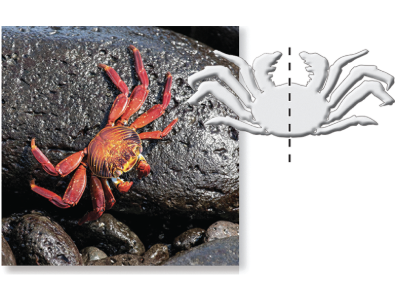
What symmetry is this?
Bilateral
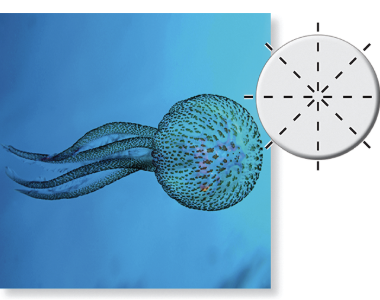
What symmetry is this?
radial
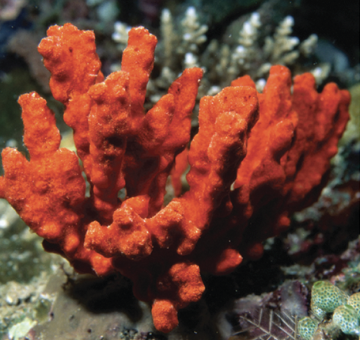
What symmetry is this?
porifera/asymmetric
Whats the definition of a biome?
major type of habitat characterized by distinctive plant and animal life
What are the abiotic factors that affect terrestrial and aquatic organisms:
light, wind, temperature, water availability, pH, and salinity
How can temperature affect organisms?
inability to regulate body temperature
How can low temperatures affect organsims?
can be lethal if cells rupture and plants with poisonous chemical defenses
How can high temperatures affect terrestrial organisms?
fire
How can high temperatures affect aquatic organisms?
coral bleaching
How can wind affect aquatic organisms?
intensify ocean waves
How can wind affect terrestrial organisms?
increase rate of heat loss leading to water loss in organisms
How does light affect organisms?
necessary for photosynthesis, photic zone
Whats the photic zone?
a narrow zone close to the surface of an aquatic environment, where light is sufficient to allow photosynthesis to occur
How does salinity affect aquatic organisms?
Fresh water fish cannot survive in salt water because they have a greater concentration of solutes and vice versa.
How does salinity affect terrestrial organisms?
salt in the soil affects plant growth, halophytes
What are halophytes?
a plant that can survive in higher salinity
How are aquatic organisms affected by pH?
Optimal pH for freshwater fish is between 6.0-9.0. Acidity increases amount of toxic metal like mercury
What is the normal pH for rain water?
5.6
What pH do plants grow best in?
6.5
How can pH affect terrestrial organisms?
Acid rain- precipitation with a pH less than 5.6 results from burning fossil fuel
Whats the definition of population?
same species same environment
What the definition of community?
different species interacting in the same environment
Whats the definition of population density?
the number of organisms of a given species in a given unit
What are the techniques to calculate population density?
visually counting, quadrat, line transect, mark-recapture, collar with tracking devices, and drones
Population density: visually counting
calculate density of small aera and then used to estimate large area, use amount of ground covered to estimate
Population density: Quadrat
sampling device with a square frame that often enclosed an area of 0.25m^2, not effective for larger plants
Population density: Line transect
number of plants located along the string are counted
Population density: mark-recapture
capture animals then release them, mix freely with unmarked, animals learn to avoid traps
Whats the equation equation for the mark-recapture technique?
Total population size = (number of marked individuals in first catch x total number of second catch)/number of marked recaptures in second catch
What are the patterns of spacing?
clumped, uniform, random
What is clump pattern spacing?
most common, individuals gather in small groups
What is uniform pattern spacing?
individuals maintain a certain minimum distance between themselves to produce an evenly spaced distribution
What is random pattern spacing?
rarest pattern, location of an individual lacks a pattern
What does it mean when r=0?
exponential growth is reached
What does exponential growth look like on a graph?
J-shaped
When does exponential growth occur?
when resources are unlimited
What happens to the line on the graph when the r value becomes larger?
the stepper the line
When does logistic growth occur?
when resource are limited
What is the equation for logistic growth?
(r x N) ((k-n)/k)
What does each letter mean in the logistic growth equation?
k-carrying capacity, r-per capita growth, N-population size
What does logistical growth look like on a graph?
S-shaped
What happens to populations when r>0?
increases
What happens to populations when r<0?
decreases
Whats the definition of dispersion?
the extend to which individuals in a population are clustered together or spread out
Whats the definition of carrying capacity?
maximum amount of organisms that can be supported by resources present
What is density independent?
a morality factor whos influence is not affected by changes in the population size or density
What is density dependent?
morality factor whos influence decreases as population size increases
What is resource partitioning?
similar species coexist by using resources in different places or at different times
What are the types of species interactions?
predation, competition, parasitism, mutualism, commensalism, and amensalism
Species Interaction: predation
an interaction in which the action of a predator results in the death of its prey
Species Interaction: Competition
interaction that affects two or more species negatively, compete over food or resources
Species Interaction: Parasitism
symbiotic association in which one organisms feeds off another but does not normally kill it
Species Interaction: Mutualism
both species benefit
Species Interaction: Commensalism
one species benefits and leave the other unaffected
Species Interaction: Amensalism
one sided competition between species, detrimental to one species but not the other
What are pathogens?
agents that cause disease symptoms in humans and other species
How are pathogens spread?
number of susceptible hosts (Ns), transmission rate (B), and the period of time a host remains infected (L)
What is the equation for calculating the spread of pathogens?
R0=(Ns)(B)(L)
what does R0 mean when calculating the spread of pathogens?
basic reproduction number, the average number of new cases of a disease that arise from each infected host
What is herd immunity?
A pathogen will die out within a population when a certain percentage of individuals become immune to the pathogen
Whats bottom up?
plants are controlling how many of each, If you have a lot of plants you’re going to have a lot of herbivores, then carnivores
Whats top down?
controls the hypothesis saying predators are controlling how much prey are present, the more predators the less prey
Whats the definition of an ecosystem?
system formed by interactions between abiotic and biotic community of organisms in an area and the abiotic environment affecting the community
What are primary consumers?
herbivores
What are secondary consumers?
eat primary consumers, carnivores
What are tertiary consumers?
eat secondary consumers, secondary carnivores
What is the facilitation mechanism?
Early species help others grow, until stronger species take over
How is facilitation mechanism determined?
climate, soil conditions, frequency disturbance
What is the inhibition mechanism?
where early colonists exclude subsequent colonists
What is the tolerance mechanism?
Any species can begin succession, and early species don’t affect later species
Example of food chain
Plant (primary producer autotroph) → Caterpillary (primary consumer herbivore) → Lizard (secondary consumer carnivore) → snake (tertiary consumer secondary carnivore)
Whats a food web?
interconnected food chains, multiple links among different species
What species richness?
the number of different species in a community
Whats the species-time hypothesis?
Temperate regions have fewer species than tropical ones because they’re younger
Whats the species-area hypothesis?
Bigger areas have more species because they have more space and habitats
Whats the species-productivity hypothesis?
proposes that greater production by plants result in greater overall species richness
how is productivity influenced?
factors like rainfall and temperature
Definition of asymmetric
no plane of symmetry like sponges
Definition of radially symmetric
divided equally by any longitudinal plane passing through the central axis; jelly fish
Definition of bilaterally symmetric
divided along a vertical plane at the midline to create two halves
What are the body cavities?
coelom, coelomate, pseudocoelom, and acoelomates
Whats the coelom?
fluid filled in an animals
Whats the function of the coelom?
cushions internal organs and prevents injury
Whats the coelomate?
an animal with true coelom, completely lined with the mesoderm
Whats the Pseudocoelom?
not completely lined by mesoderm
Whats the Acoelomates?
an animal that lacks fluid filled body cavity
Whats the definition of germ layer?
embryonic cell layer such as ectoderm, mesoderm, or endoderm. No sponges
Whats the endoderm?
inner layer of cells that line the primitive digestive tract
Whats the ectoderm?
outer layer; differentiates into the epidermis and the nervous system
Whats the mesoderm?
middle layer of bilageria and forms muscles and most organs
What does segmentation allow?
specialization of body regions
What are the characteristics of animals?
heterotrophs, capacity to move, ability to reproduce sexually, lack cell wall, and multicellularity.