3. CNIDARIA Phylum
 Call Kai
 Learn
Learn Practice Test
 Spaced Repetition
 Match
Match Flashcards
 Knowt Play
1/24

Earn XP
Name | Mastery | Learn | Test | Matching | Spaced | Call with Kai |
|---|
No analytics yet
Send a link to your students to track their progress
25 Terms
Cnidaria Phylum (Hydras, Medusae, Anemones, Corals)
Diploblastic
Ectoderm —> Epiderm
Endoderm —> Gastroderm
Characteristic cell types for stinging
Cnidocyte (cell type) with Nematocytes (stinging organelles)
DIFFERENTIATED Cell Types
Nerve cells (nerve net)
Contractile epithelial cells
Enzyme-secreting cells
Nutrient absorbing cells w/ intercellular connections
LACK of organ formation
Exceptions: Statocysts and rhopalia
Radial or biradial symmetry
Body Plans: Polyp vs. Medusa
Cnidaria exist in two primary forms during their lifetime
Polyp (Sessile)
Medusa (Motile)
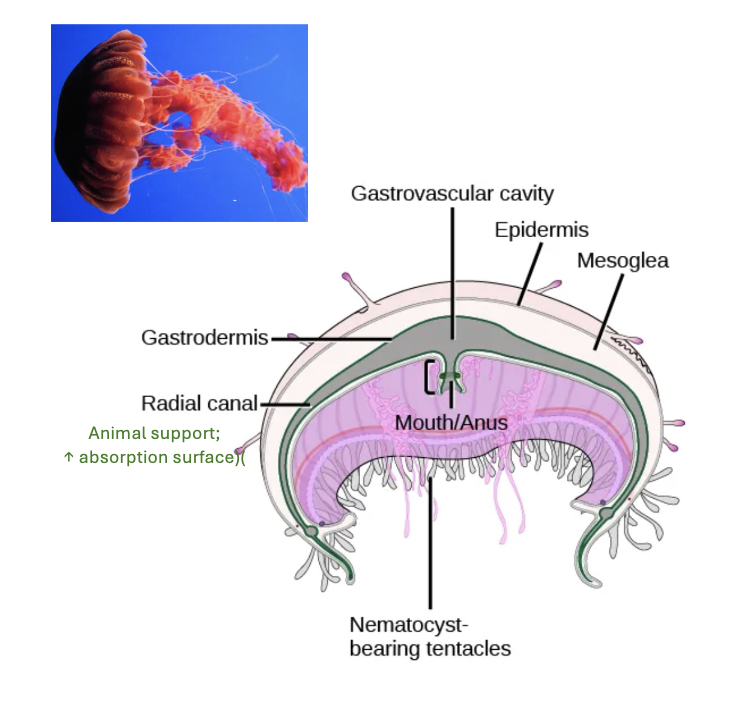
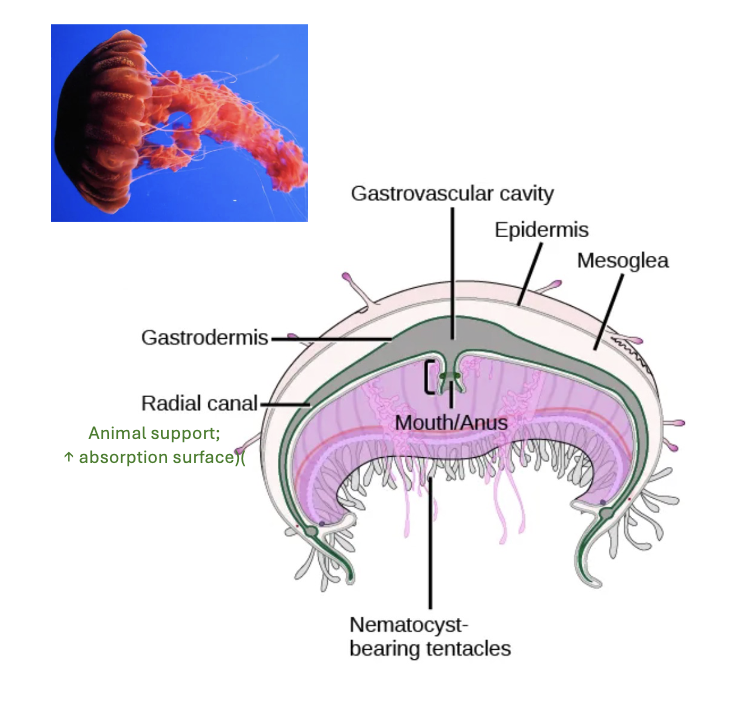
Three Layers and One Cavity:
Epidermis
Gastrodermis
Mesoglea
Gastrovascular Cavity
Polyp (Sessile)
Mouth/anus facing UPWARD
Attached to substrate
Cylindrical body
Medusa (Motile)
Mouth/anus facing DOWNWARD
Free-swimming “jellyfish” form
Umbrella-shaped (bell)
3 Layers & 1 Cavity of Polyp and Medusa
Three Layers and One Cavity:
Epidermis
Gastrodermis
Mesoglea
Gastrovascular Cavity
Epidermis
OUTER layer derived from ectoderm
Gastrodermis
INNER lining of gut derived from endoderm
Mesoglea
“Jelly” middle
Non-cellular gelatinous layer between the two tissues layers
Gastrovascular Cavity
Central digestive compartment
SINGLE opening
Functions as BOTH MOUTH AND ANUS
“Incomplete” digestive system
Life Cycle of Obelia (Hydrozoa)
Obelia is dimorphic, meaning it uses both body plans to complete its life cycle.
The Colony: A branched network of polyps. They are interconnected and share a gastrovascular cavity.
Polyp Specialization:
Gastrozooid: Feeding polyp with tentacles.
Gonozooid: Reproductive polyp. It lacks tentacles and produces medusae through asexual budding.
Medusa Phase: The tiny medusae swim away and represent the sexual phase. They produce gametes (eggs and sperm) via meiosis.
Fertilization: Sperm and egg meet in the water to form a zygote (2n).
Planula Larva: The zygote develops into a solid, ciliated larva that swims until it finds a place to settle.
New Colony: The larva settles on the ocean floor and grows into a new polyp colony.
Cnidocytes; Stinging
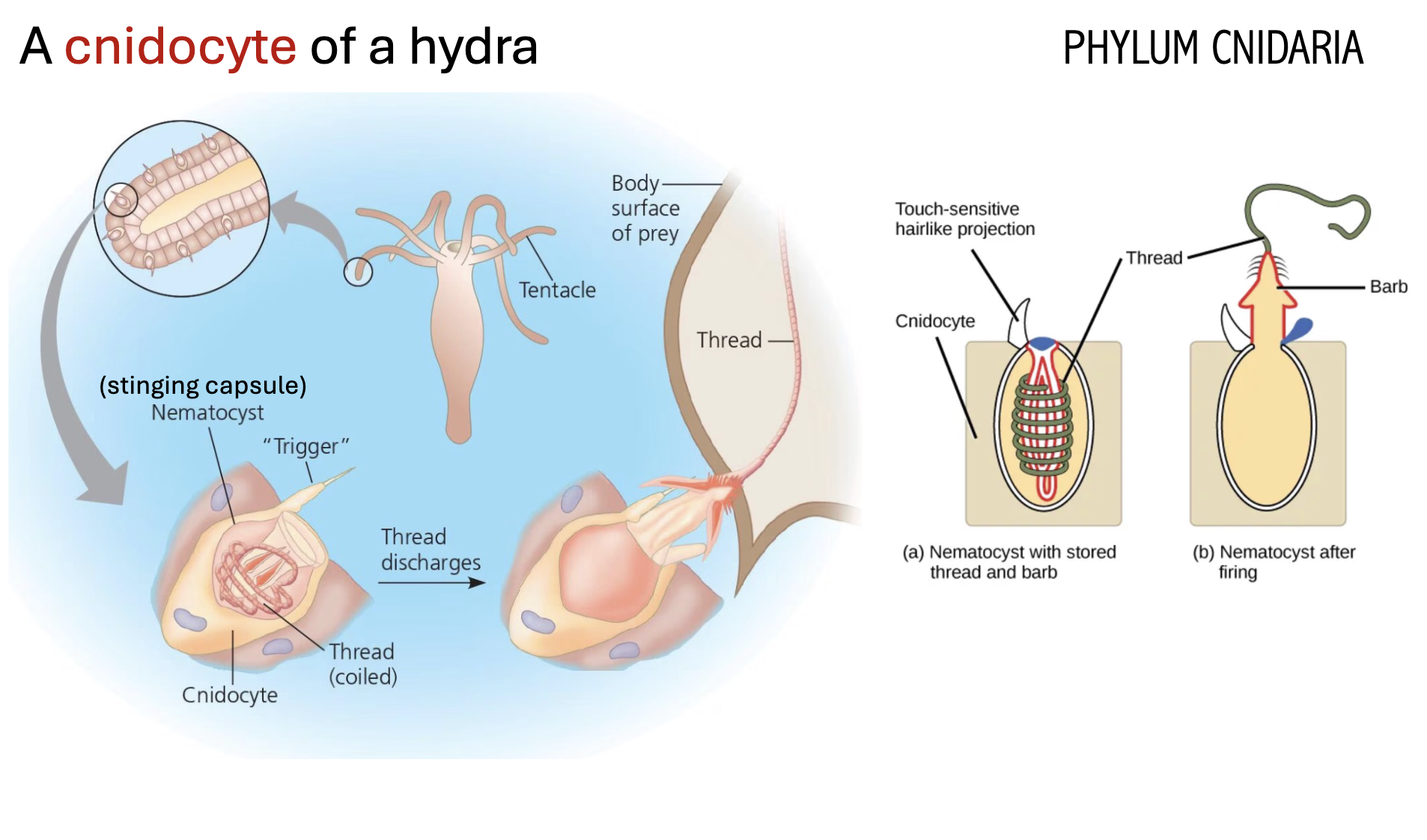
*Cnidarians are named after their CNIDOCYTE
Specialized cell for DEFENSE and CAPTURING PREY
Cnidocyte
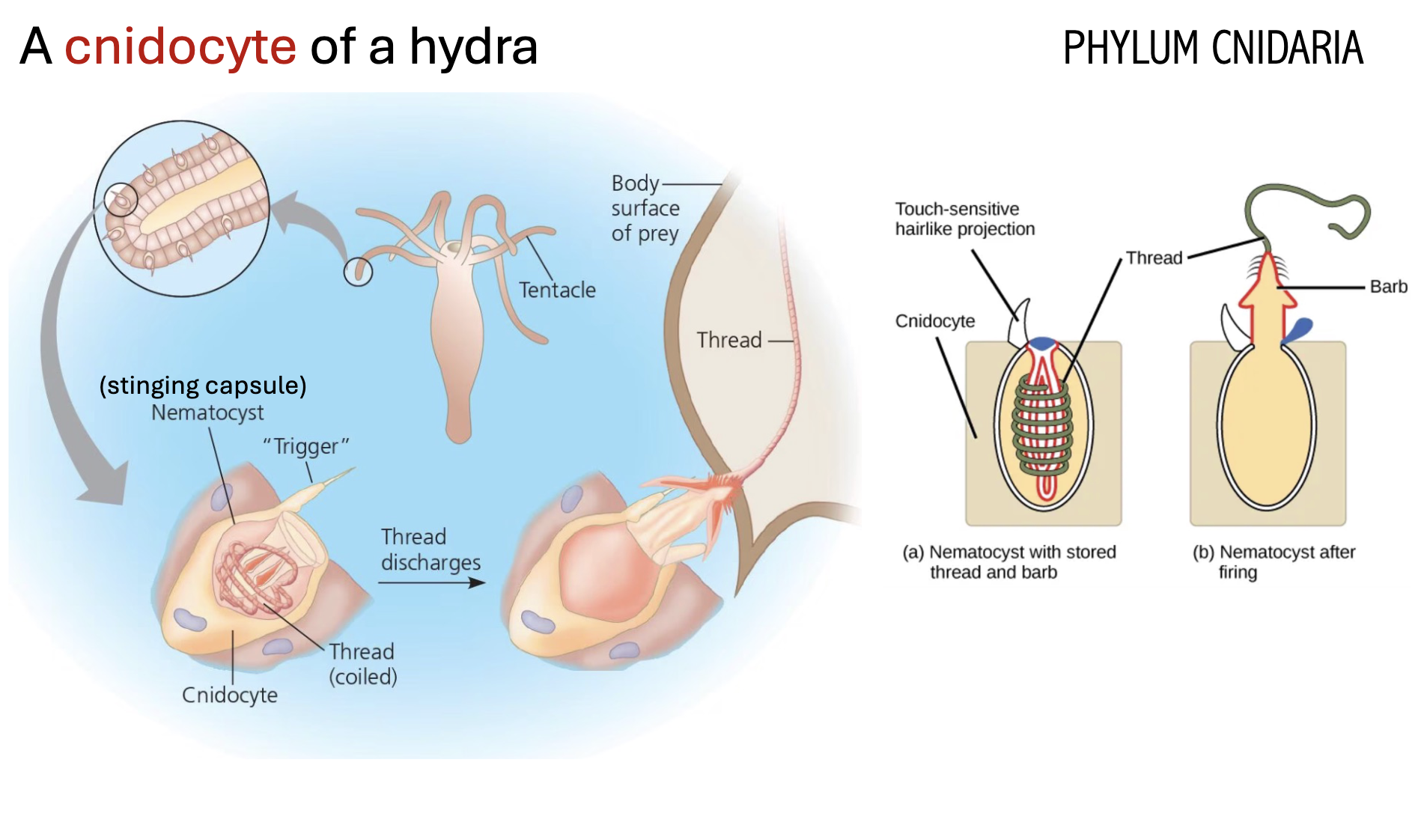
Entire cell used for defense and capturing prey
CANNOT BE REUSED
Animal must grow a NEW CNIDOCYTE
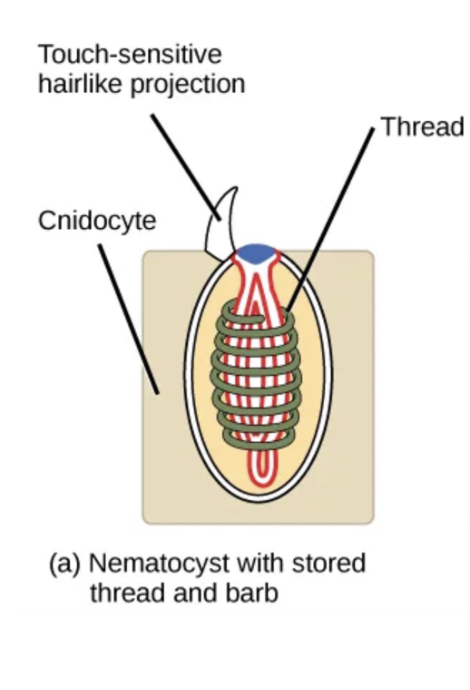
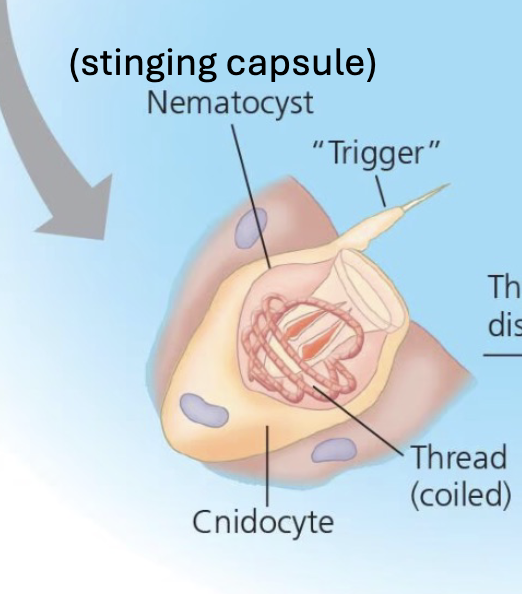
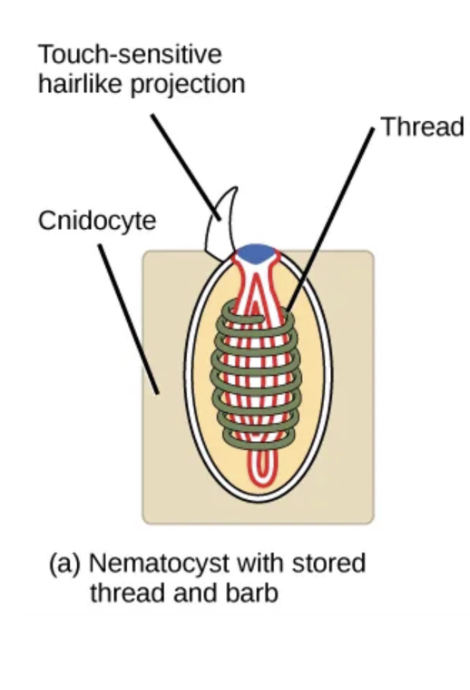
Nematocyst
Capsule INSIDE the cell that HOLDS a COILED, BARBED THREAD
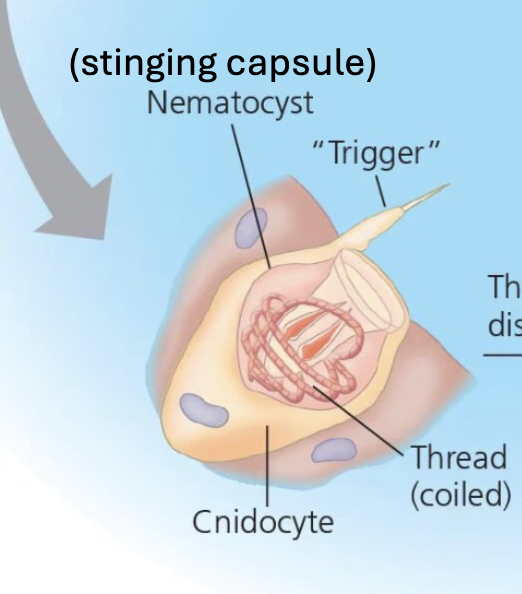
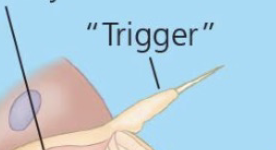
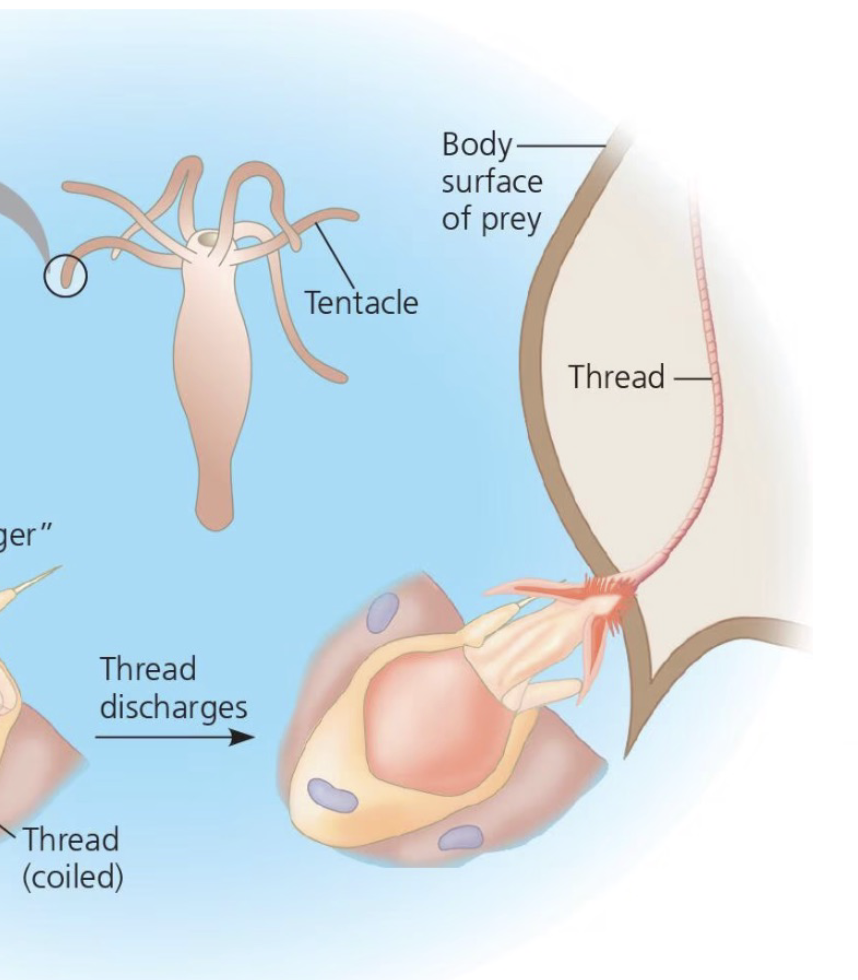
Cnidocil “Trigger”
Hair-like projection
When touched (chemically or physically), it causes the nematocyst [capsule] to fire
![<p>Hair-like projection</p><p>When touched (chemically or physically), it causes the nematocyst [capsule] to fire</p>](https://assets.knowt.com/user-attachments/1288a371-666c-4fbc-82ef-7a7515c3c3b8.png)
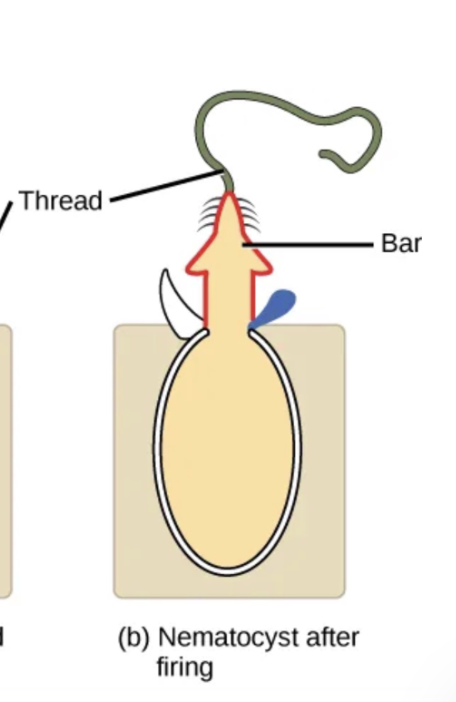
Discharge
Thread turns inside out and shoots out
Barbs puncture prey and thread delivers toxins to paralyze
Classes of Cnidaria Phylum (2)
Medusozoa (Medusa, motile)
Anthozoa (Polyp only, sessile)
Medusozoa (2 Monophyletic Clades)
Polyps and medusoids, motile
2 Monophyletic Clades:
Hydrozoa
Sessile forms
Medusoid forms
Swimming colonial forms
Portugese man o’ war
Scyphozoa and Cubozoa
Anthozoa
Only sessile polyp forms
Corals, sea fans, sea whips, sea anemones
Class Anthozoa (Sea Anemones)
Only sessile polyp forms
Cylindrical
Bilateral
Feed on small fish and shrimp
Mutualistic relationship with hermit crab
Class Anthozoa (Corals)
Only sessile polyp forms
Some form exoskeleton with CaCO3
Smaller colonial polyps
Feed on plankton
Class Scyphozoa (Medusozoa)
Polyp and medusoid forms
Marine jellies, “cup animals,” bell shape
Small
MEDUSA FORM IS PROMINENT
Free-swimmers
Solitary carnivores
Present nerve cells
Nerve net around bell
Some show rhopalia (cluster of sensory organs)
Ring of muscles lines dome of body (contractile force)
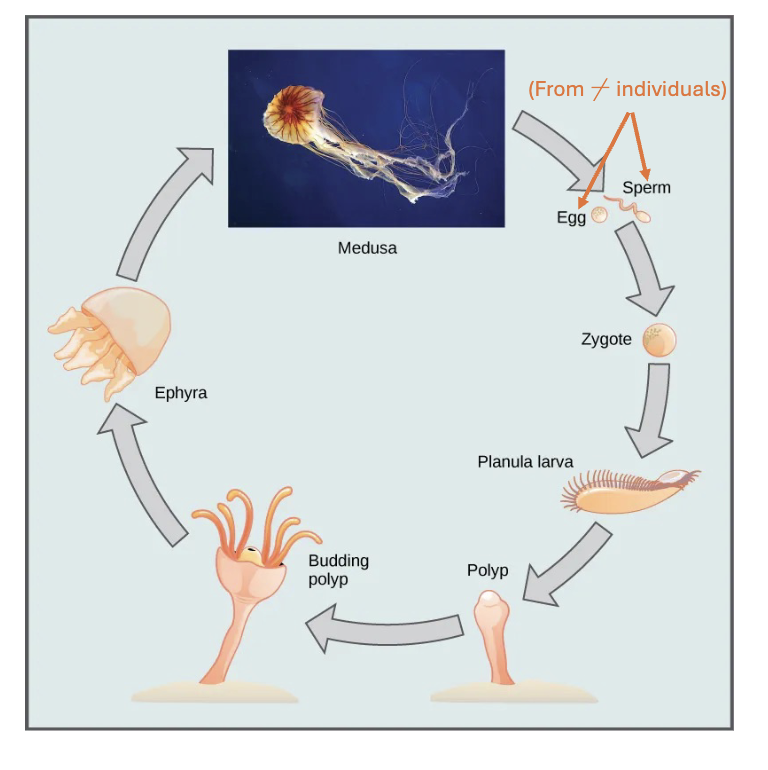
Life Cycle of Scyphozoa (Medusozoa)
Polyp and medusoid forms
Marine jellies, “cup animals,” bell shape
Dioecious
Both male and female reproductive organs
Gonads form from gastrodermis and are expelled through mouth
Life Cycle:
Egg + Sperm
Zygote
Planula larva
Polyp
Budding Polyp
Ephyra
Medusa
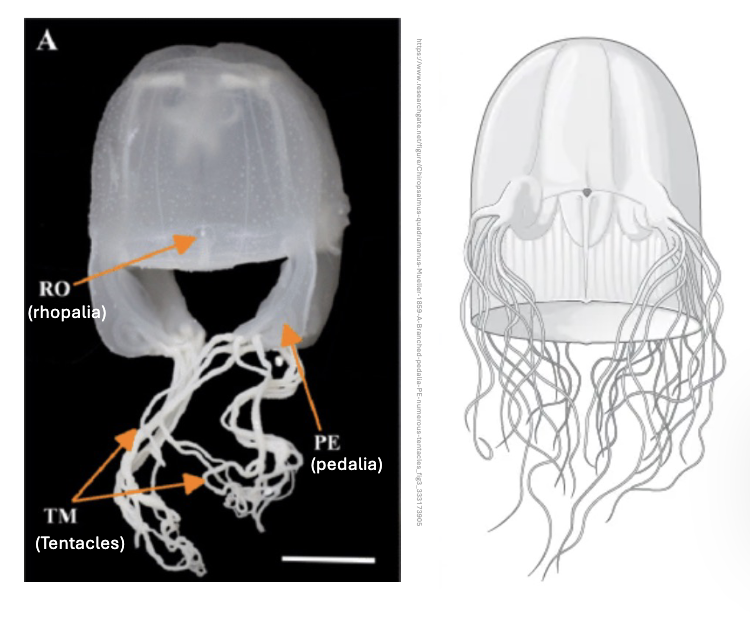
Class Cubozoa (Medusozoa)
Polyp and medusoid forms
“Box jellyfish”
Morphologically similar to Scyphozoa BUT TENTACLE ARRANGEMENT IS DIFFERENT
Pedalia (PE)
Muscular pads at corners of bell canopy
Rhopalia (RO)
Cluster of sensory organs
Nemocysts spirally arranged among tentacles
Dioecious
Planula larvae may develop within female
FORM REAL ORGANS
Complex eyes (navigation/hunting)
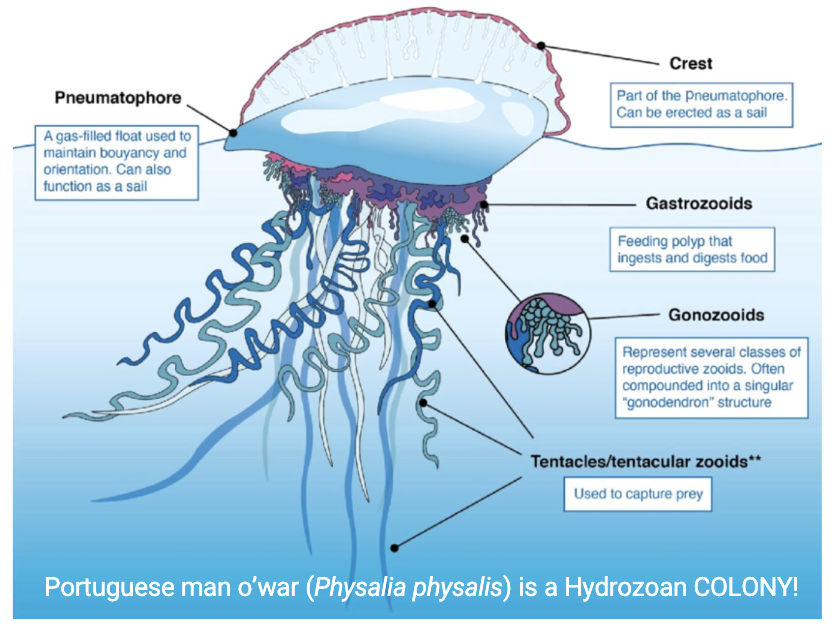
Class Hydrozoa (Medusozoa)
Polyp and medusoid forms
Portuguese man o’ war
SIPHONOPHORES
Free-floating COLONIAL (both forms)
See picture
Marine (most), some freshwater
Polypoid and medusoid forms
Hydra sp. only polypoid
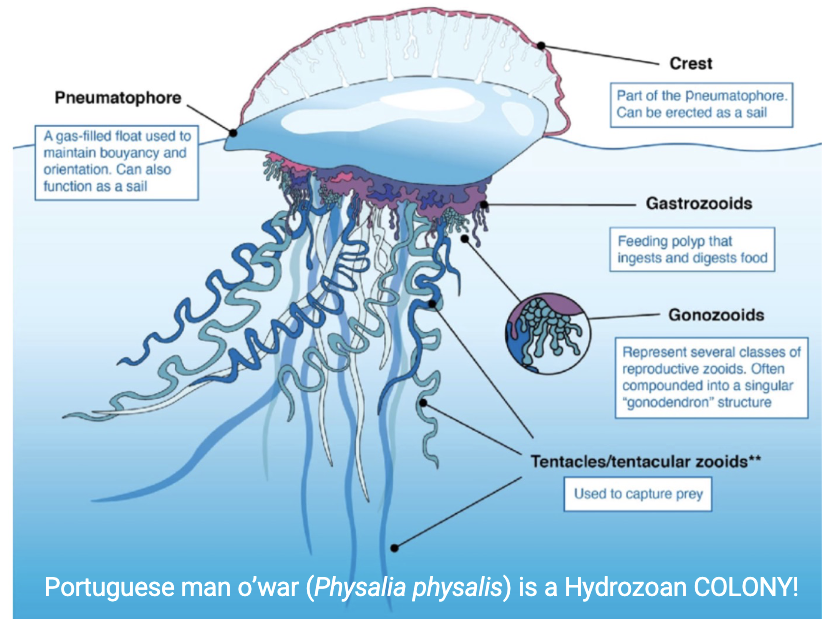
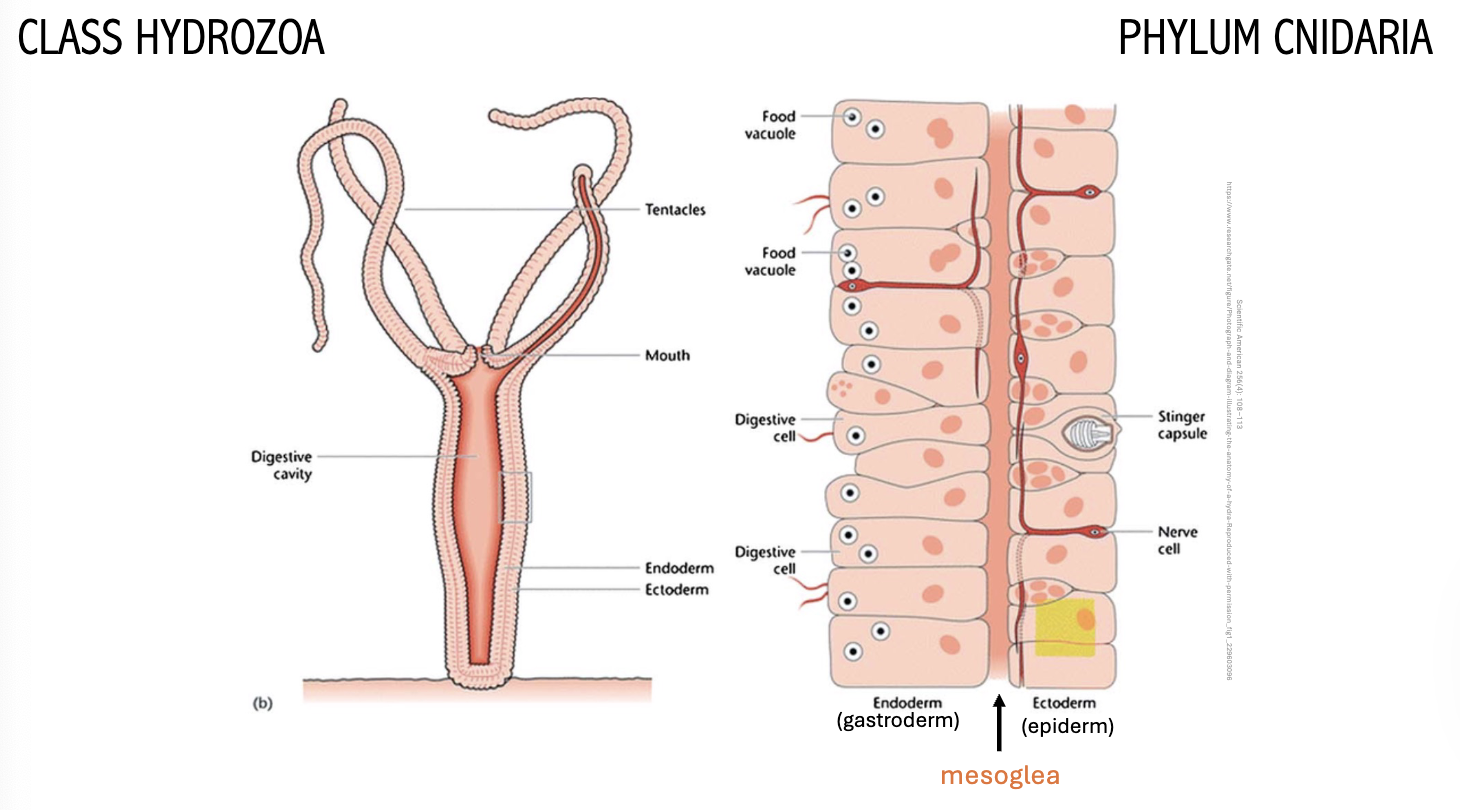
Class Hydrozoa (Medusoid)
Polyp and medusoid forms
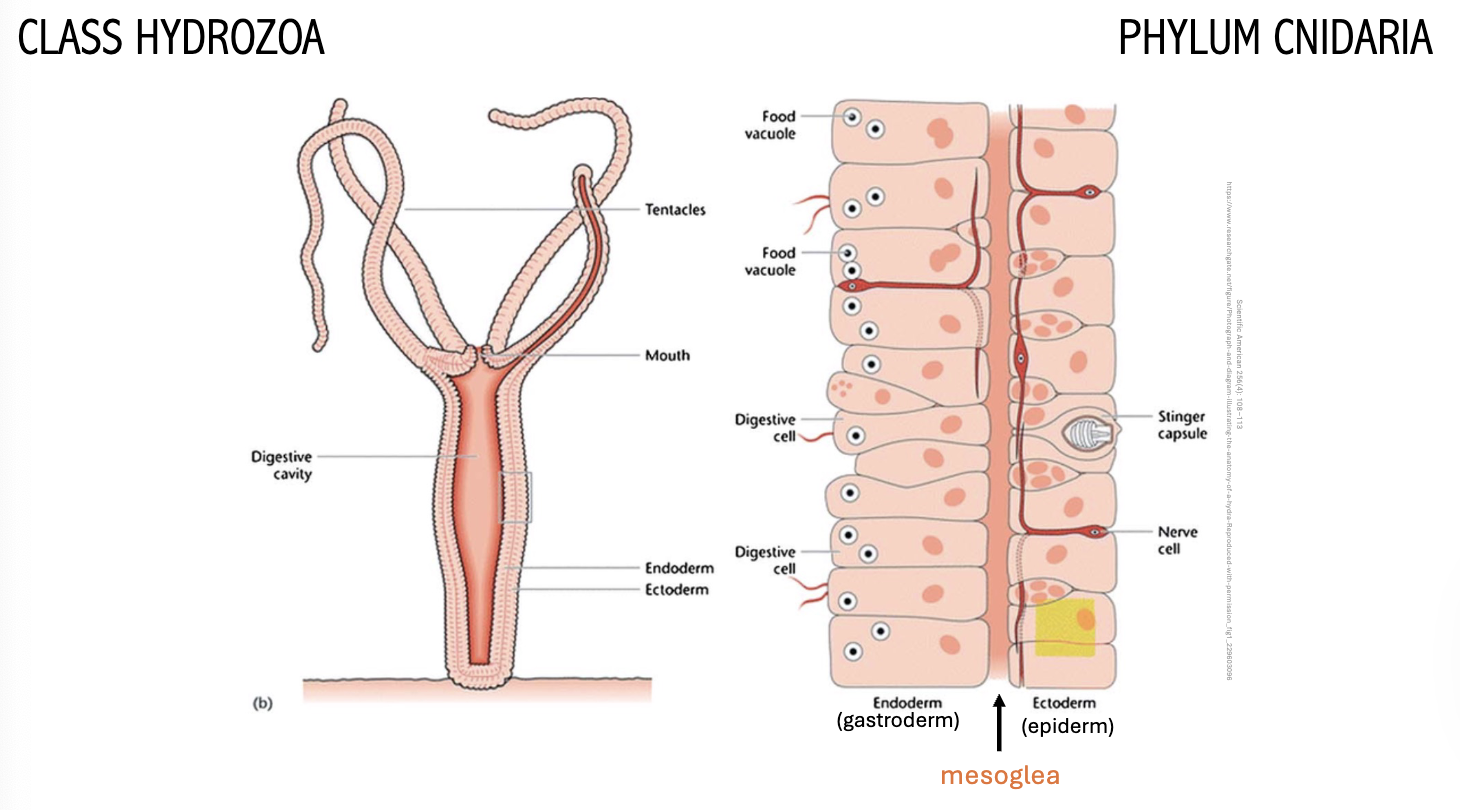
Hydra
Anatomy
Epidermis (Outer)
Nerve cells, part of nerve net
Stinger capsules (cnidocytes)
Don’t have a brain
Gastrodermis (Inner)
Digestive cells
With flagella circulates food
Food vacuoles
Intracellular digestion
Nerve Net
Red nerve cells on eppidermis
React to stimuli from ANY direction
Digestion Flow
Gastrovascular Cavity (Extracellular digestion)
Enzymes break food down
Digestive Cells (Intracellular digestion)
Occurs in gastrodermis