ANS 315 quiz 4 general slide info
 Call Kai
 Learn
Learn Practice Test
 Spaced Repetition
 Match
Match Flashcards
 Knowt Play
1/154

Earn XP
Description and Tags
Nervous system 2, sensory receptors
Name | Mastery | Learn | Test | Matching | Spaced | Call with Kai |
|---|
No analytics yet
Send a link to your students to track their progress
155 Terms
Special Senses rely on?
receptors
in head region
What are the general senses
pain
temperature
pressure
touch
What are the special senses?
Sight
hearing
taste
smell
orientation in space
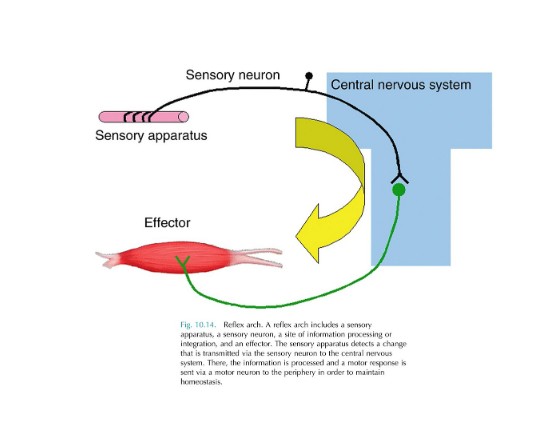
What do sensation result from?
Stimuli that initiate afferent (toward CNS) impulses
Where is sensory information processed/interpreted at? What does it turn into?
cerebral cortex, a nerve impulse
True or false. Sensory experiences involve receptors.
true
What are the simplest receptor organs.
Bare nerve endings
What are the three different types of sensory receptors?
Exteroceptors
interoceptors
proprioceptors
Function of exteroceptors?
Detect stimuli near external body surface
function of interoceptors?
Detect stimuli from internal environment
Function of proprioceptors?
Detects position and movement of the body
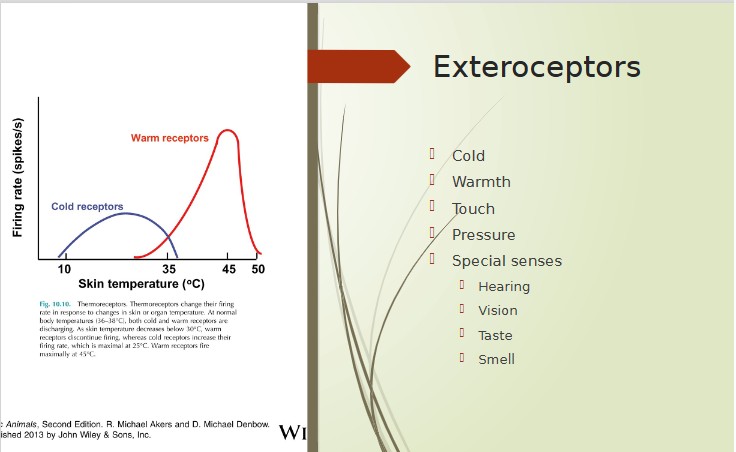
What does exteroceptors detect?
cold, warmth, touch, pressure and special senses
What do receptors adapt to during touch?
sustained stimulation. Receptors cease firing after initial activity (refractory). When stimulus is removed, receptor again responds by firing to signal beginning and ending of stimulus.
Interoceptors detect visceral organs and their function like?
pH, distension, spasm, flow
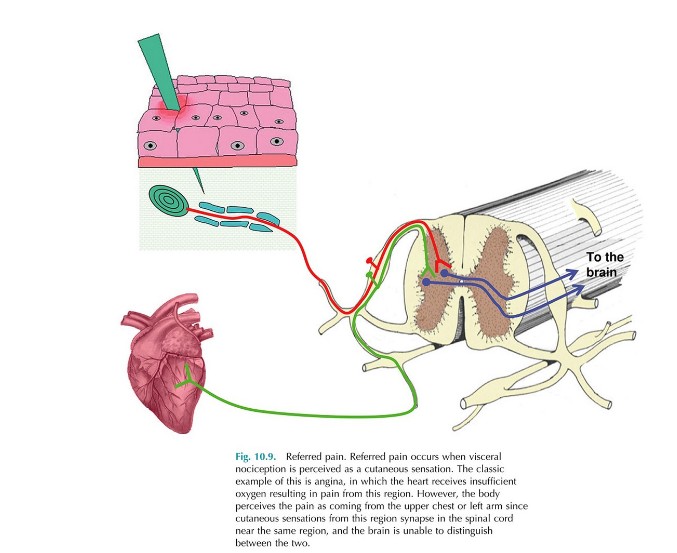
Describe referred pain
discomfort felt in a body part distinct from the actual source of injury, caused by nerves sharing pathways that confuse the brain.
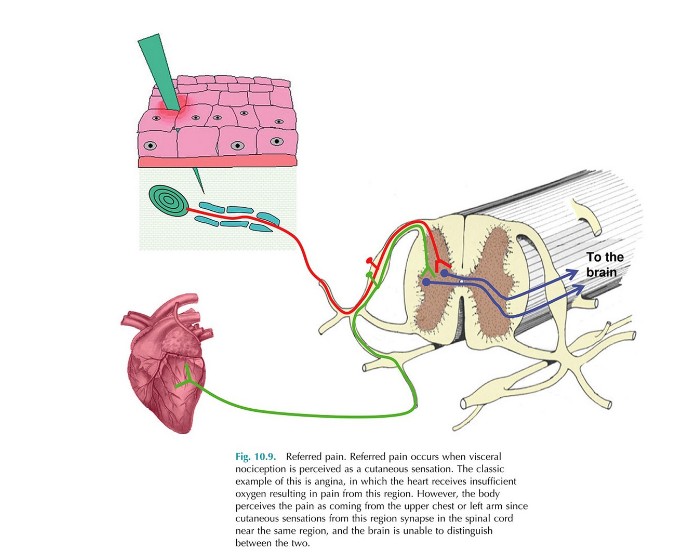
Referred pain occurs because most ….. sensations are not well …..
visceral, localized.
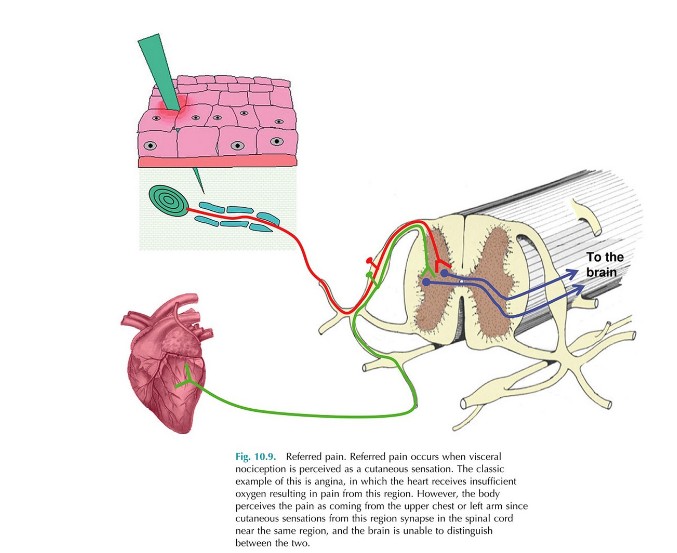
where can referred pain originate
location of cutaneous and visceral pain afferent fibers on the same neuron in the sensory pathway
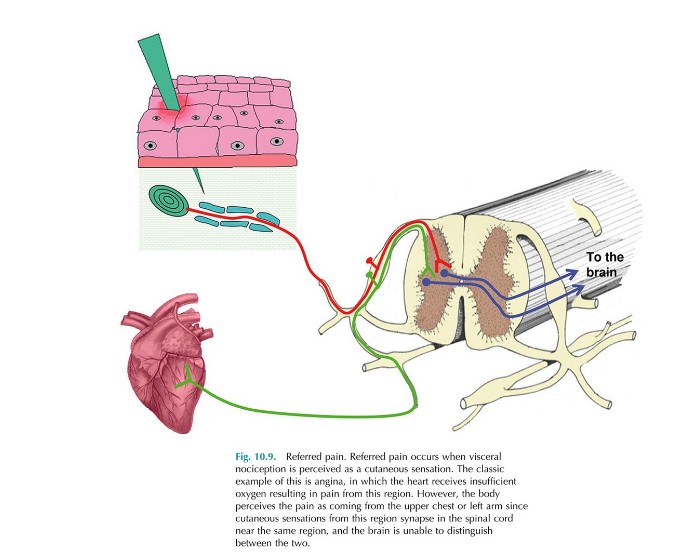
What are two examples of referred pain
traumatic pericarditis-hardware producing sensitivity in sternum
angina pectoris-heart attack in humans
Where are proprioceptors located
joints, muscles, tendons and skin.
What provides information on orientation in space, movement and pressure.
proprioceptors
Describe the fibers of proprioceptors
fibers are heavily myelinated with few synapses for rapid transmission
True or false The body uses reflexes to communicate with its
environment and maintain homeostasis
True
Sensory activation occurs when
a stimulus activates a sensory receptor, sending a neural signal
Body responds to sensations of ……,
…… changes, pressure and touch to
maintain …..
pain, temperature, homeostasis
Why does Response depends on the presence of receptors
May be free nerve endings, some receptors adapt to stimuli.
Which would have more receptors, the tip of a paw or the middle of the hindquarters
paw
Visceral sensations can be difficult to localize
because of skin sensations synapsing at nearby
locations on the
spinal cord
Why does proprioception allow animals to maintain orientation
heavily myelinated fibers and few synapses
What is olfaction
sense of smell
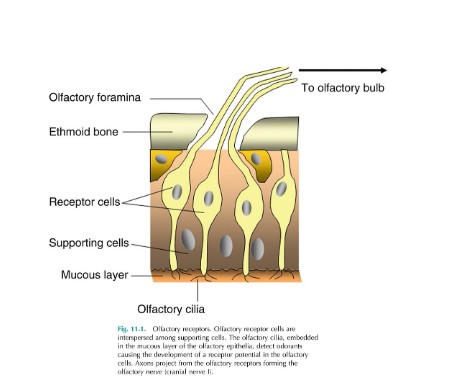
Where is the olfactory epithelium located
in roof of nasal cavity
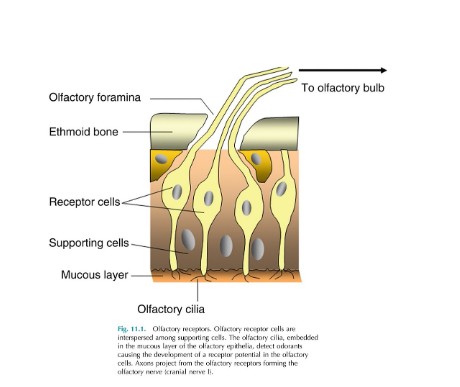
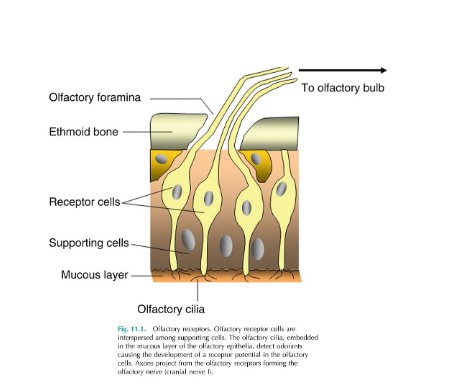
Describe the receptors of the olfactory epithelium
bipolar neurons with dendrites and axons
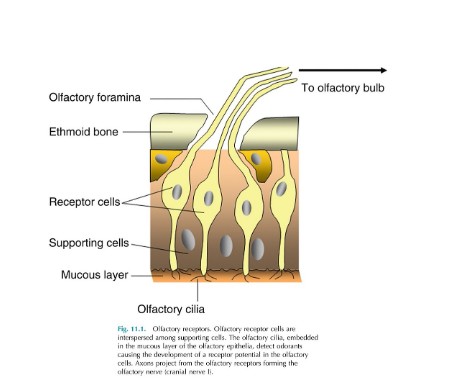
Role of cilia in olfaction
detect odors causing receptor potential in receptor cells
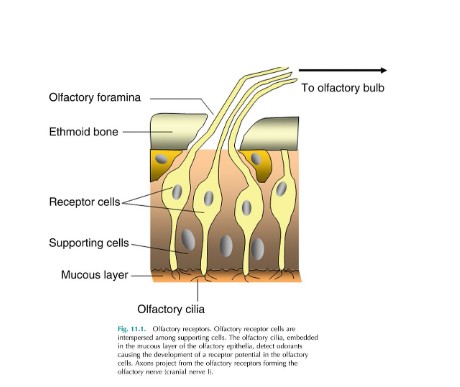
What are supporting cells in olfaction
columnar epithelium
what detects volatile chemicals in solution
chemical sense
when are basal stem cells between supporting cells replaced
1x month
Describe the physiology of olfaction
odor-causing chemicals dissolve in mucus membrane. Bind to protein receptors on the cilia to activate second messengers.
Secondary messengers of olfaction
G proteins, activation of adenylate cyclase, production of cAMP, Influx of Na+ to cause depolarization and production of potential.
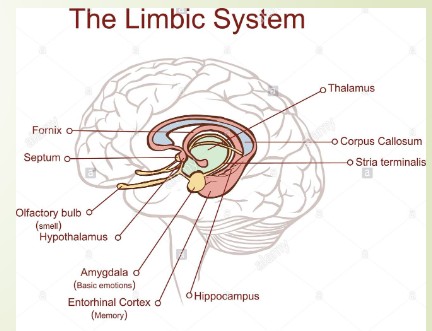
How does the olfactory communicate with brain
olfactory neurons project to hypothalamus, limbic areas.
what are olfactory nerves
unmyelinated axons (cranial nerve 1)
Describe function of facial nerve (cranial nerve VII)
innervates olfactory glands, can result in stimulation of lacrimal glands and nasal mucous glands.
What is gustation
sense of taste
What is the tongue composed of and what is its function
bundles of muscle fibers, mixing and moving food for swallowing.
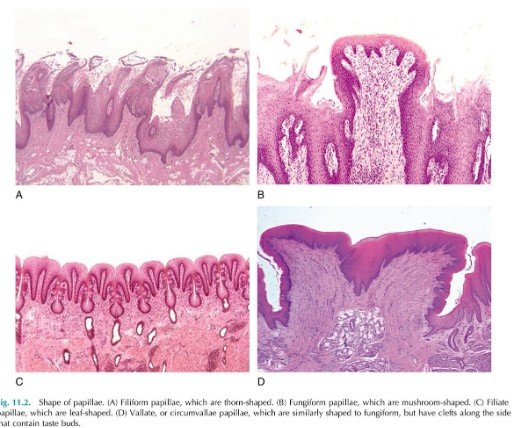
What are the 4 shapes of papillae (a-d)
a-fililform: mechanical
b-fungiform: mechanical, gustatory
c-foliate: gustatory
d-vallate: gustatory
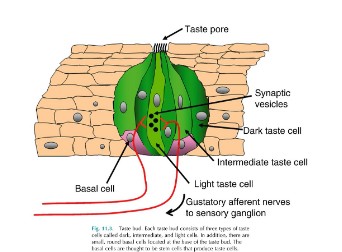
What determines taste and what do taste buds allow
papilla: up to hundreds on taste buds. allow animals to differentiate between nutritious and toxic feeds.
describe the stimuli to taste receptors
Sweet taste: binding of sweet tastant to receptor. Excitation of sensory neurons by neurotransmitters.
Are there a high number or low number of receptors in the eye
high
what is a major sense organ with strong stimulation
vision
what is dedicated to vision
a large portion of cerebral cortex
True or false. vision varies among species in perfect of body weight composed by eyes
true, about 50% of head in birds
describe role of eyelids
protect eye and provide lubrication
domestic species have
3rd eyelid
role of eyelashes, eyebrows
protection
What are lacrimal glands
produce lacrimal fluid of water, salts, mucus, antibodies and lysozyme. (cold, wet noses)
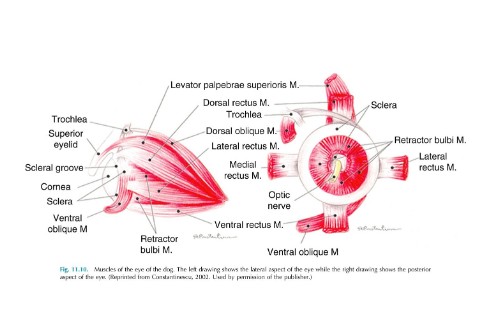
Describe the muscles of the eye
six striated muscles outside the eyeball. Lateral, medial rectus, superior, inferior rectus, inferior and superior oblique
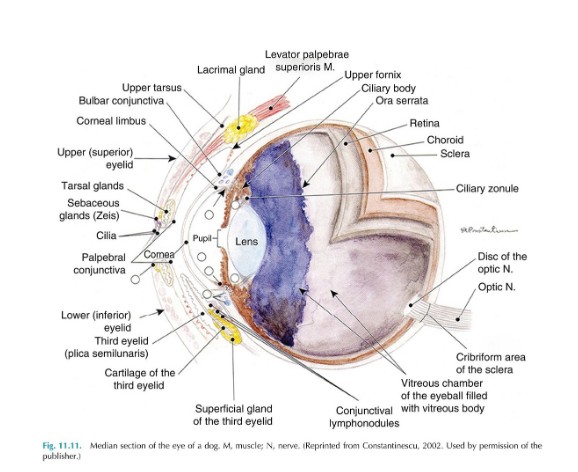
What are the three layers of the eyeball
fibrous tunic
vascular tunic
retina
Which layer is the outside layer of the eyeball
fibrous
What is the cornea
transparent layer, curved. in the fibrous tunic.
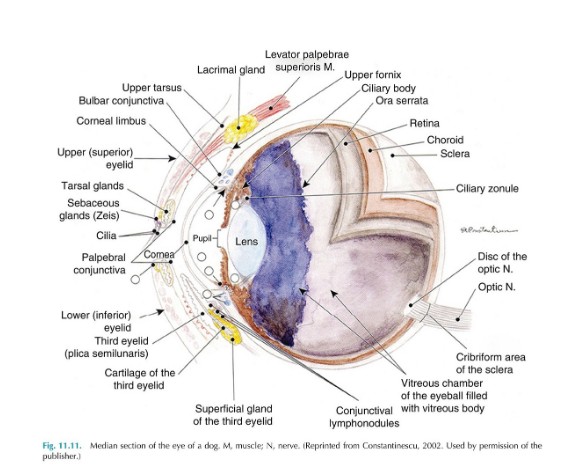
What makes up the cornea ( 3 layers)
Stratified squamous epithelium in outer layer. collagen fibers, fibroblast in the middle layer. Simple squamous epithelium in the inner layer.
What is sclera and what is its role
dense connective tissue to provide rigidity
which layer is the middle layer of the eyeball
vascular tunic
what is a choroid. what layer is it a part of
vascularized, dark brown, lines inside of much of sclera, absorbs light to minimize scatter. vascular tunic
Describe tapetum lucidum in domestic animals
added layer of choroid, reflects light back towards the retina and causes animals eyes to glow
Describe the iris and what layer it is in
colored portion at the front of eyeball, with hole in the middle, aka the pupil. Vascular tunic
Describe pigment in the iris
many pigmented cells=brown
few= blue
describe the difference in a cat iris
cats have elliptical pupil, rather than round.
Describe location of the iris
lies between the cornea and lens, attached to ciliary processes of circular and radial smooth muscle that regulate the amount of light entering the eye
What is the inner layer of the eyeball
retina
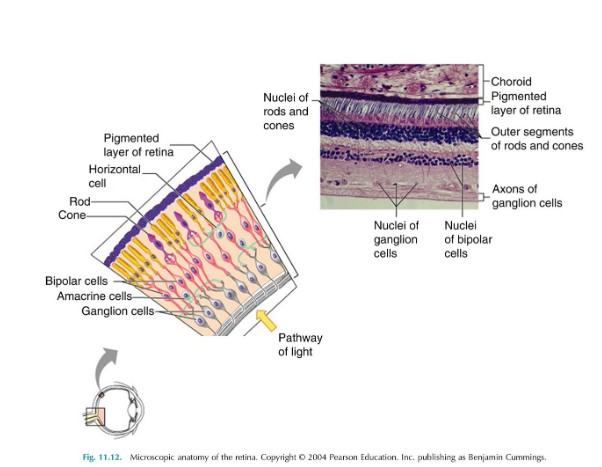
What are the two layers of the retina
outer pigmented layer and inner neural layer
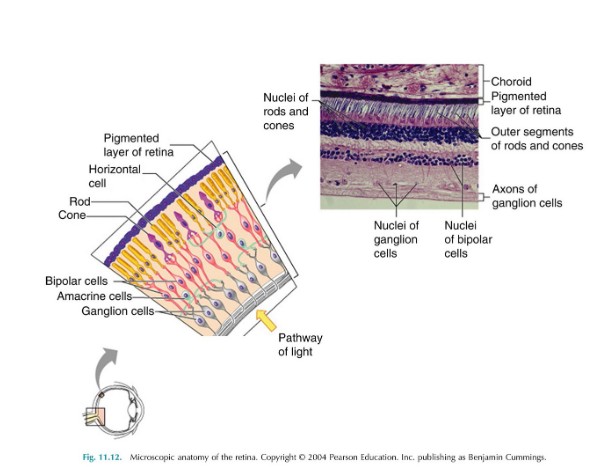
What are the three layers of the neural layer
photoreceptor layer
bipolar cell layer
ganglion cell layer
Describe the flow of retinas neural layers
light stimulates photoreceptors, signals to bipolar cells, ganglion cells and then optic nerve
Describe photoreceptors
blind spot
two types: rods work in dim light, cones have higher light threshold.
rods outnumber cones 20:1 except in birds
Describe the lens
biconvex, transparent, avascular.
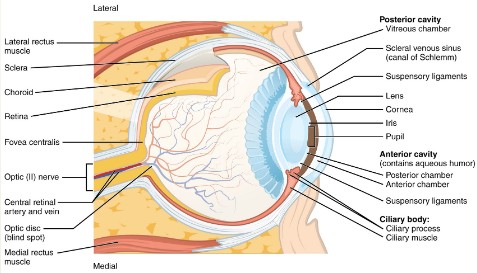
what changes shape to focus light to retina
lens
What is the lens held in place by
suspensory ligament attached to choroid
True or false. The lens contains epithelial cells on front surface and proteinaceous lens fibers
true
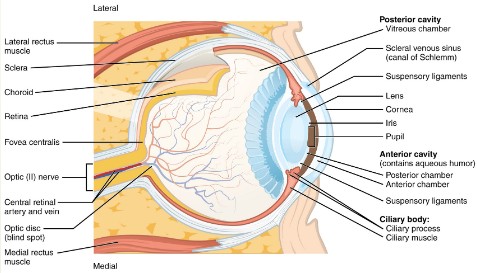
What are the two chambers of the eye
Anterior portion: between cornea and iris-aqueous humor
posterior portion: contains vitreous humor, may develop floaters
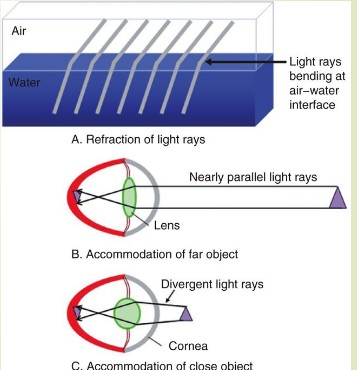
What is refraction
bending of light rays, inversion of image to upside down and backwards
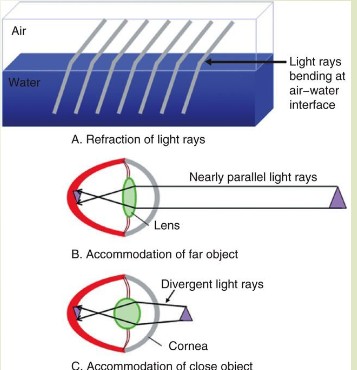
describe accommodation in vision
change in shape of lens to focus image on retina, less able with age to adjust.
describe unique accommodation of birds and horses
Birds can keep object in focus regardless of distance. Horses move head to focus an object at different locations on the retina.
what is binocular vision
visible with both eyes
true or false humans have wider set to eyes
false, herbivores do
what controls the field of vision
location of eyes on the head
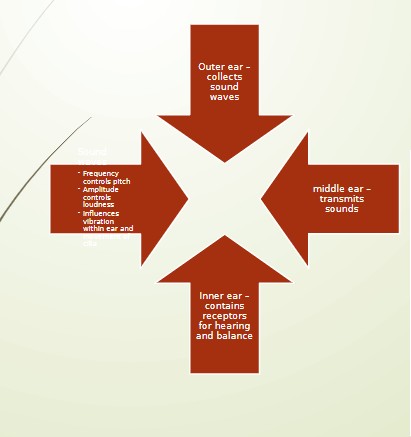
what within the ear controls sense of equilibrium
vestibular apparatus. Static and dynamic.
what are the three connective tissue membranes that overlay the CNS
Dura matter, arachnoid matter and pia matter.
Describe the role of cerebrospinal fluid (CSF)
maintain constant external environment for brain cells. Remove harmful metabolic products, protection, lymphatic system for brain.
where is CSF mainly produced
choroid plexus.
T or F. CSF provides movement of peptides produced in brain to site of action.
TRUE
What is the role of the BBB
isolates neurons from the systemic circulation
what forms the BBB
endothelial cells and astrocytes.
What does the BBB allow for
transfers of lipid-soluble molecules like carbon dioxide, oxygen, steroids, prostaglandins and alcohol. It also allows for carrier-mediated transport.
what does the BBB exclude
peptides and antibiotics
the meninges meanings
covering
describe dura mater
tough, fibrous layer over the brain
describe arachnoid mater
loose covering that doesn’t dip into sulci. sub-arachnoid space includes large blood vessels and CSF.
describe pia mater
inner layer with many small blood vessels
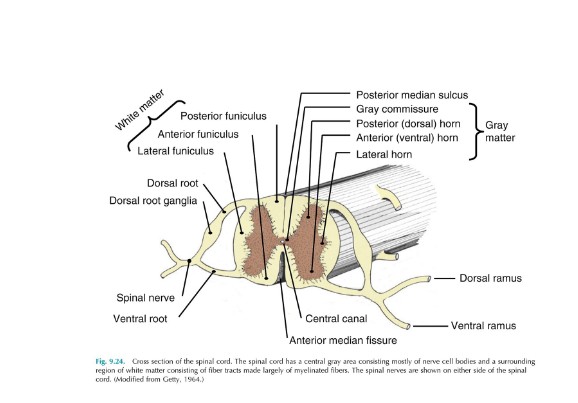
where is the spinal cord located
within the vertebral column. from foramen magnum at base of skull to about first or second lumbar vertebra
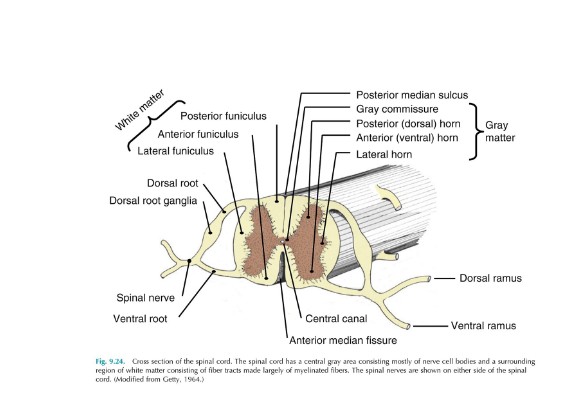
What surrounds the spinal cord
bone, meninges and CSF
What does the spinal cord contain
ascending and descending pathways to/from brain and nerve cell bodies coordinated motor activity.
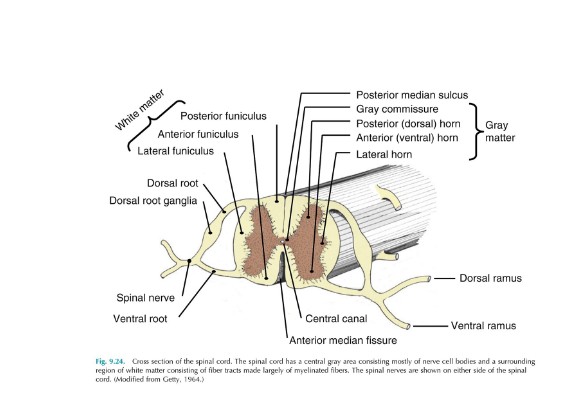
describe central core of spinal cord
central core of gray matter with outer region of myelinated and unmyelinated nerve fibers