Elastomers - properties & applications
 Call Kai
 Learn
Learn Practice Test
 Spaced Repetition
 Match
Match Flashcards
 Knowt Play
1/10

There's no tags or description
Looks like no tags are added yet.
Name | Mastery | Learn | Test | Matching | Spaced | Call with Kai |
|---|
No analytics yet
Send a link to your students to track their progress
11 Terms
What are the 2 types of elastomers?
What are their respective characteristics?
conventional elastomers
chemically cross-linked (polymer chains tightly tied together by strong chemical bonds)
Can’t be melted (need to be produced in one single step)
Not really recyclable (because you can’t melt them into a new shape)
thermoplastic elastomers
Combine the best properties of plastics & rubbers
CAN be melted
Physical/thermal non-permanent bonds
List all elastomers that you know
CR chloroprene rubber
EPDM ethylene propylene diene terpolymer rubber
NR natural rubber
SBR styrene-butadiene rubber
SIR polysiloxanes (formerly silicone rubber)
Polysulphides
Properties & applications of natural rubber NR
made from latex
Vulcanisation with sulfur (chemical process that turns the sticky, raw rubber into tough, elastic material)
70% for car tires
12% for latex products
8% for technical products
Properties & applications of styrene-butadiene rubber SBR
copolymer of 1,3-butadiene (1 monomer) & styrene (other monomer)
tires
Seals
Conveyor belts (tapis roulants)
Properties & applications of chloroprene rubber CR
synthetic rubber
Very resistant to ageing
hoses = pipes
Drive belts
Diving suits (équipement de plongée)
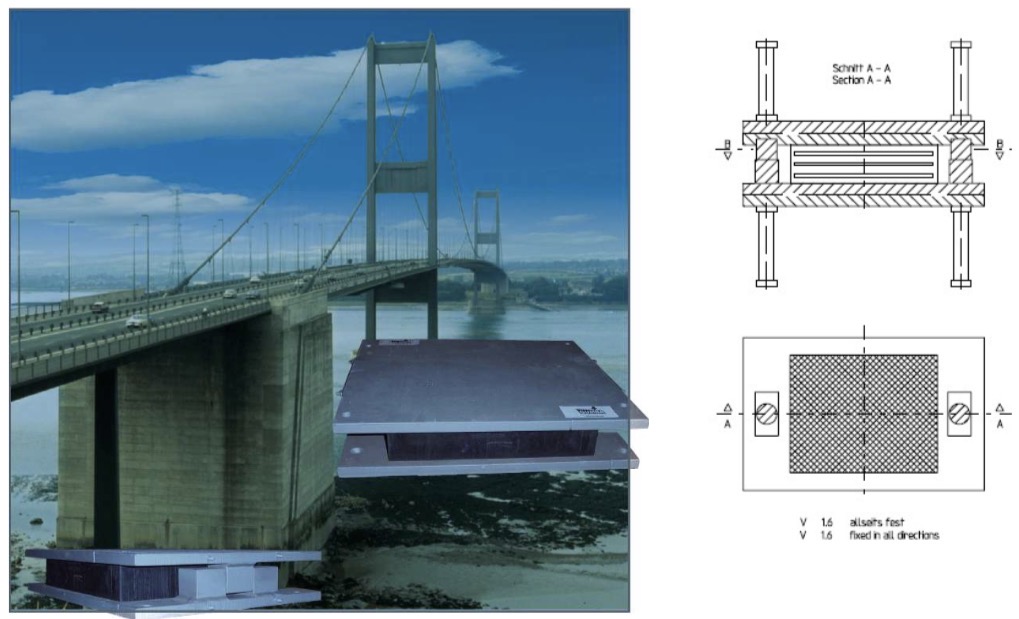
Unreinforced & steel-reinforced construction bearings (roulement)
Joint tapes (rouleau joint)
Joint that can “slide” in bridges to prevent them from breaking when they expand with temperature increases
Properties & applications of ethylene propylene diene terpolymer rubber EPDM
synthetic caoutchouc
Short-term properties similar to CR’s (behavior under a brief load)
unreinforced bearings (roulements)
Joint tapes
Waterproofing membranes
Hoses = pipes
Pond liners (bâches de bassins)
Properties & applications of polysiloxanes (silicone rubber) SIR
oily, paste-like or rubber-like
Can be used from -50 to 180°C
Hydrophobic (doesn’t absorb water)
Good chemical resistance
seals
Adhesives
Conveyor belts (tapis roulants)
Electrical insulation
Joint compounds
Baking moulds
Cosmetics
Implants
Properties & applications of polysulphides
sulfur-based rubber
joint compounds
Insulating glass
Properties & applications of thermoplastic elastomers (give examples)
block polymers OR polyblends
TPO → cable sheathing, conveyor belts (tapis roulants)
TPU → car door handles, gear lever, steering wheel, sport shoes, ski boots
SBS → transparent films, toys
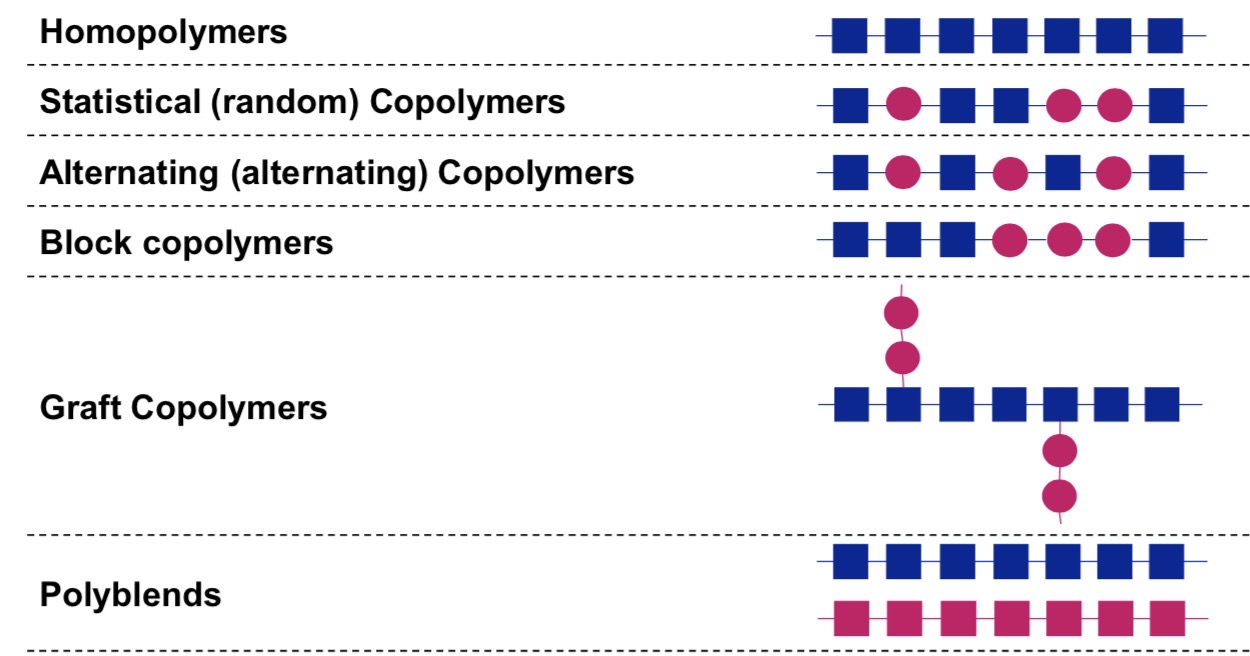
What’s the difference between copolymer, block polymer and polyblends?
copolymer = any polymer made from multiple different types of monomers bonded together in the same chain
block polymers = special type of copolymers where monomers alternate in a block sequence AAAABBBBAAAABBBB
polyblends = physical mixture of multiple different polymers (physically mixed, no chemical bonds)
How do we read TPE-O or TPO?
TPE-U or TPU?
What does the last letter indicates?
TPE-O/TPO = thermoplastic elastomer based on olefin
TPE-U/TPU = thermoplastic elastomer based on urethane
→ the last letter indicates the plastic used for the hard part