Cybernetic Art - 4.3
 Call Kai
 Learn
Learn Practice Test
 Spaced Repetition
 Match
Match Flashcards
 Knowt Play
1/75

There's no tags or description
Looks like no tags are added yet.
Name | Mastery | Learn | Test | Matching | Spaced | Call with Kai |
|---|
No analytics yet
Send a link to your students to track their progress
76 Terms
What is cybernetics?
The science of communication and control systems in and between machines and living organisms.
Who coined the term cybernetics?
Norbert Wiener in 1948.
What does the word cybernetics derive from?
The Greek for steersman, guide, or governor.
Who were important British cyberneticists?
William Ross Ashby, Gordon Pask, and Stafford Beer.
What historical context shaped cybernetics?
The Second World War and post-war developments in communication, control systems, and machine-human interaction.
What is a cyborg?
A cybernetic organism that combines biological and technological systems.
Who introduced the term cyborg?
Clynes and Kline in 1960.
Why was the cyborg concept created?
Marking an ambitious moment where we try to extend the limits of the human body. Imagining humans adapting biologically and technologically to survive in outer space.
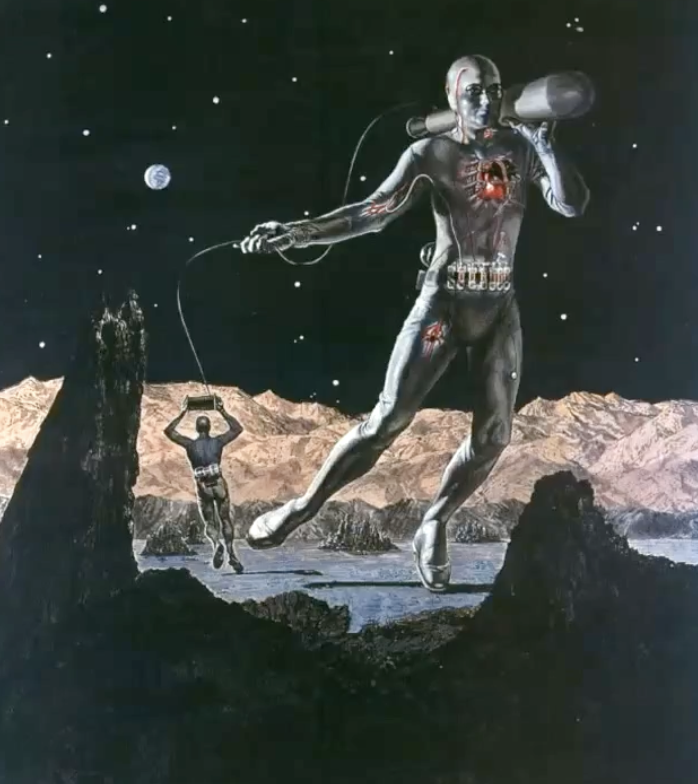
What publication popularized the cyborg?
Life Magazine’s 1960 illustration “Man Remade to Live in Space.”
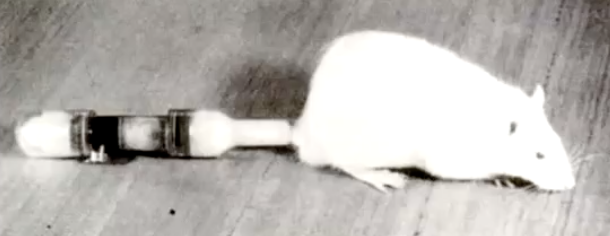
What was the first real cyborg experiment?
A rat fitted with an osmotic pump that slowly released chemicals into its bloodstream.
How did the Space Race influence cybernetics?
It encouraged research into extending human capacities through technology for survival in space. Enhancement was tied to competition between the United States and the Soviet Union during the Cold War
Goro - Chimp with a Vacuum Hangover etc.
1964, Life Magazine Publication, part of photo essays, showing juxtapositions between technology and natural. Uncomfortable photos showing bodies pushed to their limits beyond conditions of their own environments. Chimps as the first travellers into space
Why are cyborgs considered a “social premonition”?
They anticipate modern human dependence on technology and machine integration.
Kathrine Hales on the spectrum of primatology and cybernetics?
They are opposite ends, primatology brackets the spectrum of humanity by our similarities and differences to other primates. Cybernetics brackets the continuities and ruptures between humans and machines.
How did Donna Haraway reinterpret the cyborg?
As a metaphor for hybrid identities, technological relationships, and social transformation.
What is Haraway’s Cyborg Manifesto about?
The breakdown of boundaries between human, machine, nature, gender, and technology. The cyborg is a metaphor for hybrid identities, technological relationships, and social transformation in everyone.
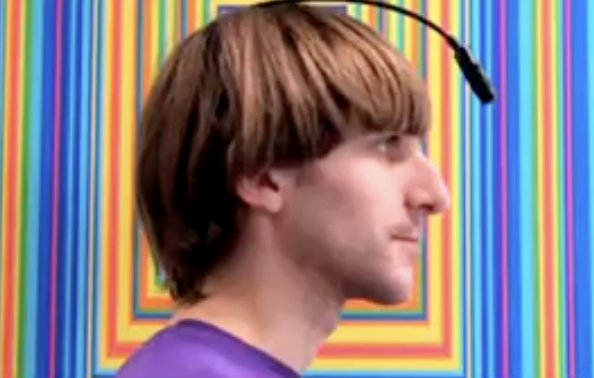
Who is Neil Harbisson?
A contemporary artist born with greyscale colour-blindness with an implanted antenna that converts colour into sound.
Who is Moon Ribas?
A contemporary artist with seismic sensors implanted in her feet that detect earthquakes.
What was Project Pigeon?
1943-4; A World War II military experiment using trained pigeons to peck at a target image on a screen to keep a missile on course. It explored organism-machine communication and control systems.
What question did cybernetics raise about humans?
“What kind of machine have we put in the middle?”—how humans function within larger systems.
How did William Ross Ashby describe feedback?
Through the example of a bird and butterfly constantly adjusting movements in response to one another.
Why is feedback important in cybernetic art?
Artworks respond dynamically to viewers, environments, light, sound, or movement. Putting something into a process to change the process.
What is meant by interactivity in cybernetic art?
The artwork changes in response to audience participation or environmental conditions.
How did cybernetic art change the role of the viewer?
The viewer became an active participant rather than a passive observer.
Why was flicker important to cybernetics?
Researchers discovered flickering light could influence consciousness and brain activity.
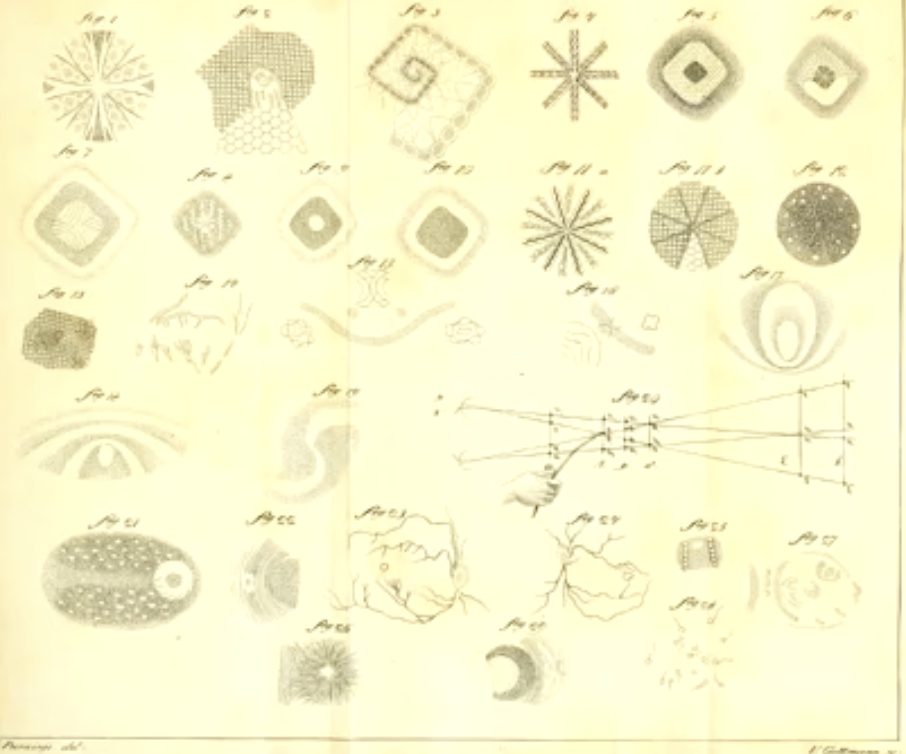
Who studied flicker effects in the nineteenth century?
Jan Evangelista Purkinje.
What did William Grey Walter discover about flicker?
Post WW2 investigated that stroboscopic flicker could map and affect brain activity and induce altered states.
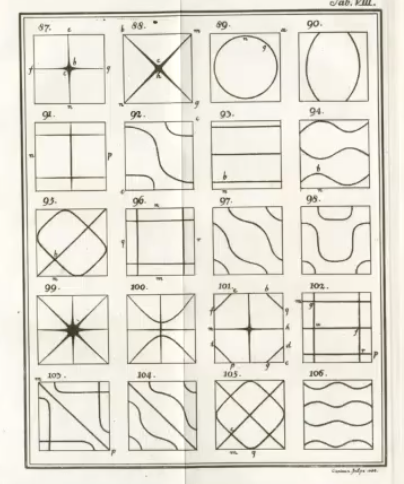
What are Chladni figures?
Patterns formed by vibrations on surfaces, often used to explain sound and visual resonance.
Who collaborated on Flame Orchard?
György Kepes, William Walton, Paul Earls, and Mauricio Bueno.
What was the Center for Advanced Visual Studies (CAVS)?
An MIT research center founded in 1967 by György Kepes that promoted collaborations between artists, scientists, and engineers.
What media did artists at CAVS experiment with?
Light, kinetic sculpture, lasers, holography, electronic music, video, steam, and computer graphics.
Why was CAVS historically significant?
It connected avant-garde art with technological and scientific research.
Who was Wen-Ying Tsai?
A cybernetic sculptor known for interactive stroboscopic installations.
How did Piene’s work connect to flicker?
Projected moving lights produced perceptual effects linked to altered sensory experience.
How did cybernetic artists view light?
As a trigger capable of affecting machines, behaviour, and consciousness.
What did Wiener mean by describing the body as a flame rather than a stone?
Humans are dynamic processes rather than fixed stable objects.
What is Photoelastic Walk by György Kepes?
An interactive installation where walking altered coloured refractive light patterns.
How did Photoelastic Walk involve the viewer?
The artwork changed visually in response to the participant’s movement.
How did Roy Ascott define cybernetic art?
behavioural art that creates unpredictable changes in thought, emotion, and interaction. He argued that ‘art too had behaviour’
What did Roy Ascott mean by “art has behaviour”?
Artworks can respond, adapt, and interact dynamically rather than remain static objects.
What are Ascott’s Change Paintings?
Interactive paintings with movable Perspex panels that viewers could rearrange.
Why did Roy Ascott use games in teaching?
Games demonstrated interaction, systems, communication, and behavioural feedback loops.
What was Groundcourse?
Roy Ascott’s experimental cybernetic art teaching programme in Britain.
What themes appeared in Groundcourse activities?
Control, masks, role play, systems, interaction, behaviour, and communication, military training
How did Cold War culture influence cybernetic art education?
Military environments, surveillance systems, and communication networks shaped aesthetics and concepts.
Why are cybernetics and gaming historically connected?
Early computer games developed from military radar and control technologies.
What was Tennis for Two?
An early interactive electronic game developed in 1958 at Brookhaven National Laboratory.
What was Spacewar!?
An early computer game developed at MIT in 1961–62 using military-derived computing systems.
What is CYSP 1?
A 1956 cybernetic sculpture by Nicolas Schöffer that responded to sound, colour, light, and movement.
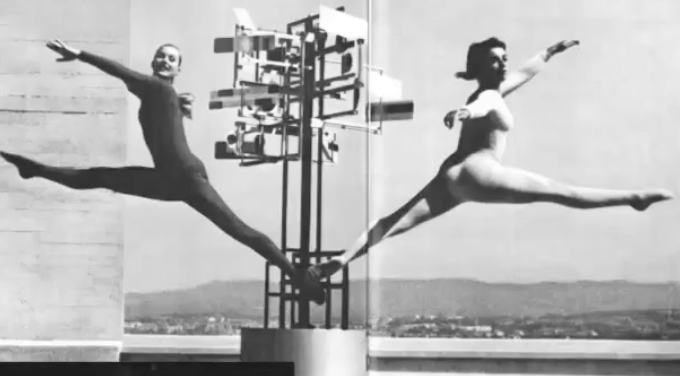
How was CYSP 1 used in performance?
It danced with performers in avant-garde ballet productions.
How did Schöffer later control CYSP 1’s movement?
Photoelectric sensors detected dark boundary lines to confine its motion so that it could collaborate with dance.
What are cybernetic towers?
Responsive architectural structures using light, sound, and environmental feedback.
What was Schöffer’s Tour Cybernétique de Liège?
A cybernetic tower in Belgium using lights and sound to respond to the city environment.
Why were cybernetic towers futuristic?
They imagined cities as interactive technological environments.
What was György Kepes’s vision of civic art?
Artists, engineers, planners, and scientists collaborating to reshape urban life.
What is meant by “futuring” in cybernetic art?
Imagining and designing speculative technological futures.
What was Schöffer’s Cybernetic City?
A visionary plan for a technologically integrated and interconnected urban environment.
How did cybernetic artists view cities?
As dynamic systems shaped by communication, light, technology, and behaviour.
Why is cybernetic art historically important?
It transformed ideas about interaction, systems, technology, participation, and media art.
What are key themes in cybernetic art?
Feedback, behaviour, control, flicker, interactivity, communication, and machine-human relationships.
Artwork: Man Remade to Live in Space — Fred Freeman
Life Magazine illustration visualizing the cyborg as a technologically enhanced human adapted for space travel.
Artwork: Cyborgs and Space — Manfred E. Clynes and Nathan S. Kline
Foundational cybernetic essay proposing technologically modified humans for extraterrestrial survival.
Artwork: Project Pigeon (Project OrCon) — B. F. Skinner
1940s. Military experiment training pigeons to guide missiles through behavioural conditioning.

Artwork: Flame Orchard — György Kepes
1972, Interactive installation of gas flames responding dynamically to electronic music and sound. Uses vibrational patterns. Demonstrates the relationship between sound, feedback, environment, perception, and responsive systems. Shows early cybernetic sound with electronic music.
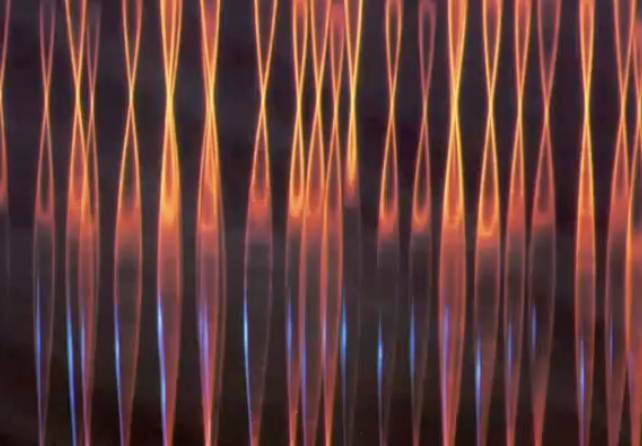
Harmonic Sculpture — Wen-Ying Tsai
1969; Cybernetic sculpture shining strobe lights on vibrating rods to create responsive visual effects. Ironically looks like a thrown together sculpture, not knowing what to do with old art and tech.
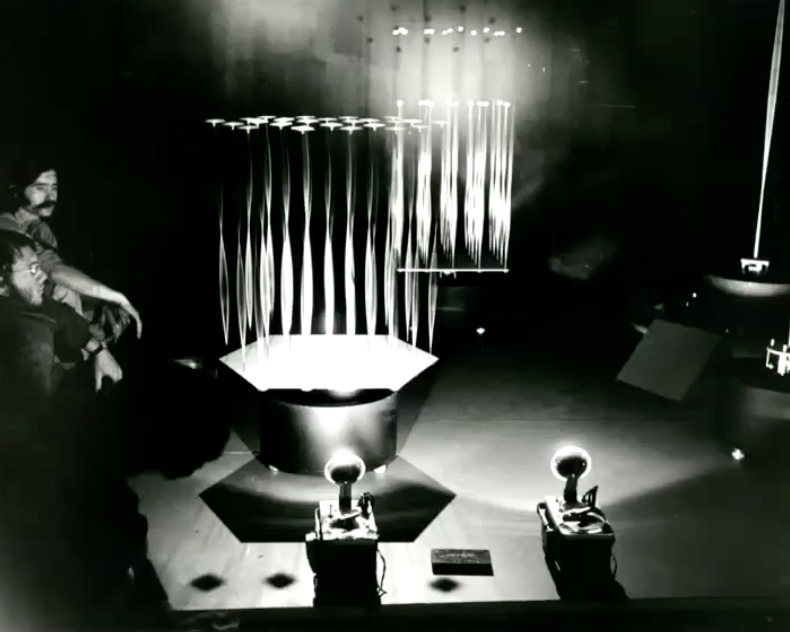
Cybernetic Sculpture System — Wen-Ying Tsai
1970; Interactive MIT installation combining light, sound, vibration, and environmental feedback. Clustered sculptures around the room, the viewer is surrounded by light and sound, early immersive art.
Licht Ballet (Light Ballet) — Otto Piene
1972, Began by drawing with fire and soot, then poking holes in large screens. Began to shine light through it. Motorized light installations producing moving patterns and immersive environments.
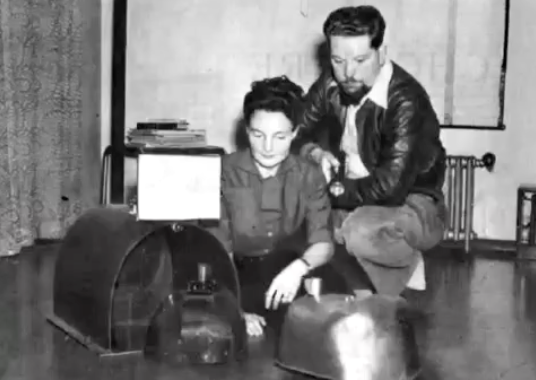
Elmer and Elsie — William Grey Walter
1948–49. Cybernetic tortoises using light-sensitive behaviour and self-regulating movement. They would move towards light. An experimental play. Reassuring of exhibiting science and art in a post-war context.
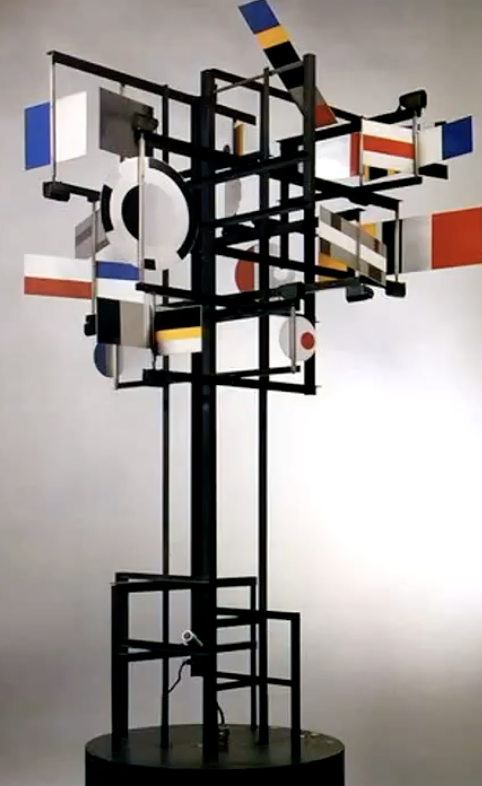
CYSP 1 — Nicolas Schöffer
1956, The first cybernetic sculpture responding to colour, sound, light, and environmental stimuli. It got excited by the color blue, moving forward or quick turns. It becomes calmed by red. Excited in the dark and calm in intense light. Projecting living onto these things.
Artwork: Tour Lumière et Cybernétique — Nicolas Schöffer
1962–73. Unrealized proposal for a giant responsive cybernetic tower in Paris.
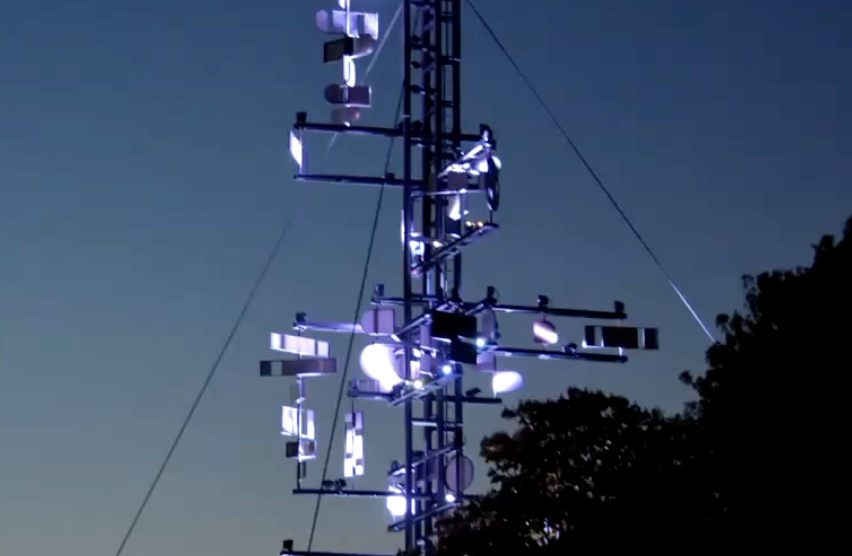
Artwork: La Tour Cybernétique de Liège — Nicolas Schöffer
Belgian cybernetic tower using light and sound to interact with the urban environment. Had issues interacting with wildlife, noise pollution.
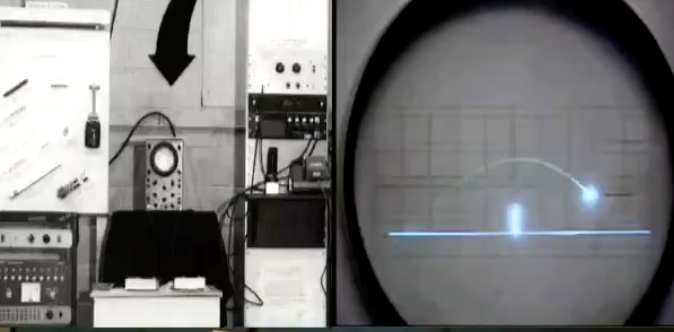
Tennis for Two — William Higinbotham
1958, Early interactive electronic game developed from military technological systems.
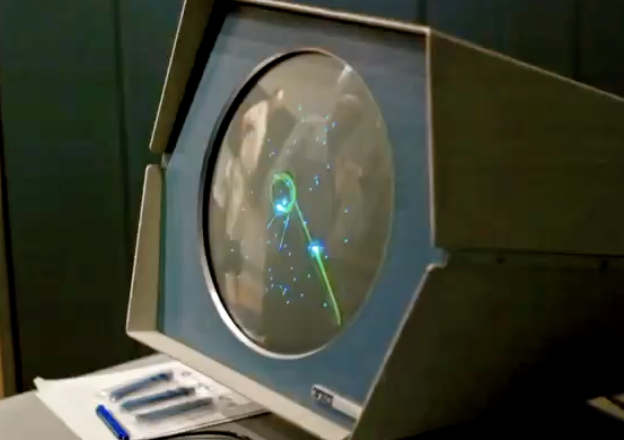
Spacewar! — MIT programmers
1961–62. Influential early computer game developed using Cold War computing infrastructure.
What did cybernetic artists believe about technology?
Technology could reshape human perception, communication, behaviour, and urban life.
How did cybernetic art differ from traditional sculpture?
It emphasized movement, interaction, systems, and environmental responsiveness.
Why is cybernetic art connected to immersive art today?
It pioneered responsive environments involving sound, light, participation, and sensory engagement.