Bonds and Orbitals
 Call Kai
 Learn
Learn Practice Test
 Spaced Repetition
 Match
Match Flashcards
 Knowt Play
1/74

There's no tags or description
Looks like no tags are added yet.
Name | Mastery | Learn | Test | Matching | Spaced | Call with Kai |
|---|
No analytics yet
Send a link to your students to track their progress
75 Terms
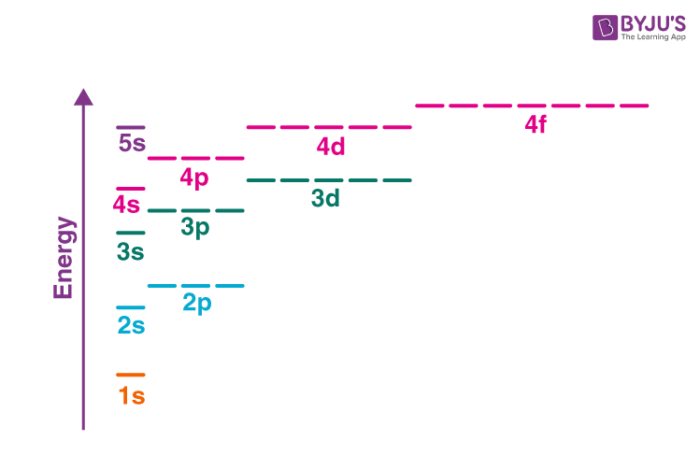
What does Ionization Energy Look like

What requires more energy, removing valence or core electron
Core electron
What are the core and valence removal exceptions
Filled ns2 is more stable than np1 Be vs B
Half filled np3 have added stability N vs O
Half filled d5 or filled d10 orbitals are stable
How does Effective Nuclear Charge look like

What is Effective Nuclear Charge
The actual attractive force electrons encounter. Outermost electrons feel the effective nuclear charge
How does Atomic Radius look like
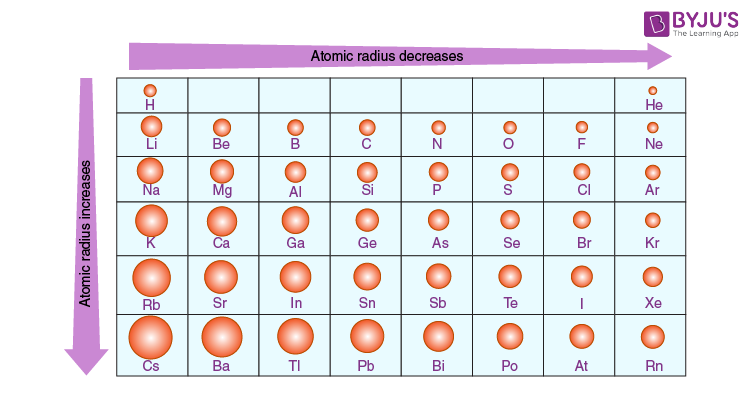
Why does Atomic Radius increase down the perioc table
Nucleus stays the same size, but electron cloud gets larger because of more electrons
What is Electron Affinity
Energy change when an electron is added to an atom in the gas phase. Greater electron affinity means more energy released when electrons are added.
What does Electron Affinity look like

What is Electronegativity
Reflects an element’s capacity to attract shared electrons to itself
What does High Electronegativity mean
High Ionization Energy
High Affinity for additional electrons
What does Electronegativity look like

What is similar in the Periodic Group
Same Valence Electron Configuration
What is similar in Periodic Row
Change Monotomically
What doe metals for in nature
Cations
What do Nonmetals trend towards in nature
Anionic character
What is Bonding
When electrons are attracted to each other and form a bond when they get close to each other
What happens to Energy during Bonding
Potential Energy decreases. More stability, Energy is released.
What is the Difference in Electronegativity range/Percentage ionic character for Ionic Bonds
3.3 to 1.7 or 100% to 50%
What is the Difference in Electronegativity range/Percentage ionic character for Polar-Covalent Bonds
1.7 to 0.3 oe 50% to 5%
What is the Difference in Electronegativity range/Percentage ionic character for NonPolar-Covalent Bonds
0.3 to 0 or 5% to 0%
How do you calculate Difference in Electronegativity for bonds
Find change in electronegativity:
Cl 3.0 - Na 0.9 = 2.1, Ionic
O 3.5 - H 2.1 = 1.4 Polar Covalent
C 2.5 - H 2.1 = 0.4 Non Polar Covalent
What is an Ionic Bond
Bonds between ions where one atom gains electrons and the other loses electrons
What is Electrostatic Attraction
Positive to Negative Charges
Which Bond forms a strong lattice
Ionic Bond
What is Coloumbs Law
What is a Metallic Bond
Electrons are delocalized sea around an ordered array of metal cations. Valence electrons dont belong to any single nucleus but are shared throughout metal
What are Atomic Interactions
Potention energy from proton, electron attractions, and electron
Minimum energy when forces are balanced, bond length
What are Covalent Bonds
Electrons are shared by nuclei, nonmetals, energy of atoms bonded together is lower than E of them apart so bond forms. Nonpolar and Polar
What is Nonpolarity
Share valence electorns equally, so no poles
What is Polarity
Share electrons unequally, so positive and negative poles
What is a Dipole Moment
Measures how unevenly electrons are shared between the atoms in the molecule. It is the separation of postivie and negative electrical charges within a system
What are the rules for Bond Length and Strength
Multiple bonds are shorter and stronger than single bonds
F-F < O=O < N≡N
What are the rules for Dot Structure
Count Valence electrons
Set up molecules with the least electronegativity in the middle
Add electrons
If no electrons remain, move lone pairs to make multiple bonds
Write Formal Charge
Check structure
What is Formal Charge
Informs on how many bonds an element is likely to make in a structure
How do you calculate Formal Charge
Valence Electrons - # Unshared Electrons - # Bonds
What is Resonance
When more than one dot structure can be written
The real structure is an average of all resonance forms, with electons delocalized across the bodns with resonance
What are the Electron defficient Molecules
H —> 2 electrons
B —> 6 electrons
Which Atoms can have expanded octets?
3rd Row Elements or Larger
What is an Odd Electron Species
Free Radical that should be placed on least electronegative species
What is Valence Shell Electron Pair Repulsion
It describes the shapes of molecules
What are the Electron Domain Geometries
Linear
Trigonal Planar
Tetrahedral
Trigonal Bipyramidal
Octahedral
What are the SN and Bond Angles of Linear
SN=2 180
What are the SN and Bond Angles of Trigonal Planar
SN=3 120
What are the SN and Bond Angles of Tetrahedral
SN=4 109.5
What are the SN and Bond Angles of Trigonal Bipyramidal
SN=5 90, 120, 180
What are the SN and Bond Angles of Octahedral
SN=6 90, 180
What are the Molecule Geometries of Linear
Linear
What are the Molecule Geometries of Trigonal Planar
Trigonal Planar
Bent
What are the Molecule Geometries of Tetrahedral
Tetrahedral
Trigonal Pydramidal
Bent
What are the Molecule Geometries of Triognal Bipyramidal
Trigonal Bipyramidal
Seesaw
T-Shaped
Linear
What are the Molecule Geometries of Octahedral
Octahedral
Square Pyramidal
Square Planar
T-Shaped
Linear
What is a Wedge
Out of page toward you
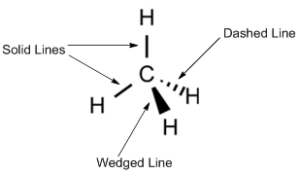
What is a Dash
Into page away from you
What are Real Bond Angles compared to Ideal Bond Angles?
Bond angles that deviate from ideal are sometimes observed
Why do Real Bond Angles occur
Lone pairs take up more space and compress bond angles
What is Bond Polarity
Covalent bonds represent shared electron density between nuclei, bonds are shared equally or unequally
As electronegativity increases, what occurs to bond polarity
Bond polarity increases
What is Molecule Polarity
The sum of all bond dipoles which helps predict chemical and physical properties
How do you draw Organic Line Structures
Carbon is represented as the end of a line or the corner of a line
Hydrogen is bonded to C as C always has 4 bodns
Atoms that arent H or C are heteroatoms which must be written
What are Heteroatoms
Atoms that arent H or C in Organic Line Structures
What is the Valence Bond Theory
Electrons are in overlapping orbitals, localized between nuclei

What is Molecular Orbital Theory
Electrons are in delocalized orbits

What is Valence Theory for Hybrid Orbitals
s and p orbitals combine to produce degenerate hybrid orbitals with distinct geometries
What is the formula for Hybrid Orbitals
#Atomic Orbitals in = #Hybrid Orbital out
s + p + p + p = sp3
What works and doesnt work for Hybrid Orbitals
Works for main group, nonmetal elements, organic moleules
Doesnt work for Ionic Compounds
D Orbitals do not hybridize
How do you determine Hybridization
Count the number of Bonds (Steric Number SN), and that is the number of hybrid orbitals needed
What is a Direct Orbital Overlap
Sigma Bond
What is na Indirect Orbital Overlap
Pi Bond
Pi Bond Rotation
It takes energy for Pi Bonds to rotate
Sigma Bond Rotation
Sigma Bonds can rotate, but double bonds dont readily rotate
What does Molecular Orbital Theory help do
Provides Quantum Mechanical basis for explaining bonding, electrons are delocalized over the entire molecule. Orbitals are wave functions, so interactions are constructive or deconstructive
What are the 2 Assumptions in Molecular Orbital Theory
Molecular Orbitals are linear combinations of atomic orbitals: 3x+2y and -x+5y
Some number N atomic orbitals combine to form and equal number N molecular orbitals: 1s-1s
What is Hund’s Rule
Electrons fill subshells first before filling complete orbitals

What is the Aufbau Principle
Electrons fill orbitals in order of increasing energy levels