IGCSE Biology Revision Unit 1-5
 Call Kai
 Learn
Learn Practice Test
 Spaced Repetition
 Match
Match Flashcards
 Knowt Play
1/132

There's no tags or description
Looks like no tags are added yet.
Name | Mastery | Learn | Test | Matching | Spaced | Call with Kai |
|---|
No analytics yet
Send a link to your students to track their progress
133 Terms
What 7 characteristics do all living organisms share?
they move- they respire- they respond to their internal and external environment- they grow and develop- they reproduce- they excrete their waste- they require nutrition
Define movement
An action by an organism or part of an organism causing a change of position or place
Define respiration
The chemical reactions in cells that break down nutrient molecules and release energy for metabolism
Define sensitivity
The ability to detect and respond to changes in the internal or external environment
Define growth
A permanent increase in size and dry mass
Define reproduction
The processes that make more of the same kind of organism
Define excretion
The removal of the waste products of metabolism and substances in excess of requirements
Define nutrition
The taking in of materials for energy, growth and development
Why are viruses not living?
They do not have all of the 7 characteristics of living organisms (for example they cannot respire)
Define species
A group of organisms that can breed to produce fertile offspring
Give 2 ways that organisms can be classified
Physical features- Evolutionary relationships
How are modern classification techniques more accurate? (Higher/Supplement)
Biochemical and genetic analysis gives a more precise and detailed understanding about the relationships of organisms
How can organisms that share recent common ancestors be identified? (Higher/Supplement)
Analyse the organism's DNA- Organisms with more similar DNA sequences often share more common ancestors
What are the 5 kingdoms? (Higher/Supplement)
Animal, Plant, Fungus, Prokaryote, Protoctist
Describe the binomial naming system
The system used to name organisms using two names
Give 3 advantages of the binomial naming system
- It is universal- It provides information about closely linked organisms and hence their traits- It allows for precise naming
State the features that all cells share
Cytoplasm, cell membrane and DNA, ribosomes and enzymes for respiration
What are the two broad groups of animals?
Vertebrates and invertebrates
What is the difference between vertebrates and invertebrates?
Vertebrates have a backbone, invertebrates do not
What are the 5 main groups of vertebrates?
Mammals, birds, reptiles, amphibians, fish
What is an arthropod?
An invertebrate animal with an exoskeleton, segmented body, and jointed appendages
What are the 4 main groups of arthropods?
myriapods, insects, arachnids, crustaceans
What are the two broad groups of plants? (Higher/Supplement)
Flowering and non- flowering
What are the two main groups of flowering plants? (Higher/Supplement)
Monocotyledons and dicotyledons
What are dichotomous keys?
They are resources that are used to identify organisms by asking a series of contrasting questions
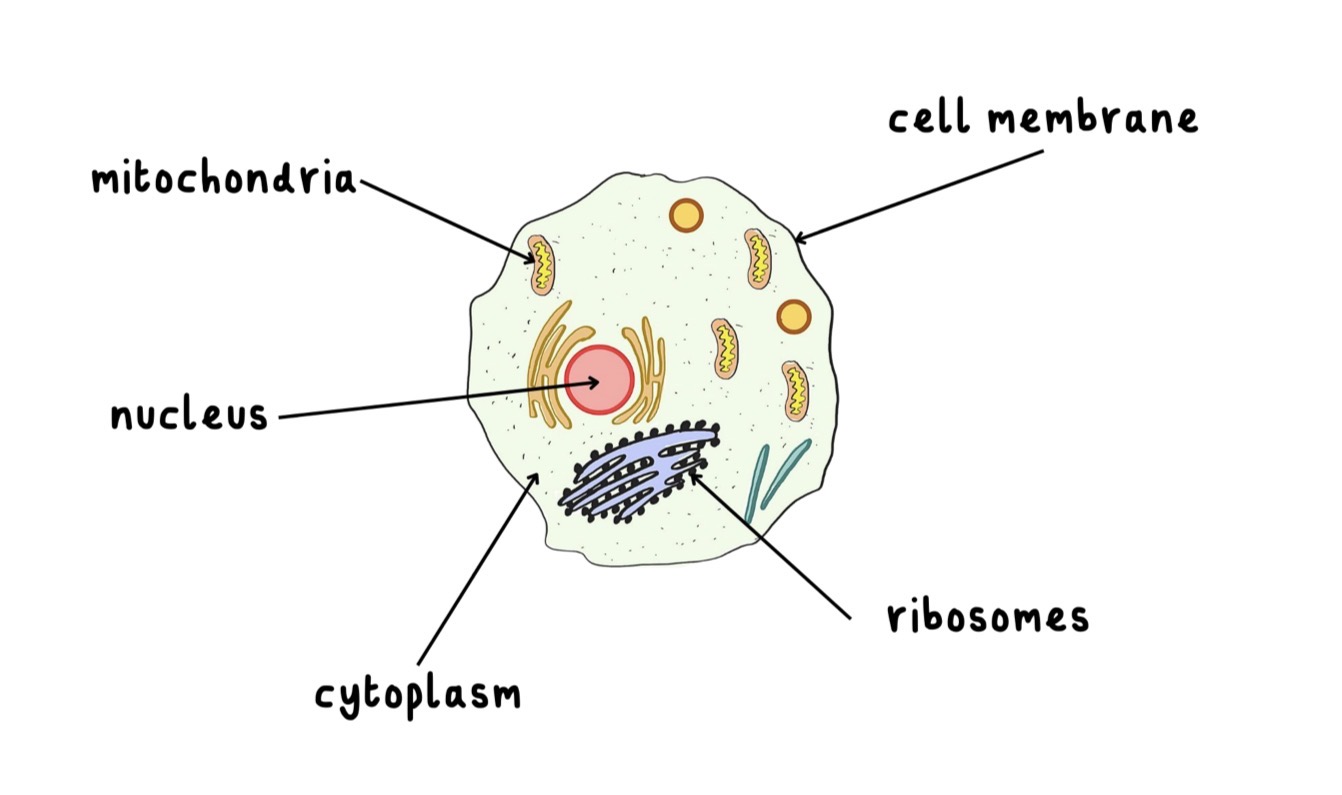
State 3 parts of an animal cell visible under a light microscope
Nucleus, cytoplasm, cell membrane
State 2 additional features of eukaryotic cells that are not visible under a light microscope
Mitochondria and ribosomes
What is the function of ribosomes?
Ribosomes are the site of protein synthesis
A very metabolically active cell is likely to have lots of which type of organelle?
Mitochondria as they produce energy through aerobic respiration
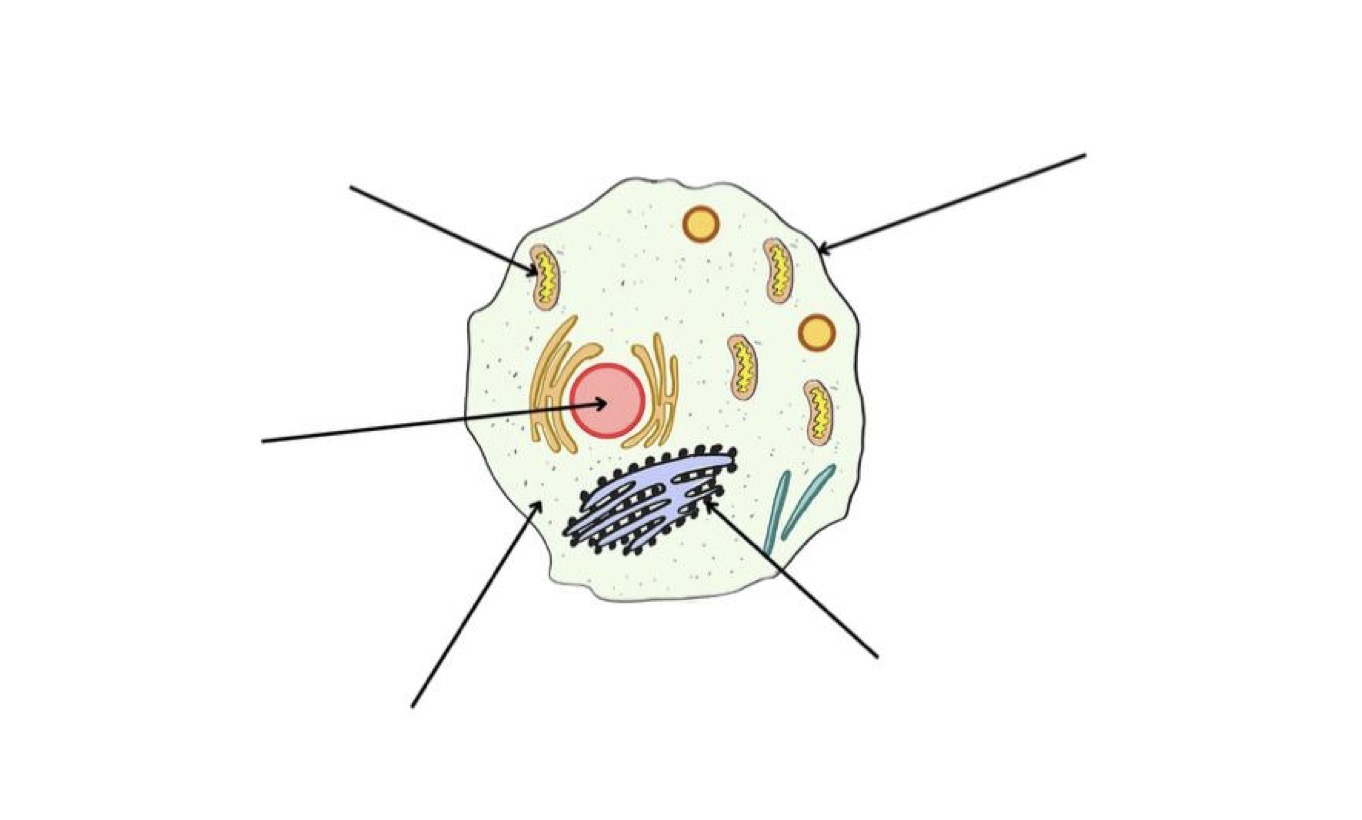
Label this animal cell
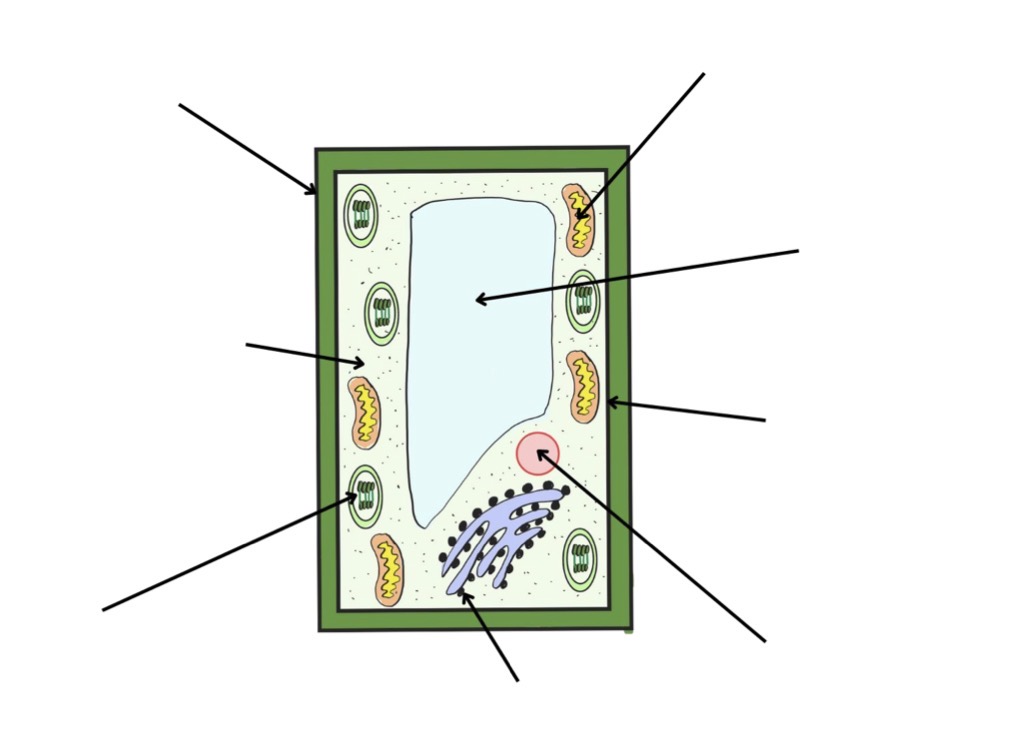
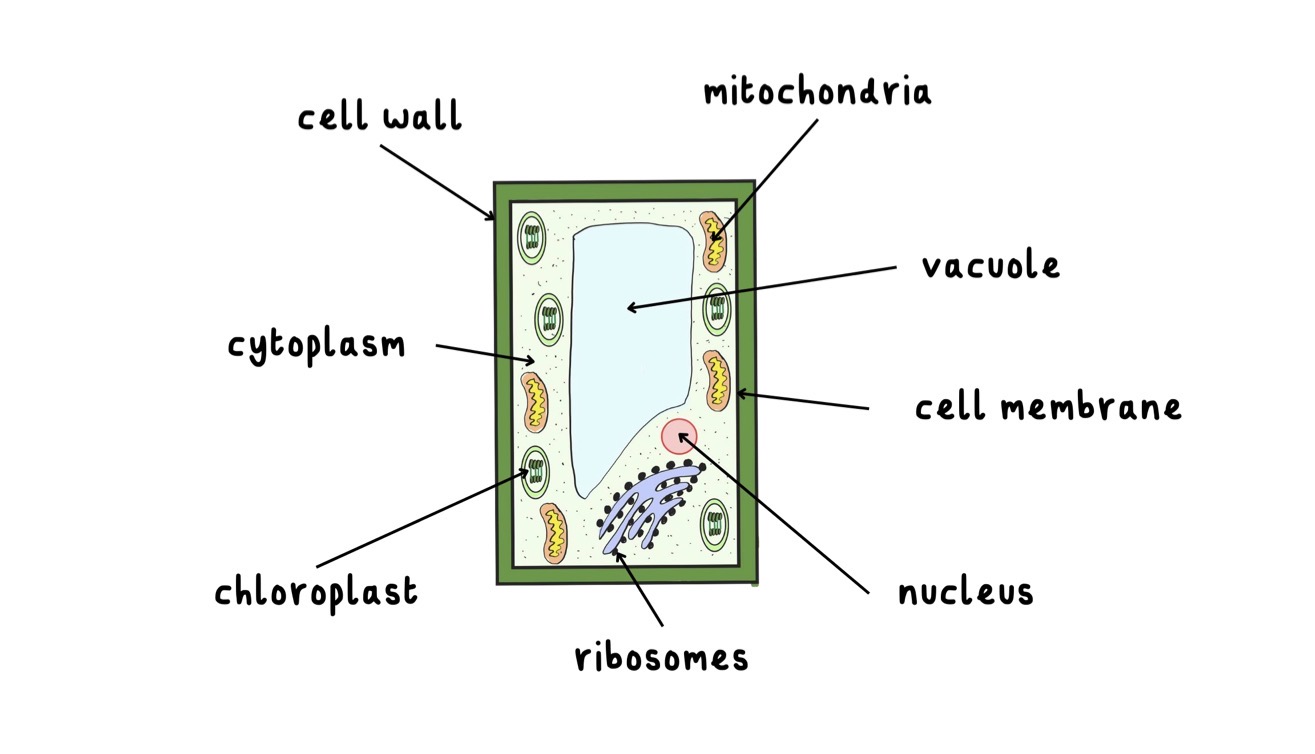
Label this plant cell
Label this light micrograph of an onion epidermal cell
State 6 parts of a plant cell visible under a light microscope
Nucleus, cytoplasm, chloroplasts, vacuoles, cell wall and the cell membrane
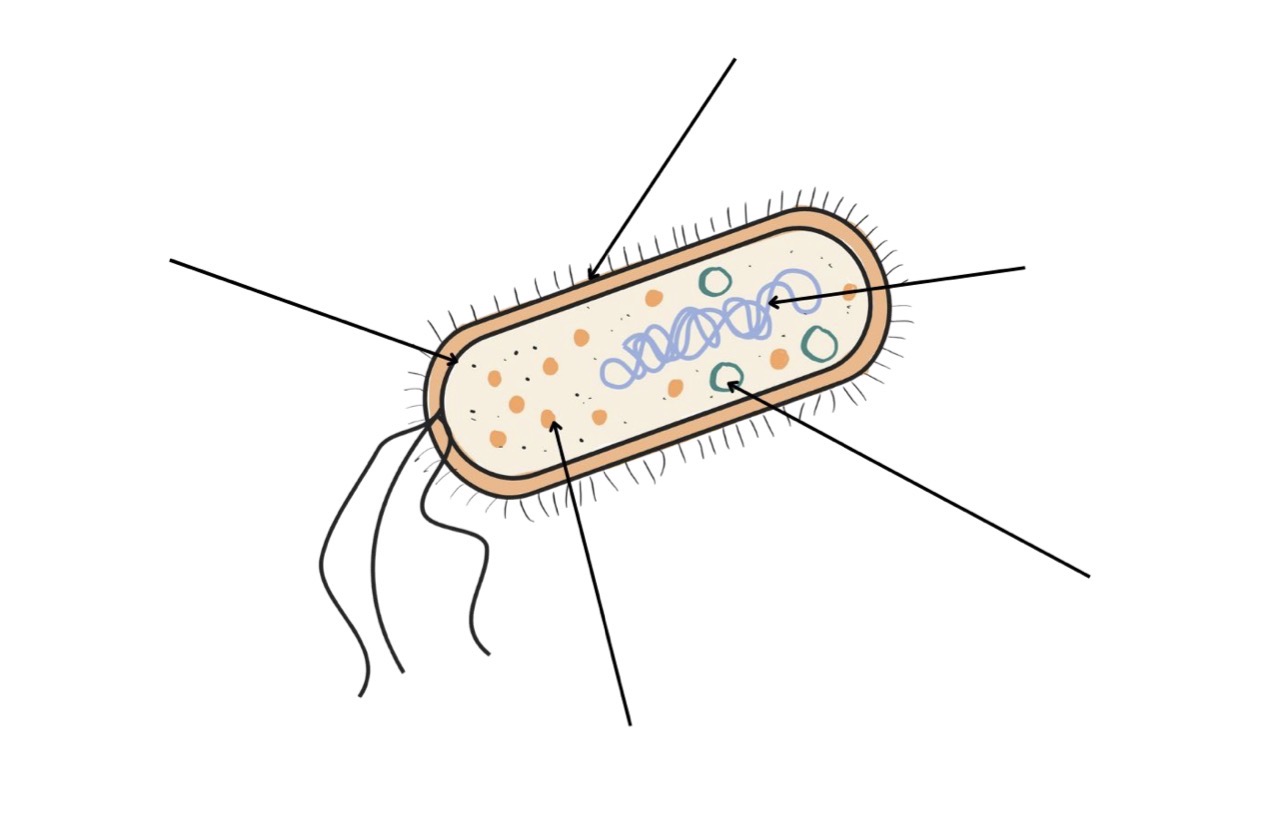
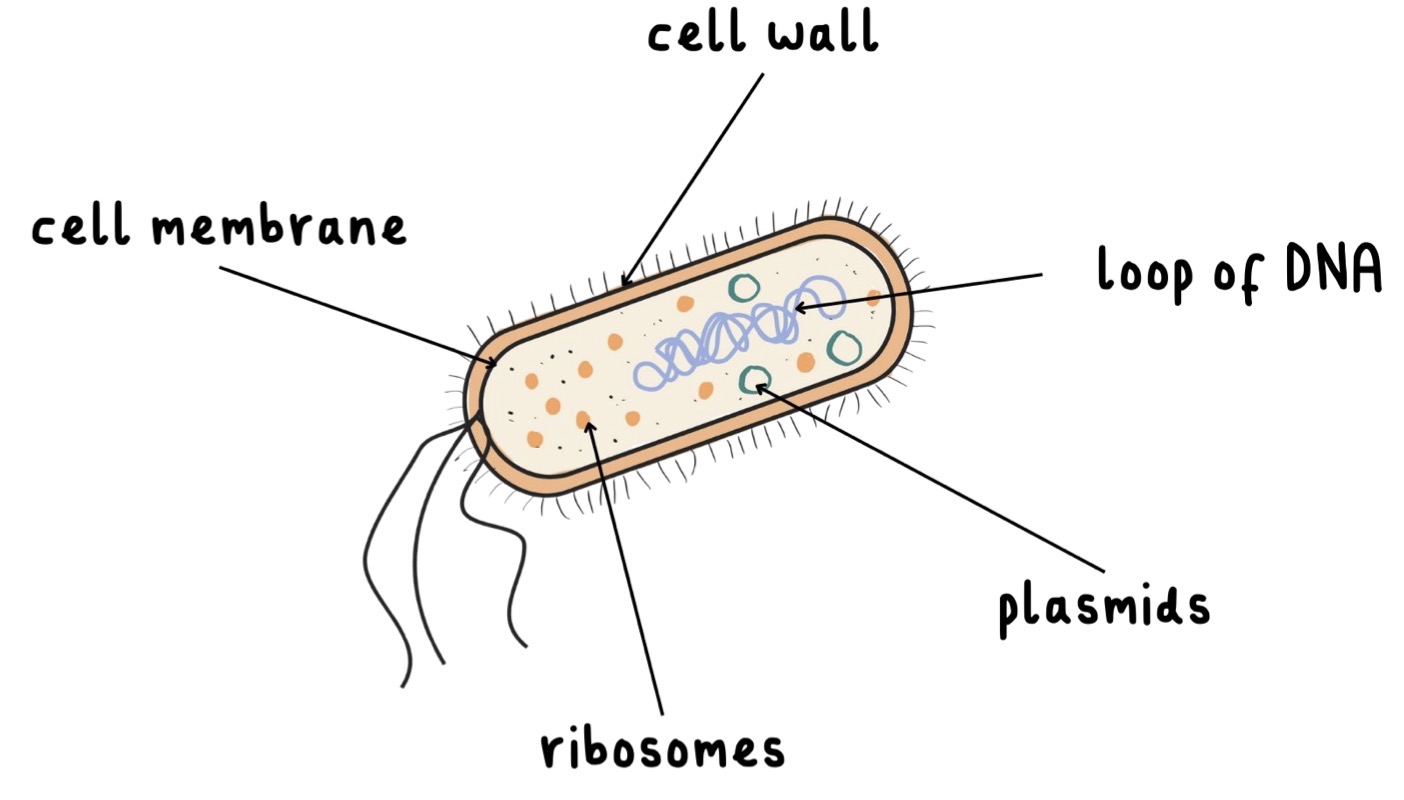
State the organelles that a bacterial cell contains
Cell wall, cell membrane, cytoplasm, circular DNA, plasmids and ribosomes
State 2 functions of the nucleus
- Controls the cell- Contains genetic material - found in the form of chromosomes
State the function of the cytoplasm
It is where most of the cell's chemical reactions take place
State 3 organelles only found in plant cells
- Cellulose cell wall- Permanent vacuole- Chloroplasts
What is the function of the cell wall and what is it made of?
It provides strength and support. It is made of cellulose (in plants).
What is the function of the permanent vacuole and what does it contain?
It supports the cell and contains cell sap (a solution of sugars and salts)
What is the function of chloroplasts?
They are the site of photosynthesis
State 2 organelles only found in bacterial cells
Plasmids and circular DNA
What is the function of plasmids?
Contain extra genes in addition to those in the circular DNA
What is the function of ciliated epithelial cells?
They waft away mucus, dirt and debris up the throat where it can be swallowed
How are ciliated epithelial cells adapted to their function?
- Small cilia that line the exposed surface can waft back and forwards- The cilia are long and thin so that lots of them can waft at the same time
What is the function of root hair cells?
To take up minerals and water needed by the plant
How are root hair cells adapted to their function?
- They have lots of mitochondria to provide energy for active transport- They have a long extension to maximise the surface area available for uptake
What is the function of palisade mesophyll cells?
Their main function is to absorb light and carry out photosynthesis
How are palisade mesophyll cells adapted to their function?
- Contain lots of chloroplasts to carry out photosynthesis- Thin and tall so that many can be packed together- Large vacuole pushes chloroplasts to the outside of the cell- Thin cell wall to minimise the diffusion distance
What is the function of red blood cells?
Red blood cells carry oxygen from the lungs to tissues and carbon dioxide from tissues to the lungs to be exhaled
How are red blood cells adapted to their function?
- No nucleus so there is more room for haemoglobin- Contain lots of haemoglobin to carry oxygen- Biconcave shape giving a large surface area to volume ratio- Thin membrane to minimise the diffusion distance for gases
What is the function of neurones?
To transmit electrical impulses around the body
How are neurones adapted to their function?
They are long and have branched endings to connect to other neurones
What is the function of a sperm cell?
To travel to, penetrate and fertilise an egg cell
How are sperm cells adapted to their function?
- They contain a long tail to help it swim to the egg- They have a middle section containing lots of mitochondria which provide the cell with energy for swimming to the egg- They have an acrosome at the tip containing enzymes to digest the outer membrane of the egg
What is the function of an egg cell?
To fuse with a sperm cell for reproduction
How is an egg cell adapted to its function?
- Haploid nucleus so that after fusing with a sperm it produces a diploid organism- Lots of cytoplasm for many divisions- Lots of nutrients to support the egg until it reaches the womb
Define cell
Basic building block of all living organisms
Define tissue
A group of similar cells working together to perform a specific function
Define organ
A group of different tissues working together to perform a specific function
Define organ system
A group of organs working together to carry out a specific function
Name 3 organ systems in the body
Circulatory system, digestive system, respiratory system
What tissues make up a plant leaf?
Epidermal tissue, mesophyll tissue, vascular tissue
What organs make up the circulatory system?
- The heart- The lungs- The blood vessels
What type of tissue is the heart made up of?
Cardiac muscle
What organs make up the digestive system?
The oesophagus, stomach, small intestine, large intestine, liver, pancreas, gallbladder and anus
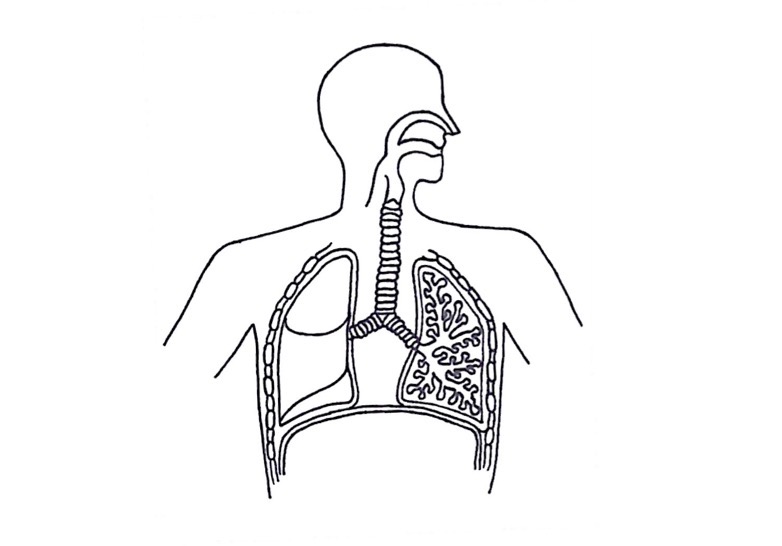
Is this diagram an example of a tissue, organ or organ system?
This is an organ system (the respiratory system) which is made of multiple different organs working together
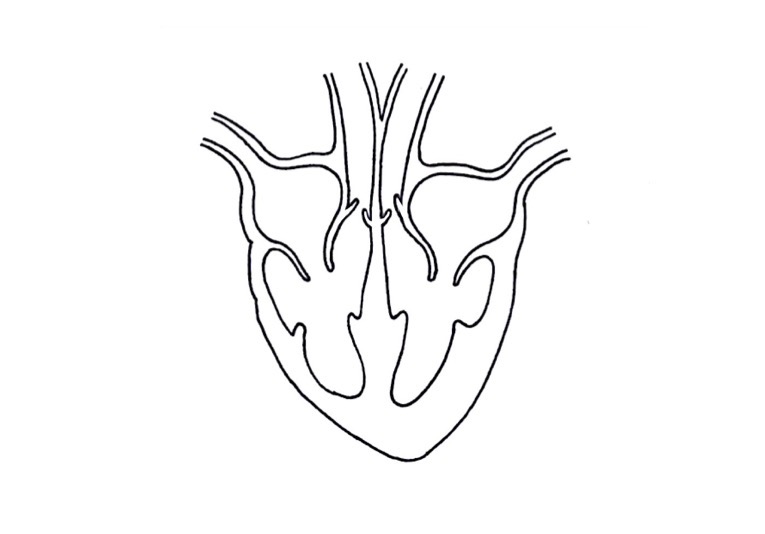
Is this diagram an example of a tissue, organ or organ system?
This is an organ (the heart) which is made of multiple different tissues
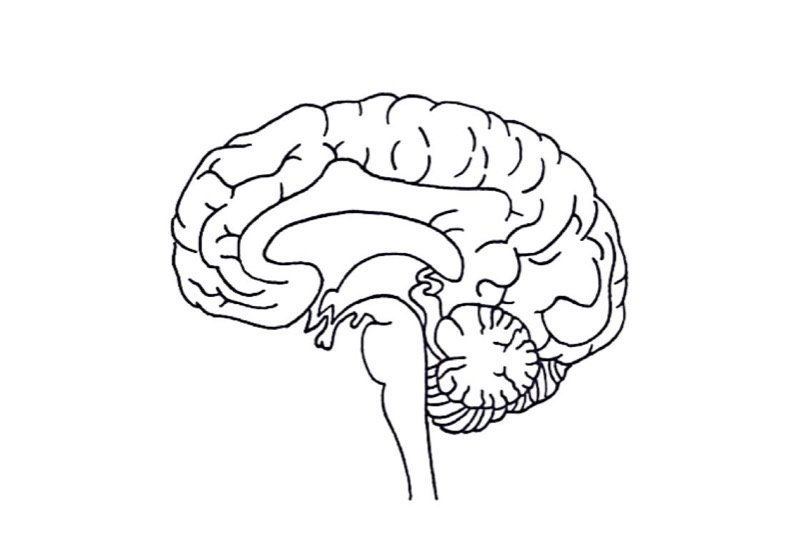
Is this diagram an example of a tissue, organ or organ system?
This is an organ (the brain) which is made of multiple different tissues
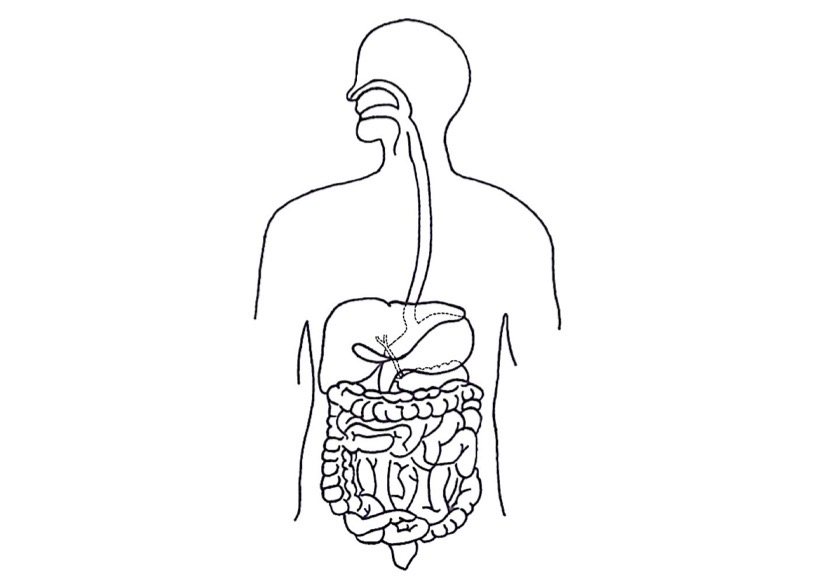
Is this diagram an example of a tissue, organ or organ system?
This is an organ system (the digestive system) which is made of multiple different organs working together
Define magnification
How much larger a displayed image is compared with the original object
What is the formula to calculate magnification from image size and actual size?
Magnification = image size / actual size
If a cell with an actual size of 0.05mm in diameter is viewed under a microscope with a 200x power lens, what will the size of the image be in mm?
Image size = actual size x magnification = 0.05 x 200 = 10mm
If an image of a cell is 50mm in diameter when viewed under a 800x microscope, what is the size of the actual cell in mm?
Image size = 50mm, Magnification = 800x, I = A x M can be rearranged to I / M = A, 50/800 = 0.0625mm
How do you convert from mm to cm?
Divide by 10, E.g. 100 mm = 10 cm
How do you convert from cm to mm?
Multiply by 10, E.g. 5 cm = 50 mm
How do you convert from mm to μm? (Higher/Supplement)
Multiply by 1000, E.g. 50mm = 50,000μm
How do you convert from μm to mm? (Higher/Supplement)
Divide by 1000, E.g. 6μm = 0.006mm
Define diffusion
The net movement of molecules from an area of high concentration to an area of low concentration down their concentration gradient
Where does the energy for the movement of particles in diffusion come from?
From the kinetic energy of the particles that causes them to move in random directions
Why is the diffusion of gases important?
It allows for gas exchange in organisms to provide useful gases for processes like respiration and to remove waste gases
Why is the diffusion of solutes important?
It is useful for the uptake of solutes from the soil in plants
How does temperature affect the rate of diffusion?
As the temperature increases, so does the rate of diffusion as the particles have more kinetic energy and move faster
How does the concentration gradient affect the rate of diffusion?
The greater the concentration gradient (the difference between the two areas), the faster the rate of diffusion
How does the surface area of the membrane affect the rate of diffusion?
As the surface area increases so does the rate of diffusion as there is more space for the particles to move through
How does the diffusion distance affect the diffusion rate?
The shorter the diffusion distance, the faster the rate of diffusion
Give one use of water in the body
Water is used as a solvent in the body
Give 3 processes in which water is used as a solvent
Digestion, excretion, transport
What is osmosis?
The passive diffusion of water through a partially permeable membrane
Define osmosis (Higher/Supplement)
The net movement of water molecules from a high water potential to a low water potential across a partially permeable membrane
What is a hypotonic solution? (Higher/Supplement)
A solution that has a higher water potential than the water potential of the cell
What happens if you place an animal cell in a hypotonic solution? (Higher/Supplement)
There is a net movement of water into the cell which causes the animal cell to burst (lysis)
What happens if you place a plant cell in a hypotonic solution? (Higher/Supplement)
There is a net movement of water into the cell which causes the plant cell to become turgid (it does not burst because of the strong cell wall)
What is a hypertonic solution? (Higher/Supplement)
A solution that has a lower water potential than the water potential of the cell
What happens if you place an animal cell in a hypertonic solution? (Higher/Supplement)
There is a net movement of water out of the cell which causes the animal cell to shrink (crenate)
What happens if you place a plant cell in a hypertonic solution? (Higher/Supplement)
There is a net movement of water out of the cell which causes the plant cell to become plasmolysed (the cell membrane peels away from the cell wall)
How is a plant cell supported?
Water within the vacuole creates pressure which supports the cell. The cell wall also provides support.
Explain how the water in cells supports them (Higher/Supplement)
The water creates turgor pressure which pushes the cell membrane against the inelastic cell wall
Define active transport
The movement of molecules from a low concentration to a high concentration against their concentration gradient using energy from respiration
Give one use of active transport in humans (Higher/Supplement)
- Uptake of minerals and nutrients in the small intestine- Reabsorption in the kidney
Give one use of active transport in plants (Higher/Supplement)
Uptake of minerals into root hair cells