Class 19 transcript + slides
 Call Kai
 Learn
Learn Practice Test
 Spaced Repetition
 Match
Match Flashcards
 Knowt Play
1/48

There's no tags or description
Looks like no tags are added yet.
Name | Mastery | Learn | Test | Matching | Spaced | Call with Kai |
|---|
No analytics yet
Send a link to your students to track their progress
49 Terms
Mitosis stages (microtubule organization)
Interphase: diffuse cytoplasmic microtubules.
Prophase: centrosomes separate and nucleate microtubules.
Prometaphase: nuclear envelope breaks down, chromosomes become accessible.
Metaphase: chromosomes align at spindle equator.
Anaphase: chromosomes segregate.
Telophase: complete segregation, midbody forms.
Cytokinesis: cytoplasm cleaved by actin-myosin ring.
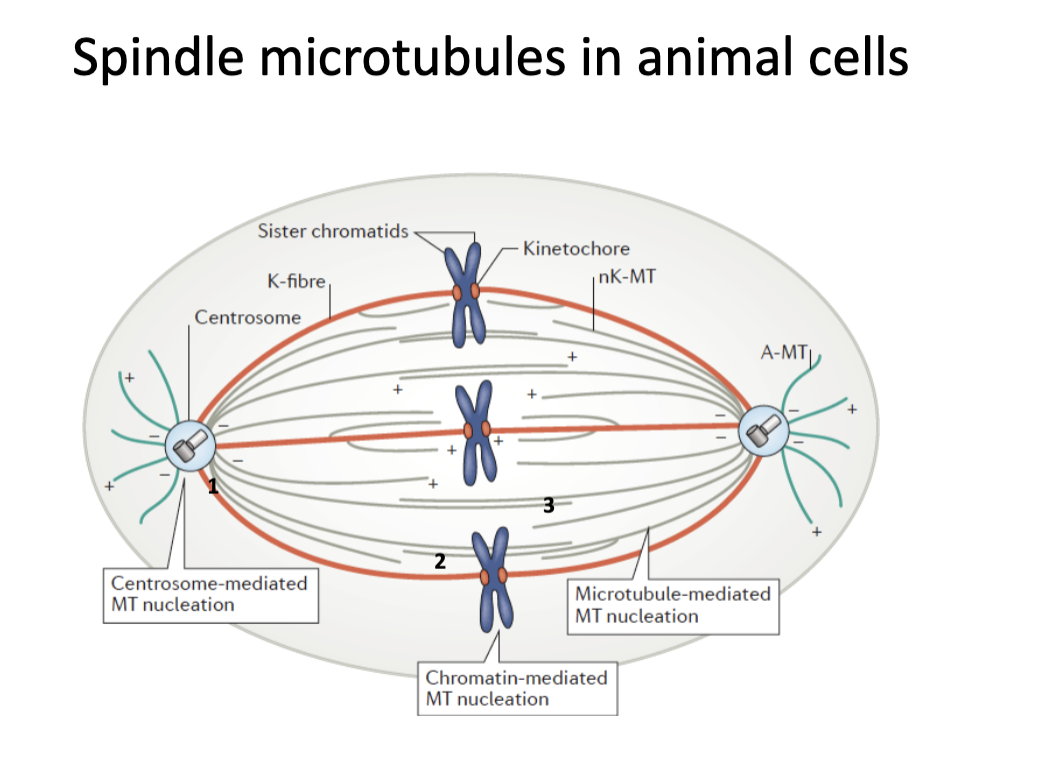
Kinetochore fiber (K-fiber)
Bundles of microtubules that make direct attachment from the centrosome to the kinetochore on the chromosome.
K-fibers are more stable than astral microtubules and are responsible for chromosome movement (alignment and segregation).
Minus ends are anchored at centrosome; plus ends attach to kinetochore.
Astral microtubules
Microtubules that radiate outward from the centrosome toward the cell cortex. Their name comes from the "star-like" (aster) appearance.
They help position the spindle within the cell.
Interpolar microtubules (non-kinetochore microtubules)
Microtubules that extend from one spindle pole toward the opposite pole, overlapping in the middle. They are not attached to kinetochores and help push the poles apart during anaphase.
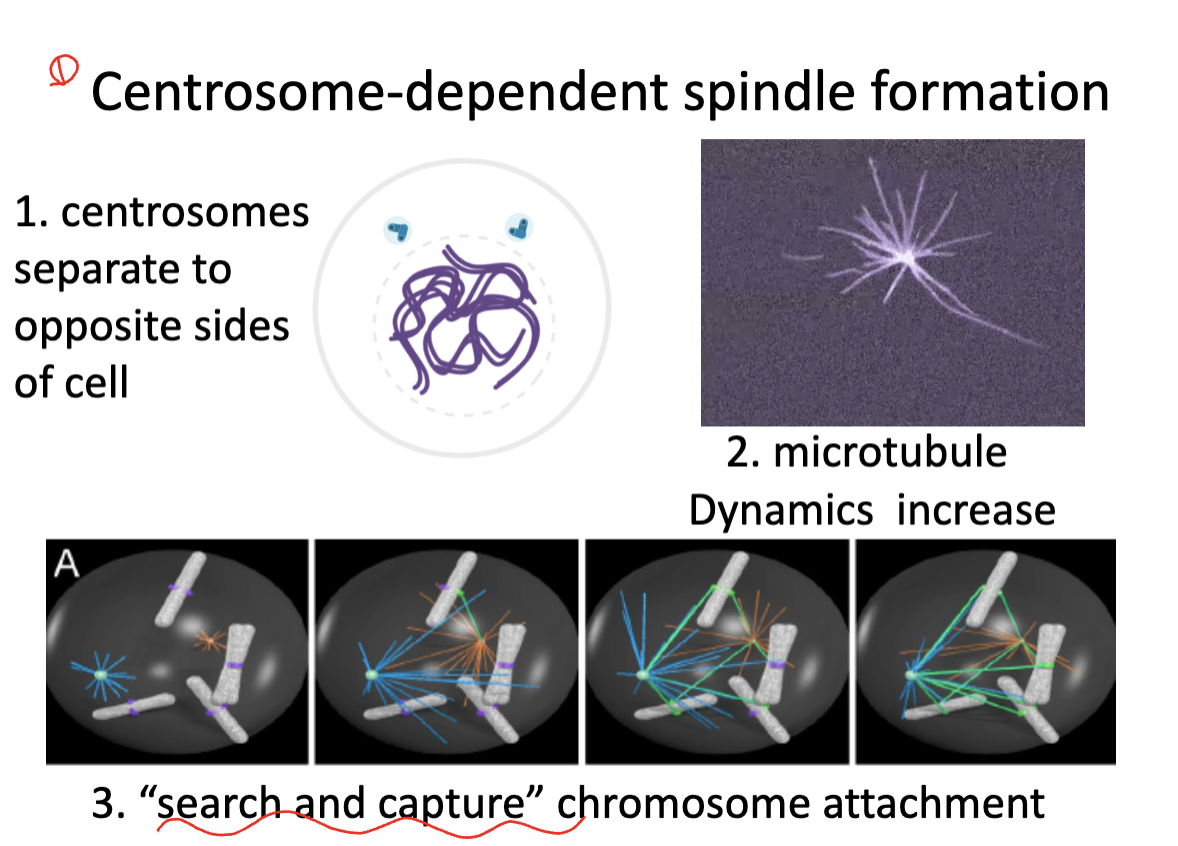
Search and capture model
The classic model for spindle formation where microtubules nucleate from centrosomes and undergo dynamic instability, growing and shrinking to "search" for and capture kinetochores.
This alone is inefficient and requires additional mechanisms.
Xenopus oocyte extract system
A cell-free system made by grinding frog eggs (Xenopus laevis).
Contains all necessary components for spindle assembly.
Used to study spindle formation by adding sperm DNA or chromatin-coated beads.
Chromatin bead experiment (Heald et al.)
Plastic beads coated with plasmid DNA (chromatinized beads) added to Xenopus egg extracts form bipolar spindles identical to those formed around sperm DNA.
Demonstrates that centrosomes and kinetochores are NOT required for bipolar spindle assembly.
Bipolarity is an intrinsic property of microtubules assembling around chromatin.
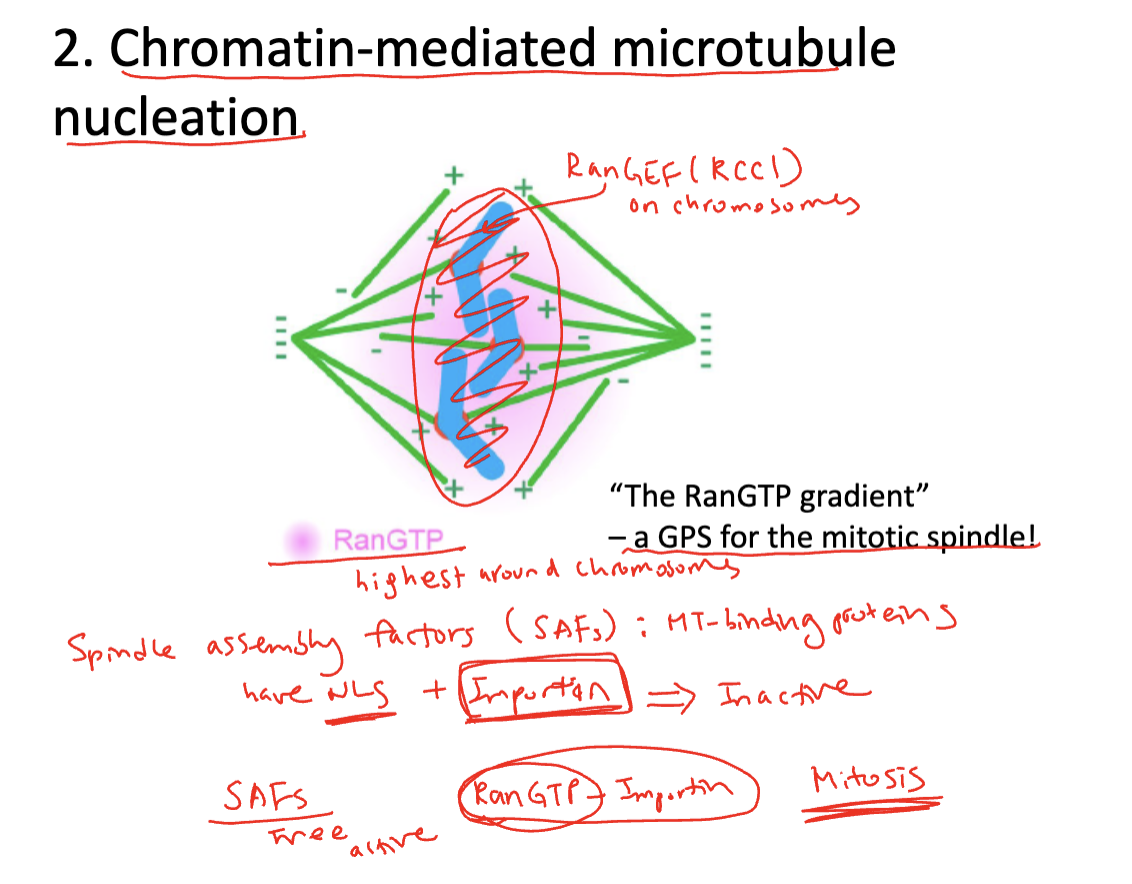
Ran GTP gradient in mitosis
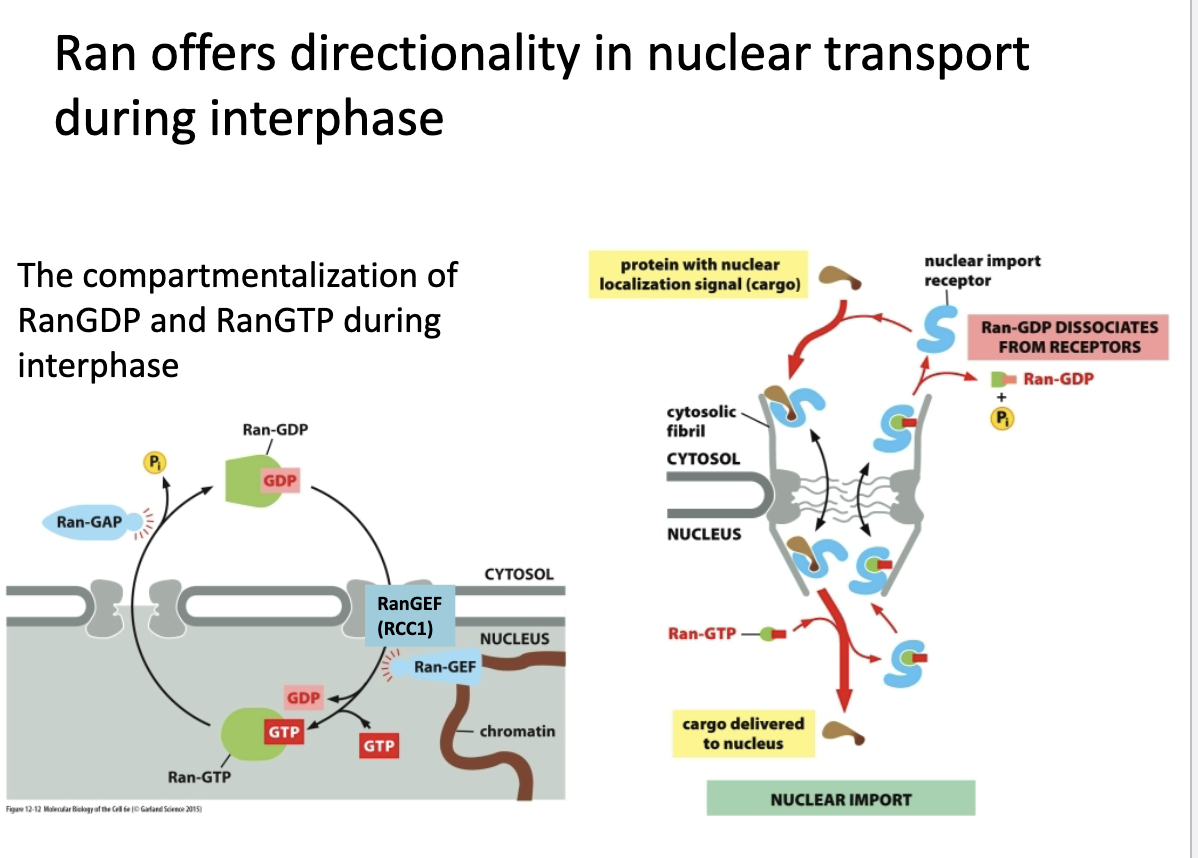
In mitosis, the nuclear envelope breaks down, but RanGEF (RCC1) remains bound to chromatin, creating a high Ran-GTP concentration near chromosomes.
This gradient provides spatial information for spindle assembly, promoting microtubule nucleation and bundling where chromosomes are located.
Ran regulation of spindle assembly factors
Many microtubule-binding spindle assembly factors (SAFs) contain NLS sequences and are bound and inactivated by importins in interphase.
Near chromosomes, high Ran-GTP binds importins, releasing SAFs to bind microtubules and promote spindle assembly locally.
This ensures microtubules form where needed (near chromosomes).
Chromatin-mediated microtubule nucleation
Microtubule nucleation and stabilization that occurs specifically near chromosomes due to the Ran-GTP gradient.
SAFs released from importins by Ran-GTP promote microtubule bundling and branching around chromatin.
One of three major pathways for spindle formation.
Augmin complex
A protein complex that recruits γ-tubulin ring complexes (γ-TuRC) to the sides of existing microtubules, nucleating new microtubules and creating branched microtubule networks.
Augmin is a spindle assembly factor regulated by Ran-GTP and is critical for building robust spindle microtubule density.
Three pathways for spindle microtubule nucleation
Centrosome-mediated (search and capture).
Chromatin-mediated (Ran-GTP gradient releases SAFs).
Augmin-mediated microtubule branching (nucleates new microtubules from sides of existing ones).
All three work together to build robust bipolar spindle.
Spindle pole focusing
The process of gathering and tethering the minus ends of microtubules at the spindle poles to form focused, organized poles.
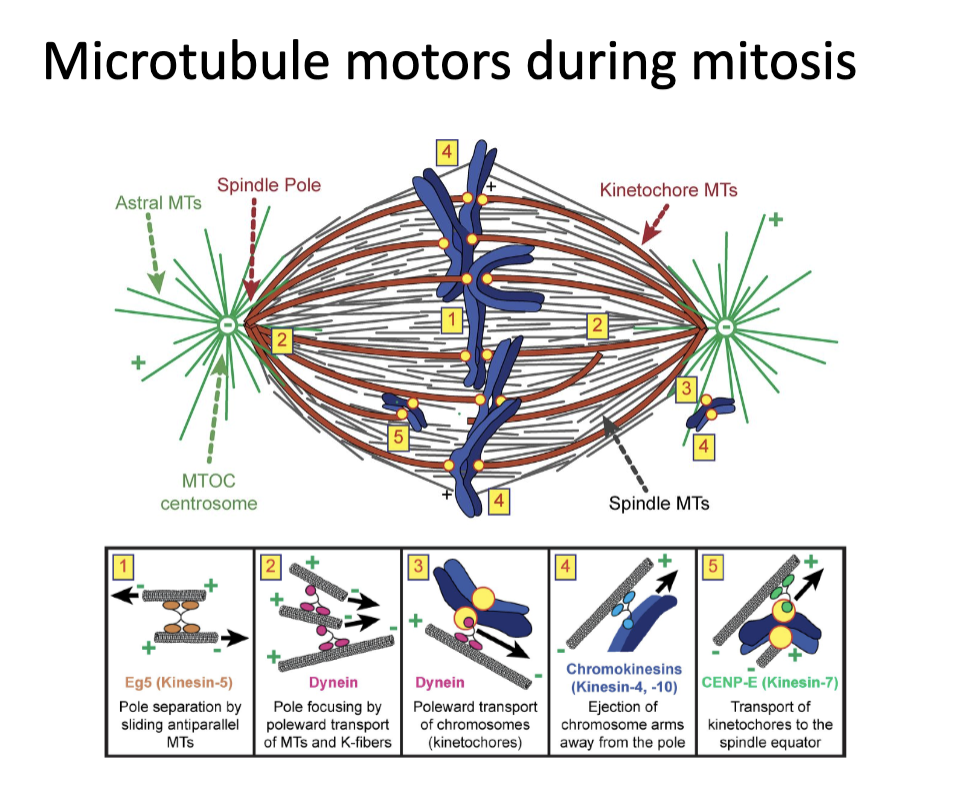
Mediated by minus-end-directed motors: cytoplasmic dynein and kinesin-14.
When inhibited, spindle poles appear "unfocused" or spread out.
Kinesin-5
(Eg5, tetrameric kinesin)
A tetrameric (bipolar) kinesin with motor domains at both ends.
It slides antiparallel microtubules toward each other, organizing them into antiparallel bundles.
Essential for establishing spindle bipolarity.
When inhibited, cells form monopolar spindles (one pole instead of two).
Kinesin-5 mechanism
Both motor heads walk toward plus ends on adjacent antiparallel microtubules.
This slides the microtubules relative to each other, pushing the spindle poles apart and organizing microtubules into antiparallel bundles in the spindle midzone.
Highly enriched in the middle of the spindle.
Chromosome passenger complex (CPC)
Kinesin-7 (CENP-E)
A plus-end-directed kinesin motor located on chromosome arms.
Pushes chromosomes toward the plus ends of microtubules (toward the spindle equator).
Required for chromosome congression (alignment).
When inhibited, chromosomes fail to align properly (misalignment), though spindle bipolarity appears normal.
Kinetochore
A large protein complex (over 100 proteins) assembled on the centromere that attaches chromosomes to spindle microtubules.
Functions:
1) Attach to dynamic microtubule plus ends.
2) Harness force from microtubule dynamics.
3) Spindle assembly checkpoint (monitor attachment).
4) Cohesion regulation (protect centromeric cohesion until anaphase).
Centromere
Centromeres are not defined by DNA sequence but epigenetically by the presence of the histone H3 variant CENP-A (Cse4 in yeast).
CENP-A-containing nucleosomes mark the centromere and direct kinetochore assembly.
This allows centromere identity to be inherited independently of DNA sequence.
CENP-A (centromere protein A)
A histone H3 variant that replaces canonical H3 at centromeres. CENP-A-containing nucleosomes define centromere location epigenetically and serve as the foundation for kinetochore assembly.
Kinetochore attachment to dynamic microtubules
Kinetochores attach to the plus ends of microtubules and remain attached during both polymerization (growth) and depolymerization (shrinkage).
Multiple kinetochore proteins bind the microtubule lattice, allowing the kinetochore to "harness" the force generated by dynamic instability for chromosome movement.
Fibrous corona
The outer, fibrous-looking meshwork of the kinetochore visible by electron microscopy (3D reconstruction).
Composed of multiple kinetochore proteins, the fibrous corona is important for capturing microtubules.
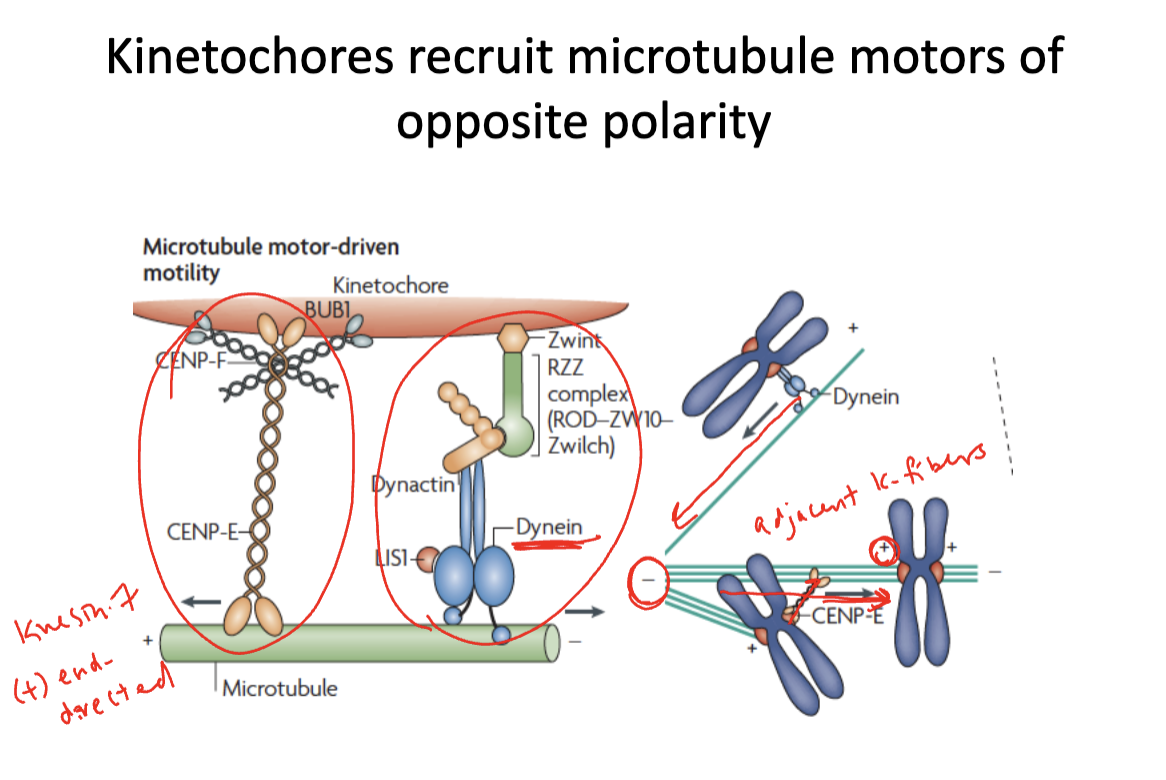
Cytoplasmic dynein at kinetochore
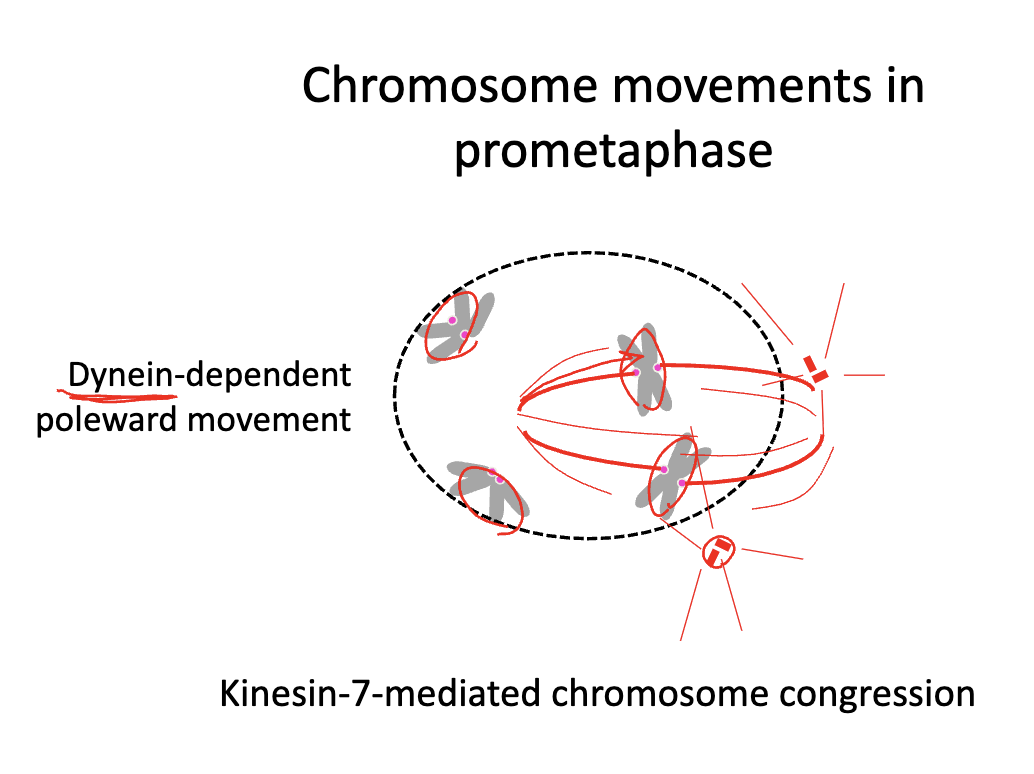
Minus-end-directed motor recruited to kinetochores. Drives poleward movement of chromosomes (toward spindle poles). Helps collect chromosomes that are far from the spindle and bring them to the pole where microtubule density is highest, facilitating proper attachment.
Kinesin-7
(CENP-E) at kinetochore
Plus-end-directed kinesin motor located on kinetochores. Walks along adjacent K-fibers (which have defined polarity with plus ends at equator) to move chromosomes toward the metaphase plate (equator). Required for chromosome congression. Works in coordination with dynein.
Chromosome congression
The process by which chromosomes move to and align at the metaphase plate (spindle equator).
Involves coordinated activities: dynein moves chromosomes poleward (minus-end direction); kinesin-7 (CENP-E) moves chromosomes toward the equator (plus-end direction).
Defects cause chromosome misalignment.
Cohesin
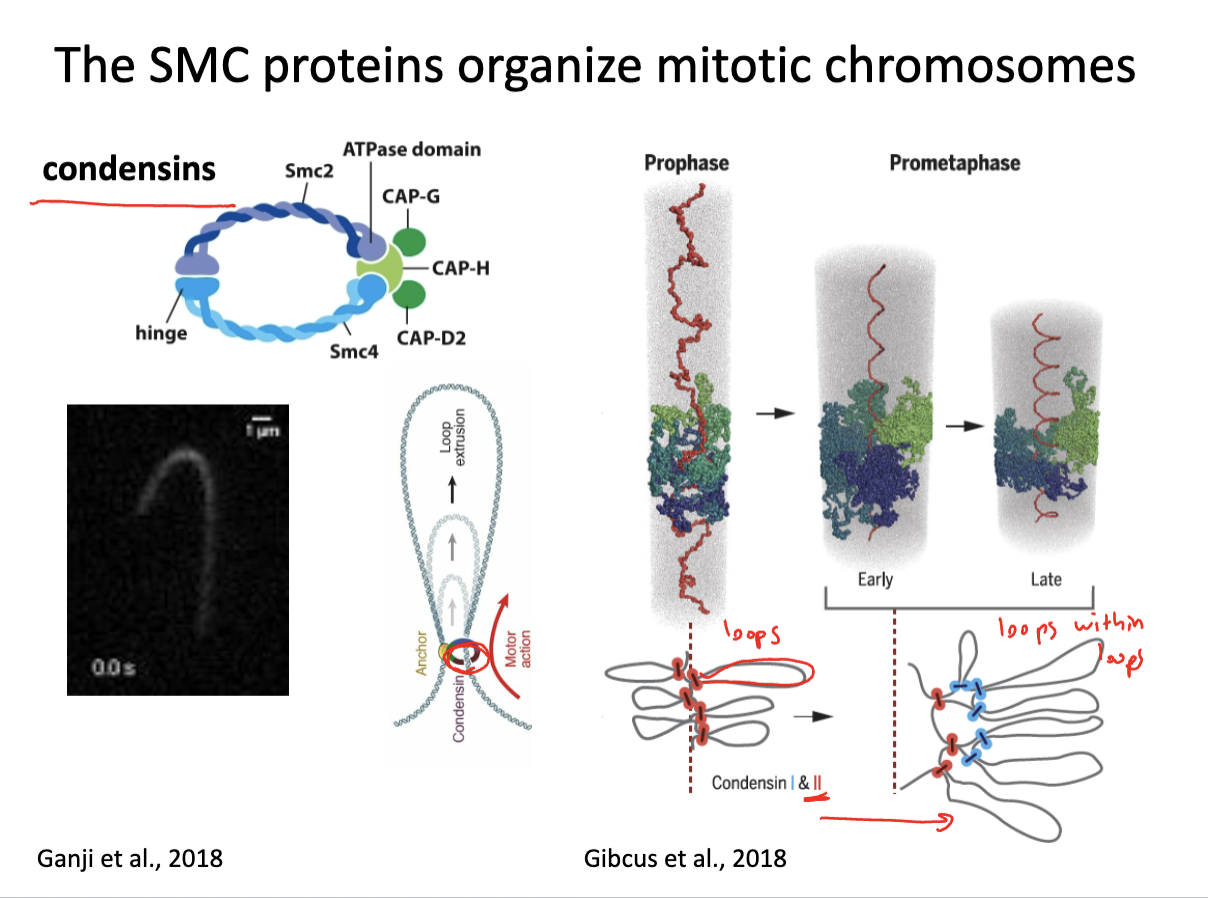
A ring-shaped protein complex (SMC proteins) that holds sister chromatids together after DNA replication.
Cohesin embraces duplicated DNA within its ring.
Cohesin is also a DNA motor that performs loop extrusion, organizing interphase chromatin into topologically associating domains (TADs).
ATPase activity required for loop extrusion but not for sister chromatid cohesion.
Condensin
A ring-shaped protein complex (SMC proteins) that condenses chromosomes in mitosis.
Condensin is a DNA motor that uses ATP hydrolysis to perform loop extrusion, creating loops within loops that compact DNA into helical bundles, forming mitotic chromosomes.
Loop extrusion (SMC complexes)
The mechanism by which SMC complexes (condensin and cohesin) use ATP hydrolysis to thread DNA, forming progressively larger loops.
Condensin loop extrusion compacts DNA into mitotic chromosomes.
Cohesin loop extrusion organizes interphase chromatin into TADs and regulates gene expression.
Cohesin regulation in mitosis
Cohesin holds sister chromatids together from S phase until anaphase.
Cohesion is released from chromosome arms first, but protected at centromeres until anaphase onset.
The centromere/kinetochore is the last region where sister chromatids remain connected, ensuring proper segregation.
Spindle assembly checkpoint (SAC)
A surveillance mechanism at kinetochores that monitors proper microtubule attachment. If any kinetochore is unattached or improperly attached, the SAC generates a "wait anaphase" signal, delaying anaphase onset until all chromosomes are correctly attached (amphitelic attachment). Prevents chromosome mis-segregation.
proper chromosome attatchment attachment
Amphitelic
The correct, stable chromosome attachment configuration where each sister kinetochore is attached to microtubules from opposite spindle poles. This is the desired configuration for equal chromosome segregation.
Incorrect kinetochore attachments
Types:
1) Monotelic (only one kinetochore attached).
2) Syntelic (both sister kinetochores attached to same pole).
3) Merotelic (one kinetochore attached to both poles).
All are common errors that must be corrected before anaphase. The spindle assembly checkpoint detects unattached kinetochores.
SMC proteins (Structural Maintenance of Chromosomes)
A family of ATPases with long coiled-coil domains that form ring-shaped complexes.
Include cohesin (sister chromatid cohesion, interphase organization)
and condensin (chromosome condensation).
Function as DNA motors using ATP hydrolysis to perform loop extrusion
cell cycle
1. Bipolar spindle assembly
2. Chromosome structure
3. Chromosome alignment
4. Chromosome segregation
Spindle microtubules in animal cells
Centrosome-dependent spindle formation
1. centrosomes separate to opposite sides of cell
2. microtubule Dynamics increase
3. “search and capture” chromosome attachment
Ran offers
directionality in nuclear transport during interphase
The compartmentalization of RanGDP and RanGTP during interphase
2. Chromatin-mediated microtubule nucleation
3. Microtubule-mediated microtubule nucleation
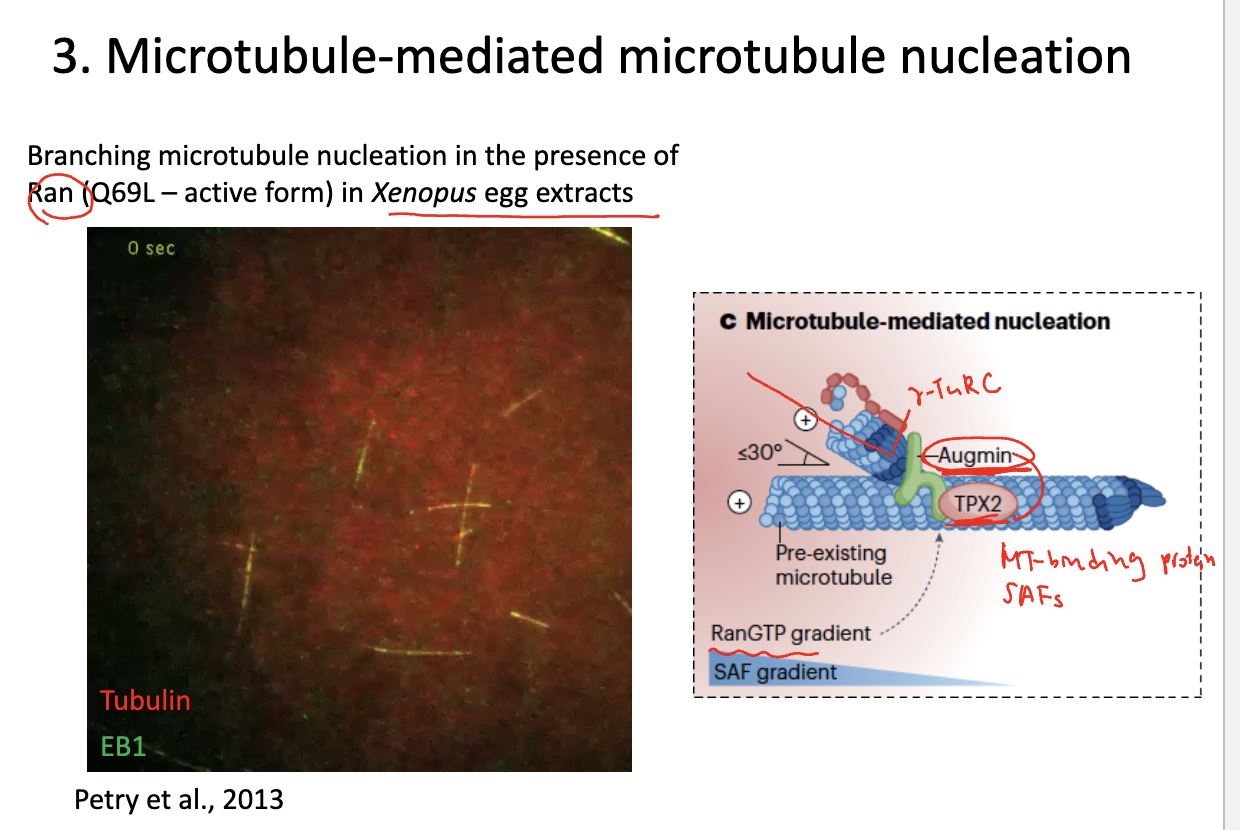
TPX2
Spindle self-organization by
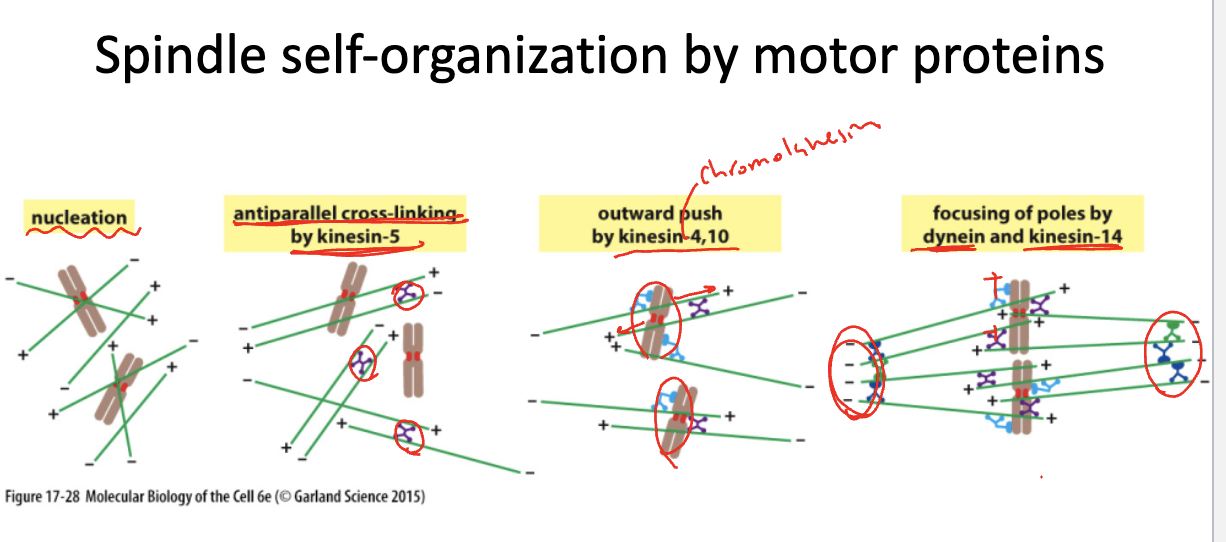
Microtubule motors during mitosis
During mitosis, chromosomes are, parts of condensins and cohesins
compacted into dense rod-shaped structures
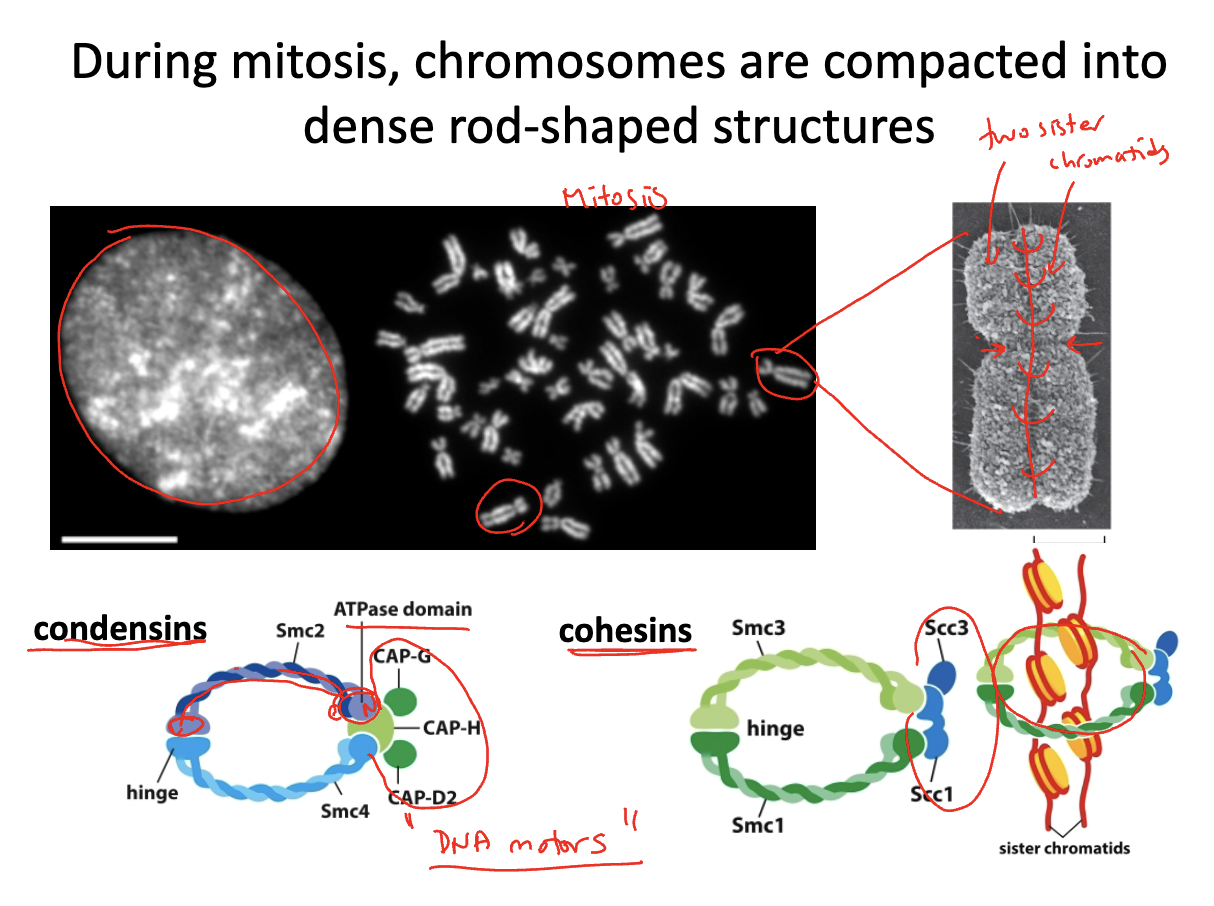
The SMC protein
organize mitotic chromosomes
The SMC proteins 2
• Sister chromatid cohesion
• Chromatin organization
• Gene regulation
• DNA repair
• Recombination
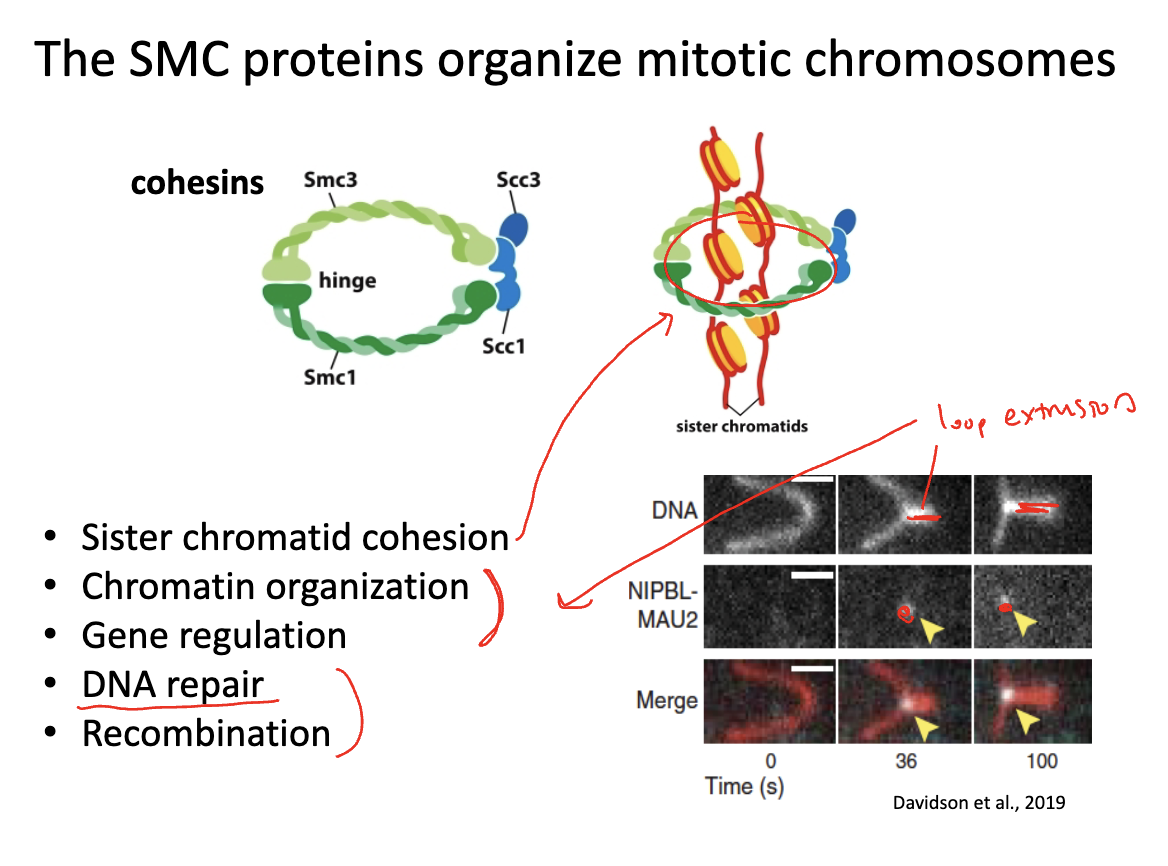
Centromeres are
epigenetically defined and require a Histone H3 variant, CENP-A
CENP-B binds alpha-satellite DNA sequence
Stretched centromeric chromatin fiber
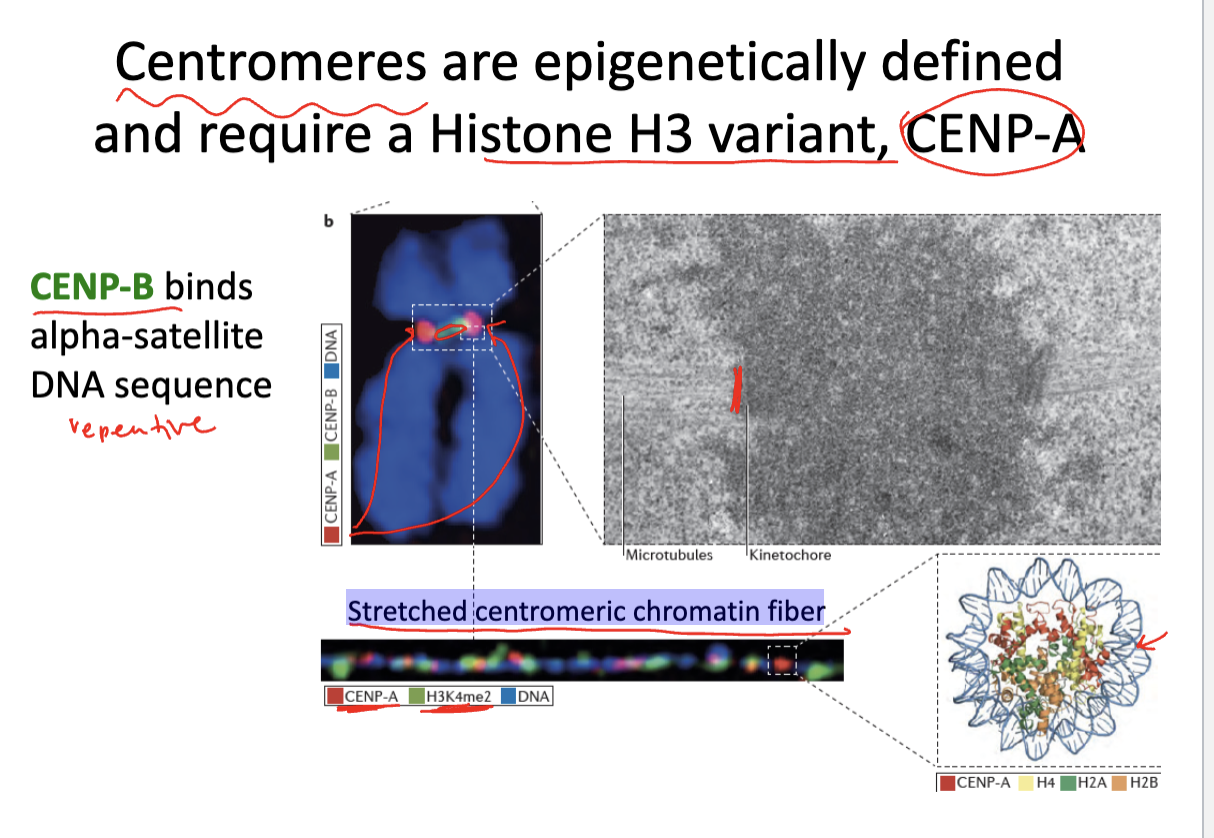
The kinetochore is composed
more than 100 proteins
• Microtubule attachment (harnessing force generated by dynamic microtubule plus ends)
• Spindle assembly checkpoint – monitoring kinetochore-microtubule attachment
• Cohesin regulation - sister chromatid cohesion persists until metaphase
Kinetochores recruit
microtubule motors of opposite polarity
Chromosome movements in prometaphase
Dynein-dependent poleward movement
Kinesin-7-mediated chromosome congression
CENP-E
powers chromosome congression (alingment)
Kinetochores can
hold onto both growing and shrinking ends of microtubules
Kinetochores monitor the status of microtubule attachment