ECON 211 Chapter 7
 Call Kai
 Learn
Learn Practice Test
 Spaced Repetition
 Match
Match Flashcards
 Knowt Play
1/25

There's no tags or description
Looks like no tags are added yet.
Name | Mastery | Learn | Test | Matching | Spaced | Call with Kai |
|---|
No analytics yet
Send a link to your students to track their progress
26 Terms
non binding price floor (shortage)
below equilibrium price
binding price floor (surplus)
above equilibrium price
welfare economics
study of how allocation of resources affects economics well-being
willingness to pay
highest price a buyer is willing to pay for a good or how much a buyer values a good
consumer surplus
difference between wtp and actual price or buyer’s gain from trade
oppurtunity cost represents
lowest price at which sellers are willing to sell
producer surplus
difference between price received by seller and seller’s oppurtunity cost or seller’s gain from trade
total surplus
all gains from trade in the market
efficient outcome
outcome that maximizes total surplus
why is q* efficient?
good goes to buyer who values it the most and is produced by sellers with lowest oppurtunity cost
first criteria of efficient outcomes
all beneficial trades are made, value>cost
second criteria of efficient outcomes
no wasteful trades are made, cost>value
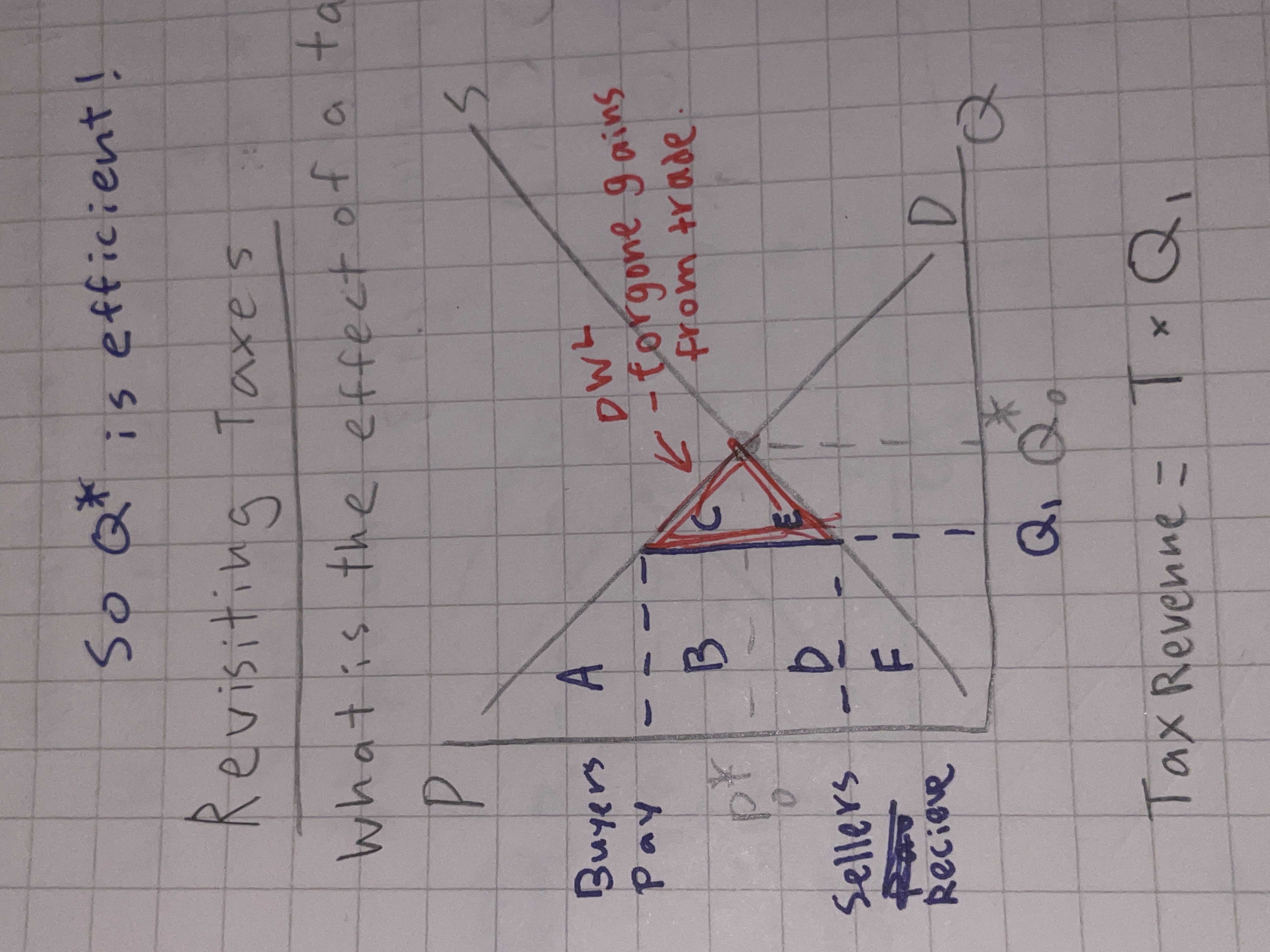
CS without tax
ABC
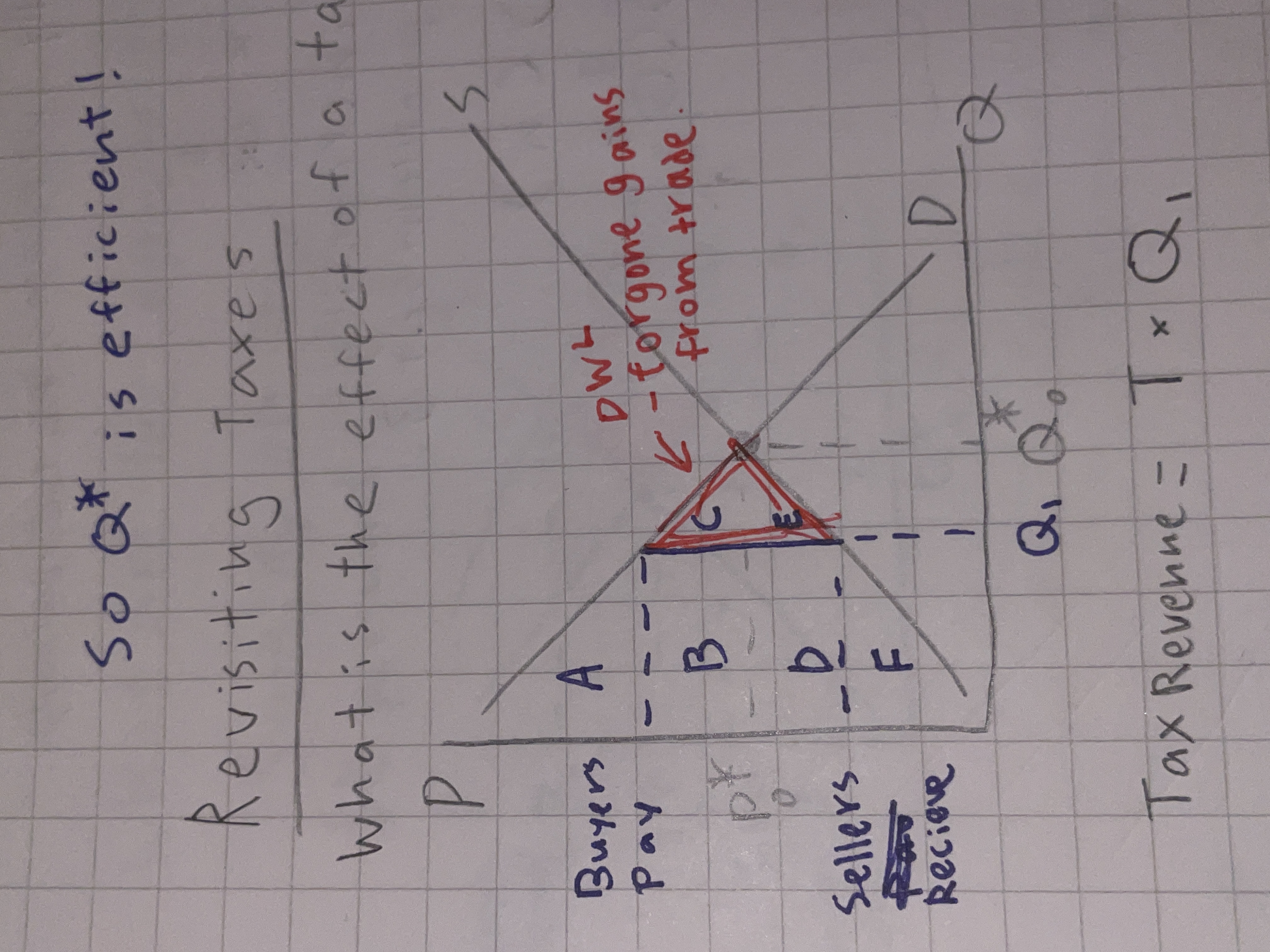
PS without tax
DEF
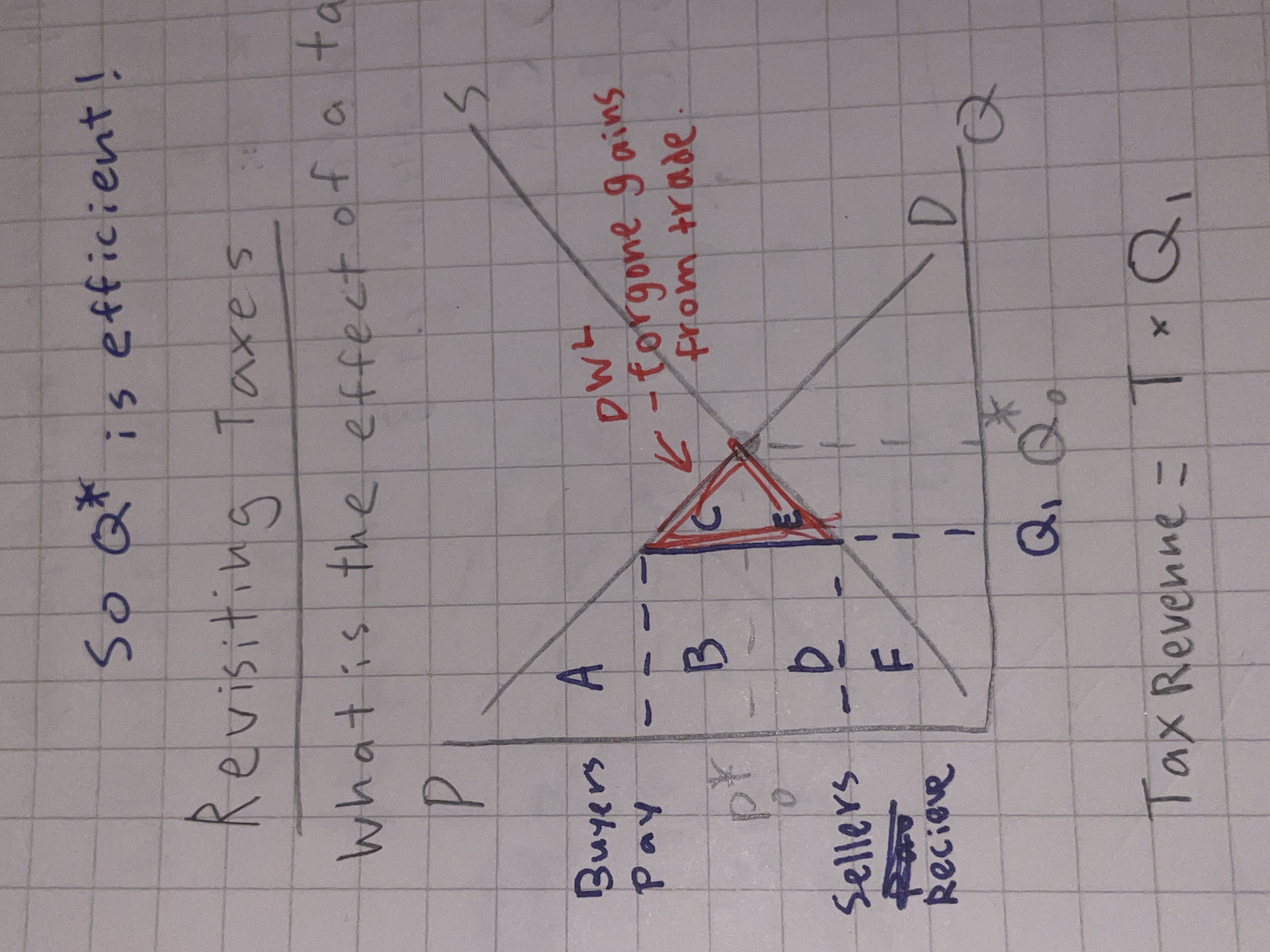
Tax Revenue without Tax
none
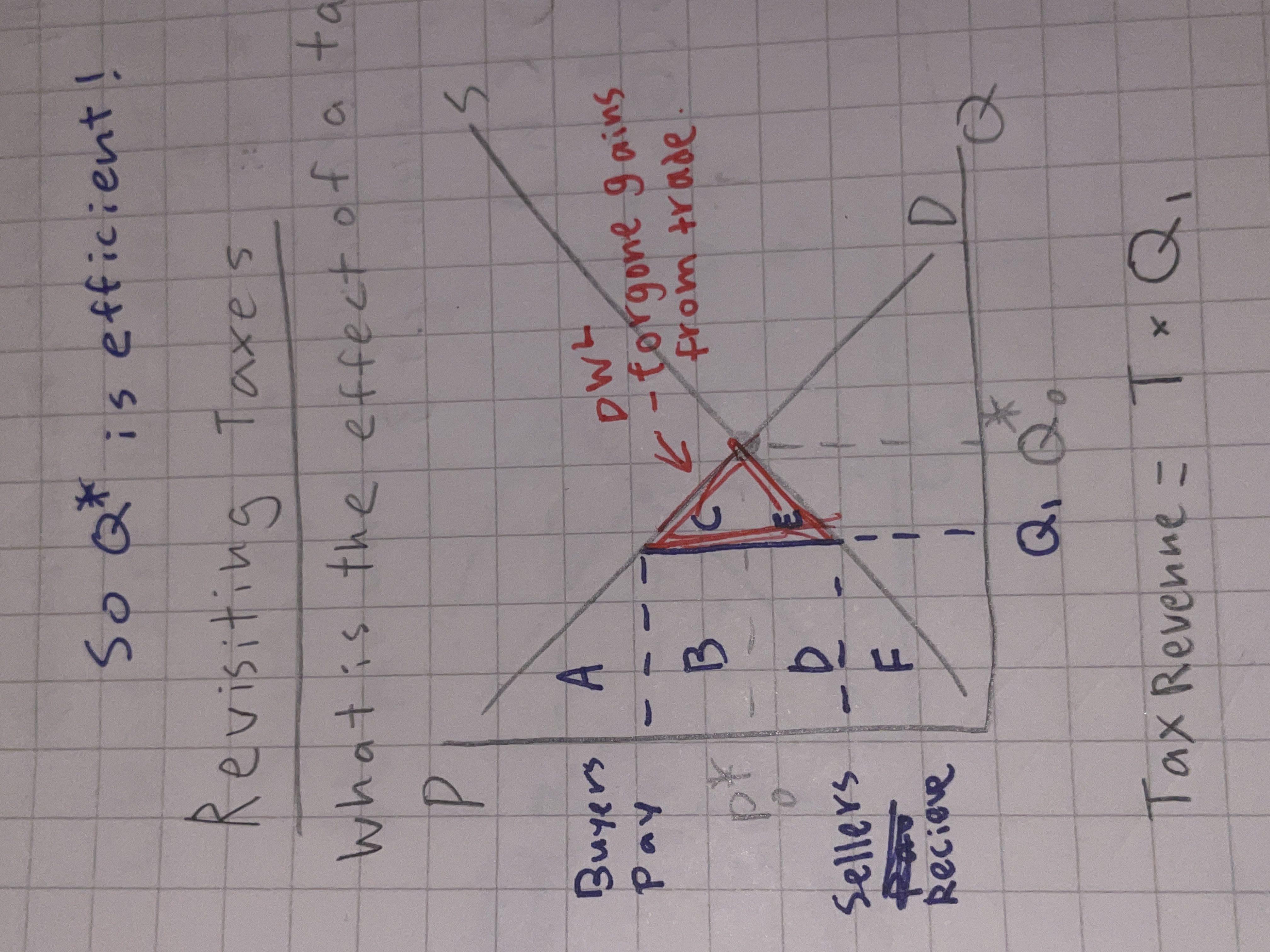
Total Surplus without tax
ABCDEF
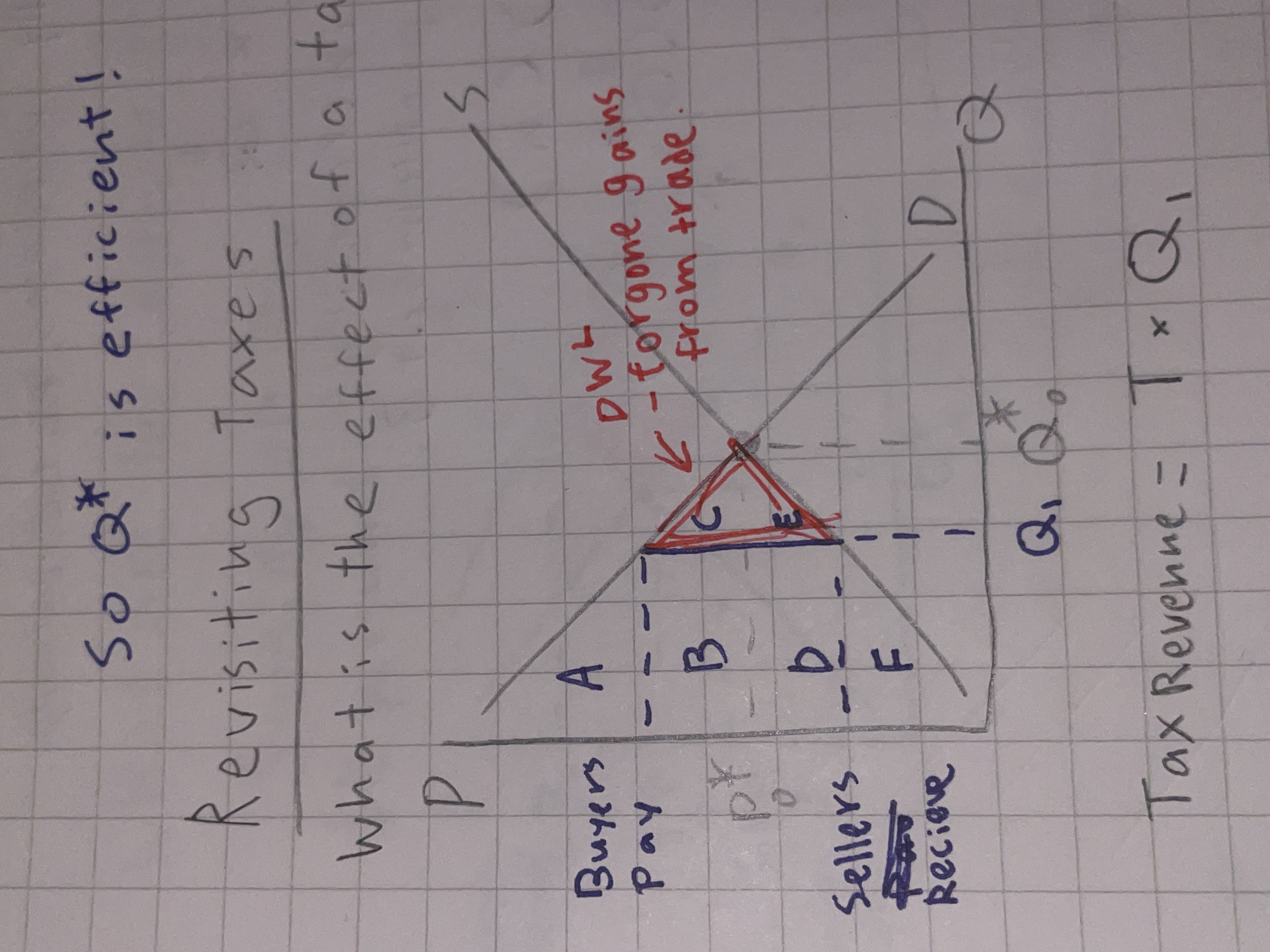
CS with tax
A
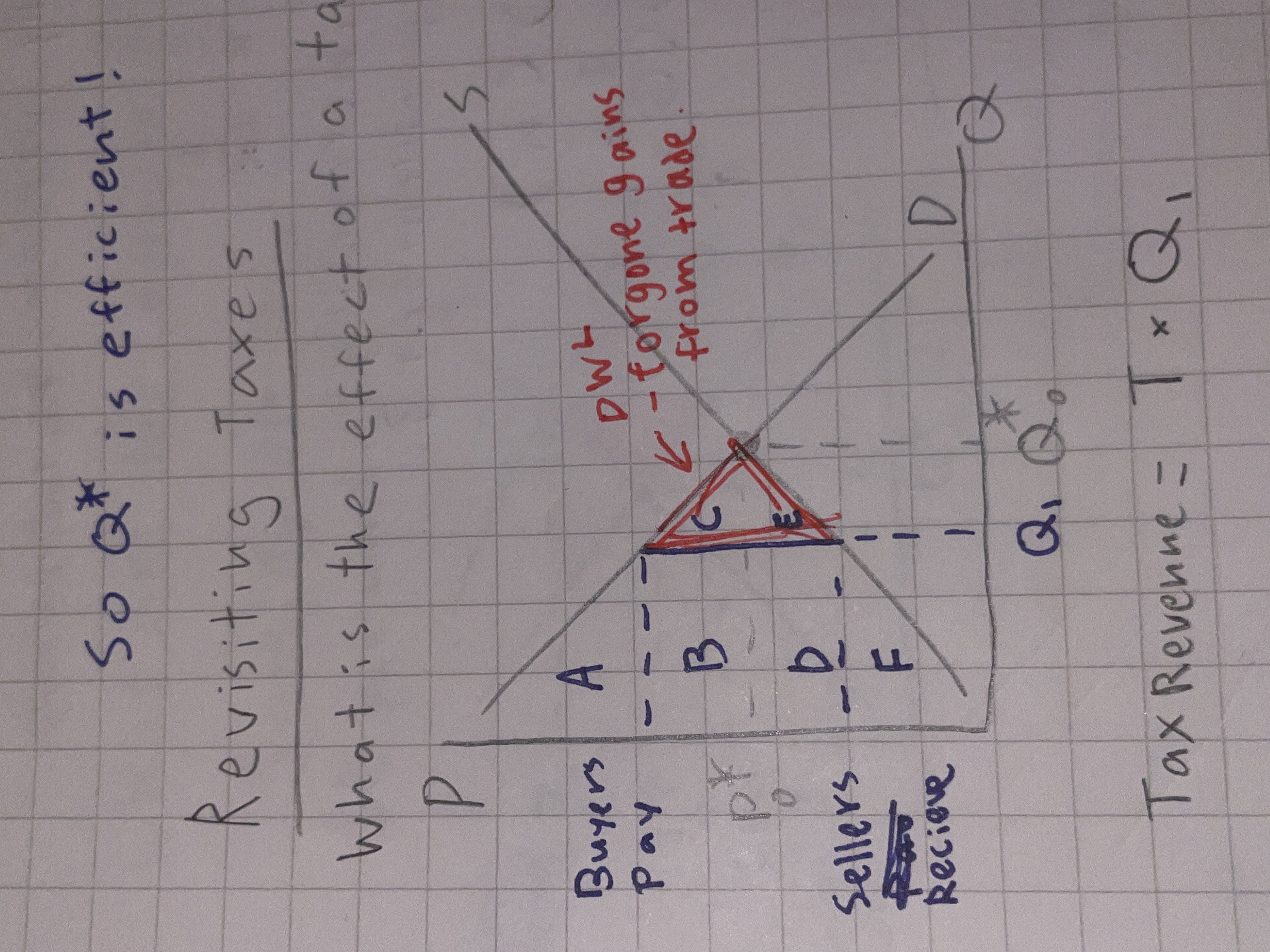
PS with tax
F
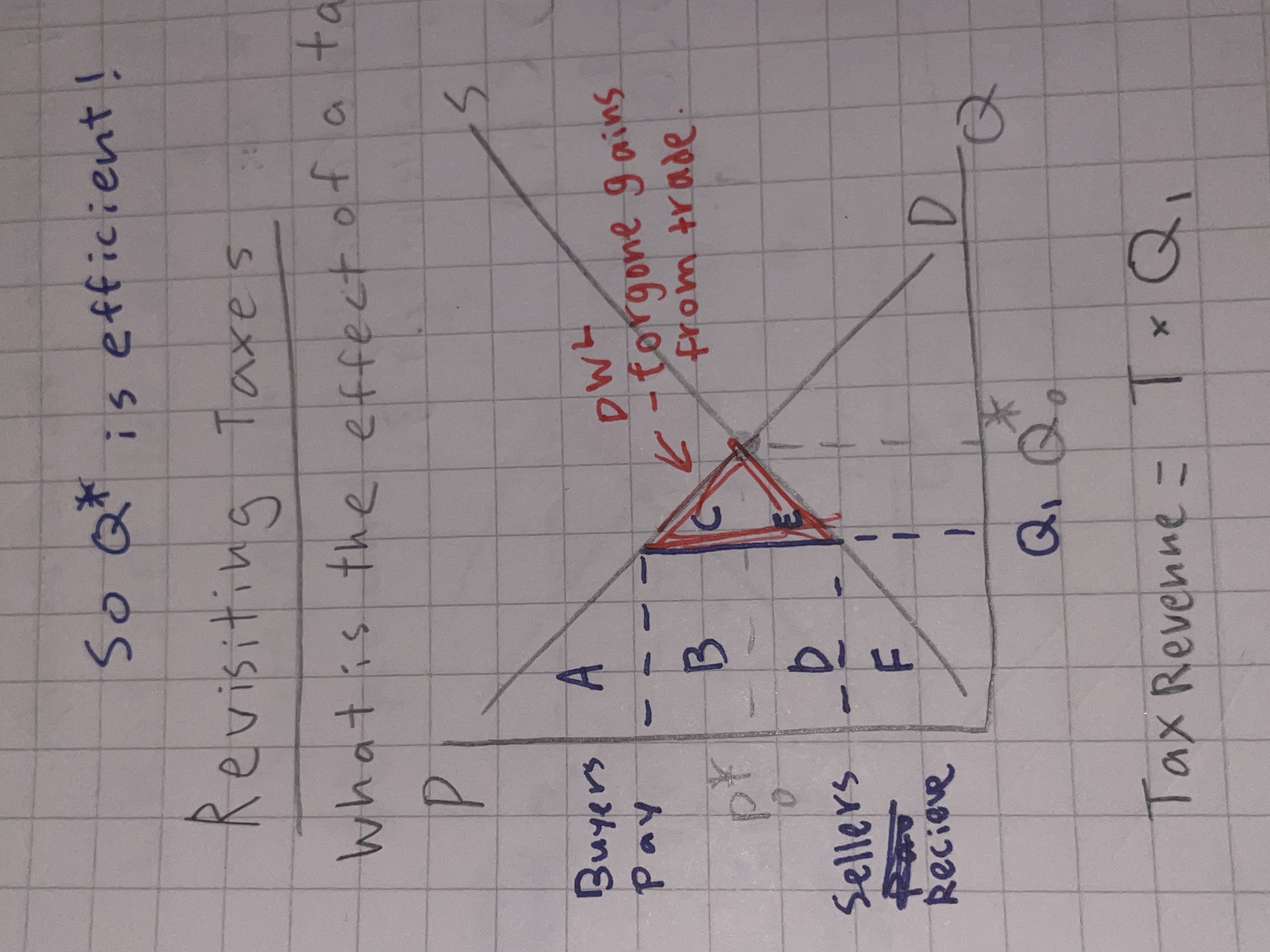
Tax revenue with tax
B+D
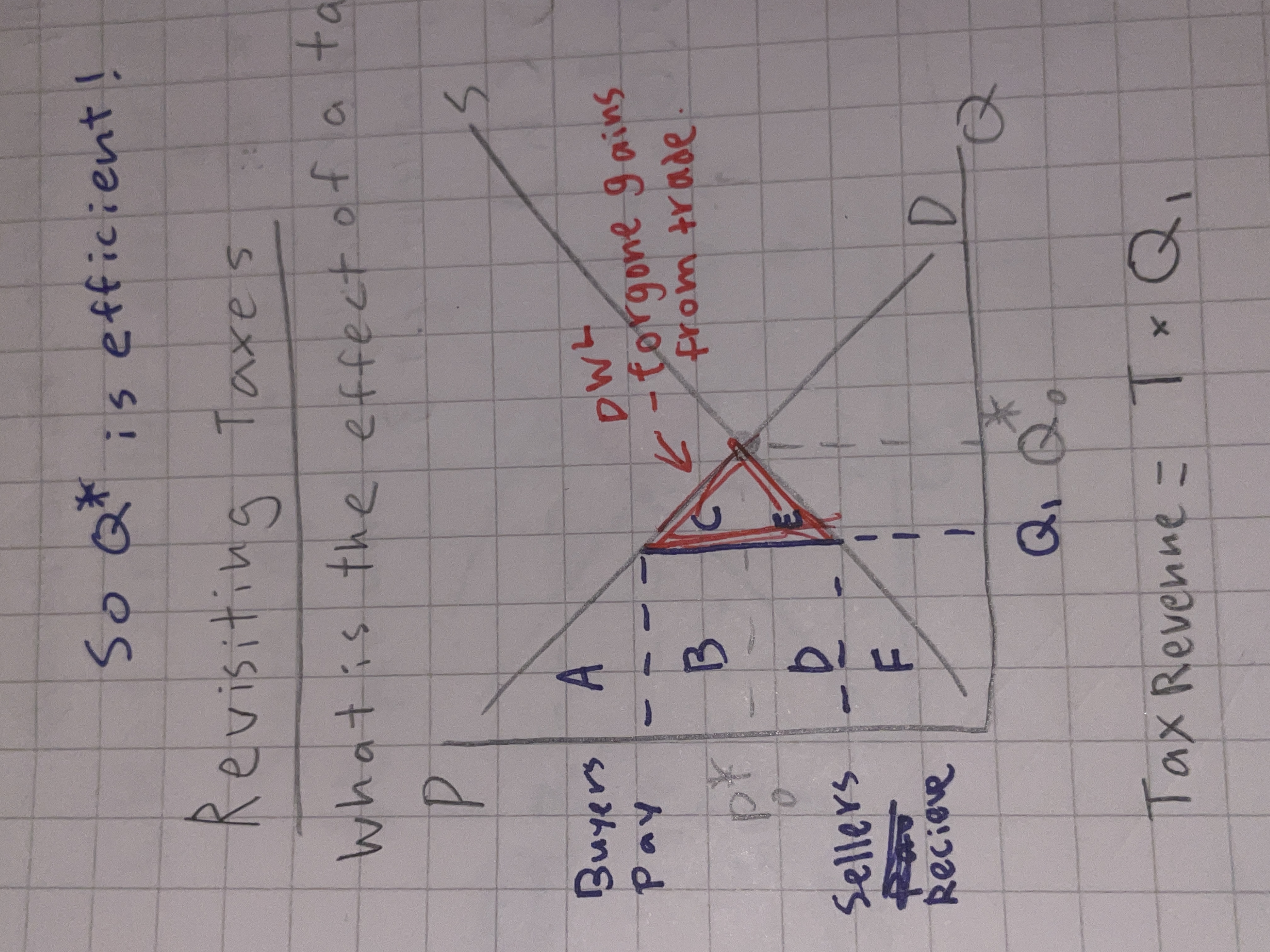
Total Surplus with tax
AFBD
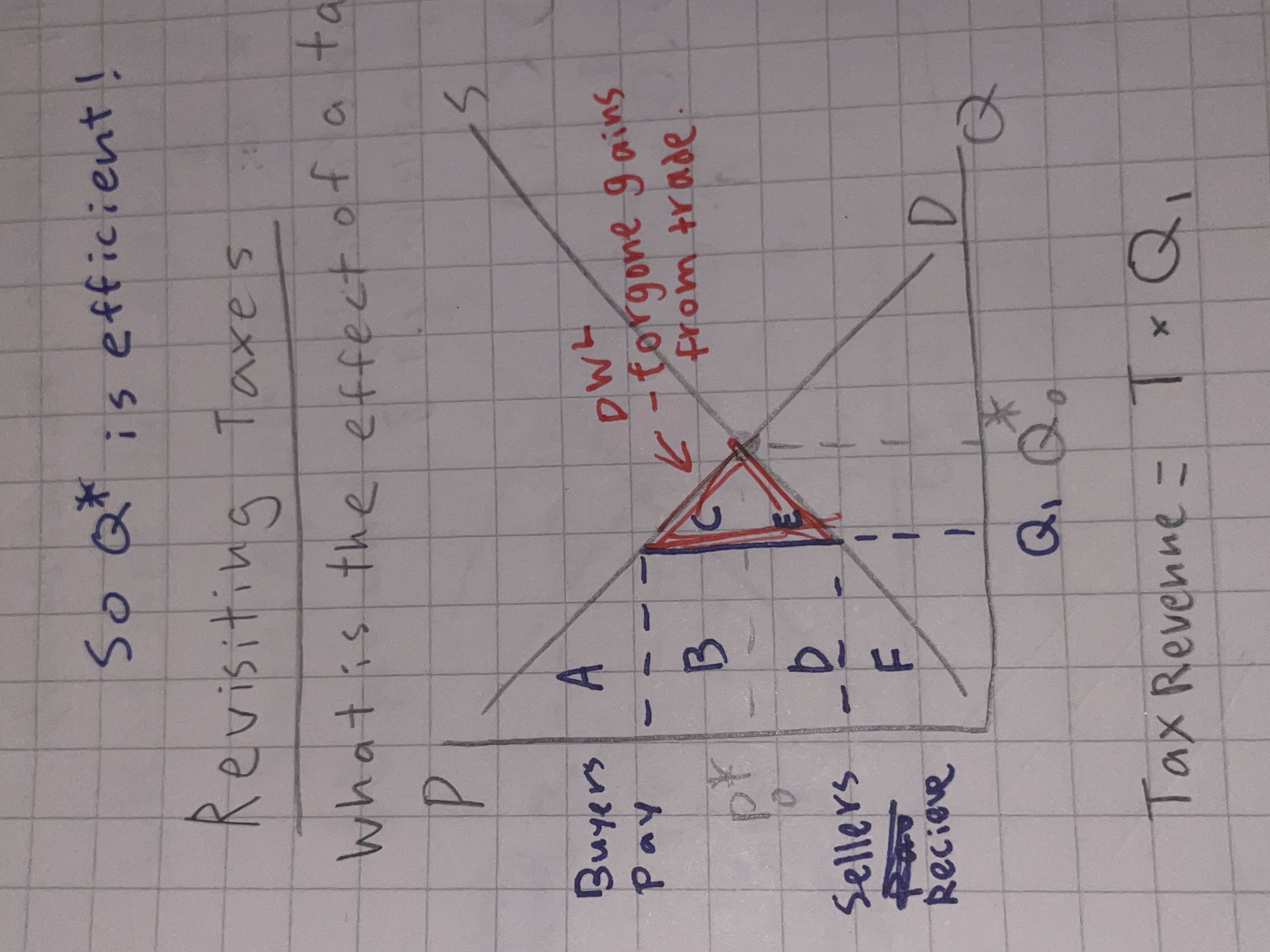
CS change
-(B+C)
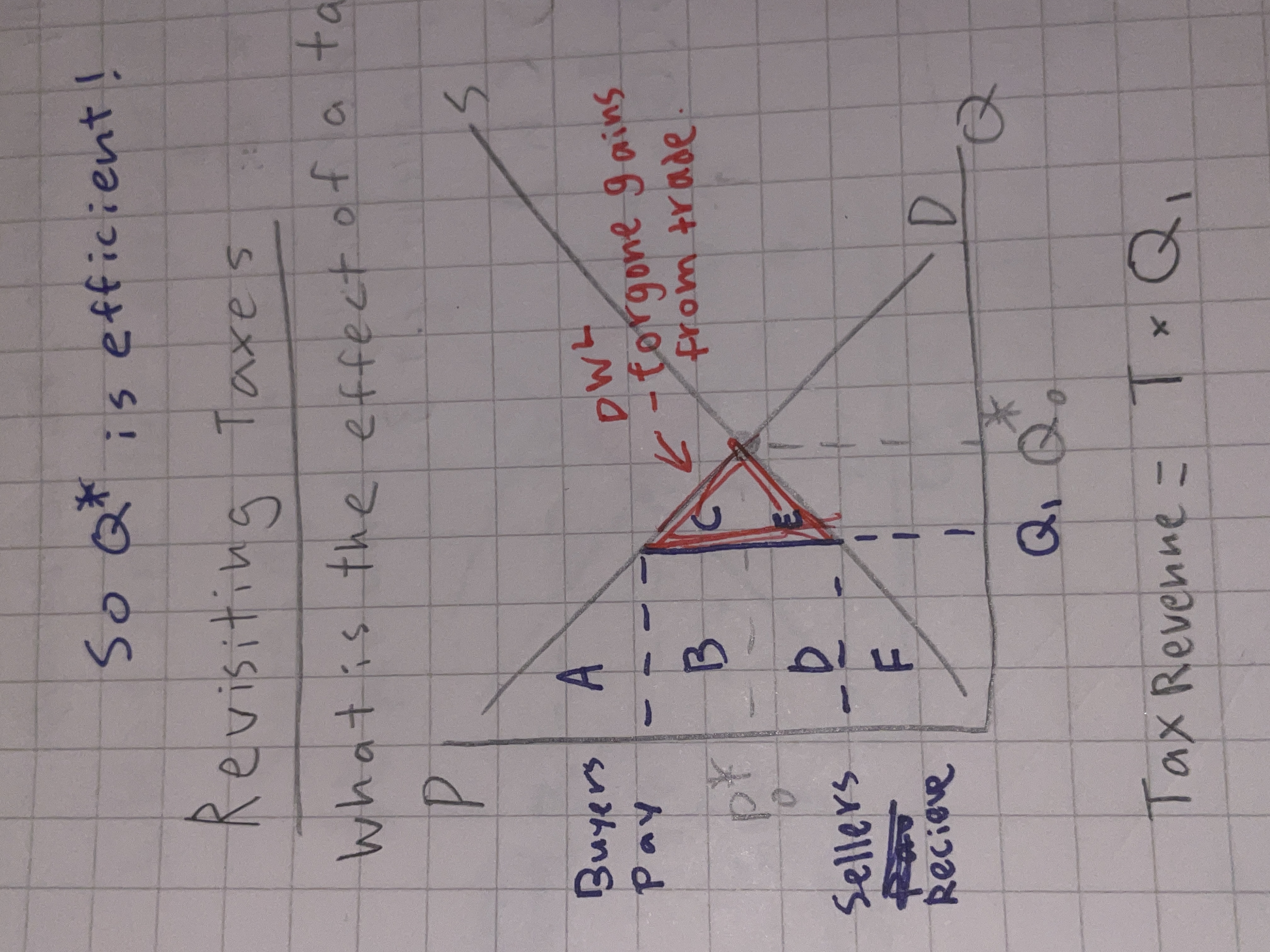
PS change
-(D+E)
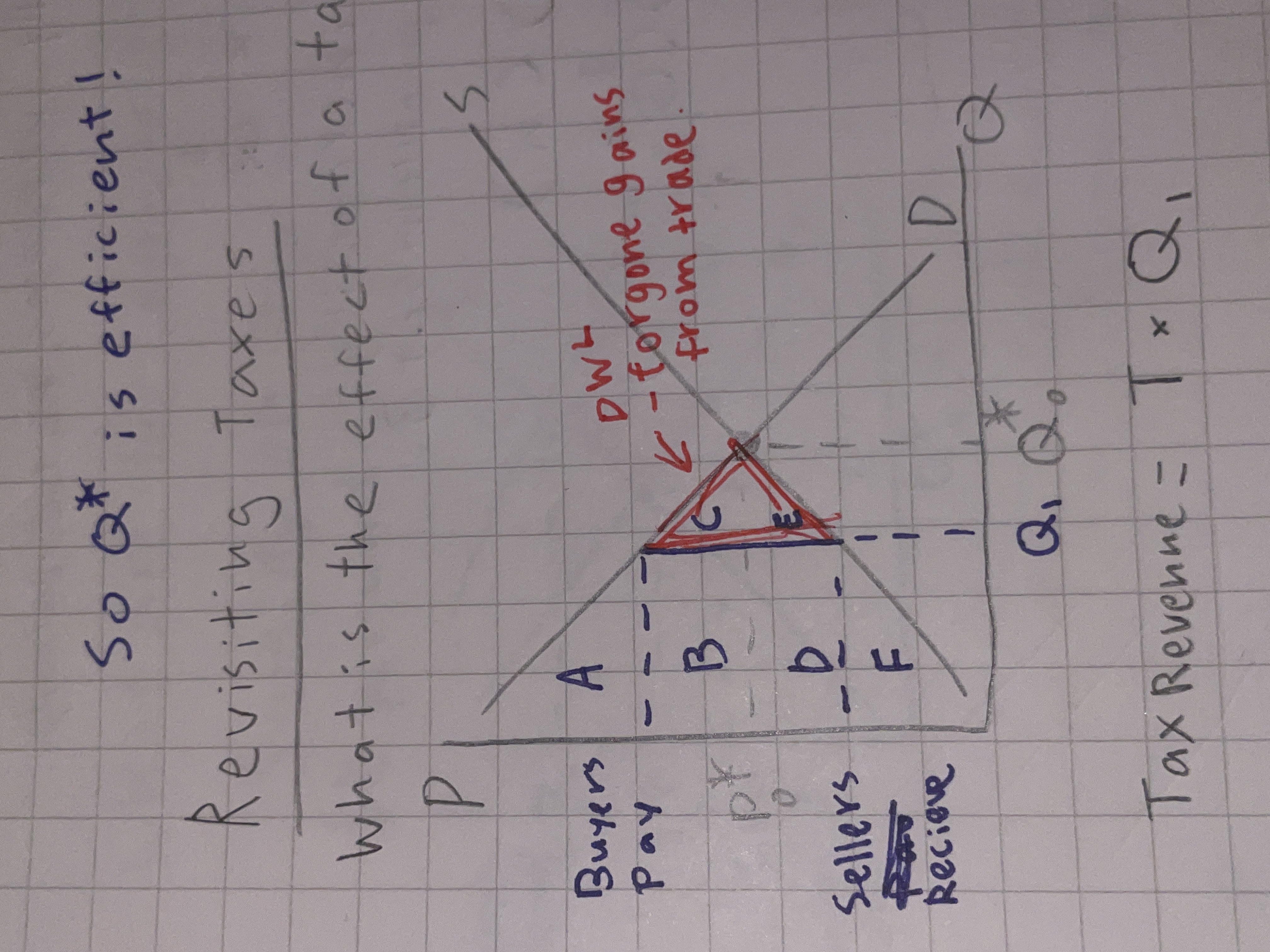
Tax Revenue change
B+D
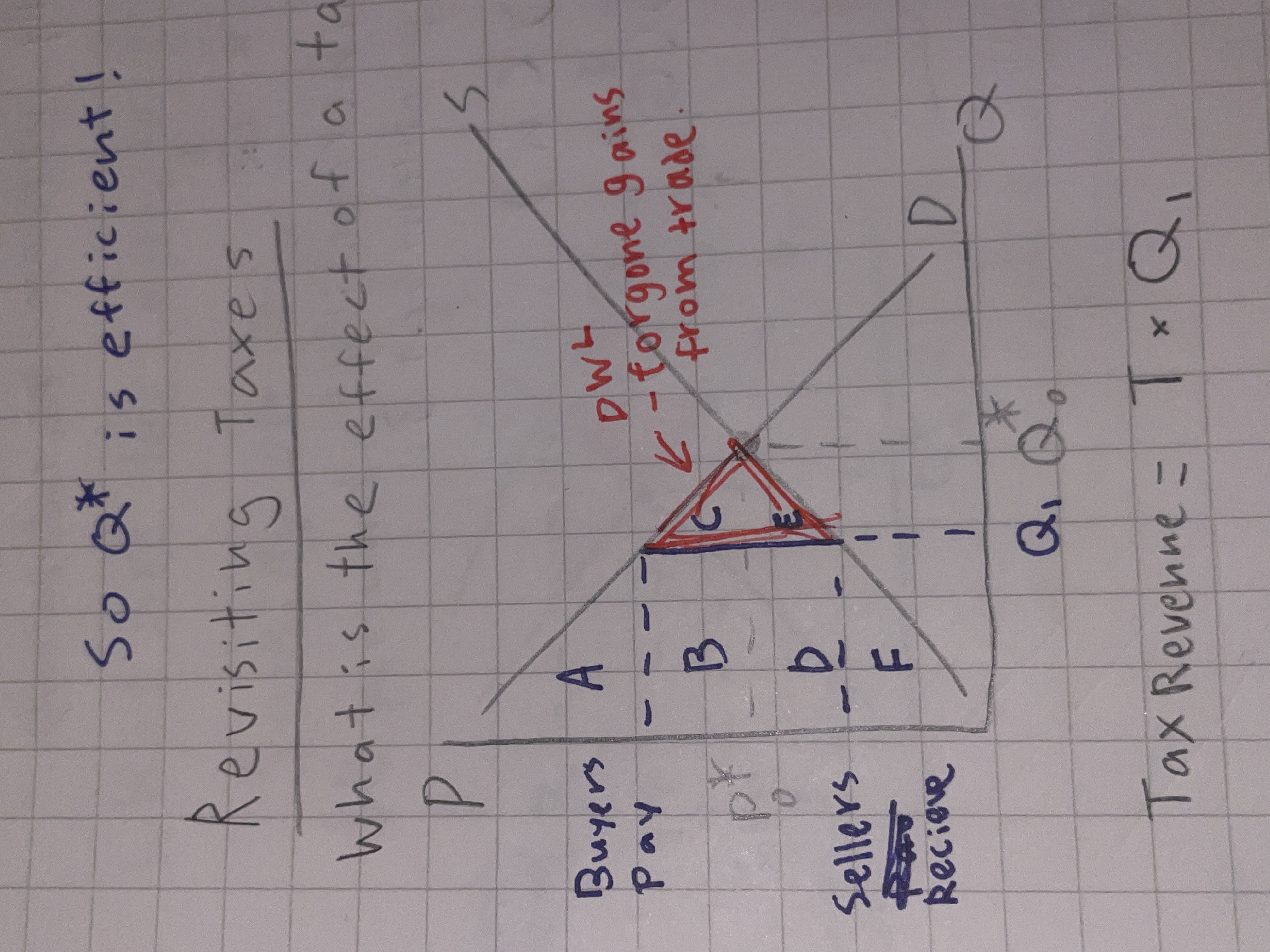
Total Surplus change
-(C+E)
Dead Weight Loss
decrease in total surplus from a market distortion, such as tax
tax revenue=
T*Q1