Week 2 - Special Senses - Balance
 Call Kai
 Learn
Learn Practice Test
 Spaced Repetition
 Match
Match Flashcards
 Knowt Play
1/14

There's no tags or description
Looks like no tags are added yet.
Name | Mastery | Learn | Test | Matching | Spaced | Call with Kai |
|---|
No analytics yet
Send a link to your students to track their progress
15 Terms
Special Senses Breakdown
All special senses have corresponding ORGANS:
Organ → special sense → stimuli → neural sensation
eye → vision → light → colour
Ear & cochlea → hearing → sound waves → pitch
Vestibular apparatus → balance → head movement → motion
Noes & olfactory epithelium → smell → airborne chemicals → smell
Tongue & taste buds → gustation → tastants → flavour
Balance: Vestibular system Definition
The sense of equilibrium, perception of balance and spatial orientation.
Head position and movement
Detecting if body is in motion
Balance: Factors effecting Balance
Base of Support: Area around the outside edges of the body in contact with the ground.
Centre of gravity: Average location of a body’s centre of mass.
Joint movement
Posture
Humans are unstable creatures (little base of support, high centre of gravity, lots of joints)
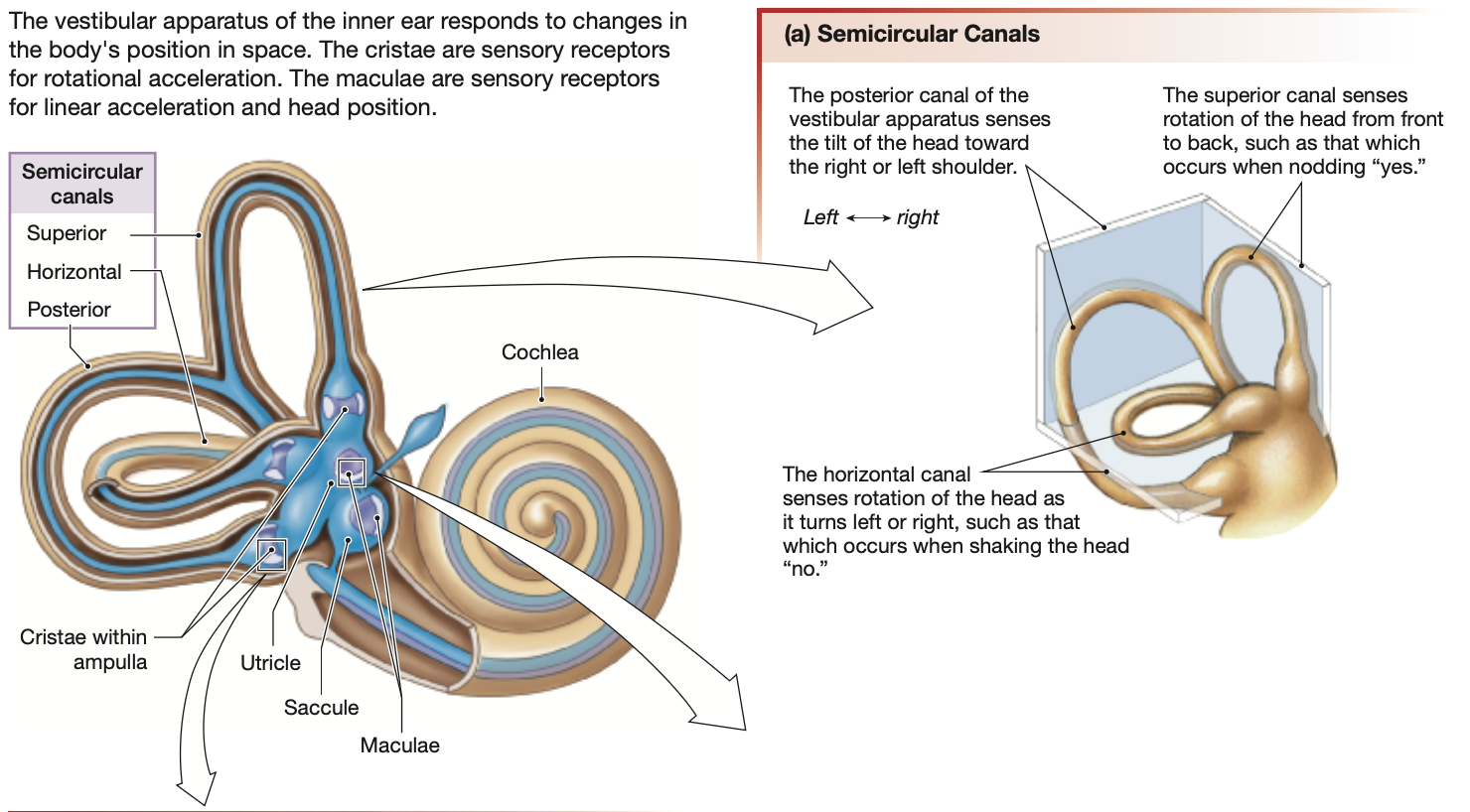
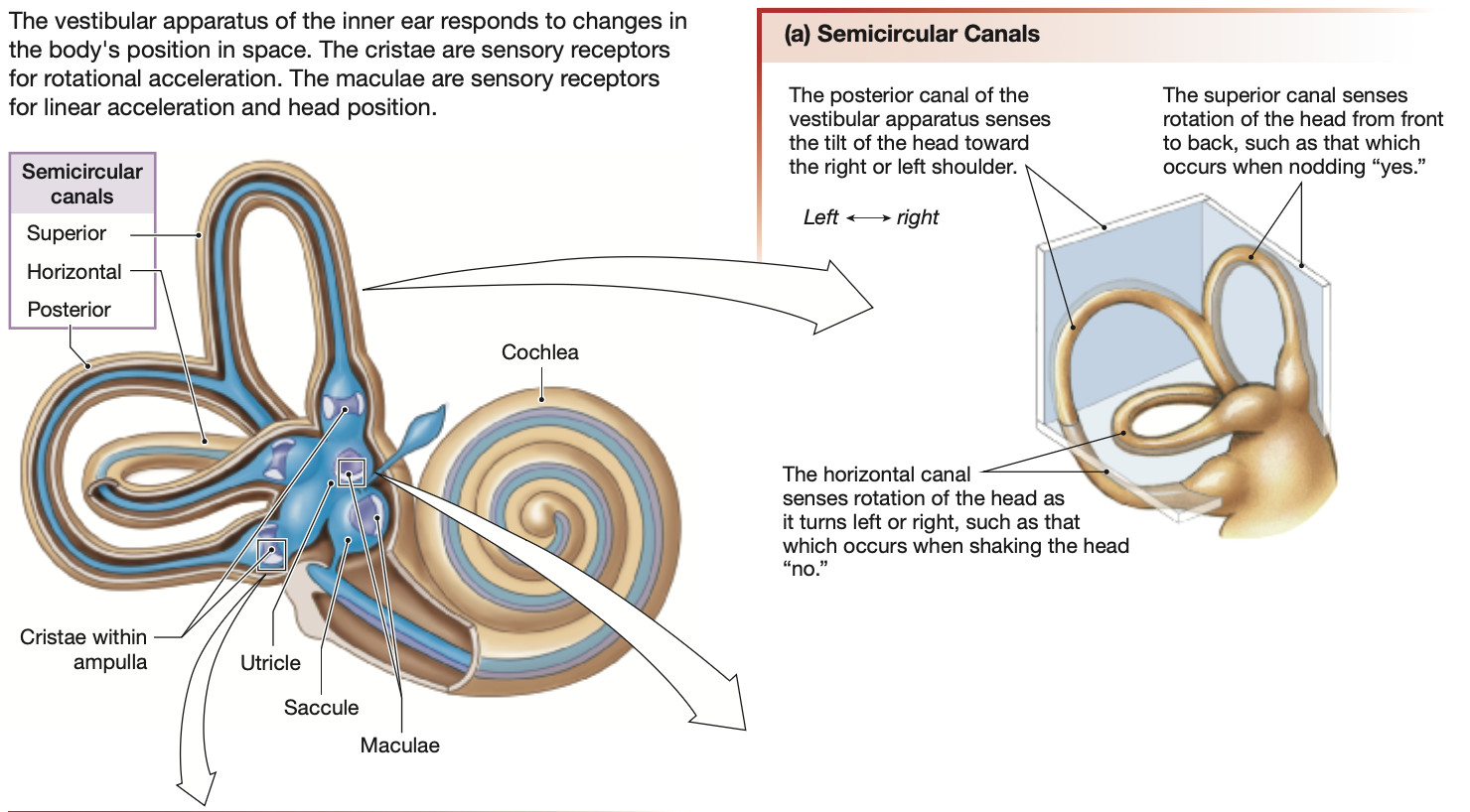
Balance: Vestibular apparatus/labyrinth Anatomy
Vestibular apparatus/labyrinth: Located in inner ear, sits next to the cochlea
Composed of vestibule (also called otolith organs) & 3 semicircular canals
Activates mechanoreceptors (hair cells)
Relies on other senses, such as sight (can cause motion sickness)
Made of 3 loops, called ‘semicircular canals’, each containing fluid
Provides proprioception of the head in 3 dimensions
Balance: Vestibule / Otolith organs
Otolith organs are 2 membranous sacs - Utricle & saccule
Utricle: Sensitive to horizontal movements (e.g driving a car)
Saccule: Sensitive to vertical movements (e.g standing in an elevator)
Different functions due to different anatomical positions
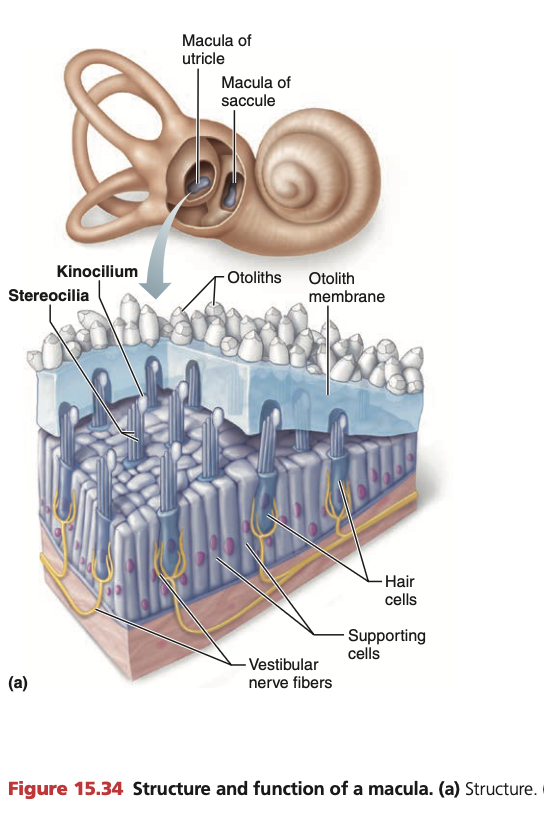
Both surrounded by '“macula tissue” - hair cells (mechanoreceptors) surrounded by support cells
Balance: Otolith organs: Macula
Hair cells are embedded within the macula.
Stereocilia of the hair cells project into a gelatinous otolithic membrane laying on top.
Resting above the viscous otolithic membrane are a layer of calcium carbonate crystals called “otoliths”.
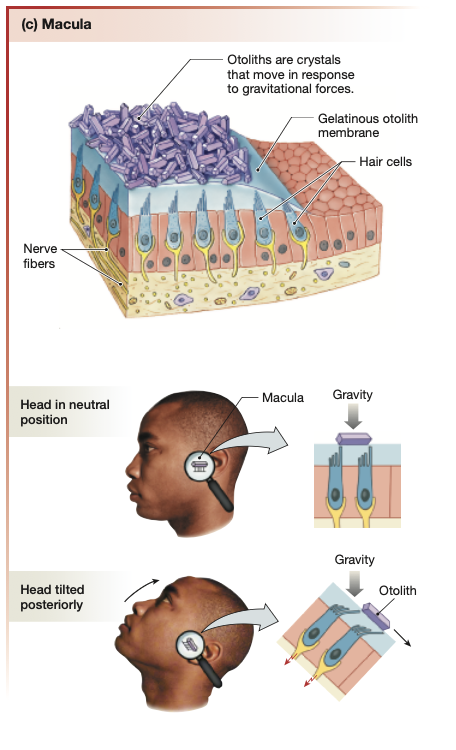
Crystal otoliths make the otolithic membrane top-heavy, hence the gel moves in response to head movements in line with gravity
Balance: 3 Semicircular canals
3 membranous tubes.
Oriented at 90 degrees of one another. Oriented in the 3 different planes.
Filled with endolymph
At the base of each canal is a swelling called an ampulla
Inside each ampulla, is a gelatinous capsule called the cupula
Fluid movement in the:
Superor/Anterior semicircular canal: Nodding head - sagittal plane
Horizontal/Lateral semicircular canal: Shaking head - transverse plane
Posterior semicircular canal: Tilting head sideways - coronal plane
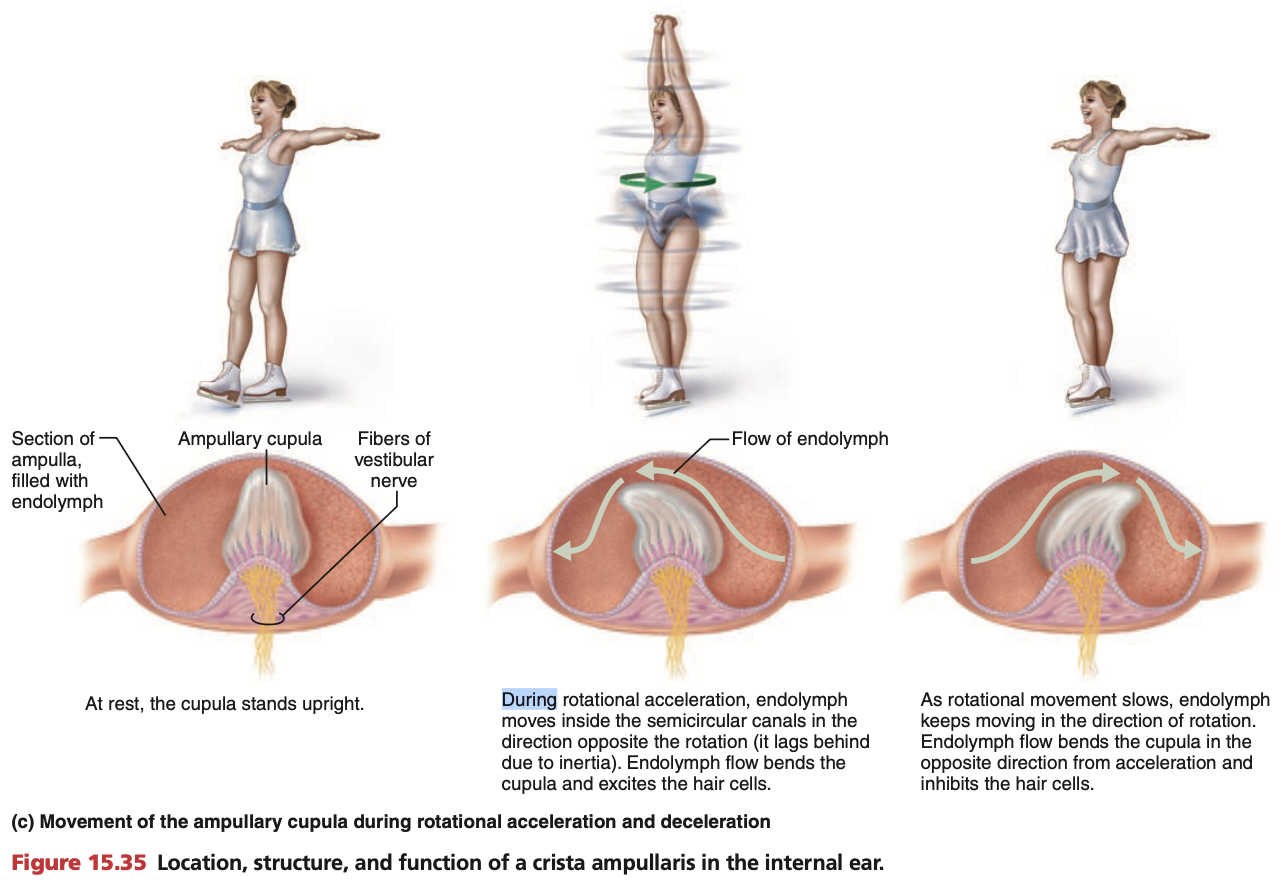
Balance: 3 Semicircular canals: Ampulla
Inside each ampulla, is a gelatinous capsule called the cupula
Hair cells (mechanoreceptors) extend into the cupula
Head turns in a direction (e.g turns right) ←🙂↔
Endolymph in the semicircular canals lags behind due to inertia. Semicircular canal continues moving regardless. (e.g horizontal semicircular canal)
Endolymph is frozen for a few seconds, swishing into the cupula located within the ampula, causing the cupula to sway in the opposite direction momentarily.
(e.g endolymph 💧 → ← semicircular canal & ampulla👂
endolymph 💧 → ampulla & cupula momentarily 🪼 →)
Movement of cupula causes stereocilia on the hair cells bends towards kinocilium, activating the hair cells
Hair cells depolarise, firing action potentials
As rotation slows down, endolymph finally moves in direction of rotation (e.g moves left)
Cupula sways in direction of movement (e.g swishes left)
Movement of cupula causes stereocilia on the hair cells bends away from kinocilium, activating the hair cells
Hair cells hyperpolarise, deactivating and inhibiting hair cells.
Balance: Endolymph & Dizziness
When the head suddenly stops after rotating for a while, the endolymph keeps moving through the canals, continuing to hyperpolarise hair cells and causing dizziness.
Balance: Push-pull system
As there are two vestibular labyrinths, one in each ear, when the head rotates in any direction, the hair cells on one side are stimulated, while the other is inhibited.
The brain compares info from both canals to understand how the head is moving
For turning the head right:
The right horizontal semicircular canal gets excited (more action potentials)
The left horizontal semicircular canal gets inhibited (less action potentials)
Balance: Mechanoreceptors & sensation
Mechanoreceptors within the vestibular apparatus sense:
Head position - utricle & saccule
Moving otolithic membranes in utricle & saccule bend stereocilia, causing some hair cells to depolarise as others hyperpolarise.
Head movement - semicircular canals
Comparing movement along all 3 planes of semicircular canals enables the brain to position the head in the 3D plane.
Movement of othilithic membranes and cupula in ampulla triggers mechanoreceptors (hair cells). At the base of each hair cell are fibres of the vestibular nerve.
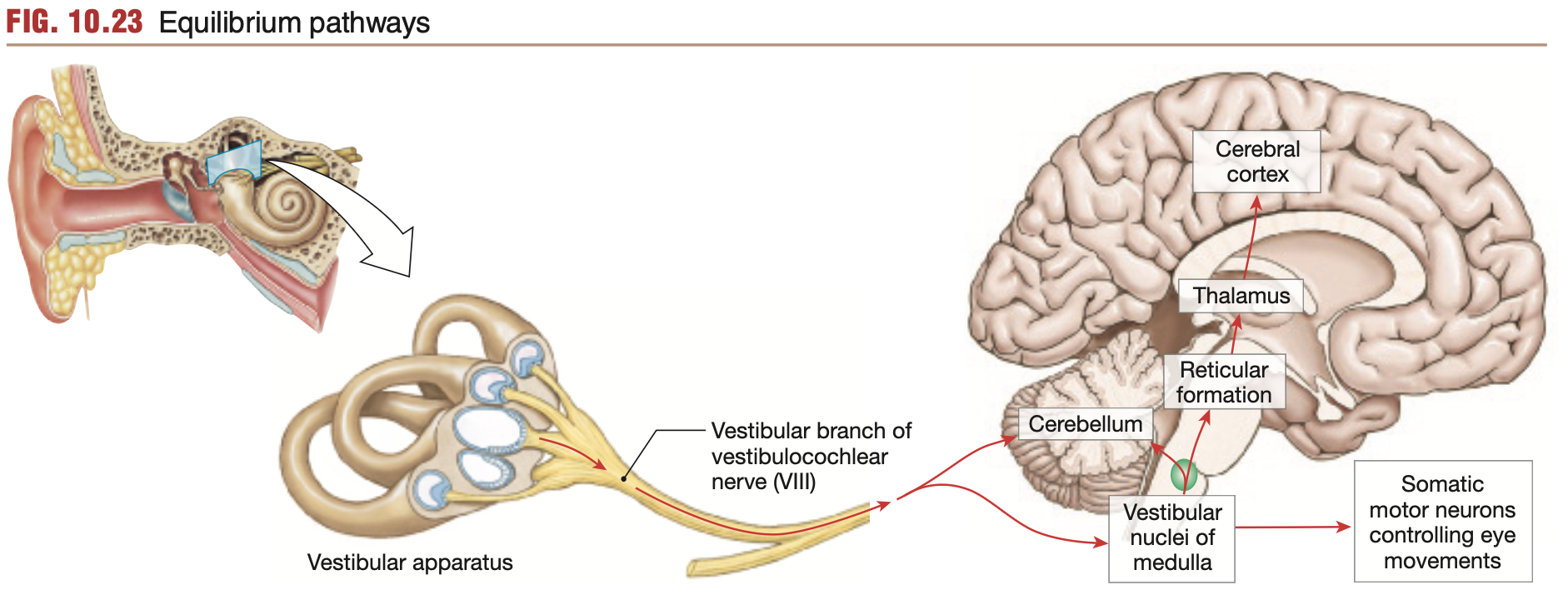
Information travels down the vestibular branch of the Vestibulocochlear nerve (Cranial nerve 8).
Balance: Vestibular cortex - Temporal & parietal lobes
The vestibular cortex is located in several areas within the temporal and parietal lobes.
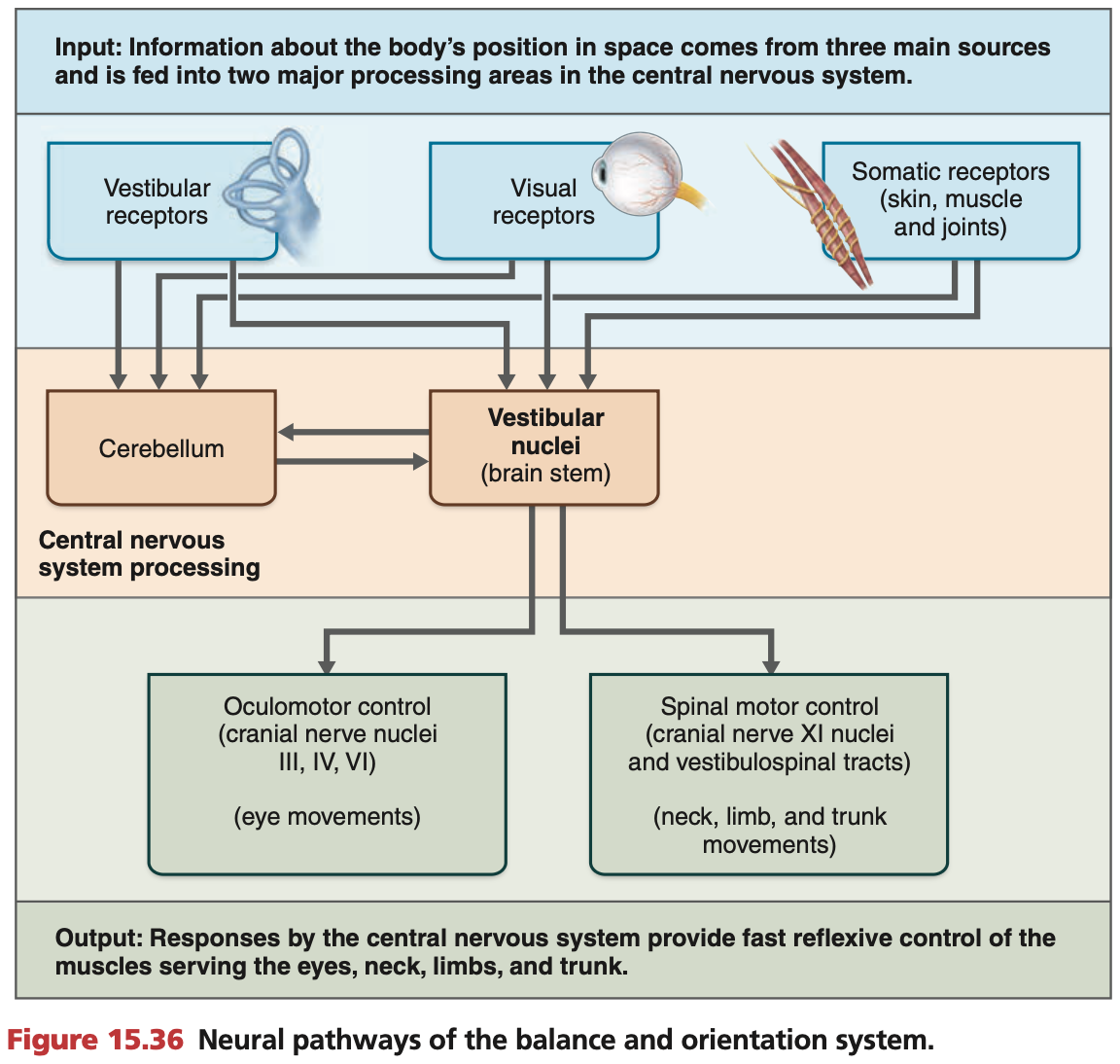
3 aspects: vestibular, visual & somatosensory
Brain receives info from BOTH ears which is integrated at once.
Balance: Neural pathways
Vestibular fibres (vestibulocochlear nerve (Cranial nerve 8)) congregate in the vestibular nuclei within the brainstem’s medulla
Fibres propagate in 4 directions:
Cerebellum: To sense balance
Thalamus: To send signals to sensory and motor areas of the face
Extraocular motor neurons: To move the eyes along with the head
Motor neurons of limbs and neck: To maintain body balance and head position
Reflexes:
Sometimes impulses travel directly to reflex centres in brain stem
Balance Disorders: Vestibular labyrinth malfunctions
Inner ear problems can result from otoliths detaching from otolith organs and entering semicircular canals.
Stroke is a common cause of disorders with the vestibular neural pathway.
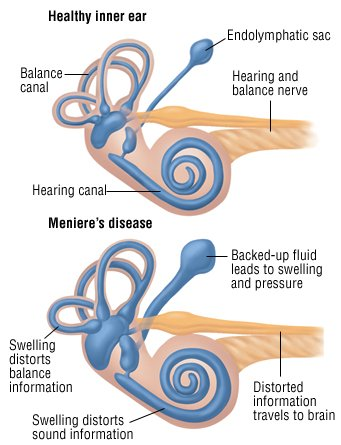
Balance Disorders: Meniere’s disease
Buildup of endolymph within the inner ear
Disrupts functioning of hair cells
Unclear cause