Bio part 5
 Call Kai
 Learn
Learn Practice Test
 Spaced Repetition
 Match
Match Flashcards
 Knowt Play
1/144

There's no tags or description
Looks like no tags are added yet.
Name | Mastery | Learn | Test | Matching | Spaced | Call with Kai |
|---|
No analytics yet
Send a link to your students to track their progress
145 Terms
What genetic info is passed on in sexually reproducing organisms? What does this allow them to have?
In sexually reproducing organisms, the offspring obtain a unique combo of genetic info from their parents. These different genetic combinations give rise to a unique combination of characteristics or traits.
What is a trait? What is a phenotype? How are traits passed down?
A distinguishing characteristic or phenotypic feature of an individual. e.g. hair colour, height, shape of face, etc.
phenotype= an observable trait u see
Traits are passed down by being inherited
Whe was the term genetics first used? Who was it used by and what did they use it to describe? What is the origin of the word for geentics?
In 1905 by an English botanist, William Bateson, to describe the study of heredity and the science of variation. The origin of the word is Greek meaning ‘to give birth’.
Hippocrates (about 400 BCE)- genetics history- include what he said involving genetics
Material to be inherited by the offspring were collected from throughout the parents’ bodies and passed on.
Aristotle (about 350 BCE)- genetics history- include what he said involving genetics
The form-giving principle of an organism was transmitted through the semen (which he considered to be the purified form of blood) and the mothers’ menstrual blood which interact in the womb.
Charaka Samhita Shamans (300 CE)- genetics history- include what he said involving genetics
Characteristics of the child is determined by factors in the mother’s reproductive material, the fathers sperm, the diet of the mother and the soul that enters the fetus
Abu al-Qasim al-Zahraw (1000 CE)- genetics history- include who he was, what he did that was like the first thing done for genetics
The first doctor to describe the inheritance of hemophilia
Note: Hemophilia= A disease where u bleed and bruise a lot more-found out it was genetic
Judah HaLevi (1140 CE)- genetics history- include what he described abt genetics
Described dominant and recessive genetic traits.
Preformation (early 1700’s)- genetics theory- include what the theory was
A miniature human, called a homunculus, was already present in the egg and sperm which grows into a human after the formation of the zygote
Epigenesis (mid 1700’s)- genetics theory- describe it/what it said
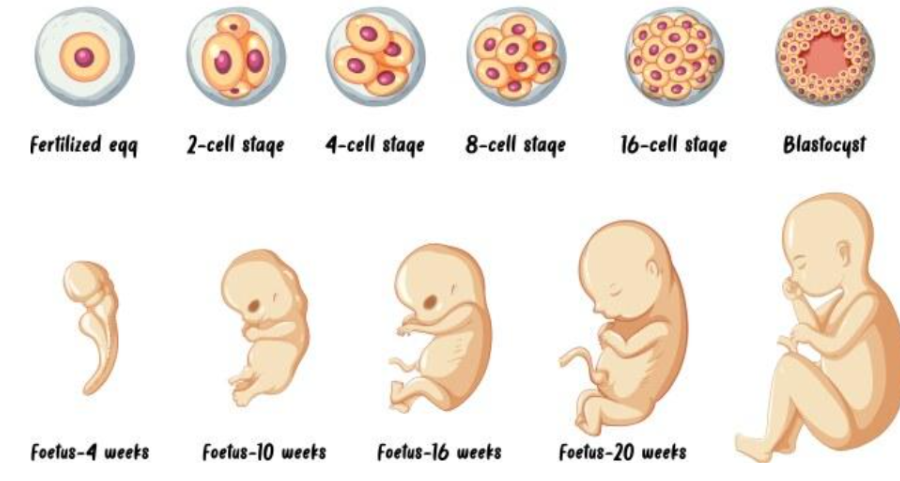
Egg and sperm are undifferentiated cells that develop into the various organs after fertilization resulting in the development of adult tissues and organs
The development of the child is influenced by factors both inside and outside of the mother.
Describe how a baby devleops in the womb
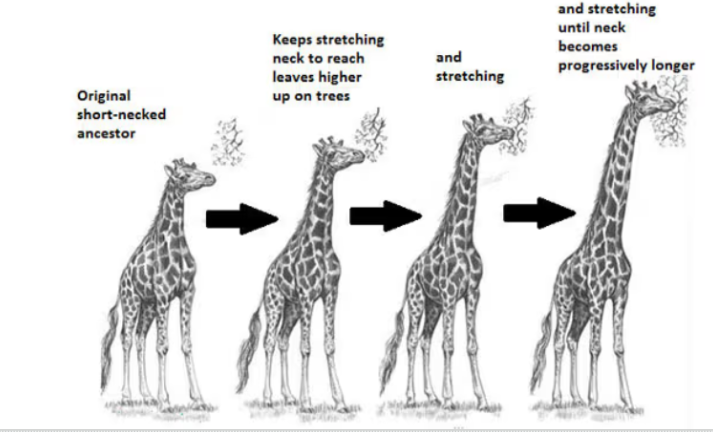
Theory of Acquired Traits (late 1700’s)- include who it was proposed by, what the theory said and an example
Theory proposed in the late 1700s by Jean Baptiste Lamarck
A new trait acquired by an individual is passed onto the offspring.
Example: It was thought giraffes responded to food being higher on branches by actively stretching their necks longer to reach the food. The more the giraffes used this trait the taller their necks grew and this physical trait would be passed onto the next generation of giraffes with each new generation having a longer neck. -not true tho
Theory of Pengenes (Darwin mid 1800’s)- include who it was proposed by + what it said
Theory proposed by Charles Darwin
Very small, exact but invisible copies of each body part (called gemmules) are transported by the blood to the sex organs
The gemmules are assembled into the gametes
Blending inheritance (mid 1800’s)- include how it was made/developed + describe what the theory said and give an example
Developed from Darwin’s theory
Sperm and egg gametes (sex cells) mix together resulting in offspring that have a blend of both of the parent’s characteristics.
Ex. Tall and short parents will have medium height offspring
Not true- genetic variation + diversity
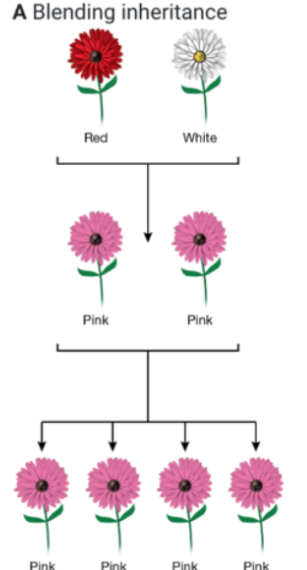
What are Problems with the Blending Inheritance Theory- include an example of a problem and why the theory doesn’t work
Ex. Two parents with black hair give birth to a blonde haired child…where is the blending of traits?
If this theory were completely true, then over time all extremes or ‘opposite’ traits would eventually blend within a population. By now we would all look more similar, but we all show diverse phenotypes!
Facts abt Gregor Mendel- include when born, to who, and where, what he studied and where, + when he began his work in genetics and what the time period was
Born in 1822 to a humble farming family in the Czech Republic
Studied physics, mathematics & botany at University of Vienna
Began his work in genetic experiments in 1853 until 1861
Disproving the Blended Inheritance Theory- Mendel did this- include what he did to prove this + what the experiments results were and what it determines
Traced inheritance patterns of traits in pea plants.
The patterns obeyed simple statistical rules with traits being dominant and recessive.
Contradicted the blended inheritance theory.
Determined that traits were passed from parent to offspring as factors.
What are 2 biological processes that are fundamental to life? Why do organisms use these processes-what do they help them do? Compare and contrast these processes between multicellular and unicellular organisms. What is a key feature of these processes?
Cell division and reproduction are biological processes that are fundamental to life.
All organisms use these processes to grow and reproduce.
Multicellular organisms use cell division for growth and repair, whereas unicellular organisms use it as a means of reproduction.
A key feature of cell division and reproduction is the passing of chromosomes from the parent cell to the daughter cells.
Genetic Material- include what this term is used to describe, where is genetic info contained, and what is DNA composed of + what does it do
This is a term used to describe all the material in an organism that stores genetic information.
In a chromosome, genetic information is contained in a molecule of deoxyribonucleic acid, DNA.
Each DNA molecule is composed of hundreds of thousands of chemicals that act as a set of chemical instructions for the cell.
DNA Molecule- when + who was this discovered by, what did they call it at first and what do we call it now, and when + by who was the chemical composition of DNA found
In 1869, a Swiss scientist, Friedrich Mieshcer, investigated a compound found in the nucleus of the cell. He called this compound nuclein. - we now see this as nucleic acid
In the 1920’s, Phoebus Levene discovered the chemical composition of the nuclein compound.
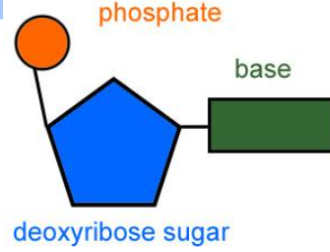
What are the 3 main components of DNA?- include what each gives us too- also label diagram
4 Nitrogenous bases- combos give u ur traits
A phosphate group that has a negative charge- make up backbone of ur DNA
A pentose (like pentagon) sugar (a cyclic 5-carbon sugar)- pair with phosphate group to make backbone of DNA
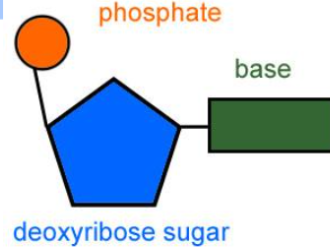
What are the 4 nitrogenous bases? Which ones are pyrimidines vs purines? Which ones pair with which + what do they give us
Adenine (purine)-pared with thymine
Thymine (pyrimidine)
Cytosine (pyrimidine)-paired with guanine
Guanine (purine)
How was it proven thatt DNA (or nuclein as it was called historically) controls cell functioning-include by who + when also.
It was not until the work of Joachim Hammerling in the 1930’s that it was proven that the nuclein is the information that controls the cell functioning. He used a single celled algae called Acetabularia to experiment with.
When the top was removed from algae it would regrow because it received the chemical messages from the nucleus. The bottom would not regrow from just the top.
When + who discovered how the 3 DNA components were organized? How did he discover this? Who made the final structural discovery + how did they do this
In the 1940’s Erwin Chargaff discovered how the 3 DNA components were organized.
He discovered that the amount of adenine is always equal to the amount of thymine and the amount of guanine is always equal to the amount of cytosine.
The final structural discovery came through the work of Rosalind Franklin and James Watson and Francis Crick.
Rosalind Franklin used X-ray crystallography to determine the geometry or arrangement of the atoms in the molecule. For her results, she concluded that DNA is a spiral or helix.
James Watson and Francis Crick used Franklin’s results to construct a model of the DNA structure as a twisting shape called a double helix.
X-ray crystallography- include what it is used for-what it identifies + how it works
A method of determining the arrangement of atoms within a crystal, in which a beam of X-rays strikes a crystal and diffracts into many specific directions.
From the angles and intensities of these diffracted beams, a crystallographer can produce a three-dimensional picture of the density of electrons within the crystal.
From this electron density, the mean positions of the atoms in the crystal can be determined, as well as their chemical bonds, and various other information.
Describe the structure of a DNA molecule- include how the nitrogenous base pairs are bonded, what the chemical backbone is made up of, what the pairing of the bases is called, and how the typical shape of a DNA molecule forms
The chemical backbone of one strand is made up of alternating phosphate groups and sugar groups.- the line part is the backbone and the middle shapes are the bases
Attached to the backbone are the nitrogenous bases.
A and T are held together with 2 hydrogen bonds
C and G are bonded with 3 hydrogen bonds.
This pairing is called complimentary base pairing- one must come with the other
This ‘ladder’ shaped molecule is then ‘twisted’ to form the actual shape of the DNA molecule.
Since once half of the DNA molecule is a ‘complement’ to the other half, we can determine what the other half or strand looks like.
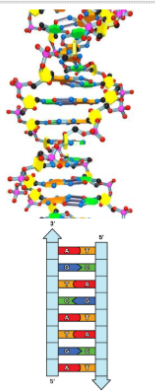
How is each organism unique?
Even though there are only four nitrogen bases that make up DNA sequences, they are arranged in different sequences in each organism.- That is what makes each organism unique.
Since nucleotide chains also vary in length from a few hundred nucleotides to millions of nucleotides, the number of combinations is essentially unlimited.
How do DNA give instructions + what are these called? What is a gene + where are they in a chromosome? How are genes passed on?
These instructions occur as distinct sequences of information along the DNA molecule. Each of the distinct sequences is called a gene.
A gene is a portion of a DNA molecule that carries the information that helps to produce a particular trait of an organism. Each gene occupies a specific location on a chromosome called the gene locus (plural is loci).
The chromosomes and all the genetic information they contain are duplicated during cell division.
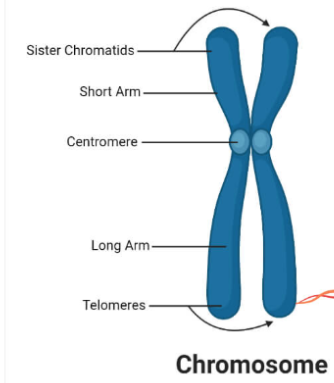
Label this chromosome
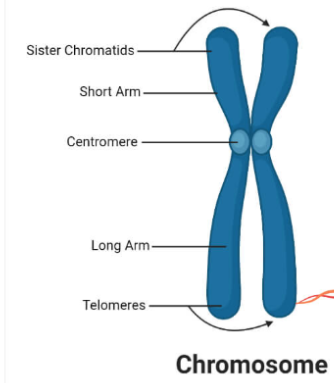
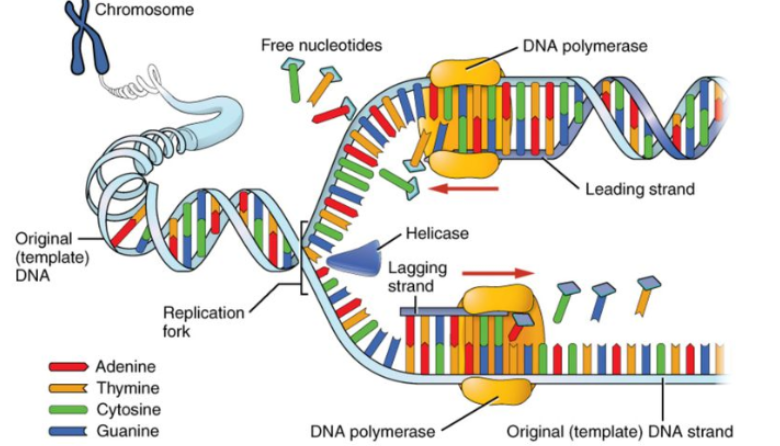
Know this like vaguely
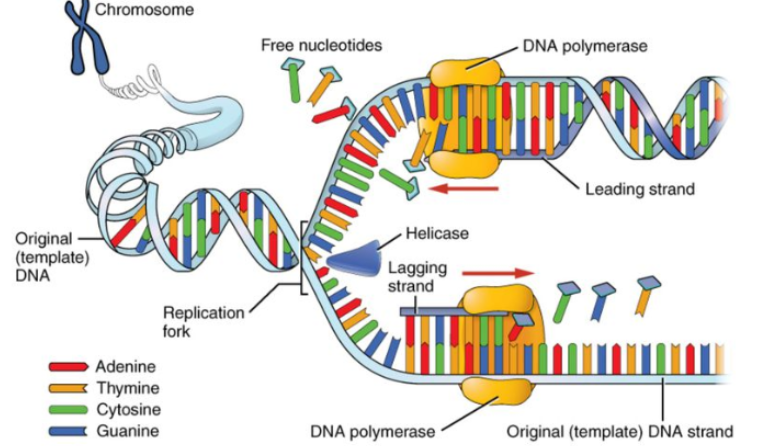
Describe the process of DNA replication- include what must be done when the cell prepares to divide, what is needed to separate the nucleotide base pairs + what this creates, what do enzymes do, and js describe from there
When the cell prepares to divide, the DNA must make a copy of itself.
Enzymes (helicase) are needed to separate the nucleotide base pairs. -creates 2 strands of DNA-splits first one
Note: Enzymes speed up reactions- in this case dna replication
The DNA molecule begins to “unzip”.
Another enzyme (DNA polymerase) attaches to a strand of the DNA and begins to attach free nucleotides to each exposed base on that strand.- matches the base pairs again but with new nucleotides
The process continues until the DNA molecule has been completely unzipped and 2 new molecules/strands of DNA are formed.
Once the DNA is replicated, the DNA strands must become organized. The chromatin fibres condense into visible structures called chromosomes.
How are chromosomes formed?
In the formation of the chromosomes, the chromatin is coiled tightly around histone (hep with condensing DNA to give the chromosomes the x shape) to form nucleosomes (the pentose sugar, phosphate group and base of the DNA).
The “beaded” strand coils into the characteristic X structure. This structure is now visible using a microscope.
What is asexual reproduction? How does it work/what happens in this process? Compare it to sexual reproduction (briefly)
This is the form of reproduction in which a new individual is produced from a single parent by cell division.
In this process the chromosomes of the parent are duplicated and then divided so that each of two daughter cells receives one copy of each chromosome. The result is two new cells that are genetically identical to one another and to the original parent cell.
asexual=one parent one genetic info, sexual= 2 parents, mixed genetic info
Advantages of Asexual Reproduction
No mate is needed
No specialized reproductive organs/cells are needed
Invariable heredity, generation after generation are identical.
Beneficial if the original parent is well adapted to its environment and the environment is unchanging
note: organisms do this thru binary fission + budding
N(m)N(s)IB
I BNN(m,s)
Disadvantages of Asexual Reproduction
If the environment changes the individuals may no longer be well adapted
Most, if not all, individuals may be affected therefore populations may be affected therefore populations may suffer greatly
The Cell Cycle- include what is is + stages
As eukaryotic cells grow and divide, they move through three distinct stages. This is known as the cell cycle. The stages are: interphase, cell division (mitosis), and cytokinesis.
cytokinesis is missing from this diagram but happens after mitosis
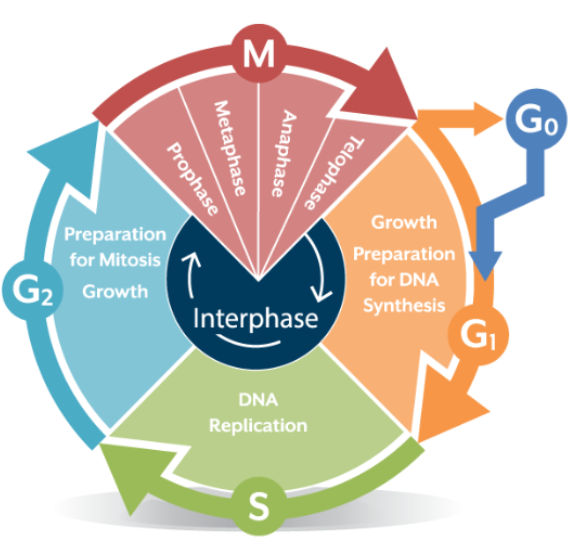
Interphase
A cell spends most of its time in interphase.
During this time the cell is actively taking in nutrients, excreting waste, producing energy making proteins and growing.
When the cell is triggered to divide, the DNA strands are duplicated so there are two identical copies of all the genetic material.
Chromosomes are uncoiled here- not visible
Nuclear envelope is still there- hasn’t dissolved yet
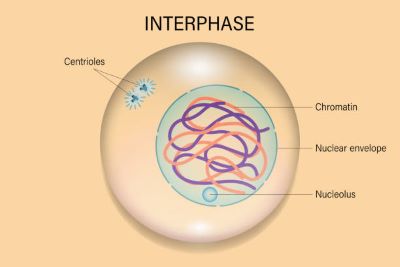
What are the parts/stages of interphase?-include chromosome number in each phase + diploid or haploid
G/Gap 0:
No cell growth at all + cells don't need to divide-eg. neurons
G/Gap 1 (main phase):
DNA strands are contained in the nucleus surrounded by the nuclear membrane
Forms a mass of long, thin, thread-like structures called Chromatin
Cell grows organelles and proteins needed for division (preps for what’s needed for 2 cells to function yk)
2n (diploid-2 pairs of chromosomes)
(46= 2 x 23) n=23-this is ur haploid- half of total DNA
S/synthesis:
Replication of chromosomes results in pairs of sister chromatids each containing the exact same genes at the same loci
Each original chromosome and its duplicate remain attached by a protein structure called the centromere
Attached DNA strands are called sister chromatids
2 sister chromatids make a double chromosome (also called replicated or duplicated chromosome)
2n (92 strands of DNA found as 46 pairs)- cause double the chromosomes -cause replication phase doubles the base number of chromatids- still 46 chromosomes tho cause 2 chromatids in one chromosome now
G/gap 2:
Cell checks the duplicated chromosomes for any errors and makes necessary changes
2n (46 pairs of chromosomes and 46 chromatids (no longer replication phase))
Cell Division (mitosis) phase of cell cycle
This process is called mitosis.
The duplicated DNA is divided so 2 nuclei are formed.
This occurs as a continuous process with four distinct phases. These phases always occur in the same order.
The phases are Prophase, Metaphase, Anaphase and Telophase (PMAT)
Describe the prophase stage of cell division/mitosis- also include number of chromosomes- be able to draw a diagram describing it
The long strands of DNA condense and become visible in this stage. They are described as/look like X’s
The nucleolus and nuclear membrane disappear and all other cell functions stop (no more growth)
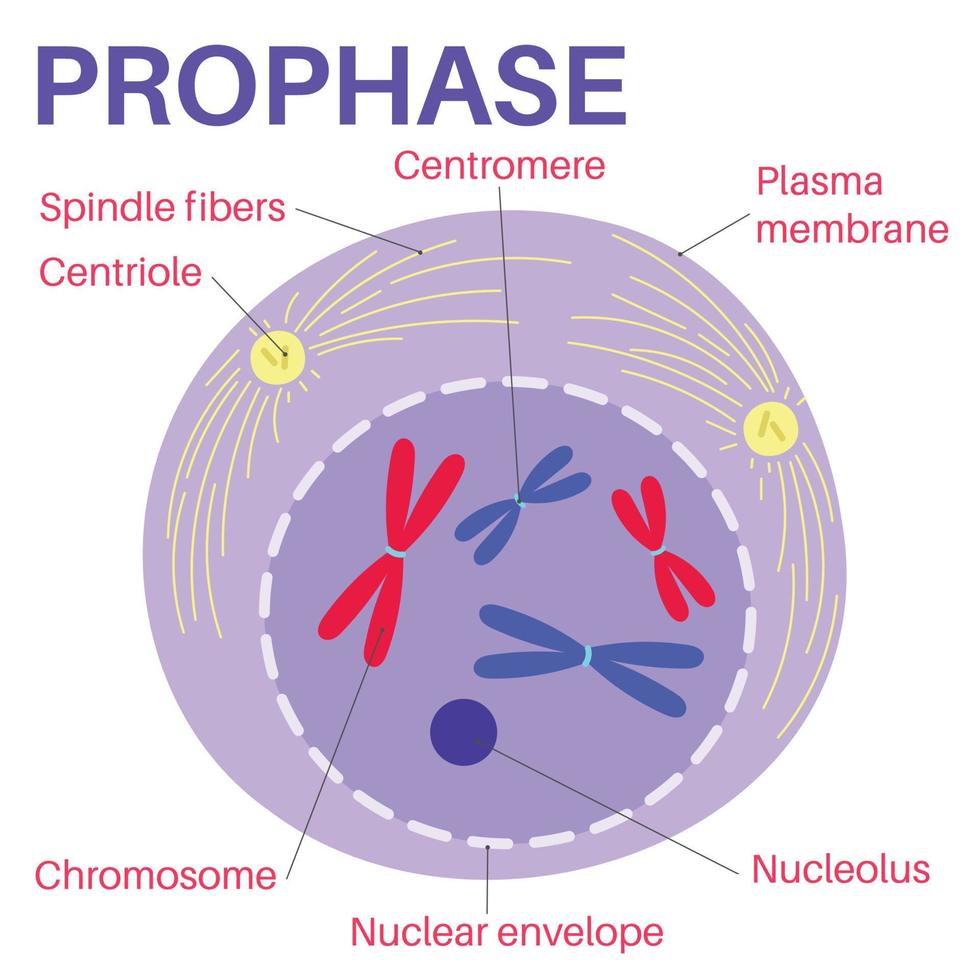
The duplicated chromosomes spread out thru the cytoplasm- cause a single sister chromatid is a single chromosomes that has replicated to make the 2 sister chromatids yk that’s why it’s called a replicated chromosome and 46 chromosome pairs cause one sister chromatid is one chromosome
In animal cells, structures called centrioles start to move toward the opposite ends (poles) of the cell. The centrioles make spindle fibers that grow and attach to the centromeres to guide the chromosomes around the cell in later stages.
Chromosome number:
2n- diploid
46 pairs of chromosomes
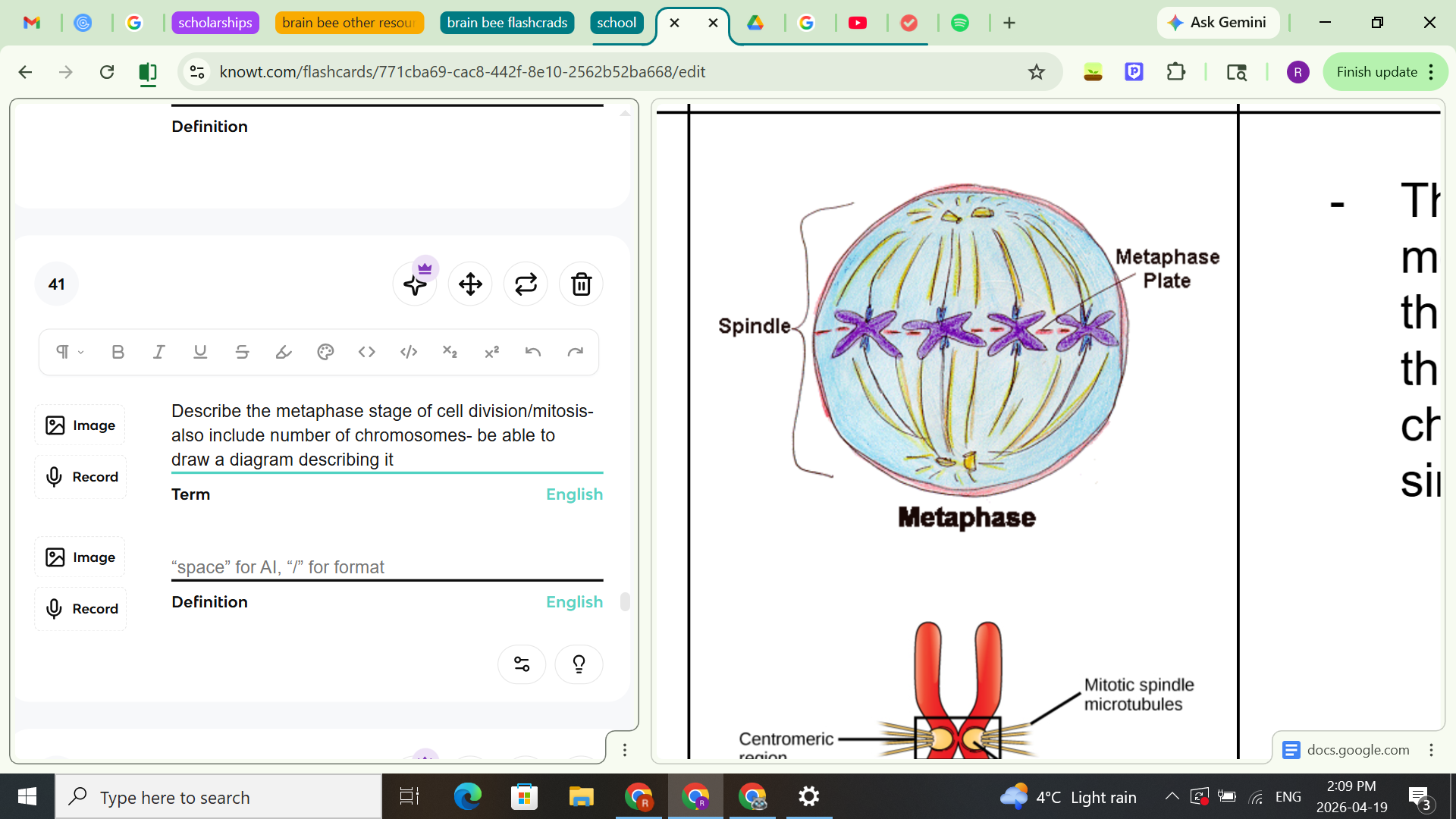
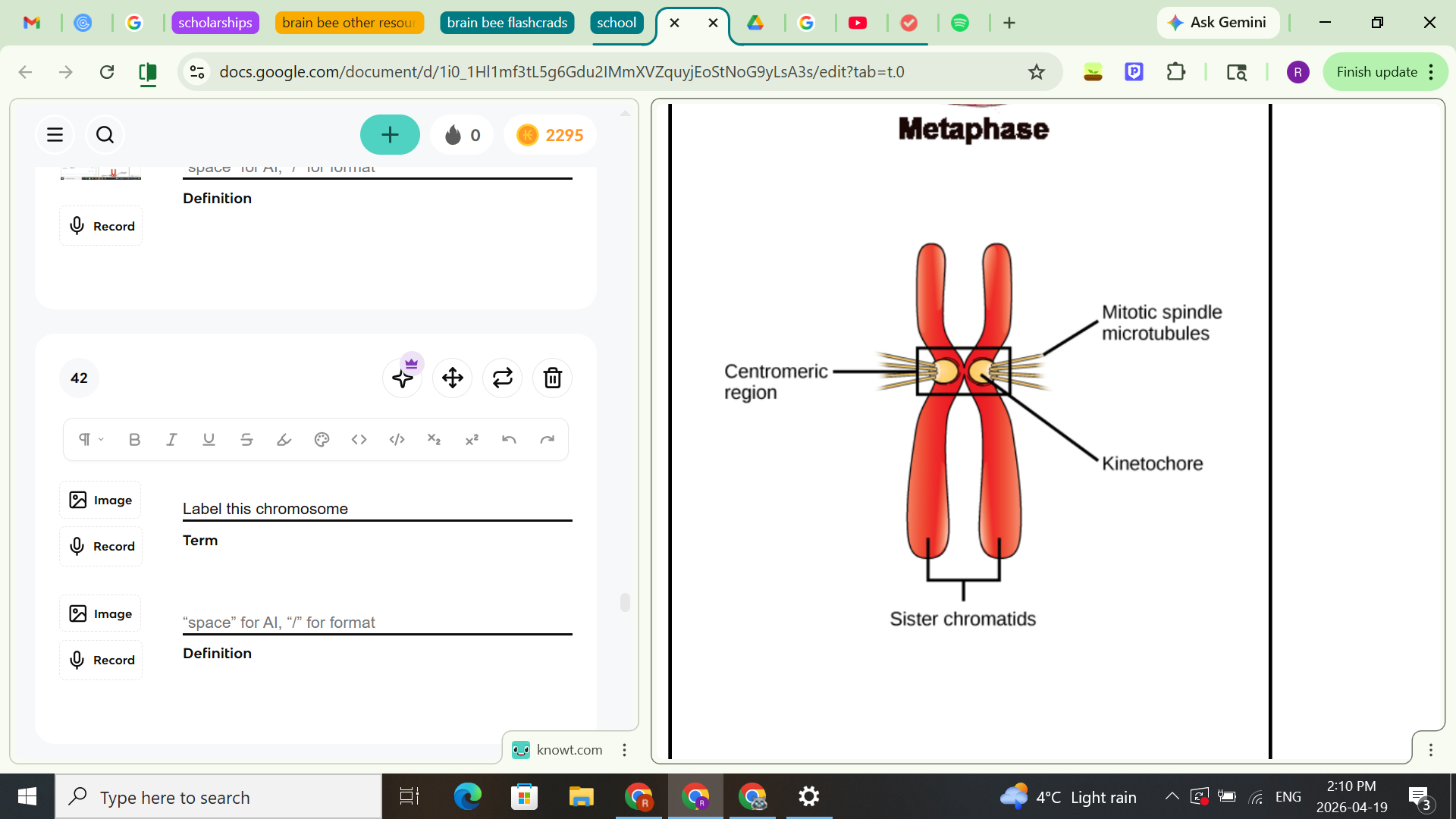
Describe the metaphase stage of cell division/mitosis- also include number of chromosomes- be able to draw a diagram describing it
The double chromosomes move toward the center line of the cell.- This is referred to as the equator. The chromosomes line up in a single row
Spindle fibers start to form and stretch out from the centrioles
Chromosome number:
2n- 46 pairs of chromosomes
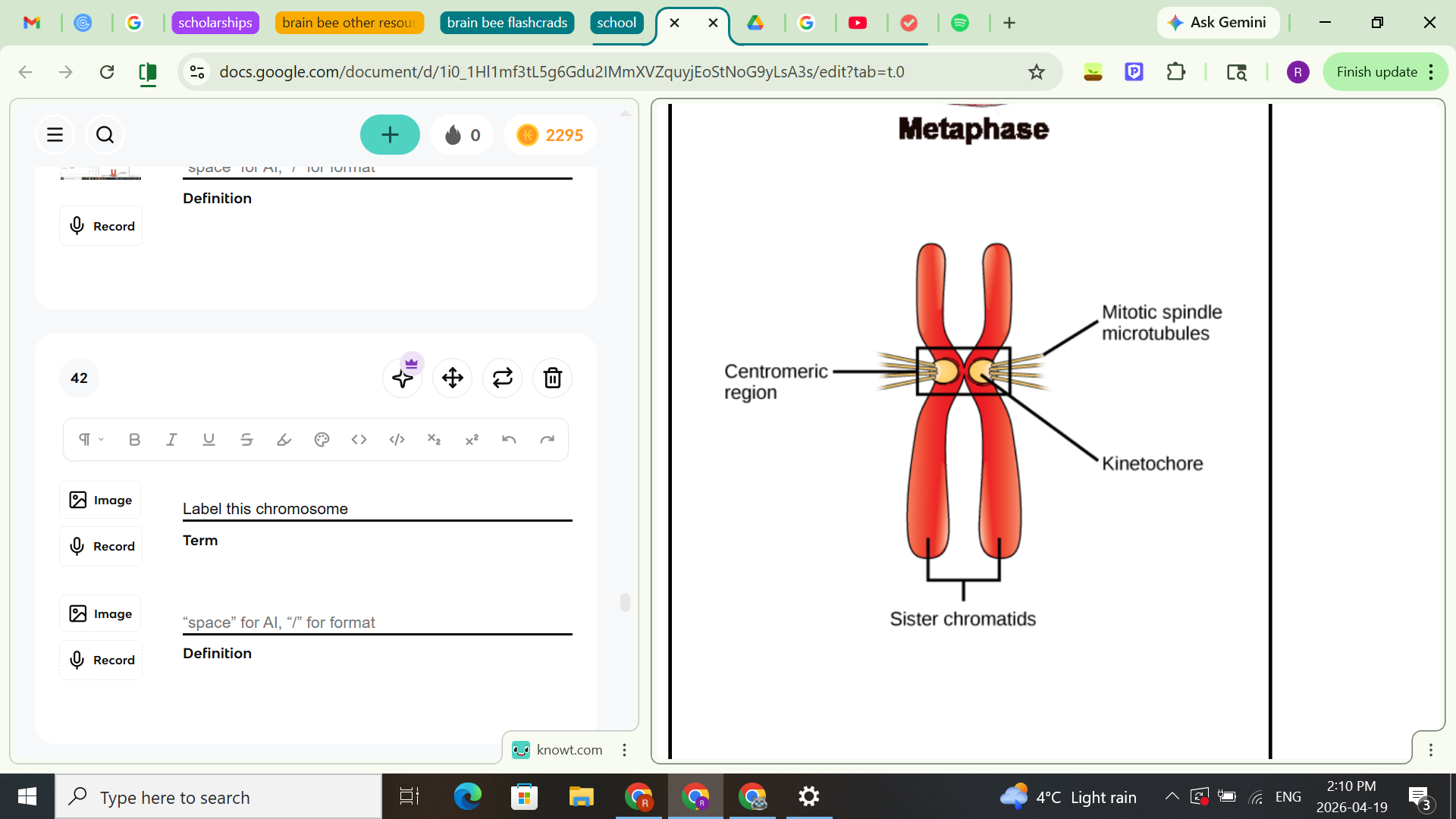
Label this chromosome
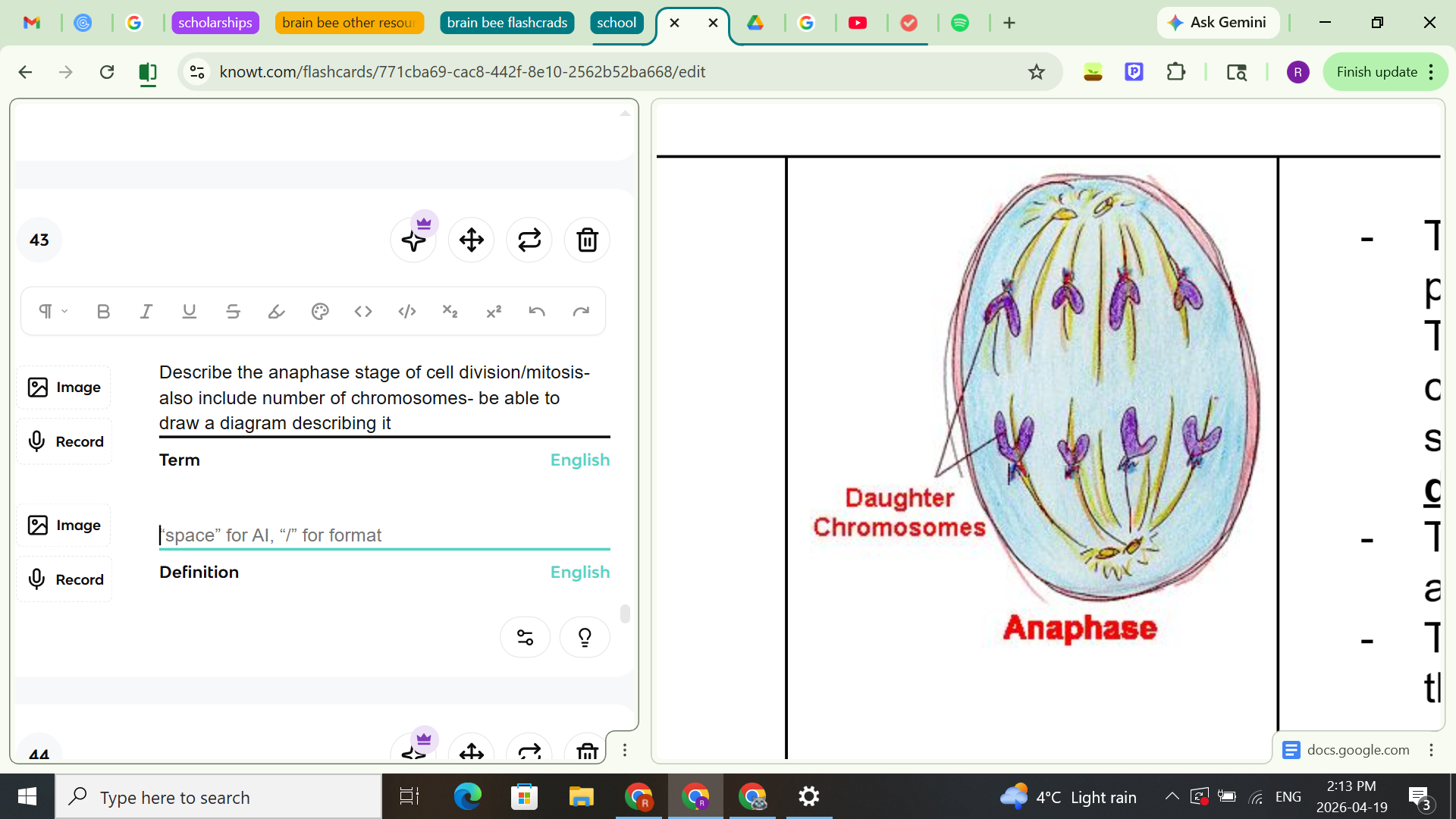
Describe the anaphase stage of cell division/mitosis- also include number of chromosomes- be able to draw a diagram describing it
The spindle fibers shrink and pull the centromeres apart. This separates the double chromosome into single strands. They are now called daughter chromosomes
The daughter chromosomes are pulled to the poles
The end of anaphase is when the daughter chromosomes are grouped tightly around the centrioles
Chromosome number:
2n- 2 groups of 46 single chromosomes
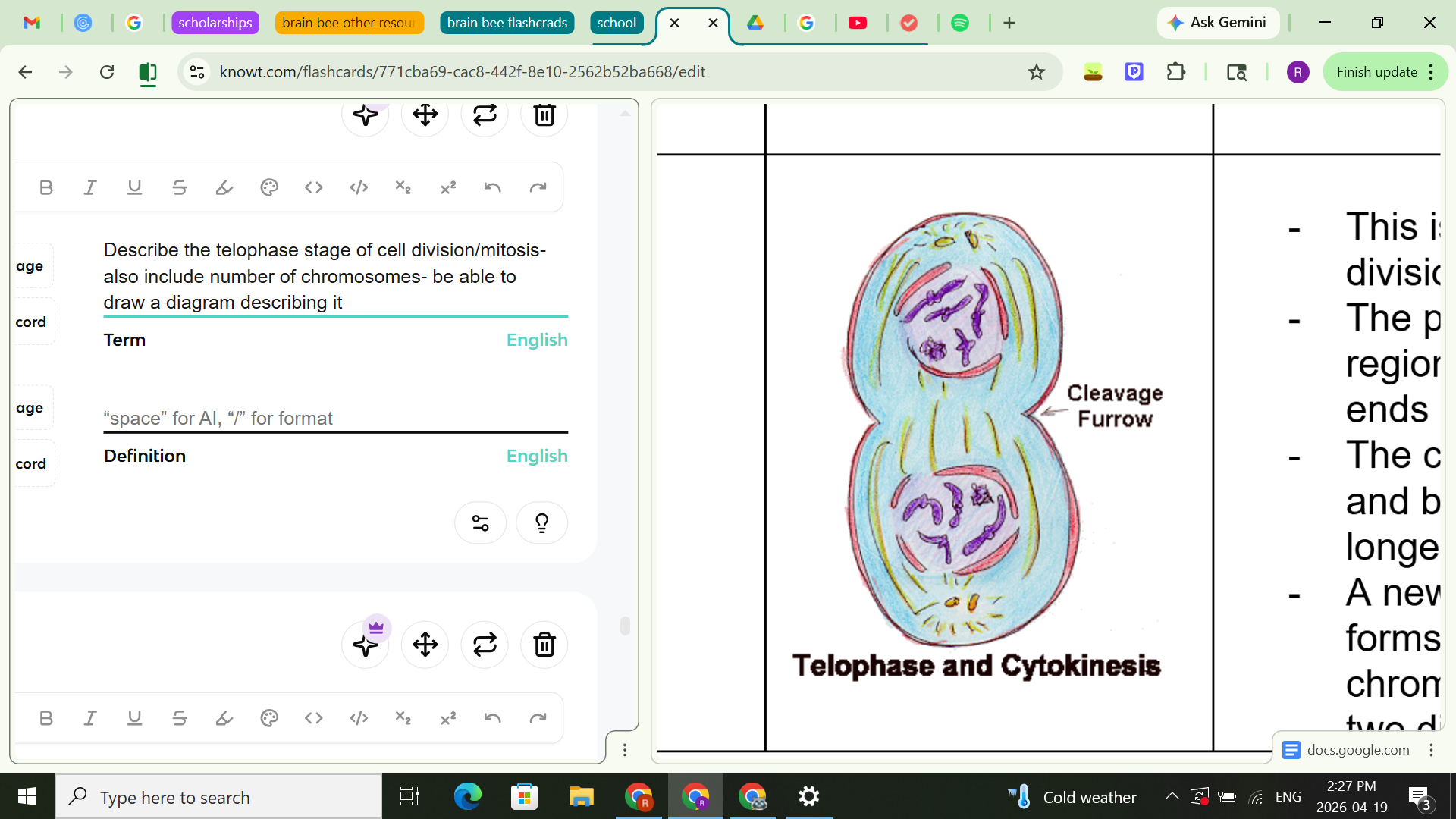
Describe the telophase stage of cell division/mitosis- also include number of chromosomes- be able to draw a diagram describing it
This is the final phase of cell division
The parent cell has two regions of DNA at the opposite ends of the cell
The chromosomes stretch out and become thinner and no longer visible- chromosomes uncoil into chromatin again
A new nuclear membrane forms around each group of chromosomes. There are now two distinct nuclei
Chromosome number:
2n- 2 areas of 46 single chromosomes
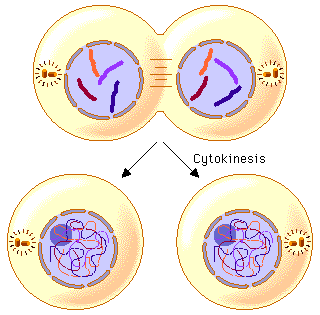
Describe the cytokinesis stage of a cell’s life cycle. Draw it + label
This is the final stage. The cytoplasm pinches in along a line between the two new nuclei.
Eventually the cell is divided into two separate cells.
In animal cells, the new daughter cells completely separate from each other. In plant cells, a plate between the daughter cells forms into a new cell wall- the cells are still attached to one another.
The new daughter cells are identical to each other and to the parent cell that produced them.
The new cells are in interphase and the process starts over again.
Describe how a cell’s chromatin changes as the cell prepares to divide
To prepare for cell division, the cell replicates its DNA. After this replication, the DNA condenses and becomes a visible chromosome
What is the role of interphase in cell division?
It is the growing stage of the cycle. During this stage, the cell makes more protein and cytoplasmic organelles needed for cell division (since it has to have enough organelles and stuff for 2 cells).
DNA is replicated in interphase
Note: the cell still carries out its metabolic activities in this stage- metabolic activities stop during mitosis
How many chromosomes does a human body cell contain in each of the following periods? Explain.
a) G1 phase
b) Just before M (mitosis) phase
c) Just after cytokinesis
a) 46 chromosomes- base number because nothing has happened yet
b) 46 double chromosomes- has already replicated in S phase but has not reached the stage of mitosis where the duplicated chromosomes divide into daughter chromosomes
c) 46- because cells have already divided
Why is describing interphase as the “resting phase” inaccurate?
This description is inaccurate because the cell is actually doing a lot of work during interphase. This is the phase where chromosomes are duplicated, and the cell checks for errors in duplication (needed for M phase to occur).
The cell is also metabolically active during this phase- is making proteins and new cellular organelles to prepare for division
How is it possible for a strand of DNA as long as your arm to fit inside the nucleus of a cell?
Because the strand is tightly coiled around histones and is packaged into the cell’s nucleus
Suggest what would happen to a single-celled organism if it were to go thru many rounds of mitosis but did not go thru cytokinesis.
This will cause the organism to have more than one nucleus in a single cell- can cause the cell to increase in size- because it’s not able to divide
What is sexual reproduction? Describe what offspring it creates and how it creates offspring.
This is a form of reproduction in which individuals are produced from the fusion of two specialized cells called the sex cells.
The sex cells usually come from two different parent organisms.Offspring produced are not genetically identical to either of their parents and to each other (with the exception of identical twins.
The offspring obtain half of their genetic information from each of their parents.- this is why they are genetically different
What are the advantages of sexual reproduction?
Produces variation in the offspring which may provide some advantage in the future if the environment changes.- genetic variation= good
What are the disadvantages of sexual reproduction?
Must have specialized organs to produce the sex cells.
Must have a method to attract a mate, such as bright colouration, mating calls/behaviours, etc. - therefore requires a lot of energy.
Offspring may inherit a combination of genetic information that makes them weak and possibly unable to survive.
SMC
MCS
What are the 2 key processes in sexual reproduction?
The formation of Sex Cells called Gametes, which contain the genetic information from the parents.- This is done through the process of meiosis.
Fertilization which occurs when two sex cells join to produce a zygote- the first cell of the new individual.
Do sex cells of different organisms vary in size shape and mobility? What do most species do in terms of sex cells?
Yes
Most species produce 2 diff types of sex cells- eg. egg and sperm
What are the reproductive organs that produce the sex cells and which ones produce what cells?
In animals, the reproductive organs that produce the sex cells are the testes, which produce sperm, and the ovaries, which produce the eggs or ova.
What are germ cells and why are they called this
The cells of the testes and ovaries are called germ cells. These are diploid cells that constantly produce haploid cells.
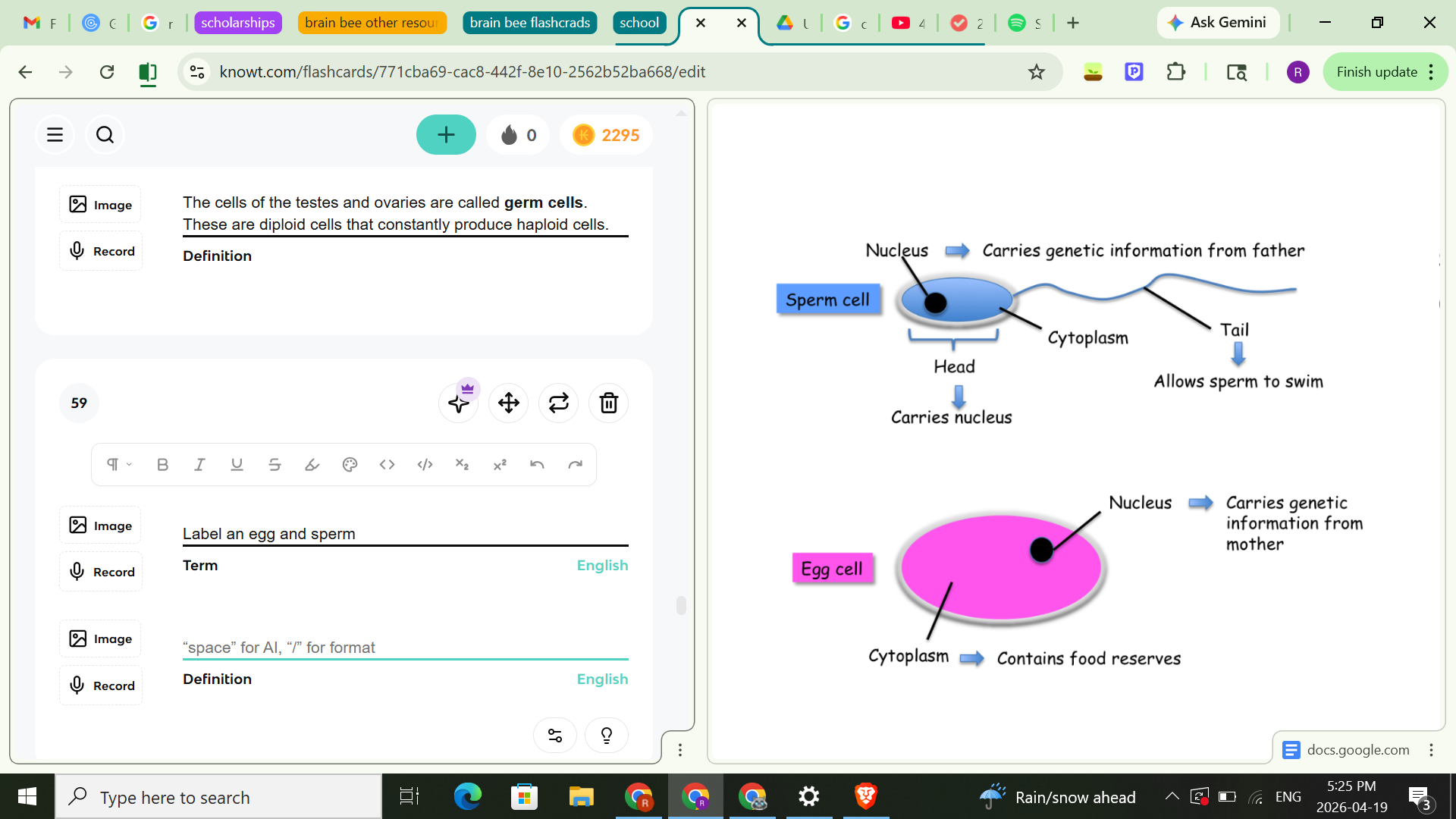
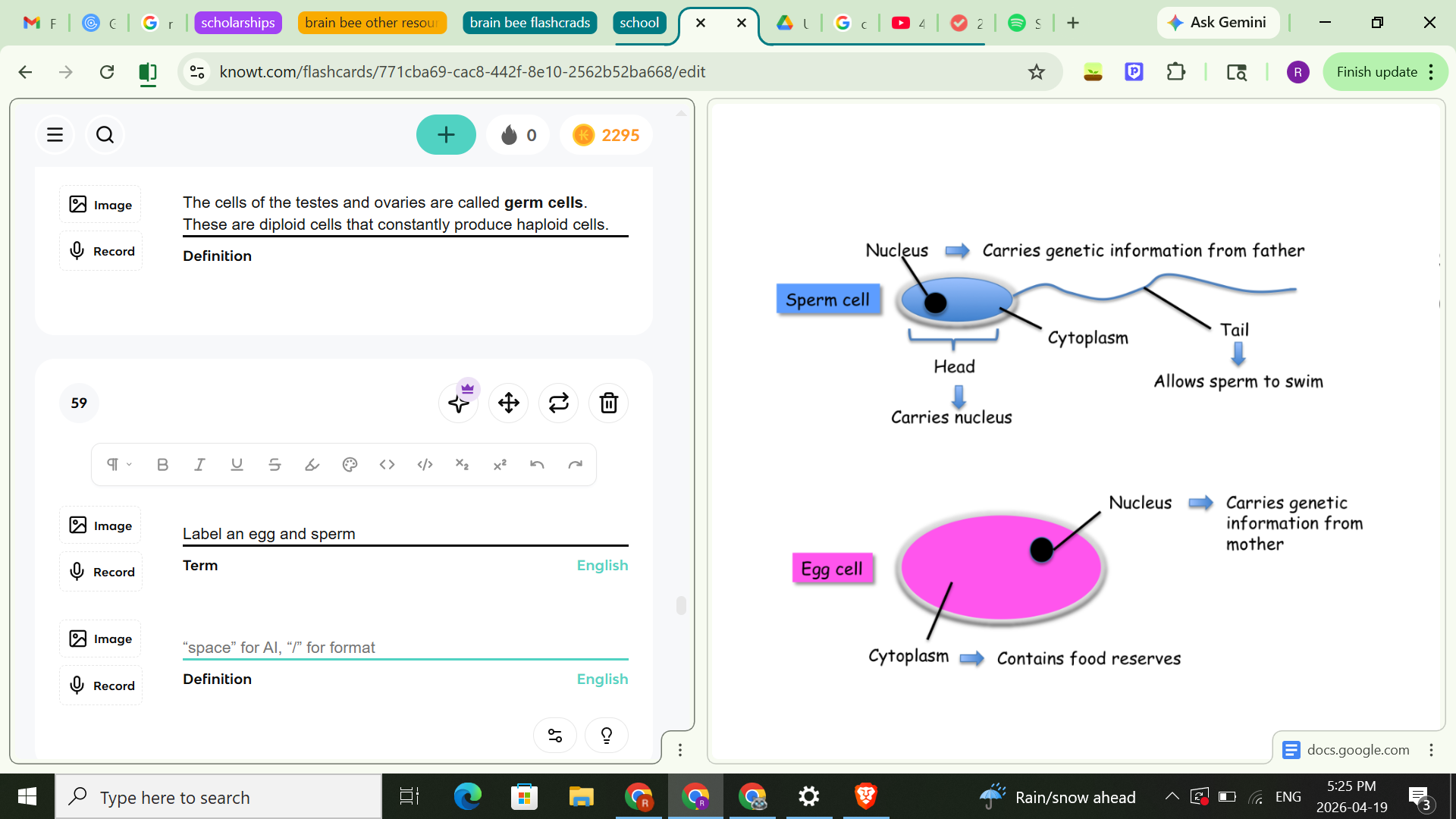
Label an egg and sperm
What do the gametes produced through meiosis carry in terms of the number of their chromosomes- what are they? How does the number of chromosomes in a human body cell differ to that of a gamete? What species are humans in terms of the number of their chromosomes?
Through the process of meiosis, the gametes are produced which each carry half of the chromosome number for the new individual. For example, a human cell containing 46 chromosomes that undergoes meiosis will produce gametes that each have 23 chromosomes. Since these gametes have only one set of chromosomes, they are haploid or ‘n’.
(The number of chromosomes in a human body cell, called a somatic cell, is twice the number of the chromosomes found in the gametes. This is called the diploid number or ‘2n’. Humans are a diploid species).
What do the gametes (sex cells-egg and sperm) produced through meiosis carry in terms of their genes? What are homologous chromosomes- also describe them. Describe a gamete- in terms of haploid/diploid
The gametes carry a complete set of genetic instructions from each of the parents. You receive one version from your father and one version from your mother. The information might be the same or it could be different (think of a chess set).
Each of the 23 chromosomes you receive from your father is matched by the 23 chromosomes received from your mother.
The paired chromosomes (chromosomes that pair together and are later split apart during meiosis) are called homologous chromosomes.
With the exception of a pair of special sex chromosomes, the homologous chromosomes are similar in size and shape and carry genetic information for the same genes.
Each gamete is haploid and together they form a diploid cell
What is a karyotype?
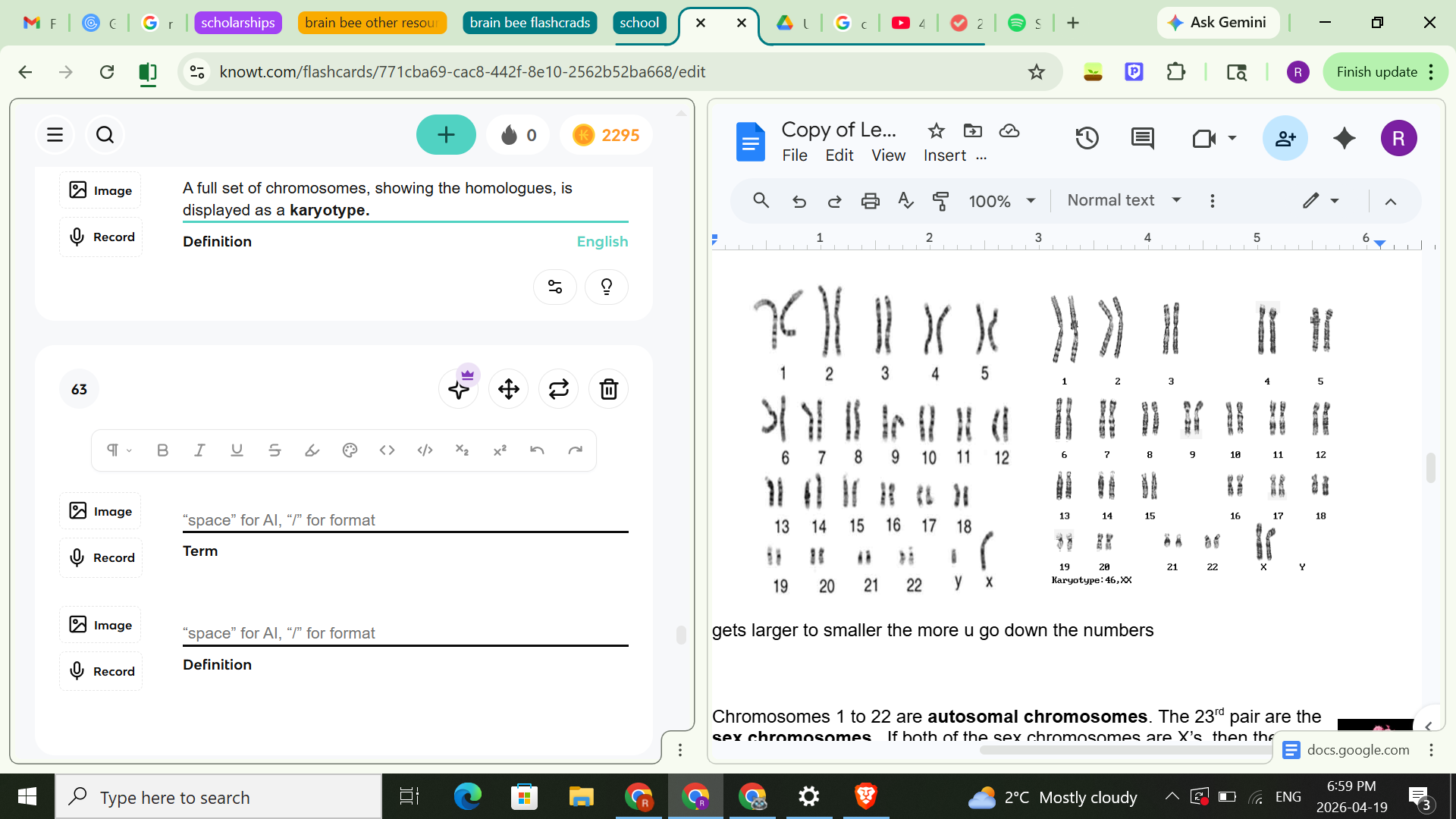
A full set of chromosomes, showing the homologues, is displayed as a karyotype.
The picture shows the 2 special sex chromosomes- xy (male) and xx (female) and the other 22 pairs of homologous chromosomes that each sex cell contains.
Note: Pairs go from larger to smaller the more u go down the numbers
What are autosomal chromosomes? What are sex chromosomes? What determines the gender of a baby- in terms of their chromosomes?
Chromosomes 1 to 22 in a sex cell are autosomal chromosomes.
The 23rd pair are the sex chromosomes.
If both of the sex chromosomes are X’s, then the zygote is female. If there is a smaller Y chromosome, the zygote is a male.
Females can only contribute an X chromosome to the eggs while males contribute an X or a Y. Therefore, the males determine the sex of the offspring- cause they’re the ones that either contribute second x to make it a female or a y to make it a male.
What does meiosis provide for humans? What are the 2 distinct stages of meiosis- describe them BRIEFLY.
Describe what homologous chromosomes are in terms of like where their genetic info comes from (what each pair has)
Meiosis provides the mechanism by which haploid gametes are formed.
There are 2 distinct stages of meiosis.
In stage 1, called meiosis 1 (l), the chromosomes pair up with their homologue. The chromosome pair is separated into 2 different cells.
During the second stage, meiosis 2 (ll), the sister chromatids of the double chromosome are separated into different cells. At the end of meiosis II there are 4 haploid cells produced (4 cells with 23 chromosomes).
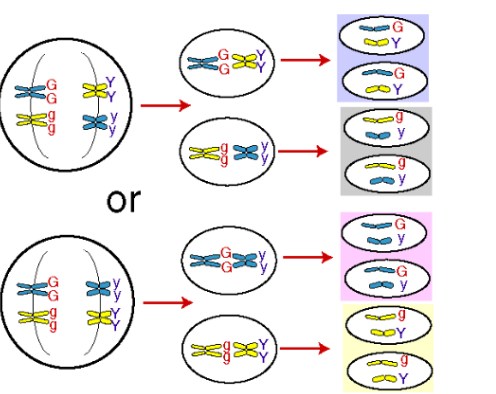
Homologous chromosomes are 1 chromosome from mom and one from dad- these are then pulled apart in anaphase- mom and dad chromosomes end up randomly on either side of the cell tho it’s not all mom’s dna on one side of the cell (cause they line up randomly in metaphase 1)
Describe the process of fertilization
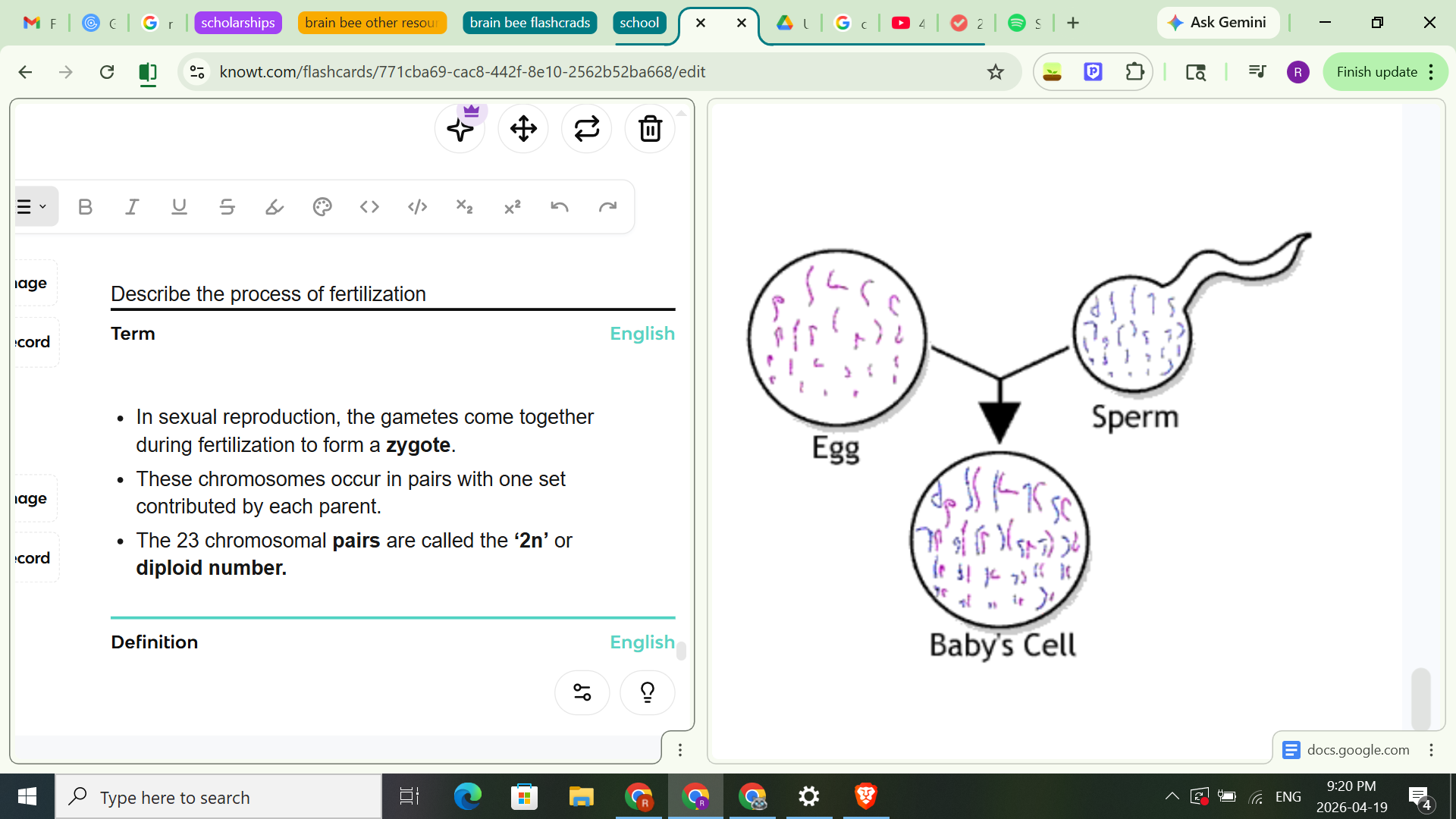
In sexual reproduction, the gametes come together during fertilization to form a zygote.
These chromosomes occur in pairs with one set contributed by each parent.
The 23 chromosomal pairs are called the ‘2n’ or diploid number.
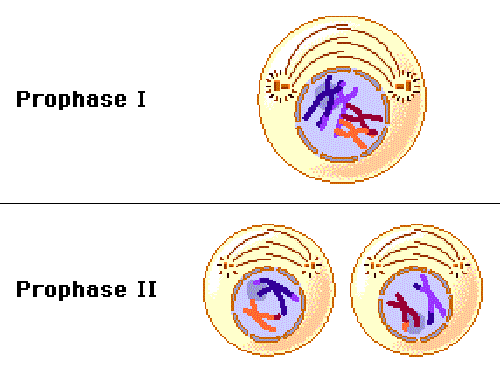
Describe the Prophase I stage of meiosis (what happens in this stage) + be able to draw a diagram showing what happens in this stage. Also mention the number of chromosomes in this stage.
In meiosis one-homologous chromosomes separate process
2 complete sets of duplicated chromosomes in the form of sister chromatids
Each duplicated chromosome pairs with its corresponding homologous chromosomes- forms a tetrad
The homologous chromosomes the exchange portions of DNA- called genetic recombination
The chromosomes condense and become visible in this stage
Chromosome number:
46 double chromosomes- diploid
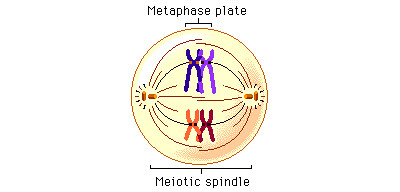
Describe the Metaphase I stage of meiosis + be able to draw a diagram showing what happens in this stage. Also mention the number of chromosomes in this stage.
In meiosis one-homologous chromosomes separate process
The tetrads move to the middle of the cell and line up across the equator through the spindle fibers- the spindle fibers guide them there
Chromosome number:
46 double chromosomes- diploid
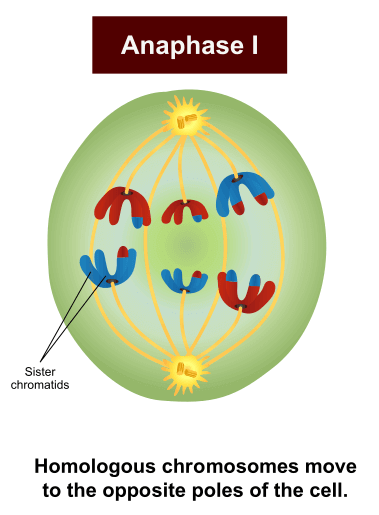
Describe the Anaphase I stage of meiosis + be able to draw a diagram showing what happens in this stage. Also mention the number of chromosomes in this stage.
In meiosis one-homologous chromosomes separate process
Homologous chromosomes separate from the tetrad and migrate to opposite poles of the spindle
Sister chromatids remain attached at their centromeres
Chromosome number:
46 double chromosomes- diploid
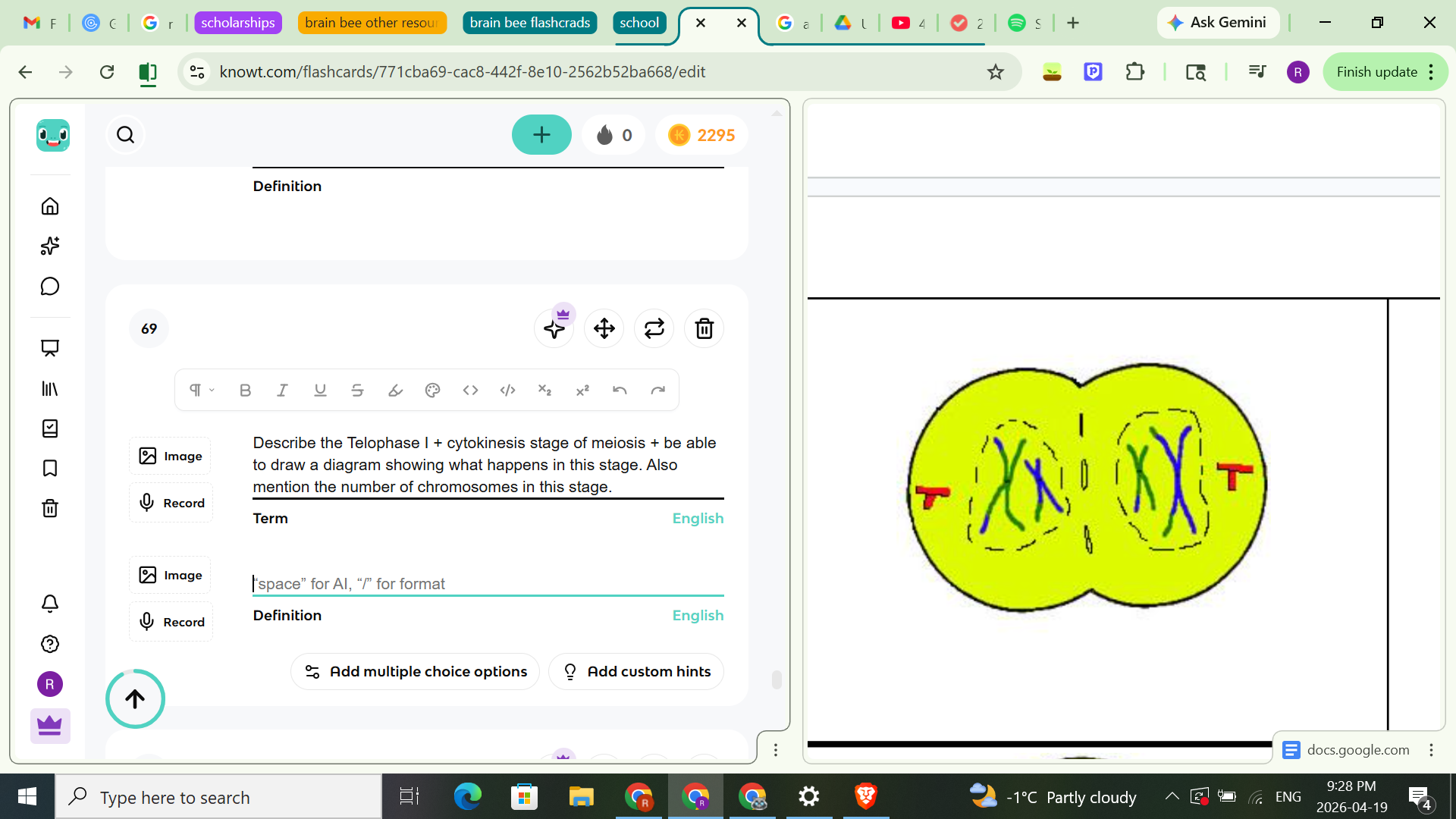
Describe the Telophase I + cytokinesis stage of meiosis + be able to draw a diagram showing what happens in this stage. Also mention the number of chromosomes in this stage.
In meiosis one-homologous chromosomes separate process
The nuclear membrane re-forms around each cluster of chromosomes
At this stage, the chromosomes of each daughter cell are present in duplicate (as sister chromatids), although each cell is considered haploid
The cell must go thru a second division in order to have the correct number of chromosomes
Chromosome number:
2 cells with 23 double chromosomes each- haploid after cytokinesis
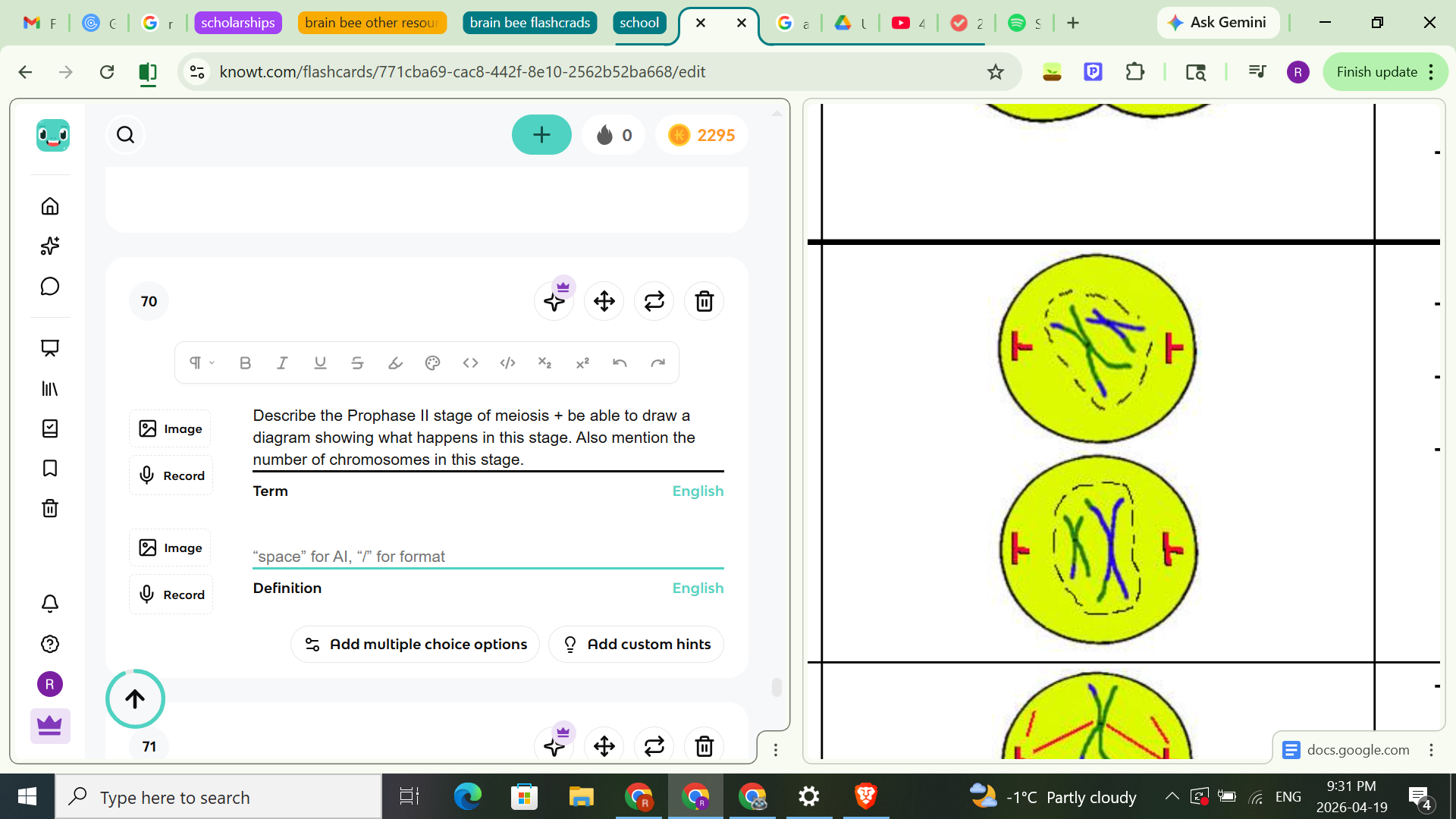
Describe the Prophase II stage of meiosis + be able to draw a diagram showing what happens in this stage. Also mention the number of chromosomes in this stage.
In meiosis 2- sister chromatids separate process
Not preceded by round of DNA replication like prophase 1
In each haploid daughter cell, a spindle forms and attaches to the centromeres of the sister chromatids
Chromosome number:
2 cells each with 23 double chromosomes
Haploid
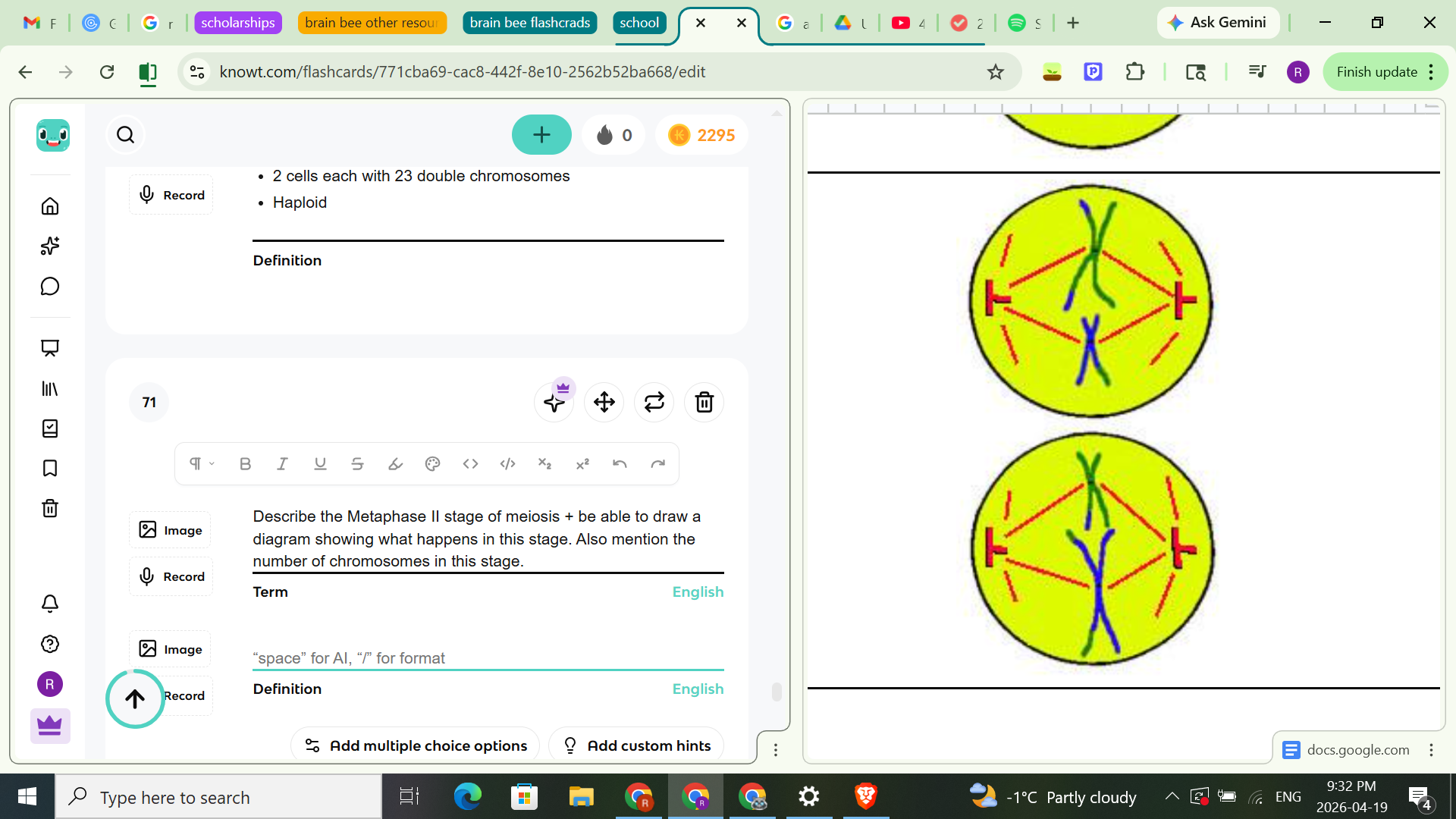
Describe the Metaphase II stage of meiosis + be able to draw a diagram showing what happens in this stage. Also mention the number of chromosomes in this stage.
In meiosis 2- sister chromatids separate process
The spindle, attached to the centromeres, moves the sister chromatids so that they line up in the middle of the cell
Chromosome number:
2 cells each with 23 double chromosomes
Haploid
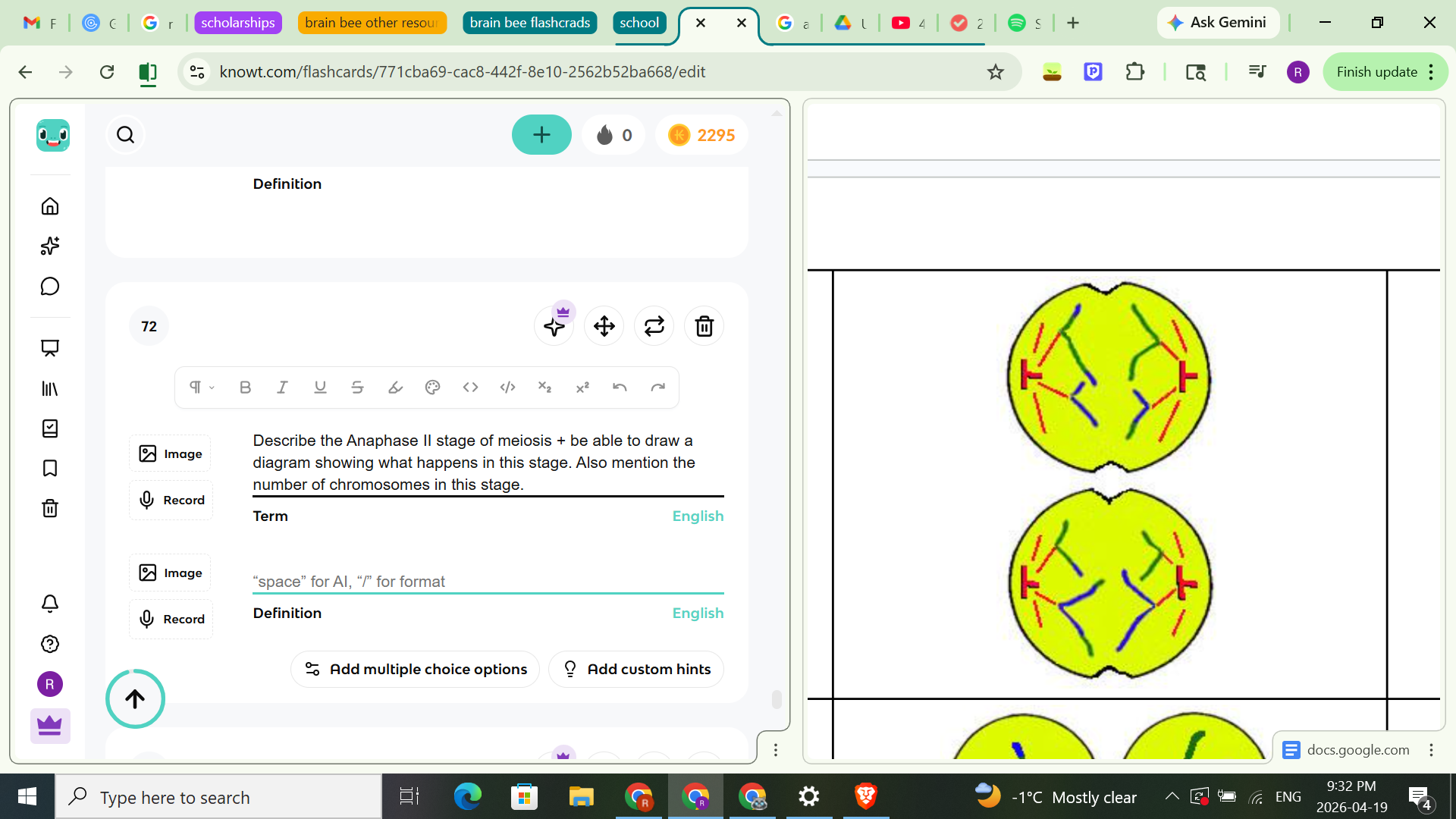
Describe the Anaphase II stage of meiosis + be able to draw a diagram showing what happens in this stage. Also mention the number of chromosomes in this stage.
In meiosis 2- sister chromatids separate process
The sister chromatids separate and move to opposite poles of the cell.
Once separated, they are considered individual chromosomes
Chromosome number:
2 cells each with 23 single chromosomes
Haploid
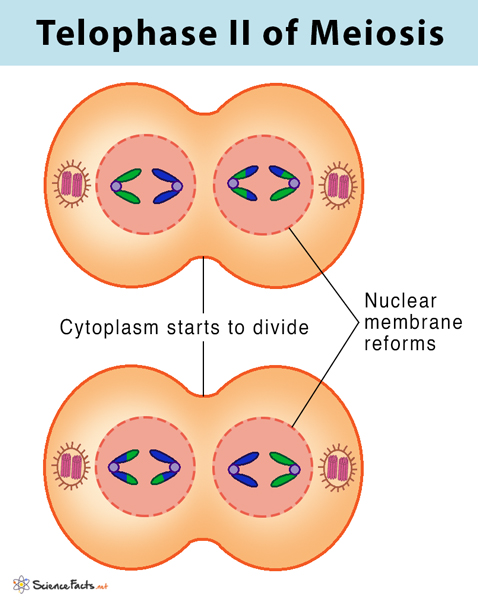
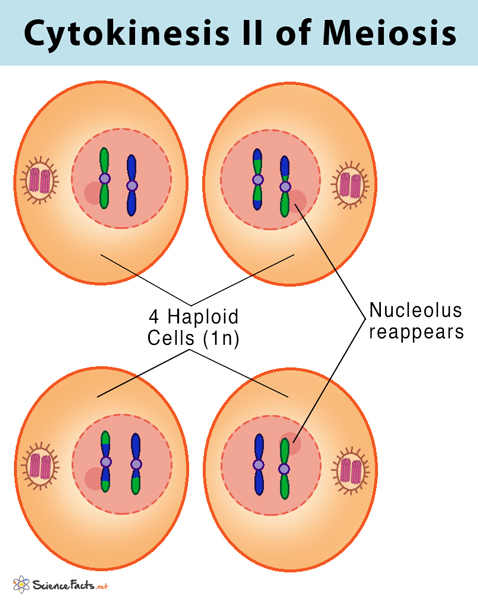
Describe the Telophase II + cytokinesis stage of meiosis + be able to draw a diagram showing what happens in this stage. Also mention the number of chromosomes in this stage.- telophase diagram is here cause couldn’t be in answer don’t cheat
In meiosis 2- sister chromatids separate process
The chromosomes are at the poles
Separate nuclei begin to form around each group of chromosomes
Cytokinesis splits the cells one more time
The process of meiosis is complete, with 4 haploid daughter cells as the final result
Chromosome number:
4 cells each with 23 single chromosomes (chromosomes uncoil in Telophase 2)- now single stranded chromatin by cytokinesis
Haploid
What are the two areas in humans in which germ cells are found?
Testes and ovaries
What does diploid mean?
Diploid means that the cell has 2 complete sets of chromosomes (one from each parent in the case of meiosis)
Are germ cells diploid? Explain.
Yes- This is because germ cells divide to make haploid cells (egg and sperm), meaning that they themselves are diploid.
What does homologous mean?
Something that is similar to something else but not the same.
How do sister chromatids differ from chromosomes?
They are the 2 replicated, identical halves of a chromosome. - the 2 halves of one replicated chromosomes
What is the centromere?
A region of DNA on a chromosome that keeps sister chromatids together and is where spindle fibers attach to during metaphase.
Fill in the blanks:
a) The amount of DNA in a replicated chromosome is 2 times the amount of DNA in an unreplicated chromosome.
b) The number of copies of each gene in a replicated chromosome is 2 times the number of copies in an unreplicated chromosome.
c) Each replicated chromosome contains 2 complete copies of genetic info.
d) The copies of genetic information in each chromosome are identical
a) The amount of DNA in a replicated chromosome is 2 times the amount of DNA in an unreplicated chromosome.
b) The number of copies of each gene in a replicated chromosome is 2 times the number of copies in an unreplicated chromosome.
c) Each replicated chromosome contains 2 complete copies of genetic info.
d) The copies of genetic information in each chromosome are identical
Why is the pairing of homologous chromosomes called a tetrad?
Because there are 4 sister chromatids when the homologous chromosomes are paired (hence tetra).
Describe the process of crossing over that happens during Prophase I after homologous chromosomes pair up.
Crossing over is when the paired homologous chromosomes exchange DNA (this creates a new combination of DNA and increases genetic diversity in the offspring).
If crossing over were to occur, would the two sister chromatids be identical or contain different alleles? Explain.
They would contain different alleles- this is because there are now different DNA segments in each chromatid- because they have exchanged genetic info
A diploid human germ cell contains 46 unreplicated chromosomes in early interphase. How many sister chromatids will be present in the human cell during prophase I of meiosis?
92
How many pairs of replicated chromosomes would be on the metaphase plane in a human cell undergoing metaphase I?
23 (because homologues are now pairs-out of the 46 chromosomes total there are 23 pairs of replicated chromosomes).
Are each of the chromosomes separated in Anaphase I replicated or unreplicated?
Replicated
Are the two sets of chromosomes separated in Anaphase I identical to those in the parent cell? Explain.
No because the cross over process has happened- DNA has been exchanged between the paired chromosomes
What are the TWO events that are accomplished by this separating of the homologous pairs in Anaphase I?
The homologues are separated and drawn to the poles of the cell- allows for Telophase + cytokinesis because each new cell created will have a complete set of chromosomes
check- add one more rzn this is js one
Are chromosomes single or doubled by Telophase I?
Doubled- because chromosomes are still replicated (sister chromatids are not split-actually split in anaphase 2)
Are the two new nuclei formed after Telophase I haploid or diploid? Explain.
Haploid- This is because the homologous pairs have separated creating half the set of original chromosomes in each new nucleus- so in humans it would go from 92 chromosomes to 46 here and then in the second phases of meiosis they will divide into haploid cells with 23. - check
Does the original parent germ cell still exist by cytokinesis in Meiosis I?
No- has now divided into 2 new daughter cells
Name and explain the TWO processes that contribute to the daughter cells not being identical to each other after cytokinesis in meiosis I
The cross over process- homologous chromosomes will exchange DNA segments, creating genetic diversity in the 2 daughter cells.
The other process is independent assortment- happens in metaphase 1 and is the random separation and lining up of chromosomes- so during metaphase I the homologous chromosomes, since they function and stuff happens to them independently, when they're lining up it is random and they’re pulled apart to either dies (pole) of the cell randomly- causes genetic info to get mixed around the cell and the daughter cells to therefore be different after division.
Interkinesis
This is a brief resting period before the next round of division.
The chromosomes may partially decondense and lengthen (uncoil)
There is no DNA replication in this phase like in interphase- because the chromosomes have already replicated- already have 2 sister chromatids from meiosis 1. This is just a resting phase between the 2 phases of meiosis.
How many replicated chromosomes would be on the metaphase plane in a human cell undergoing meiosis? (for meiosis II specifcally)
23- check
Are the daughter chromosomes replicated or unreplicated during Anaphase II?
Unreplicated-check
Are the two sets of daughter chromosomes identical to those in the parent cell during Anaphase II?
No- cause cross over and independent assortment mixed homologues DNA and randomly put them into each new daughter cell
What are the daughter ells produced from Meiosis II called? How are these daughter cells related to one another? How are these daughter cells related to the original germ cell?
Pre-gamete cells- check cause why
They have the same parent cells.
Their DNA comes from the original germ cell. - is a mixture of the 2 original germ cells
check all of these
What is accomplished by meiosis?
Meiosis allows for new cells to be formed (specifically haploid cells like sperm and eggs), and genetic variation.
How does sexual reproduction allow for genetic variation?- in what ways
During the process of meiosis (cells produced as a result of this process are NOT identical to each other)- cause of random/individual assortment and crossing over
During fertilization
Random assortment
In prophase I/metaphase I, the order in which the homologous chromosomes pair up is by chance.
Even though the same genes are distributed to each new cell, the allele distribution is completely random.
Note: Alleles are like the parts of a gene that determine traits like hair colour, eye colour, etc.
The resulting gametes therefore have different combinations of chromosomes.