virus replicaiton
 Call Kai
 Learn
Learn Practice Test
 Spaced Repetition
 Match
Match Flashcards
 Knowt Play
1/21

There's no tags or description
Looks like no tags are added yet.
Name | Mastery | Learn | Test | Matching | Spaced | Call with Kai |
|---|
No analytics yet
Send a link to your students to track their progress
22 Terms
attachment
what is the receptor usually
what does the virus receptor interaction determine
what do some viruses do
how is the virus prepared for entry
viral surfce proteins bind to receptors on cell surface
receptor is cellular protein or glycan that a viral protein or glycoprotein has evolved to use
virus receptor interaction determines specificty of viruses for cells and tissues
tropism
soem viruses use mutiple receptors or coreceptors
spike cleaved by enxymes prepares for entry
entry
how is the virus released from endosome
endocytosis
virus is released from endosome by pH change
fusion of viral envelope with endosomal membrane
some enveloped virus fuse directly with the plasma membrane
uncoating
release of viral nucleic acid from viral capsid
some viruss, nucelic acid is still in a nucleoprotein complex
some virses the capsid is only partially disintegrated
transcription of DNA viruses
mRNA transcription in the nucleus using cellular RNA polymerase
transport of mRNA to ribosomes in cytoplasm for translation
RNA viruses- transcription
cells do not possess enzyme for transcription of RNA from RNA template
RNA viruses need to use their own enzymes to make meesenger RNA (RdRp)
most RNA viruses remain in cytoplasm for replication
must avoid RNA degedation
early proteins
non strutural eg polymerase to replicate
and protein to shut down the hosts immune system
late proteins
structural
eg capsid and envelope glycoproteins
where is genome replication of dna and rna viruses
dna- in the nucleus
rna- in the cytoplasm
exceptions
POX- dna makes viral factories in the ctoplasm (a dna dependent RNA polymerase)
influenza- replicates in the nucleus
assembly
ackaging of new genomes with viral proteins
genomes needs a packaging signal
concentrate viral components
eg negri bdy in rabies
complex
influenza needs to package 8 segments
release
budding (enveloped viruses aquireenvelope through host lipid bilayer)
exocytosis
lysis- most unenveloped
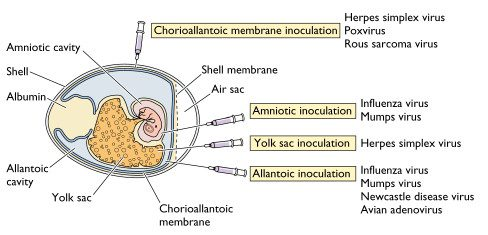
culture of viruses in chicken egg
fertlilised eggs
sterile inoculation (eg growth of influenza in allantoic)
cell culture
easy to handle and easy to scale up
treatment with trypsin eaches cells from plastic
cells are trasnferred to new flasks= passaging
once cells growing well they may be used for virus culture or isolation
primary cell culture
what is it
how much passages can it survive before differentation
cells freshly prepared from tissue sample
can survive for about 10-15 passages before differentiation prevents further cell division
continuous cell lines
what are they
what are they often derived from
what are they widely used for
features
immortalised cells that continue to grow
often derived from tumours
widely used for virus culture
loss of receptors, major chromosomal abnormalitites
organoids
3d cell cultures derived from stem cells
increased realism as multiple cell types
can be grown for month
can model diff donors
expensive/difficult
eg intestinal organoids used to grow norovirus
human airway epithelial cells
isolation
sample eg nasal swab, faeces, tissue from postmortem. freeze for long term storage
inoculate cell cultures and wait for changes- cytopathic effect
cytopathic effets
what are they
exmples
visible changes to cells following virus infection
cells round up and detach from flask
holes appear in cell layer
syncytia formation: cells start to fuse creating very large cells with several nuclei and eventually cell death
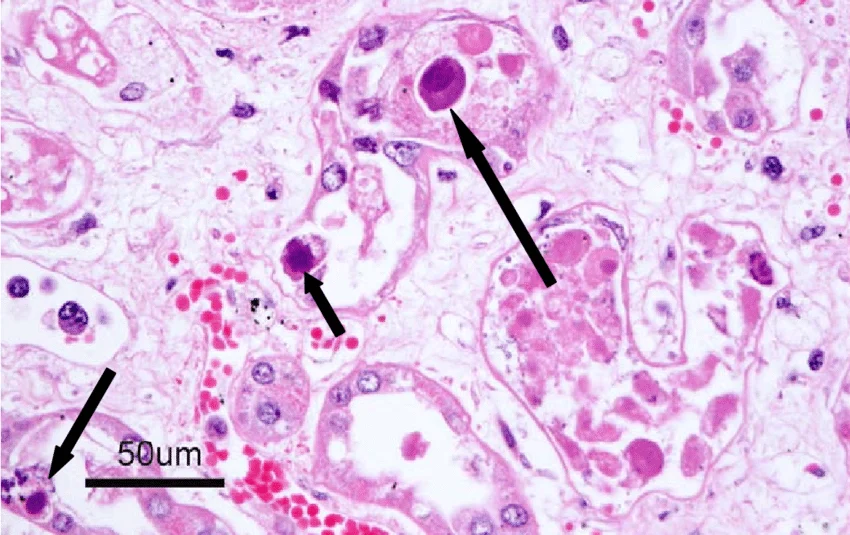
inclusion bodies (masses of viral proteins within hte cell)
non cytopathogenic
no visible signs of replication but viral particles prodcued
use staining or qPCR
infectiivty assays
to quantfy number of infectious virus particles produced eg plaque assay
plaque assay
Quantify plaque forming units (pfu)/ml:
10-fold serial dilutions of virus stocks/sample Addition of agar overlay over inoculated cell cultures Virions infect cells – give rise to plaques
Count plaques – calculate pfu/ml = virus titre