Fetal Pig Dissection Quiz
 Call Kai
 Learn
Learn Practice Test
 Spaced Repetition
 Match
Match Flashcards
 Knowt Play
1/49

There's no tags or description
Looks like no tags are added yet.
Name | Mastery | Learn | Test | Matching | Spaced | Call with Kai |
|---|
No analytics yet
Send a link to your students to track their progress
50 Terms
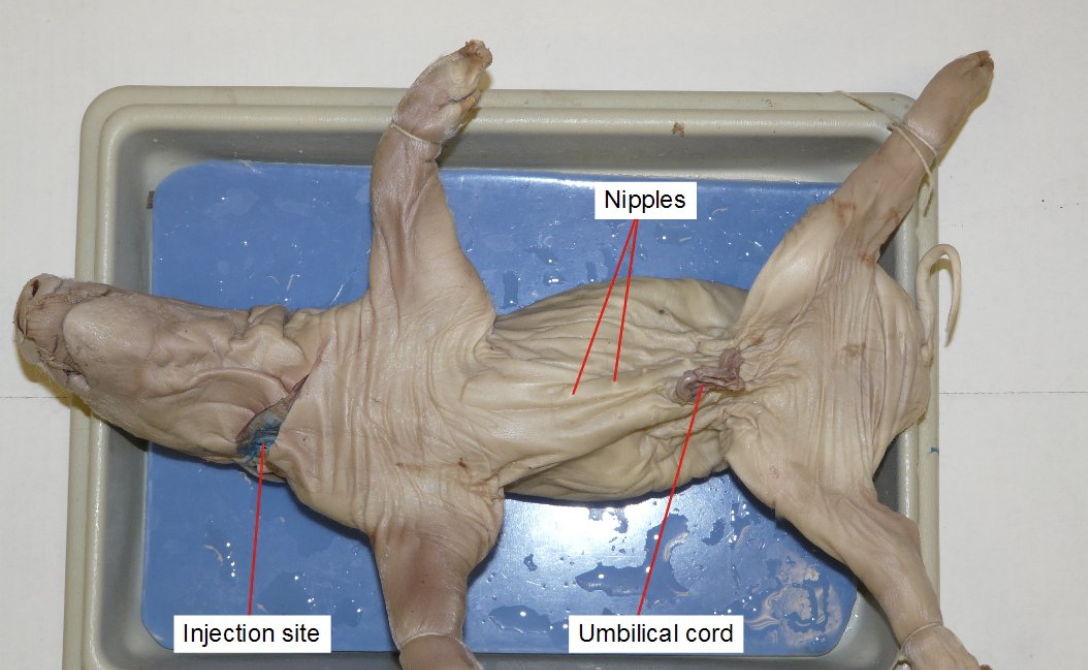
ventral view
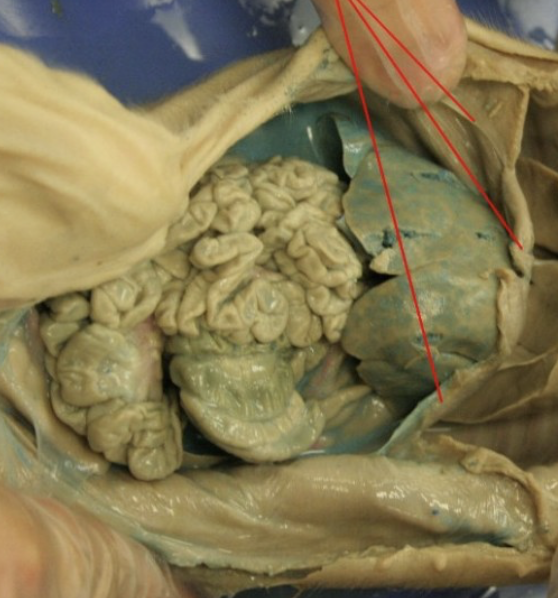
diaphragm
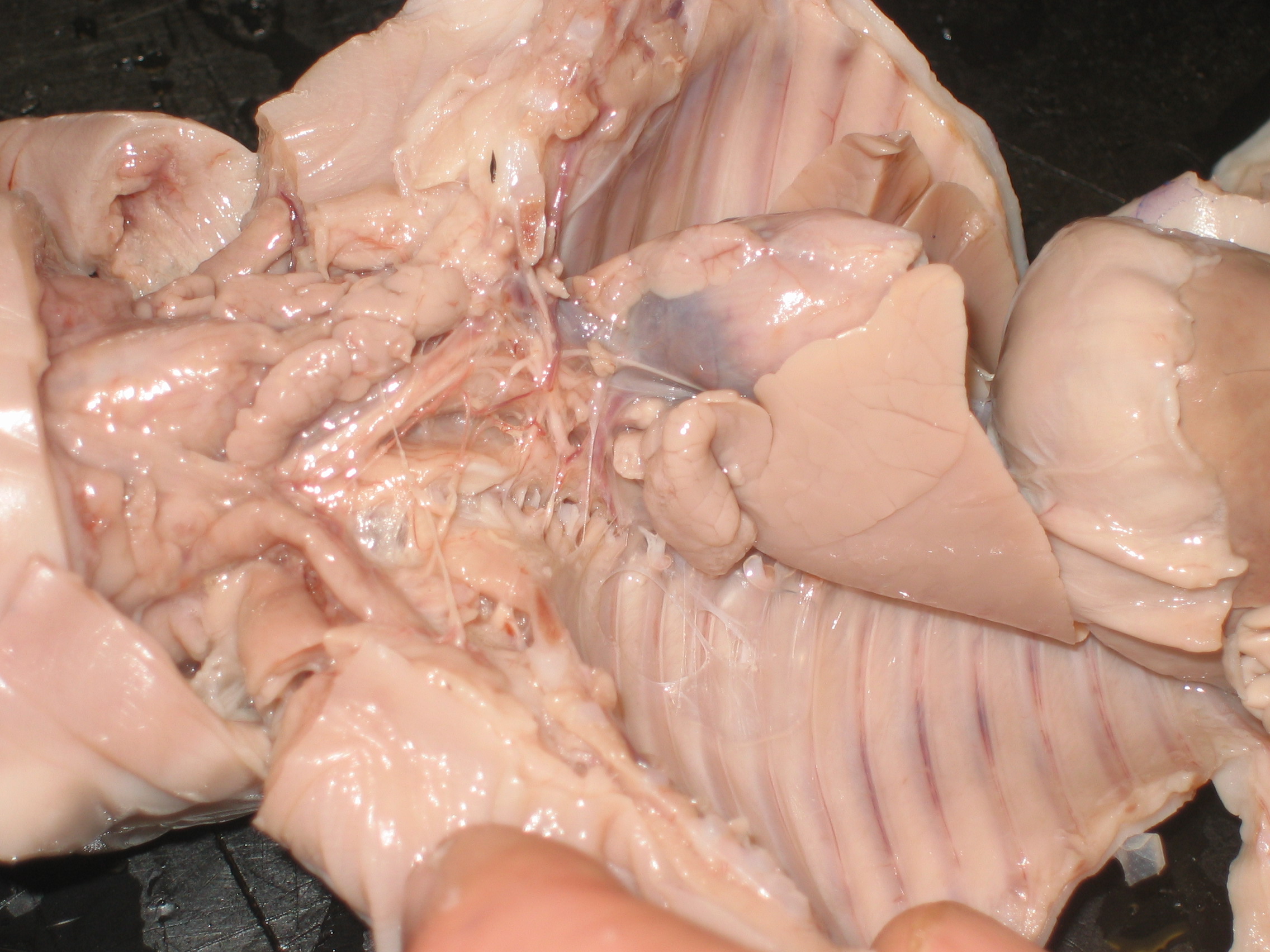
thoracic cavity
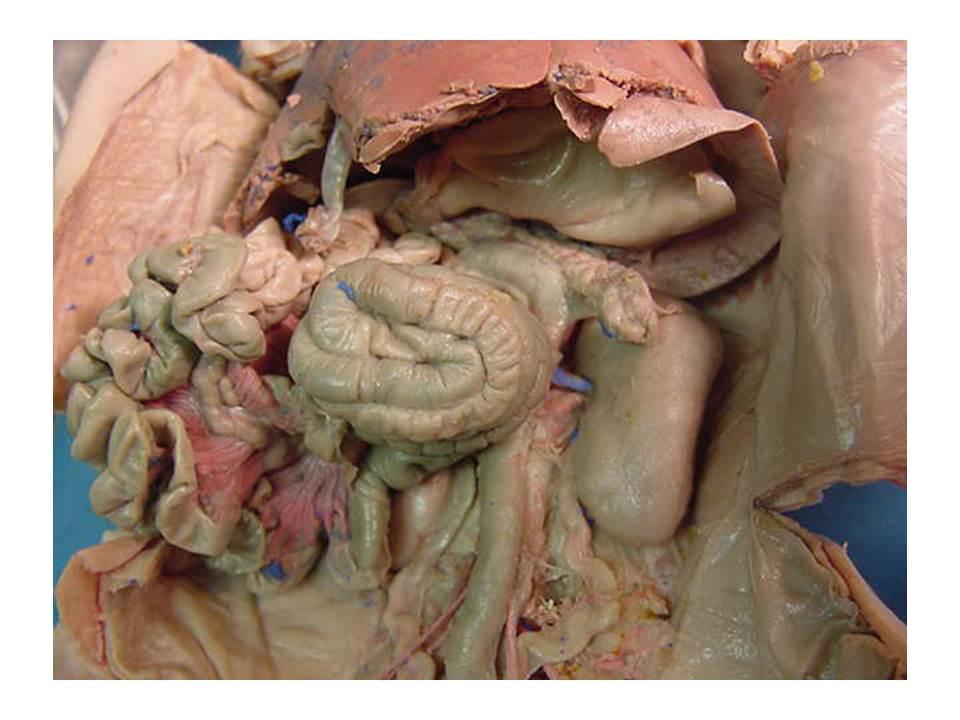
abdominal cavity
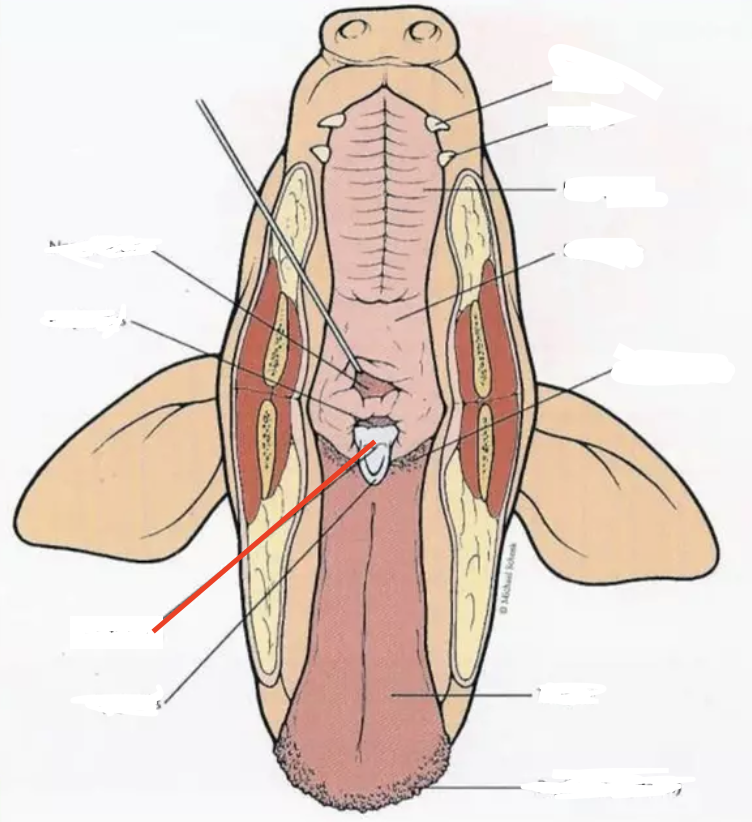
glottis
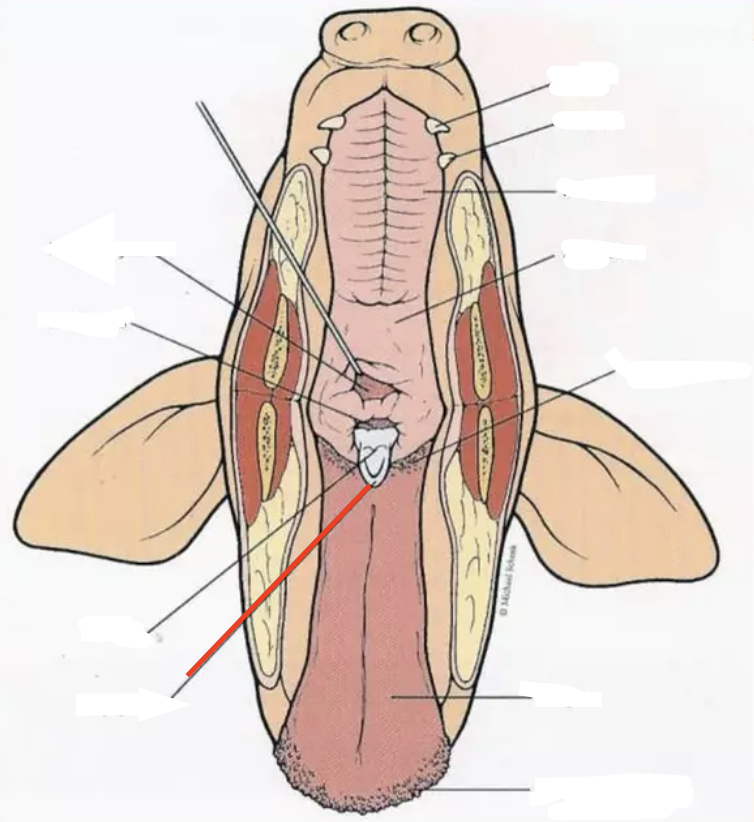
epiglottis
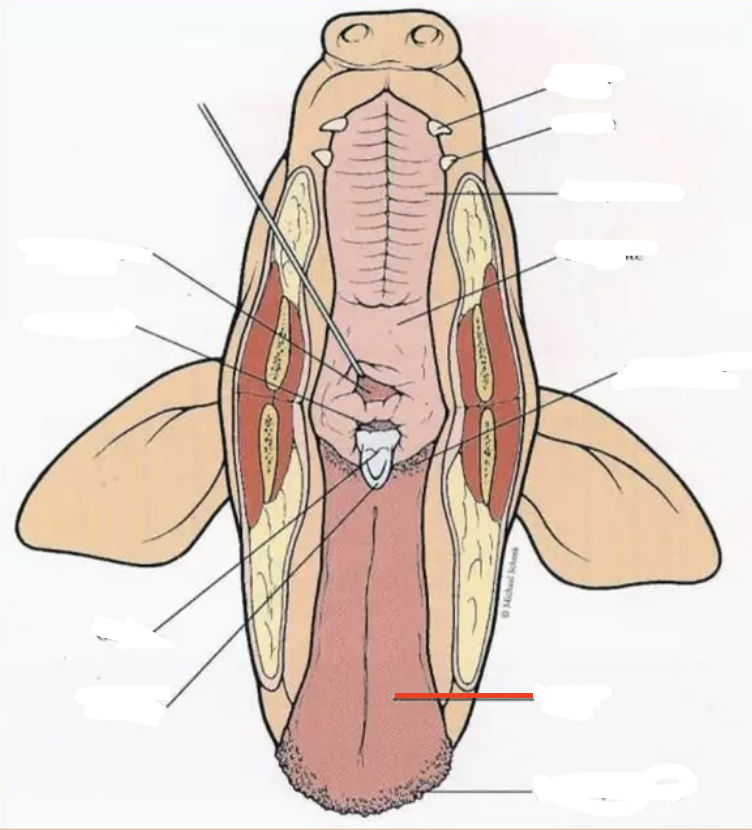
tongue
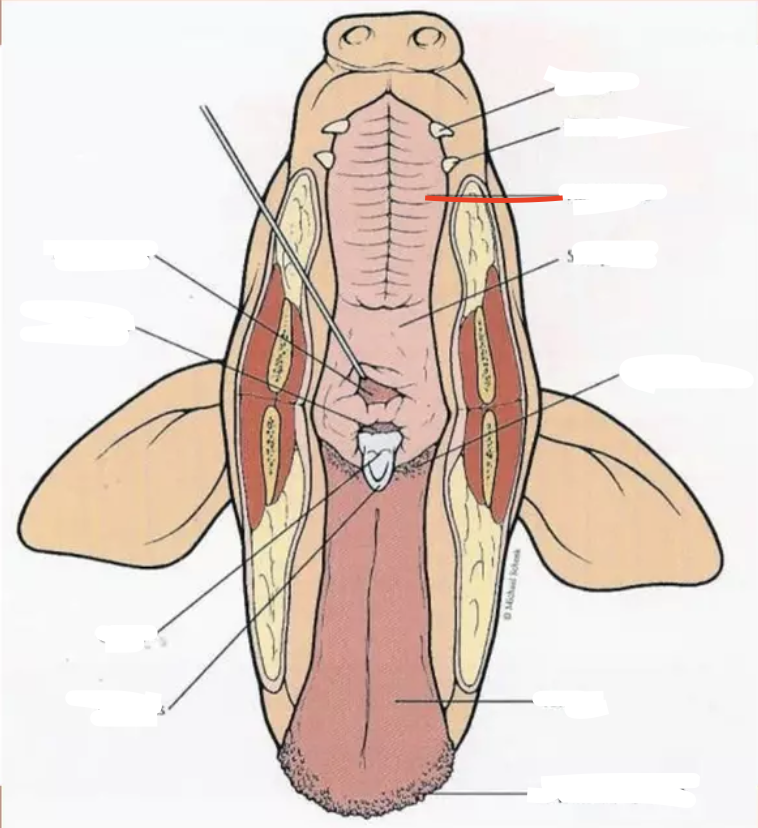
hard palate
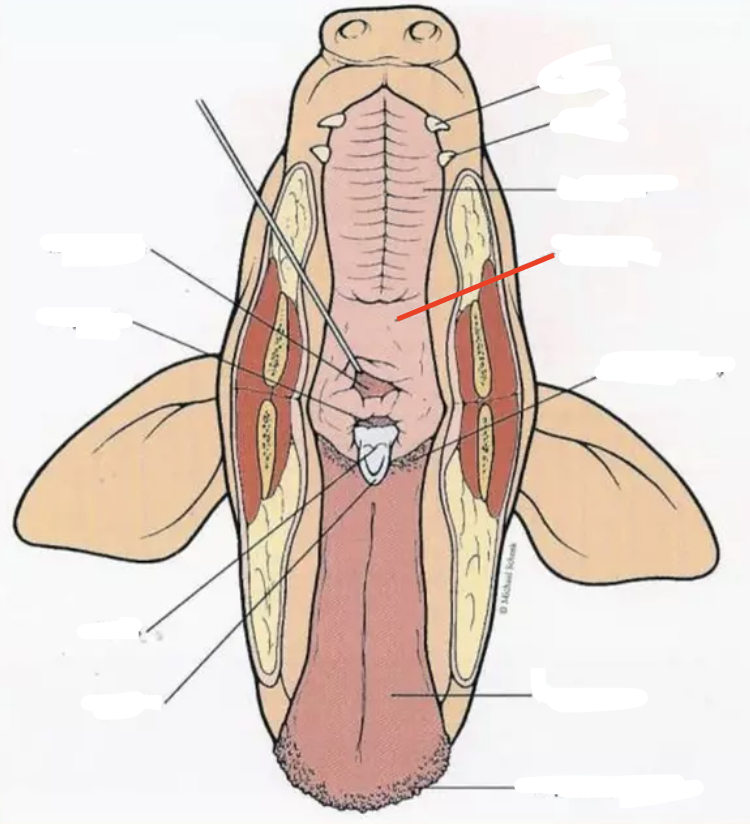
soft palate
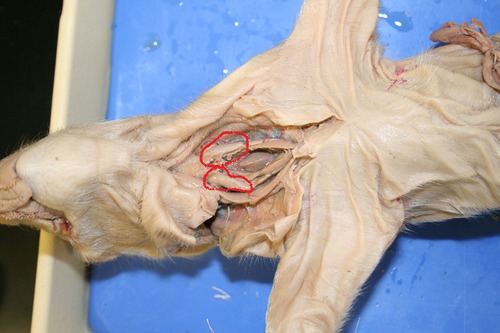
thymus gland
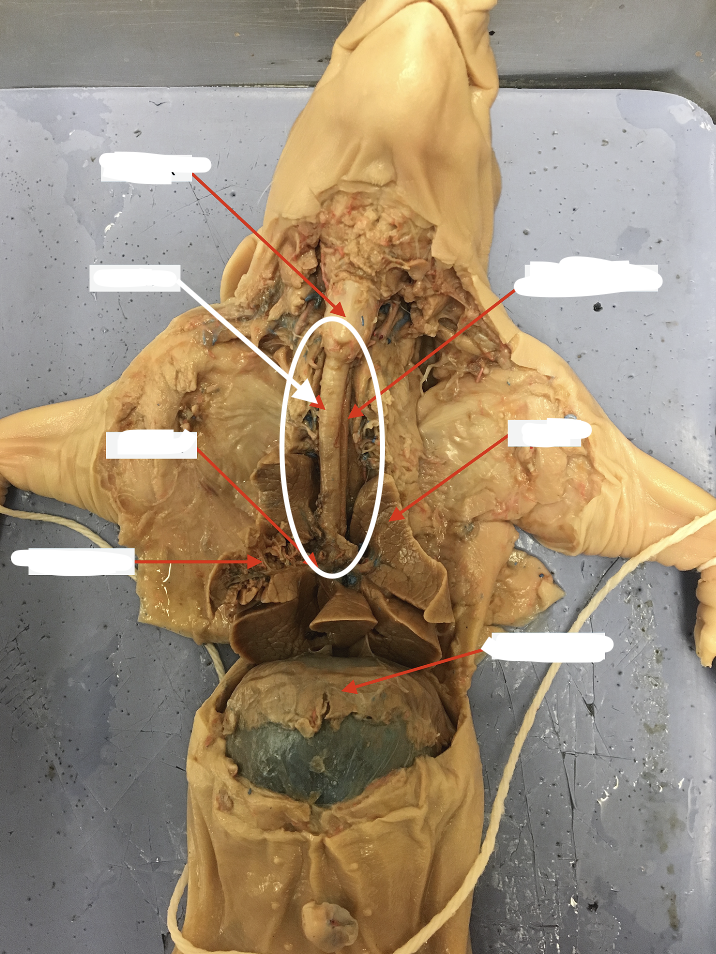
trachea
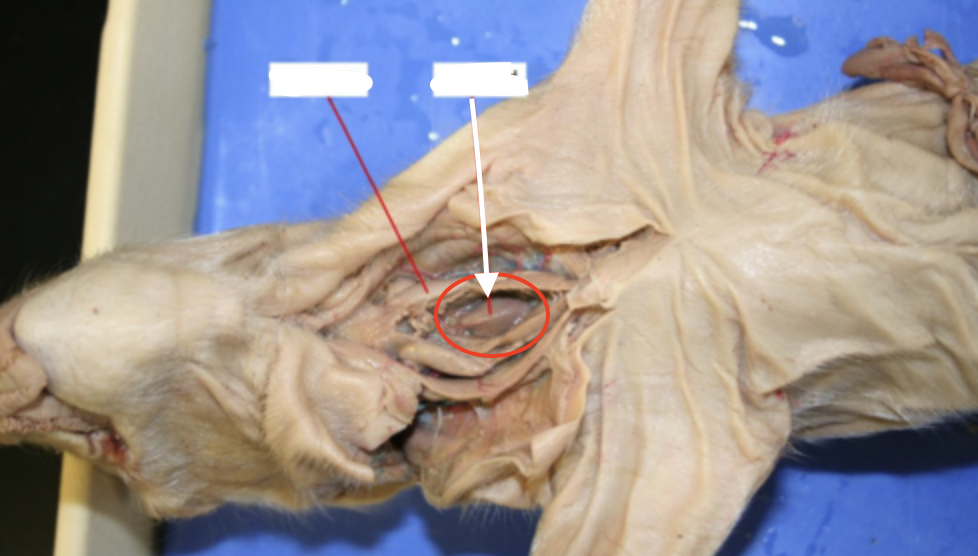
thyroid gland
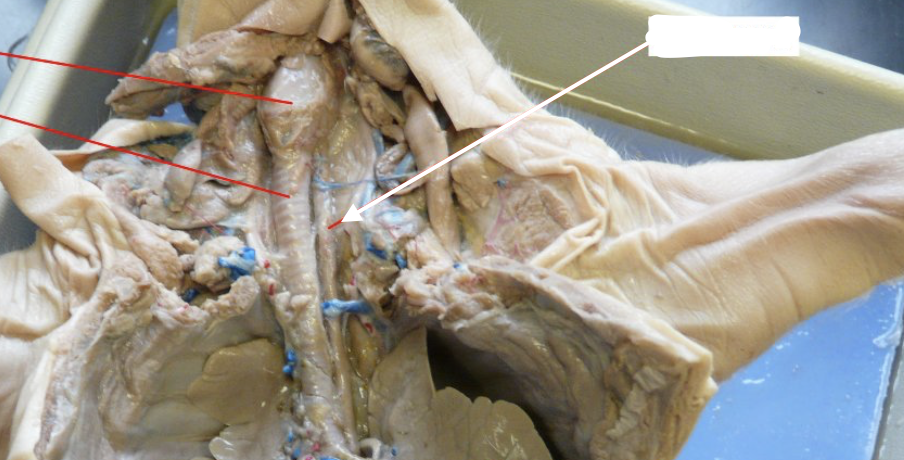
esophagus
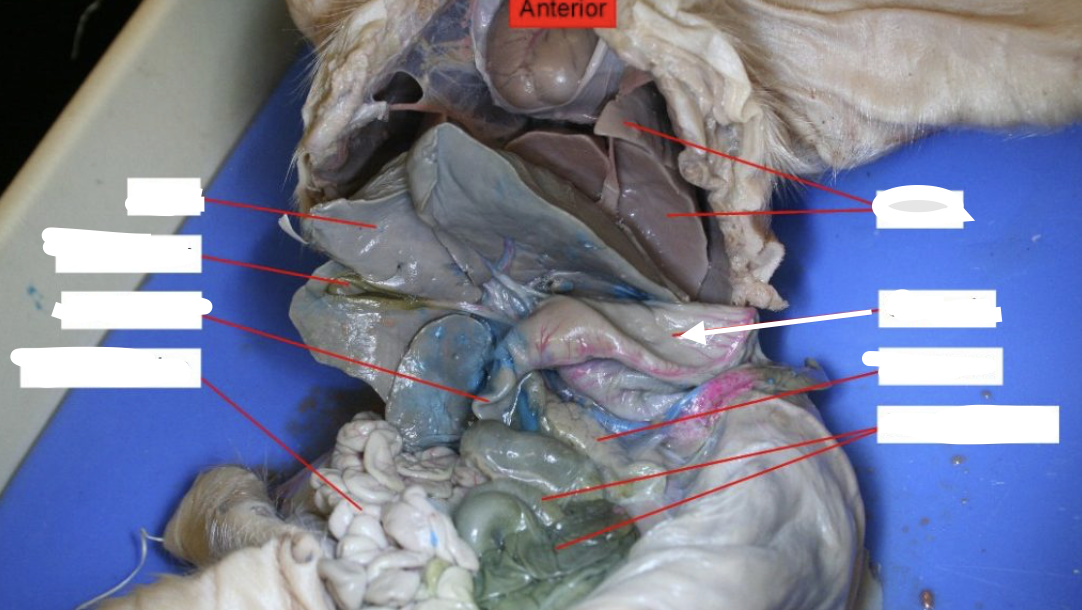
stomach
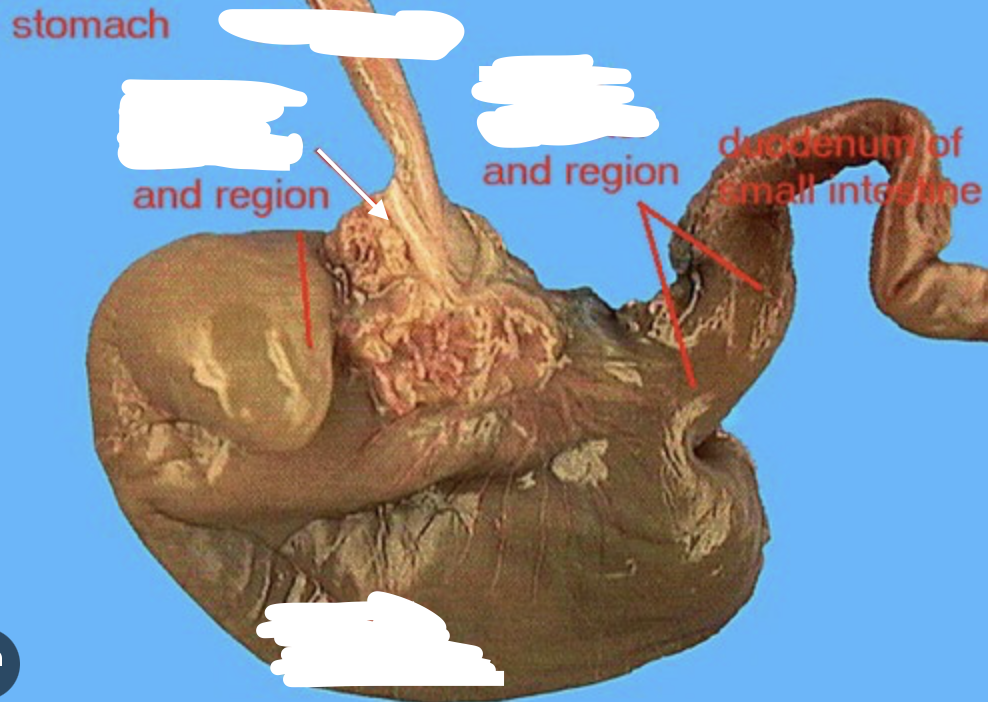
cardiac sphincter
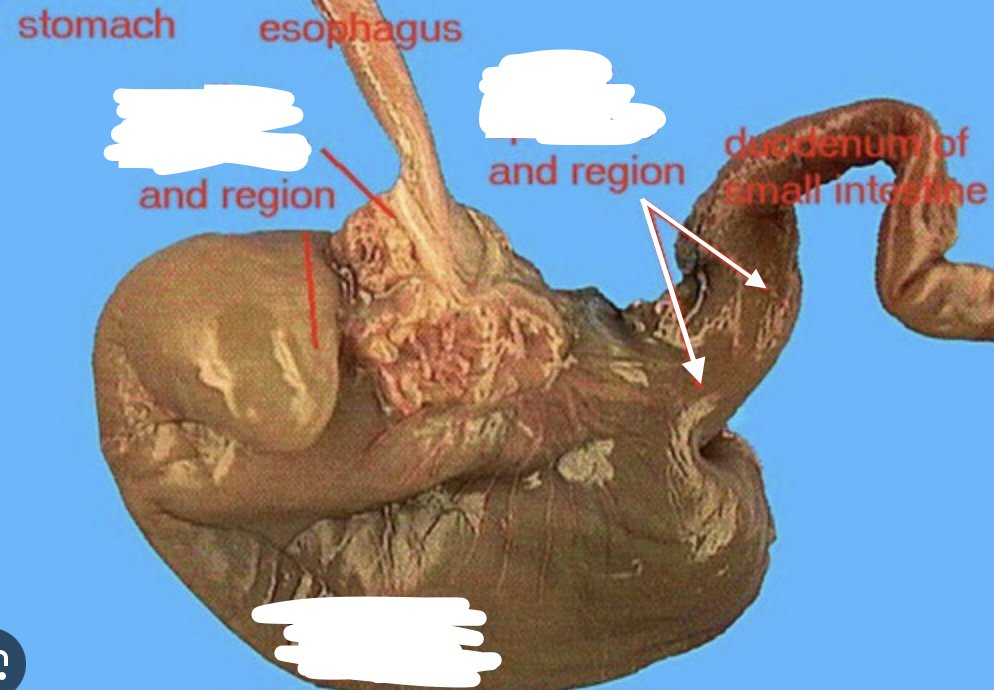
pyloric sphincter
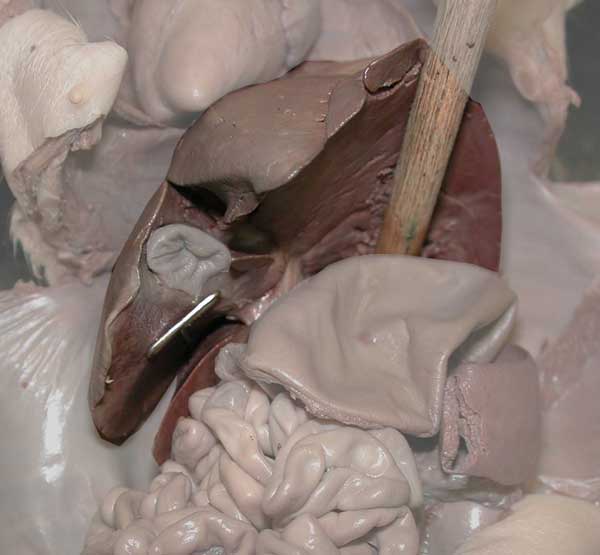
liver
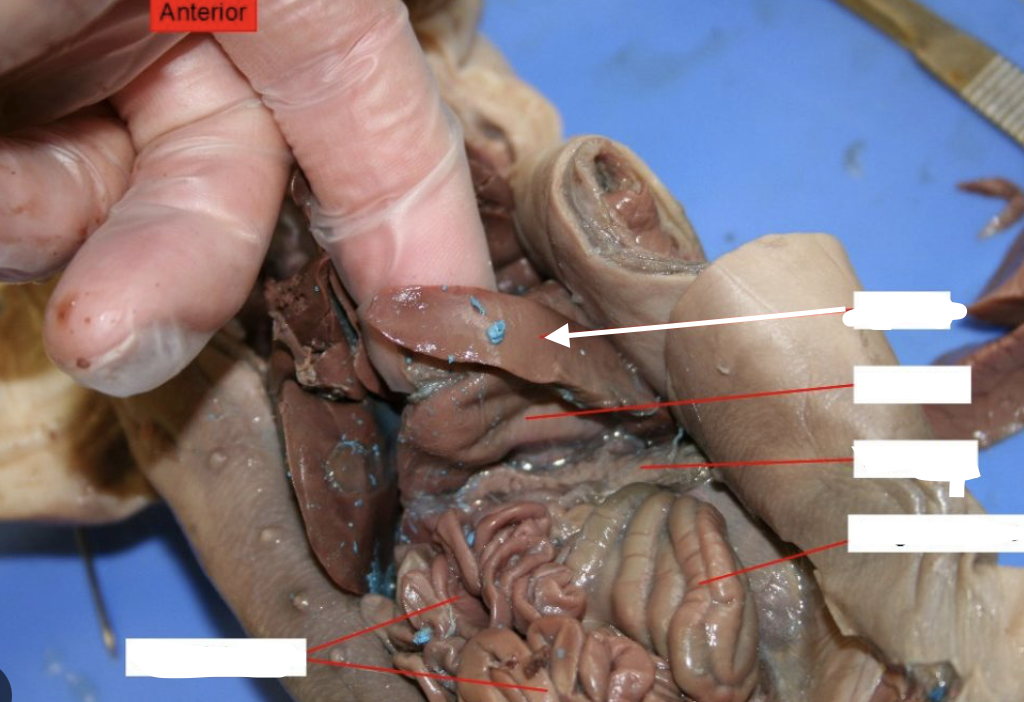
spleen
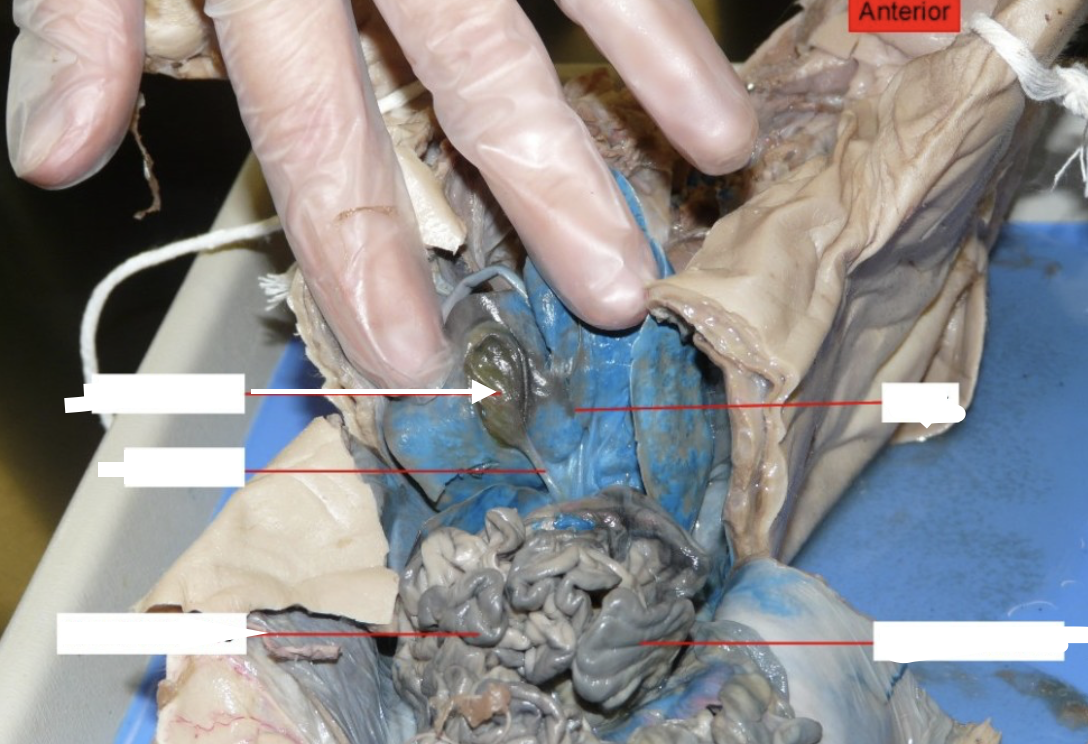
gallbladder
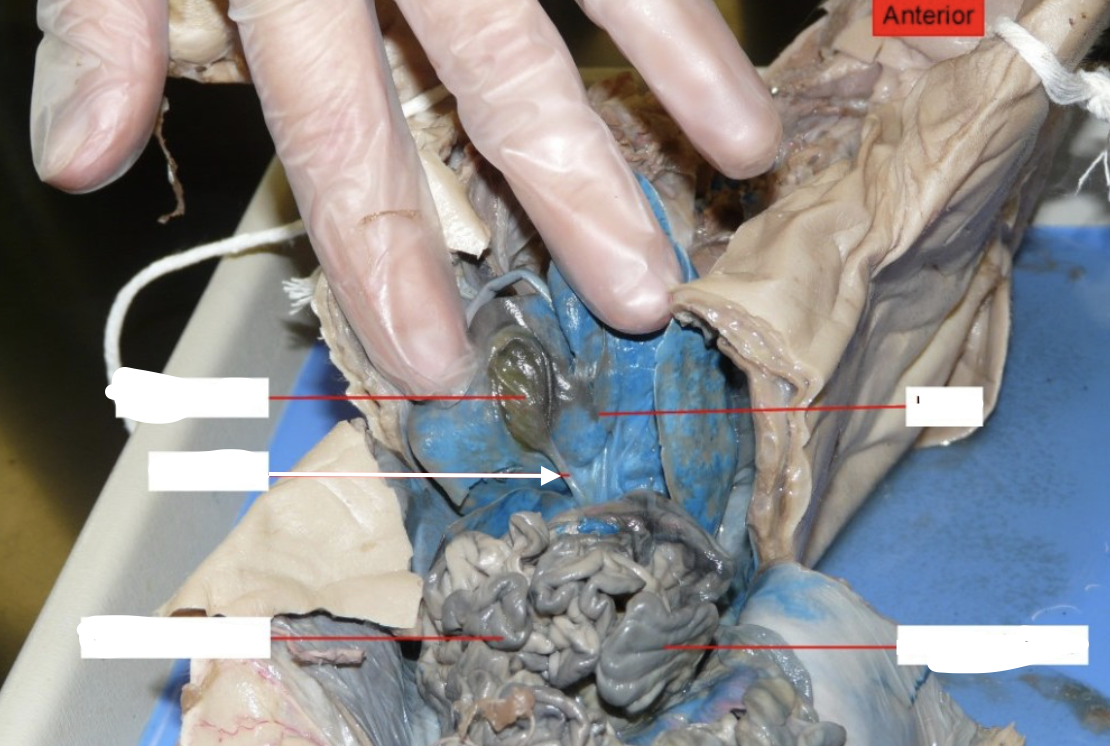
bile duct
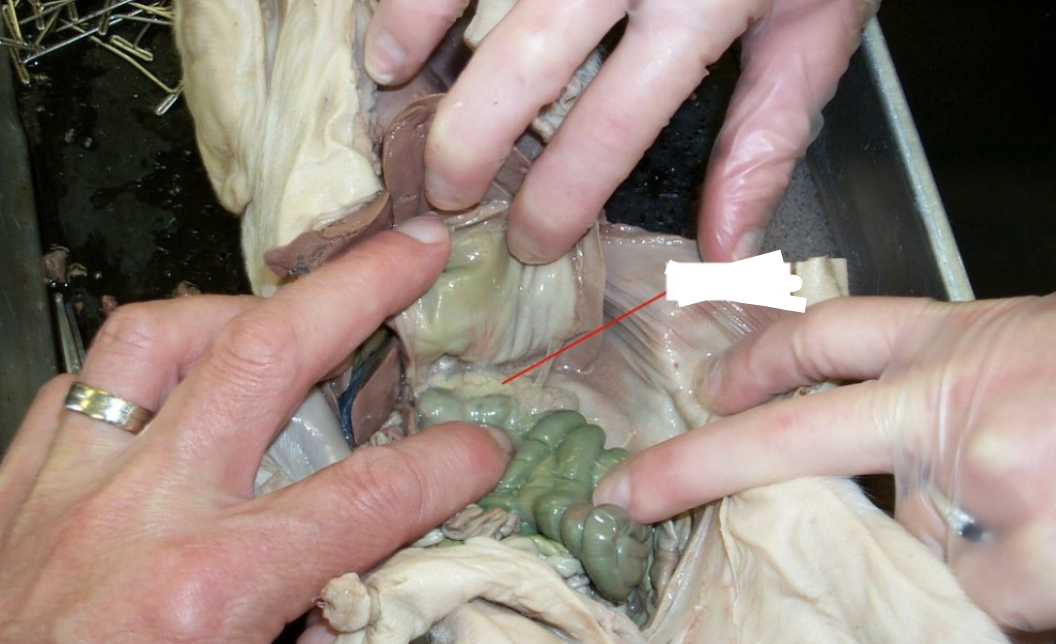
pancreas
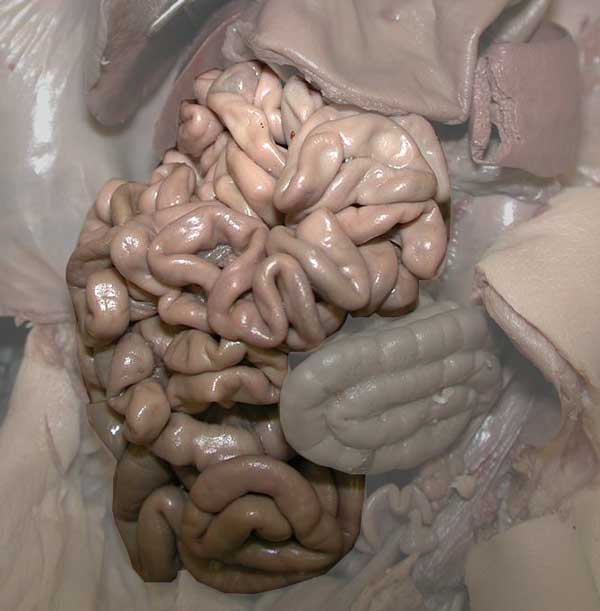
small intestine
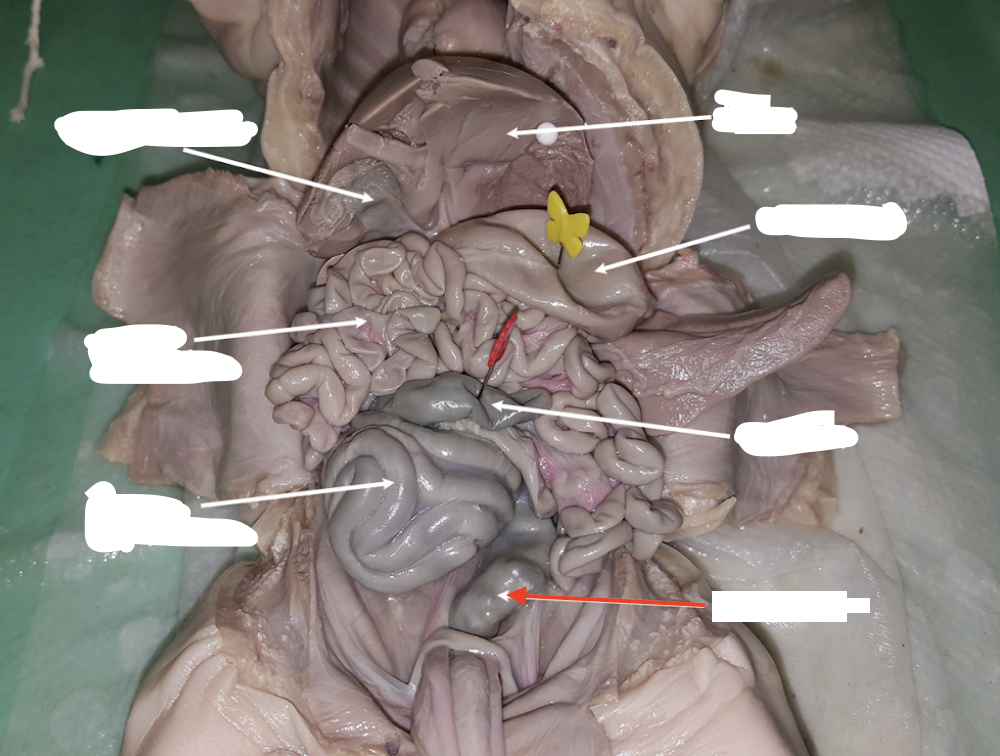
rectum
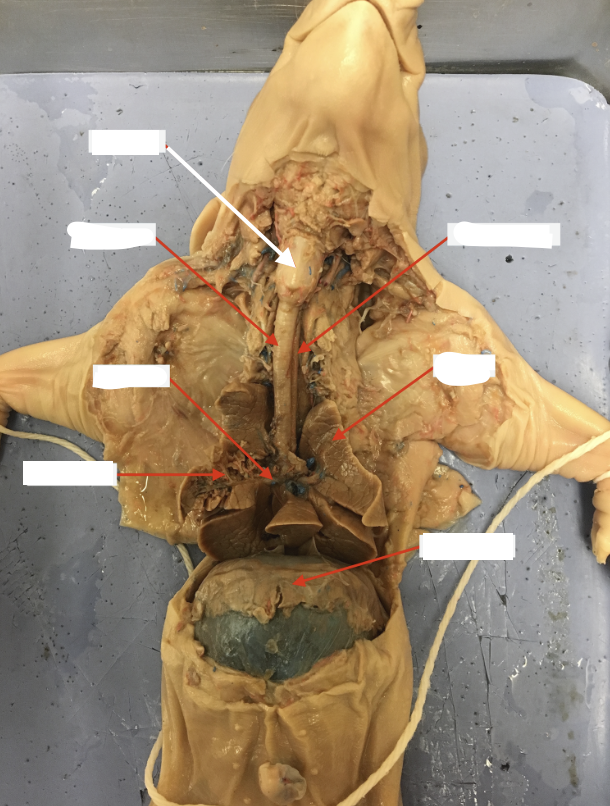
larynx
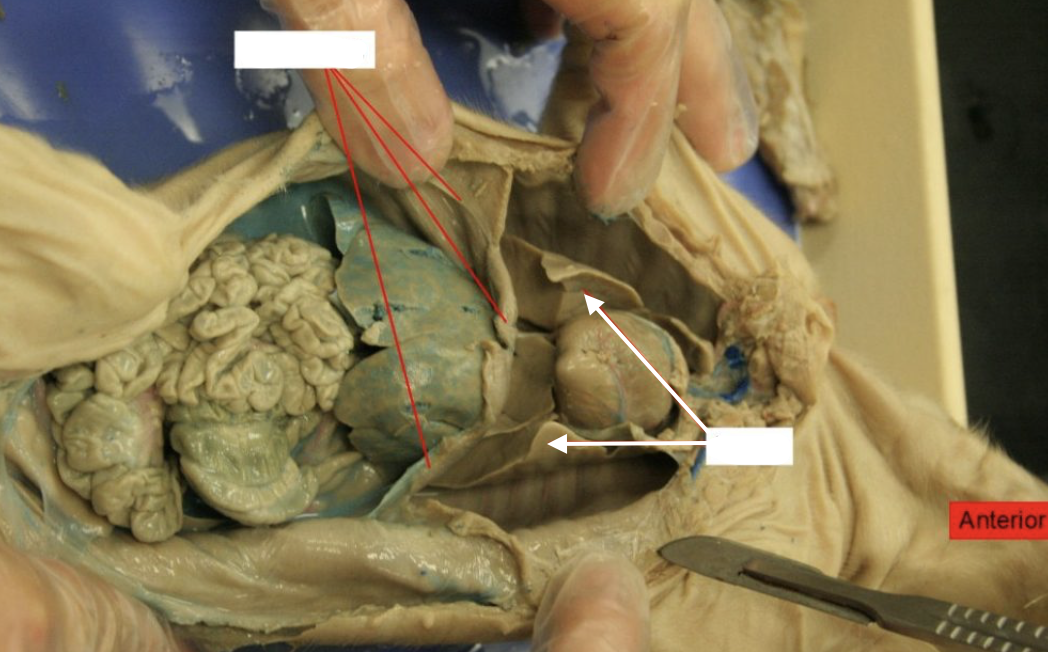
lungs
What is the function of the lungs?
exchange gases (oxygenation and carbon dioxide removal)
What is the function of the diaphragm?
acts as the primary driver of respiration, separating the thoracic cavity (lungs/heart) from the abdominal cavity.
What is the function of the thoracic cavity?
a protective chamber for vital cardiovascular and respiratory organs, primarily the heart and lungs
What is the function of the abdominal cavity?
a space housing, protecting, and supporting the digestive, urinary, and endocrine organs
What is the function of the glottis?
allows air to pass into the lungs during breathing
What is the function of the epiglottis?
folds down over the glottis during swallowing to prevent food or liquids from entering the respiratory tract
What is the function of the tongue?
food manipulation, ingestion, and sensory perception
What is the function of the hard palate?
separates the oral cavity from the nasal cavity. Provides a rigid surface for mechanical digestion (grinding food) and to separate breathing from swallowing
What is the function of the soft palate?
a muscular flap at the back of the mouth that acts as a vital partition, separating the digestive and respiratory tracts
What is the function of the thymus gland?
the site for T lymphocyte (T cell) maturation and selection, training them to identify pathogens, and produces hormones like thymosin to support this maturation
What is the function of the trachea?
the main airway for conduction of air to and from the lungs
What is the function of the thyroid gland?
regulate metabolism, heart rate, and growth
What is the function of the esophagus?
acts as a conduit, transporting food and water from the pharynx to the stomach through involuntary muscle contractions called peristalsis
What is the function of the stomach?
storing food, secreting hydrochloric acid and pepsin to break down proteins, killing ingested bacteria with low pH, and physically churning food into a liquid chyme
What is the function of the cardiac sphincter?
permit food to enter the stomach while preventing acidic stomach contents and food from regurgitating back up into the esophagus
What is the function of the pyloric sphincter?
regulate the passage of digesta (chyme) into the small intestine
What is the function of the liver?
filter toxins from blood, produce bile for fat digestion, manage energy (glucose/glycogen), and create clotting proteins
What is the function of the spleen?
acts as a vital hematopoietic and immune organ, filtering blood, producing lymphocytes, and removing old red blood cells
What is the function of the gallbladder?
stores, concentrates, and releases bile produced by the liver into the duodenum to facilitate fat digestion
What is the function of the bile duct?
pathway transporting bile from the liver and gallbladder to the duodenum to facilitate digestion
What is the function of the pancreas?
an exocrine gland, secreting digestive enzymes and sodium bicarbonate into the duodenum to break down food, and an endocrine gland, producing insulin and glucagon to regulate blood sugar
What is the function of the small intestine?
digestion, nutrient absorption, and immune defense
What is the function of the rectum?
stores digestive waste (feces) before elimination
What is the function of the larynx?
control airflow for respiration, produce vocalizations, protect the lower airways during swallowing, and serve as an immunological defense
What is the function of the lungs?
to exchange gases (oxygen and carbon dioxide) between the air and blood