Marine Biology Test!
 Call Kai
 Learn
Learn Practice Test
 Spaced Repetition
 Match
Match Flashcards
 Knowt Play
1/34

There's no tags or description
Looks like no tags are added yet.
Name | Mastery | Learn | Test | Matching | Spaced | Call with Kai |
|---|
No analytics yet
Send a link to your students to track their progress
35 Terms
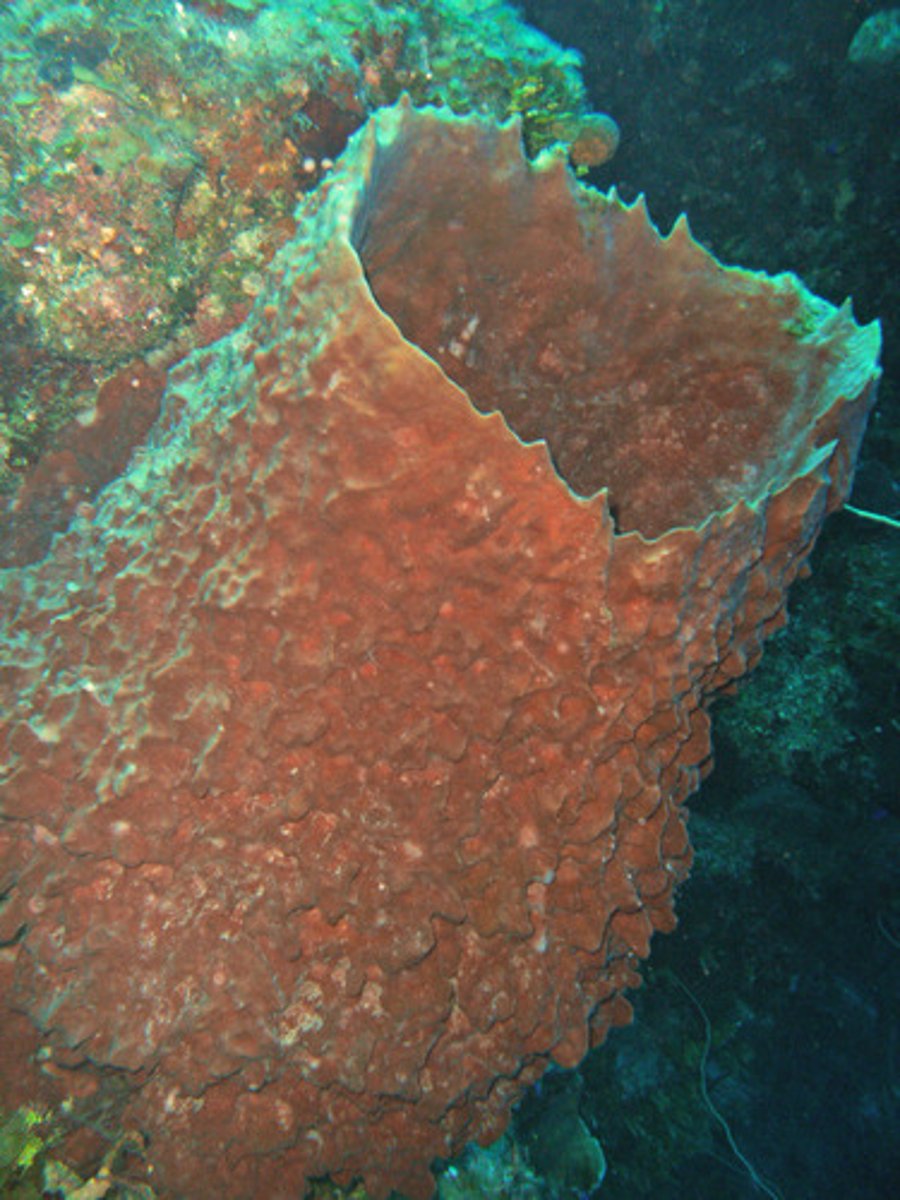
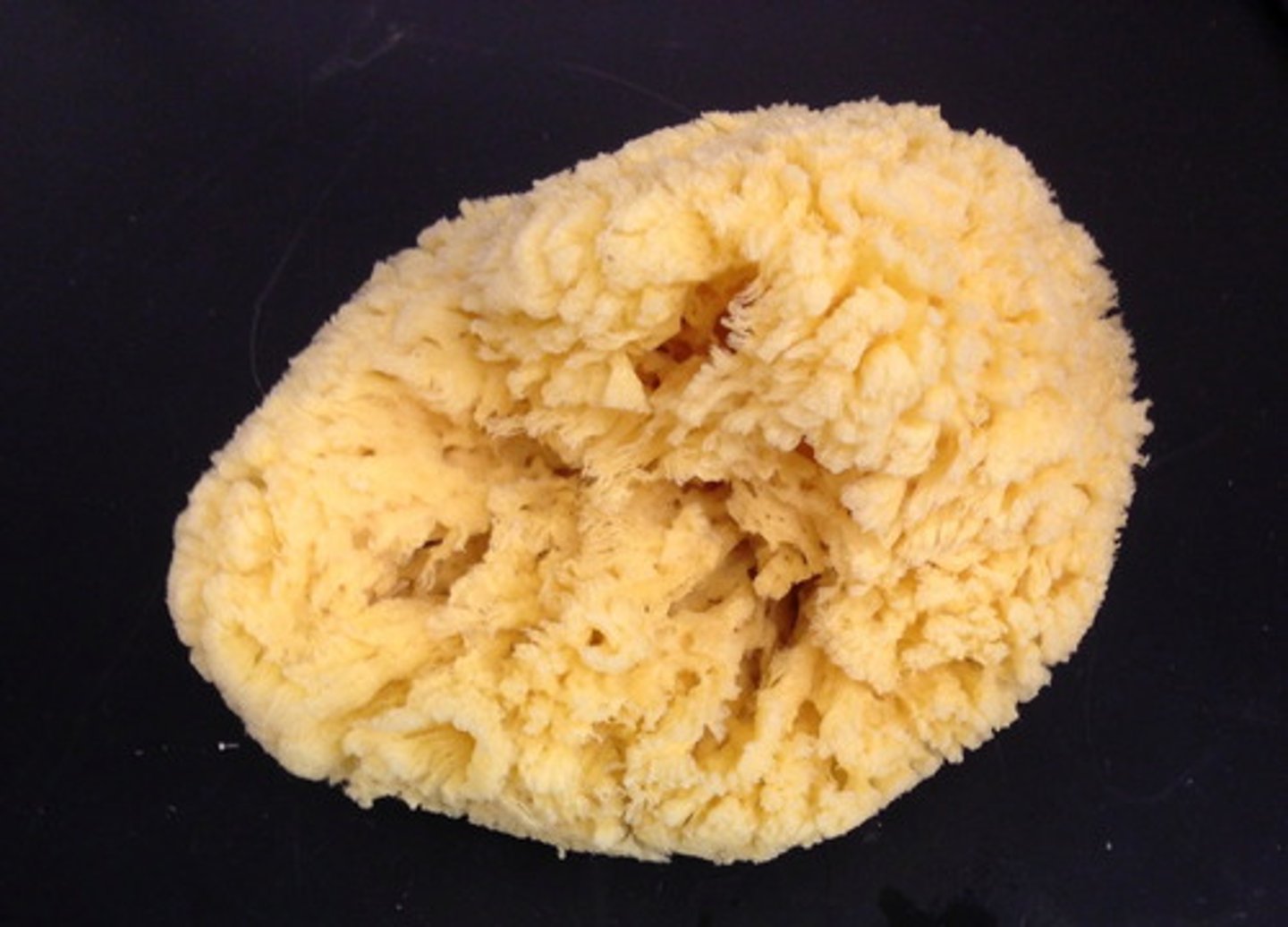
Sea sponges
Simplest animals with no organs, tissues, or symmetry
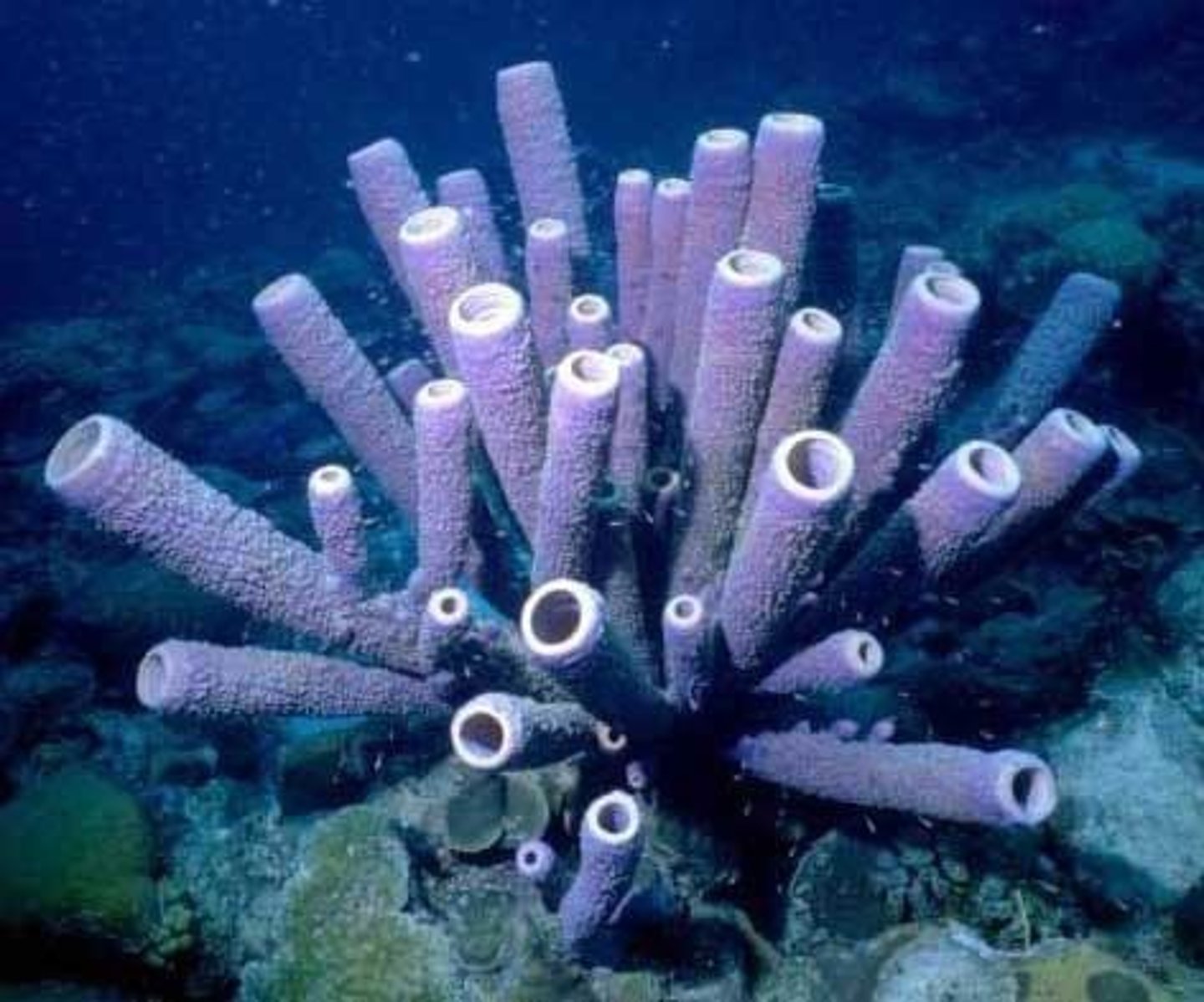
Ostia
Holes through which a sponge draws water into its body
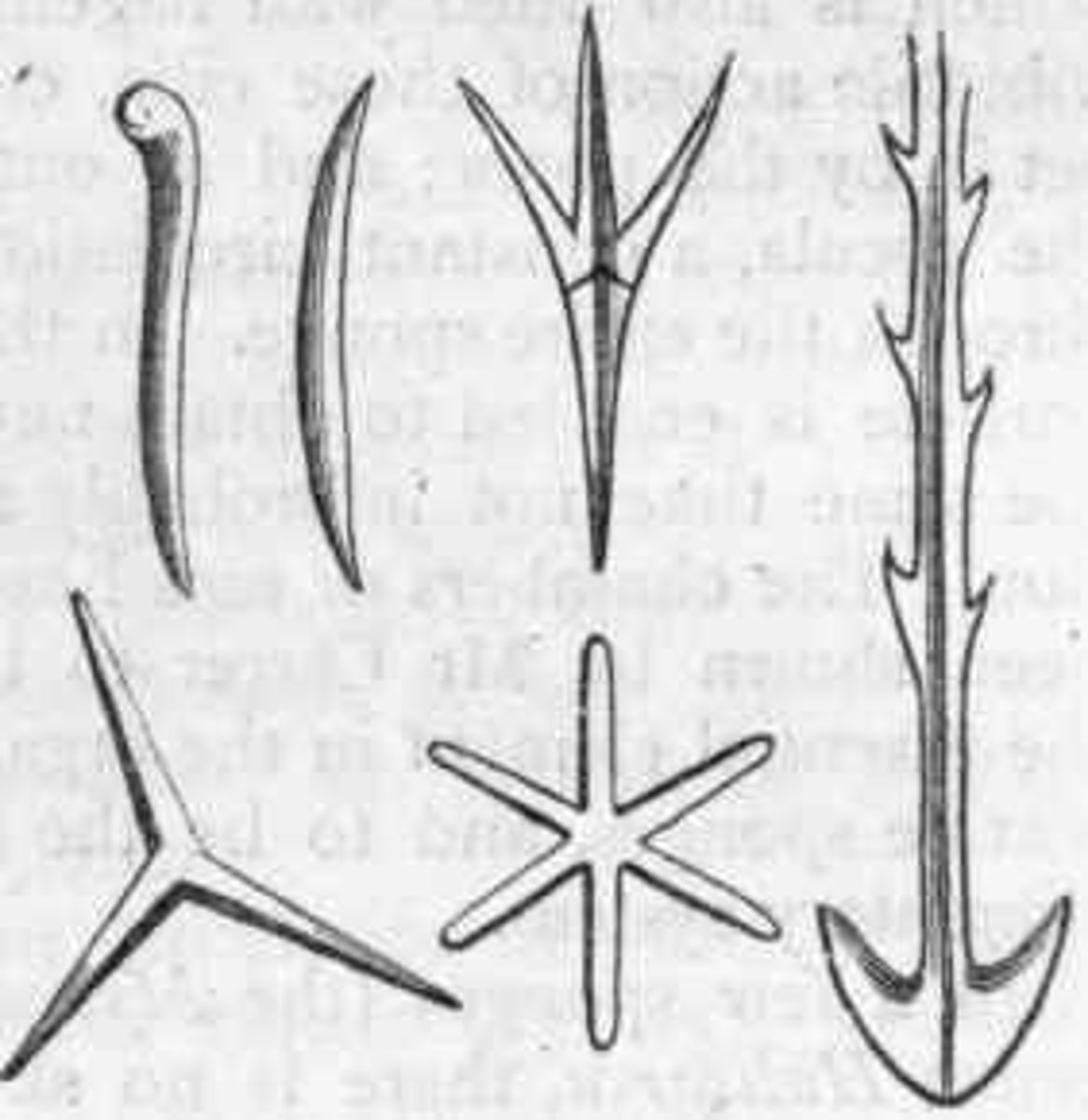
Spicules
Small, spike shaped particles that make up the skeleton of sponges
Spongin
Flexible protein that holds sea sponges together and is left behind when the hard skeleton dissolves
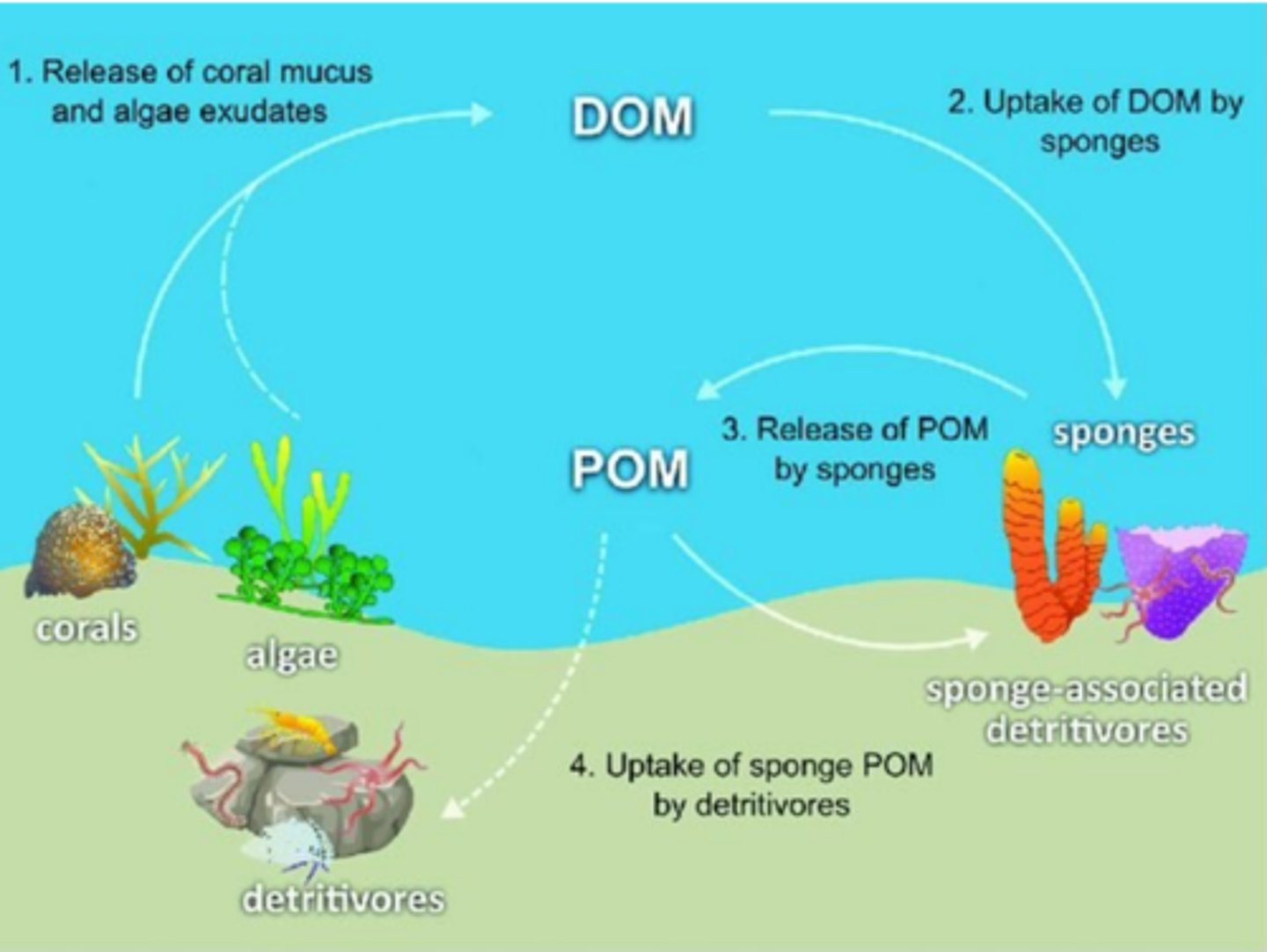
Sponge loop
Mutualistic symbiosis with corals that cycles nutrients, producing nutrient-rich detritus that fuels the food web
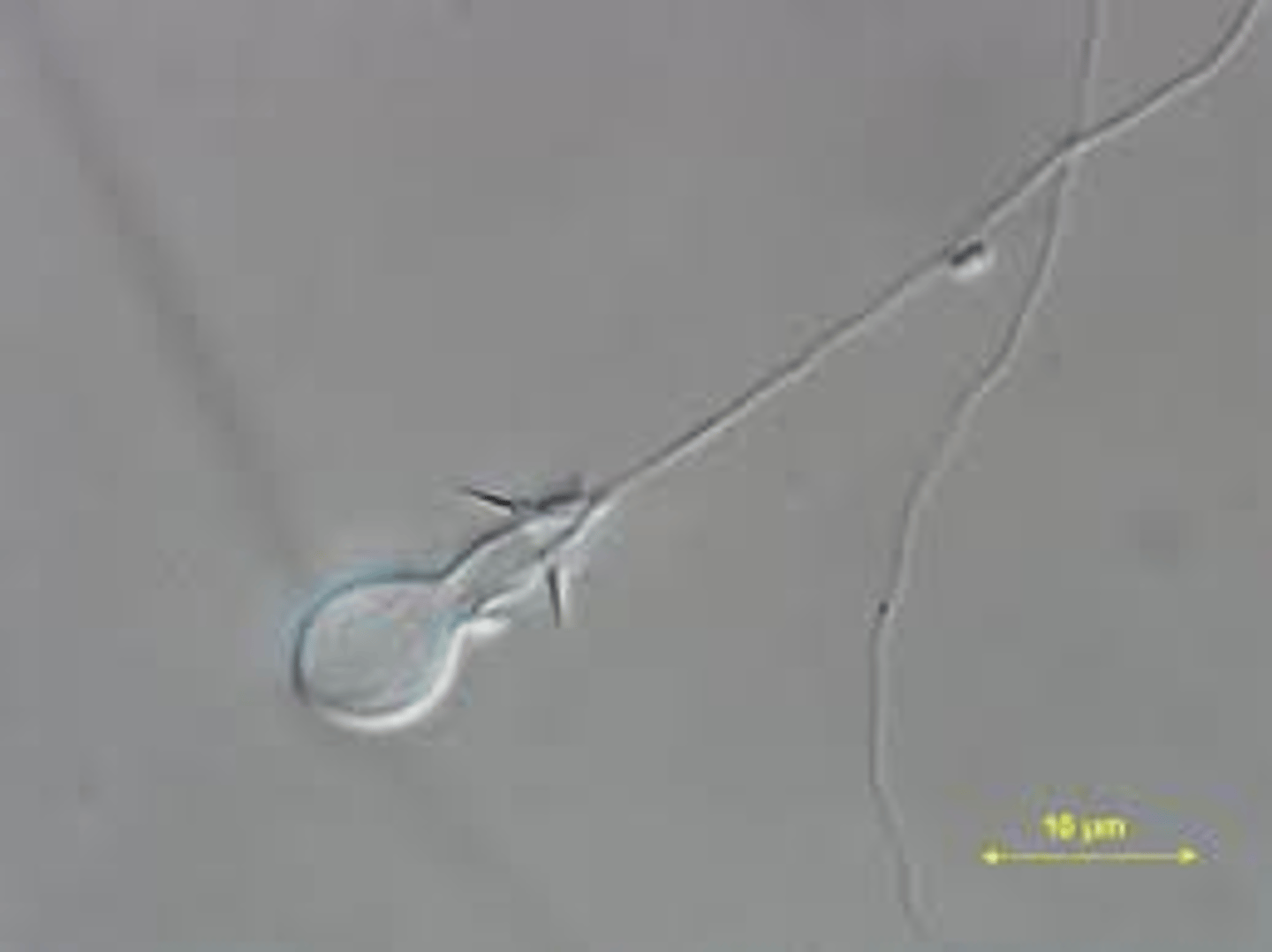
Nematocysts
Cells with filaments that can penetrate and inject venom into predators or prey
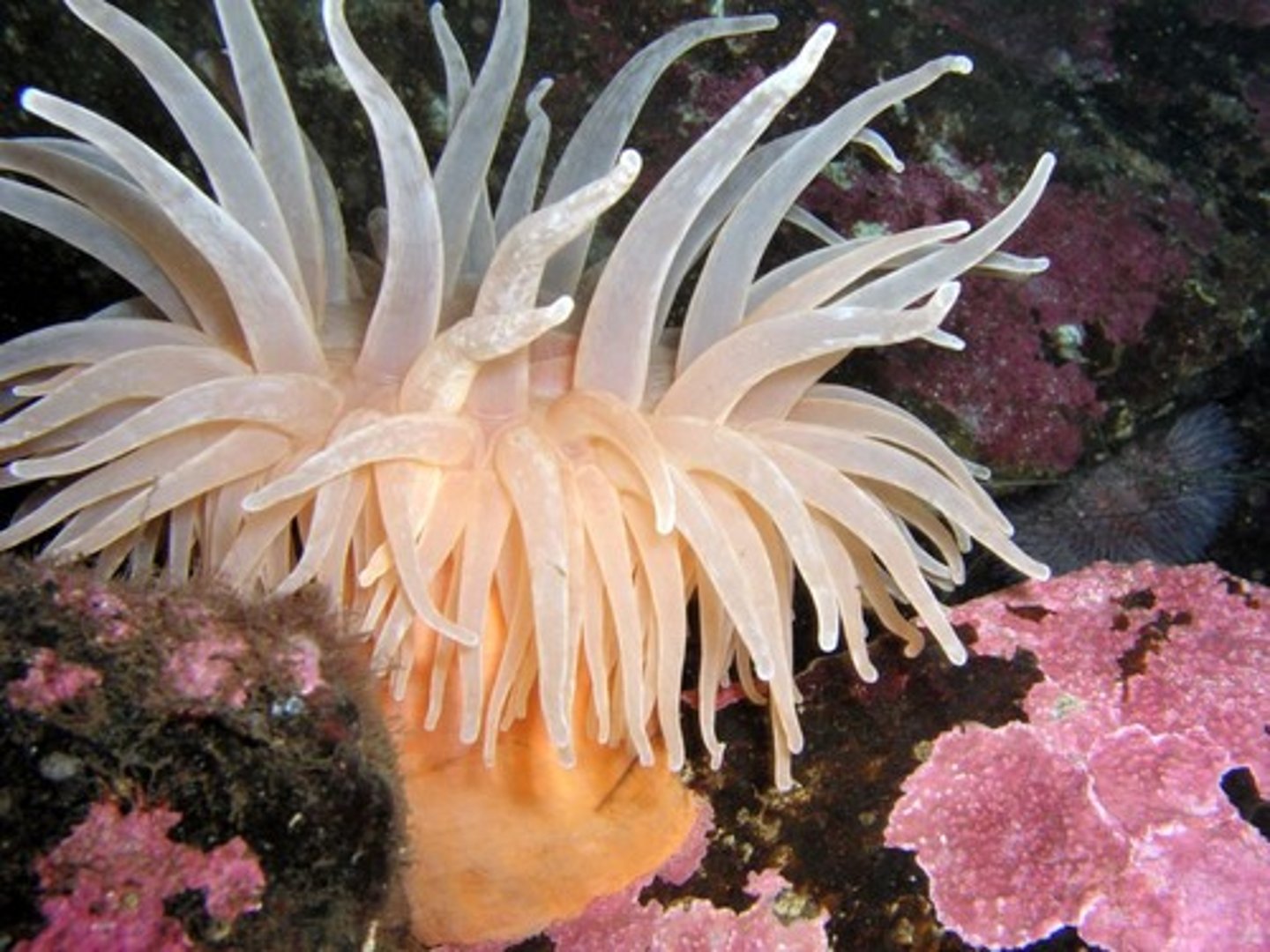
Polyp
The body plan of sessile cnidarians, with mouth and tentacles facing upwards
Medusa
The body plan of mobile cnidarians; an upside-down polyp adapted for drifting
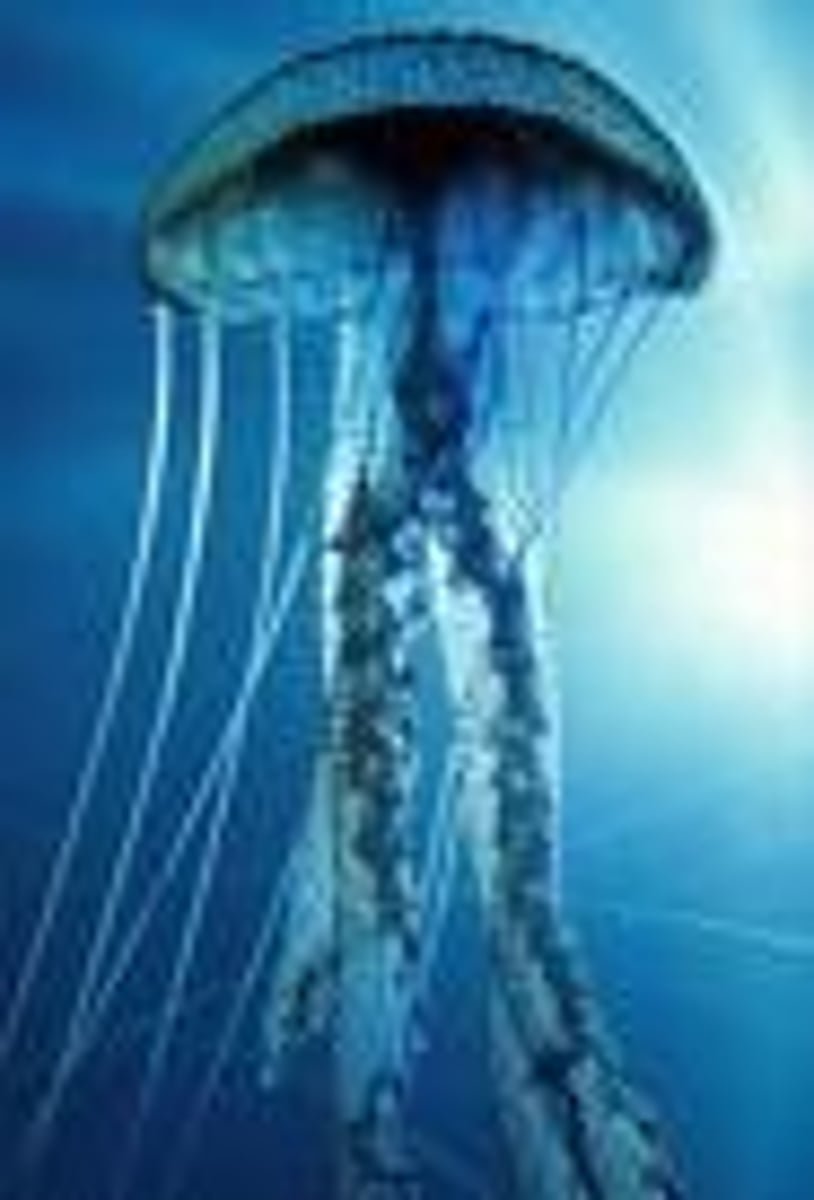
Zooids
Specialized individuals that make up a colonial organism
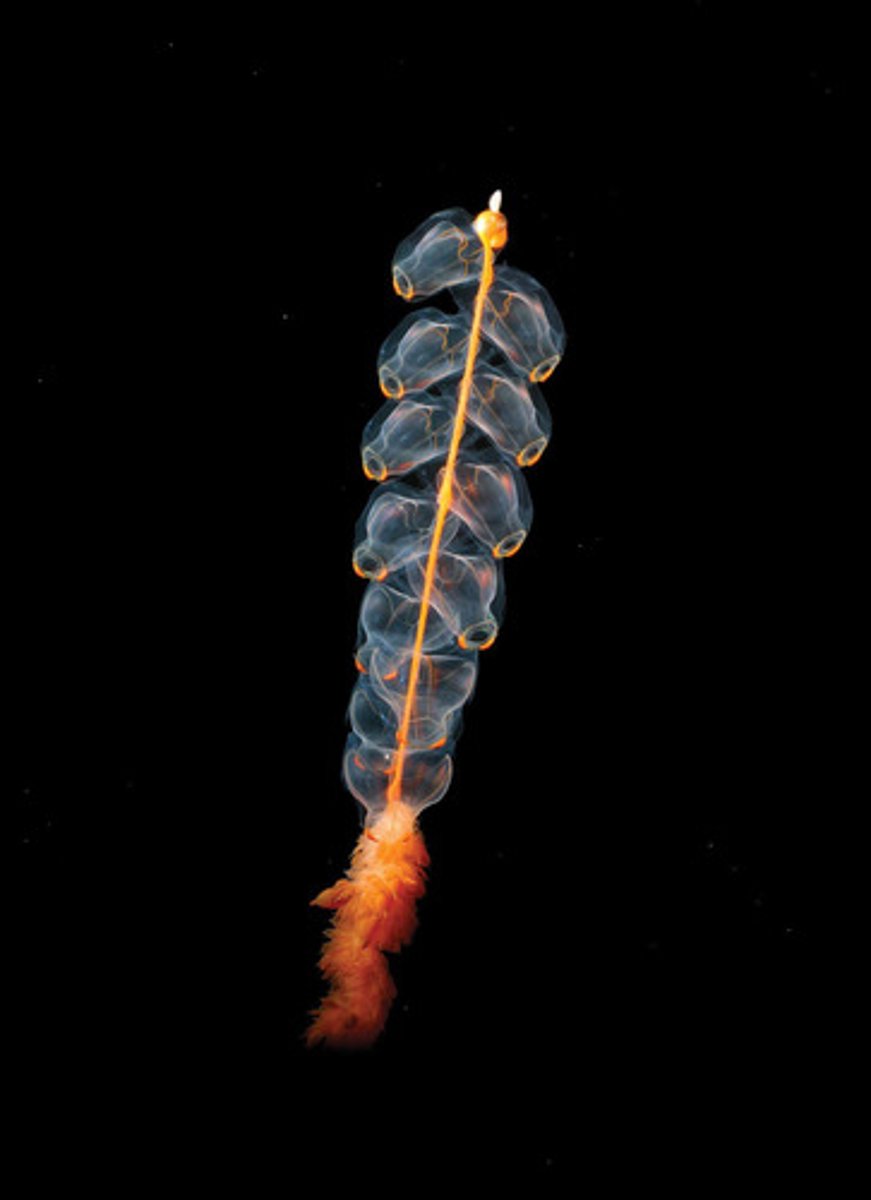
Zooxanthellae
Symbiotic algae that live inside cells of coral polyps
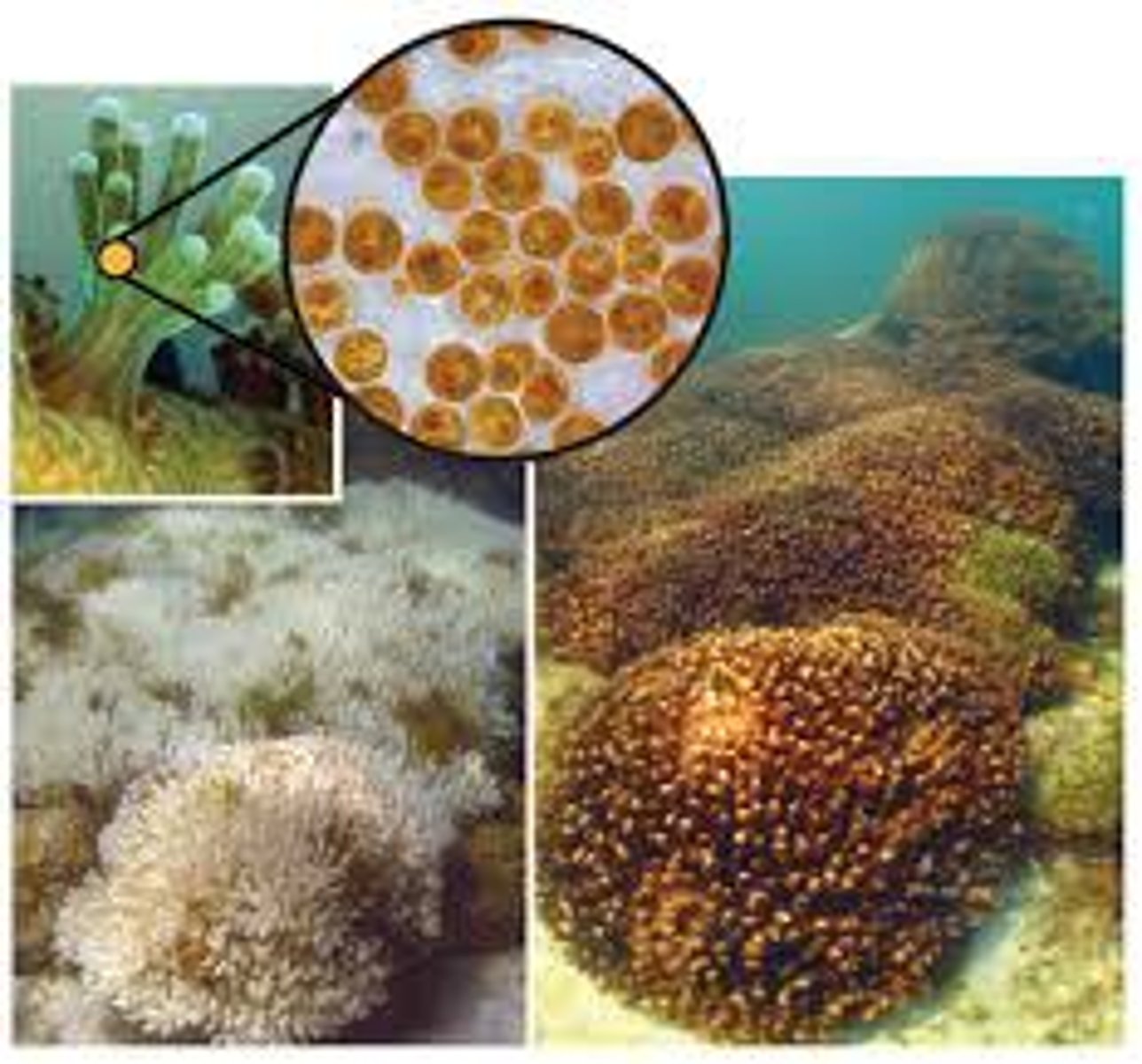
Barrier reef
A coral reef separated from shore by a lagoon
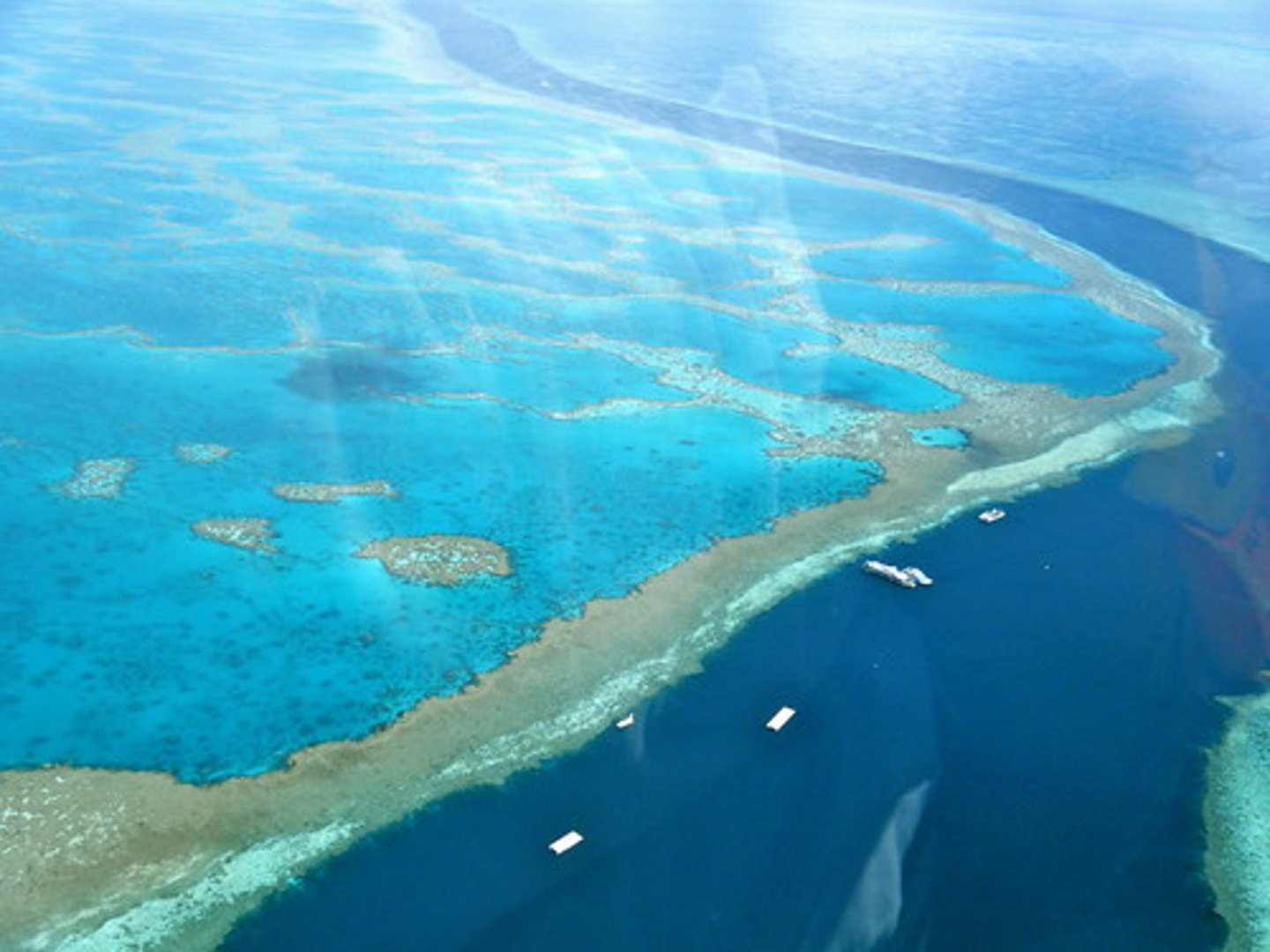
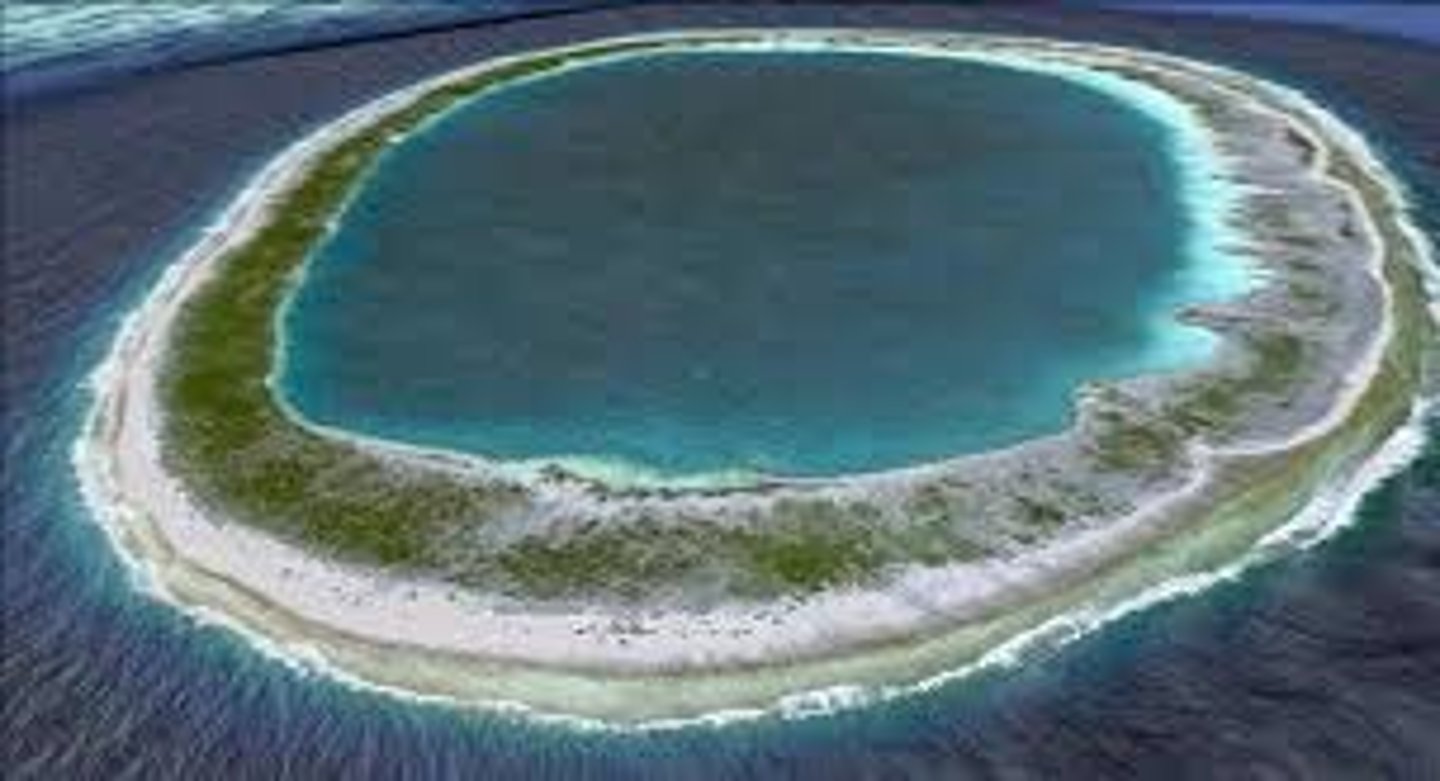
Atoll
A ring-shaped coral reef encircling a lagoon where a volcanic island used to be
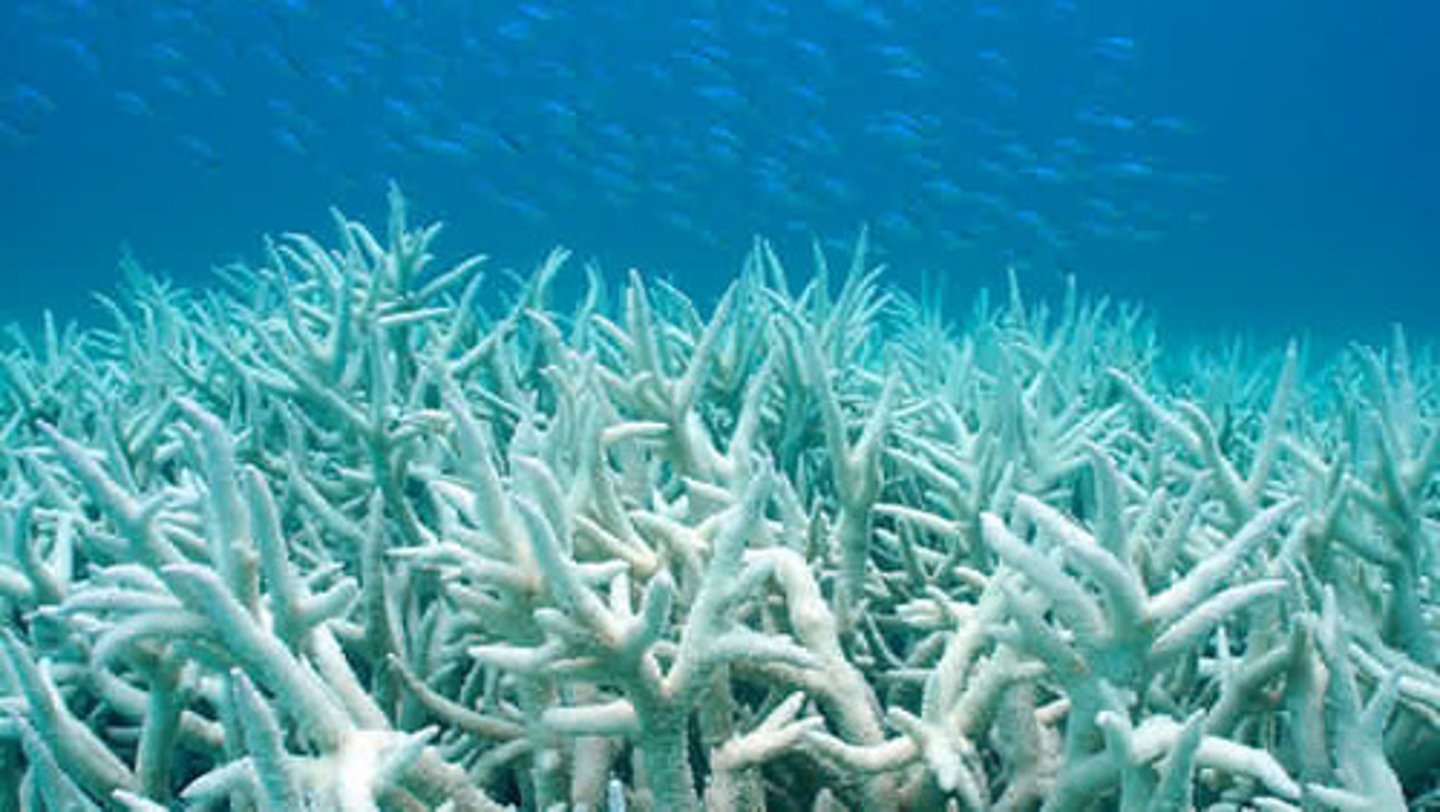
Coral bleaching
Rejection of symbiotic algae from coral (usually due to increased temp) which leads to starvation of the coral
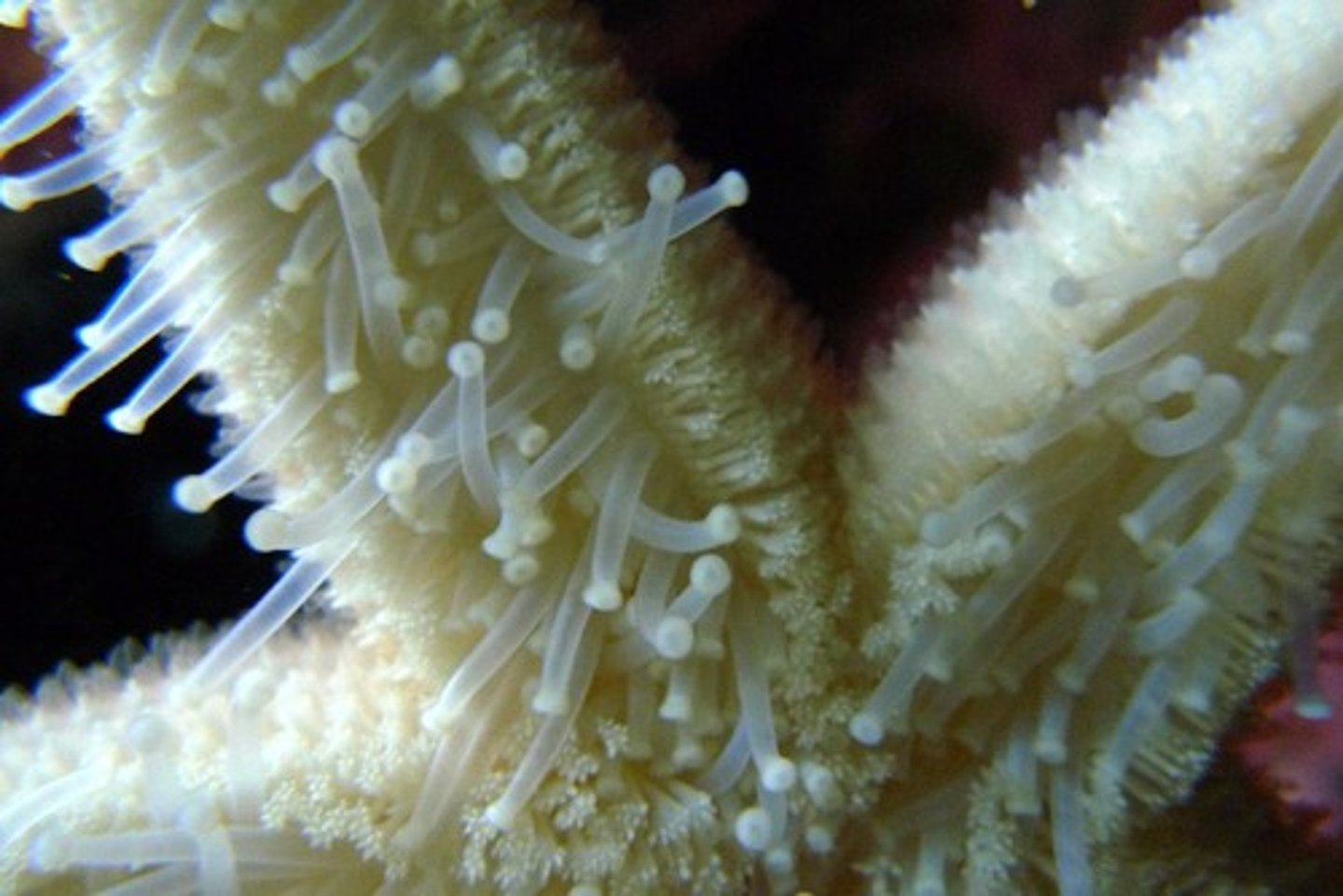
Tube feet
Part of the water-vascular system of echinoderms used for locomotion and feeding
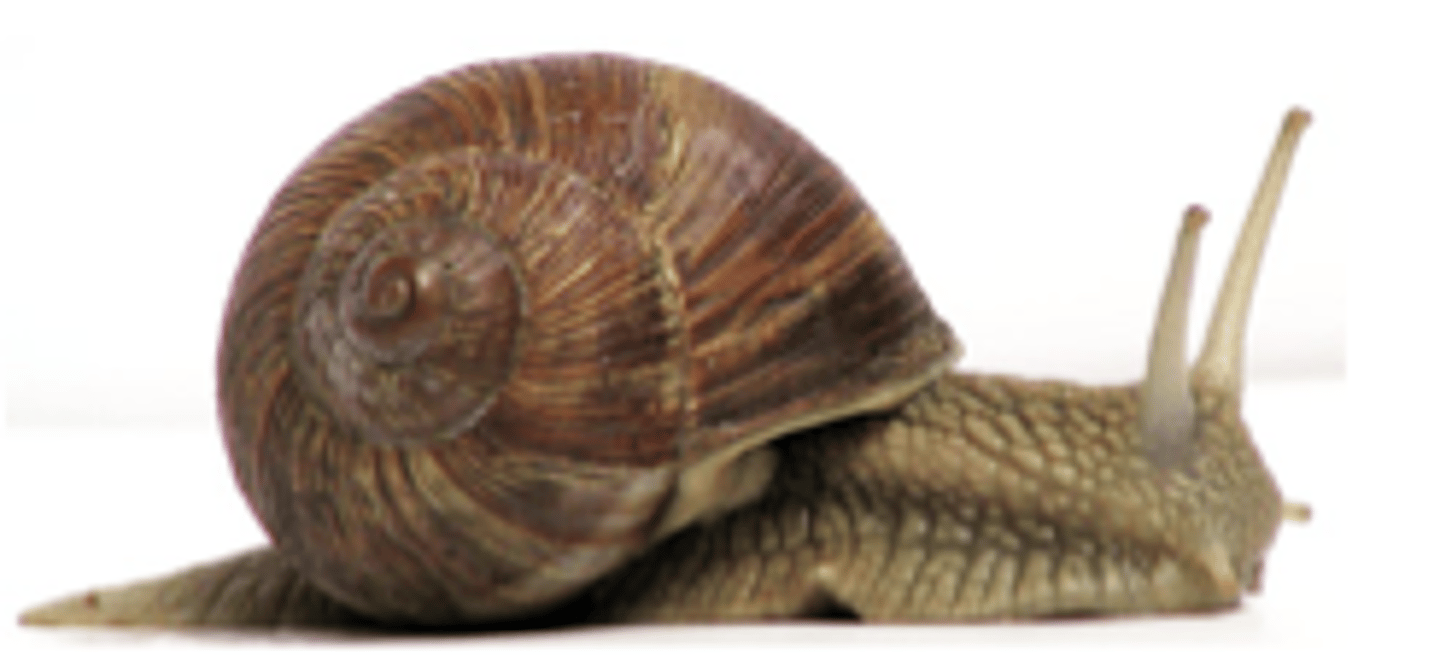
Foot
A muscular part of the three-part body plan of mollusks, used for locomotion (divided into tentacles in some)
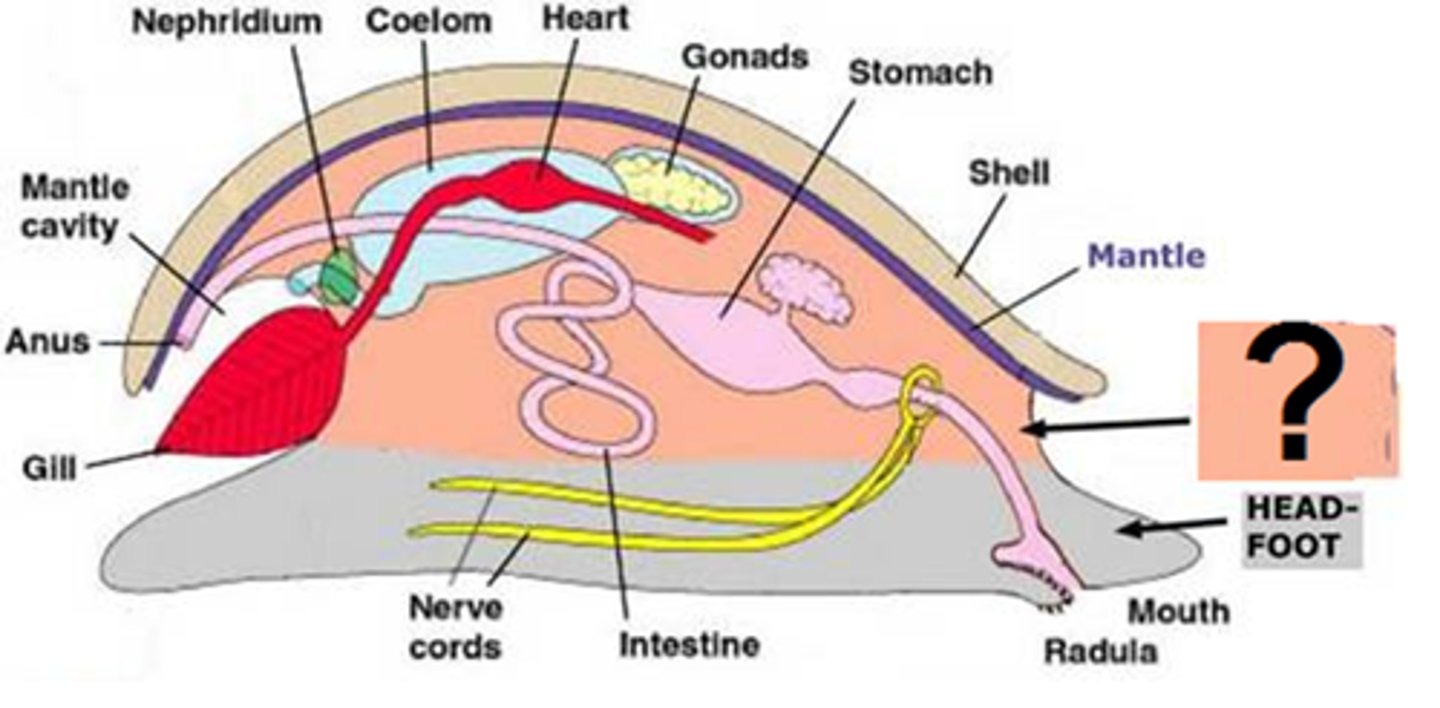
Visceral mass
The organ-containing bulk of the three-part body plan of mollusks
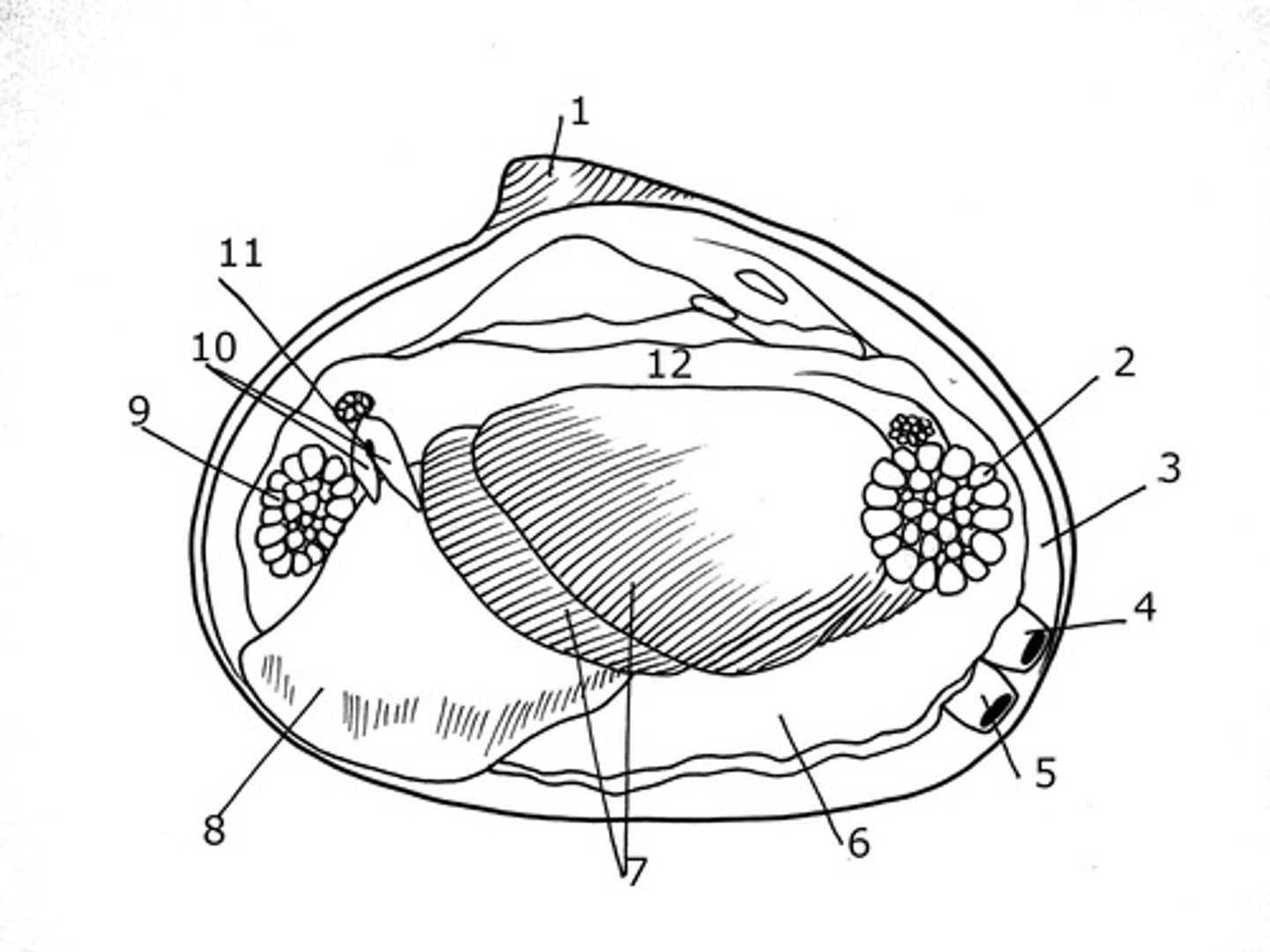
Adductor muscle
Holds together and opens/closes the shells of bivalves (9 & 2 in diagram)
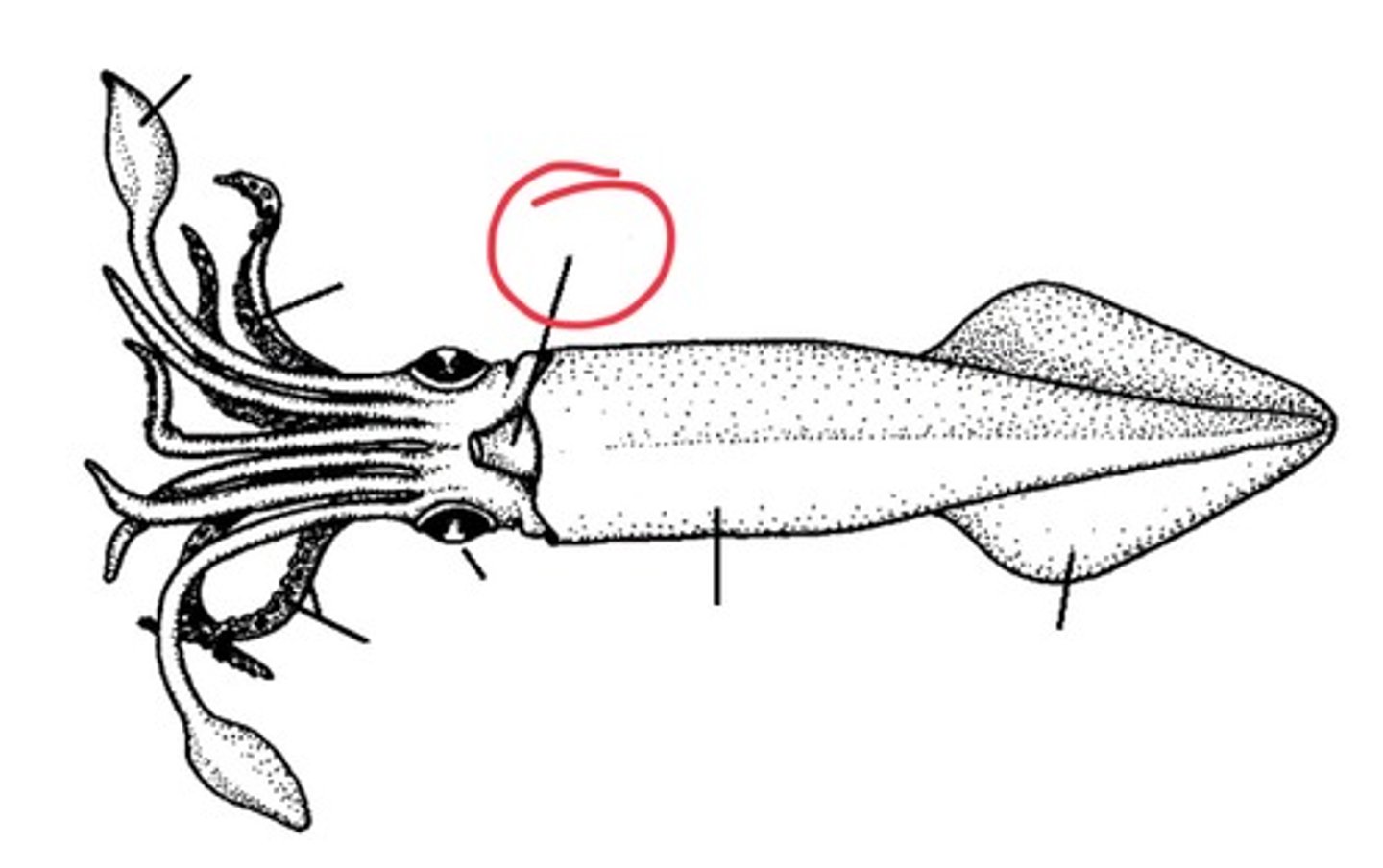
Siphon
Used for jet propulsion in cephalopods
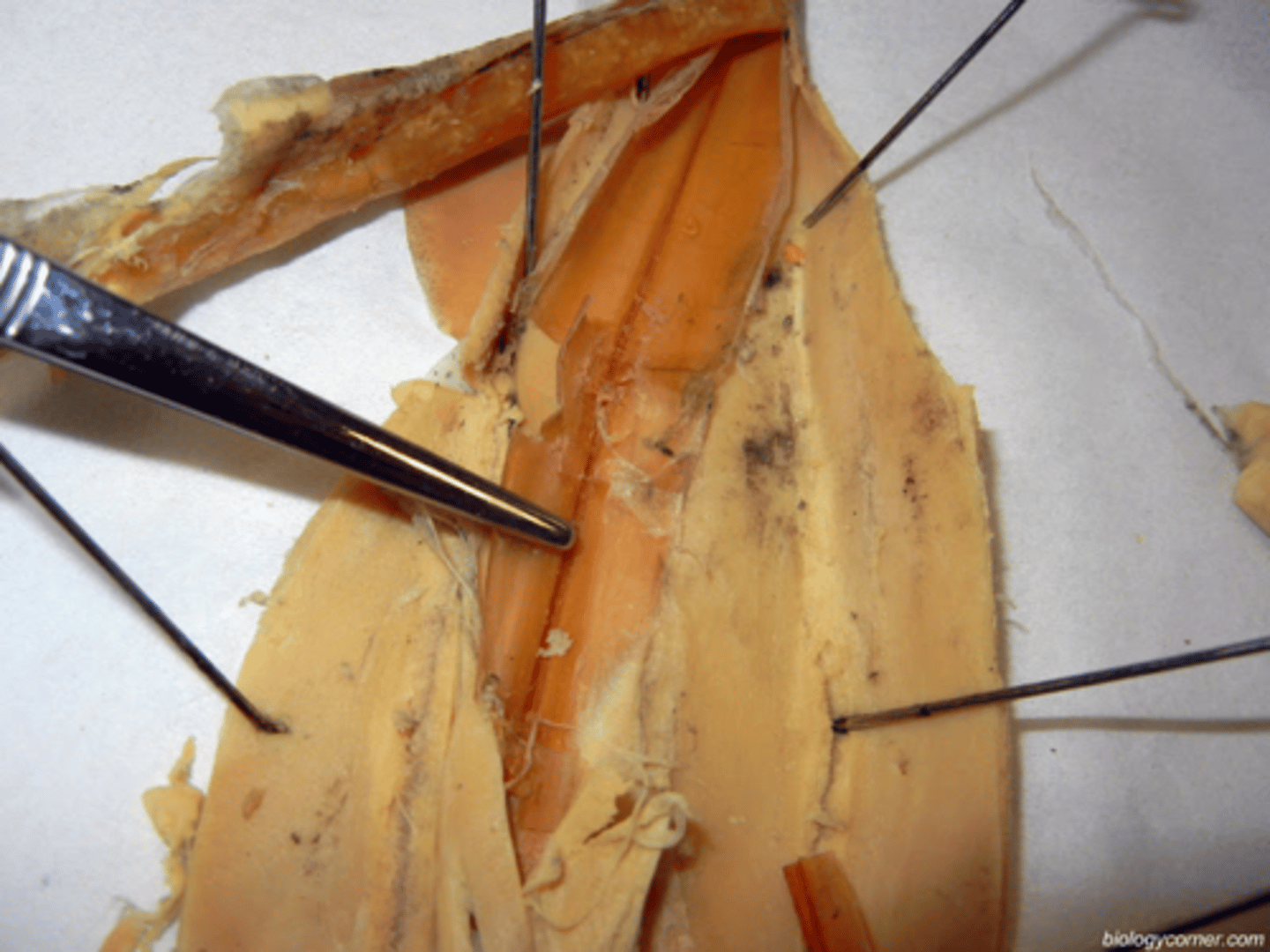
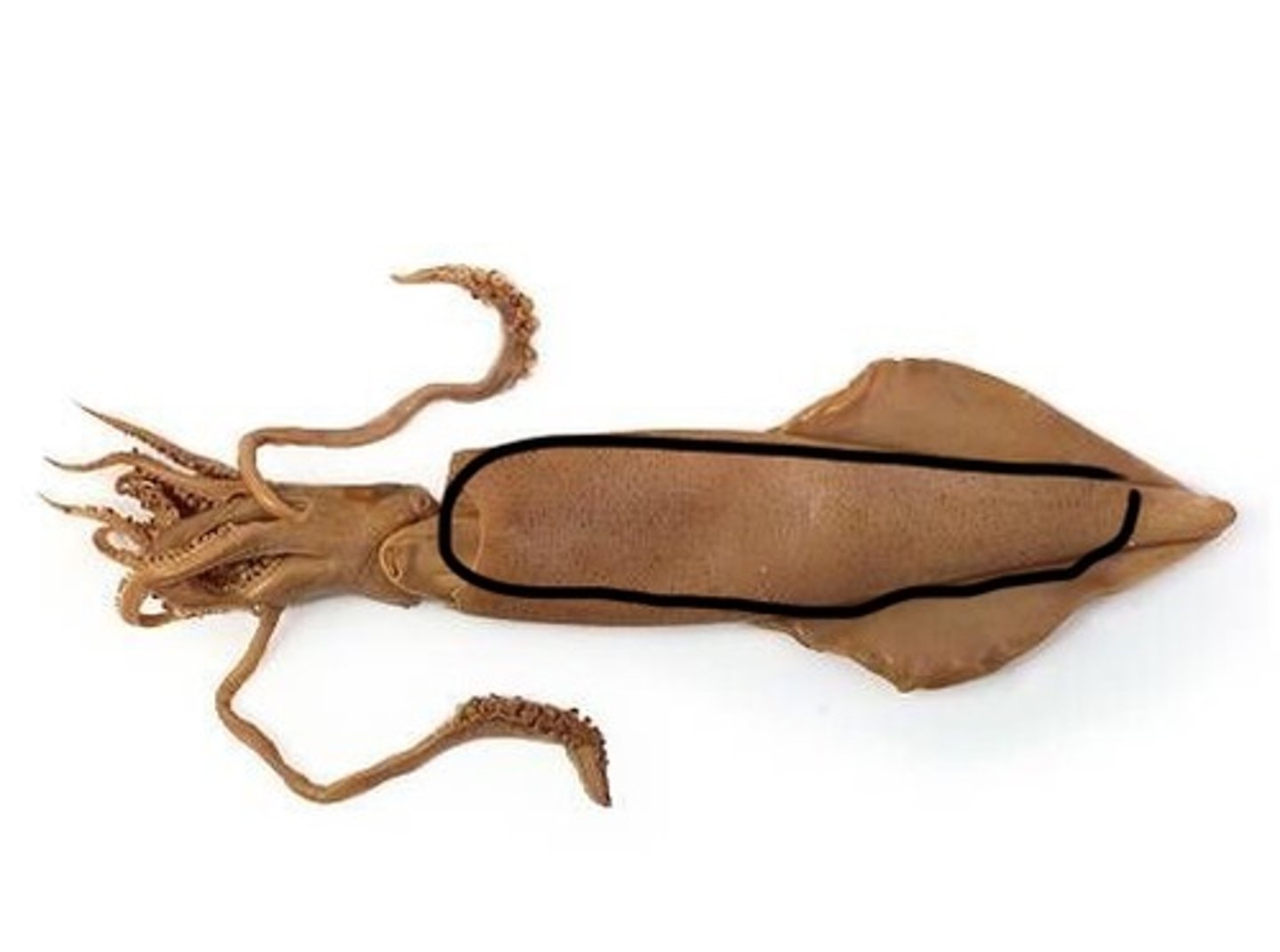
Pen
Internal shell of a squid; a vestigial remnant of the external shells of ancient cephalopods
Mantle
Body wall of mollusks that covers the visceral mass and secretes the shell
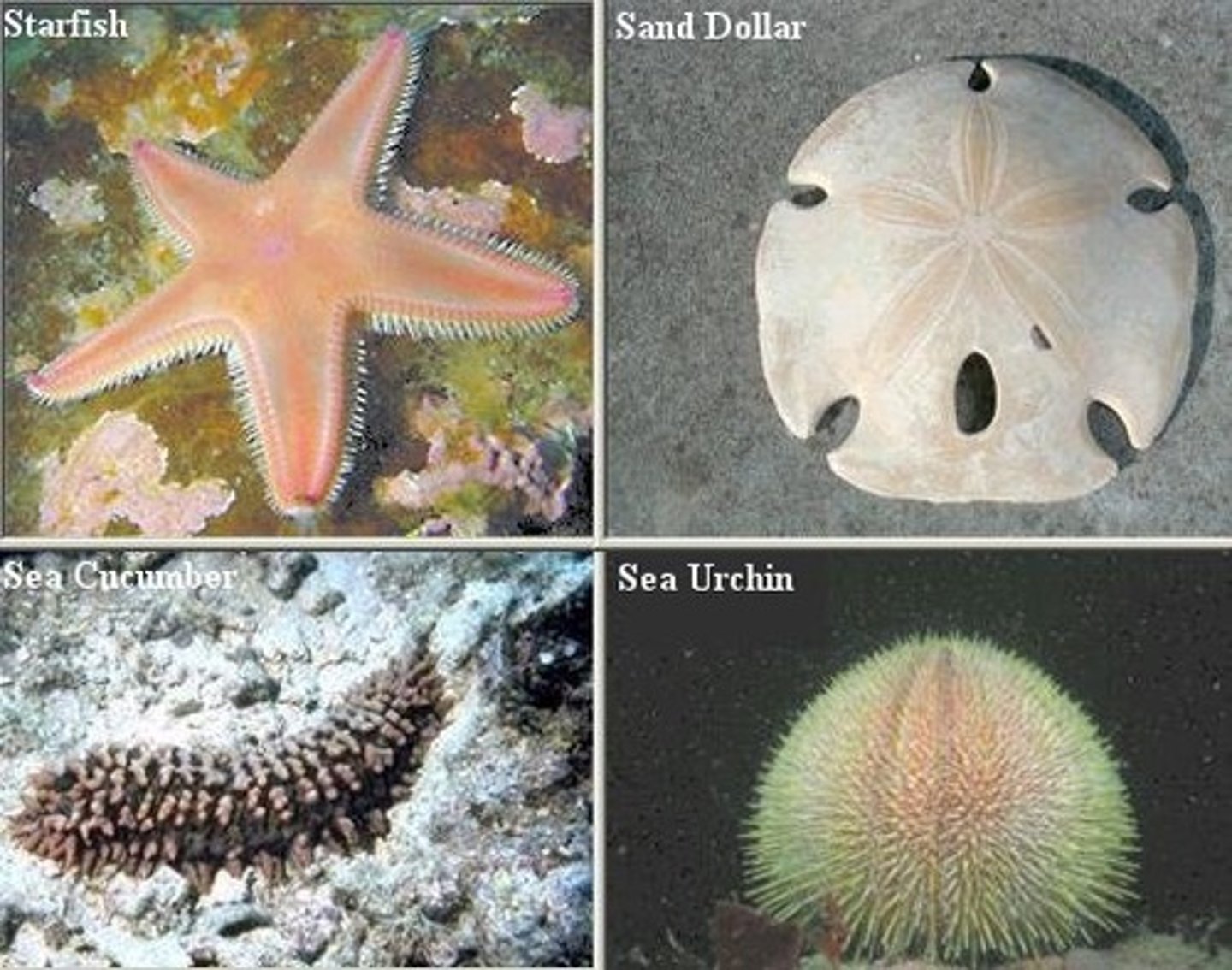
Echinodermata
Phylum containing sea stars, urchins, sand dollars, and sea cucumbers
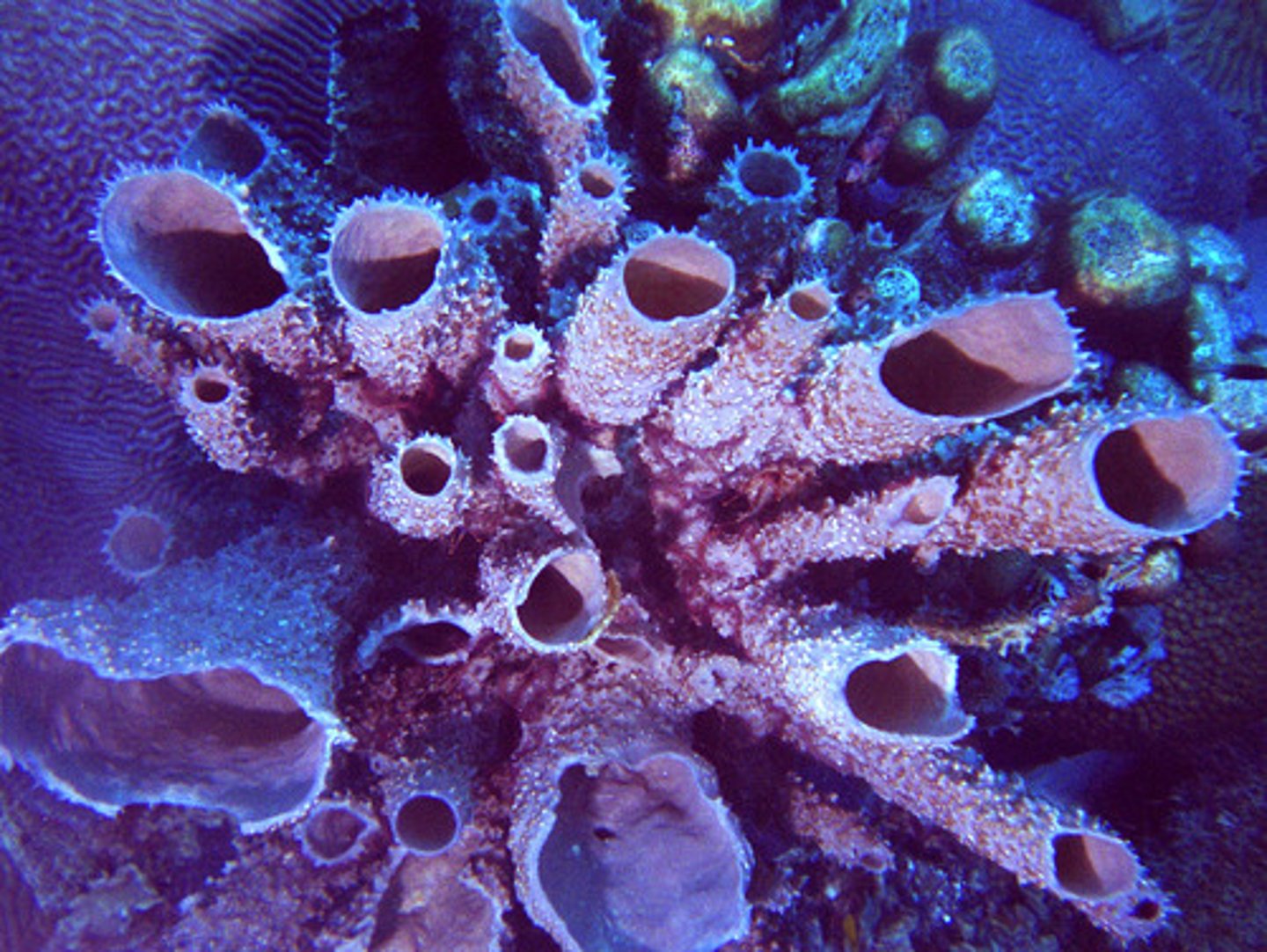
Porifera
Phylum containing sea sponges
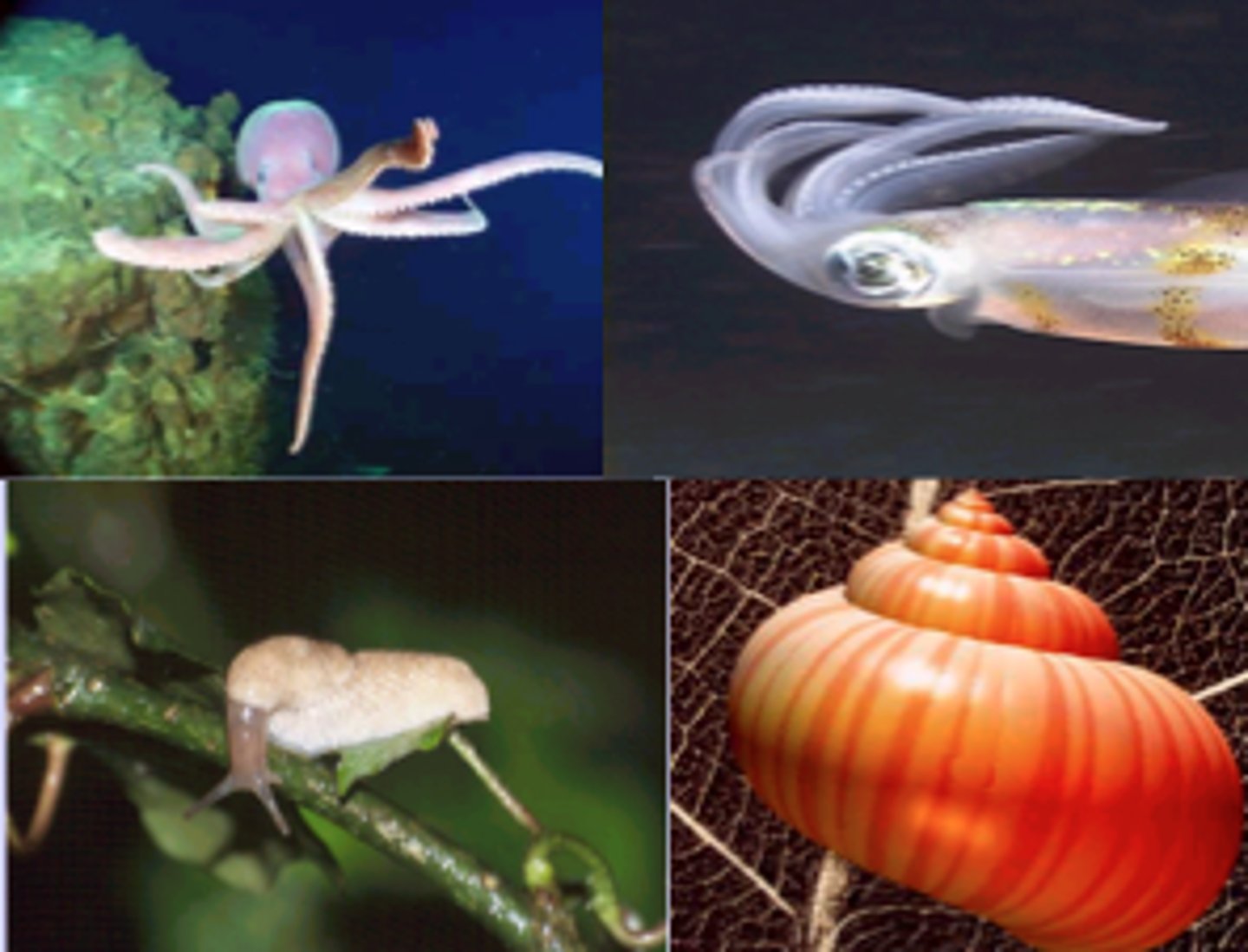
Mollusca
Phylum containing bivalves, gastropods, and cephalopods
Cnidaria
Phylum containing anemones, jellyfish, corals, and siphonophores
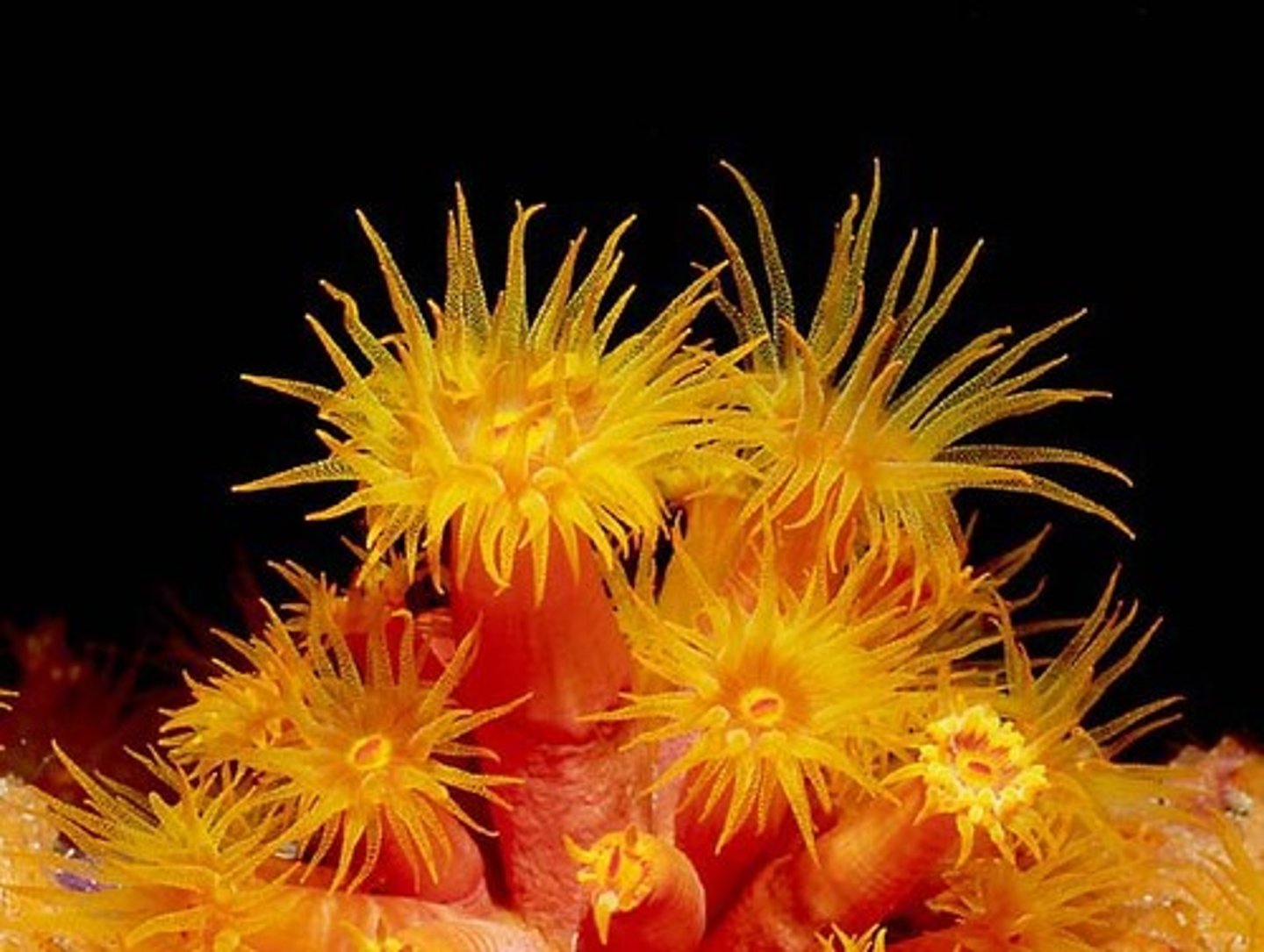
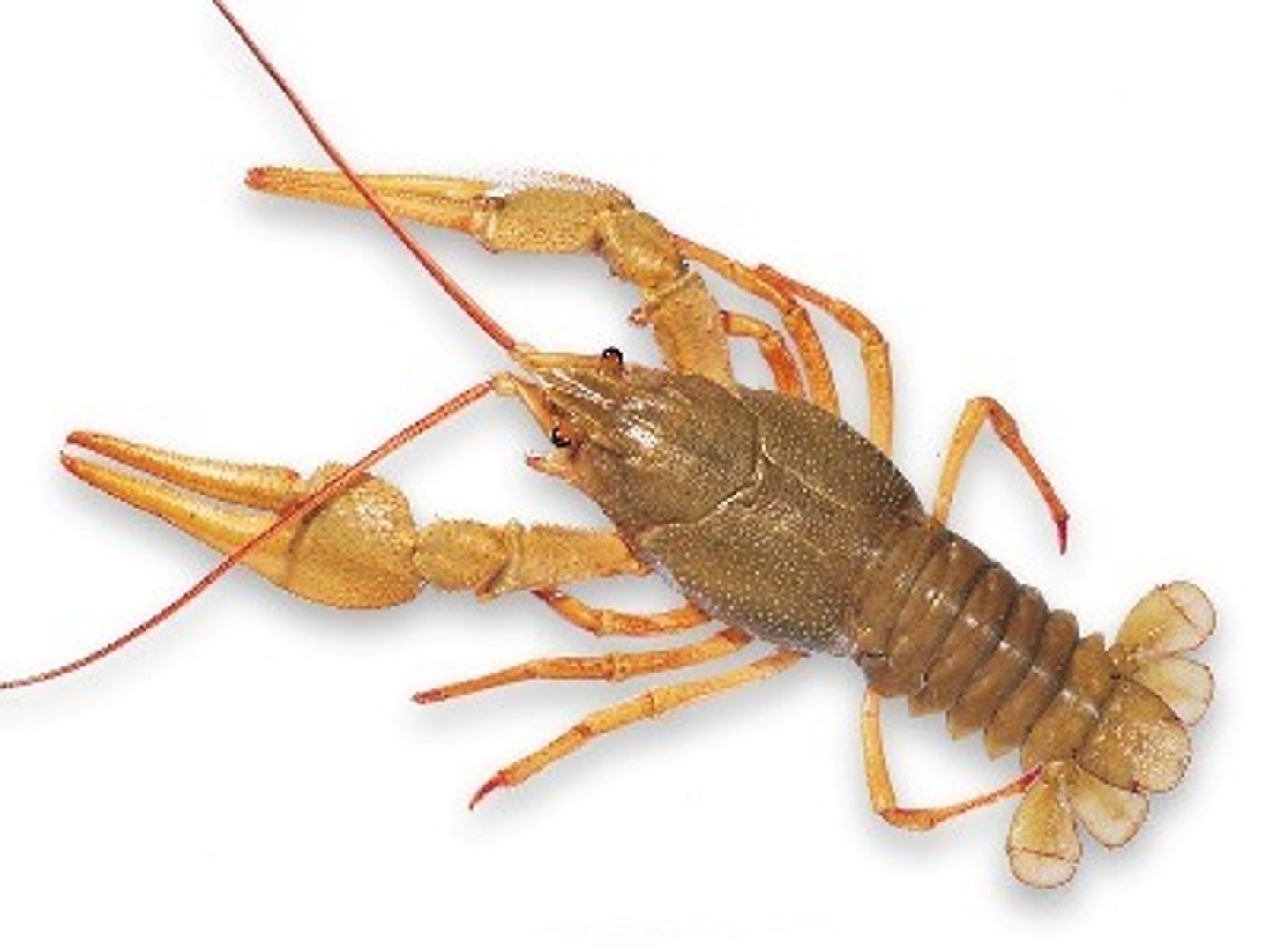
Arthropoda
Phylum containing insects, arachnids, and crustaceans
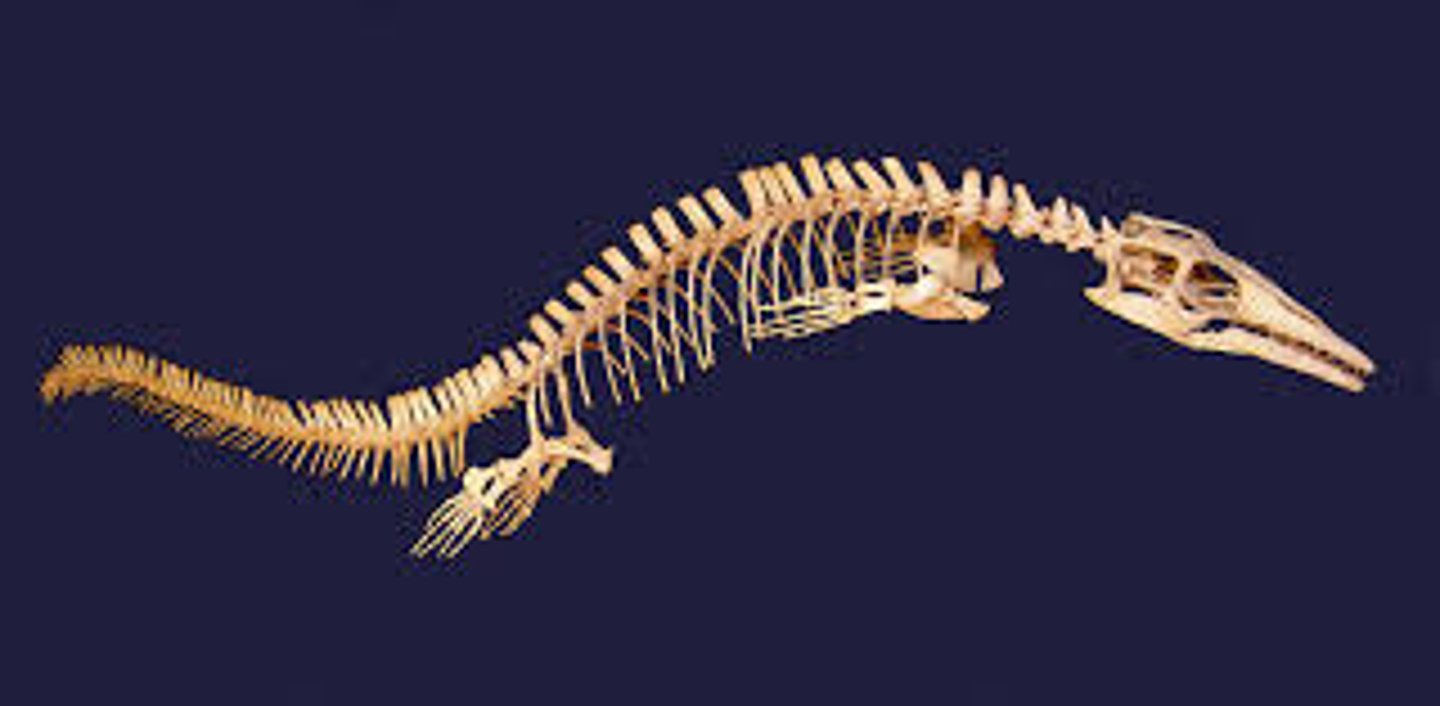
Chordata
Phylum containing all vertebrates
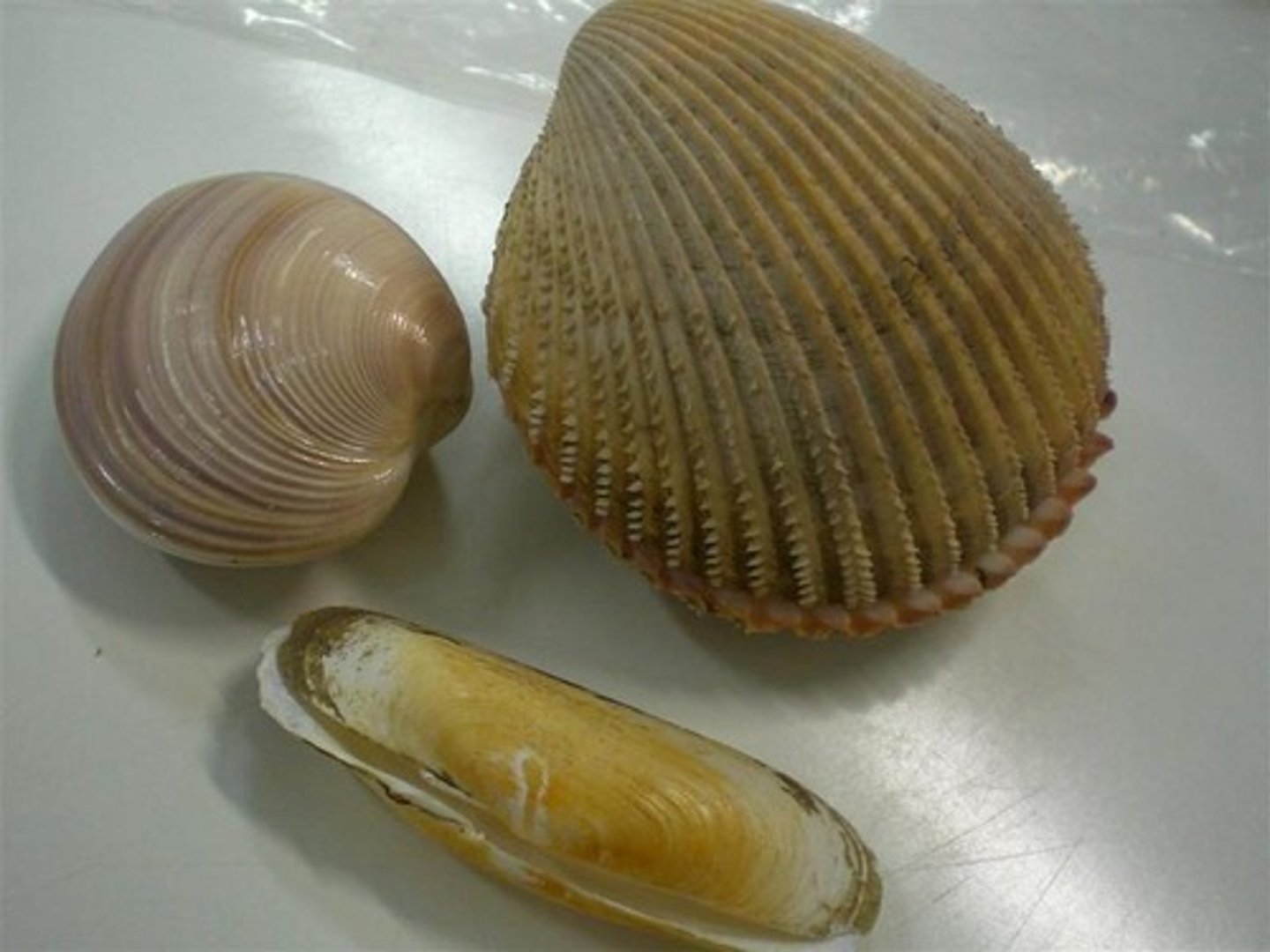
Bivalvia
Class containing clams, oysters, mussels, and scallops
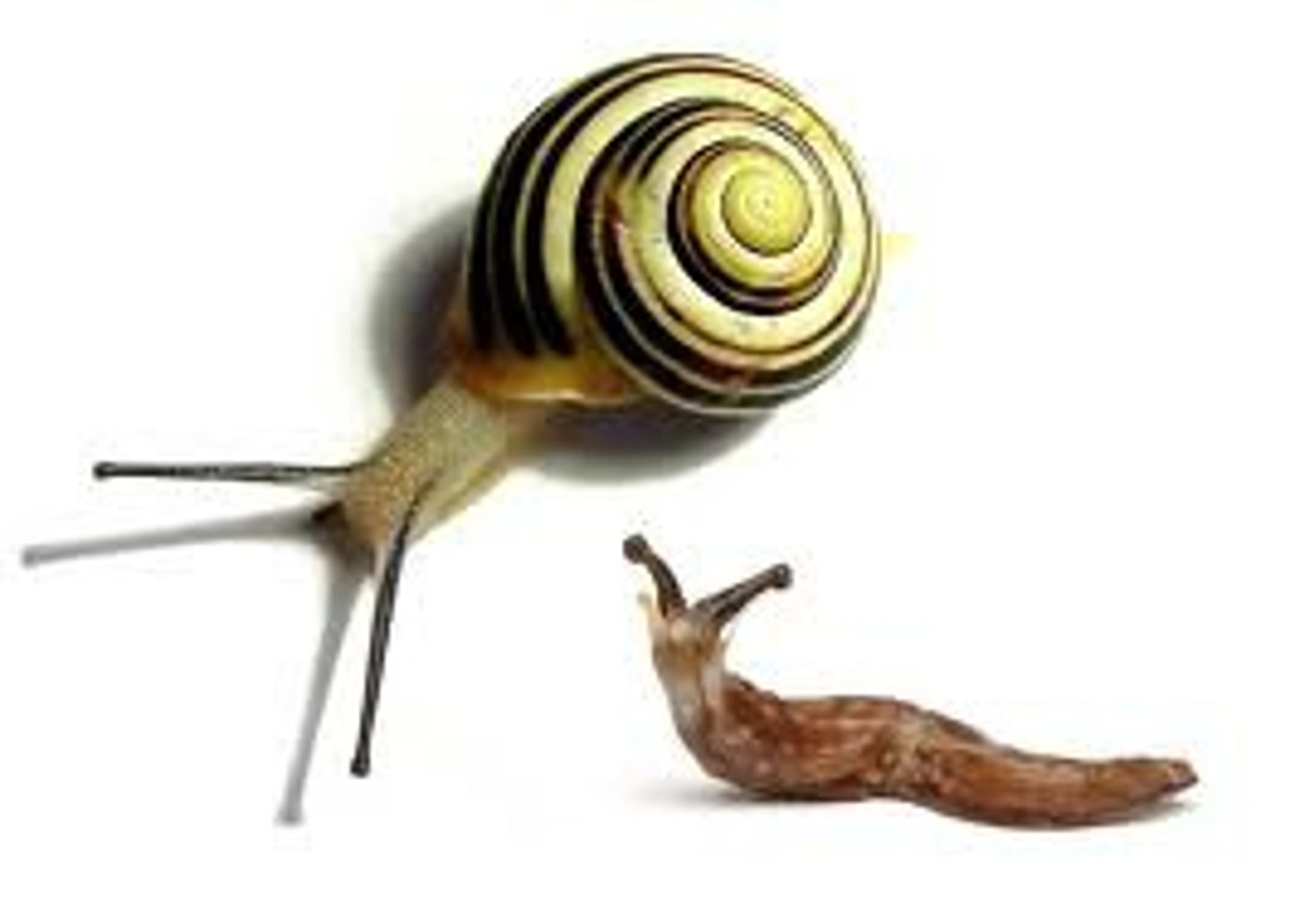
Gastropoda
Class containing slugs and snails
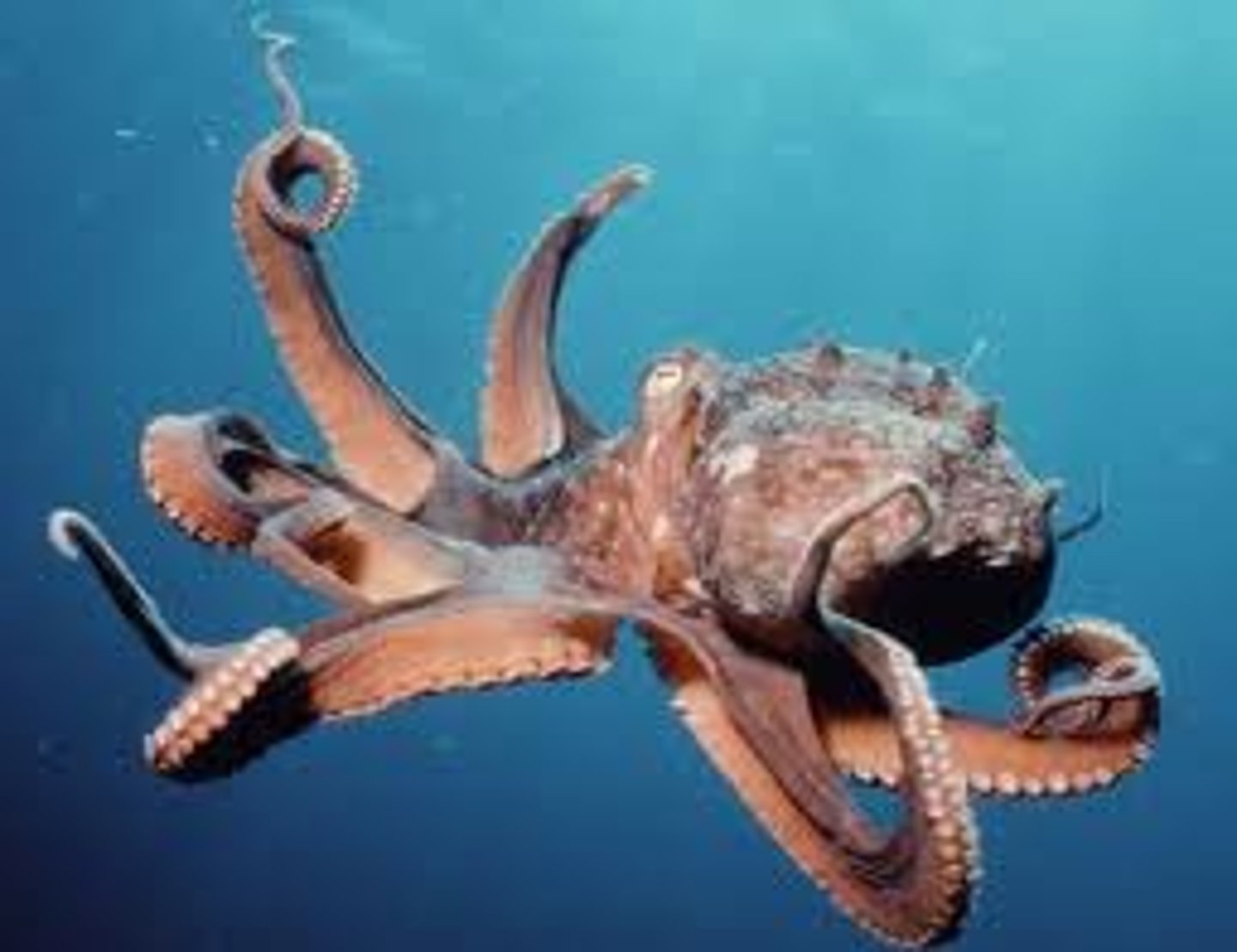
Cephalopoda
Class containing squid, octopus, cuttlefish, and nautilus
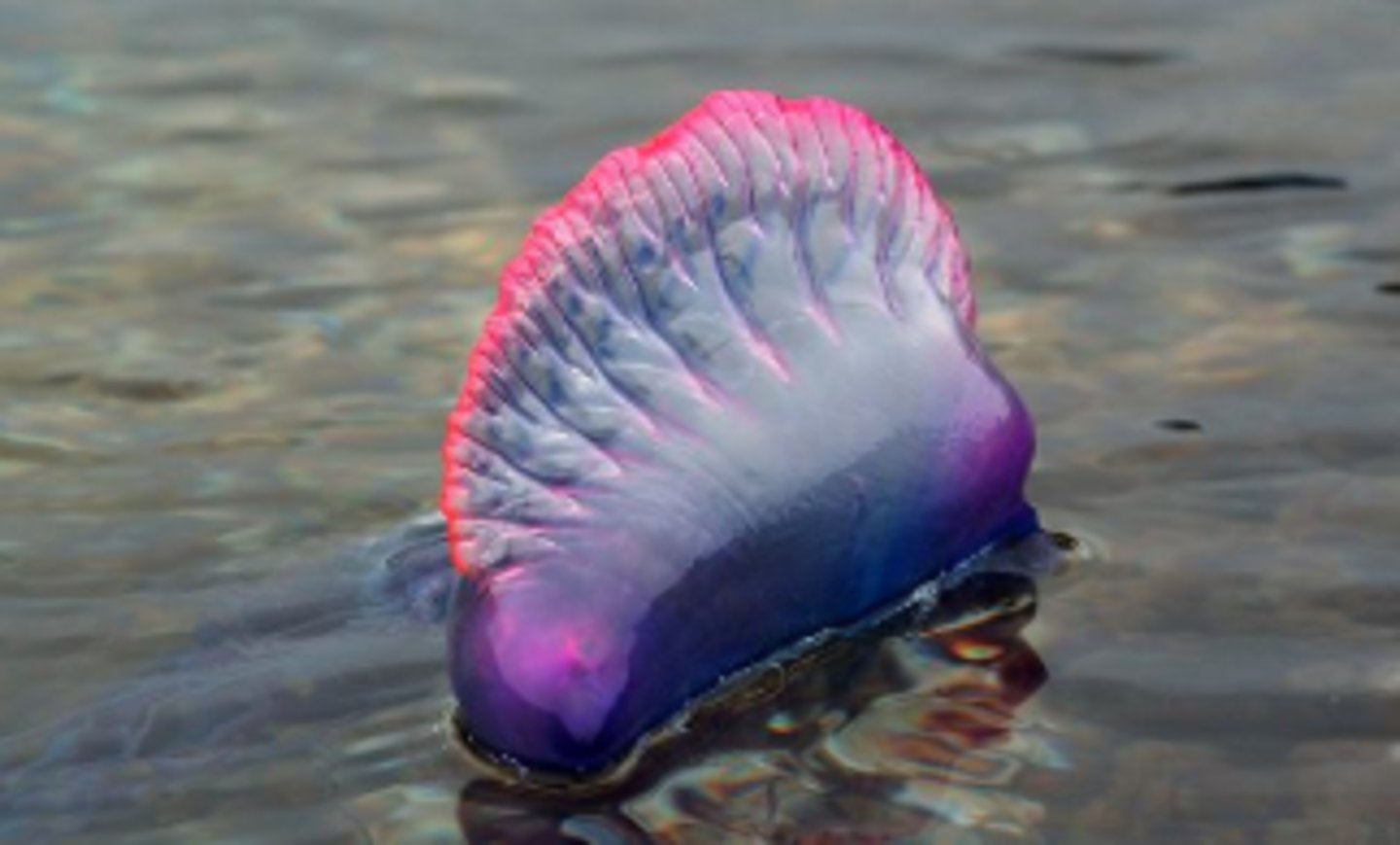
Siphonophores
Group of colonial organisms made up of zooids
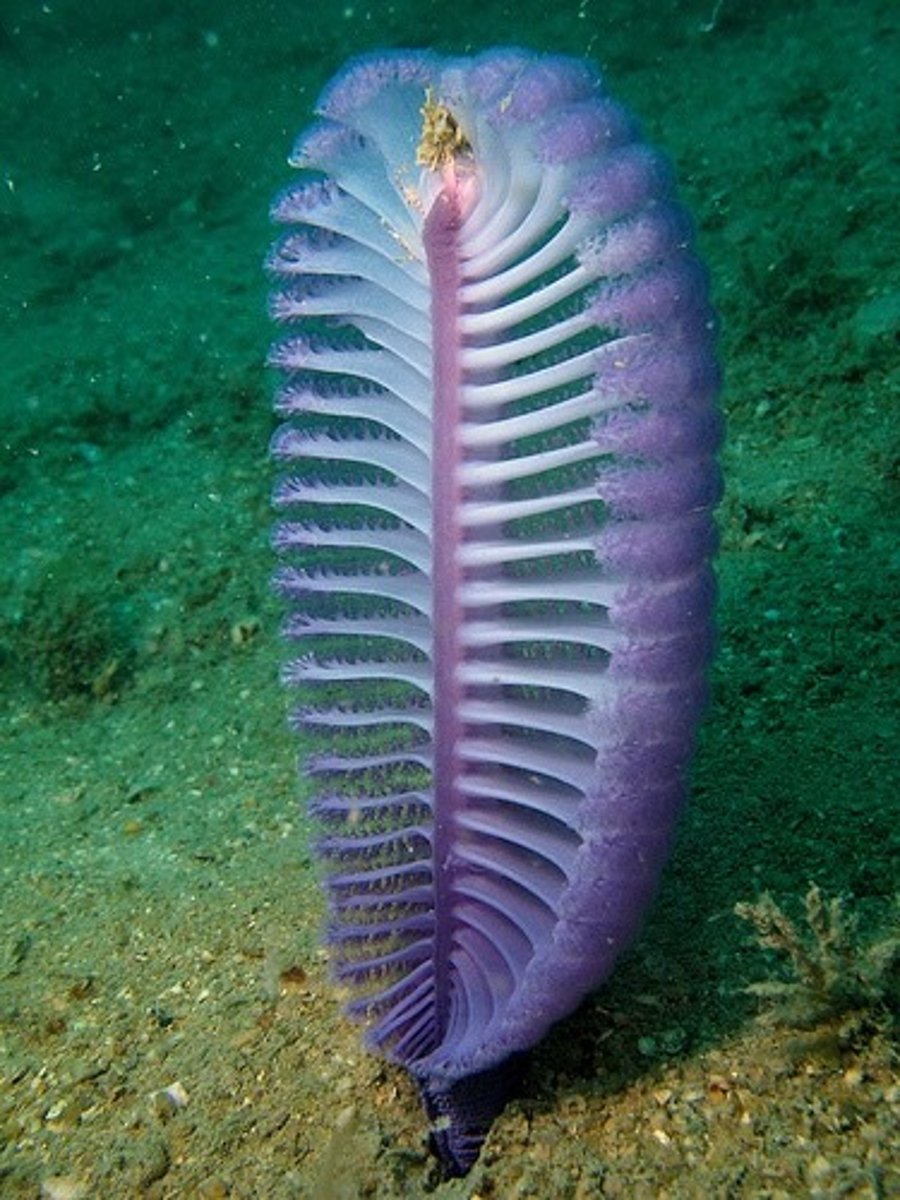
Soft corals
Group of colonial organisms including sea pens and sea fans
Stony corals
Group of colonial organisms that secrete calcium carbonate to build a skeleton that can form reefs
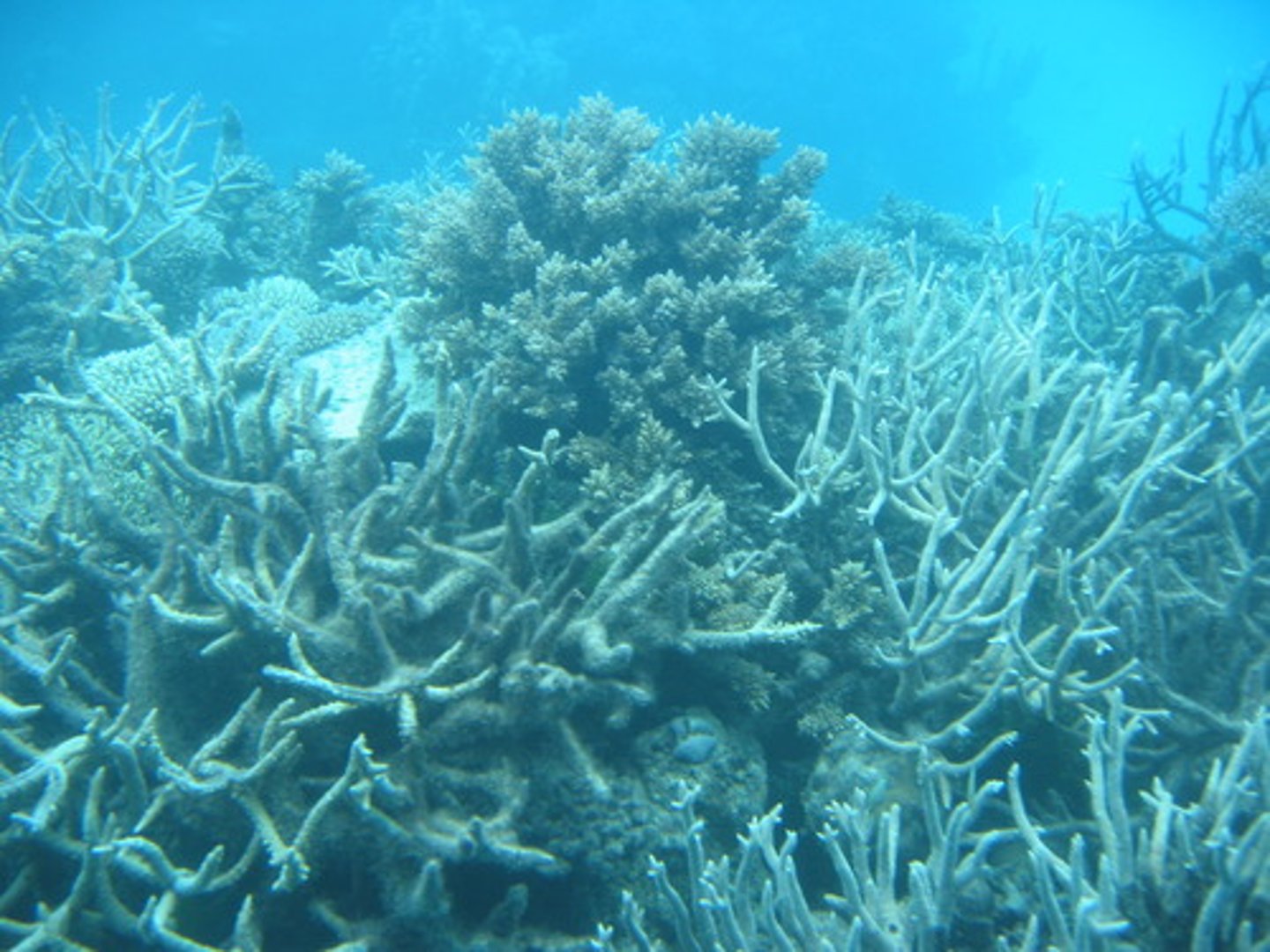
Echinozoa
"Spiny animal"; a subphylum containing urchins, sand dollars, and sea cucumbers
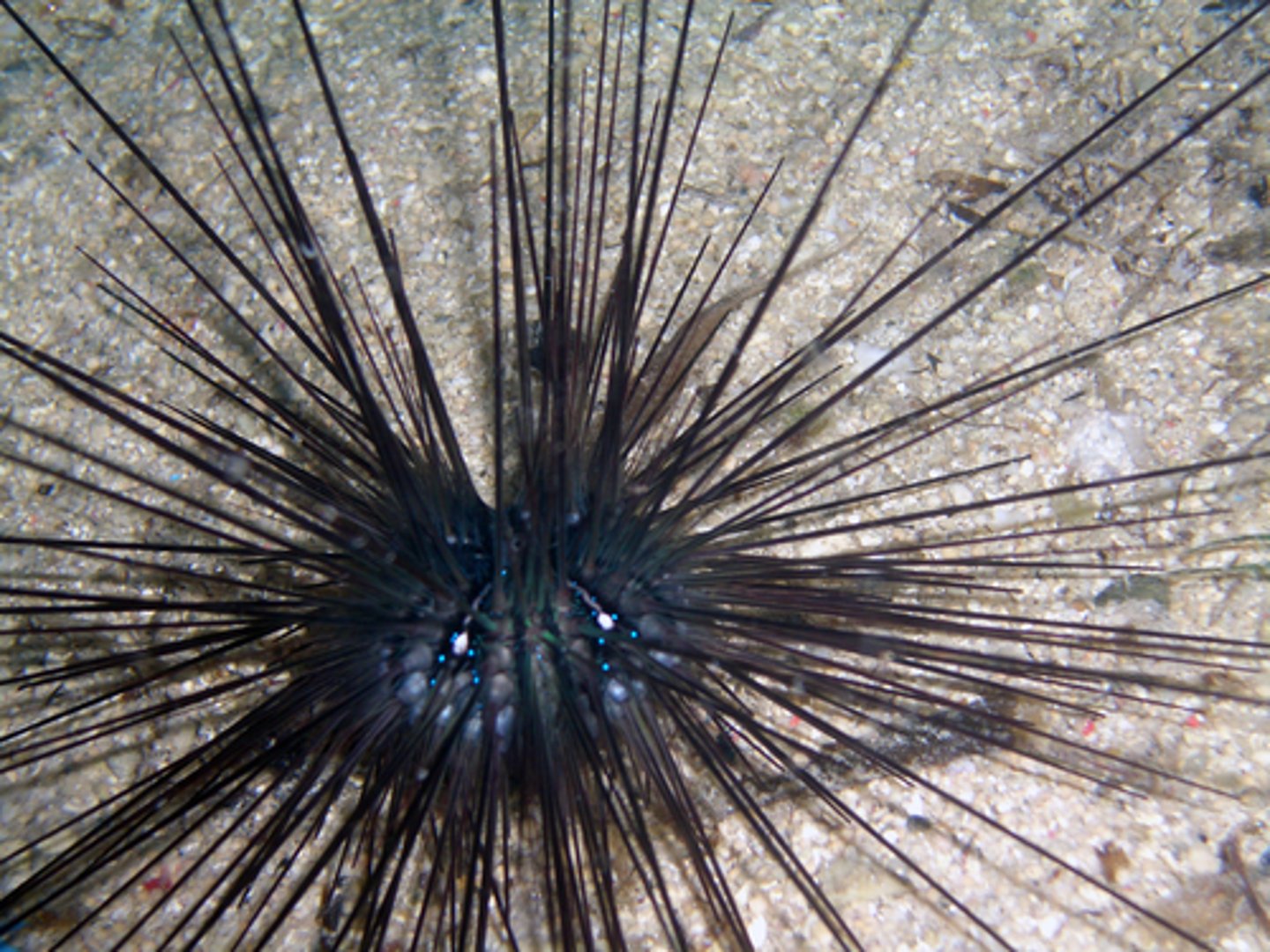
Asterozoa
"Star animal"; a subphylum containing sea stars and brittle stars
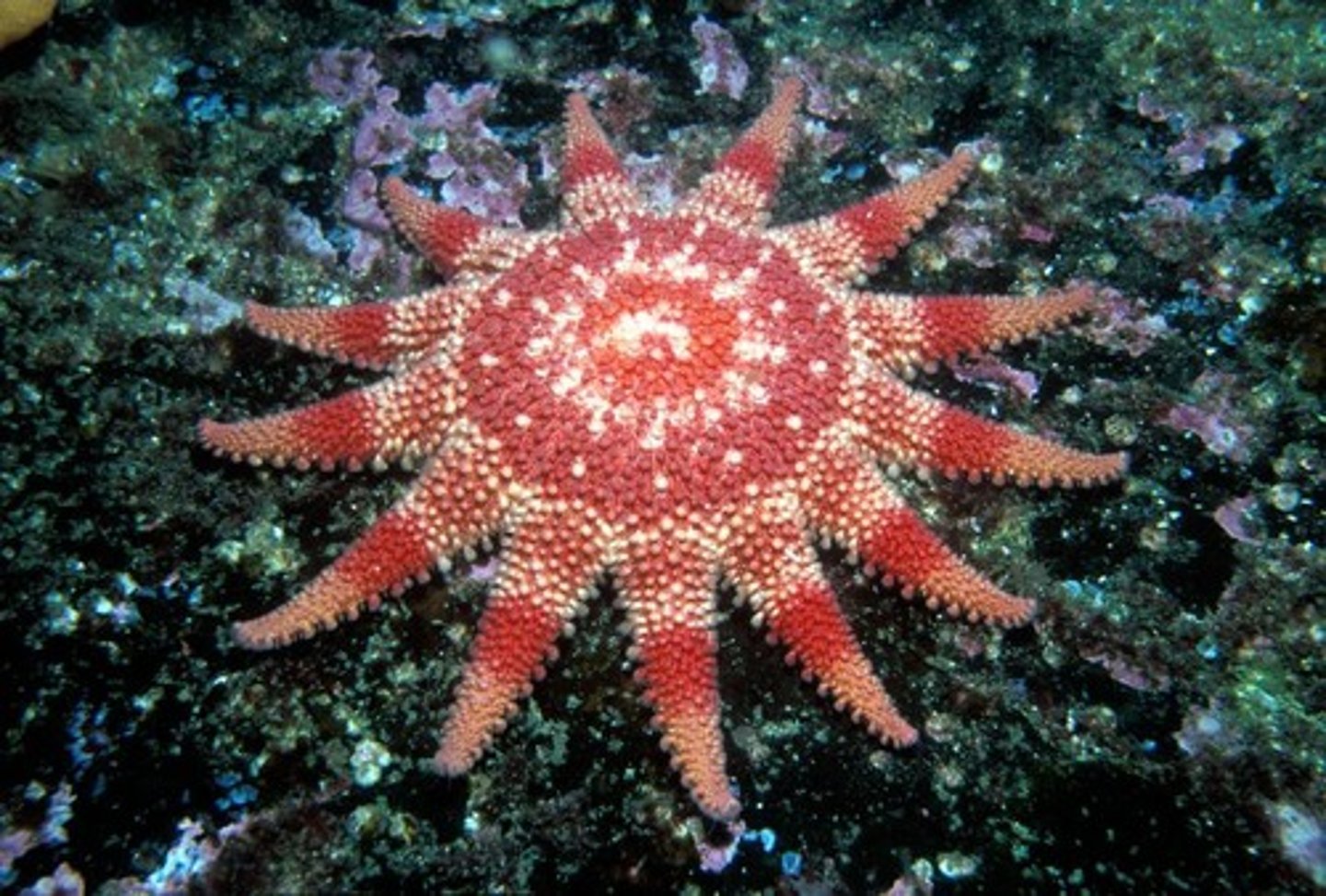
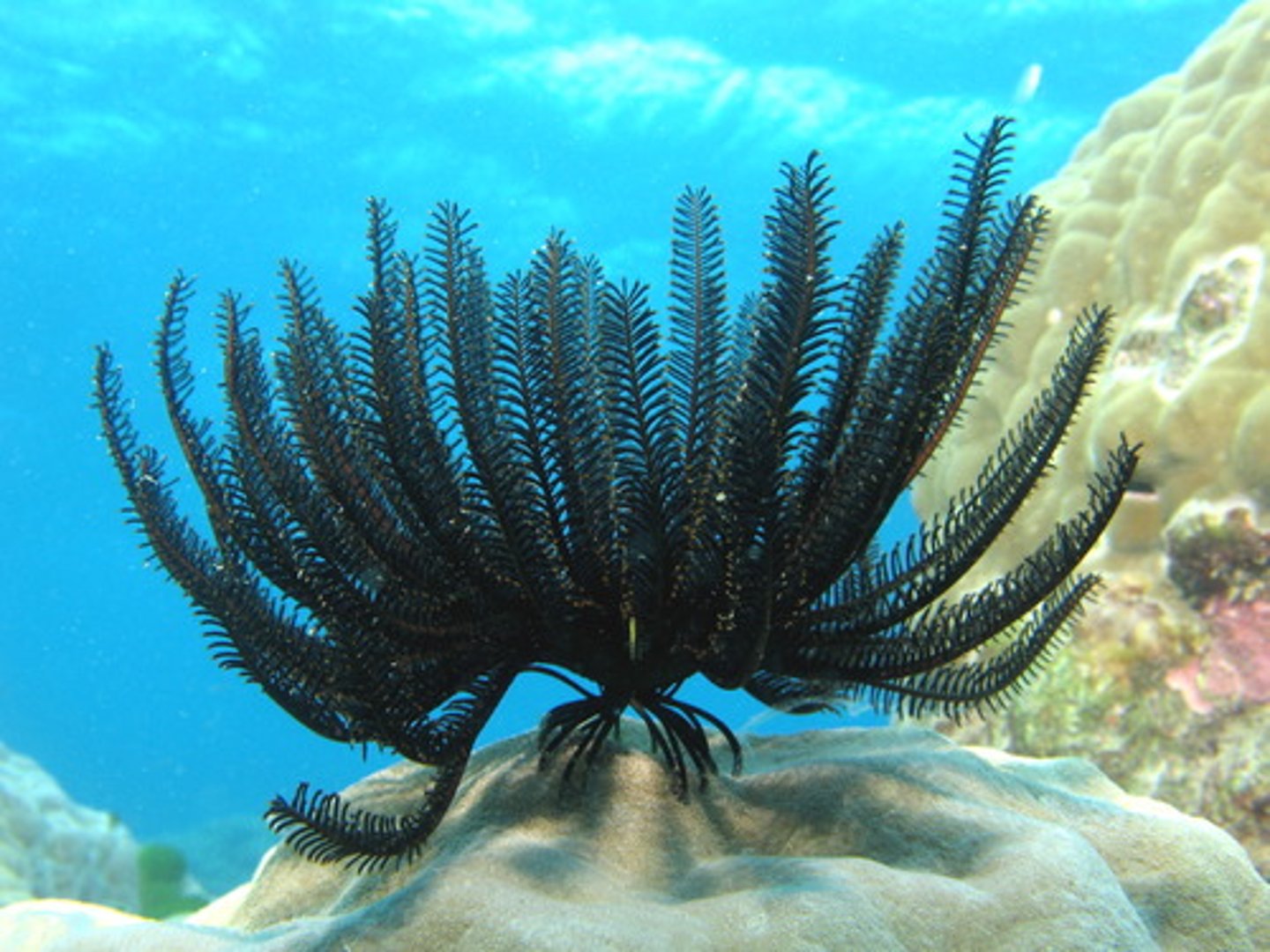
Crinoidea
Class containing sea lilies and feather stars