liver toxicity
 Call Kai
 Learn
Learn Practice Test
 Spaced Repetition
 Match
Match Flashcards
 Knowt Play
1/46

There's no tags or description
Looks like no tags are added yet.
Name | Mastery | Learn | Test | Matching | Spaced | Call with Kai |
|---|
No analytics yet
Send a link to your students to track their progress
47 Terms
obligate toxic substances def
lead to predictable toxic effects, dose dependent
idiosyncratic toxic effect def
only in some individuals of some species, unpredictable, dose independent, hypersensitivity to hepatocytes
obligate toxic substances direct effects
membrane lipid oxidation
dentature structural proteins
inh enzymes
obligate toxic substances indirect effects
block recepotrs/ transport prtoeins
modify proteins
bind to nu proteins, dna, rna, ribosomes
how do exogenous posions reach liver
portal v
role of hepatocytes in detoxification
biotransformation (lipophilic hydroxylation → conjugation → bile)
hydrophilic carrier systems
kupffer cell activation → free radicals, infl
xenobiotics def
non polar foreign compounds
purpose of biotransformation
lipid soluble metabolites → water soluble for elimination via bile/urine
phases of biotransformation
1- add reactive polar groups to lipid soluble compounds / cytochrome p450 mediated oxidation
2- detoxification / conjugation
biotransformation - phase 2 conjugation happens with
water, glutathione, sulfate, glucoronate
biotransformation - how does hepatocyte damage occur
compouds metabolised by cytochrome p450 system
ischaemia, hypoxia
toxicants
acute toxic hepatosis - gross (same with any toxin)
ascites
gall bladder wall oedema
serosa petechial haemorrhage
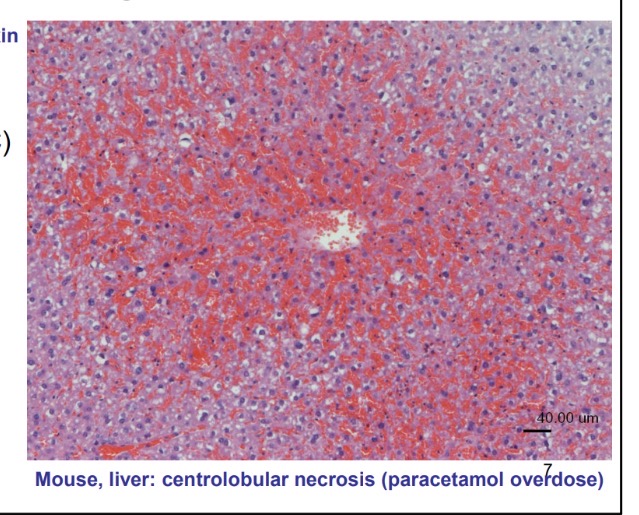
acute toxic hepatosis - histo
centrolobular/ massive necrosis
fatty/ hydropic change
necrosis → dilated, blood filled sinusoids
acute toxic hepatosis - causes
halogenated hydrocarbons, tar derivatives, P, Cu edta, algae
effect of toxins on hepatocytes
diffuse/ zonal metabolic derangement → hydropic degeneration, lipidosis, necrosis
hydropic degeneration def
swelling cells
overall toxin effects
necrosis (regeneration depends on reticulum framework)
fibrosis
cirrhosis
hepatic neoplasms
copper toxicosis - copper deficiency disease in sheep
swayback
copper toxicosis - causes
inc intake, reduced bile excretion, genetics
copper toxicosis - which breeds predisposed (low tolerance for cu)
texels, north ronaldsay
copper toxicosis - legal max for sheep
15mg/kg
copper toxicosis - haemolytic crisis def
release of cu from necrotic hepatocytes → blood
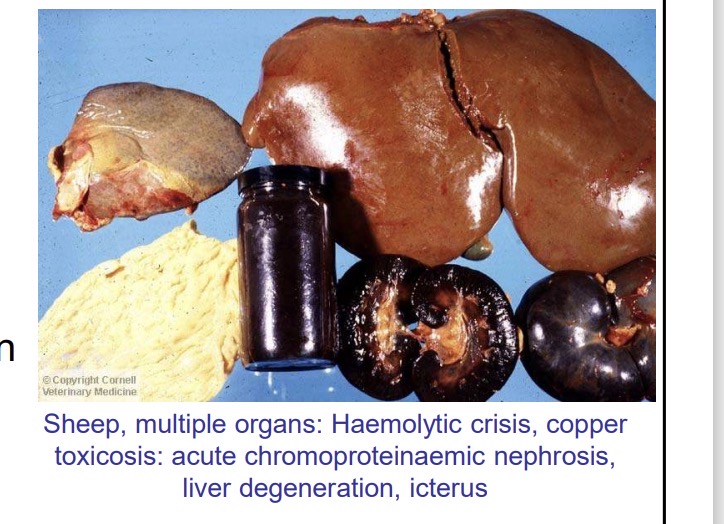
copper toxicosis - haemolytic crisis CS
inappetance, jaundice, haemoglobinuria
copper toxicosis - histo
zone 3 necrosis, renal tubular hb casts
copper toxicosis - diagnosis def normal (150-400 microm/g)
liver cu 500-1000 microg/g
familial copper toxicosis - breed
bedlington terrier
familial copper toxicosis - cause in Bedlington terrier
autosomal recessive mutation
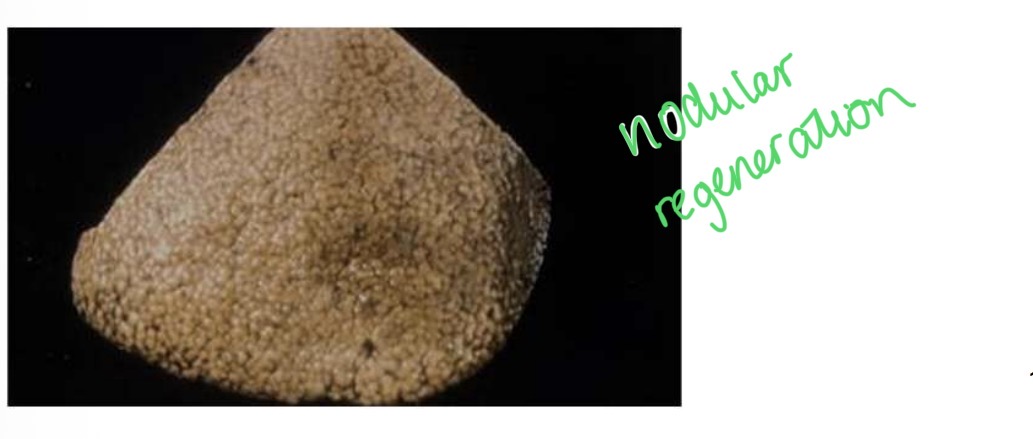
familial copper toxicosis - effects
hepatitis, cirrhosis
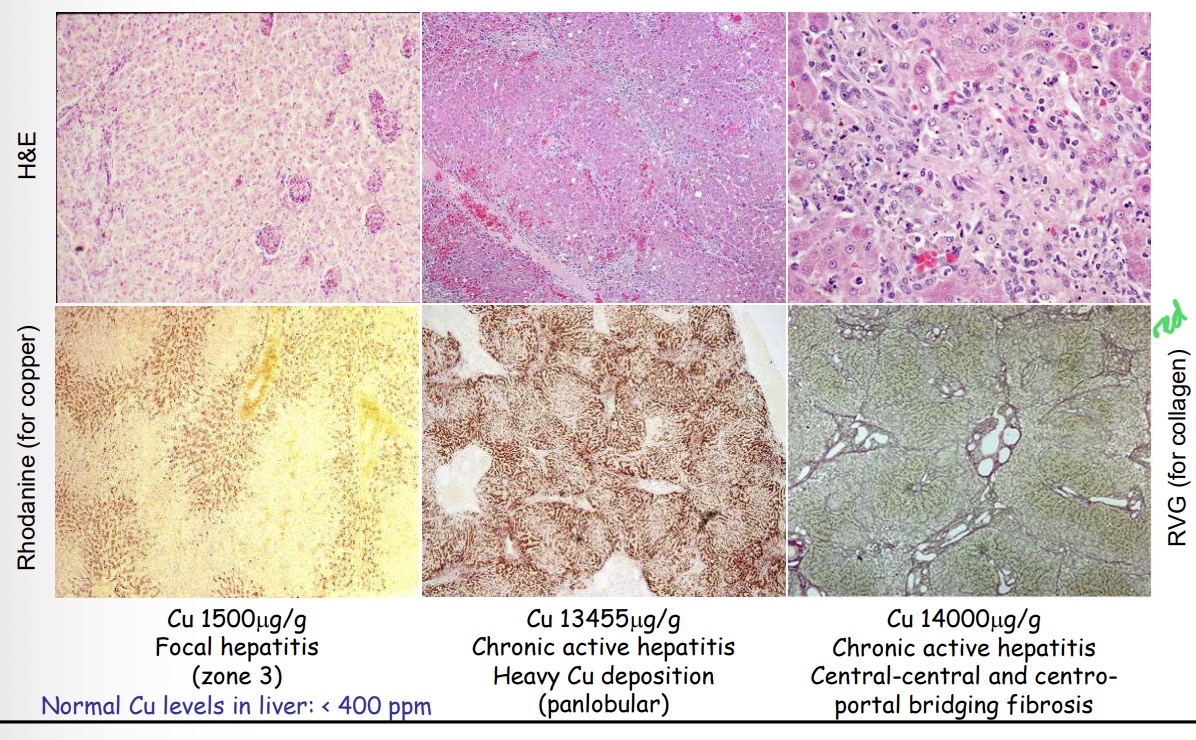
Familial copper toxicosis - histo (rhodanine stain)
Necrosis, infl, fibrosis
normal liver cu levels
<400 ppm
familial copper toxicosis - CS
inc liver enzymes, hameolytic crisis ,
copper toxicosis - copper retnetion due to
chronic liver disease → obstruct bile flow
copper toxicosis - sheep familial breed (from inc sensitivity due to low environment)
north ronaldsay
pyrrolizidine alkalosis - animals (grazing)
horse, cattle
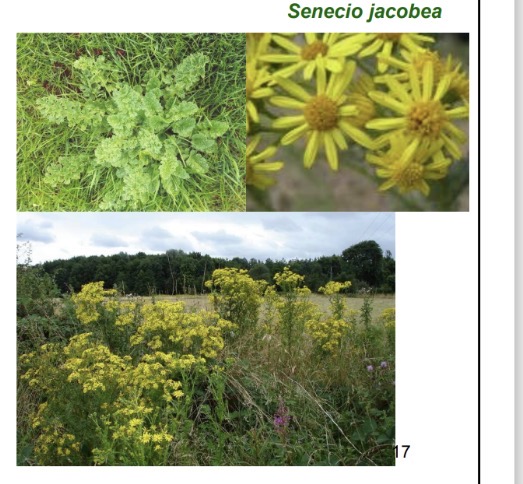
pyrrolizidine alkalosis - cause
ing pyrrolizidine alkaloids
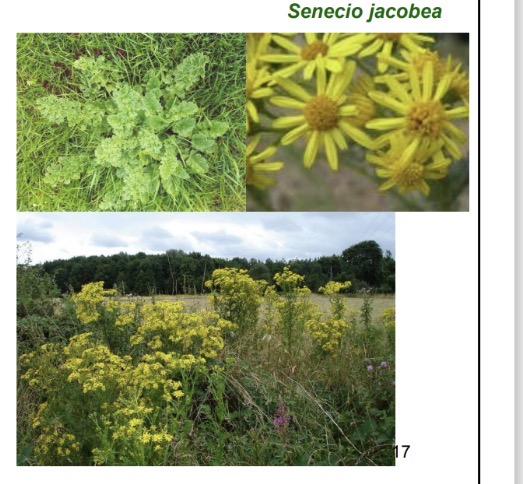
pyrrolizidine alkalosis - other name
ragwort, seneciosis
pyrrolizidine alkalosis - pathogenesis (chronic)
Alkaloid + cytochrome p450 → toxic pyrrolic esters → bind to DNA
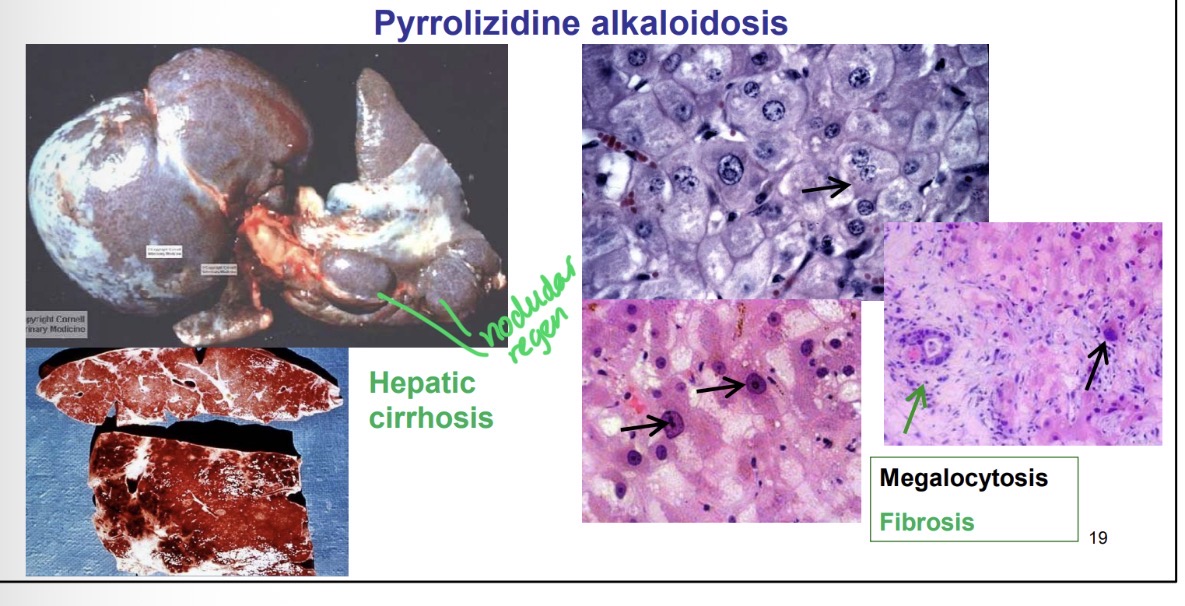
pyrrolizidine alkalosis - gross
bile duct proliferation, hepatoencephalopathy, cirrhosis
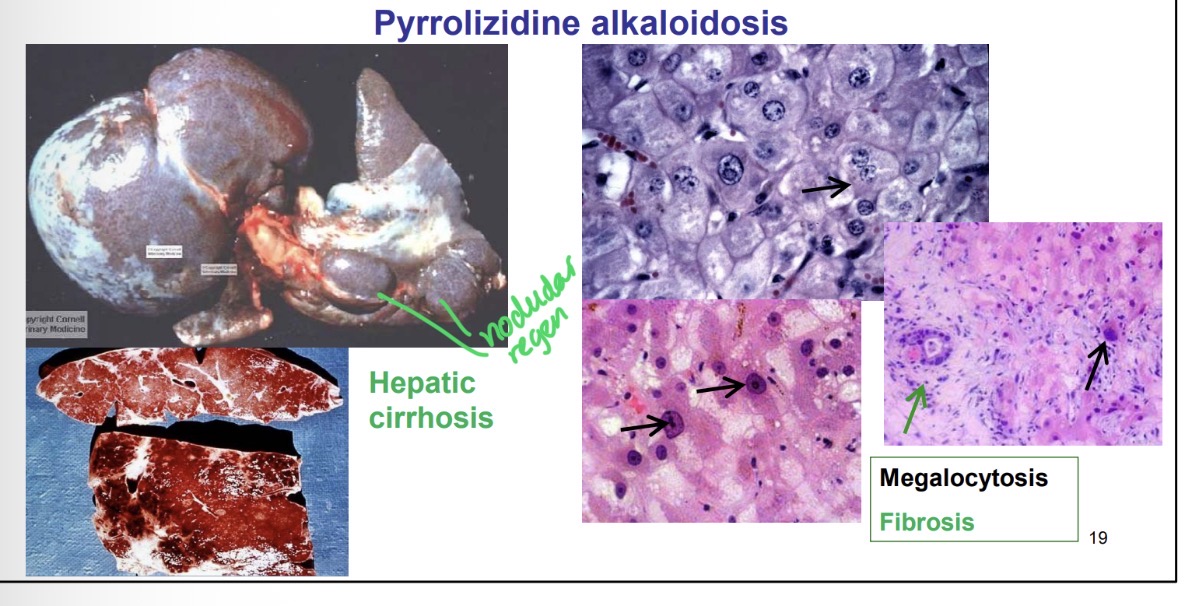
pyrrolizidine alkalosis - histo
single cell necrosis, megalocytes, infl, fibrosis
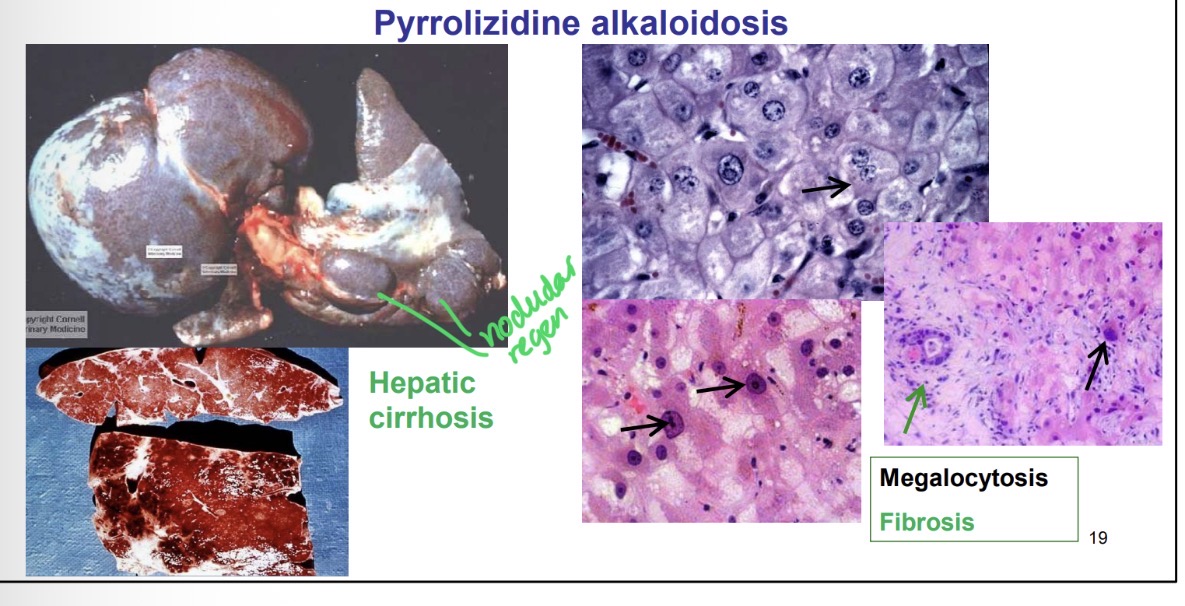
megalocytosis def
inh mitosis but not protein synthesis → large cells
CS of liver failure
ascites, jaundice, hepatic encephalopathy
aflatoxicosis - cause
mouldy feed
aflatoxicosis - fungi species making toxins (furanocumarin)
aspergillus flavus, aspergillus parasiticus, penicillium puberculum
aflatoxicosis - effects
carcinogenic, teratogenic, inh mitosis, immunosuppressive, chronic hepatotoxicity
aflatoxicosis - liver change s
inh mitosis, megalocytosis, lobular shrinkage, fibrosis
blue green algae - group names
cyanobacteria
blue green algae - liver effects from algae digestion
centrolobular/ massive necrosis with haemorrhage