Chariots - Homeric World
 Call Kai
 Learn
Learn Practice Test
 Spaced Repetition
 Match
Match Flashcards
 Knowt Play
1/10

There's no tags or description
Looks like no tags are added yet.
Name | Mastery | Learn | Test | Matching | Spaced | Call with Kai |
|---|
No analytics yet
Send a link to your students to track their progress
11 Terms
Box Chariot
two wheeled ( 4 wheel spokes )
relatively small - most likely could fit only 1 or 2 people.
Used in hunting, battle - high speed vehicle.
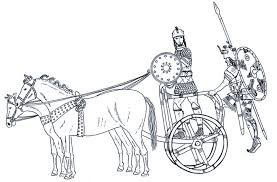
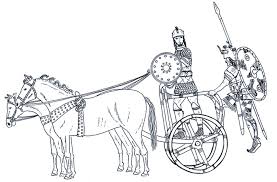
Rail Chariot
later period
also for transport, would have been very light and would have an open frame and cab.
Most likely used for battlefield transport than for actual battle.
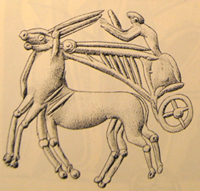
Quadrant chariot
Early period - transitional periods
D shaped floor with back open
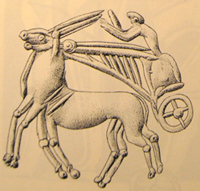
4 wheeled chariots
there is barely any evidence existing for this type of chariot, perhaps it was used like a wagon ?
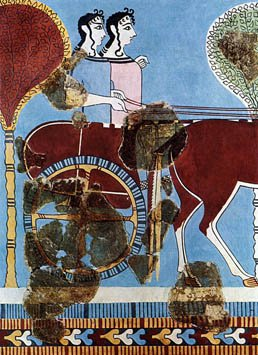
Dual Chariot
Big 4 spoked wheels - cover more ground
Not high speed - made for long distance travel at a moderate speed.
covered in leather - sturdy, made to last
Most likely used for trade + travel
Quality suggests that the wealthy and high status would use this type more.
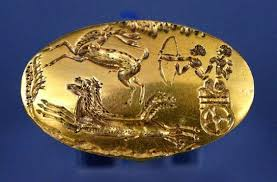
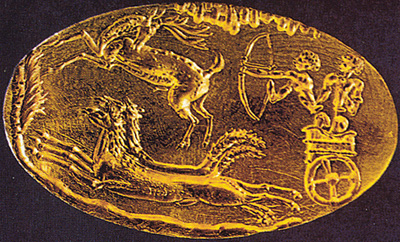
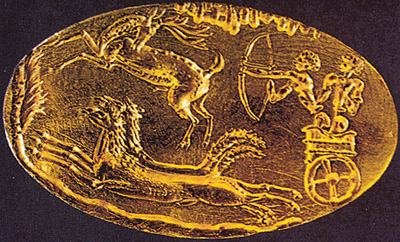
Chariot hunt signet ring ( Mycenae )
Box chariot is being used :
2 occupants
one shooting bow ( archer )
one driving ( driver )
2 horses is pulling the chariot
Chariot seems very small and unstable
quite dangerous
significance :
evidence of box chariot usage in hunting
evidence of how to operate a box chariot
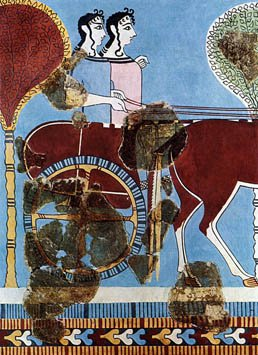
Tiryns Fresco of man and woman in a chariot
Date : 13th century BC
Location : Tiryns
Material : Plaster and paint
Significance :
evidence of chariots used for travelling
evidence of wealth - dual chariot usage
Dual chariot is depicted :
2 people ( one driver )
It is much more spacious compared to a box chariot
could hold cargo in the back for trade
designed for longer distance, slower travel
Covered in red animal hide/leather
sturdy so last longer.
Big wheels - cover more ground
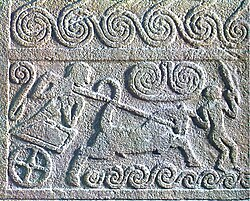
Grave Stele of man driving a chariot - Grave Circle A
Date : 16th century BC
Material : Limestone
Significance :
evidence of chariot use for games - possibly racing in this scene though unlikely..
evidence for use in battle perhaps
chasing enemy holding a club
Driver has a scabbard
Driving a box chariot ( mainly used for hunting and war )
evidence of proto reins / early rein variation
one long, solid pole around horse’s mouth
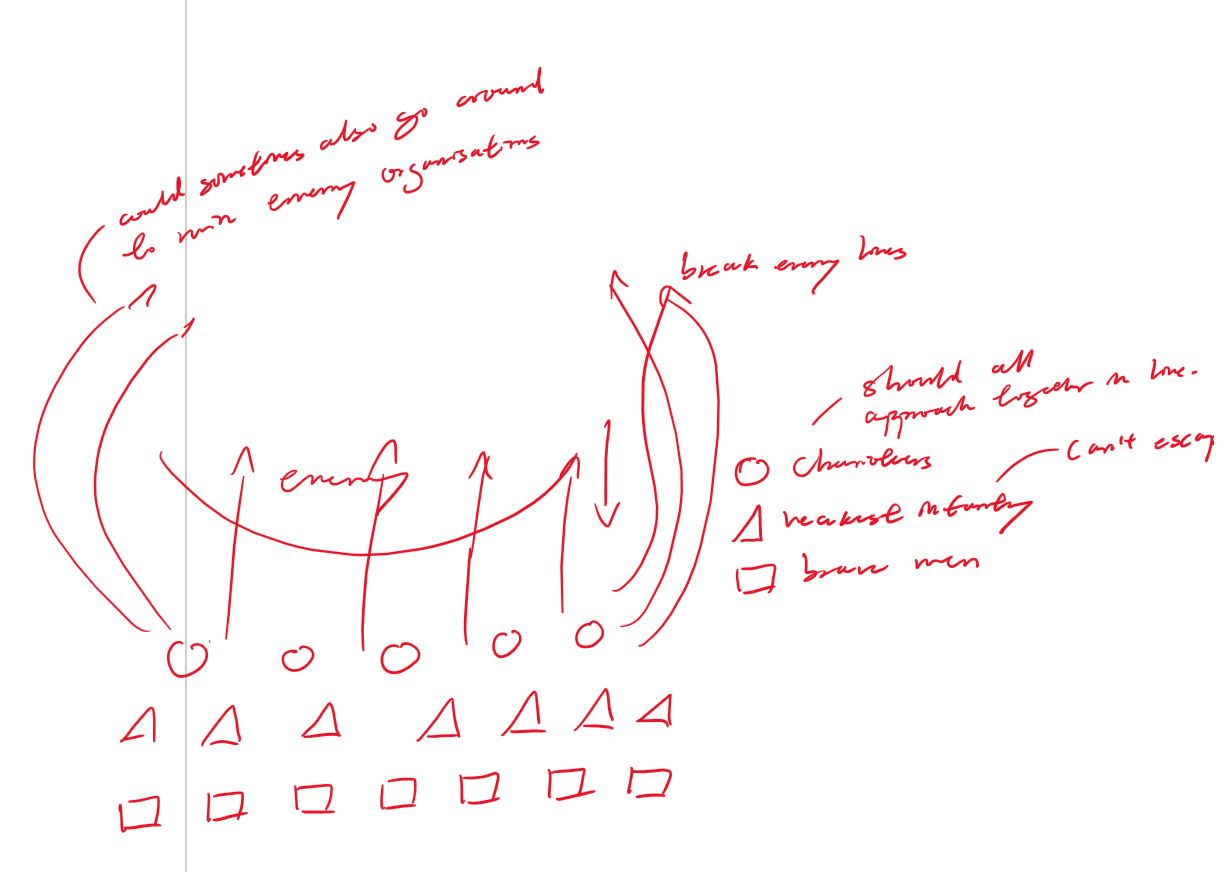
Agamemnon’s orders
In the Iliad, Agamemnon orders the chariots to disturb and break enemy lines :
weakest infantry would go forth so that they are forced to fight - no escape
followed by stronger ones that would back them up.
Other uses of chariots in the Iliad
warriors were often driven to the centre of fighting, get off and fight on foot.
Generally, warriors didn’t fight on chariots.
After the warrior wins, charioteer would drive them elsewhere.
Chariots also raced as funeral games - Iliad Book 23 - Patroclus' funeral games
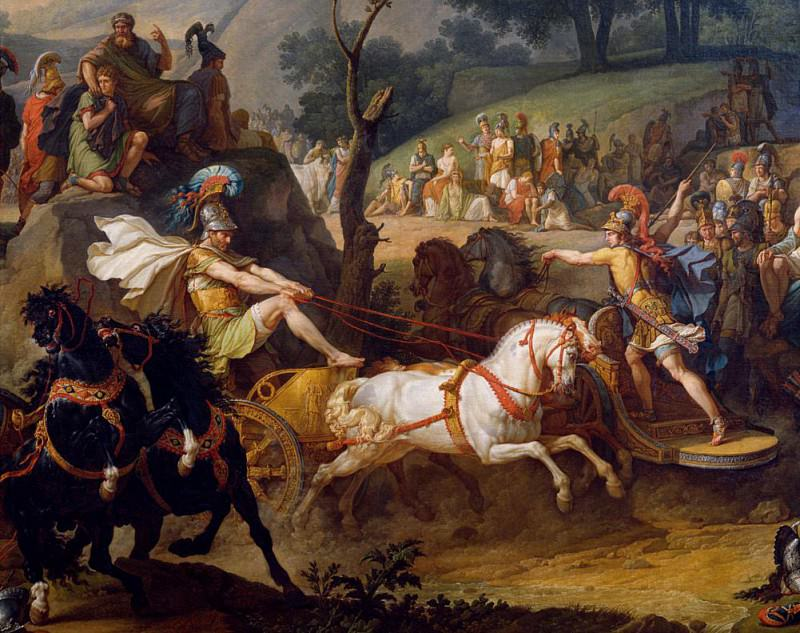
What were those funeral games like ?
In the Iliad, the chariot race is described as being :
very dangerous - high speed race, chariots break easily and falling could cause serious injuries.
Takes place in a circuit - doing laps around the same area.
Teams of horses ( pairs )
very competitive, prizes available for the victor.
Sportsmanship - “oath” is integral to this competition.