BS3054 L7 - Phosphoinositides
 Call Kai
 Learn
Learn Practice Test
 Spaced Repetition
 Match
Match Flashcards
 Knowt Play
1/40

There's no tags or description
Looks like no tags are added yet.
Name | Mastery | Learn | Test | Matching | Spaced | Call with Kai | Chat |
|---|
No analytics yet
Send a link to your students to track their progress
41 Terms
Phospholipid structure
2 fatty acids, 1 glycerol, 1 phosphate group
- hydrophilic head and hydrophobic tail = amphipathic
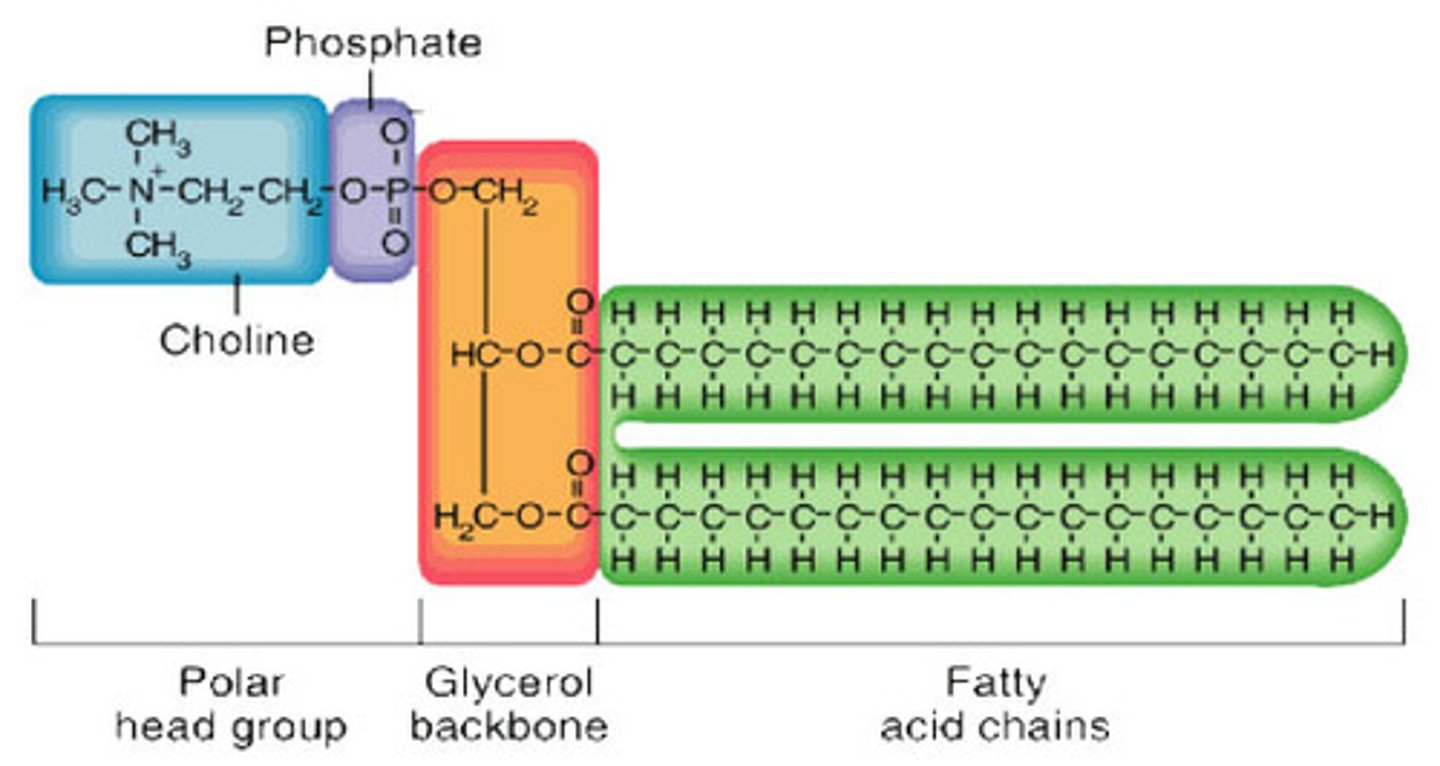
X group on phosphate of phospholipids
- can add groups
e.g. add choline to make phosphatidylcholine
e.g. add inositol to make phosphatidylinositol
phospholipids classified according to their polar head group and their abundance
- phosphatidylcholine = 50% of membrane lipids
- phosphatidylserine = 2-10%
- phosphatidylethanolamine = 15-35%
- phosphatidylinositol = 5-10%
Other denotations of phosphatidylinositol
PI or PtdIns
How is PI modified
- phosphorylation of any of the 6 carbons on the inositol group make other signalling molecules e.g. PIP2
Variations of PI
- phosphatidylinositol = PI
- phosphatidylinositol 4-phosphate = PIP
- phosphatidylinositol (4,5) - bisphosphate = PIP2
- phosphatidylinositol (3,4,5) - triphosphate = PIP3
why is PIP2 called phosphatidylinositol 4,5-bisphosphate not called phosphatidylinositol 4,5-diphosphate
- because the phosphates are on different carbons they are not organised in a chain where it would be referred to as diphosphate
Which carbons is PIP2 phosphorylated on
carbons 4 and 5
phosphatidylinositol structure
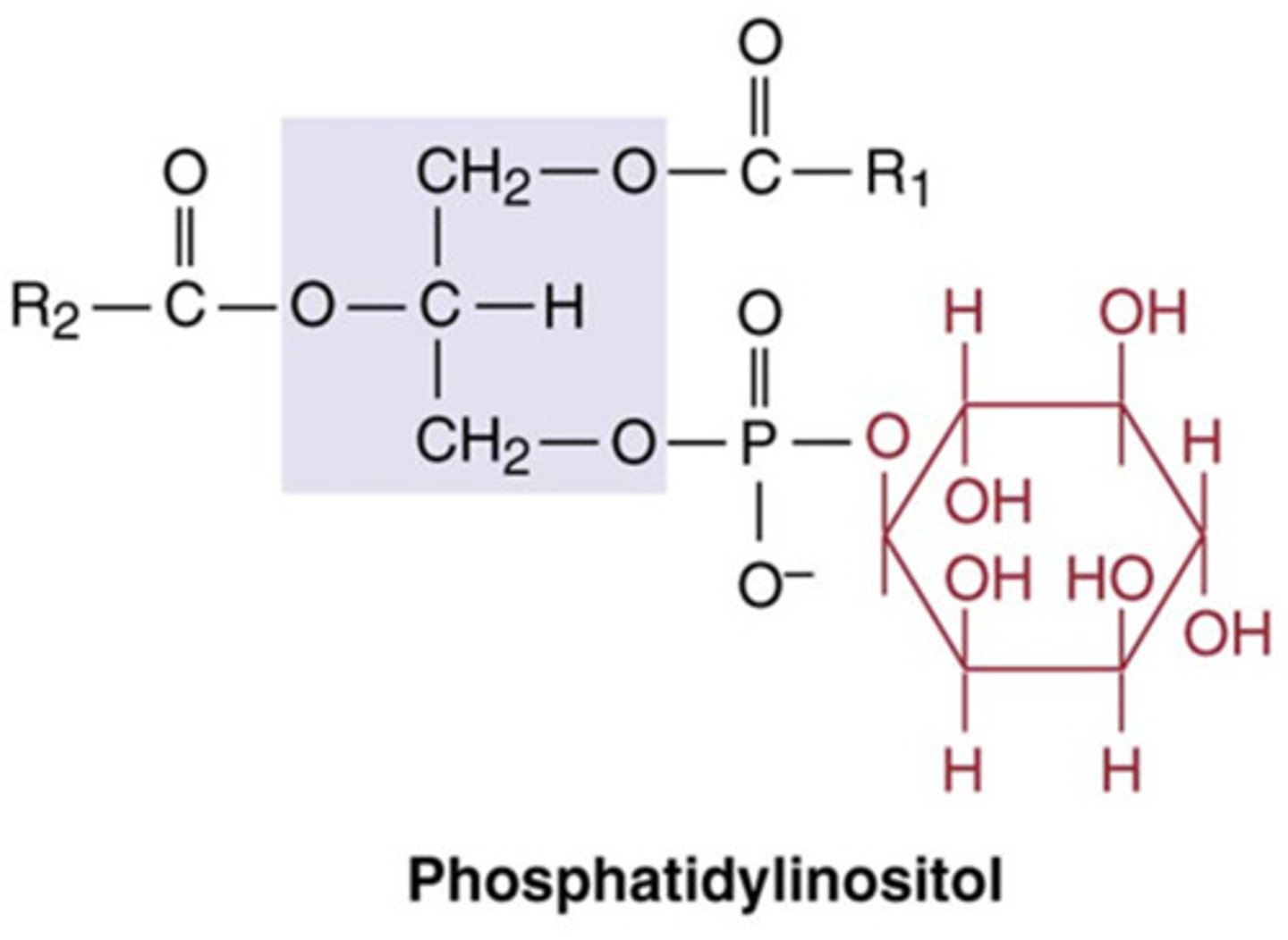
what enzymes turn phospholipids into signalling second messenger molecules
phospholipases
variations of phospholipases
- PLA1
- PLA2
- PLD
- PLC
= same substrate different outcomes
Role of phospholipase C
- cleaves PIP2 between the oxygen on the glycerol backbone and the phosphate
- forms DAG and IP3 = both second messengers
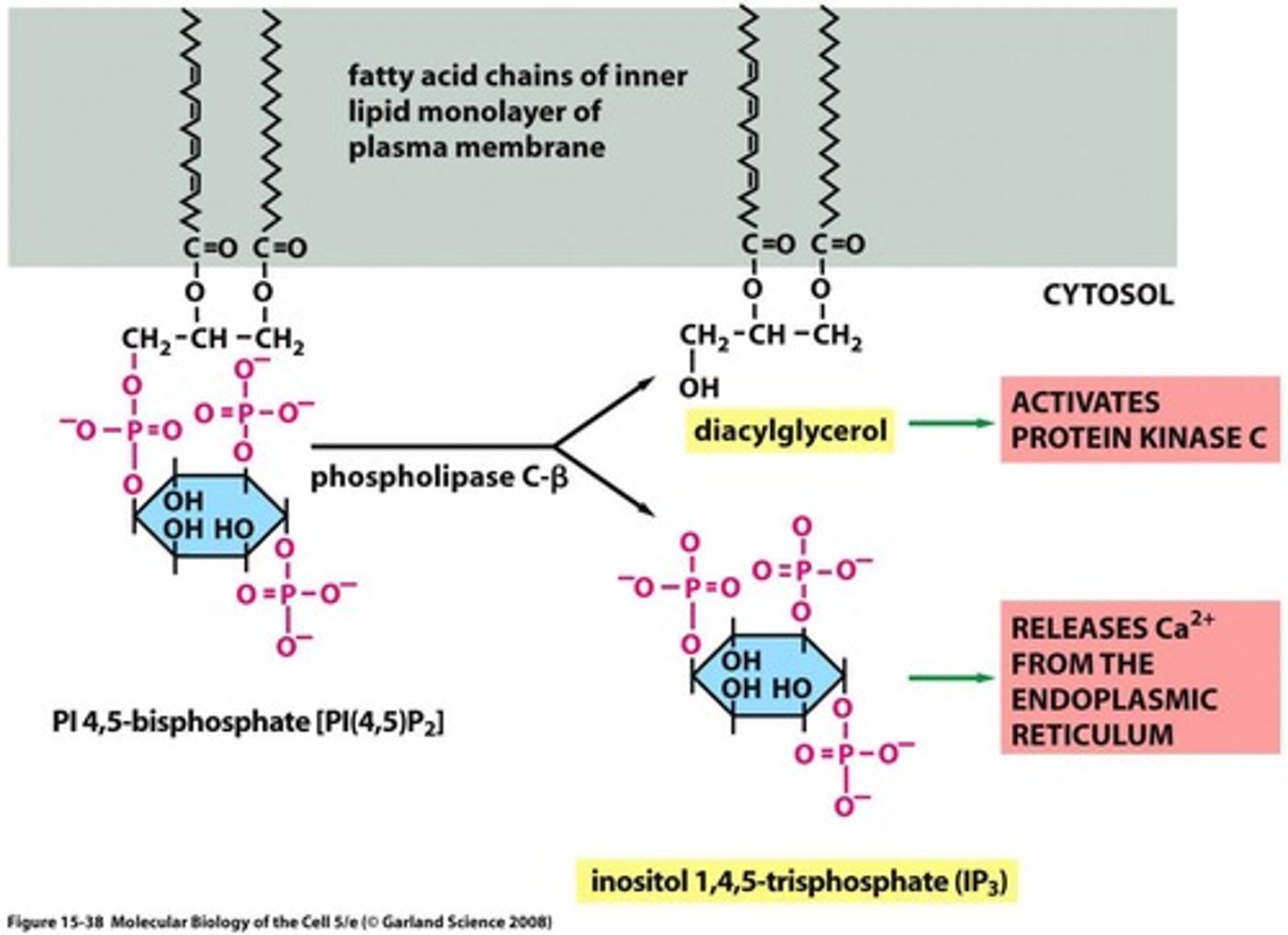
what is IP3
inositol 1,4,5-triphosphate
Receptor mediated signalling through PLC
- agonist binds receptor = conformational change
- alpha subinit dissociation and GDP/GTP exchange
- recruitment of PLC = cleaves PIP2 = DAG + IP3
- IP3 stimulates release of calcium from IC stores (ER) by binding to IP3 receptor
- DAG and calcium activates PKC
IP3 receptor
- acts as coincidence detector
- requires both IP3 to bind and calcium to be present for ion channel to open and cause calcium release into cytoplasm = calcium induced calcium release
families and isoforms of PLC
6 families, 13 isoforms (30 splice variants):
- PLC-beta (4 isoforms)
- PLC - gamma (2 isoforms)
- PLC - delta (3 isoforms)
- PLC - epsilon (1 isoform)
- PLC - zeta (1 isoform)
- pLC - eta (2 isoforms)
why is it important for there to be different isoforms of PLC
- to allow precise control so signalling can be regualted between cell types/locations
PLC-beta
- has 4 isoforms PLC-b1-4
- X and Y catalytic domains
- PH domain = allows localisation = bind PIs
- 4 tandem EF-hand domains = calcium function but unclear
- C2 domain = Ca2+ binding
- CC domain and PDZ domain = protein-protein interactions with PLC
homology between isoforms of PLC-beta
- 60% homology of the catalytic domain between isoforms
what is PLC-b most commonly associated with regulating
GPCRs
PLC-beta isoforms tissue distribution
B1 and B3 = fairly widespread
B2 = immune/haematopoietic
B4 = retina and certain neurons
What can activate PLC-beta
- Gaq subunit
- G beta-gamma subunit
- Ca2+
what domains does G-beta-gamma subunit associate with on PLC-beta
- PH domain (localisation of PIs)
- catalytic region
- almost always beta-gamma subunit from Gai/10 proteins as they are the most abundant
PLC-beta role other than phospholipase activity
- GTPase activating proteins
- can bind to alpha subunit and speed up intrinsic GTPase activity to cause reassociation between alpha and beta-gamma subunit
- same role as RGS proteins
coincidence detection with G-proteins and PLC-B3
- Gaq and Gbeta-gamma both activate PLC-B3 = synergistic activation
how is inositol recycled
- dephosphorylation of IP3 creates inositol
- inositiol fed back into membrane where it is phosphorylated into PIP2 again by kinases
- PIP2 can be turned into IP3 and DAG again or phosphorylated by phosphoinositide 3-kinase into PIP3 = signalling
phosphoinositide kianses
- phosphorylate PIs at 3,4,5 positions on inositol
- phosphatases dephosphorylate these
e.g. phosphoinositide 3-kinase phosphorylates in the 3 carbon position
PI3Ks
= phosphatidylinositol 3-kinases
= phosphorylate in the 3-OH position of the inositol ring in PIs
- 3 main classes = I, II, III
- activated by diverse cell surface receptors mainly RTKs and some GPCRs through Src transactivation of RTKs
- its preferred substrate in vivo is PIP2 = converts it to PIP3
GPCR singalling via Src transactivation of RTKs
- agonist binding to GPCRs can cause Src activation
- Src can then phosphorylate and activate RTKs
- transactivation amplifies the signal by integrating different pathways onto the RTK cascade
Structure and function of PI3-kinase
Regulatory subunit:
- p85 with SH2 and SH3 domains associated = allows recruitment to RTKs or adaptor proteins
Catalytic subunit
- p85 binding domain
- Ras binding domain - Ras binding can activate catalytic subunit
- HR3 = membrane binding
- HR2 = scaffold for other proteins to bind to it
- HR1 = kinase core
Why is PI3k associated with cancer
- Ras binding to PI3k causes cell proliferation
activation of PI3 kinase via RTKs
- growth factor binds to RTK causinf autophosphorylation and dimerisation
- allows docking of Grb2, SOS, RAS and GTP
- PI13k docks via Ras domain
= production of PIP3 on membrane
PIP3 as an anchor for signalling proteins
- signalling proteins with PH domains accumulate at sites of PI3K activation by binding to PIP3
- these proteins regulate cell growth, survival and movement
- examples of proteins containing PH domains are PKB (Akt) and PDK1
PKB (Akt)
- serine/threonine kinase
- growth factor pathway
- activated by PI3K and PDK1/2
PDK1
phosphoinositide dependent kinase 1 (involved in activation of PKB)
PKB activation via PDK1
- PIP3 in the membrane recruits PKB (Akt) and PDK1
- PDK1 phosphorylates PKB to partially activate it
- mTORC2 complex further phosphorylates AKT to fully activate it
- activated AKT then inhibits the TSC complex leading to activation of mTORC1 = controls protein synthesis and growth
What is PKB/Akt generally associated with
anti-apoptosis, growth, proliferation and migration
Termination of PI3-kinase signalling
- SHIP proteins remove binding sites for proteins with PIP selective PH domain
- SHIP proteins generate PIP2 from PIP3 that PKB can bind to
- PH domain of PKB binds PIP2 and PIP3 with equal affinity
- PTEN turns PIP3 into PIP2 and PIP2 into PI
PI3-kinase signalling and cancer
- numerous oncogenes activate type IA PI3-kinase
- activating mutation of PI3-kinase described in cancer
- PTEN has tumour supressor properties - mutations in PTEN associated with cancer
- mutations in SHIP1 recently associated with some leukaemias
therapeutic attempts to inhibit PI3-kinase in cancers
- small non-specific molecules
- wortmannin
- LY294002
- copanlisib and apelisib - only active on one kinase (class I PI1K inhibitors)
- most approved drugs have since been withdrawn due to side effects
Theoretical ideal therapeutic targets for PI3K in cancer
Isotype selective PI3K inhibitors:
- inhibitors that target specific p110 catalytic subunits - many minimise side effects
Inhibitors of Akt (not yet apporoved)
- inhibition of downstream signalling from PI3K activation many be beneficial
- two examples of Akt inhibitors:
1. ipatasertib = binds ATP binding site of Akt (breast cancer)
2. afuresertib = competitive inhibitor