Vital Signs & Derm Terms - Medicine Study Set
 Call Kai
 Learn
Learn Practice Test
 Spaced Repetition
 Match
Match Flashcards
 Knowt Play
1/168

There's no tags or description
Looks like no tags are added yet.
Name | Mastery | Learn | Test | Matching | Spaced | Call with Kai |
|---|
No analytics yet
Send a link to your students to track their progress
169 Terms
why do we do general survey
gives us an overall impression of our patients well being
level of conscious questions
are they alert and orientated?
are they responding to physical and verbal stimuli?
common causes of unresponsivenesses
focal lesions of the brain
diffuse brain disease
psychogenic unresponsiveness
example of focal lesions of the brain
hemorrhage
hematoma
infarct
tumor
abscess
trauma
example of diffuse brain diseases
-drug intoxication's
-disturbances in glucose, sodium or calcium metabolism, renal failure, myxedema, pulmonary insufficiency
-hypothermia, hyperthermia
-hypoxia or anoxic event
-encephalitis, meningitis, seizures
example of psychogenic unresponsiveness
dementia
how to asses apparent state of health
make general judgment based on observations throughout the encounter
questions to ask during apparent state of health
-is the patient acutely or chronically ill?
-frail or fit? obese or cachectic?
-does the patient look "sick"?
-is there muscle wasting?
-are they diaphoretic?
signs of physical distress
pale, excessive sweating, trouble breathing, muscle twitching or spasms, intense pain, extreme fatigue, falling asleep
signs of emotional or psychological distress
crying, sighing frequently, confused, anxious, irritable, agitated, angry outburst, non-attendance, not concentrated, no motivation
signs of behavioral distress
withdrawing socially or verbally, poor self care, impulsive behavior, talk of suicide, excessively demanding
indicators of dress grooming personal hygiene
-socioeconomic status, homelessness, access to resources
-are they dressed in more layers than expected? (fever, anemia, hypothyroidism, vascular disease, psych, emaciated)
-are they dressed in too few layers (meds, hyperthyroidism, menopausal, psych)
-grooming- hair brushed, clean, discheveled, dirty nails
pallor could mean
anemia, cardiovascular or pulmonary dysfunction, reduced blood flow in artery, shock
cyanosis could mean
hypoxia to affected tissues, anaphylactic rxn, pulmonary or heart dx, anemia, poison/meds
jaundice could mean
liver disease
cholestasis
cirrhosis
uniform could mean
are there areas that are different?
inflammatory process, birth mark, systemic diseases
dry or oily could mean
metabolic disease
types of lesions
primary, secondary
facial expressions could indicate
pain
mood
neurological and cranial nerve issues
disease states
medications
clues to disease from facies and expressions: endocrine
-protruding jaw of acromegaly
-moon facies of Cushing syndrome
-prominent stare of hypothyroidism
-vitiligo/increased freckling in Addison dx
clues to disease from facies and expressions: CNS
-masklike facies of Parkinsonism
-drooping eye, sleepy appearance of myasthenia gravis
clues to disease from facies and expressions: cardiovascular
prominent earlobe crease associated with coronary heart disease
clues to disease from facies and expressions: infectious
-leonine facies of leprosy
-slapped-cheek appearance of fifth disease
clues to disease from facies and expressions: renal
-periorbital edema in acute nephritis
-earlobe abnormalities in some congenital renal diseases
clues to disease from facies and expressions: misc
-taut, stretched facies of scleroderma
-butterfly rash in LE
-hirsutism from drug therapy (ex minoxidil)
lack of eye contact could mean
depression, neurologic conditions, contempt, nervous/scared
Excessively energetic movements or constantly watchful eyes suggest
tension, mania, anxiety, drugs (meth, cocaine)
body odor could mean
exercise, poor hygiene, food medications, metabolic conditions, diabetes, kidney disease, infections
acetone breath could mean
diabetic ketoacidosis
ammonia breath could mean
uti or kidney disease
cinnamon breath could mean
TB
bitter almonds could mean
cyanide poisoning
fresh baked bread could mean
typhoid fever
foul breath could mean
infection
manner means
patient outward behavior towards others
mood means
behavior suggestive of feeling or state of mind
underweight BMI
<18.5
normal BMI range
18.5-24.9
overweight BMI range
25-29.9
obese BMI range
30-34.9
extremely obese BMI
>35
normal body temp is approx
37C or 98.6 F
fever or pyrexia is a temperature
>37C but <41.1 C
>98.6 F but < 106 F
hyperpyrexia
is extreme elevation >41.1 C (106 F)
hypothermia is below
35 C (95F)
oral temps are LOWER than
rectal and tympanic
oral temps are HIGHER than
axillary and temporal
fever causes
infection, exercise, hot weather, reaction to immunization, connective tissue disease, malignancy, drugs
hypothermia causes
environmental exposures, hypothyroidism, sepsis, malnutrition, thiamine deficiency, hypoglycemia, ethanol abuse, medications
why do we take radial pulse
-to assess HR, rhythm and strength
-can contribute to dx of underlying cardiovascular diseases
-clues about nutritional and health status/fitness
always compare radial pulse _____
bilaterally!
normal radial pulse
60-100 bpm
average resting pulse rate for adults
70 beats per minute
athletes resting pulse rate
50-60bpm
tachycardia
>100bpm
tachycardia causes
medications
drugs and alcohol
hyperthyroidism
pneumonia
arrhythmias
congential
bradycardia
<60 bpm
bradycardia causes
anorexia nervosa
bulimia nervosa
CHF
hypothyroidism
aging
arrhythmia
asymmetric radial pulses causes
-aortic dissection
-subclavian steal syndrome
-coarctation of the aorta
cause of bounding pulse
hypertension
expected respiratory rate in adults
12-20 breaths per minuge
bradypnea
less than 12 breaths per minute
tachypnea
more than 20 breaths per min
factors affecting breath rate
age, obesity, lung diseases (asthma, COPD, infections, CF), exposure, muscle weakness, smoking, lack of O2 in environment, anxiety, pain, CNS, poisoning, drugs/medications
why do we take palpable blood pressure
to avoid being misled by an auscultatory gap when using the stethoscope
make sure to use the _____ to hear the low-pitch sounds produced by the _______ in the artery
bell
turbulence of blood flow in artery
what does audible BP measure
pressure of blood going through arteries
systolic bp
the force exerted when the ventricles contract and largely the result of cardiac output, blood volume, compliance of arteries
diastolic bp
force exerted by peripheral vascular resistance when heart is in the filling or relaxed state
audible bp readings can be skewed with factors such as
smoking, caffeine, emotional distress, physical activity, incorrect cuff size
taking bp in both arms decreases the risk of missing an
elevated bp
when you have difference of bp in arms, you should use the ___ bp reading overall
higher
studies have shown if the SBP is > 10mmHg difference in arms, the patient is at higher risk of a
cardiovascular event or stroke
normal bp level
Systolic <120 and
Diastolic <80
elevated bp level
Systolic: 120-129 and
Diastolic: <80
high blood pressure (hypertension) stage 1 level
systolic 130-139 or diastolic 80-89
high blood pressure (hypertension) stage 2 level
systolic 140 or higher or diastolic 90 or higher
hypertensive crisis level
(emergency)
systolic higher than 180 and/or diastolic higher than 120
complications of HTN
-CAD
-Stroke
-MI
-kidney disease/failure
-complications of pregnancy
-eye damage
-vascular disease
hypotension causes: arrhythmias
bradycardia
tachycardia
fibrillation
hypotension causes: structural disease
valve disease, ischemic heart disease, pericardial disease, cardiac tamponade, congenital, obstructive cardiomyopathy, dilated cardiomyopathy, dilated cardiomyopathy, primary pulmonary hypertension
hypotension causes: hypovolemia
hemorrhage, diarrhea, dehydration, orthostatic volume shifts, drugs (diuretics0
hypotension causes: systemic vasodilation
sepsis, anaphylaxis, neurogenic, autonomic dysfunction, drugs
hypotension causes: obstructive
pulmonary embolism
orthostatic hypotension defined as
sustained reduction of SBP of at least 20mmHg or in DBP of at least 10mmHg
orthostatic hypotension historical features and possible etiology
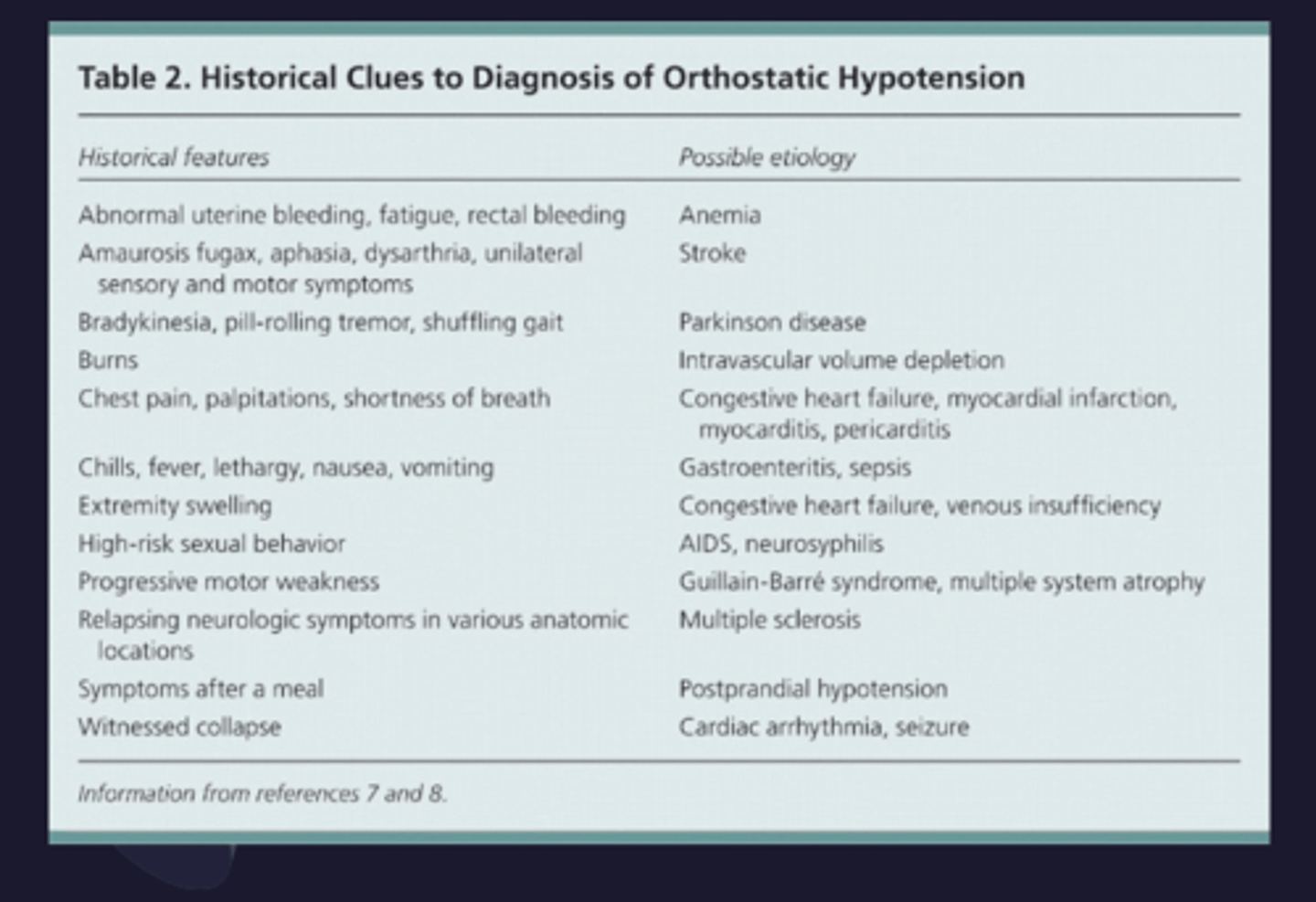
skin inspection: inspecting the skin for any lesions noting:
color
morphology
configuration
size
location
distribution
brown color of lesion/skin could indicate
darkening of melanin( hormonal, cancer)
white color of lesion/skin could indicate
absence of melanin (vitiligo, albinism)
red (ERYTHEMA) color of lesion/skin could indicate
increased cutaneous blood flow (infection, polycythemia)
yellow color of lesion/skin could indicate
increased bile/carotene pigmentation (liver disease, diet, impetigo)
blue color of lesion/skin could indicate
increased unsaturated hemoglobin (lung disease, hypoxia, ingestion of silver)
skin inspection: localized distribution means
lesions appear in one area (impetigo, herpes simplex, cellulitis, contact dermatitis)
skin inspection: regional distribution means
legions involve a specific part of the body (acne, psoriasis, pityriasis rosea)
skin inspection: generalized distribution means
lesions appear widely distributed (urticaria, drug rxn)
skin inspection: morphology: discrete means
well demarcated and defined (psoriasis)
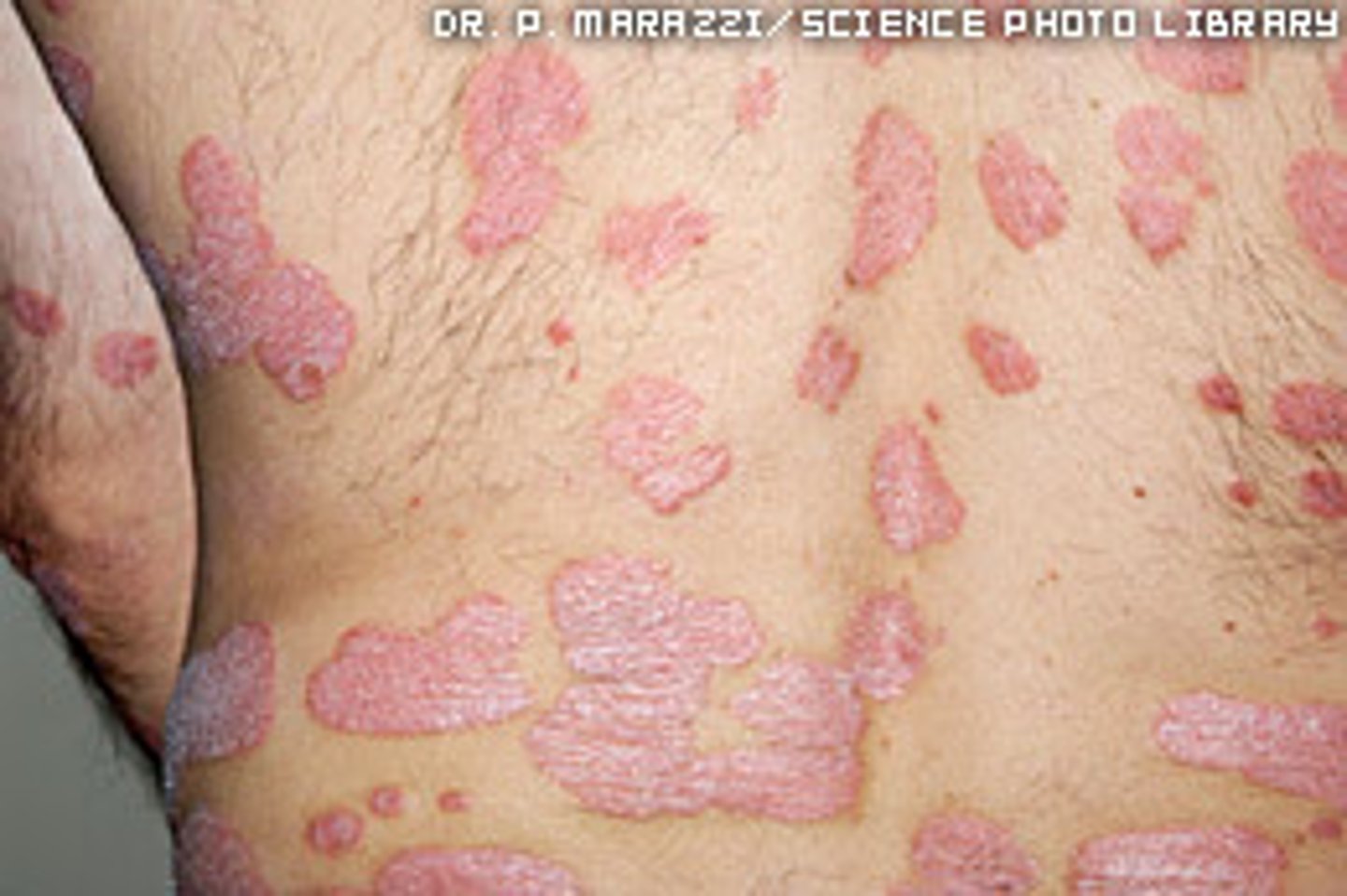
skin inspection: morphology: indistinct means
poorly defined, have borders merging into normal skin (nummular eczema)
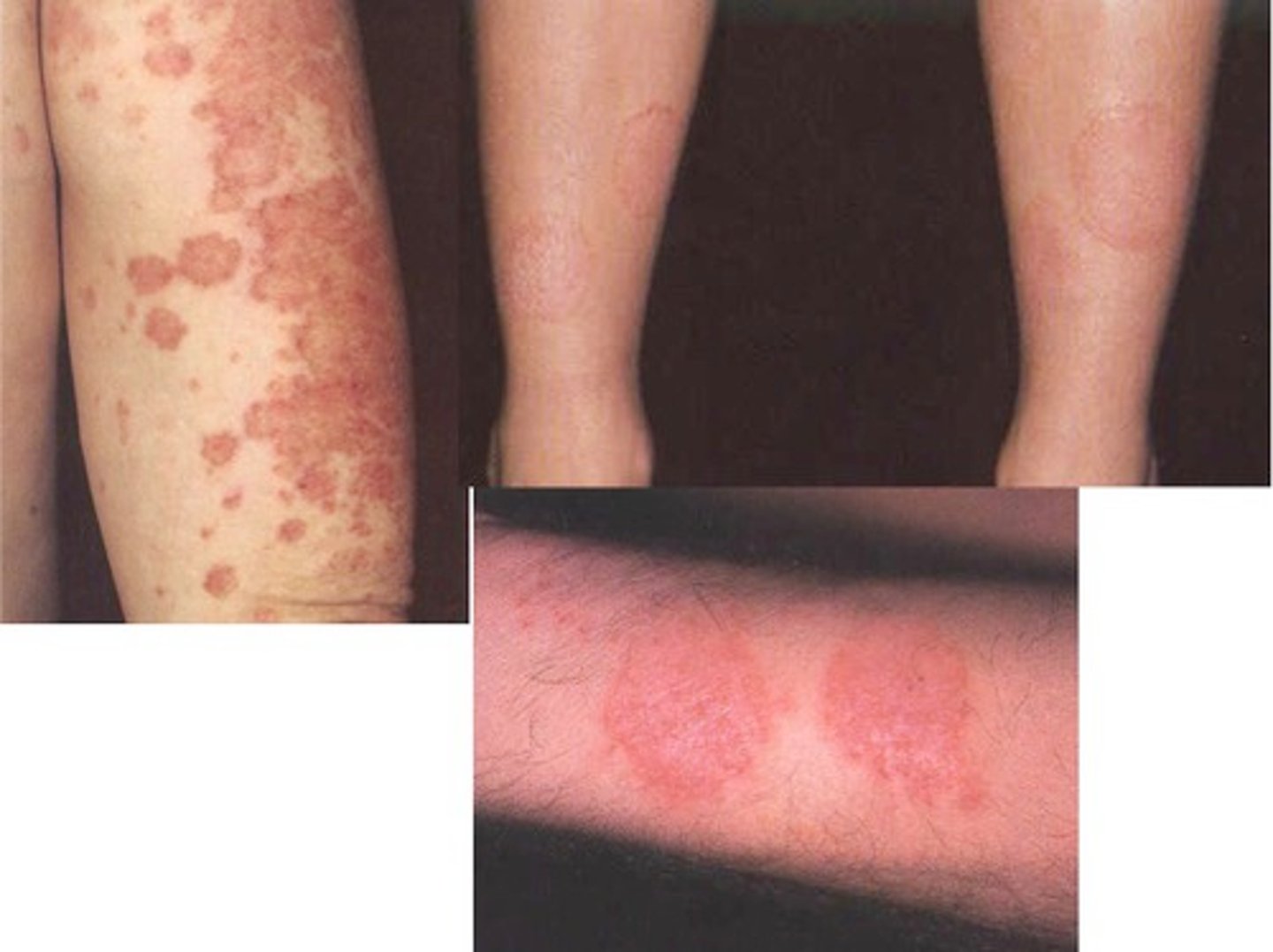
skin inspection: morphology: active means
margin of lesion shows greater activity than center (tinea eruptions)
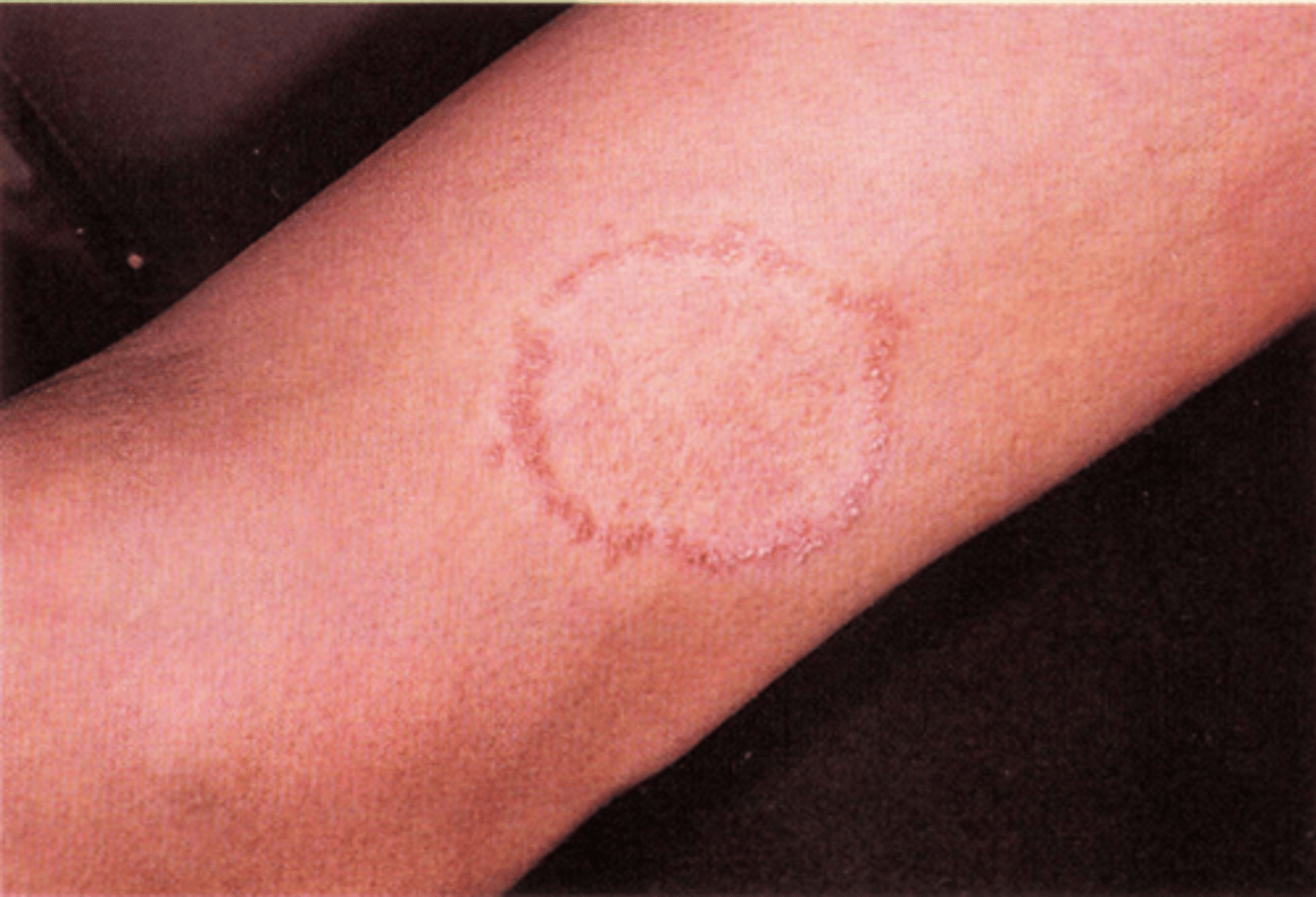
skin inspection: morphology: irregular means
non smooth or notched margins (malignant melanoma)
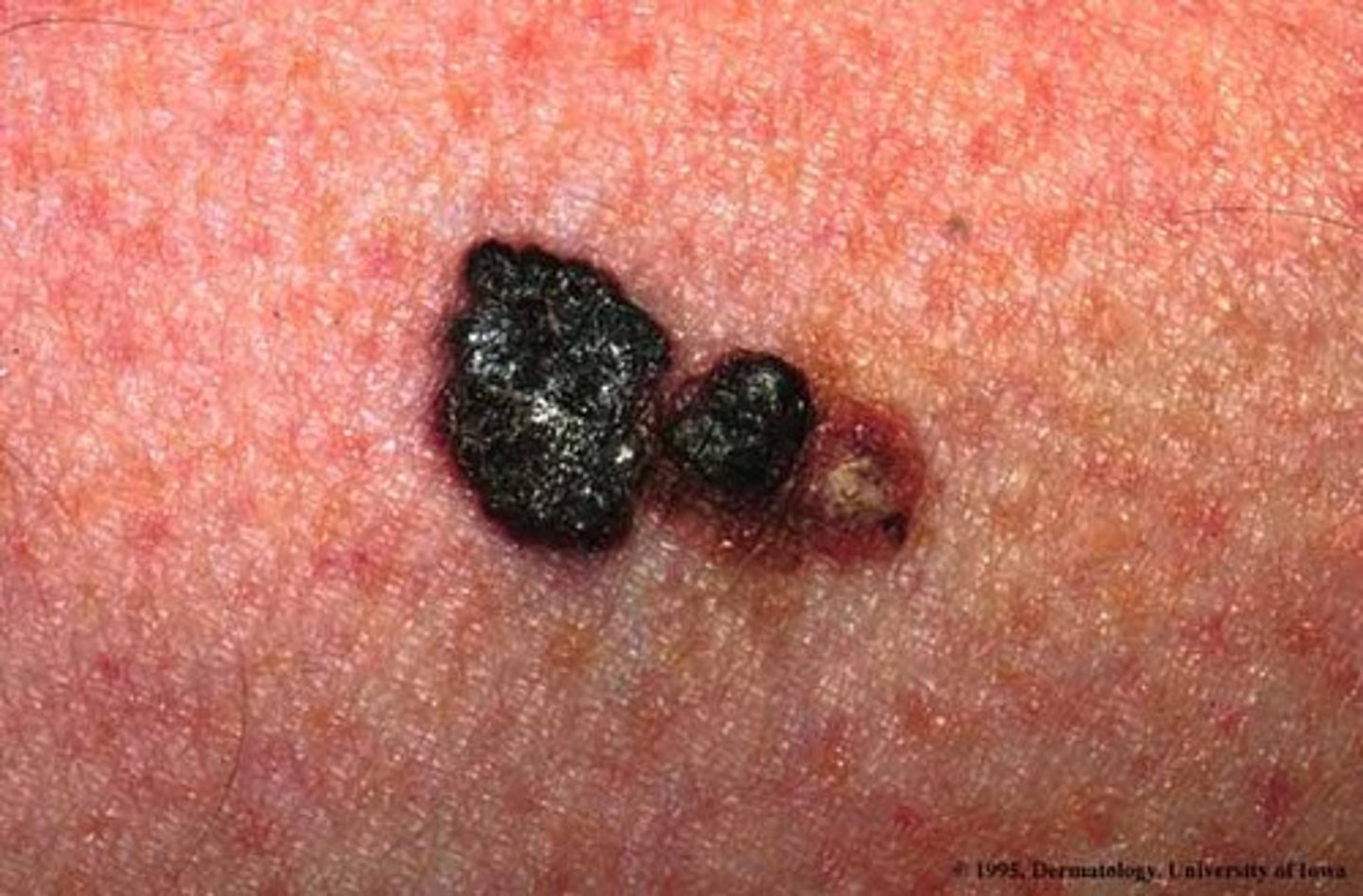
skin inspection: morphology: border raised above means
center of lesion depressed compared to edge (basal cell carcinoma)