Unit 10
 Call Kai
 Learn
Learn Practice Test
 Spaced Repetition
 Match
Match Flashcards
 Knowt Play
1/28

There's no tags or description
Looks like no tags are added yet.
Name | Mastery | Learn | Test | Matching | Spaced | Call with Kai |
|---|
No analytics yet
Send a link to your students to track their progress
29 Terms
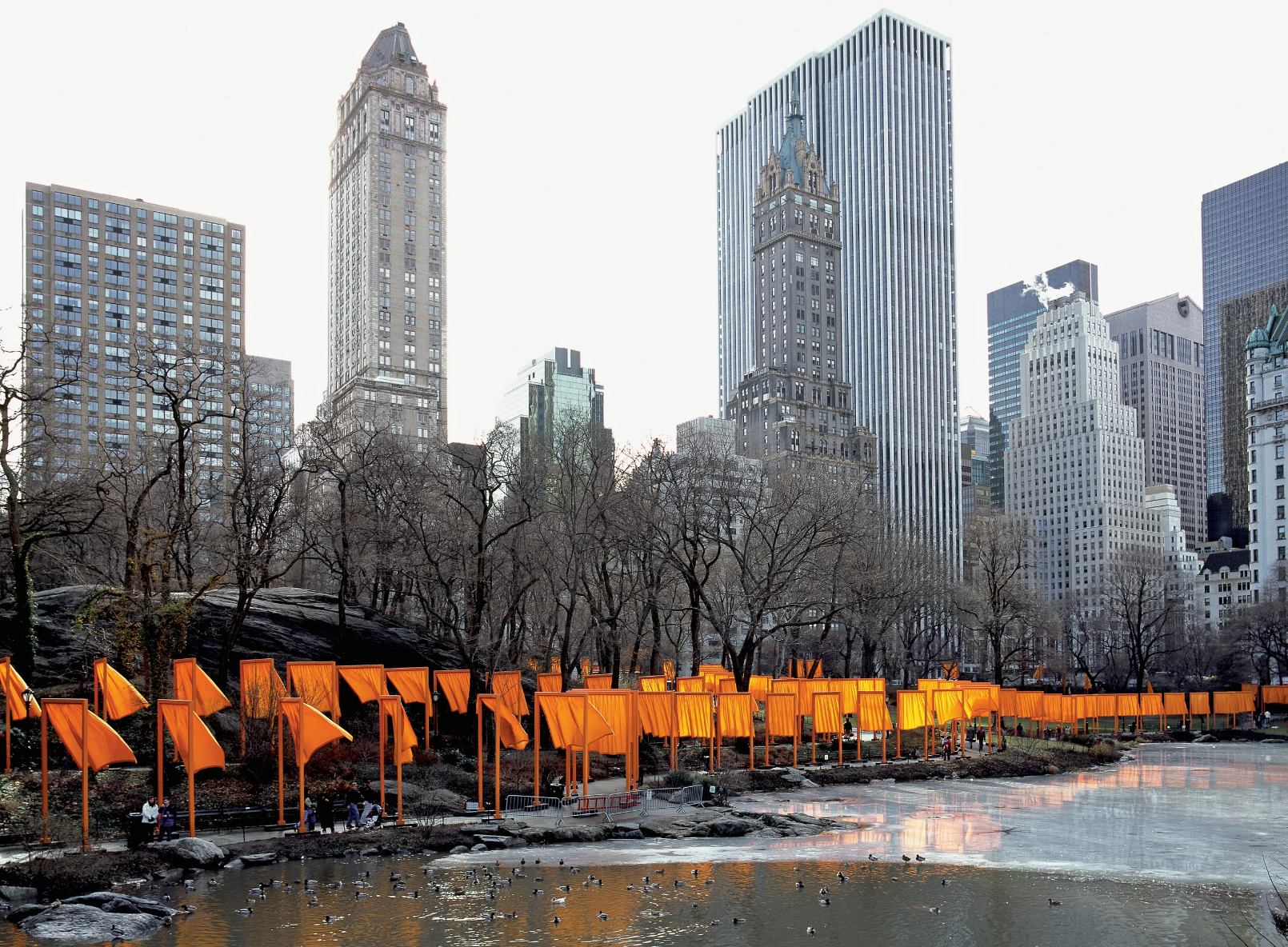
The Gates
Artist: Christo and Jeanne-Claude
Time Period: 1980s
Culture/Style: Contemporary
Medium: Plastic, steel
Content: Contrasts between the orange fabric and the natural environment of the park it was created in.
Form: Line of square shaped orange fabric on panels on a walkway.
Context: Created to challenge the question of what is meaningful art and how art impacts our environment.
Function: Used as a walkway and viewers walk underneath the fabric to view the artwork.
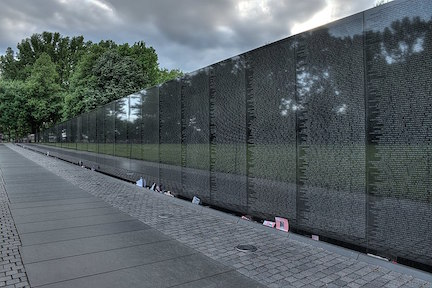
Vietnam Veterans Memorial
Artist: Maya Lin
Time Period: 1980s
Culture/Style: Modernism
Medium: Granite
Content: A memorial for the veterans who died in Vietnam during the war.
Form: Two walls dug into the ground with names of veterans engraved into them.
Context: Created to honor the veterans who died in the war.
Function: Viewers are supposed to walk along the walls into the ground and read the engraved names.
Horn Players
Artist: Jean-Michel Basquiat
Time Period: 1980s
Culture/Style: Contemporary
Medium: Acrylic paint, Oil paint, Canvas
Content: Connection to jazz music and African American culture - similar format to Picasso’s own triptych.
Form: Three panels showing musicians playing jazz instruments + repeated words scattered across the panels.
Context: Shows two famous jazz players - homage to jazz culture - artist began as a graffiti artist before becoming a professional artist.
Function: (idk)
Summer Trees
Artist: Song Su-Nam
Time Period: 1970s
Culture/Style: Contemporary
Medium: Ink, Paper
Content: Similar to many traditional Korean artworks.
Form: Forest of trees painted with black ink. Only in black and white.
Context: Made in times of war and modernism and post-Korean war to preserve Korean identity.
Function: To instill Korean pride and culture into Western culture.
Androgyne III
Artist: Magdalena Abakanowics
Time Period: 1980s
Culture/Style: Modernism
Medium: Canvas, Wood, String
Content: Artwork purposely androgynous to generalize to all humanity rather than lean towards either gender.
Form: Sculpture of the back of a person. They have no arms or legs or indication of gender. Their skin is wrinkled.
Context: Created post WW2.
Function: To remind viewers that pain and suffering is universal and impacts everyone.
Book from the Sky
Artist: Xu Bing
Time Period: 1987
Culture/Style: Contemporary
Medium: Ink, Paper
Content: Chinese characters + culture.
Form: Many books and scrolls containing Chinese characters that are hung up on the ceiling. Many of them are fake and the symbols inside are gibberish and don’t mean anything.
Context: Created during the Cultural Revolution in China where art and individuality was distrusted by the government.
Function: Used to spread awareness of political propaganda in China.
Pink Panther
Artist: Jeff Koons
Time Period: 1980s
Culture/Style: Contemporary, American
Medium: Porcelain sculpture
Content: Femininity, ‘kitsch’ - mass produced imagery designed to please the broadest possible audience with objects of questionable taste.
Form: An unclothed blonde woman holding a pink panther plush.
Context: Made during a time of increased female presence in media, however it was still a very male dominated industry.
Function: Created to challenge and critique the kitsch culture and question where the line is drawn between pleasure and objectification.
Untitled #228
Artist: Cindy Sherman
Time Period: 1990s
Culture/Style: Contemporary
Medium: Paint on canvas
Content: Interpretation of the Biblical story of Judith and Holofernes - symbolizes triumph over tyranny.
Form: Self-portrait of the artist in a red dress. She holds a decapitated head and bloody knife.
Context: Artwork was created as the artist’s own interpretation of the Biblical scene, and to challenge how past interpretations depict Judith as hesitant and unsure rather than decisive and confident.
Function: Exposes to the audience her critique of past art interpretations of the story.
Dancing at the Louvre
Artist: Faith Ringgold
Time Period: 1990s
Culture/Style: Contemporary, African French
Medium: Acrylic paint, canvas, cotton
Content: The inside of the Louvre with famous paintings such as the Mona Lisa; a ‘story quilt’ about character Willa, a young black woman who moved to Paris in the early 20th century.
Form: Two black women and two black girls dancing inside the Louvre.
Context: Created during a time when the art industry was dominated by white male artists. Story quilts are important aspects of African culture, they are associated with women’s domestic work and women would socialize and share stories as they made them.
Function: Created to challenge gender and racial expectations during the time.
Trade
Artist: Jaune Quick-to-See Smith
Time Period: 1990s
Culture/Style: Contemporary, Native American
Medium: Oil Paint, Canvas, Object → Collage
Content: Depicts some of the items that Native Americans received in exchange for trading their land.
Form: Canvas with oil paint of many colors, mostly red which represents anger - outline of canoe on canvas - 'Native-themed' items strung above canvas.
Context: Response to the 500th anniversary of Christopher Columbus and how Native Americans were tricked into trading their land for worthless items they believed were valuable.
Function: Created for the artist to share her personal perspective of the impact of colonization on Native Americans.
Earth’s Creation
Artist: Emily Kame Kngwarreye
Time Period: 1990s
Culture/Style: Contemporary, Aboriginal
Medium: Painting
Content: Inspired by Aboriginal cultural identity.
Form: Canvas of paints of natural colors such as green, blue, yellow, and red.
Context: Artist was inspired by the natural environment and Aboriginal culture she grew up in.
Function: Used to appreciate cultural identity and spread awareness of culture.
Rebellious Silence: Women of Allah series
Artist: Shirin Neshat
Time Period: 1990s
Culture/Style: Contemporary, Islamic
Medium: Ink
Content: Muslim women’s identities and struggle for freedom.
Form: Central figure of a woman in a hijab staring at the viewer. Her face is bisected along the center by a rifle which she is presumably holding.
Context: Created during a period where women in the Middle East and Muslim women in general have their voices and identities silenced, and this period is still going on to this day. The artist was also influenced by her experience growing up and escaping from the Islamic Revolution.
Function: Used to challenge the conservative policies and culture against women in Iran.
No Crying Allowed in the Barbershop
Artist: Pepon Osorio
Time Period: 1990s
Culture/Style: Contemporary, Latino
Medium: Installation
Content: Latino culture.
Form: Barbershop room with 'masculine' items scattered around.
Context: In Latino culture there is a high expectation for males to be ‘masculine.’
Function: Created to challenge the idea of ‘machismo’ in Latino communities.
Corned Beef 2000
Artist: Michel Tuffery
Time Period: 1990s
Culture/Style: Contemporary, Polynesian
Medium: Sculpture of flattened cans of beef
Content: How highly processed food was introduced to the islands.
Form: Flattened yellow cans shaped in a sculpture of a cow.
Context: Created during a time of food insecurity in the Pacific Islands which still continues to impact them today. This is further impacted by the use of highly processed foods on these islands, making it so that the food on these islands lacks nutrients for the people.
Function: Used to spread awareness of food insecurity in the Pacific Islands.
Electronic Superhighway: Continental U.S., Alaska, Hawaii
Artist: Nam June Paik
Time Period: 1990s
Culture/Style: Contemporary, American
Medium: Wood, steel, neon lights, TVs
Content: Created during a time when technology was beginning to advance.
Form: Neon lights in the shape of the United States. Inside each state are TVs.
Context: Artist created this piece to reflect on how we interact with technology and to question how we will continue to use it as it continues to advance - also shows how technology connects us across distances.
Function: Used to make the viewers wonder how far technology will continue to grow.
The Crossing
Artist: Bill Viola
Time Period: 1990s
Culture/Style: Contemporary, American
Medium: Film Installation
Content: Religious symbolism from many different religions.
Form: Two videos of a male figure walking towards the camera. On each screen, there is a different scene, such as his body being on fire or soaked with water. The videos are in slow motion.
Context: —
Function: Used to convey ‘self-annihilation and self-destruction.’
Guggenheim Bilbao
Artist: Frank Gehry
Time Period: 1990s
Culture/Style: Modernism, Deconstructivism
Medium: Limestone, Glass, Steel
Content: -
Form: The design of a museum - reflective, curving walls with multiple levels.
Context: Created in the artist’s own style known as Deconstructivism, with fragmented forms and asymmetry.
Function: Functions as a museum.
Pure Land
Artist: Mariko Mori
Time Period: 1990s
Culture/Style: Contemporary, Japanese, Buddhism
Medium: Photograph set within glass.
Content: Lotus represents rebirth - salt represents purity - ‘stupa’ is a Buddhist burial mound.
Form: Golden landscape with large lake + sunset sky - woman floating above a lotus blossom, surrounded by 6 aliens.
Context: Created to be displayed alongside her other artwork Nirvana, which is a multisensory video that plays sounds and blows scents at the audience.
Function: Used to convey the idea of ‘oneness’ and that everyone can achieve enlightenment.
Lying with the Wolf
Artist: Kiki Smith
Time Period: 2000s
Culture/Style: Contemporary
Medium: Ink, graphite, paper
Content: Relationship between humans and animals.
Form: Drawing of a woman laying down with a wolf.
Context: Created to challenge how in literature, women are typically depicted as ‘prey’ to animals who are ‘predators.’
Function: Used to depict a companionship between women and animals.
Darkytown Rebellion
Artist: Kara Walker
Time Period: 2000s
Culture/Style: Contemporary, North America
Medium: Paper
Content: Depict the violence of rebellion.
Form: Wall with cutouts of people and a projection of bright colors - depicts a rebellion - figures purposely lack detail in limbs to emphasize violence.
Context: Does not resemble any real-life historical rebellions - however, it asks the question whether this violence remains in the past or if it is still relevant today.
Function: Makes the viewer wonder how much violence still applies in our current world.
The Swing (After Fragonard)
Artist: Yinka Shonibare
Time Period: 2000s
Culture/Style: Contemporary, European, African
Medium: Cotton, rope, wood
Content: Recreation of The Swing painting, headless → represents the guillotine, wears African-Dutch fabrics.
Form: Mannequin on swing mid-flight - one slipper is kicked off - mannequin is headless.
Context: Artist influenced by his own British-Nigerian heritage - how the Europeans exploited and took advantage of African colonies.
Function: Used to call attention to the darker moments from Western history.
Old Man’s Cloth
Artist: El Anatsui
Time Period: 2003
Culture/Style: Contemporary
Medium: Copper, Aluminum
Content: Trade history.
Form: Metal wires and bottle caps arranged into a quilted tapestry.
Context: Artist inspired by Africa’s history and culture.
Function: Signifies trade history between Africa and Europe.
Stadia II
Artist: Julie Mehretu
Time Period: 2004
Culture/Style: Contemporary, American
Medium: Ink, Acrylic paint, Canvas
Content: Nationalism - stadiums are a center of American culture for games, protests, events, etc.
Form: Abstract art in the form of a stadium.
Context: Created to reflect the use of stadiums in American culture.
Function: Used to represent stadiums in American culture.
Preying Mantra
Artist: Wangechi Mutu
Time Period: 2000s
Culture/Style: Contemporary
Medium: Mixed media, plastic
Content: Snake - symbolizes the story of Adam and Eve in the Bible; mantis - preying insect.
Form: Female body in purposely intimate position on a tree branch with a snake.
Context: Reference to how African women have been oversexualized throughout history.
Function: Used to challenge racist stereotypes of African women and gender views.
Shibboleth
Artist: Doris Salcedo
Time Period: 2000s
Culture/Style: Contemporary, European
Medium: Concrete
Content: Shibboleth - Biblical story when the Ephramites attempted to flee from the Gileadites - represents division and oppression.
Form: Concrete hall with large crack on the floor.
Context: Created as an act of cultural rebellion - to call out how immigrants are oppressed and discriminated against.
Function: Used to symbolize oppression and division.
MAXXI National Museum of XXI Century Arts
Artist: Zaha Hadid
Time Period: 1990s
Culture/Style: Contemporary, Italian
Medium: Concrete, Glass
Content: Literally idk.
Form: Concrete museum with metallic columns.
Context: To be a museum.
Function: A museum.
Jui Hua Zi (Sunflower Seeds)
Artist: Ai Weiwei
Time Period: 2010
Culture/Style: Contemporary, Chinese
Medium: Porcelain
Content: Inspired by the artist’s own personal life of memories of sharing sunflower seeds with friends in China in order to eat.
Form: 100,000,000 porcelain sunflower seeds.
Context: Created for the artist to portray his life and struggles growing up in China under the rule of Mao Zedong.
Function: Used as a symbol to advocate for human rights.
The Gates
Vietnam Veterens Memorial