AP Bio unit 6
 Call Kai
 Learn
Learn Practice Test
 Spaced Repetition
 Match
Match Flashcards
 Knowt Play
1/121

There's no tags or description
Looks like no tags are added yet.
Name | Mastery | Learn | Test | Matching | Spaced | Call with Kai |
|---|
No analytics yet
Send a link to your students to track their progress
122 Terms
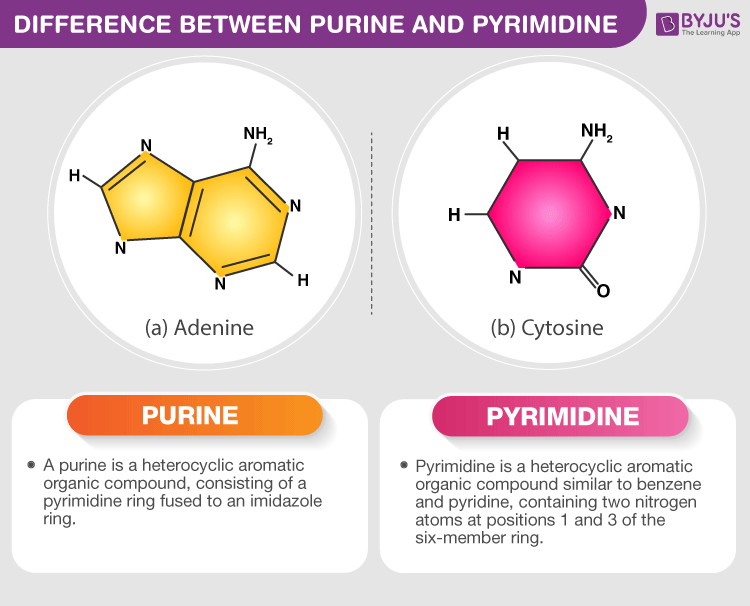
Differentiate between purines and pyrimidines
Purines (Adenine, Guanine) are larger, consisting of a two ring structure, while pyrimidines (Cytosine, Thymine and Uracil) are smaller with a single-ring structure
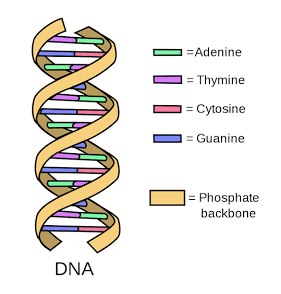
What is the backbone of DNA composed of?
Sugar-phosphate backbone containing deoxyribose sugar and a phosphate group.
What is the center of DNA composed of?
nitrogen bases held together by hydrogen bonds
What does it mean that DNA strands are anti-parallel?
The two strands of the double helix run in opposite directions
If one DNA strand reads 3’- ACTAG -5” what would the complimentary strand read?
5’- TGATC-3’
What functional group defines the 5’ end of DNA?
Phosphate group
What functional group defines the 3’ end of DNA?
Hydroxyl group (-OH)
Prokaryotic DNA
single circular chromosome, free in cytoplasm, no introns, simultaneous transcription/ translation
Eukaryotic DNA
Multiple linear chromosomes, enclosed in a nucleus, DNA wrapped around histones
The DNA from a certain plant species is analyzed. The DNA contains 22% thymine. Determine the percent of the other bases.
22% adenine, 28% guanine, 28% cytosine
Is DNA positively or negatively charged? How could you tell just by looking at a strand of DNA?
Negative, you can tell by looking at it because of the repeating sugar-phosphate backbone, where each phosphate group contains oxygen atoms carrying a negative charge
True or false: plasmids replicate separately from chromosomal DNA
True
3 differences between DNA and RNA
DNA is double stranded while RNA is single stranded; DNA is deoxyribose while RNA is ribose, DNA uses TA pair while RNA uses UA pair.
Describe the Meselson and Stahl experiment that supported the semi-conservative model of DNA replication.
Meselson and Stahl demonstrated semi-conservative replication by growing E. coli in heavy nitrogen (N), switching them to light nitrogen (N), and using equilibrium density gradient centrifugation to show that the resulting DNA molecules contained one original heavy strand and one newly synthesized light strand
In which stage of the cell cycle does DNA replicate?
S phase of interphase
Describe step-by-step how DNA is replicated.
DNA replication begins as helicase unwinds the double helix and primase lays down RNA primers, allowing DNA polymerase to continuously synthesize the leading strand and discontinuously build the lagging strand via Okazaki fragments before DNA ligase seals the segments into a complete, proofread copy.
If an error occurs in DNA replication how is it fixed?
DNA replication errors are primarily corrected by DNA polymerase proofreading as they occur, followed by mismatch repair proteins that scan the new strand for missed mistakes, and excision repair pathways that replace segments of damaged or incorrect nucleotides to maintain genetic integrity
Identify the major classes of macromolecules and then identify their monomers and polymers
Carbohydrates: Monomer: Monosaccharides, Polymer: Polysaccharides; Proteins: Monomer: Amino acids, Polymers: Polypeptides or proteins; Nucleic Acids: Monomers: Nucleotides, Polymers: DNA; Lipids: Monomers: Fatty acids Polymers: Triglycerides
Fill in the blanks: The process of _____ converts DNA to RNA. The process of _____ turns RNA into proteins.
transcription; translation
In eukarytoic cells, where does transcription occur?
the nucleus
True or False: the genetic code is read in groups of two nucleotides at a time called the doublet code
false
True or False: only the template strand of DNA is transcribed during transcription
true
Fill in the blank: the mRNA nucleotide triplets are called ____. These code for _____.
codons, amino acids
Why is redundancy in genetic code important?
It acts as a safety net against mutations
List and describe the steps of transcription.
Transcription involves initiation, where RNA polymerase binds to a promoter; elongation, where the RNA strand is built; and termination, where the completed RNA molecule is released.
What is a promoter region? Are promoter regions upstream or downstream of the gene?
A promoter region is a specific DNA sequence located upstream of a gene that serves as the "start signal" where RNA polymerase binds to initiate transcription.
What would be the immediate affect to transcription if a cell was exposed to a drug that mutated the promoter region?
If the promoter region is mutated, RNA polymerase may be unable to bind to the DNA, which would effectively block or significantly decrease the transcription of that gene
Describe the consequences of a chemical that prevents the 5’ cap and poly-A tail from forming on eukaryotic mRNA?
Without the 5’ cap and poly-A tail, the mRNA will be degraded by enzymes, fail to export from the nucleus, and cannot be properly recognized by ribosomes for translation
Why do introns exist if they are just spliced out of the mRNA during pre- mRNA modifications?
Introns allow for alternative splicing, which enables a single gene to produce multiple different proteins, and act as buffers that facilitate the evolution of new protein functions.
Fill in the blank: tRNA has an ____ region which is complimentary and antiparallel to ______.
anticodon, the mRNA codon
Where does translation occur?
ribosomes
The very first tRNA will enter at which site on the ribosome (A,P or E)?
P site
Which amino acid does the very first tRNA carry?
methionine
What is the codon that the very first tRNA bind to?
AUG codon
Fill in the blanks: protein synthesis occurs in two stages ___ and ____.
transcription, translation
What is the purpose of translation
to read the instructions on an mRNA molecule to build a specific chain of amino acids, which then folds into a functional protein
When does translation stop?
Translation stops at the stop codon (UAA, UAG, or UGA)
Trace the path of a newly produced polypeptide that will leave the cell
The polypeptide is built at the Rough ER, travels in a vesicle to the Golgi apparatus for packaging, and is finally carried to the plasma membrane to be released outside the cell
How does transcription and translation differ between prokaryotes and eukaryotes
In prokaryotes, transcription and translation happen simultaneously in the cytoplasm because there is no nucleus, whereas in eukaryotes, transcription occurs in the nucleus and translation occurs later in the cytoplasm after the mRNA is processed
What are the three parts of an operon
the promoter, the operator, and the structural genes.
Differentiate between a repressible and inducible operon
A repressible operon is usually "on" but can be turned off when a specific molecule is abundant, while an inducible operon is usually "off" but is turned on when a specific molecule is present
origins of replication
Origins of replication are specific DNA sequences where helicase unzips the double helix to create a replication bubble, allowing DNA synthesis to proceed in both directions.
replication fork
he Y-shaped region at each end of a replication bubble where the DNA double helix is being actively unzipped by helicase and new strands are being synthesized.
Helicase
the enzyme that "unzips" the DNA double helix at the replication fork by breaking the hydrogen bonds between nitrogenous bases.
Topoisomerase
the enzyme that travels ahead of the replication fork to relax the supercoiling and tension caused by the unzipping of the DNA strands
Primase
the enzyme that builds a short RNA primer to provide a starting point for DNA polymerase to begin synthesis
Primers
Primers are short RNA sequences that provide a starting point for DNA polymerase to begin building a new DNA strand
DNA Polymerase III
primary enzyme that builds the new DNA strand by adding nucleotides to the 3' end of the primer in the 5' to 3' direction
DNA Polymerase I
the enzyme that removes the RNA primers and replaces them with DNA nucleotides to complete the new DNA strand
Leading strand
the new DNA segment that is synthesized continuously in the 5' to 3' direction as it follows the replication fork.
Lagging strand
the new DNA segment synthesized discontinuously in small segments called Okazaki fragments because it must be built in the direction opposite to the unwinding replication fork
Okazaki Fragments
short, separate pieces of DNA built on the lagging strand that must be joined together later to create one continuous strand
DNA ligase
the enzyme that acts like "glue" by sealing the gaps between DNA fragments, such as Okazaki fragments, to create one continuous strand
Telomeres
repetitive, non-coding DNA sequences at the ends of linear chromosomes that act as protective caps to prevent the loss of important genetic information during replication
telomerase
an enzyme that adds repetitive DNA sequences to the ends of chromosomes to restore telomeres that shorten every time a cell divides
Nuclease
an enzyme that cuts out damaged or mismatched sections of DNA so they can be replaced with the correct sequences
Mismatch repair
a process where specialized enzymes follow behind DNA polymerase to identify, snip out, and fix incorrectly paired nucleotides that were missed during initial proofreading
5’ Cap
a modified guanine nucleotide added to the front of a new mRNA molecule to protect it from breaking down and to help the ribosome find it for translation
Poly- A tail
a long chain of adenine nucleotides added to the 3' end of an mRNA molecule to protect it from degradation and help it exit the nucleus
Reading Frame
the specific way a cell divides a sequence of nucleotides into non-overlapping triplets (codons) to ensure the correct protein is built
Alternative Splicing
a process where different combinations of exons from the same gene are joined together, allowing a single gene to produce multiple distinct proteins
RNA Splicing
the process where "junk" sequences called introns are cut out of a newly made mRNA molecule and the remaining "good" parts, called exons, are pasted together to make a finished message
Operon
is a cluster of related genes in bacteria that are controlled together by a single "on/off switch," allowing the cell to efficiently turn an entire metabolic pathway on or off at once
Promoter
is a specific DNA sequence located at the start of a gene that acts as a "landing pad" for RNA polymerase to attach and begin transcription
Operator
is a segment of DNA within an operon that acts as the "on/off switch" by controlling whether RNA polymerase can attach to the promoter and begin transcription
Inducible
a system that is usually turned "off" but can be stimulated or "induced" to turn "on" when a specific molecule is present
Cytoplasmic determinants
maternal substances (like proteins or RNA) unevenly distributed in an unfertilized egg that influence the early course of development by telling new cells what to become after the egg divides
Allosteric inhibitor
a molecule that binds to a special spot on an enzyme (not the active site), changing its shape so it can no longer do its job
Regulatory gene
regulatory gene is a gene that codes for a protein, such as a repressor or activator, that controls the expression of one or more other genes by increasing or decreasing their rate of transcription
Allosteric Activator
allosteric activator is a molecule that binds to an enzyme at a site other than the active site, changing the enzyme's shape to make it work better or faster.
Control elements
segments of non-coding DNA, such as enhancers or proximal elements, that serve as binding sites for transcription factors to regulate the initiation of gene expression
Histone acetylation
a process where acetyl groups are attached to the "tails" of histone proteins, which loosens the DNA's structure and makes it easier for the cell to read and use the genes
DNA methylation
a process where small chemical "tags" called methyl groups are added to DNA, which usually turns genes off by packing them tightly so they cannot be read
Epigenetic inheritance
the passing of traits to the next generation through chemical "tags" on DNA—like methylation—rather than changes to the actual DNA sequence itself
Differentiation
the process by which a generic "stem cell" changes into a specific type of cell, like a muscle, nerve, or skin cell, by turning certain genes on and others off
Morphogenesis
the biological process that causes an organism to develop its shape by organizing cells into specific structures like limbs, organs, and tissues
Repressible
a system that is usually "on" but can be turned "off" when a specific molecule is present in high amounts.
Induction
a process where one group of cells sends chemical signals to neighboring cells, "inducing" or telling them to change into a specific type of tissue or organ
Homeotic genes
master regulatory genes that act like a blueprint to determine the basic body plan and where specific body parts, like legs or wings, will grow.
Pattern formation
the developmental process by which cells organized into specific structures and tissues in their correct locations based on a coordinate system of chemical signals
The trp operon is repressible or inducible
repressible
If a bacterial cell uses up its tryptophan storage, what would happen to the trp operon?
the trp operon would begin producing more
If a bacterial cell does not need tryptophan and it builds up inside of the cell, what would happen to the trp operon?
the trp operon would turn off
the lac operon is repressible or inducible
inducible
If a bacterial cell is grown in a nutrient rich, lactose free medium, what would you expect to see at the lac operon?
The lac would be off
Describe how it is possible for only one identical twin to express an inherited disease
epigenetic changes, like DNA methylation, can turn a gene "off" in one twin while leaving it "on" in the other, even though their DNA sequences are exactly the same
After fertilization, a zygote forms. The cells then go through mitosis. Explain how this bundle of cells eventually forms a human with specialized cells.
This bundle of cells forms a human through differential gene expression, where cells receive different chemical signals—like cytoplasmic determinants and induction—that tell them to turn specific genes on or off to become specialized
Differentiate between histone acetylation and DNA methylation
Histone acetylation loosens DNA to turn genes on, while DNA methylation packs DNA tightly to turn genes off
microRNAs and siRNAs block transcription or translation
translation
True or false: Morphogenesis is the process that gives an organism its shape
True
Provide an example that illustrates the importance of apoptosis in reference to embryonic development
the removal of webbing between fingers and toes
Nondisjunction
a mistake that happens during cell division when chromosomes fail to separate properly, resulting in daughter cells with too many or too few chromosomes.
Translocation
Translocation is a type of chromosomal mutation where a segment of one chromosome breaks off and attaches to a completely different, non-homologous chromosome
Inversion
a chromosomal mutation that occurs when a segment of DNA breaks off, flips upside down, and reattaches to the same chromosome in the reverse order
Deletion
is a chromosomal mutation where a segment of DNA is lost or removed from the chromosome during replication
Horizontal gene transfer
the sharing of genetic material between organisms in a way other than from parent to offspring ex: antibiotic resistance
Transformation
Transformation is the process where a bacterium takes up pieces of foreign DNA from its surrounding environment and incorporates them into its own genome
Conjugation
the process where two bacteria temporarily join together to directly transfer a copy of genetic material (usually a plasmid) from one to the other.
Transposition
Transposition is a process where a specific segment of DNA, known as a "jumping gene" or transposon, moves from one location in the genome to another.
Point mutation
a genetic change where a single nucleotide base (one "letter" in the DNA code) is swapped, added, or deleted at a specific location.