Taxonomy/Bacteria
 Call Kai
 Learn
Learn Practice Test
 Spaced Repetition
 Match
Match Flashcards
 Knowt Play
1/122

There's no tags or description
Looks like no tags are added yet.
Name | Mastery | Learn | Test | Matching | Spaced | Call with Kai |
|---|
No analytics yet
Send a link to your students to track their progress
123 Terms
give me the flow for taxonomy
Dear- domain
king- kingdom
phillip- phylum
came- class
over- order
for- family
great-genus
soup- species
when writing animals names should be ____, when typing they should be ___
writing- underlined
typing- italicized
Biological Taxonomy
Classifications follow a specific hierarchy that gets increasingly refined as you work down the ranks
Species
group of organisms that are able to reproduce and produce viable offspring
give me the domains
bacteria, archaea, and eukarya
prokaryote domain
bacteria and archaea
eukaryote domain
eukarya- includes all other eukaryotic organisms
how should a species be named
genus and then species
what kingdom were prokaryotes once grouped into?
monera
monera
referring to single celled
give me 3 characteristics of prokaryotic cells
dna is circular
no membrane bound nucleus or organelles
domain archaea
Very old group of organisms that inhabit the more extreme environments => extremophiles
organisms that fall into the domain archaea have no _____ in cell walls
peptidoglycan
archaea have unique
lipid construction in the plasma membrane
archaea actually may be more closely related to ____ than some ______
eukaryotes than some prokaryotes
some archaea contain introns… what are these
non-coding parts of a gene - the parts that are not accessible/not readble
domain archaea are broken up into what three classifications
Methanogens
Halophiles
Thermoacidophiles
where do Methanogens live and what they known as?
live below the mire (mud) in swamps
known as the methane makers
Methanogens reduce _____ to ______ which is known as what
co2 to methane- which is known as swamp gas
Methanogens are poisoned by what?
what does this make them?
oxygen
makes them obligate anaerobe because they have to stay in oxygen free environments
where do Halophiles live?
in very salty place (15-20%)
the color in Halophiles is due to the presence of a pigment called/
bacteriorhodopsin
Halophiles use the simplest form of _______
photophosphorylation
what light do Halophiles use ?
carotenoids (yellow, orange, and red)
why do we not call Halophiles photosynthetic organisms ?
because they use light with carotenoids and not chlorophyll
what are some geographical places that Halophiles can be found?
in the great salt lake or dead sea
where do Thermoacidophiles live?
live in areas with a pH of 2 and below and temps above 60°C
what are some geographical places that Thermoacidophiles can be found?
areas such as deep sea vents or hot sulfur springs
Thermoacidophiles cannot live in above
2 pH
give me an example of Thermoacidophiles
Picrophilus- grows at 0.7 pH and can tolerate 0.0 pH; will disintegrate at 4.0 pH
gram + bacteria
lot of peptidoglycan in cell wall; stains violet
gram - bacteria
very little peptidoglycan in wall; stains red/pink
domain bacteria have _____ that are different from eukaryotic cells
ribosomes
how does bacteria divide since it doesn’t have mitosis or meiosis
through binary fusion
bacteria has what two things ?
chemotaxis and phototaxis
where is the extra chromosomal DNA found in bacteria?
in plasmids
some bacteria can form _____
what are these?
endospores
cells able to withstand harsh environmental conditions
the pilli on bacteria is for
attachment or conjugation
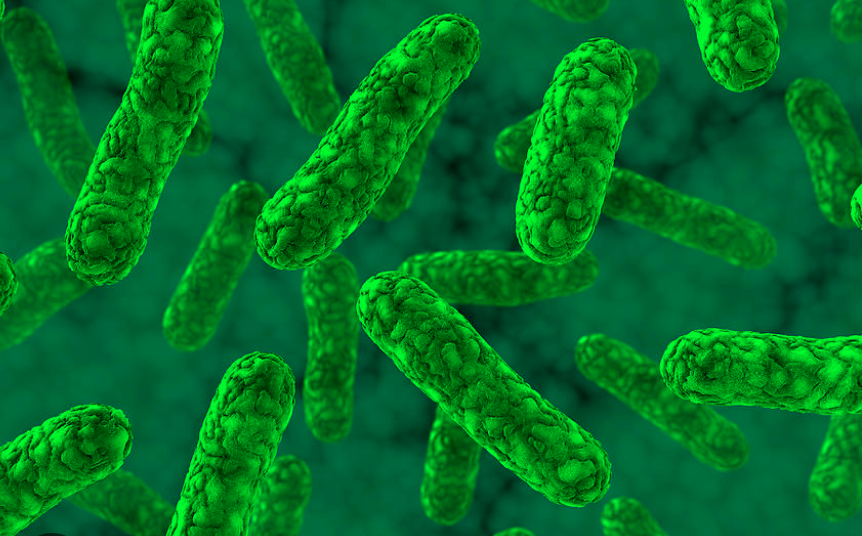
rod
bacilli
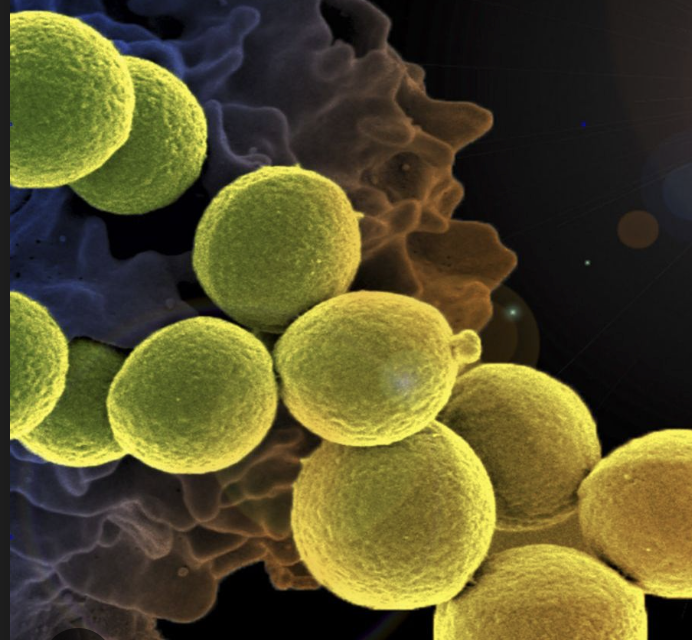
sphere
cocci
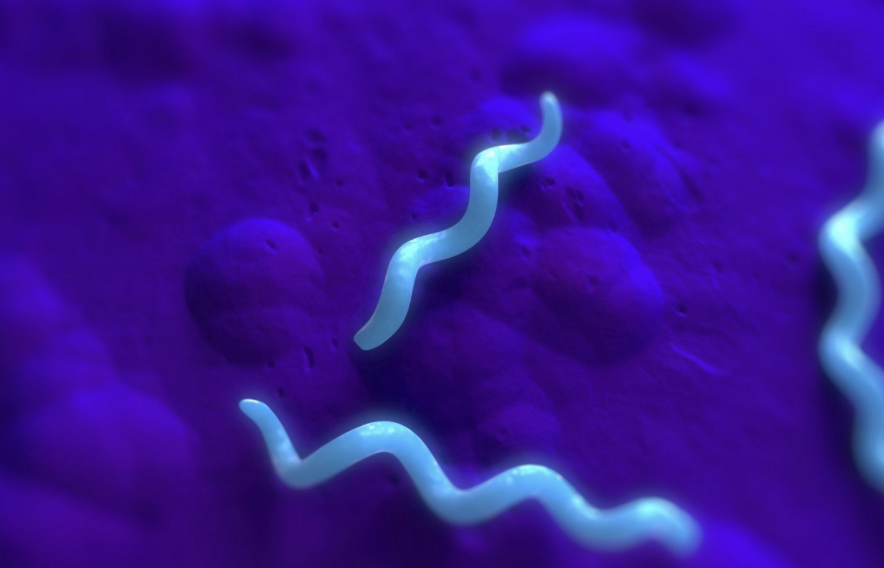
spiral
spirilla
flagella
rotary motors of bacteria
composed of flagellin (protein)
chemotaxis
movement in response to a chemical gradients (+ or -)
phototaxis
movement in response to light (+ vs. -)
a gram - bacteria such as E.coli’s outer membrane…
makes it resistant to antibiotics such as penicillin
give me the three arrangments of bacteria
diplo
strepto
staphylo
diplo
paired
strepto
chained
staphylo
clusters
because bacteria reproduces through binary fusion, what else does this mean?
that they will clone
mitosis
process eukaryotes use to divide nuclear DNA during cell division –used to replace old cells and grow larger
how does bacteria obtain genetic variation?
through horizontal gene transfer- genetic recombination with the help of plasmids
what are the three types of horizontal gene transfer
Conjugation
Transformation
Transduction
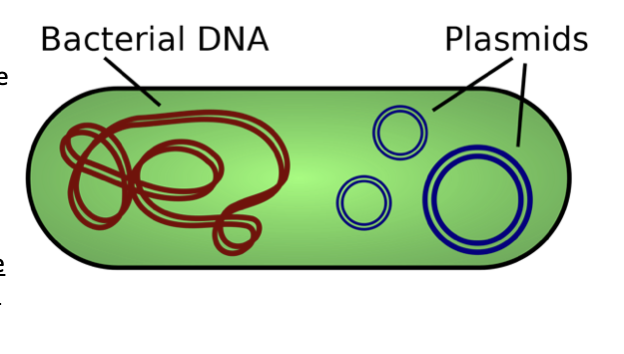
plasmids
Self replicating circular chromosomes not associated with the bacteria's normal chromosome `
conjugation
Transfer of DNA between two bacterial cells which are temporarily joined- dna is transferred through tube (pilus)
transformation
Process of taking in DNA from the external environment- which is usually dna that has been shed by other bacteria
transduction
Transfer of DNA between prokaryotes by viruses
Bacteriophages
viruses that infect bacteria
Bacteriophages commandeer a cell’s resources
to make more bacteriophages
sometimes chunks of _______ get caught inside the new bacteriophage
host cell dna
what happens when one of the “defective” bacteriophages infects a cell?
it transfers the dna
nutrition in bacteria is defined
in regard to energy source and carbon source
energy source for the chart
photoautotrophs- light
chemoautotroph- inorganics
photoheterotrophs- light
chemoheterotroph- organic compounds
carbon source for chart
photoautotrophs- co2
chemoautotroph- co2
photoheterotrophs- organic compounds
chemoheterotroph- organic compounds
majority of bacteria are _____, which includes what two types of species?
chemoheterotrophs
includes saprobes and parasites
saprobes
feed on dead organisms
parasites
feed on living host
most bacteria are _____ and what is this?
Obligate aerobes
requires oxygen (most bacteria are this
Facultative anaerobe
can grow with or without oxygen; usually grows faster with it
Obligate anaerobe
poisoned by oxygen; must have oxygen free (anoxic) environment
symbiosis
An ecological relationship between different species which are in direct contact with each other
species a for symbiosis chart
mutualism- (+)
commensalism- (-)
parasitism- (+)
ammensalism- (0)
species b for symbiosis chart
mutualism- (+)
commensalism- (0)
parasitism- (-)
ammensalism- (-)
notes for symbiosis chart
mutualism- both benefit
commensalism- a benefits, b is neither harmed nor gets benefits
parasitism- a benefits, b is harmed
ammensalism- a does not benefit nor gets harmed, b is harmed
give me the 5 kingdoms of domain bacteria
kingdom…
proteobacteria
chlamydia
spirochetes
gram + bacteria
cyanobacteria
give me the subgroups of kingdom proteobacteria
alpha
beta
gamma
delta
epsilon
many species that are in the subgroup alpha proteobacteria are _____ with what?
symbiotic (in relationship) with plants
what kind of relationship are the species in alpha proteobacteria in with plants?
mutualism
beta proteobacteria are _______
nutritionally diverse
beta proteobacteria oxidizes what? this makes them known as what?
ammonia to nitrites
makes them known as nitrogen recyclers
what kind of relationship does beta proteobacteria have?
mutualism
what bacteria causes gonorrhea
beta proteobacteria / Neisserria gonorrhoeae (give her both)
gamma proteobacteria oxidizes
hydrogen sulfide to sulfur
delta proteobacteria is known as
slime producing myxobacteria
what is the name of the bacteria that consumes other bacteria in delta proteobacteria
Bdellovibrios
epsilon proteobacteria
pathogens to humans and various animals
h. pylori (give her this answer)- epsilon proteobacteria
stomach ulcers
Camphylobactor- epsilon proteobacteria
Blood Poisoning and Intestinal inflammation
kingdom chlamydia survives only in
animal cells
what makes chlamydia a parasite
because it steals ATP from inside animal cells
chlamydia is gram (-) or (+)
gram -
true or false: chlamydia’s cell wall has peptidoglycan
false
Chlydia trachomatis- chlamydia
most common STI
Causes blindness and non-gonococcal urethritis
which kingdom causes blindness?
chlamydia
kingdom spirochetes
Uses flagella to “spiral” through an environment
what disease is caused by t. pallidum in spirochetes?
syphilis
Borrelia burgdorferi- spirochetes
lyme disease
kingdom cyanobacteria use …
photosystem 1 and 2 and contains chlorophyll a
true or false: cyanobacteria has chloroplasts and membrane bound organelles
false
cyanobacteria is ____
chlorophyll is found
photosynthetic
chlorophyll is found in thylakoid membranes