alkene and alkyne reactions
 Call Kai
 Learn
 Practice Test
 Spaced Repetition
 Match
 Flashcards
 Knowt Play
1/12

Earn XP
Description and Tags
13 Terms
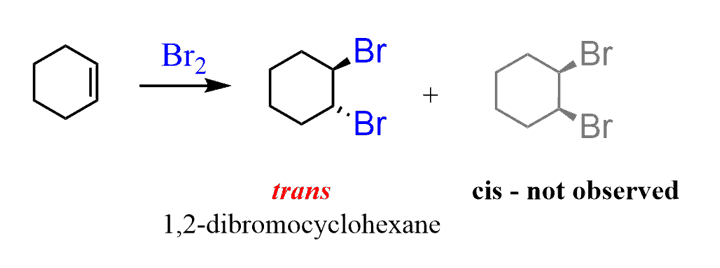
halogenation: X
alkene
Cl2 or Br2
anti addition
alkyne
excess Cl2 or Br2
trans (major), cis (minor) alkene
halohydrin
(halo: X, hydrin: H2O)
reagents
Br2/H2O
Br2/EtNH2 (technically haloamine, NHEt)
alkene
OH markovnikov with halide

hydrohalogenation
(hydro: H, halogenation: X)
rearrangement can occur
reagents, HX
HCl
HBr
HI
alkene
markovnikov X: HX
antimarkovnikov X: HX/ROOR (peroxide)
alkyne
HX (one equivalent addition)
forms a double bond with one X markovnikov
xs HX (2 equivalent additions)
forms an alkane with two Xs markovnikov (geminal halide)

alkylation
(alkyl: alkyne)
the elongation of alkynes
reagent: NaNH2/RX (usually I)

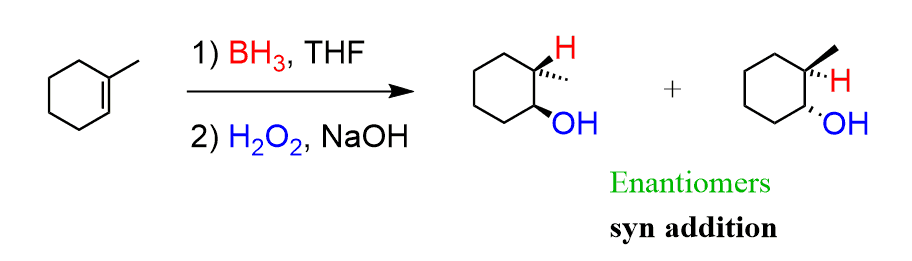
hydroboration oxidation
(hydro: H, boration: Br, oxidation: O addition)
alkene
reagents: BH3•THF/H2O2
adds OH antimarkovnikov
OH/H syn addition
alkyne
terminal alkyne: aldehyde, internal alkyne: ketone
adds O antimarkovnikov
reagents:
Disiamylborane/H2O2, NaOH
9-BBN/H2O2, NaOH
R2BH/H2O2, NaOH
acid catalyzed hydration
(acid-catalyzed: H2SO4/acid, hydration: H2O)
reagents
H2O/[H+]
dilute/H2SO4
H3O+ (always use this)
alkene
adds OH markovnikov to alkane
rearrangement occurs

oxymercuration oxidation
alkene
reagent: Hg(OAc)2, H2O/NaBH4
adds OH markovnikov to alkane
no rearrangements
alkyne
reagent: H2SO4, H2O/HgSO4
adds OH markovnikov to alkene
an enol tautomerizes into a ketone
nonsymmetrical product yields mixture, symmetrical product yields the same product

Ozonolysis
(oxidative cleavage)
reagent: O3/H2O
alkenes
double bonds are cut in half to form ketones or aldehydes
alkynes
internal alkyne: 2 carboxylic acids, terminal alkyne: carboxylic acid and carbon dioxide

catalytic hydrogenation
(catalytic: Pt, Pd, Ni, hydrogenation: H2)
reduces alkenes/alkynes
makes a mixture of products if chiral center forms
alkyne
reagents:
to cis alkene: H2/Lindlar’s Catalyst or H2/Ni2B
to trans alkene: Na/NH3(l)

anti-dihydroxylation
(anti: anti addition, dihydroxyl: two OH groups)
formation of an epoxide to diol
adds OH and OH anti
reagents
RCO3H/H3O+
CH3CO3H/H3O+
m-CPBA/H3O+

syn-dihydroxylation
(syn: syn addition, dihydroxyl: two OH groups)
adds OH and OH syn
reagents
OsO4/NaHSO3/H2O
KMnO4, NaOH/cold

Tosylation
(Tosyl: TsCl)
reagents: TsCl/Pyr
converts OH to OTs so its a good leaving group in a substitution/elimination reaction

preparation of alkynes
alkanes to alkynes
used with dihalides next to each other or on the same carbon
reagents: xs NaNH2,NH3 / H2O
