Edexcel A level chemistry Topic 18: Organic Chemistry III
 Call Kai
 Learn
Learn Practice Test
 Spaced Repetition
 Match
Match Flashcards
 Knowt Play
1/69

There's no tags or description
Looks like no tags are added yet.
Name | Mastery | Learn | Test | Matching | Spaced | Call with Kai |
|---|
No analytics yet
Send a link to your students to track their progress
70 Terms
What is benzene?
C6H6. Cyclic structure, 6 carbons joined together in a ring.
aromatic hydrocarbon which have fragrant smells or arène contain a benezene ring
aliphatic compounds are straight chain or branched of rings like cyclohexane
What are the two different ways of representing benzene?
1. Kekule model cyclohexatriene
2. Delocalised model
Describe the kekule model of benzene.
- kekule proposed benzene was a planar, cyclic structure with alternating double and single bonds
- each carbon atom was bonded to one hydrogen
- he thought that the benzene was constantly flipping between the two isomers.
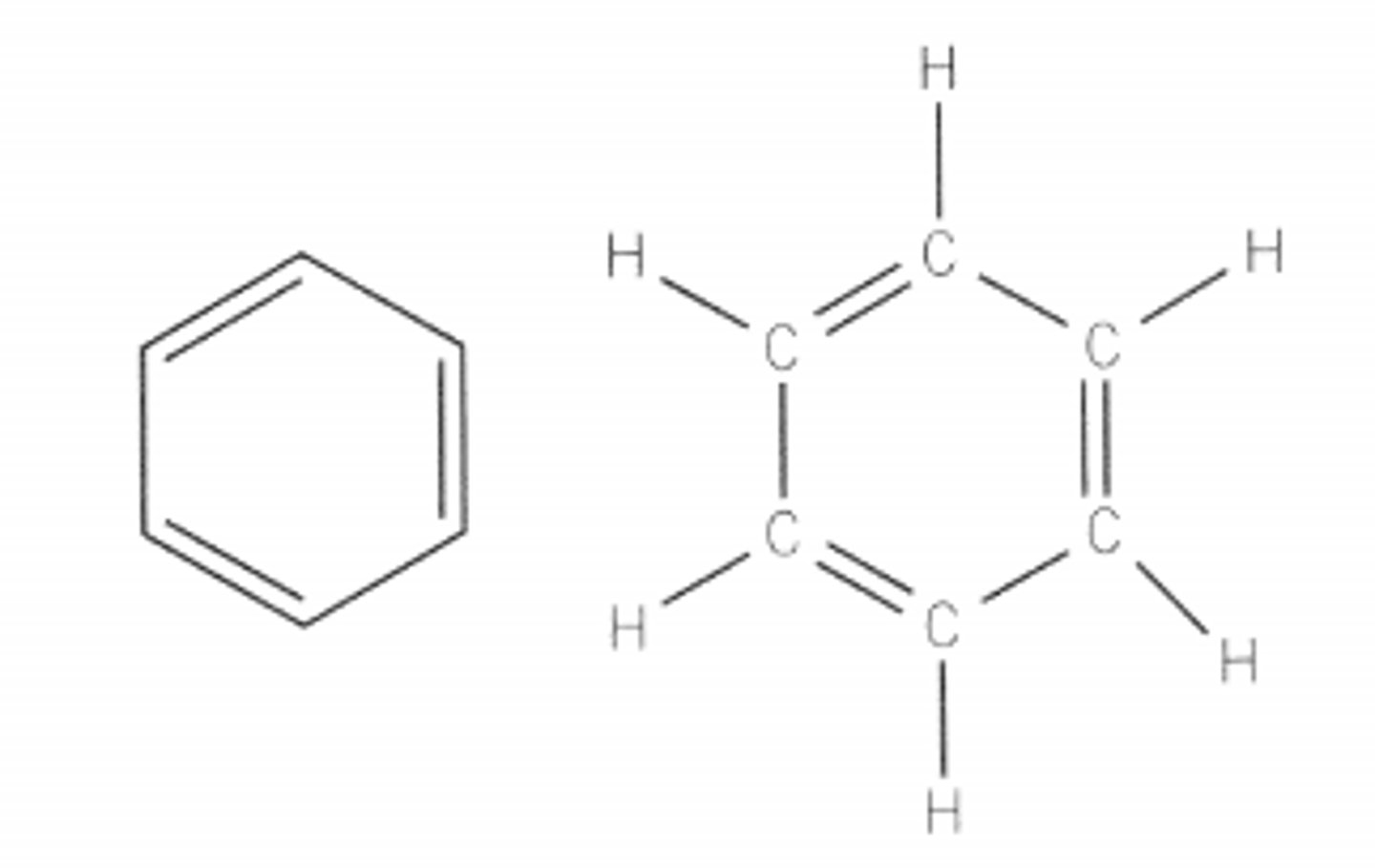
What were the problems with Kekules model of benzene?
- it was expected that benzene like it it in aliphatic compounds would have 3 bonds with length of a C-C bond. (154pm), and 3 bonds with a length of a C--C bond. (134pm)
in x - rays diffraction it shows the c-c bonds and c=c bonds are the same
- benzene didn't go colourless like alkenes (as is high electron density )
in bromination
undergo electrophilic addition reactions
but benzene undergoes electrophilic substitution instead as in addition has involve breaking the stable ring as it has delocalised pi bond as they are more spread out polarise the bromine
it was unreactive
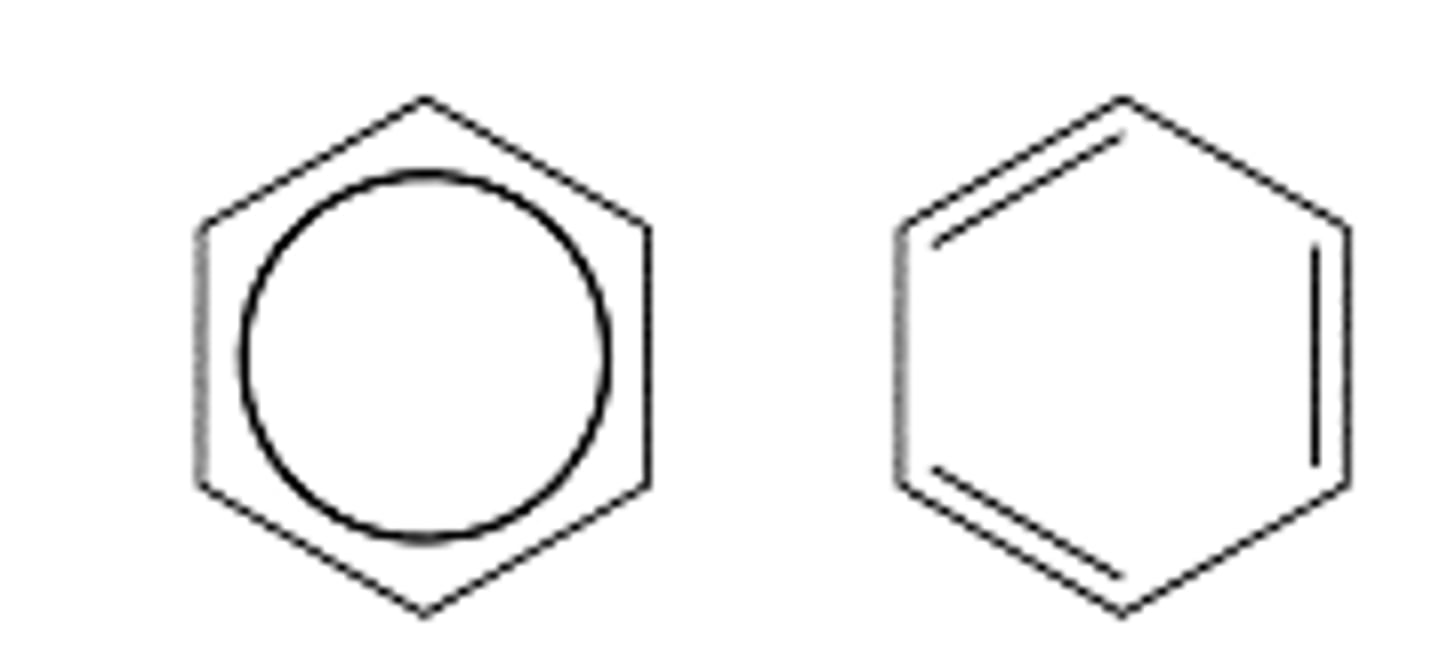
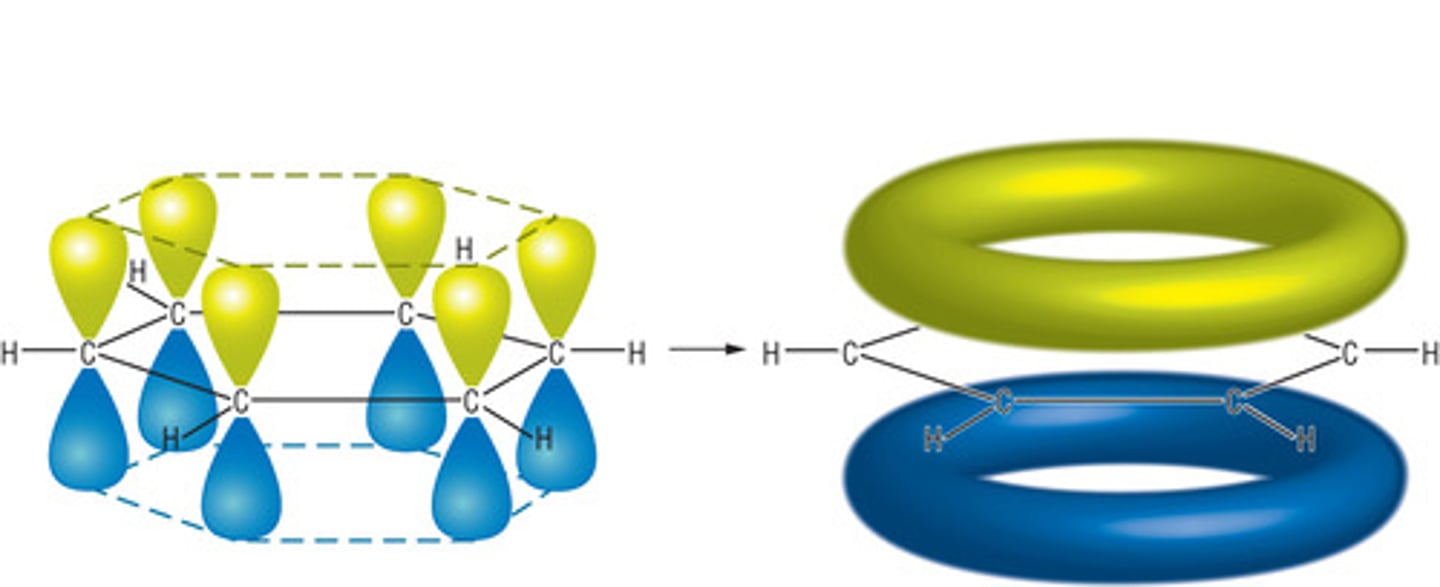
Describe the delocalised model of benzene.
- all the bonds in the ring are the same so have the same length.
- electrons in the ring don't belong to a specific carbon.
Each carbon has 3 sigma bonds to carbons and hydrogen remaining p orbitals stick above and below to form ring of pi bonds which are delocalised around the carbons above and below electrons are delocalised and form ring in centre of carbon ring
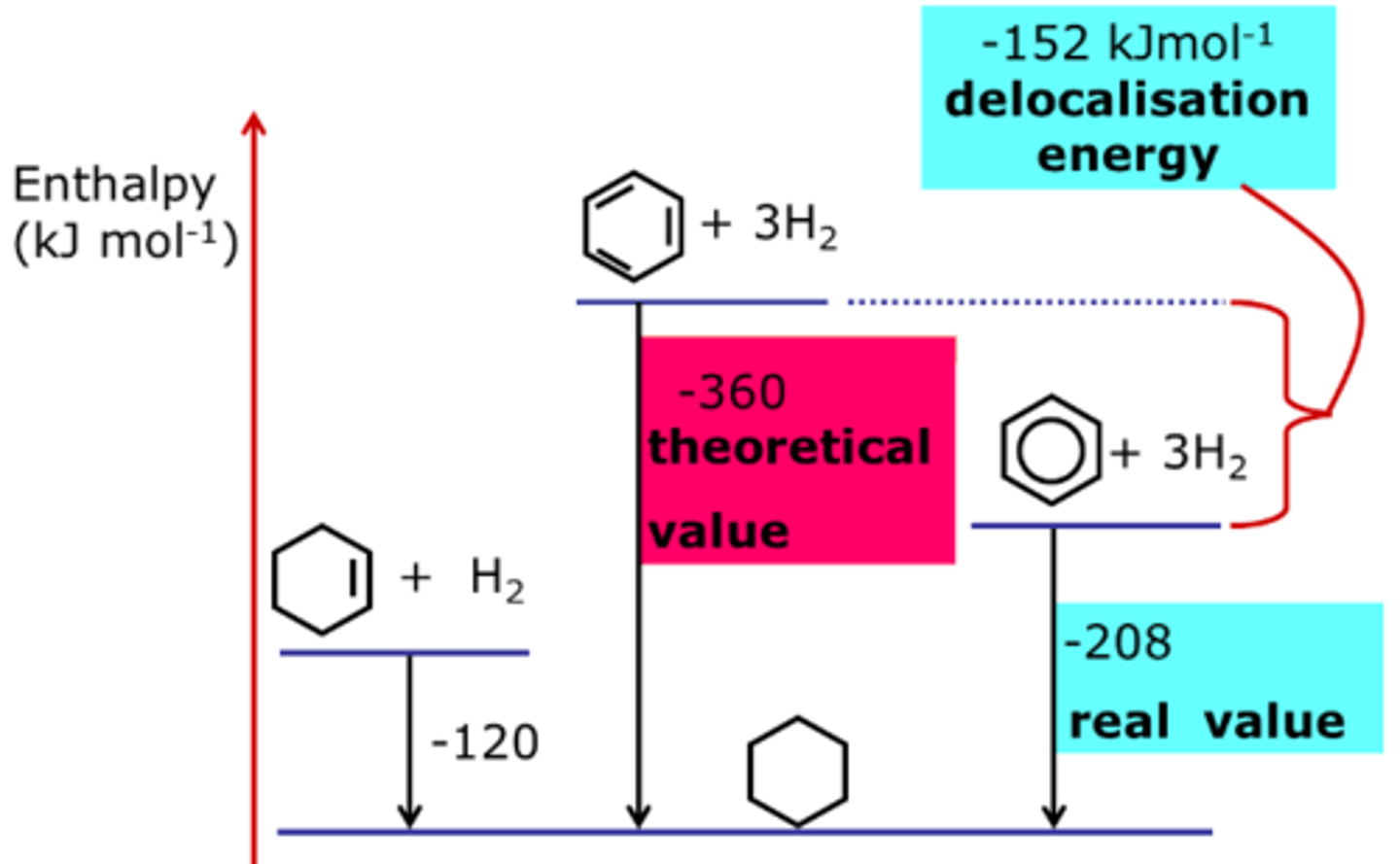
Explain how enthalpy changes of hydrogenation give evidence for delocalisation.
use a nickel catalyst
- react alkene with hydrogen gas, hydrogen is added across the double bond (enthalpy of hydrogenation)H2
- cyclohexene= 1 double bond, and enthalpy of hydrogenation = -120kJmol-1
- if benzene had 3 double bonds (kekules structure), youd expect to get -360kJmol-1
- however
experimental values of enthalpy of hydrogenation of benzene is -208kJmol-1 (less exothermic thann expected)
- difference indicates benzene is more stable than the Kekule structure would be
- 152kJmol-1 = delocalisation energy
Combustion of benzene?
2C6H6 + 15O2 ---> 12CO2 + 6H2O
- smoky flame
- lot of carbon compared to the amount of hydrogen
Why is methylbenzene more reactive than benzene?
- alkyl groups push electrons into the ring (positive inductive effect)
Why is methoxybenzene more reactive than methylbenzene and benzene?
- one lone pair of electrons from oxygen is close enough to electron ring structure.
- lone pair can donate electrons to the ring structure, increasing the electron density
- increased electron density makes arene more susceptible to electrophilic attack.
Nitration of benzene ? to form nitrobenzene
catalyst concentrated sulfuric acid
conditions 50oc water baths steady tem
if tem more substation of nitrobeneze
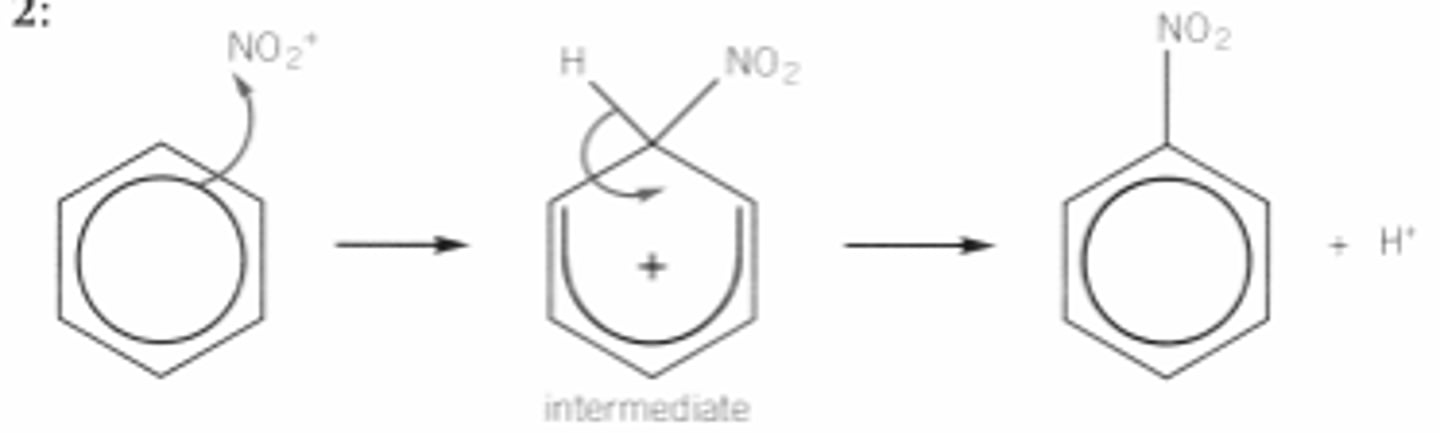
step 1 formation of No2+ electrophile
HNo3 + H2so4 -- NO2+ + Hso4- + H20
step 2 :
intermediate
No2+ accept a pair of electron from beneze rings forming dative covalent bond
intermediate formed is unstable breaks forming nitrobenzene and H+
step 3 regeneration of H2so4
Hso4- + H+ -- H2so4
Why must we use a halogen carrier in the halogenation of benzene?
- because the benzene ring is too stable to polarise the halogen by itself
use - AlCl3, FeCl3, or Fe
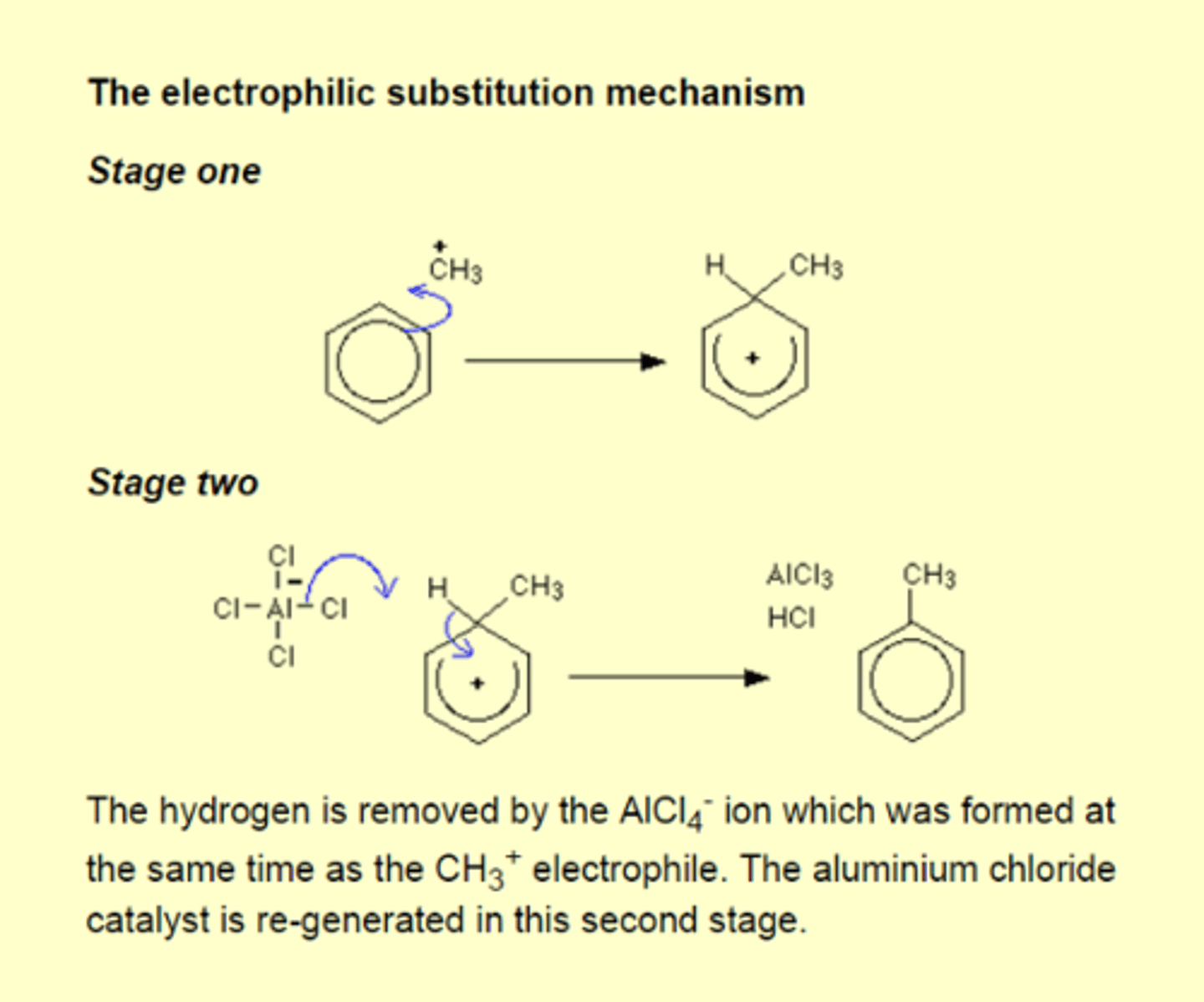
Friedel crafts alkylation
useful to form c-c
electrophilic subsitiuion
need a haloalkane and halogen carrier Alcl3 to generate electrophile under reflux
step 1
Alcl3 + Ch3ch2CL --- ch3ch2 + Alcl4
step 4
H+ = ALcl4- --- Alcl3 + HCL
Friedel crafts acylation
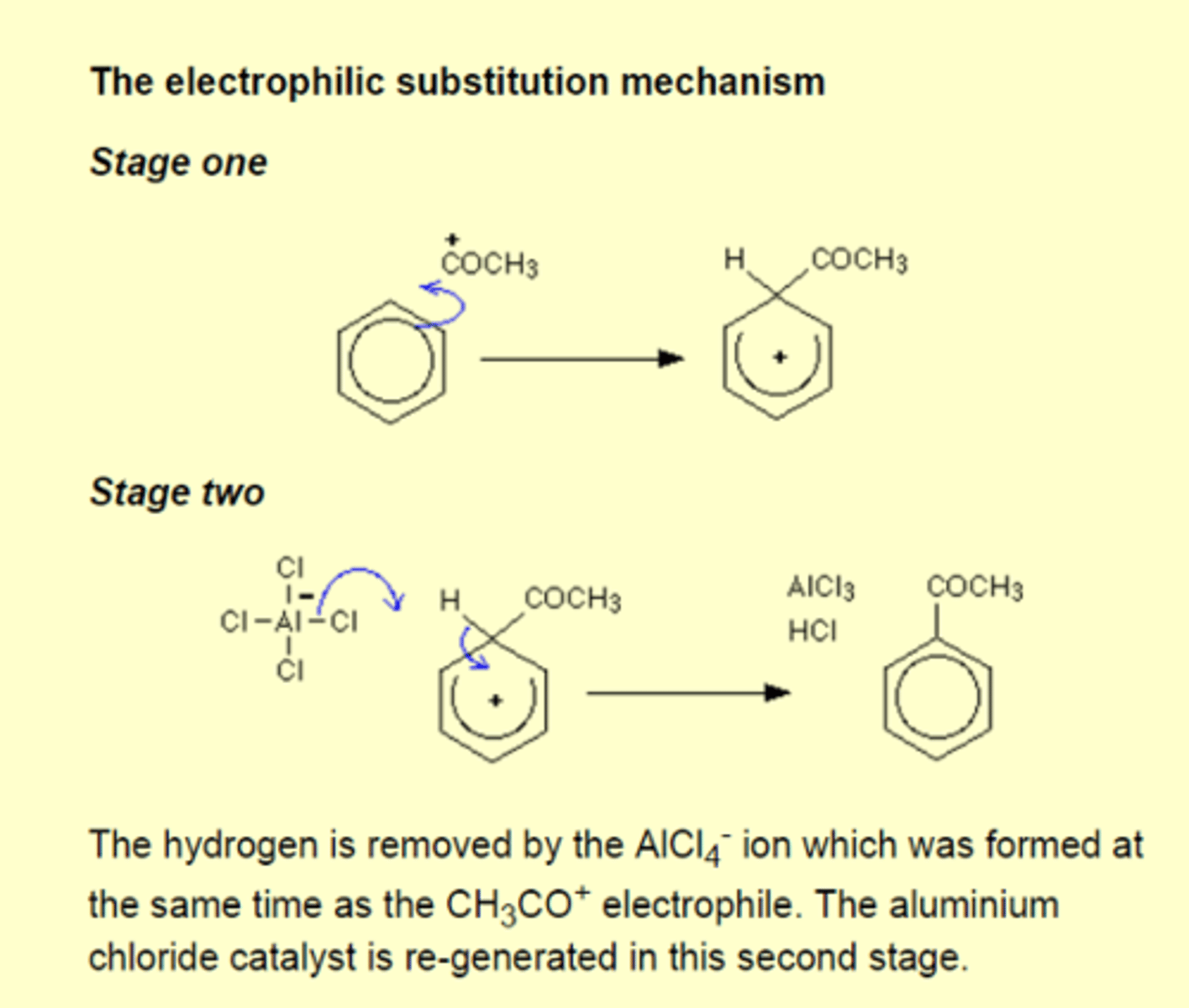
need a acyl chloride and halogen carrier Alcl3 to generate the electrophile to make a ketone
heat under reflux dry ether
step one
AlCl3 + CH 3COCl -- CH3 COcl+ AlCl4-
step 4
H + AlCl4 - ___ AlCl3 + HCL
product is a phenylketone used In industrial product of dyes and pharamceutricals and even exposives
What are phenols?
Benzene ring with hydrogen replaced with a hydroxy group
c6H5OH
Why is phenol solid at room temperature?
-OH group allows hydrogen bonding to occur (so can H bond with water)
- so phenol has stronger intermolecular forces than in benzene, more energy required to break these bonds so higher melting point
- also has more electrons so can form more London forces
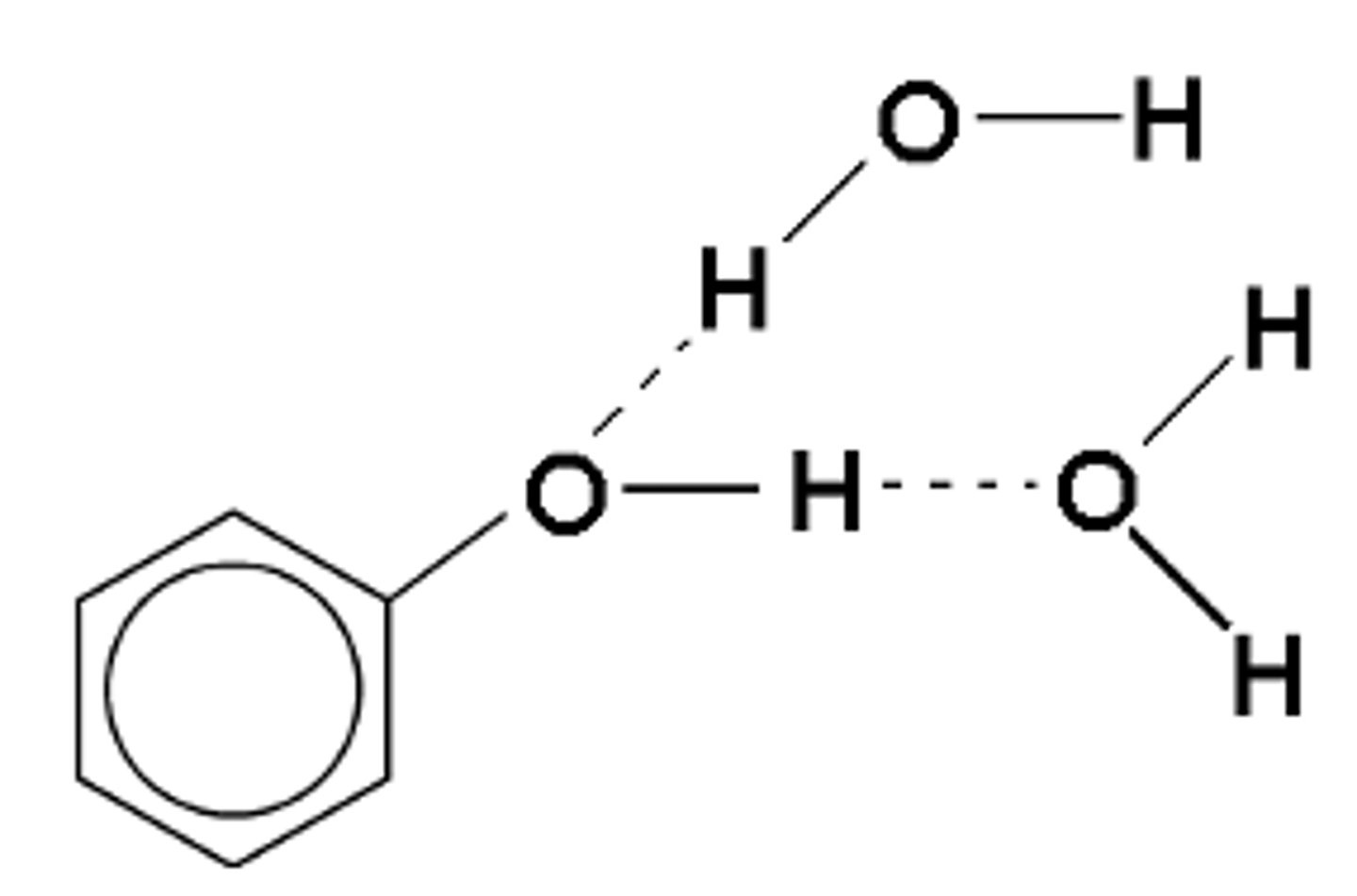
Why can phenol only slightly dissolve in water?
- OH group can form H bonds with water
- however phenol ring is London forces , which cant break the hydrogen bonding network within water
Properties of phenol?
- weak acid
- stronger acid than aliphatic alcohols
- dissolves readily in alkalis e.g. NaOH to form a salt, sodium phenoxide
- however is not strong of an acid to react with carbonates like carboxylic acids to produce CO2.
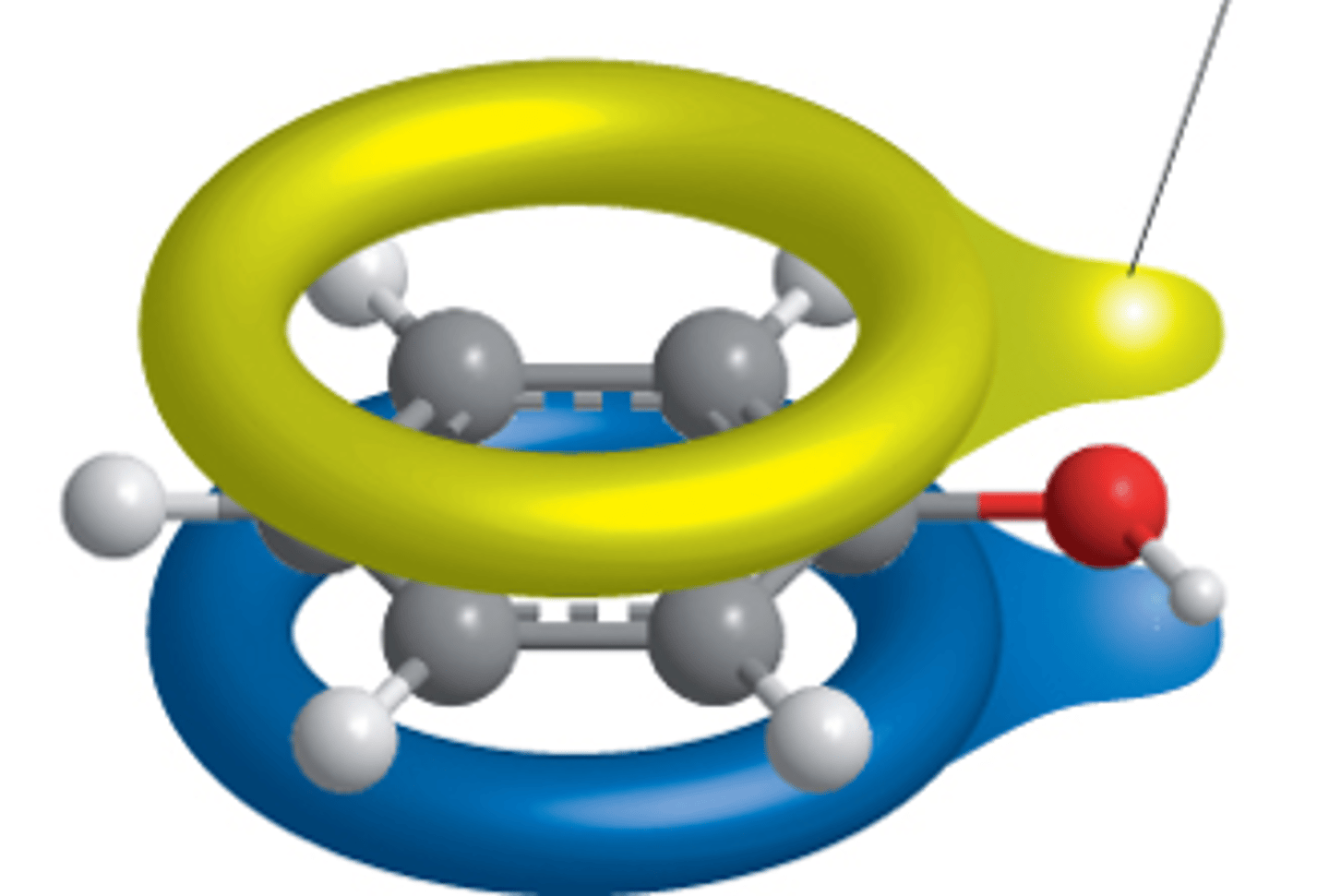
how is phenol is more reactive than beneze
- the lone of the electrons on oxygen atoms interacts with the delocalised pi electrons in benenze ring
which increase electron density inside the ring
increase reactivity towards electrophiles
undergoes electrophilic subustions
sufficient electron density to polaries br2
no halogen carrier
halogenation of bromine is electrophilic substitution ?
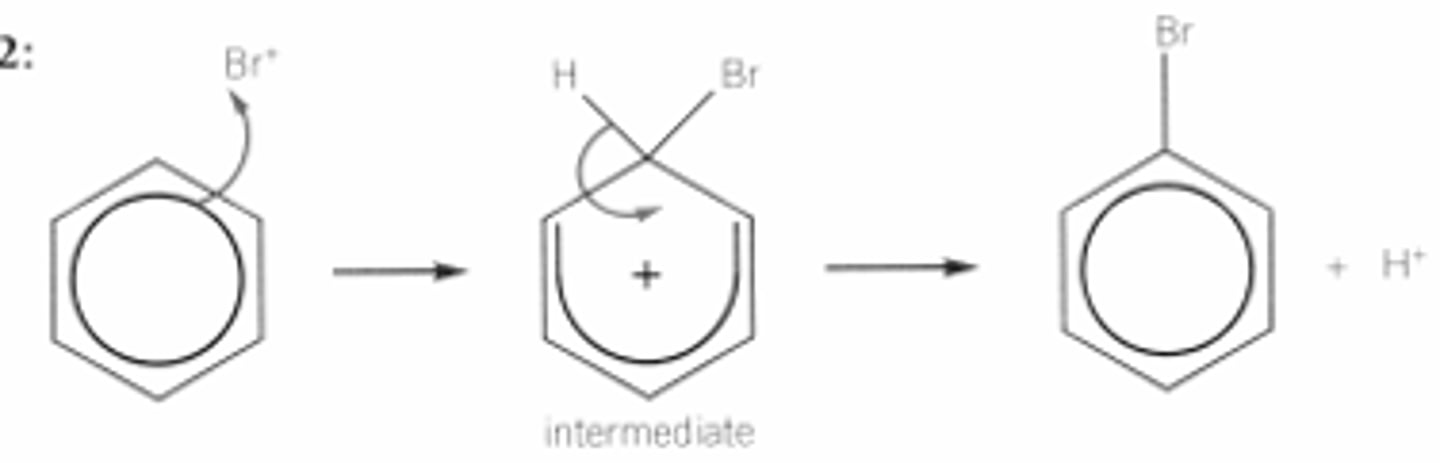
step one Br2 + Febr3 --- Febr4- + Br+
step two
the catalyst polarise the halogen
- Br+ accept a pair of electrons from beneze ring for dative covalent bond
intermediate is formed bromozbene and H+
step 3
regeneration of FeBr4- + H+ --- Febr3 + Her
Why is methyl benzoate a ring deactivator?
- oxygen is too far to get into the ring, it is not directly bonded to the ring
Why is methoxybenzene a ring activator?
- stronger ring activator because as well as the lone pair on the oxygen bonded to the ring, it also has the positive inductive effect pushing electrons into the ring.
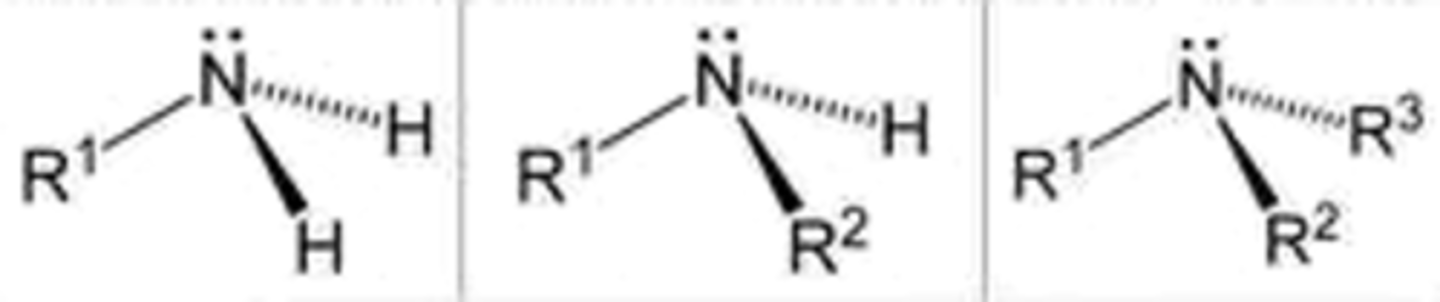
What are amines?
organic derivatives of ammonia
- functional group -NH2
- can be primary, secondary or tertiary amines. If theres 4 groups attached to the nitrogen, becomes a quaternary ammonium salt
- have a fishy smell
when the amine group is on a other carbon not the first one then its called amino
How to name secondary and tertiary amines?
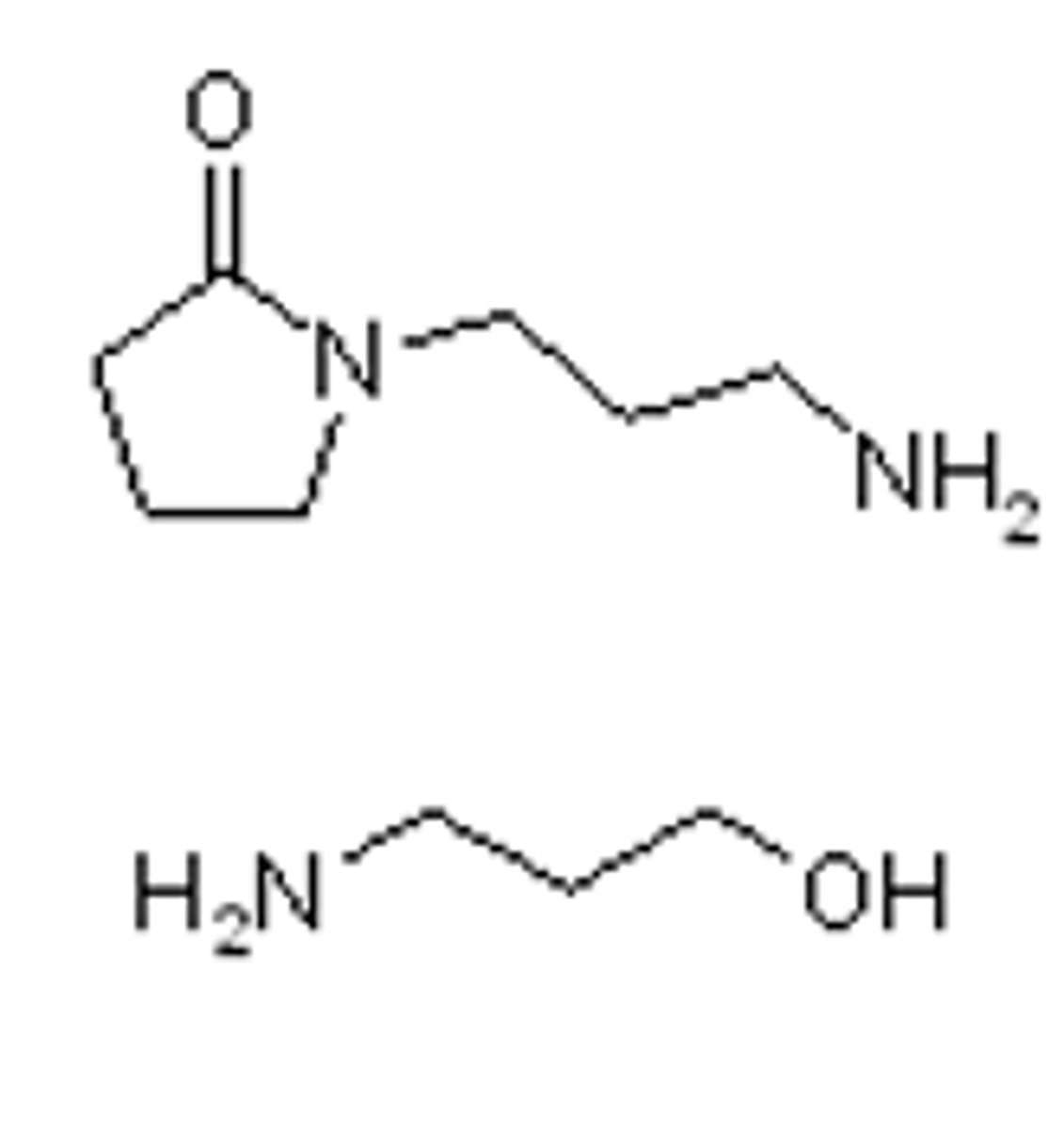
- use N- and N,N- for secondary and tertiary amines to make it clear that the alkyl groups are attached to the nitrogen.
under go nucleophilc substitution
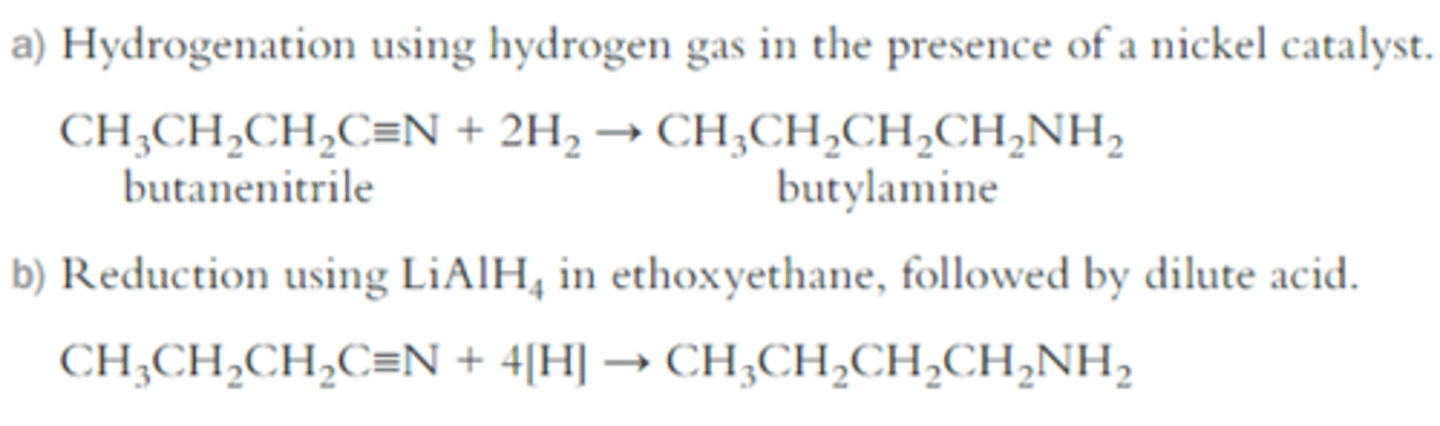
How to make aliphatic amines?
1. From a haloalkane
2. By reducing nitriles (using LiAlH4 in dry ether followed by dilute acid
nitriles reduced using hydrogen gas with metal calayts like Pt or nickel are high pres and tem called catalytic hydrogenation
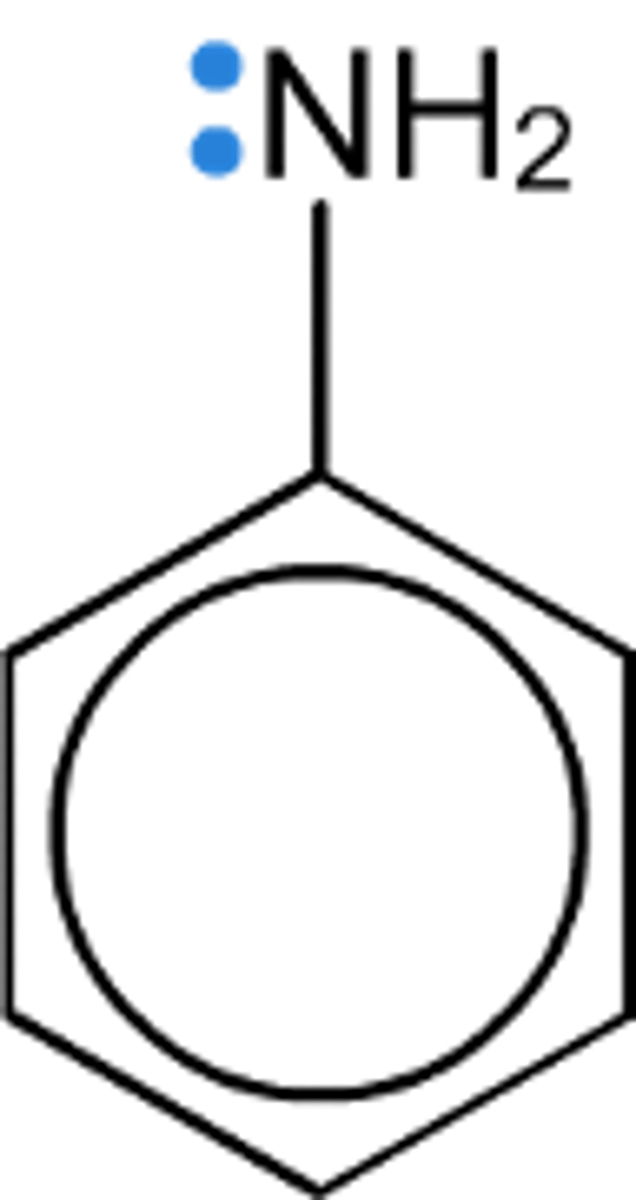
How to make aromatic amines?
- via reduction of a nitro compound.
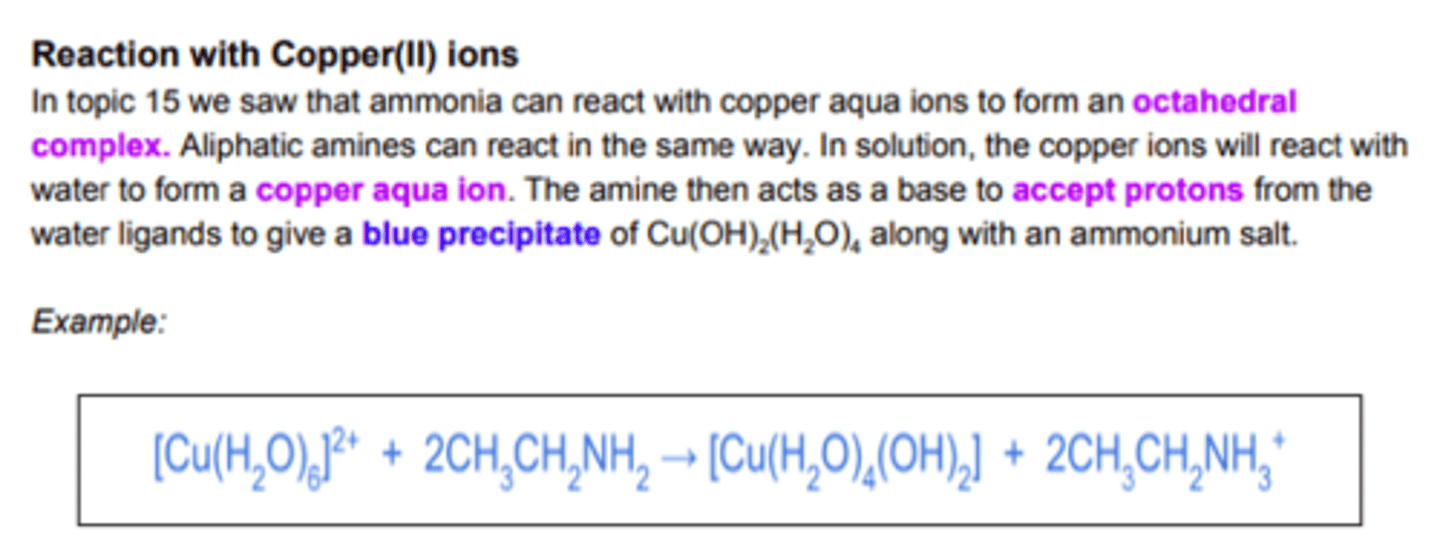
Amines and complex ions?
copper complex is formed by dissolving copper (II) sulfate in water
add small amount of butyl amine to copper sulfate solution a pale blue precipitate is formed as amines removes 2H+ acting as a base
add more butylamine then 4 ligands will be exchanged with amines forming the complex deep blue solution
large amine different shape complex
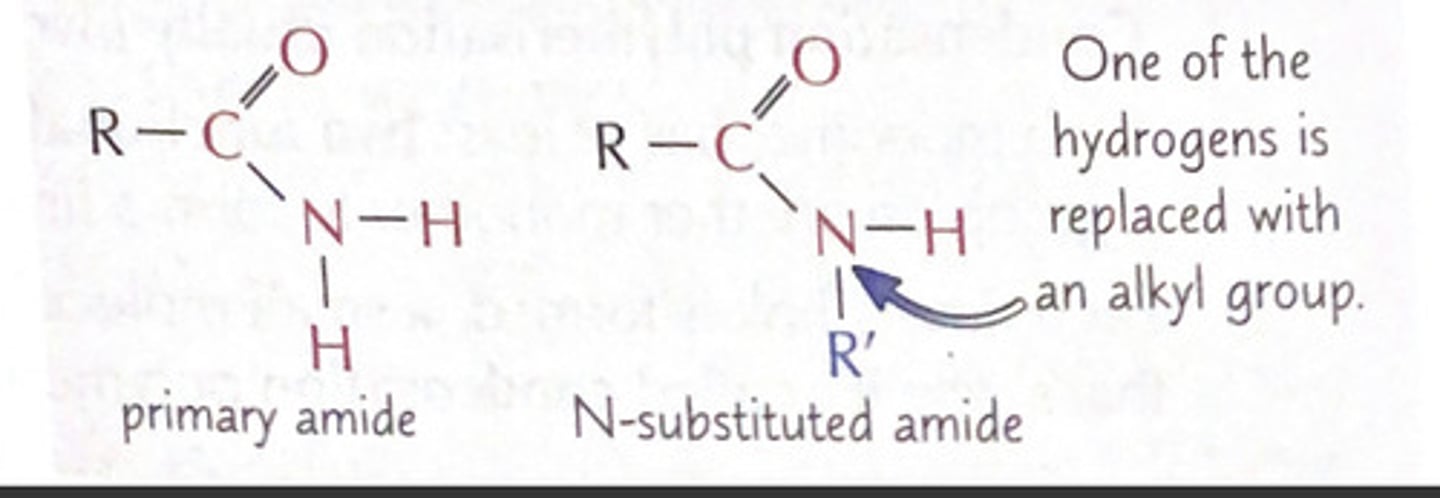
What are amides?
carboxylic acid derivatives
- functional group -CONH2
- carbonyl groups pulls electrons away from rest of functional group
one of the hydrogen is replaced with an alkyl N subsituted amide
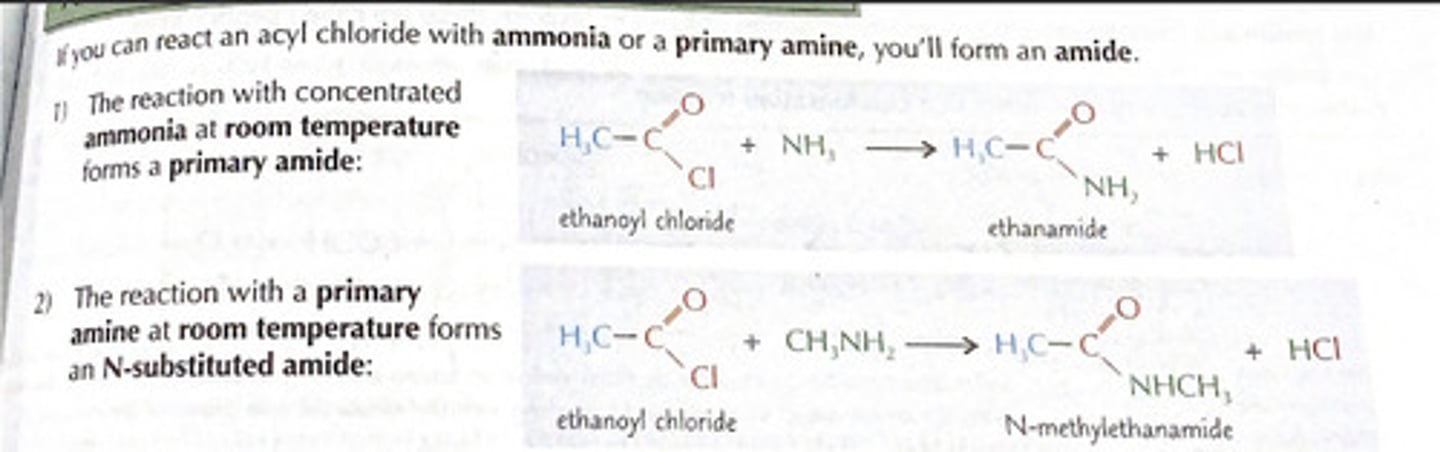
Preparation of amides?
1. Acyl chloride + ammonia
2. Acyl chloride + amine
is a vigorous reaction and white misty fumes of hydrogen chloride gas is produced
What are condensation polymers?
polypeptide
polyamides
polyester
link is made and water and HCL is eliminated and link determines the type of polymers produced
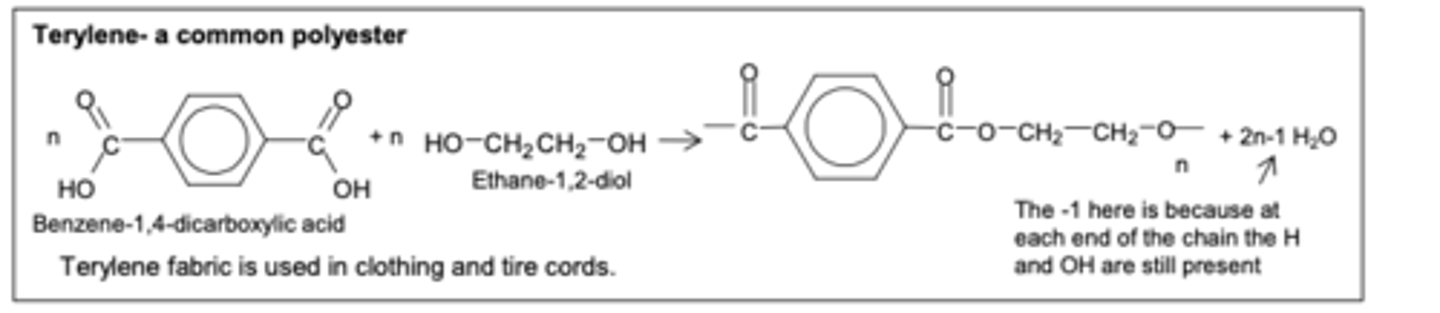
What are polyesters?
- made by reacting dicarboxylic acids and diols
- take the H from the alcohol and the OH from the dicarboxylic acid.
condensation reaction
- or you can make polyesters from single monomers which have 2 functional groups
-polyesters, used widely in plastic bottles, fabrics and clothing.
What are polyamides?
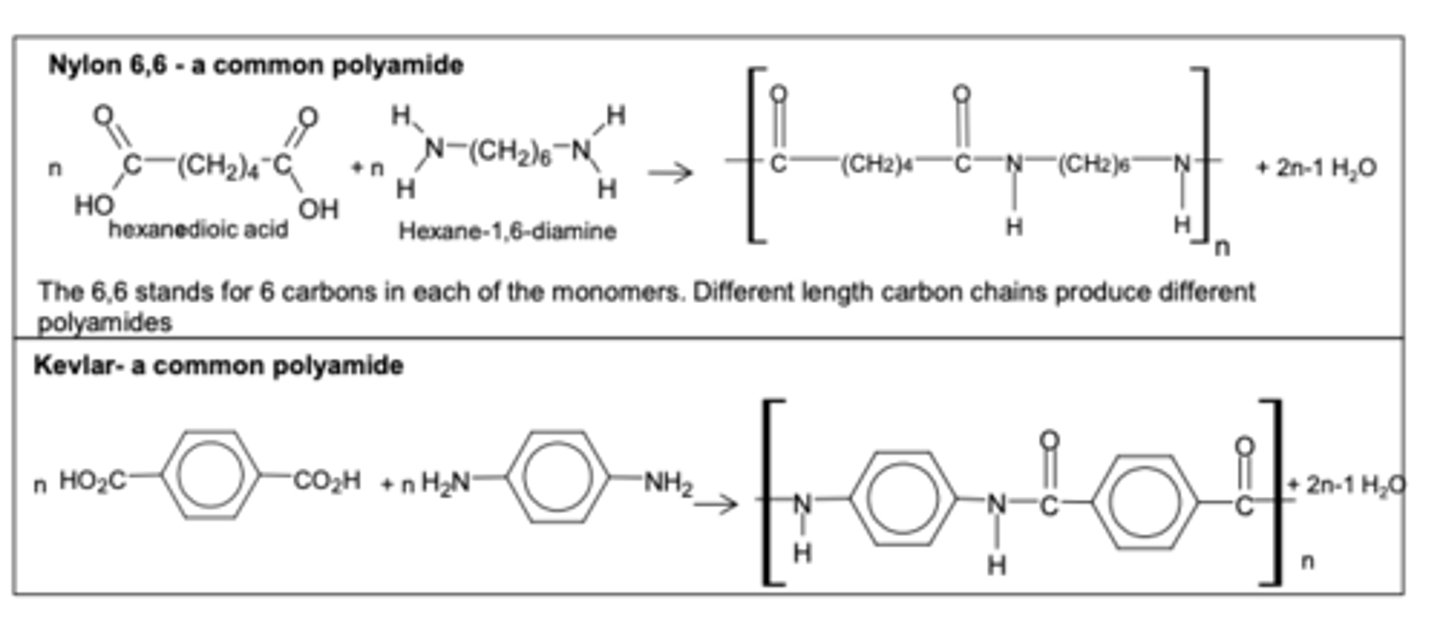
- made from dicarboxylic acids and diamines
- e.g nylon-6,6 and kevlar
- amino acids are also used as the monomers as they contain both the amine and carboxylic functional group
- forms polypeptides (proteins)
kevlar is beneneze 1,4 - dicarboxylic and 1,4 diaminoebeneze
Condensation polymers vs addition polymers
- CP: monomer has at least 2 functional groups, AP: monomer contains a double bond
- CP: doesn't require harsh conditions, AP: requires harsh conditions (high temp, high pressure, catalyst)
- CP: not 100% atom economy, as a small molecule is produced, AP: 100% atom economy
- CP: involves addition and elimination, AP: involves addition
How to hydrolyse polyamides?
- strong aqueous acid breaks up polyamides quickly.
- under acidic conditions, produces a carboxylic acid and a diammonium salt
- using hot alkali hydrolyses polyamides slowly
- require heat
-produces a diamine and a carboxylate salt
How to hydrolyse polyesters?
- strong aqueous acids breaks up polyesters slowly
-under acidic conditions produces a carboxylic acid and diol
-hot alkali e.g NaOH hydrolyses polyesters v v quickly
- produces a carboxylate ion and a diol
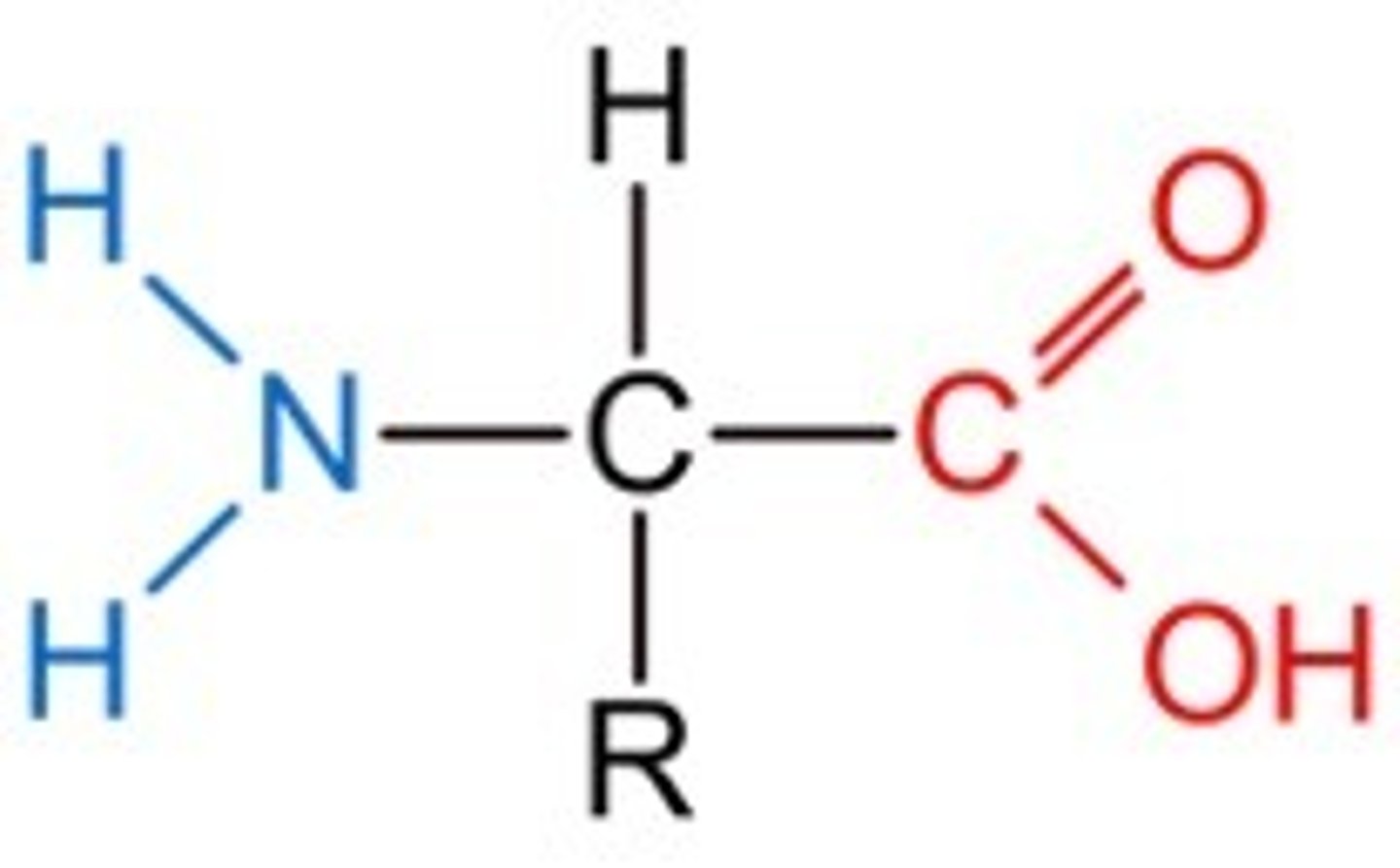
What is an alpha amino acid/2- amino acid is glycine
- amino acids with both the amine group and carboxylic group attached to the same carbon
Have organic side chain R Glycine has R' is hydrogen
- 20 naturally occurring 2-amino acids
- makes them amphoteric
Amphoteric means they have acidic and basic properties
white crystalline solid high melting point
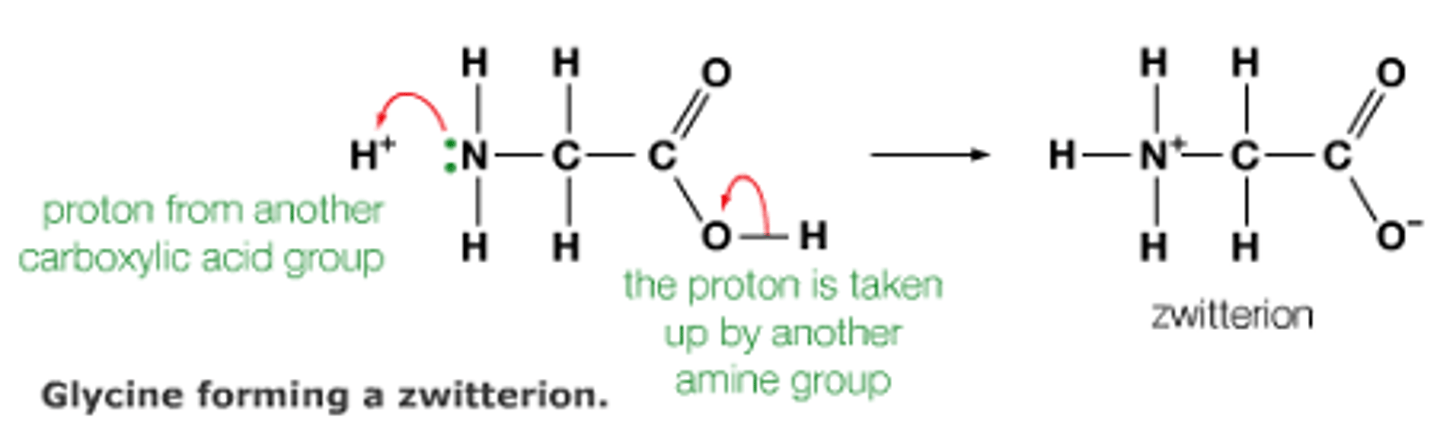
What are zwitterions?
A zwitterion is likely to be formed to PH at isoelectric point both carboxyl and amino group are ionised ( oxygen negative and N is positive)
Isoelectric is the Ph average overall change is zero this dependant on the R group
zwitterion will dissolve in solution with a PH 7
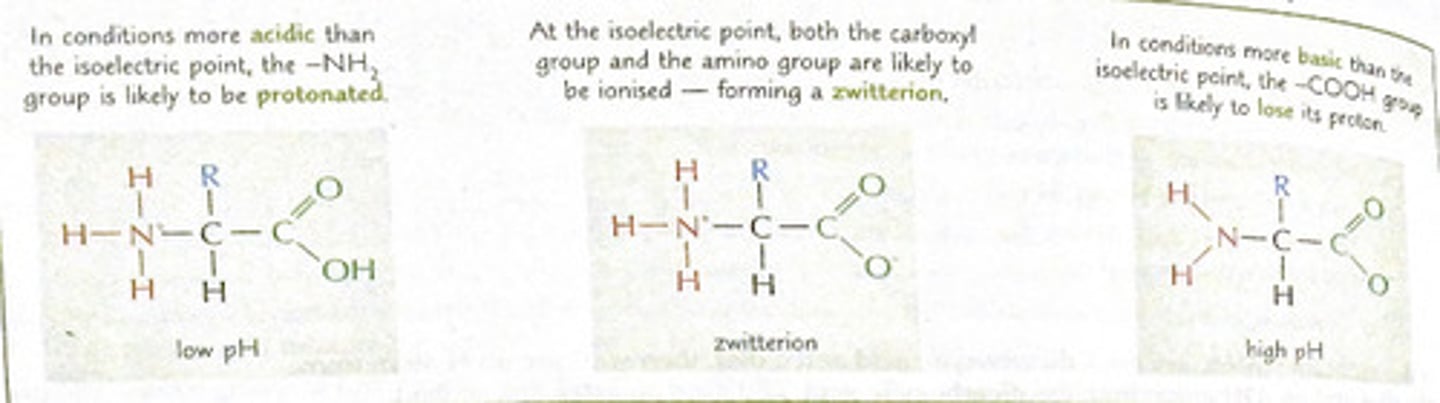
What happens to a zwitterion of an amino acid if you add more H+? in acidic conditions (low pH)
- add more H+, pH lowers then the isoelectric point
-NH2 group is more likely to be protonated
the carboxylic acid has a hydrogen
so NH2 group becomes NH3+
amino acid can be esterified in presence of concentratied sulfuric acid
What happens to a zwitterion of an amino acid if you add more OH-? alkali condition at high ph
- add more OH, pH increases
- carboxyl group is more likely to lose its hydrogen , to react with the OH-
NH3+ lose an hydrogen
have a lone pair
Chirality of amino acids?
except glycine, alpha carbon has 4 different groups --> chiral
- so amino acid will rotate plane polarised light if theres only one of the optical isomers if shone through aq solution
- if theres a racemic mixture of the amino acids, it will not rotate plane polarised light
- if glycine is present, it will also not rotate plane polarised light is achiral
How can amino acids act as buffers?
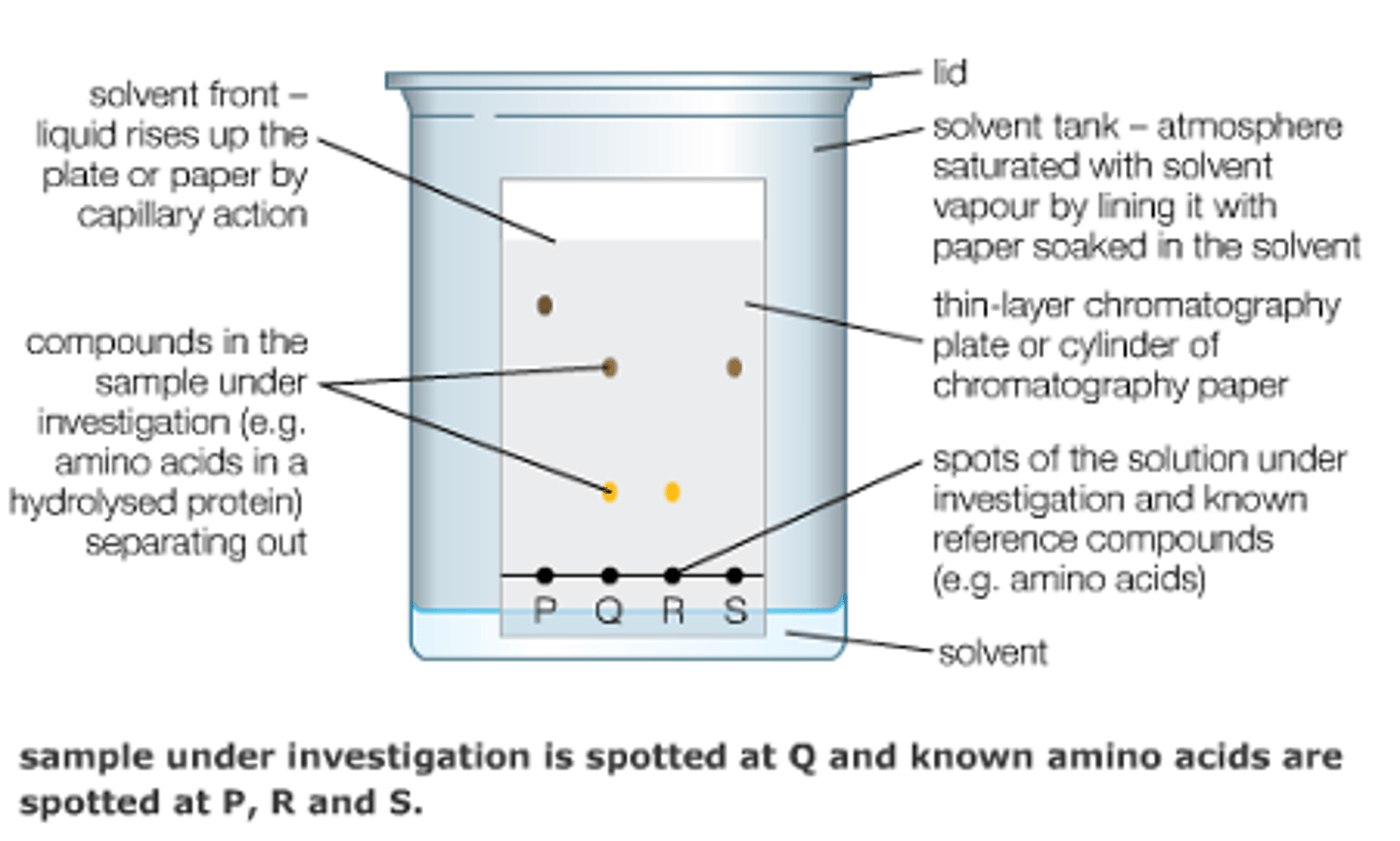
How can you use paper chromatography to identify unknown amino acids? where protein hydroloysed into amino acid
- draw pencil line near bottom of chromatography paper and put a concentrated spot of the unknown sample
- place paper into a beaker containing a small amount of the solvent
- solvent needs to be below level of pencil line
- put a watch glass on top of beaker to stop it separating out.
- when the solvents nearly reached the top, take the paper out and mark the solvent front
spray paper with ninhydrin solution to make any colourless amino acids visible, turns them blue - purple
- calculate rF values of the substances and compare against a known table of values
What are Grignard reagents?
organometallic compounds used to increase the chain length of a molecule by more than one carbon
- have the form RMgX
- made in situ by the reaction of Mg with halogenoalkanes (R-I)
- need dry ether

Reactions of Grignard reagents?
1. Reacts with methanal to form primary alcohols
2. Reacts with other aldehydes to form secondary alcohols
3. Reacts with ketones to form tertiary alchohols (first dry ether, then add dilute HCl)
4. reacts with carbon dioxide to form a carboxylic acids ( need CO2, dry ether and dilute HCl )

what do arena have ?
high melting points due to the high stability of the delocalised benzene ring, but low boiling points as they are non-polar molecules and generally cannot be dissolved in water.
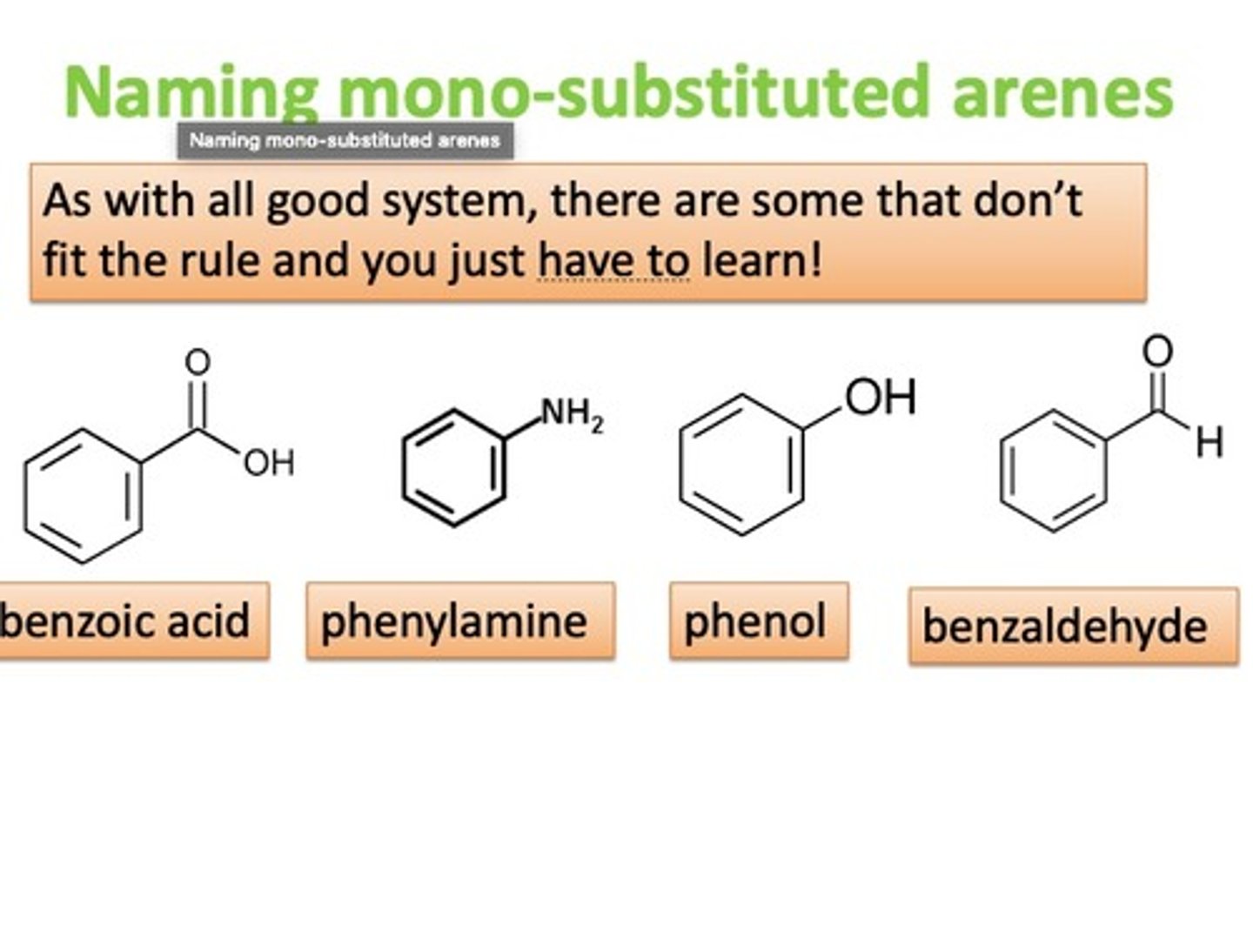
how to name difference between phenol andbenenze
if there functional group of 7 or more carbons then sed phenyl
if a OH is attached then phenol
what are the uses of phenol ?
- powerful disinfectant
burn the skill
used for antiseptics
what are the electrophiles in benezne ?
- no2+
- cl+
br+
ch3+
why is nitration important ?
forms dye
pharmaceuticals
pesticides
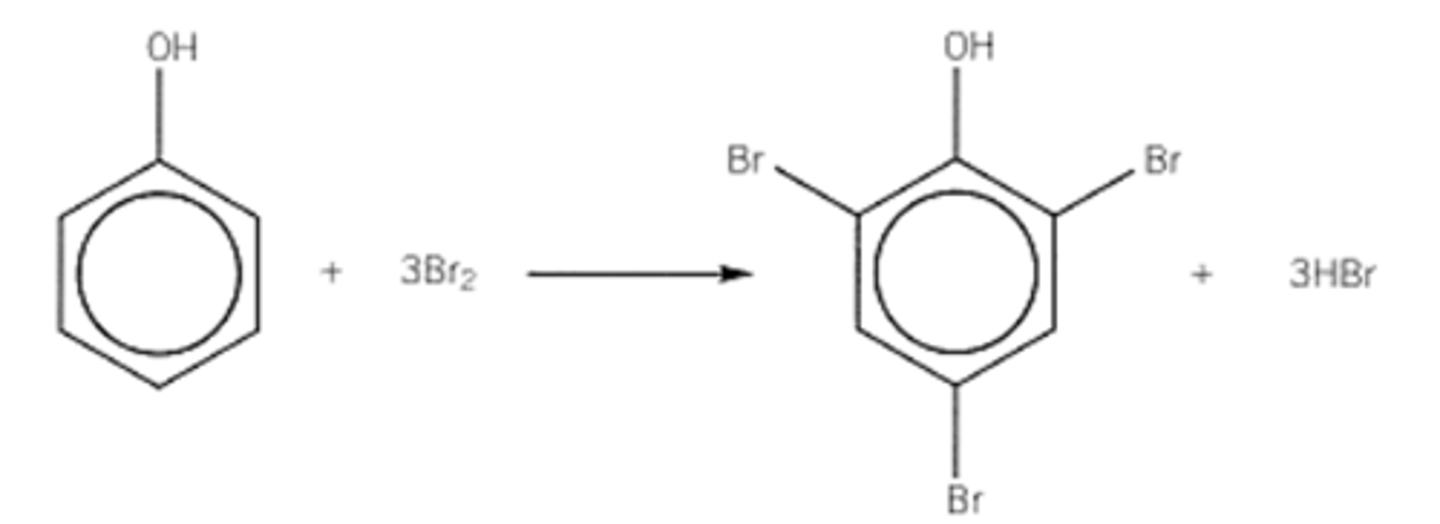
reaction with bromine water and phenol
phenol reacts with aq solution of bromine
white precipitate 2,4,6- tribormophenol insoluble in water antiseptic smell
declares the bromine water change from orange to colourless
a halogen carrier not required
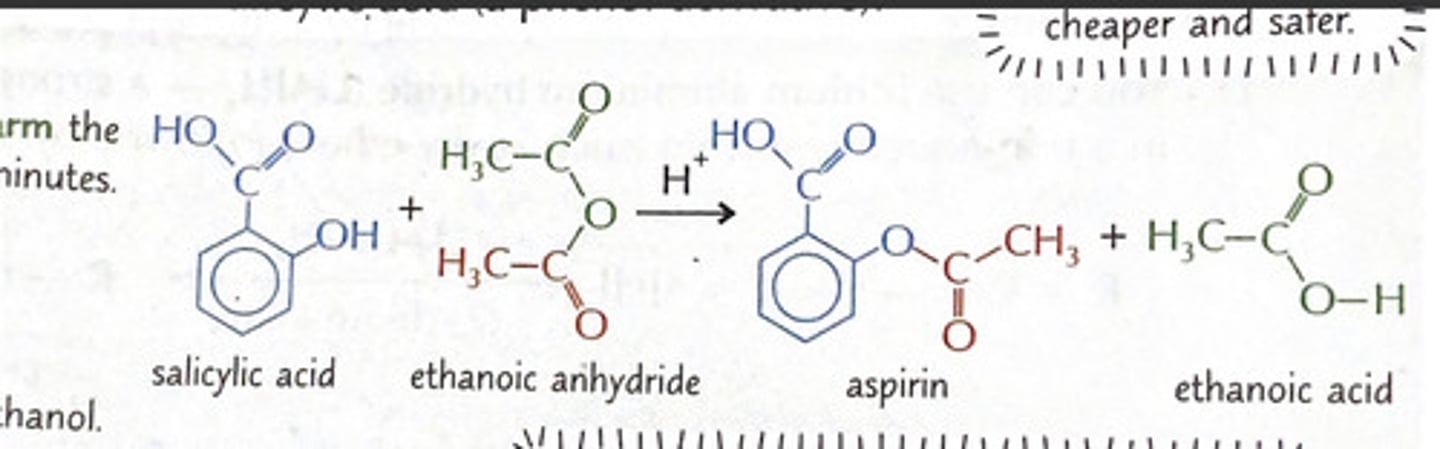
how to make aspirins from phenol ?
warm to 50 degrees and leave for 15 min
add phosphoric acid
add cold water and cool on ice and aspirin crystals form
filter the crystals under pressure
recrystallise the aprsin in mixture of water and ethanol
by esterification
how are amines like bases ?
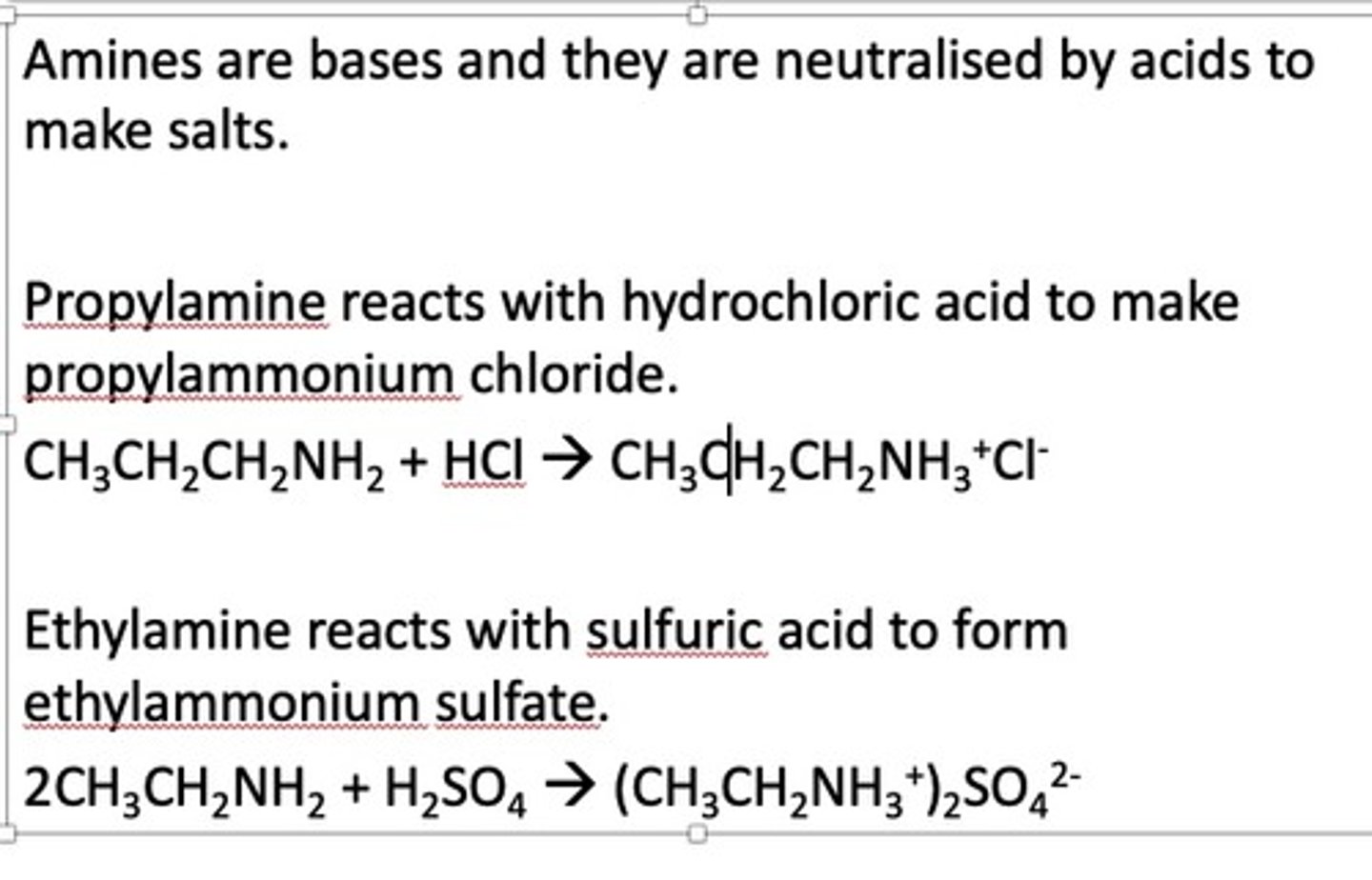
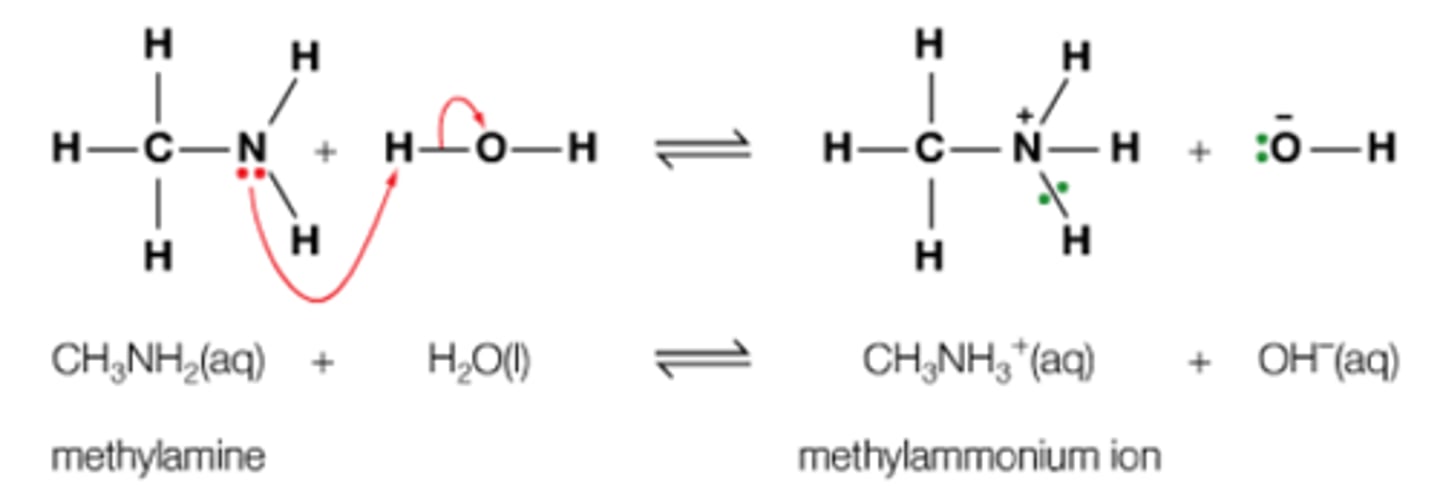
bases as the lone pair of electrons had more electron density which is higher on the nitrogen to accept a proton
weak bases
dative covalent bonding
NH4+ is tetrahedral
NH3 is pyramidal shape
what is the solubility of primary amines ?
form hydrogen bonds with the water
bigger amines have greater London forces take more energy to overcome and large amines disrupt the hydrogen bonding
in aq solution amines accept H+ ions from the water to be alkaline solution due to OH-
primary amines have high melting and boiling as hydrogen bonding
dative bond ph of 11
what are aliphatic amines stronger bases then ammonia ?
induced affect
aliphatic amines are stronger bases than ammonia
as alkyl groups are electron donating groups increased negative charge around nitrogen so it can accepts the H+
phenyl amines as is has the ring which is electron withdrawing group and lone pair of electrons interact with delocalised electrons which Donn't donate the H+
nitrobeneze to phenylbeneze
under reflux to get a salt
100 oc
reduction of nitrobenzene using concentrated hydrochloric acid (HCl) and a tin catalyst.which Is one
2 is excess NAOH (Aq)
mixture is cool
the aromatic amines is separated by steam distillation

how aliphatic amines be made from halogenoalanes
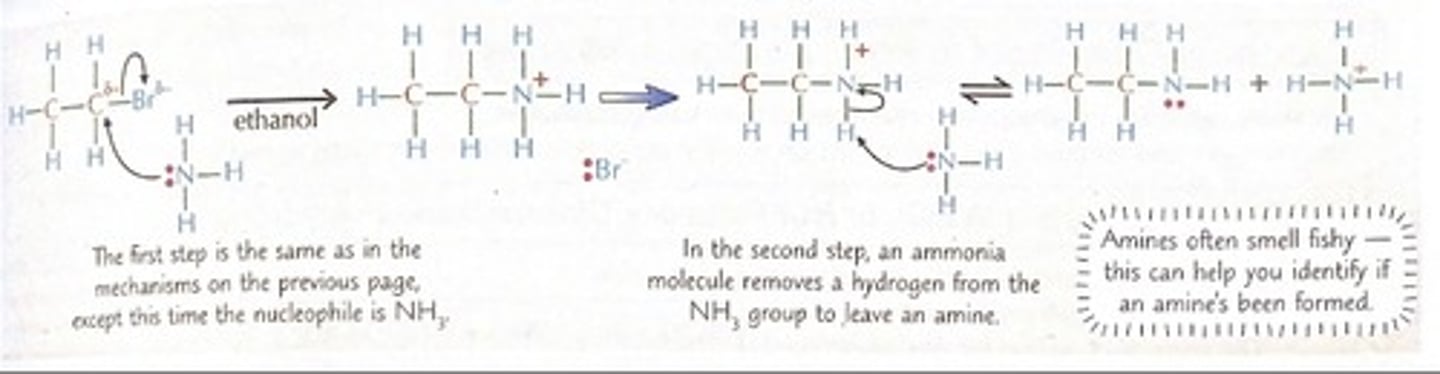
with excess concentration ethanolic ammonia under heating reflex
neutralised by acid to make ammonium salt
Ammonia in excess in order to form only the primary amine, or the mixture of products can be separated using fractional distillation.
amines reaction with acyl chlorides ?
H atoms swaps for the acyl group to produced N- subsisted amines and HCL
Hal reacts to another molecules of the amines to produced a salt
for enthnoyl chlorine added to concentrated aq solution of amines violent reaction occur solid white mixture of products
ch3cocl + 2c4H9NH2 -- CH3CONHC4H9 + (c4H9nh3)+CL-

how to name a amino acid ?
Naming amino acid
Longest carbon chain name
Name which group
Name where NH2 sit and name is amino
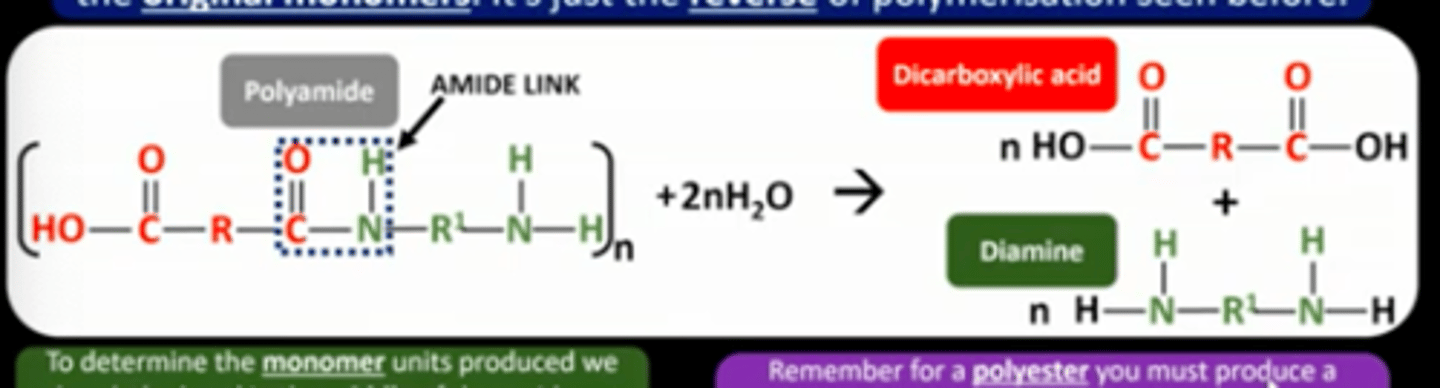
condensation polymers
find the repeat unit look either an amide links or ester links
the monomer found in the link add h or oh EITHER END of the molecules
hydrolysis polymers
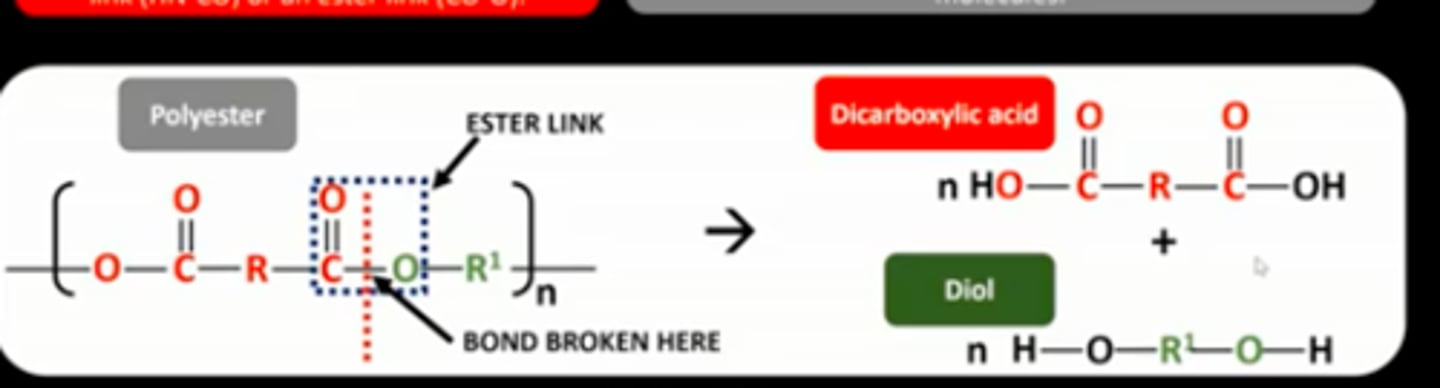
Breaking apart two bonded monomers by adding water
in the middle then add oh and h to end of the monomers units
polyester form dicarboxylic acid and diol
polyamide produce dicarboxylic acid and diamine
protein condensation of polymers ?
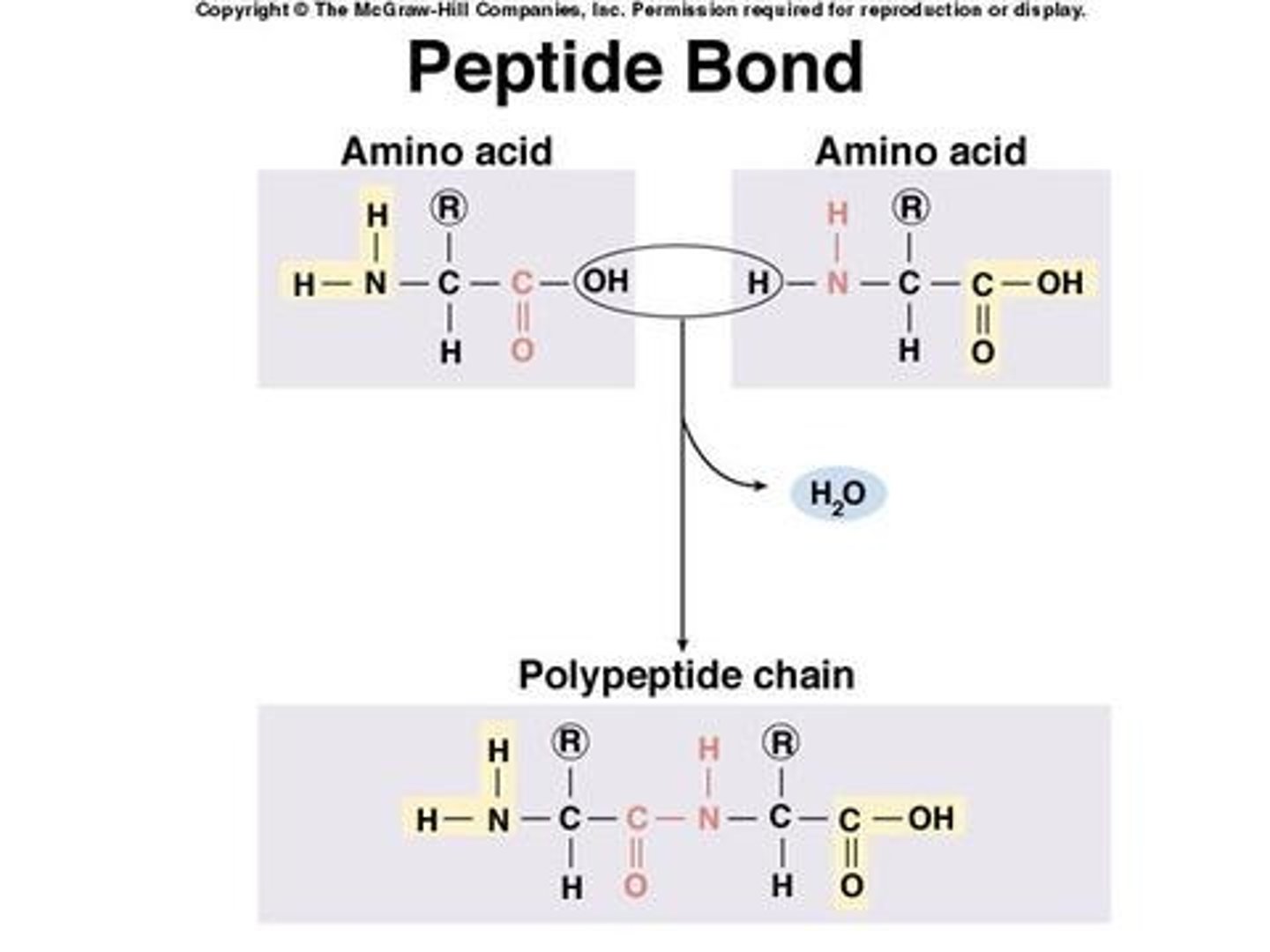
the amino acid monomers connected by amide links in protein to form peptide links
hydrolase protein harsh conditions hot aq 6 mol dm-3 HCL heated under reflux to produce ammonium salt of amino acid
then chromatography
what is reflux ?
allow strong heating without losing volatile
volatile compounds evaporate and condense and fall back into the flask
use flammable liquids heating like water baths electric heater called mantle
what is disitlation
substance with different boiling point
lower boling point of staring mixture you heat to the mixture of the boiling point of the compunds
then higher melting point
knowing the boiling point og the chemical help to separate and how to separate the compound
what is steam dilstialion
used to seperate substance with high boiling point of decompose when heated
if the product is immiscible with water then steam dilsitilation is used to seperate compound that can't be done under standard distilation
steam pushes through impure sample and steam lower boiling point of immiscible product allow to be distilled out of mixture before its decompose
high melting point able to separate as normal
substance collecting is less volatile than substance trying to separate evaporate out of the flask with steam
then condensed the collect in a separate flask
product in separating funnels
if the solvent as mixtued then solvent extraction
what is solvent extraction
add the product to separating funnel add h20 to dissolve the soluble impurities to create aq solution
drain impure product
what is gravity filtration
used to seperate soilid from liquiud
using fluted filter paper folded into a concetina to increase surface area in the funnel and dampaens
pour slowly
gravity pull thrrough the liquid component into vessels which purified if requried
solid left in the filter paper can be disposed
what is vacuum flitration
seperate liquid from solids
a filter paper disc in the the buchener funnel and dampends pour mixture with the vaccuum line on
reduce pressure in the flask pull liquid through the solid left in the buchner funnel
what is recryalisation
method to purifiying solids and the solvent
add hot solvent to allow the impure solid to dissolve this means you have saturated solution of impure product
then solutions cools
filter to get solid purified crystals and wash with very cold solvent and dry them off
impurities remain dissolvent in the solution there is a smaller qunity of them takes longer to crytalliase
if not hot sovlent this will not crystals
what is boiling point and purity
measure the boiling point of substance can help to detect impurties
by using distilation using a the thermometer in the equipment
compare to the data value
if the sample contain impurities :
- boiling point is higher than what is recorded in the data book
then sample boils over a range of tem
what is purity and melting point
purity of the compound determined by the melting point
add the sample which is a solid into capilary tube and place into heating element of the melting point apparatus
slowly increase tem until the substance starts to melt
tem range from when solid just start to melt to when it fully melts
compare the melting point against data book value
substance contain impurities the melting point will be lower and tem range the substance melts will be larger
what is separation and purification ?
removal of impurties by washing remove unwanted impuritie sodium hydrogencarbonate leads acid and co2 and salt of acid
removal by drying impure product from the seperating funnel add to round bottomed flask
add anhydrous cacl2 dehydrating agent will remove aq substance
invert the flask and leave for 20-30 min