Designer Genes Mendelian Genetics
 Call Kai
 Learn
Learn Practice Test
 Spaced Repetition
 Match
Match Flashcards
 Knowt Play
1/8

There's no tags or description
Looks like no tags are added yet.
Name | Mastery | Learn | Test | Matching | Spaced | Call with Kai |
|---|
No analytics yet
Send a link to your students to track their progress
9 Terms
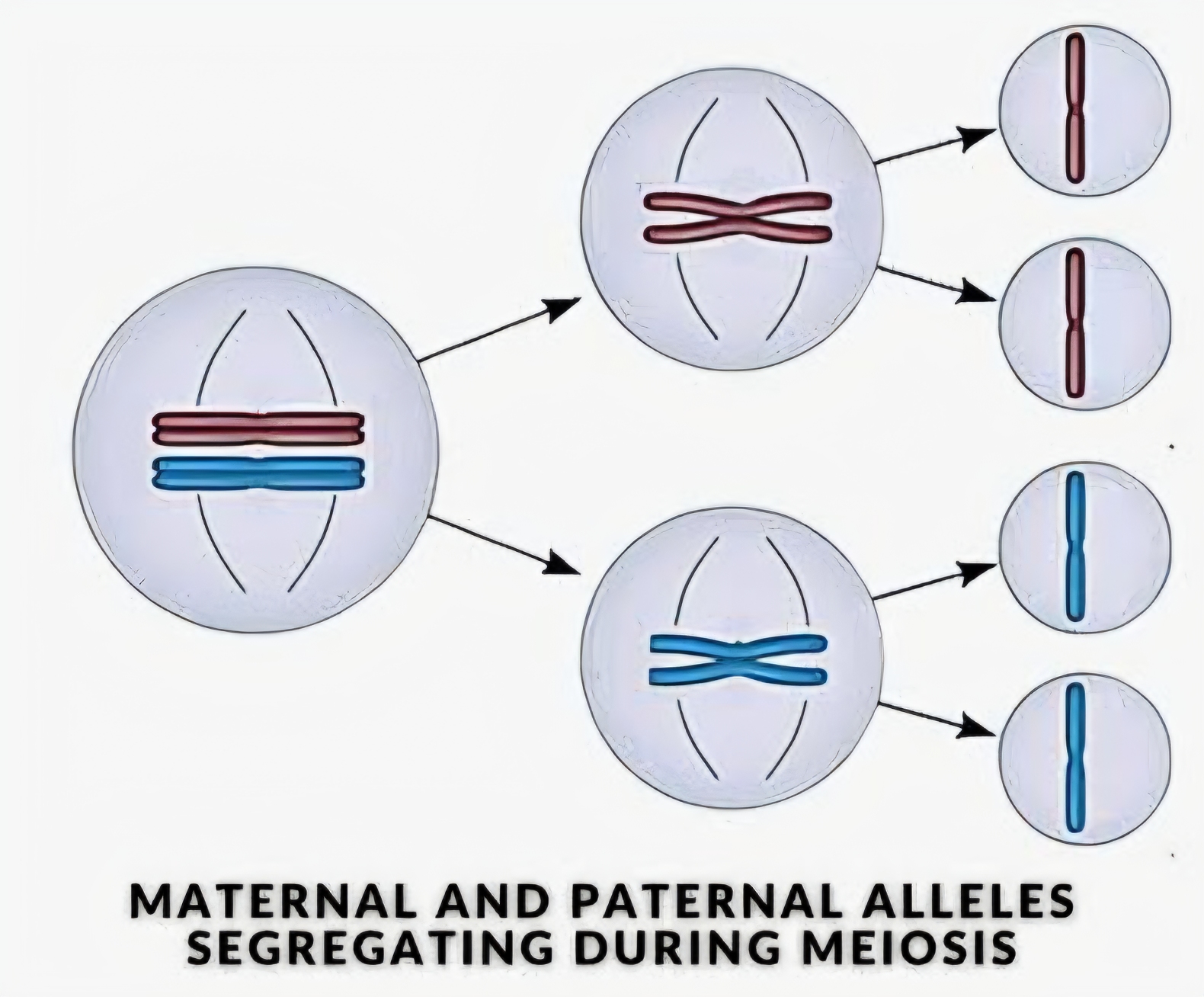
Law of Segregation
each parent has two alleles for a trait, but only one allele is passed to each gamete. These alleles separate randomly during gamete formation (meiosis). Offspring inherit one allele from each parent, explaining why traits can reappear in later generations.
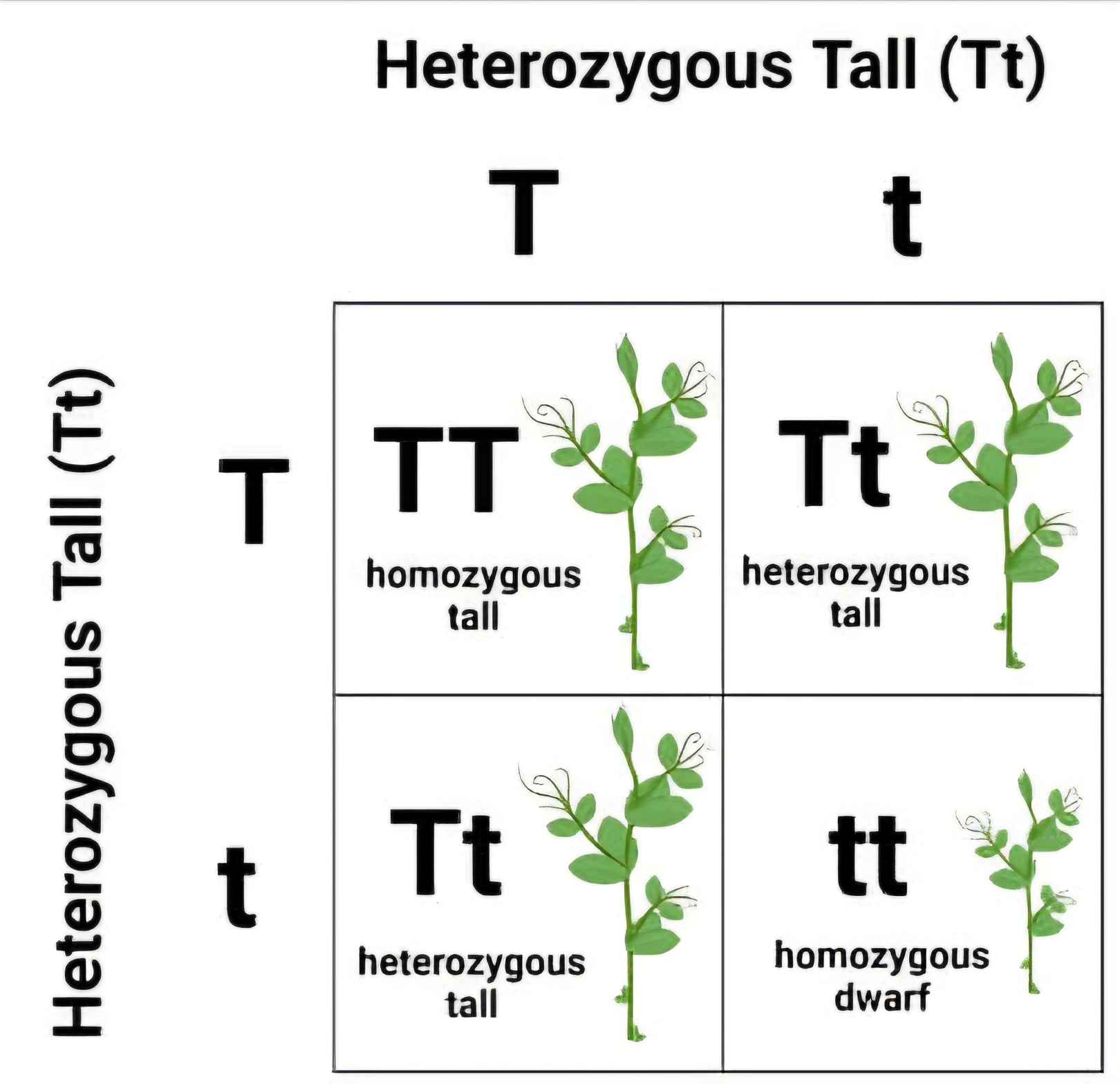
Law of Dominance
for a trait with contrasting alleles, one (dom.) can completely mask the effect of the other (rec.). An organism with at least one dominant allele will show the dominant trait (phenotype).
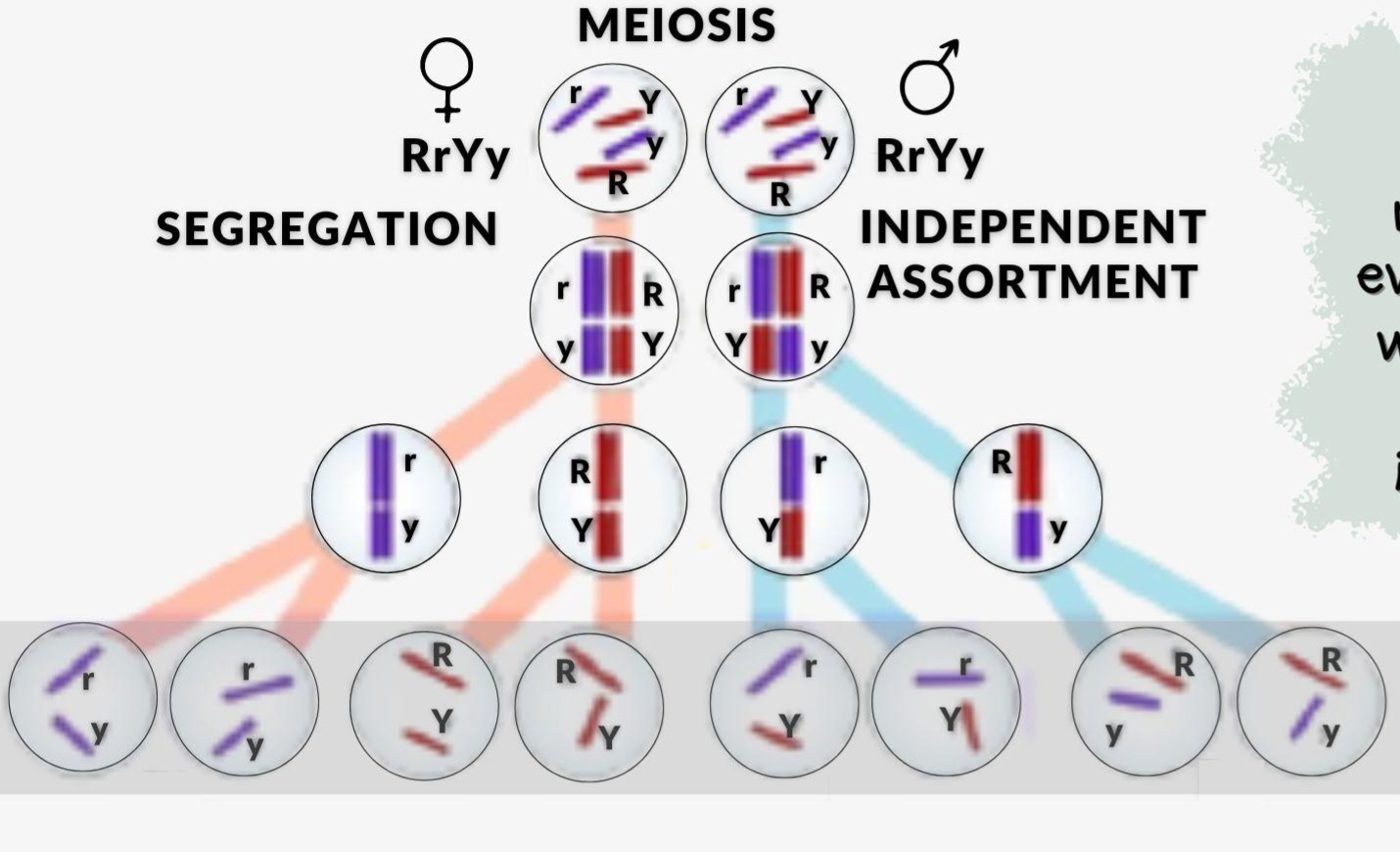
Law of Independent Assortment
alleles for different genes (on different chromosomes) are distributed to gametes independently of each other. This allows for new combinations of traits in offspring, increasing genetic diversity
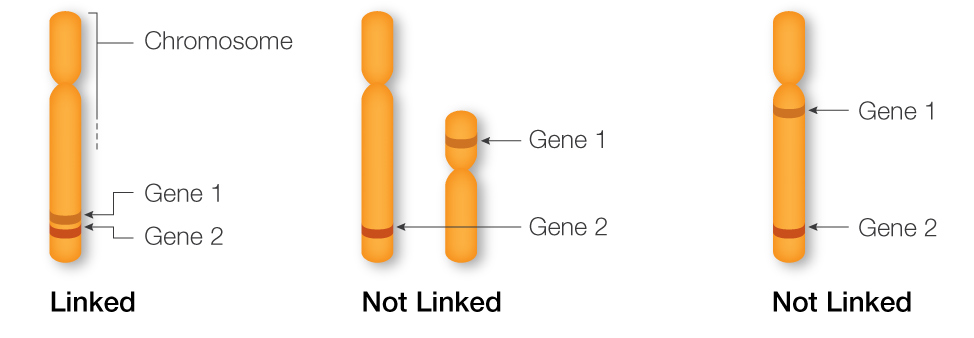
linkage
describes the tendency for genes close together on the same chromosome to be inherited together; lower frequency means genes are closer and higher frequencies means farther apart (violates Law of Independent Assortment)
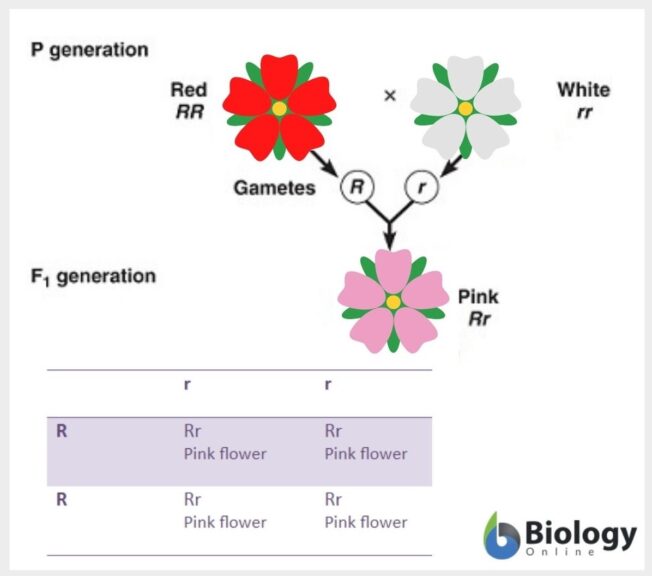
incomplete dominance
a pattern of inheritance where neither allele for a trait is fully dominant, resulting in heterozygous offspring with a blended phenotype (violates Law of Dominance)
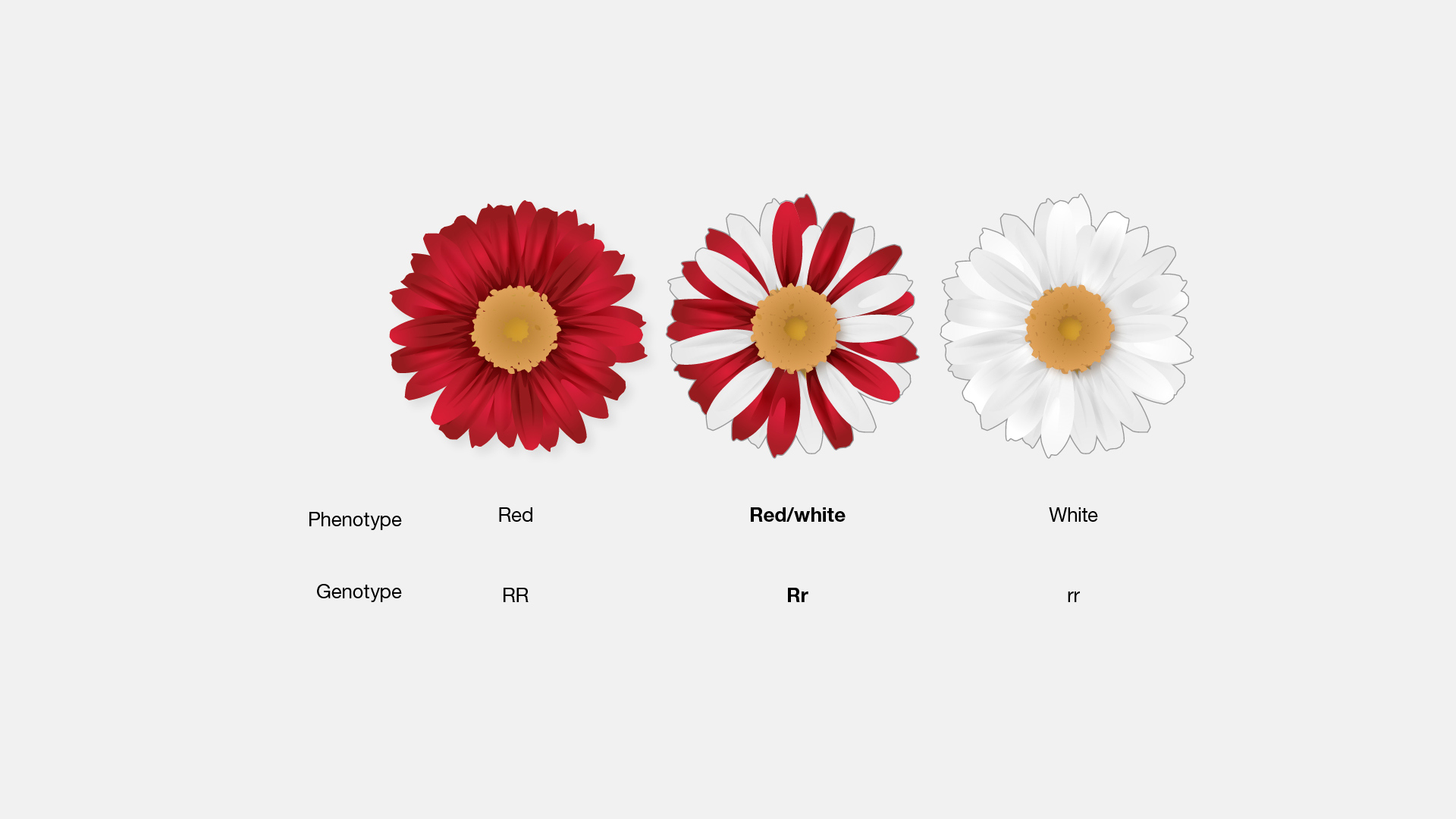
codominance
a genetic pattern where two different versions (alleles) of the same gene are both fully expressed in an organism's appearance (phenotype), resulting in a display of both traits simultaneously, rather than one masking the other; unlike incomplete dominance (blending), codominance shows both distinct traits (violates Law of Dominance)
complementation
when two different recessive mutations, each causing the same mutant trait (like white flowers or deafness), are crossed, and their offspring show the normal, wild-type phenotype (purple flowers, hearing) because each parent provides a functional copy of the gene mutated in the other. This process, often revealed through a complementation test, shows the mutations are in different genes (non-allelic), allowing the normal allele from one parent to "complement" or fix the defect from the other, restoring function. (violates Law of Independent Assortment [different genes for different traits can interact] and Law of Dominance [two different recessive mutations can restore a normal phenotype when combined
![<p>when two different recessive mutations, each causing the same mutant trait (like white flowers or deafness), are crossed, and their offspring show the normal, wild-type phenotype (purple flowers, hearing) because each parent provides a functional copy of the gene mutated in the other. This process, often revealed through a complementation test, shows the mutations are in different genes (non-allelic), allowing the normal allele from one parent to "complement" or fix the defect from the other, restoring function. (violates Law of Independent Assortment [different genes for different traits can interact] and Law of Dominance [two different recessive mutations can restore a normal phenotype when combined</p><p class="is-empty is-editor-empty has-focus"></p>](https://assets.knowt.com/user-attachments/830721ea-668a-4a9e-9852-772d81f10bec.jpg)
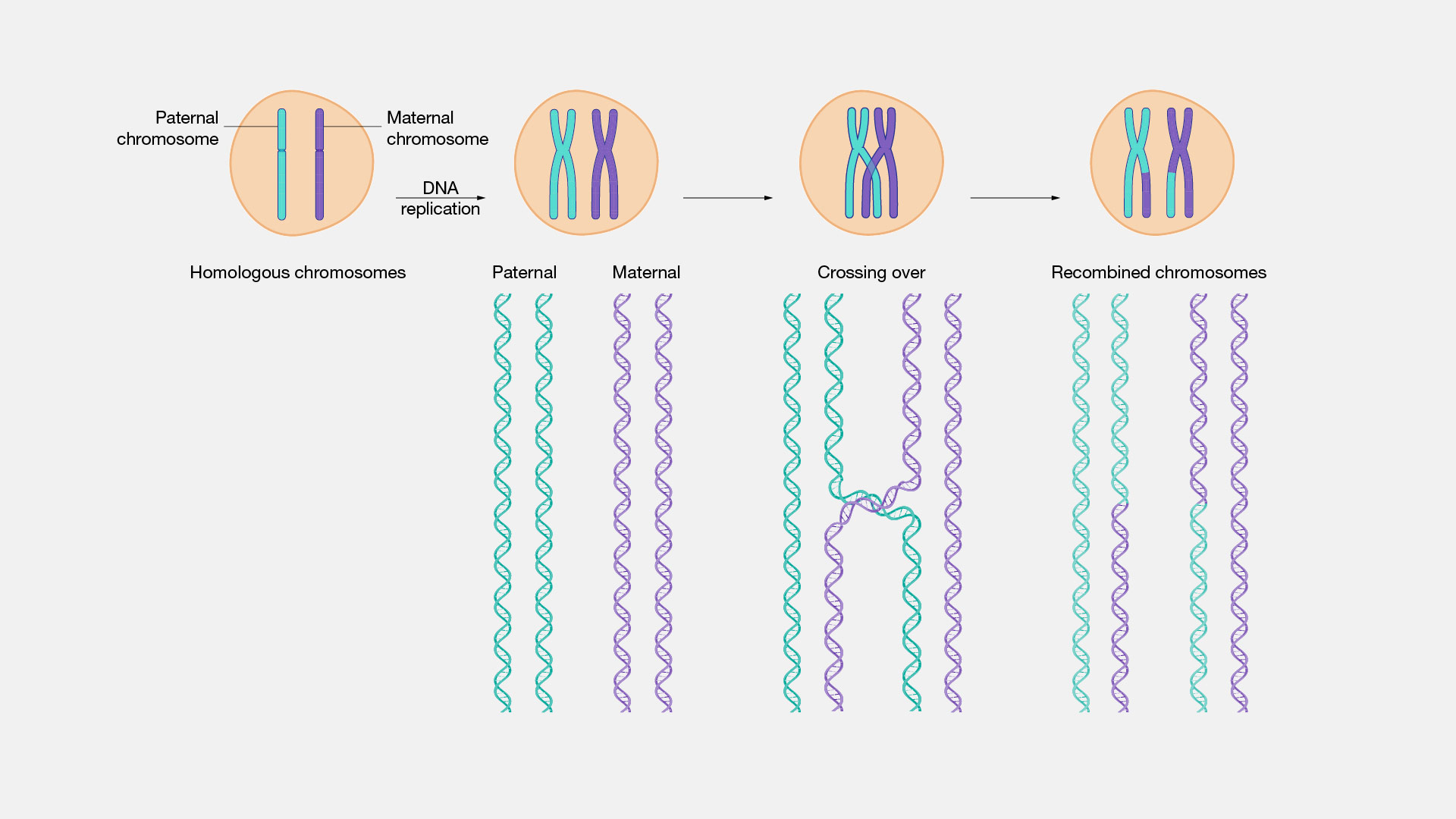
recombination
the process where DNA strands break, swap segments, and rejoin, creating new combinations of alleles (prophase I)