hydrogenic atoms
 Call Kai
 Learn
Learn Practice Test
 Spaced Repetition
 Match
Match Flashcards
 Knowt Play
1/63

There's no tags or description
Looks like no tags are added yet.
Name | Mastery | Learn | Test | Matching | Spaced | Call with Kai |
|---|
No analytics yet
Send a link to your students to track their progress
64 Terms
what type of wavefunctions do hydrogen atoms have?
analytical wavefunctions
what is an analytical wavefunction?
it can be written for a hydrogen atom as an explicit mathematical expression (exact formula)
can solve exactly Schrödinger equation
how many electrons does a hydrogenic atom have? what is the interaction? show diagram
one electron
the electron nucleus interaction is electrostatic because they have electric charges
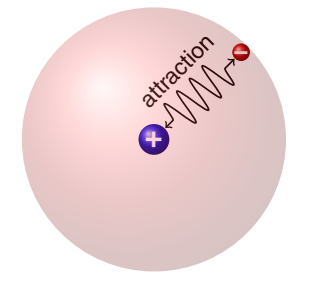
show diagram of nucleus and electron and show r and q
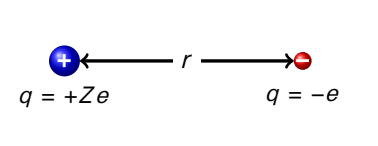
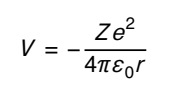
what are the terms?
Z is atomic number
r is the distance between nucleus and electron
e is elementary charge
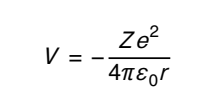
what is the relationship been r and V? what does the negative sign mean?
r is inversely proportional to V - closer to the nucleus the electron is, the stronger the attraction is
negative sign shows that the attraction is due to opposite charges

how is the Schrödinger equation solved for a hydrogenic atom?
what are the different components?
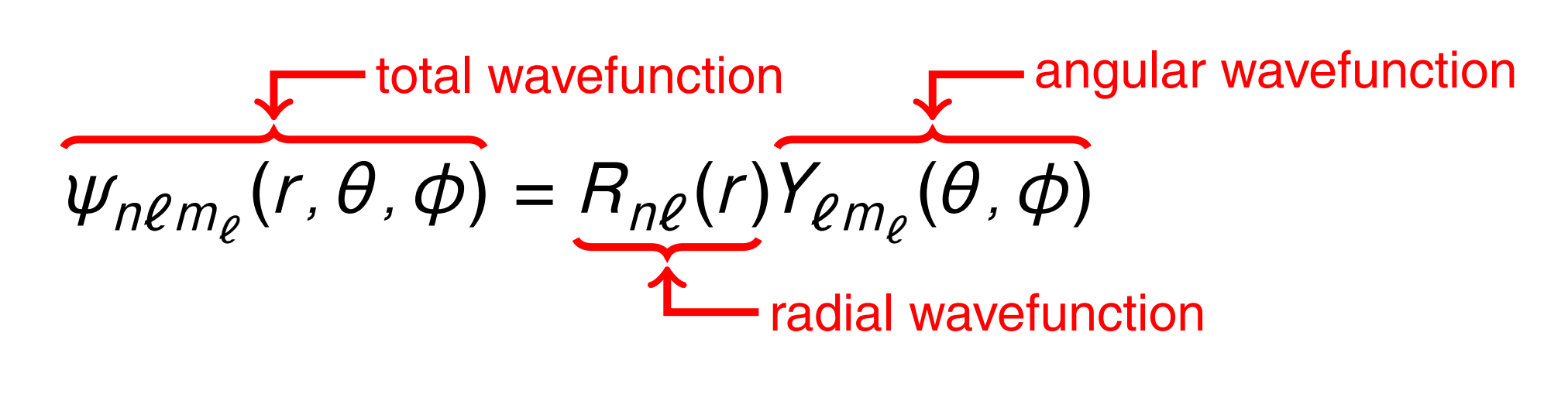
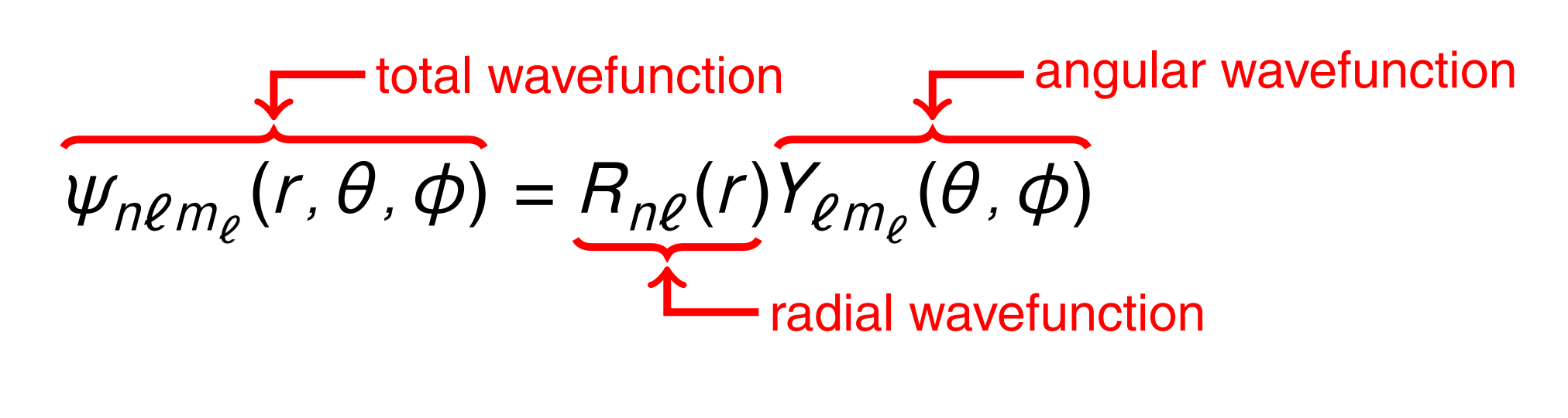
radial and angular degrees of freedom are separated
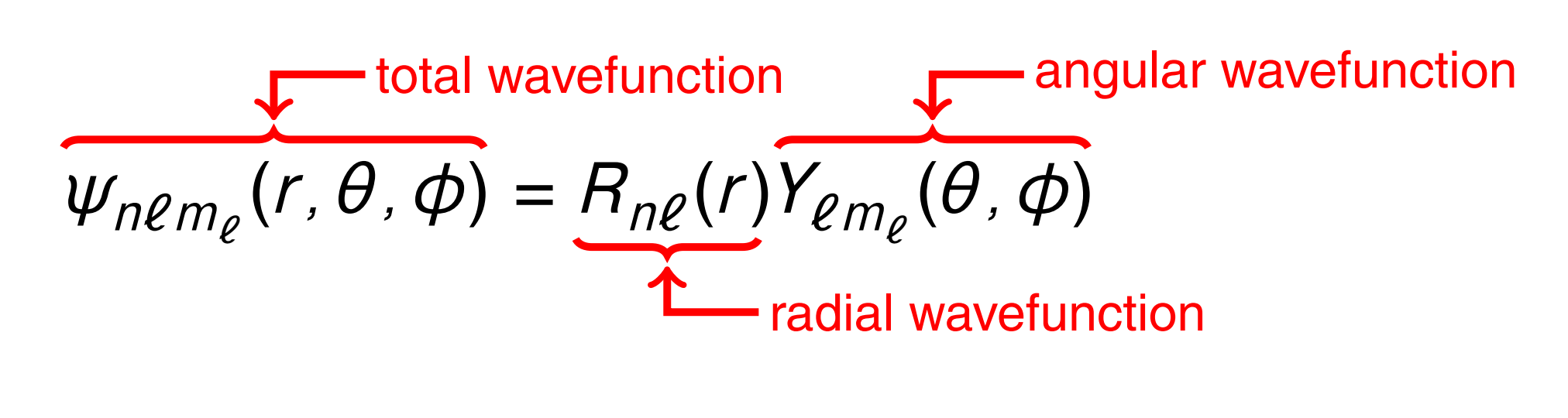
what does the wavefunction of a hydrogenic atom depend on?3
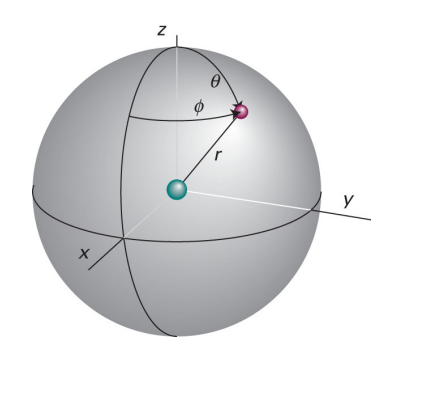
r (distance from nucleus)
θ (polar angle)
ϕ (azimuthal angle)
show diagram of r, θ and ϕ on xyz axes
how is the angular problem solved?
the angular wavefunctions are the wavefunctions of particle on a sphere
spherical harmonics
what is the radial problem?
describes how the wavefunction changes as the electron moves towards or away from the nucleus as they interact
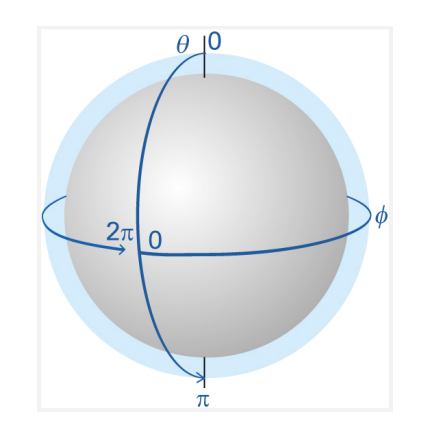
show diagram of how θ and ϕ change on a sphere (i.e. what is their range)?
θ is 0 to π and is how far from north pole
ϕ is 0 to 2π and is how far from x axis
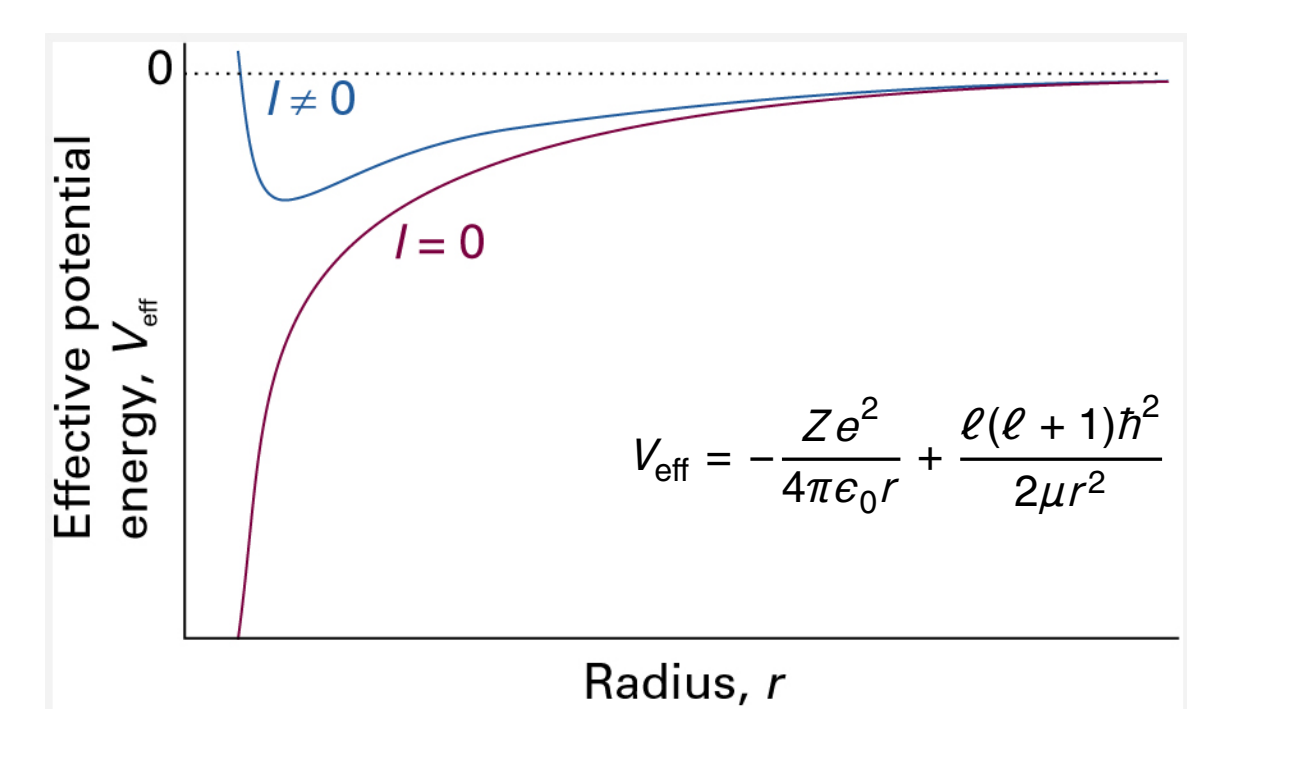
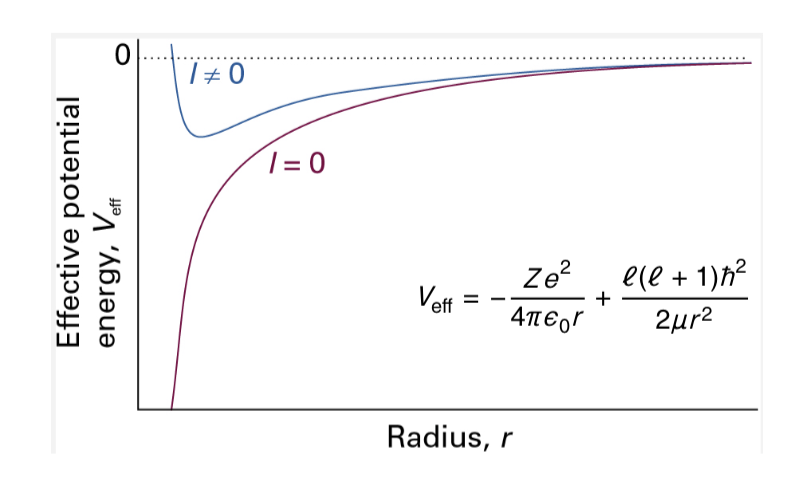
show effective potential vs radius graph for l = 0 and l ≠ 0
what does Veff depend on?
depends on r and ℓ (angular quantum number)
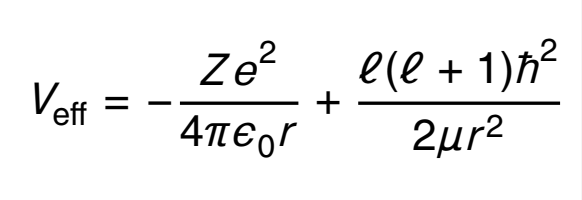
what are the terms?
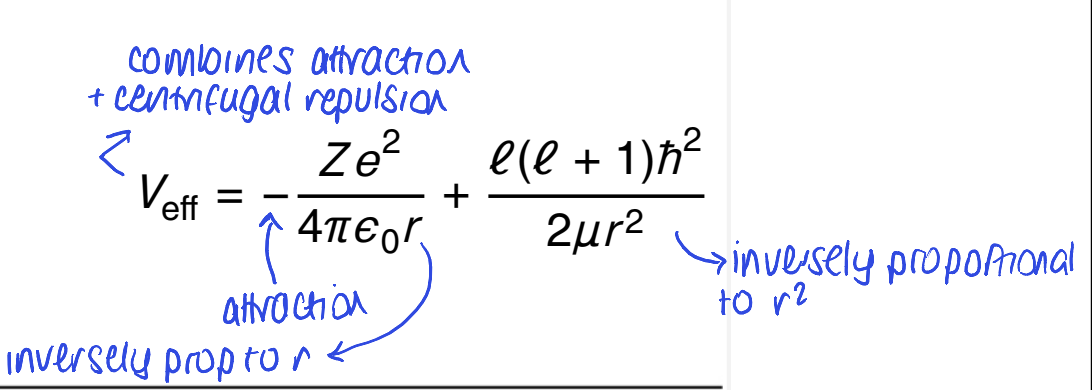
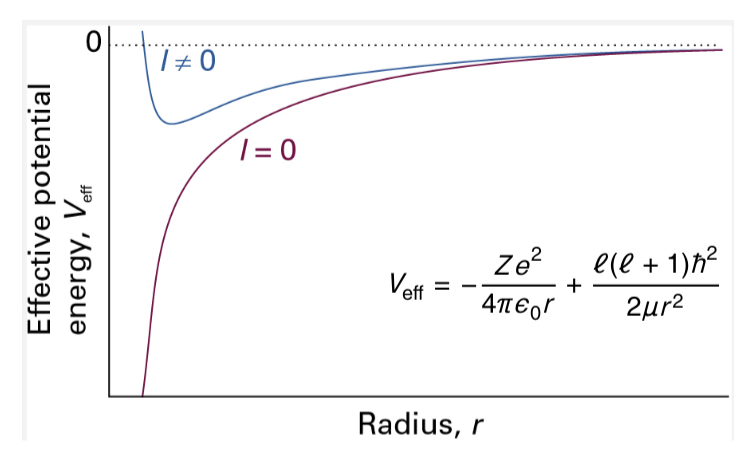
explain ℓ = 0
electron is not rotating around nucleus
has no angular momentum
effective potential is purely electrostatic
goes to -∞ as r approaches 0
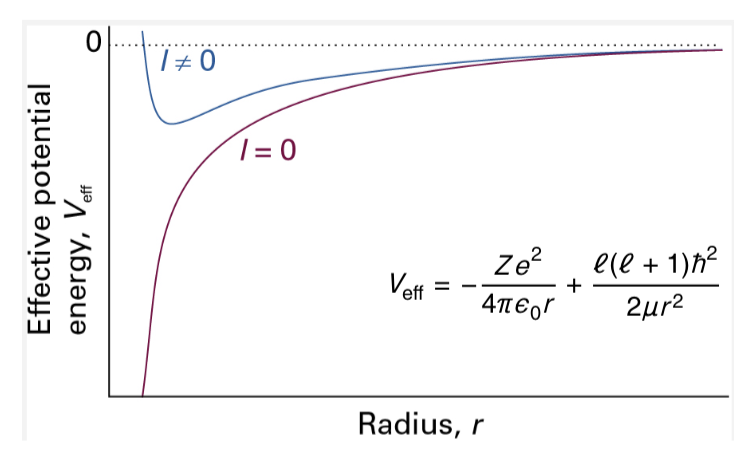
explain ℓ ≠ 0
the term is positive, which shows that there is a repulsive force pushing the electron away from the nucleus
term remains attractive at long distances (electrostatic attraction dominates) and becomes repulsive at short distances (centrifugal repulsion dominates)
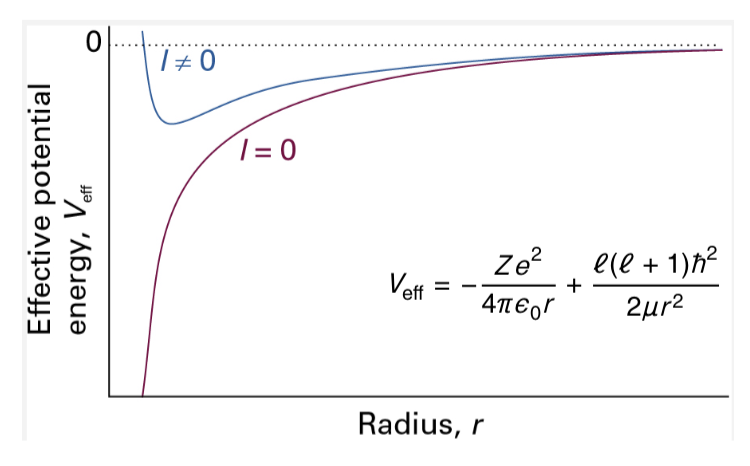
what does this mean about orbitals?
s orbitals, wavefunction is not zero at r = 0 (at nucleus)
in all other cases (p,d,f) the wavefunction vanishes at r=0
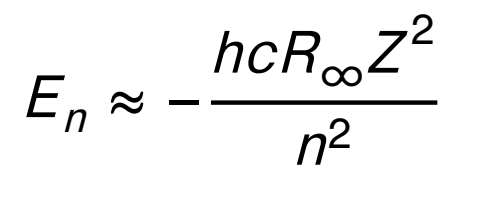
what do the bound state energies depend on?
the principal quantum number , n
determines the value of the total E
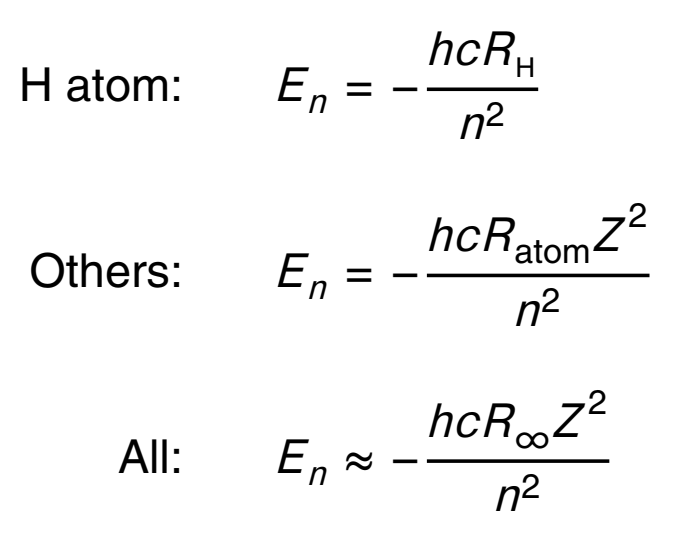
explain the difference between the first two
what is R∞?
Z2 is atomic number, Rydberg constant changes from atom to atom due to changing nuclear mass (small effect on reduced mass)
R∞ is when the nuclear mass is infinitely large compared to electron mass
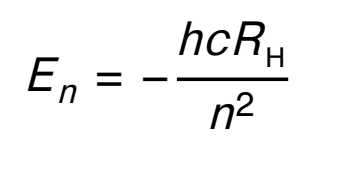
show EL diagram
how does energy change as n increases? what is ∞?
energy gets less negative as n increases and approaches zero as n → ∞
the ionisation limit = the point where the electron has just enough energy to escape from the nucleus
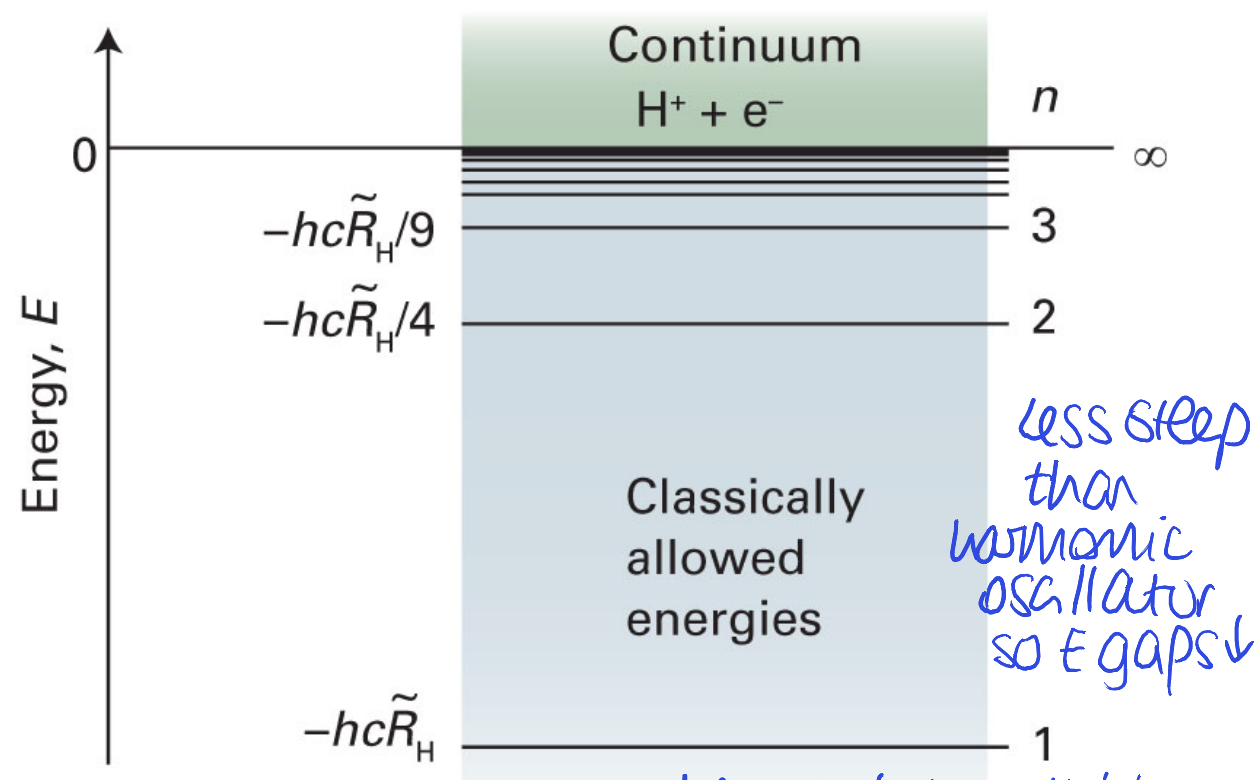
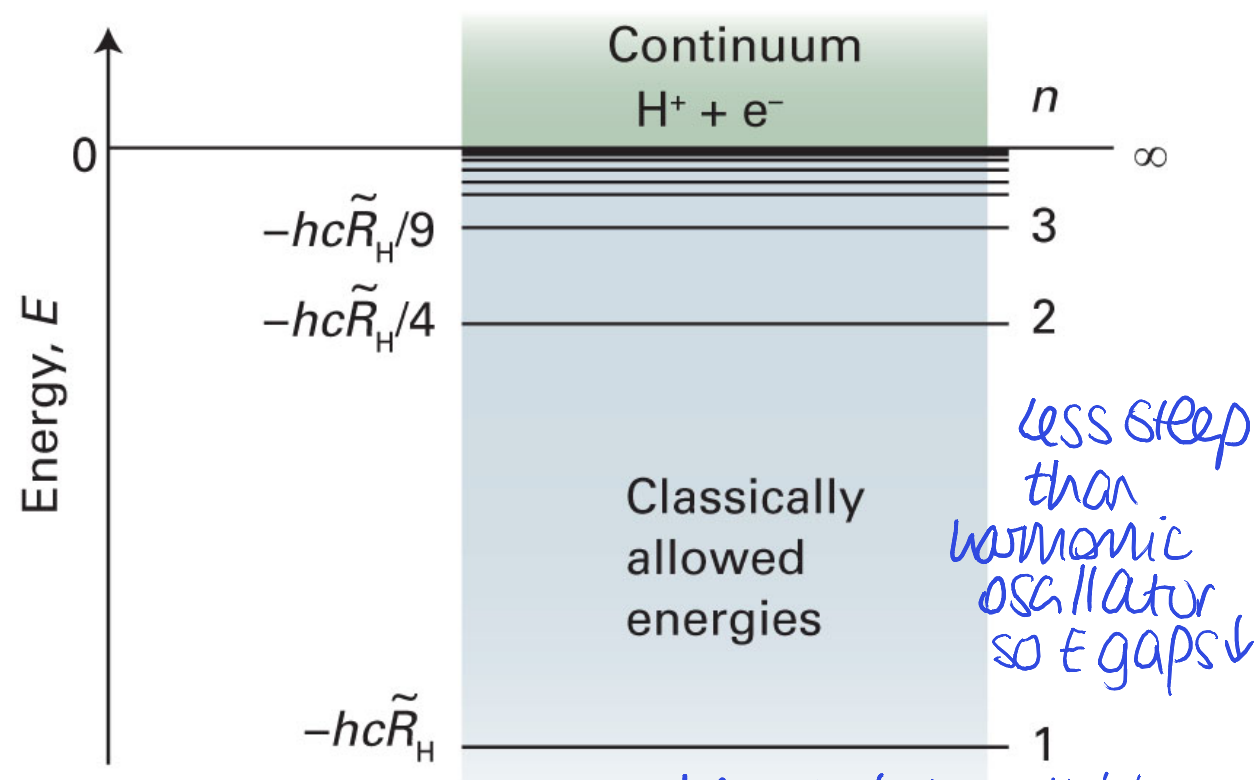
what can you say about bound state energies and why?
bound state energies are negative - as we are measuring energy relative to the state where the electron is stationary but infinitely far away (bound state has lower E than that)
why is ℓ and mℓ not included?
energy of rotation is already included in effective potential for radial motion
mℓ has no effect on any energy - quantum number associated with plane and direction of rotation not with speed and energy of motion
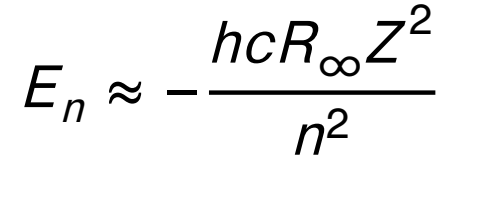
what does this say about energy gaps? potential energy?
En and ΔEn are inversely proportional to n2
decrease in E gaps with increasing energy
effective potential goes up less steeply than harmonic oscillator (flattens out for large r)
what are the allowed values of n? what does it determine?
determines E of orbital

what are the allowed values of ℓ? what does it determine?
speed of what?
determines the magnitude of angular momentum and therefore speed of rotational motion of electron around nucleus
goes up to n-1 as limited by E term - can’t rotate too fast (more E than is available)

what are the allowed values of mℓ? what does it determine?
determines the z component of the angular momentum

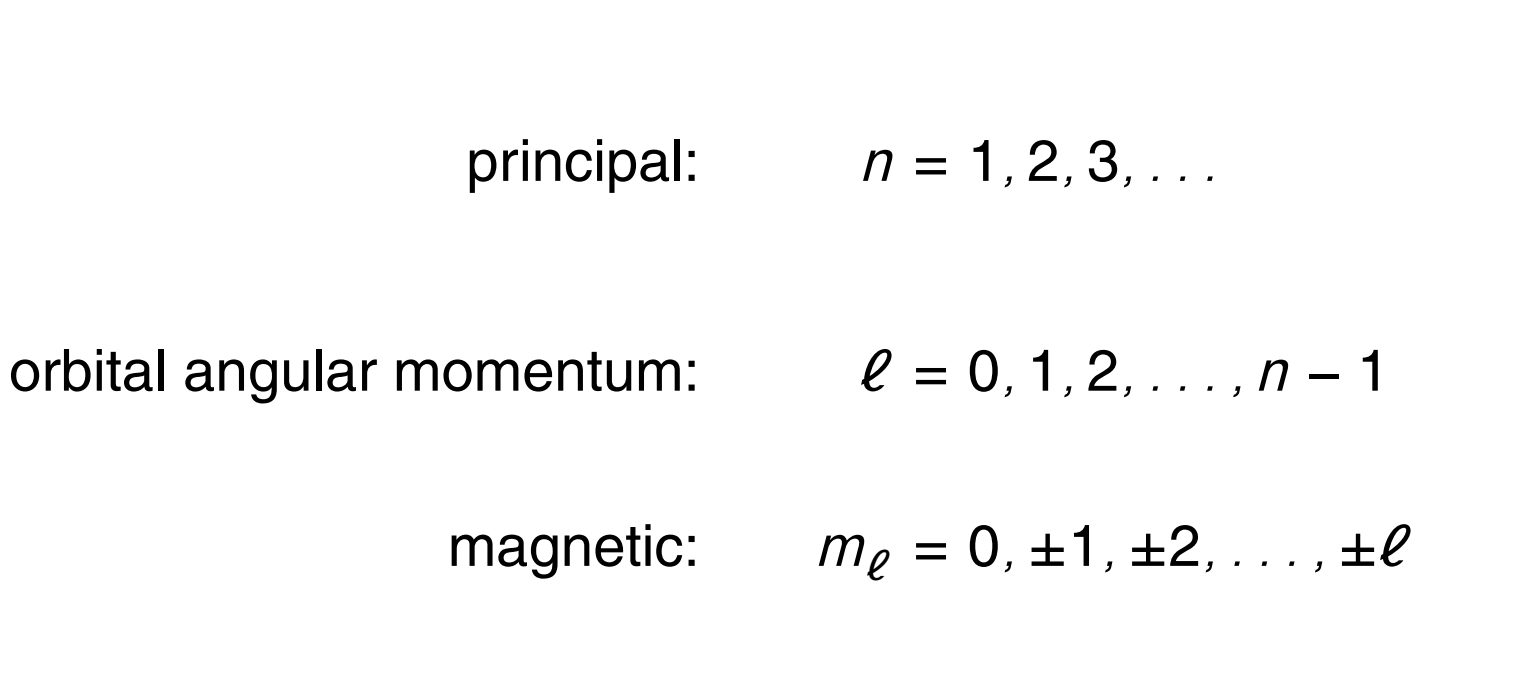
what can you say about the relation of all three?
n constrains ℓ
ℓ constrains mℓ
what are the shells? what are they made up of?
orbitals with the same value of n
K,L,M,N
what are subshells made up of? what are they?
orbitals with same value of ℓ
s,p,d,f
ℓ = 0 is s subshell
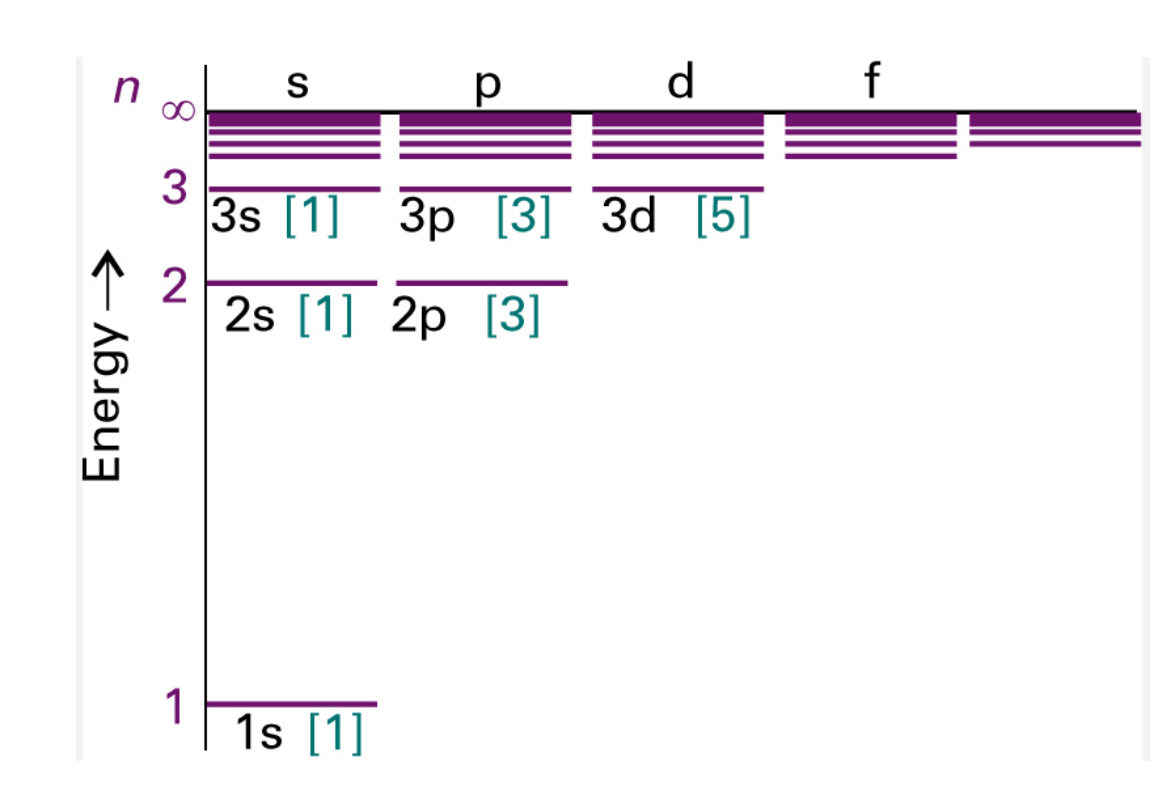
what are the numbers in square brackets? what quantum number is this?
how many orbitals are in a sub shell
s sub shell has one orbital (mℓ = 0); p sub shell has 3 orbitals (mℓ = -1,0,1)
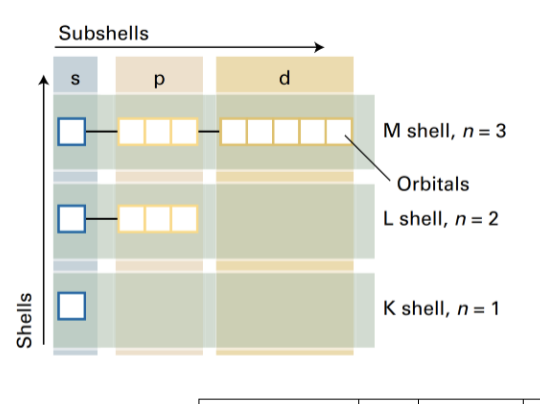
what is the difference between hydrogenic atoms and others?
what does E depend on?
subshells degenerate for hydrogenic atoms (E only depends on principal quantum number)
for others: s<p<d
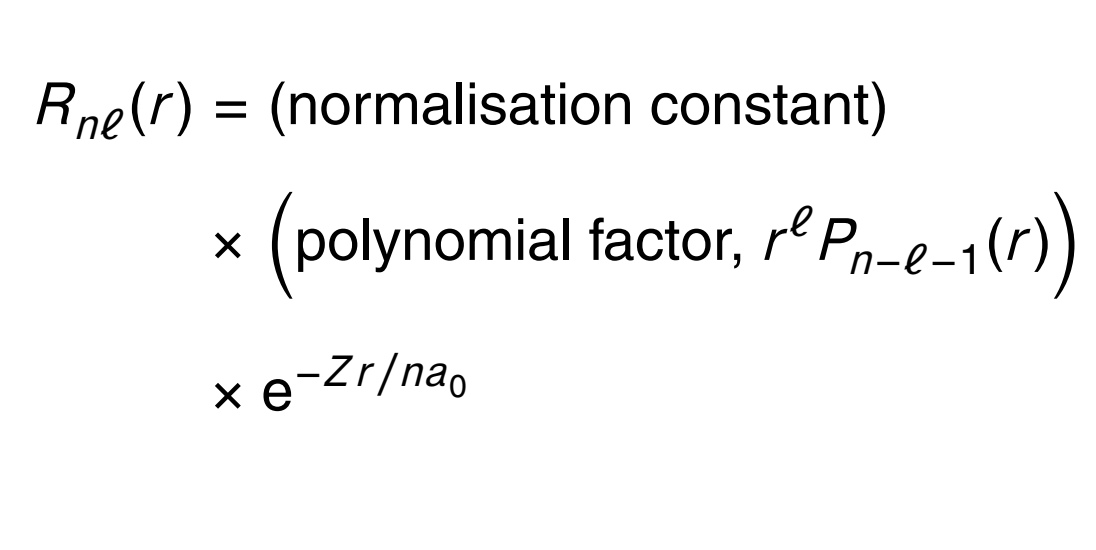
what is the normalisation constant specified by?
what is the polynomial factor specified by?
how does the final term change with r?
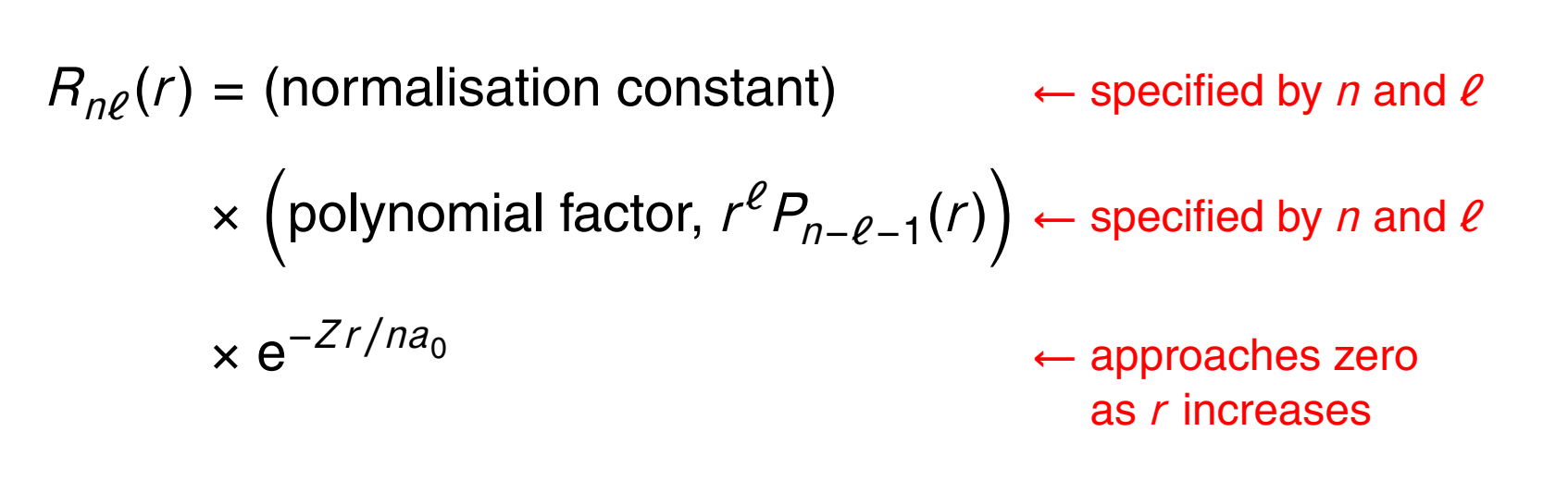
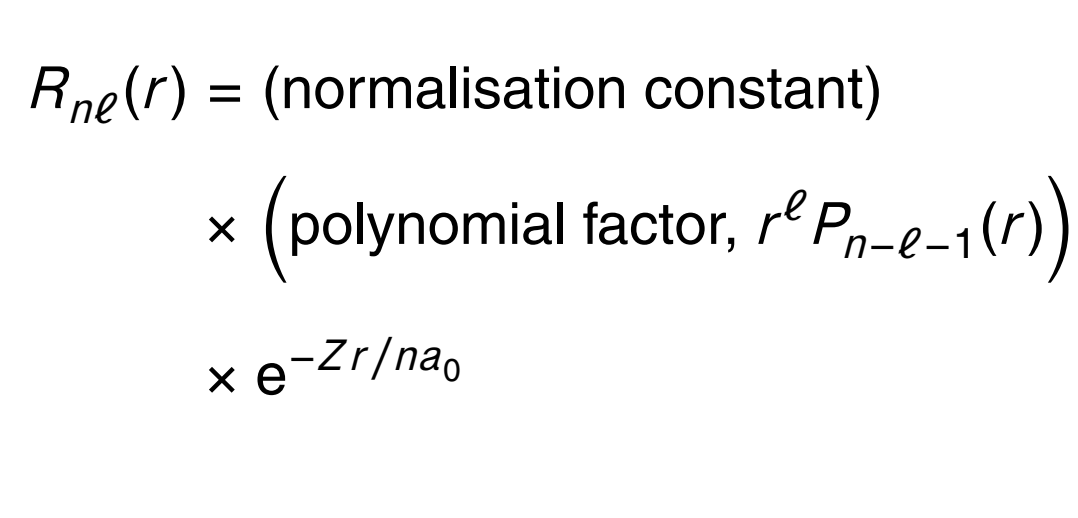
what is the purpose of the exponential decay?
ensures that the wavefunction approaches zero as r→∞
if electron is bound, the probability of finding it a long way from the nucleus has to go to zero
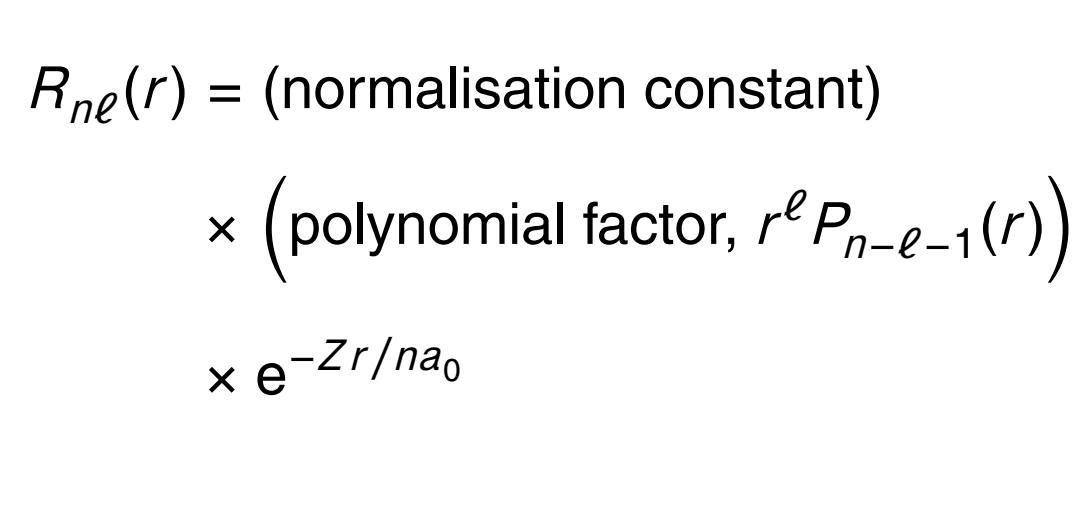
what does rℓ mean?
rℓ tells you what happens near the nucleus. if ℓ = 0, rℓ is just 1.
wavefunction has a finite value at r=0
if ℓ=1, it is r (wavefunction goes to zero linearly as r→0)
if ℓ=2, it is r2
electrons in orbitals with higher angular momentum are progressively excluded
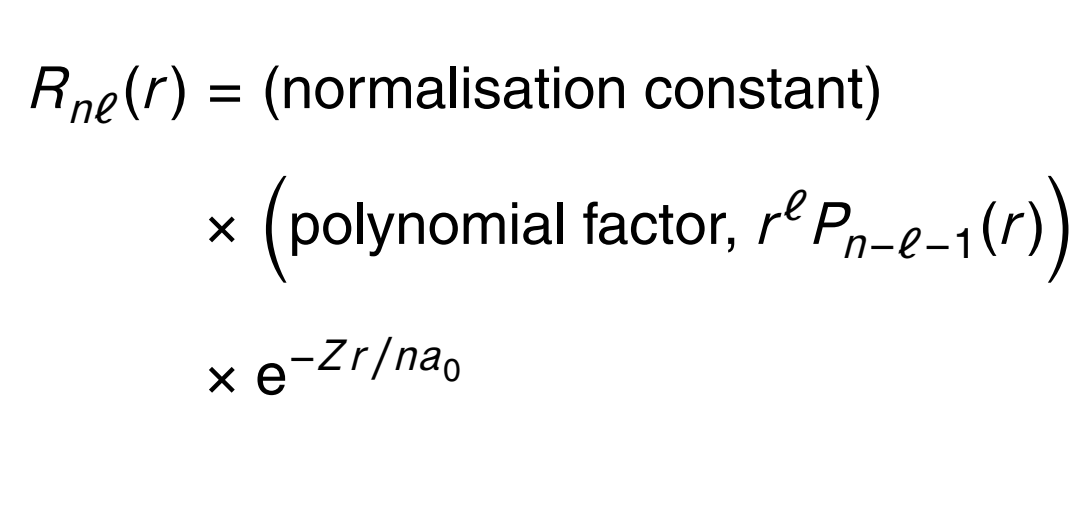
what does the rest of the polynomial term mean?
accounts for radial nodes (wavefunction passes through 0)
number of radial nodes is n - ℓ - 1
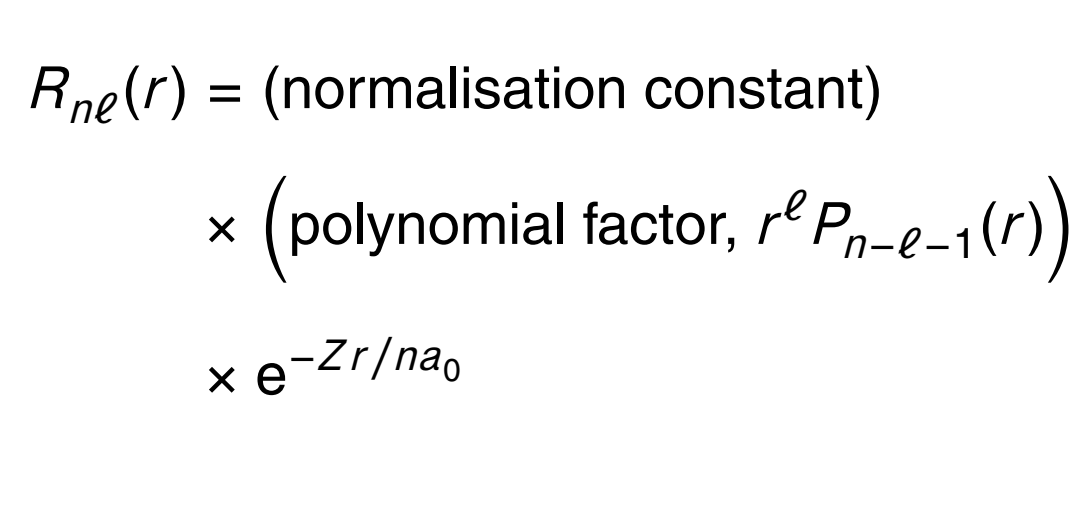
what does the normalisation constant do?
makes sure the total probability is 1 when you integrate over all space
what is the radial distribution?
what is the radial distribution function a product of?
the probability of finding an electron between r and r+dr away from the nucleus
a product of the radial probability density by the radial volume element
what is the radial volume element?
accounts for how much space there is at each distance (size of each shell around the nucleus)
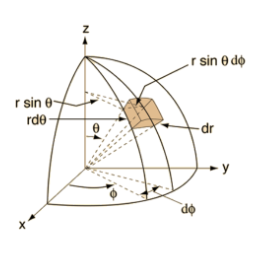
what does this show? what are the dimensions in radial and angular direction?
what is thevolume proportional to?
the volume element is the chunk of space
dimensions dr in radial direction
rdθ in one angular direction and r sin(θ)dφ in the other
vol proportional to r2
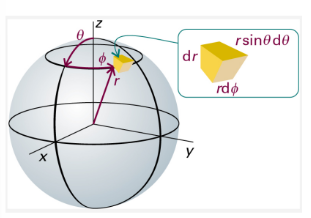
what is the overall volume element in Cartesian? what is it in spherical coordinates?
Cartesian = dxdydz


what does r2 mean?
telling us that the amount of space at a given distance from the origin increases with the square of that distance
at larger distances from nucleus, there is more room for electron to move in. even if probability density is lower at larger r, there is more space
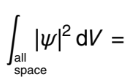
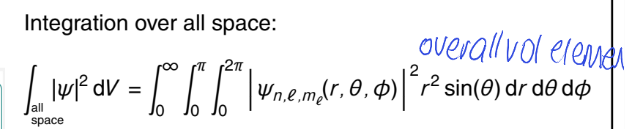
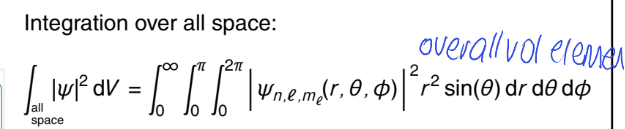
show the separation of the integral
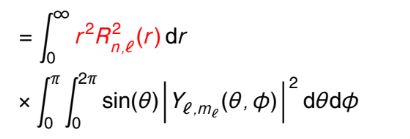

what does the radial distribution function show?
tells us the probability of finding the electron in a thin spherical shell at distance r from the nucleus
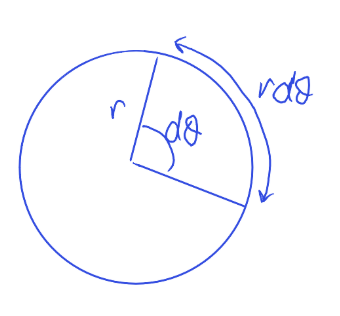
show r, dθ and rdθ on circle

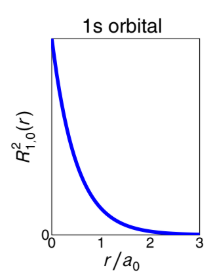
show radial wavefunction for 1s orbital
how is it written?

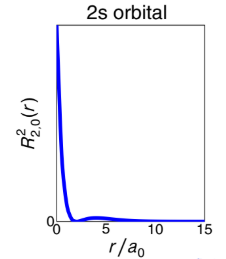
show radial wavefunction for 2s orbital?
how is it written?

show radial wavefunction for 3s orbital?
how is it written?
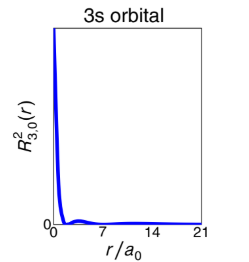
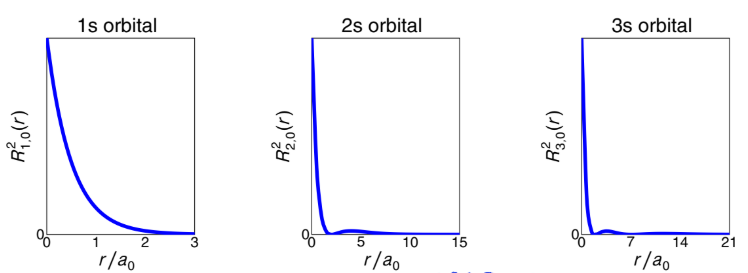
what does this show?
if l = 0, radial wavefunction and its square do not vanish at r=0
probability density is at its max at the nucleus (r=0), and decreases as you move outward

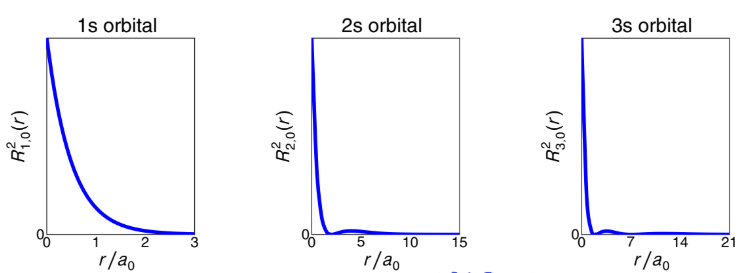
what is the probability of finding the electron at the nucleus?
zero despite probability being highest there
at r=0, r2=0
spherical shell of radius zero has volume zero
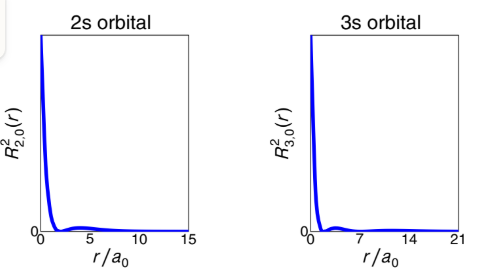
what are the nodes?
2s has one radial node
3s has two
point where Rn,l( r) flips sign
the probability doesnt vanish there for s orbitals
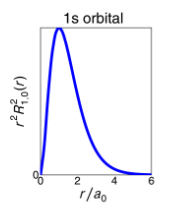
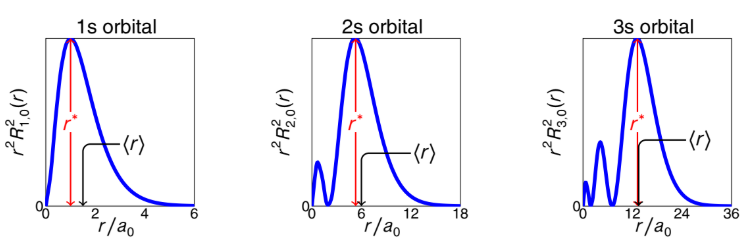
show radial distribution wavefunction for 1s orbital
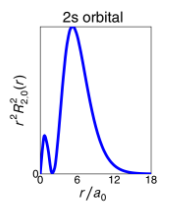
show radial distribution wavefunction for 2s orbital
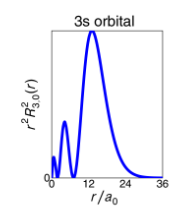
show radial distribution wavefunction for 3s orbital
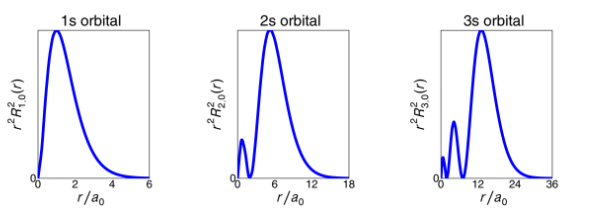
how do these differ from the radial wavefunctions?
radial probability density was max at nucleus for all 3 orbitals, the radial distribution function is zero there
starts at 0, rises to max at a finite distance and falls again at large r
at r=0,r2 =0 so whole thing is zero (regardless of R2)
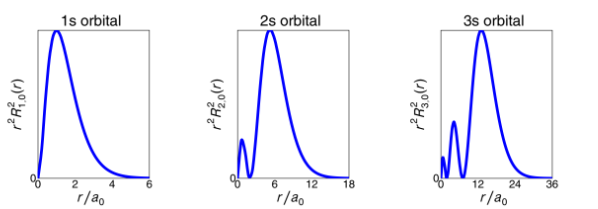
what does the position of max tell you?
what is this for the H atom?
the most probable distance (most likely to find electron)
considering both probability density and available volume
for 1s orbital of H atom, this is the Bohr radius (a0)
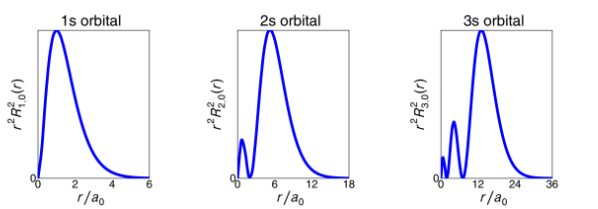
what happens as n increases?
main peak moves outwards, function becomes more spread out
higher E orbitals are larger and electron is found further away from nucleus
2s and 3s show secondary maxima
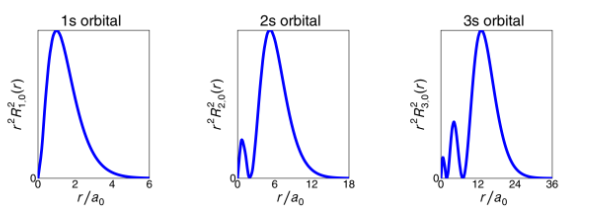
show r*
r* is most probable distance
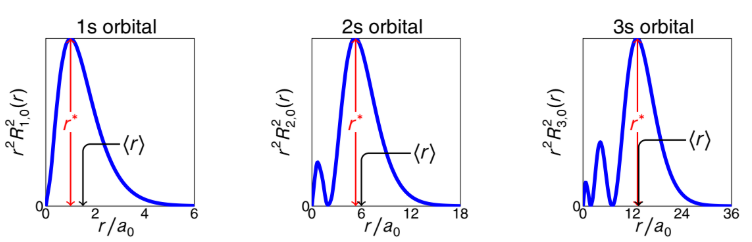
what is ( r ) ?
mean distance of electron and nucleus
found by calculating expectation value

what does this calculate?
the expectation value

what is a0? what is Z?
Bohr radius sets the scale (around 53ppm)
Z tells you that for higher nuclear charges, the electron is pulled closer to the nucleus

what does n2 show?
what does |ℓ|2 show?
dependence on n2 = higher energy orbitals are larger
presence of negative |ℓ|2 (affects how much total energy is used up as potential for radial motion) = the more energy is kinetic, the larger the orbital
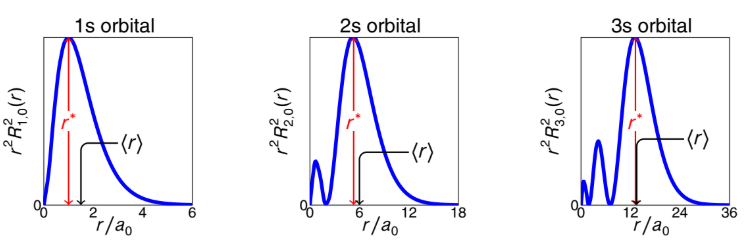
why is ( r ) > r*?
distribution is not symmetric
has a long tail extending to large r = pulls the average outward