Section 3 CH 26 Compounds containing Carbonyl groups
 Call Kai
 Learn
Learn Practice Test
 Spaced Repetition
 Match
Match Flashcards
 Knowt Play
1/9

There's no tags or description
Looks like no tags are added yet.
Name | Mastery | Learn | Test | Matching | Spaced | Call with Kai |
|---|
No analytics yet
Send a link to your students to track their progress
10 Terms
What is a carbonyl group and the physical properties:
A carbonyl group contain C = O, such as aldehydes and ketones.
The physical properties:
The carbonyl group is strongly polar with the carbon being delta positive and the oxygen being delta negative.
These forces means these compounds have a higher boiling point than alkanes, but lower boiling point than hydrogen bonding present compounds
Shorter chain carbonyl containing compounds mix with water, because the hydrogen bonding in the water and the oxygen on carbonyl compound forms a bond.
With increased length decreased ability of carbonyl compound mixing with water.
The C=O bond is highly reactive, this is because of the large difference in the electrongeativity between the carbon and the oxygen. This causes the carbon to be slighly positive, so nucleophiles can attack (most reactions nucleophillic addition)
Carboxylic acids:
They contain a carbonyl group and a hydroxy group (which is also in alcohols), but the difference is that the OH in carboxylic group is more acidic than OH in alcohols.
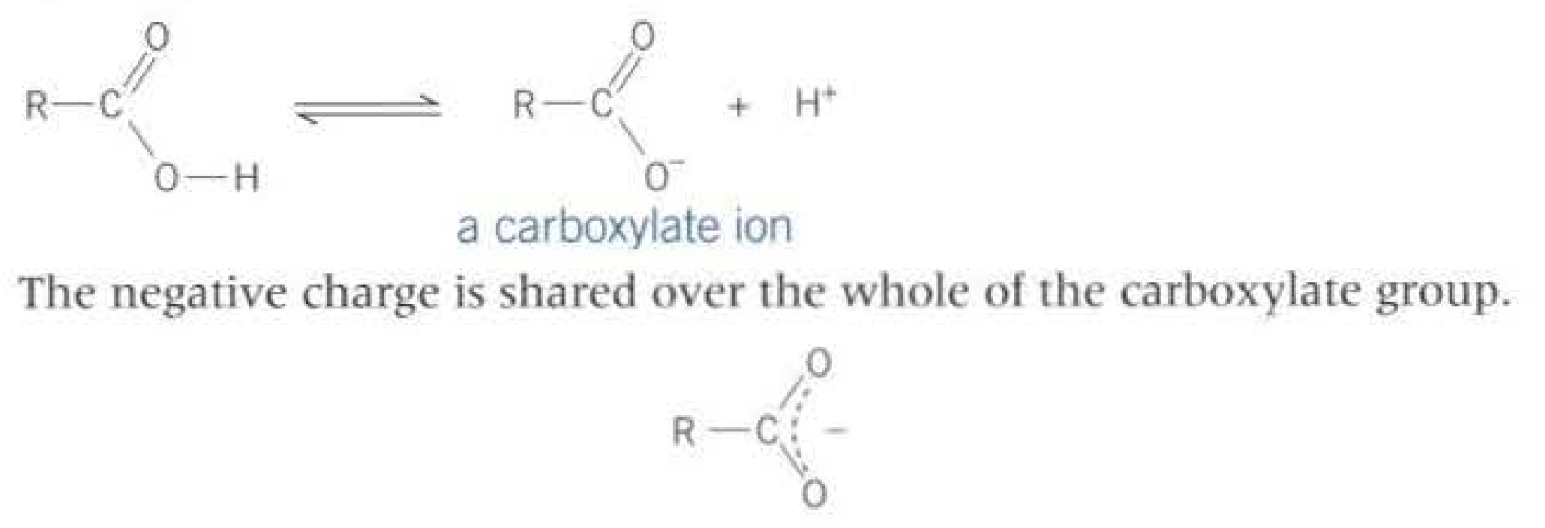
The picture above shows delocalisation which makes the ion more stable.
General reaction with a carbonyl compound
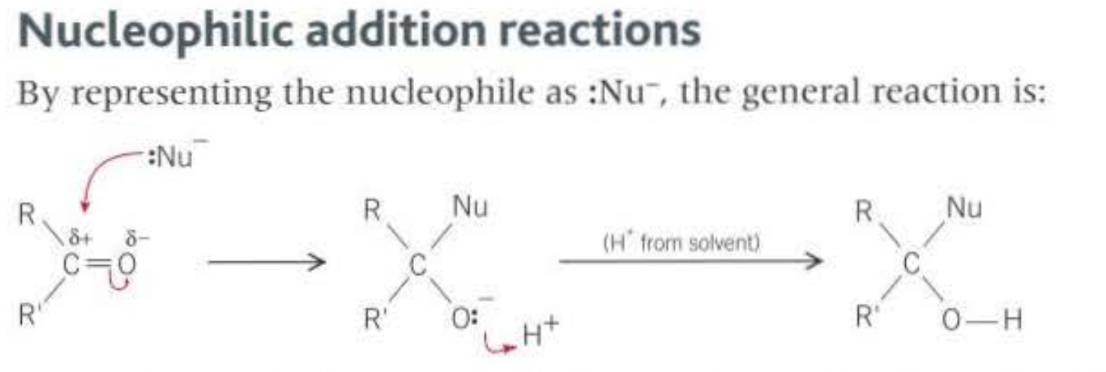
The reason that sometimes this carbon forms a sterioisomerism, is because the nucleophile attacks from above or below the plane (and the plane being trigonal planar)
With the idea that this compounds chiral carbon contains 4 different R groups bonded to it (not the one in the picture because R, R’ could be the same)
What are the two tests to distinguish between aldehydes and ketones?
Fehlings test (warmed): Blue to red percipitate with aldehydes (remains blue with ketones)
Cu2+ becomes Cu+
Tollens silver mirror (warmed): Silver mirror with aldehyde (no change with ketone)
Ag+ becomes Ag
Key information about Esters:
Esters:
They have a functional group of COO
The H from the alcohol and the OH from the carboxylic acid
To name an Ester: The alchol first then the carboxylic acid
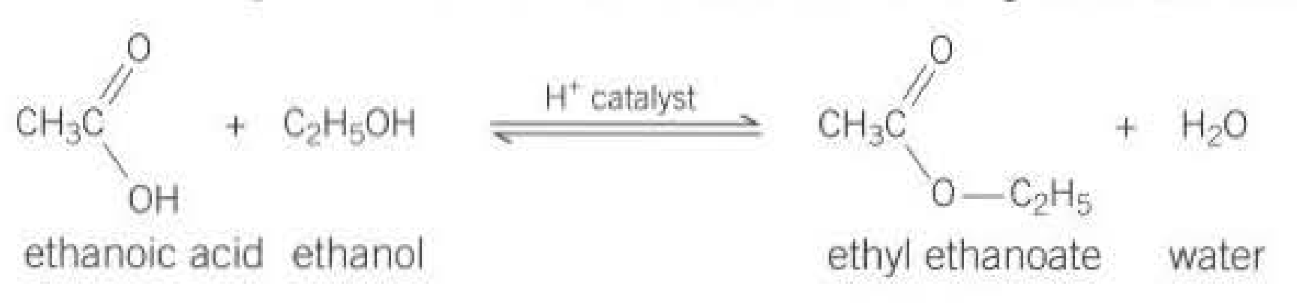
Formation of Esters: OH from the carboxylic acid// H from the alcohol
Require a strong acid catalyst (concentrated sulfuric acid)
It is a reversible reaction
Requires carboxylic acids and alcohols
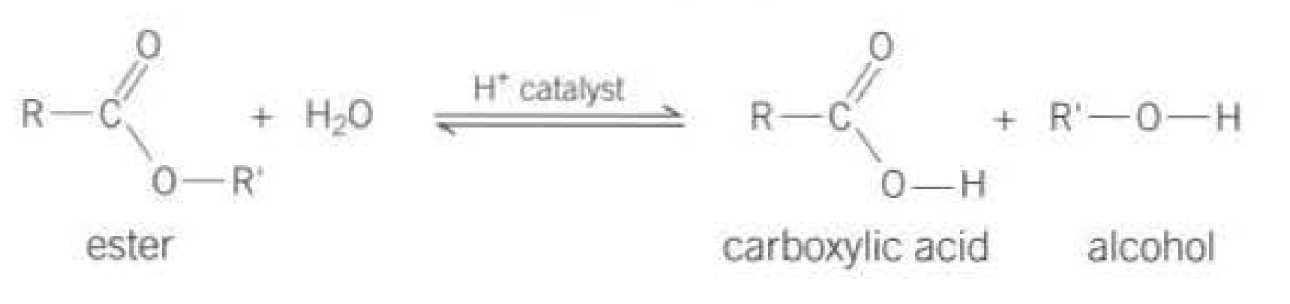
Hydrolysis of Ester (acid and alkaline)
For the hydrolysis reaction using an acid:
For the hydrolysis reaction using a base:
The salt of the acid is formed rather than the acid itself
The last step means there is no equlibrium set, so the reaction goes to completion

Key Note: The Na+ and the CH3COO- exists like this beacuse there is not actually a covalent bond, it is an ionic bond between them, so in water you find this dissociates into ions.
Uses of Ester
Uses of Esters:
In fats and oils, there is ester components. The glycerol (propane-1,2,3-ol) and 3 fatty acids (carboxylic acids) react to form ester bonds.
They can be hydrolysed using sodium hydroxide. Both products from hydrolysis are useful, the glycerol and mixture of sodium salts of the three acids that formed part of the ester. The salts are soaps. The glycerol (contains OH bonds so very soluble in water) is used as a solvent, in many medicines and in food industry (found in toothpaste)
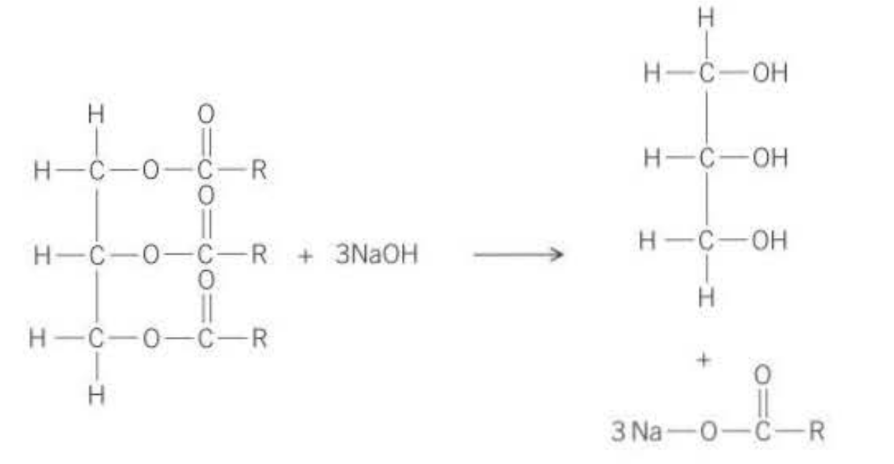
The RCOO- and the Na+ with dissociate as they are ionic. The long hydrocarbon chain which is non-polar and the COO- is polar and ionic. Where the hydrocarbon will mix with the grease and the COO- mixes with the water. Therefore is present in cleaning agents.
What is Acylation?
When an acyl group (C=O) is introduced into another molecule
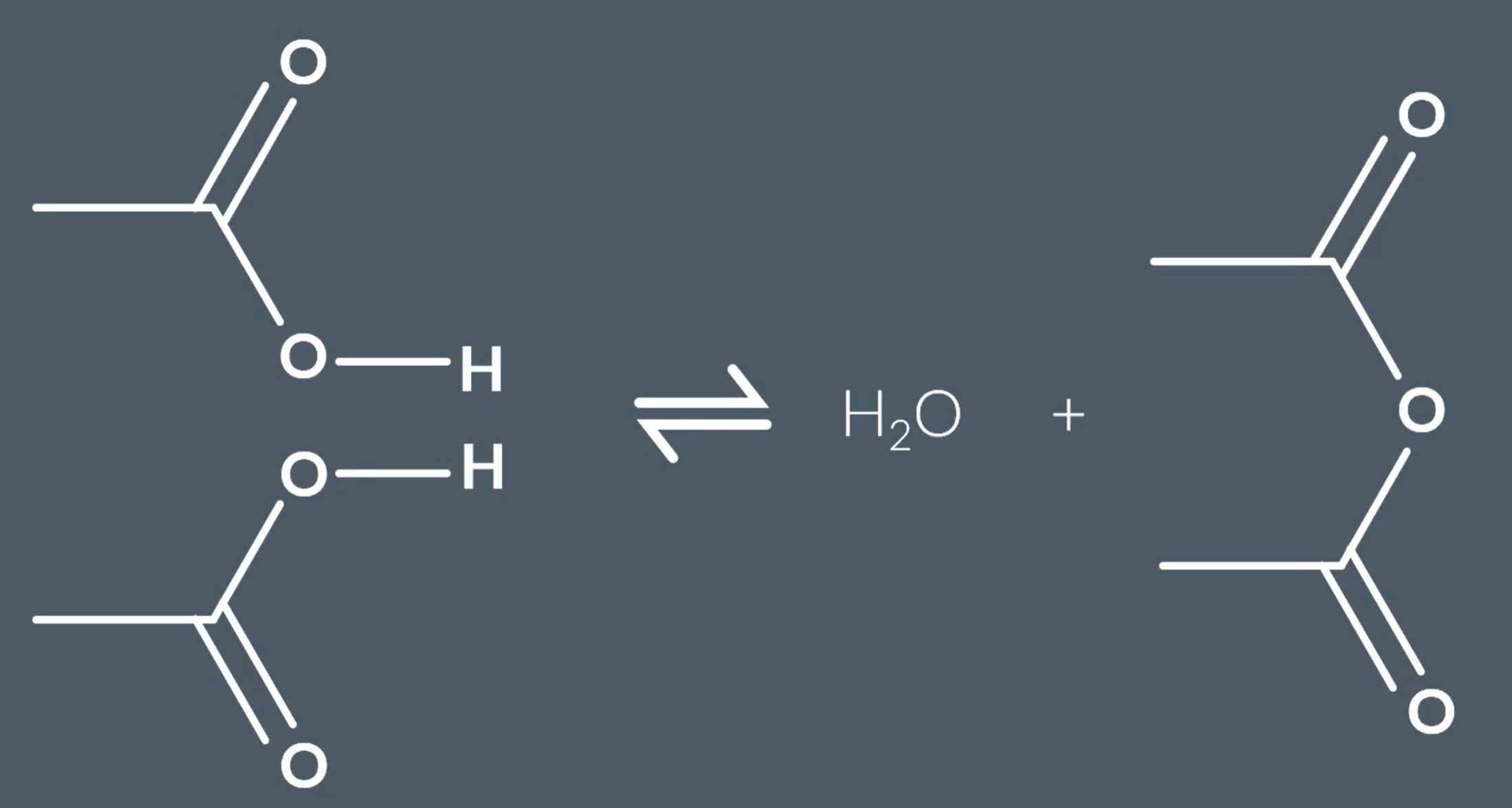
What are the types of acyl compounds?
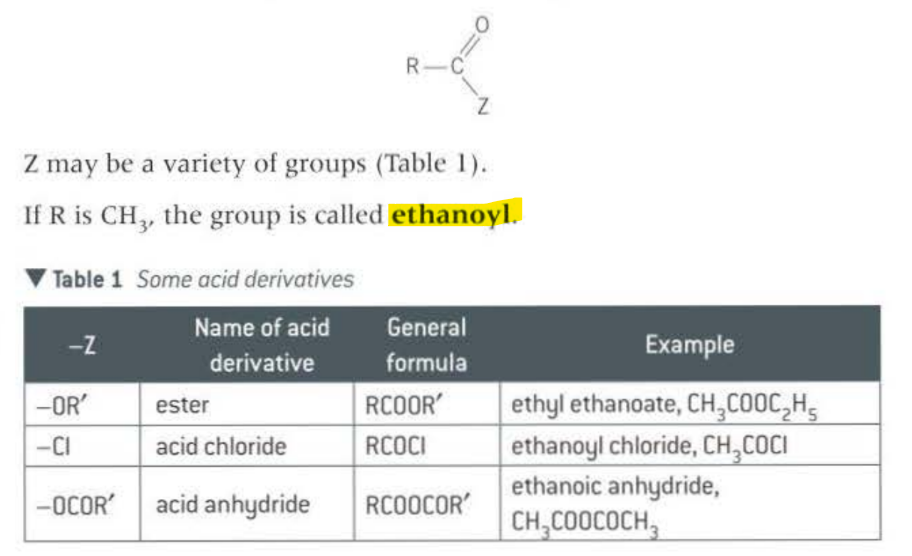
General reaction with acyl compounds: (and the requirements for stronger reaction), following nucleophiles and inorder, and what the compound forms with each nucleophile
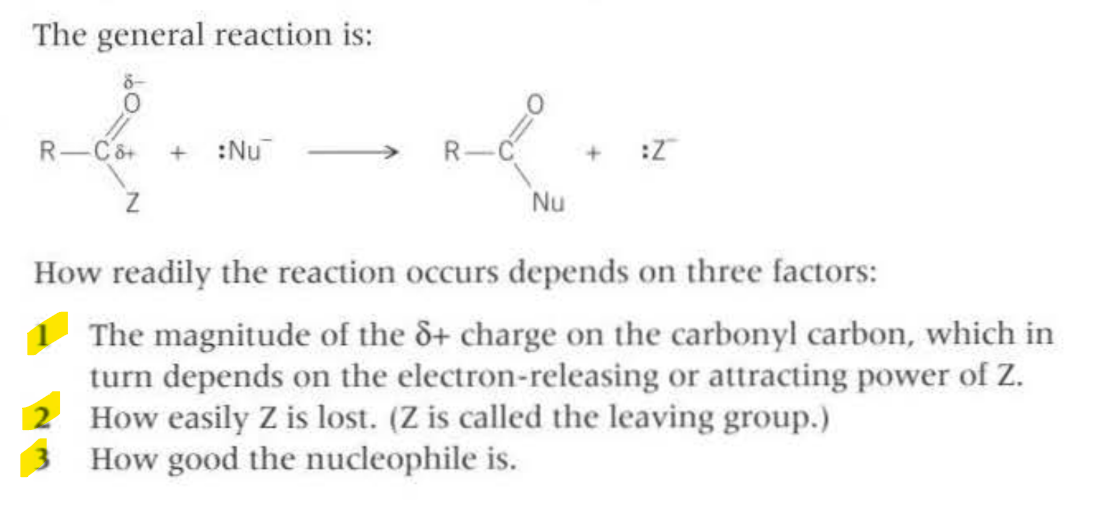
Both Acyl chlorides and acyl anhydrides attract nucleophiles, however acyl chloride contains chlorine which is more electronegative so withdraws electrons from carbonyl group making the carbon more positive, enabling the nucleophile to attract the carbon more easily.
The following nucleophiles
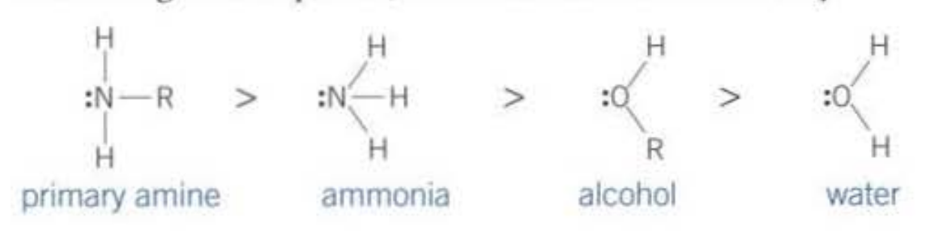
Primary amine → N-substituted amide
Ammonia → Amide
Alcohol → Ester
Water → Carboxylic acid
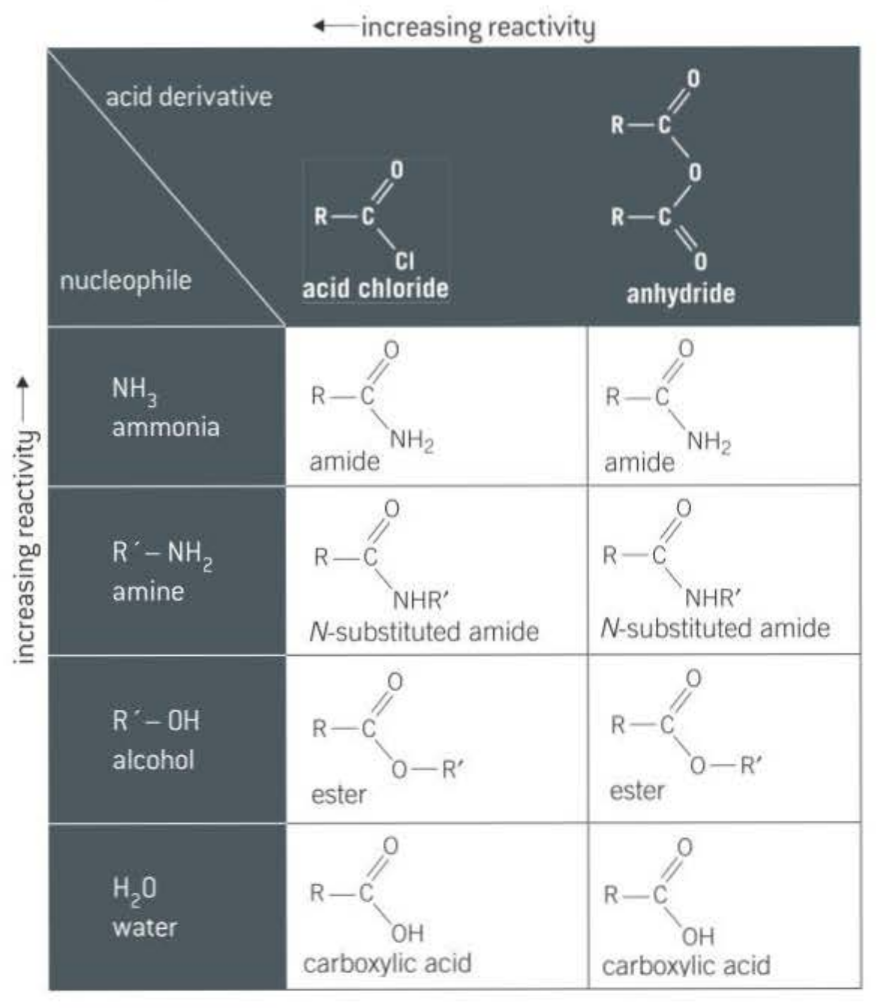
This table is incorrect, as amine has to be higher than ammonia due to the positive inductive effect
Why is Acid anhydride preferred?
Eventhough Acid chlorides are more reactive, acid anhydrides are preferred.
It is cheaper
It is less corrosive
It does not react with water as readily
Acid chlorides produce HCl as a py-product which is not safe compared to acid anhydrides that form carboxylic acid as a by-product (more safer)
The reaction with acyl chlorides is highly exothermic.