BIO 111 Exam #3
 Call Kai
 Learn
Learn Practice Test
 Spaced Repetition
 Match
Match Flashcards
 Knowt Play
1/238

Earn XP
Description and Tags
UR- Minckley
Name | Mastery | Learn | Test | Matching | Spaced | Call with Kai |
|---|
No analytics yet
Send a link to your students to track their progress
239 Terms
Fick’s Law
rate of diffusion
=-(membrane permeability)(surface area)(concentration gradient)
greater concentration gradients = faster
smaller concentration gradients = slower
basal metabolic rate + flux will limit cell size because of surface-volume ratio
diffusion time + diffusion rate = limit cell size + influence body plan architecture of multicellular organisms (i.e. membrane infoldings to increase surface area in eukaryotic cells)
shape modifications to combat surface area issue
volvox maximized contact with outer environment (hollow center with all cells on outside)
sponges- filled with acellular jelly on inside so they don’t need a circulatory system to carry O2 and CO2
flatworms- flattened to maximize surface area so no circulatory system is needed
costs and benefits of large body size
cost = food
benefits = metabolism per unit of body mass decreases, move faster, access to more food resources because large weight range of food to eat, less prone to predation
germa-soma cell differentiation
somatic cells- eventually die
germline cells- live long with no mitosis (miotic arrest) so low mutation rate and metabolic inactivity reduces DNA damage caused by oxidation
characteristics of the metazoa
multicellular- different origins
heterotopic
collagen
unique muscle/bone tissue
diploid dominant life cycle
gene arrangement
phylogeny classification for animalia
monophyletic
when did all the morphological diversity for animals originate?
in the Cambrian Explosion in aquatic environments
basal metabolic rate
minimum energy production required by a cell/organism to stay alive (measured as oxygen consumption rate b/c of the cellular respiration chemical reaction uses oxygen)
what is the outgroup for animalia
fungi- closest multicellular relative of animalia
homologous flagella in fungi and in animal gametes
use glycogen as storage molecule
genomic synapomorphies
what is the best evidence for animal relationships
gene order- i.e one portion of a gene coding for the head and the next for the body …
difference between classic and modern view of animal relationships
complexity is derived (ordered animalia by primitive —> advanced) but now organized by genomics
choanoflagellates
outgroup (sister group) of metazoa
how many phyla in animalia
36
porifera
sponges
synapomorphy: choancytes- specialized cells with flagella in porifera that facilitate feeding, respiration, excretion, reproduction
filter food particles from water
mesohyl- acellular mesoglea with embedded collagen fibers, spicules and various other cells
acellular so doesn’t need O2 from blood- no circulatory system
animalia phyla that diverge at radial (multiple planes) symmetry and 2 germ layers
ctenophora
placozoa
cnidaria
ctenophora
comb jellies
marine predators
synapomorphy: colloblasts- sticky adhesive structures that are attached to long, retractable tentacles
8 comb rows/ciliary bands
tissue
group of specialized cells that work together
missing hox genes
found in cnidaria and bilaterians so what is the first branch after porifera? what is the first animalia? - not a clear story for evolution
cnidaria
coral, jellyfish, hydra
gastrovascular cavity with 1 digestive system opening
synapomorphy:
nematocysts- stinging cells that help for active feeding
opsins- detect light and regulate hunting
animalia phyla that diverged with bilateral symmetry + 3 germ layers
protostomes- before mouth
deuterostomes- 2 mouth
cephalization
the centralization of the brain and sense organs to 1 spot in the organism
diploblastic vs. triploblastic tissue
diploblastic: 2 germ layers (endoderm and ectoderm- no mesoderm)
i.e. cnidarians + ctenophores
triploblastic: 3 germ layers (endoderm, mesoderm, and ectoderm)
mesoderm allows formation of muscles, circulatory systems, complex organs, body cavities, etc.
all bilaterians are triploblastic
blastula
hollow ball of cells in early development (undifferentiated cells)
gastrulation
movement of cells to form interior cavity
gastrula
early embryo stage with 2 tissue layers (endoderm + ectoderm)
what is the connection between the developmental body plan and germ layers?
the embryonic tissue layers give rise to all tissue and organs
cnidaria + ctenophora- no mesoderm- no organs
porifera- no germ layers so not tissues
fate of the blastophore
protosome- mouth
deuterosome- anus
protostomes
spiral cleavage
8 cell stage- spiral and cell fate determined (pluripotent)
mouth develops from blastophore
deuterostomes
radial cleavage
8 cell stage- radial and indeterminate (totipotent)
anus develops from blastophore
lophotrochozoansec
lophotrochozoans- larvae (mollusk)
synapomorphy: mantle, muscular foot
advantage of segmentation
easier to grow into larger animals because repeat the same tissues/structures (i.e. worms)
worms- phylum annelida
ecdysozoa
shed exoskeleton
platyhelminthes phylum
flatworms
neoblasts and stem cells: totipotent (become blood, nerves, skin) nervous system regenerates
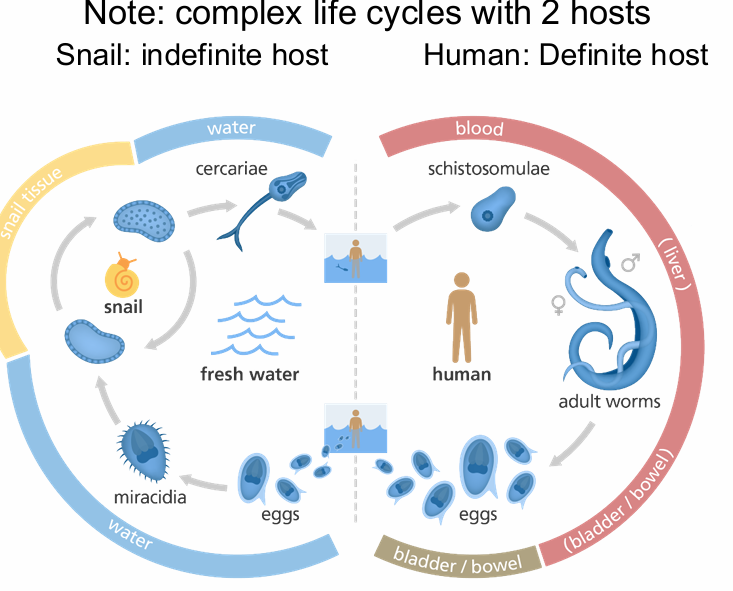
explain indefinite vs. definite hosts using Platyhelminthes as an example
schistosomiasis (in the phylum of Platyhelminthes) is a parasitic worm that uses snails as an indefinite host and humans as a definite host
indefinite host: harbor the larval, asexual stages of worm
definite host: harbors the adult, sexually reproducing worms
skeleton functions and types
functions: support, protection, movement
types: exoskeleton, endoskeleton, hyrostatic
nematoda
round worms
thin exoskeleton, moves by hydrostatic pressure
Caenorhabditis elegans
causes trichinosis infection
Arthropoda
spiders
thick exoskeleton, movement by attachment of muscles to skeleton
drive ecosystems
no marine Arthropoda (water spider only walks on top of water) because crustacea dominate marine environments
fused body segments- tagmosis
open circulatory system
stepwise growth through molting
what are the big four Arthropoda?
Chelicerata (spiders)
acari (mites)
crustacea (crab, barnacles, crayfish)
insecta
what is the outgroup/sister group of insects?
crestaceans
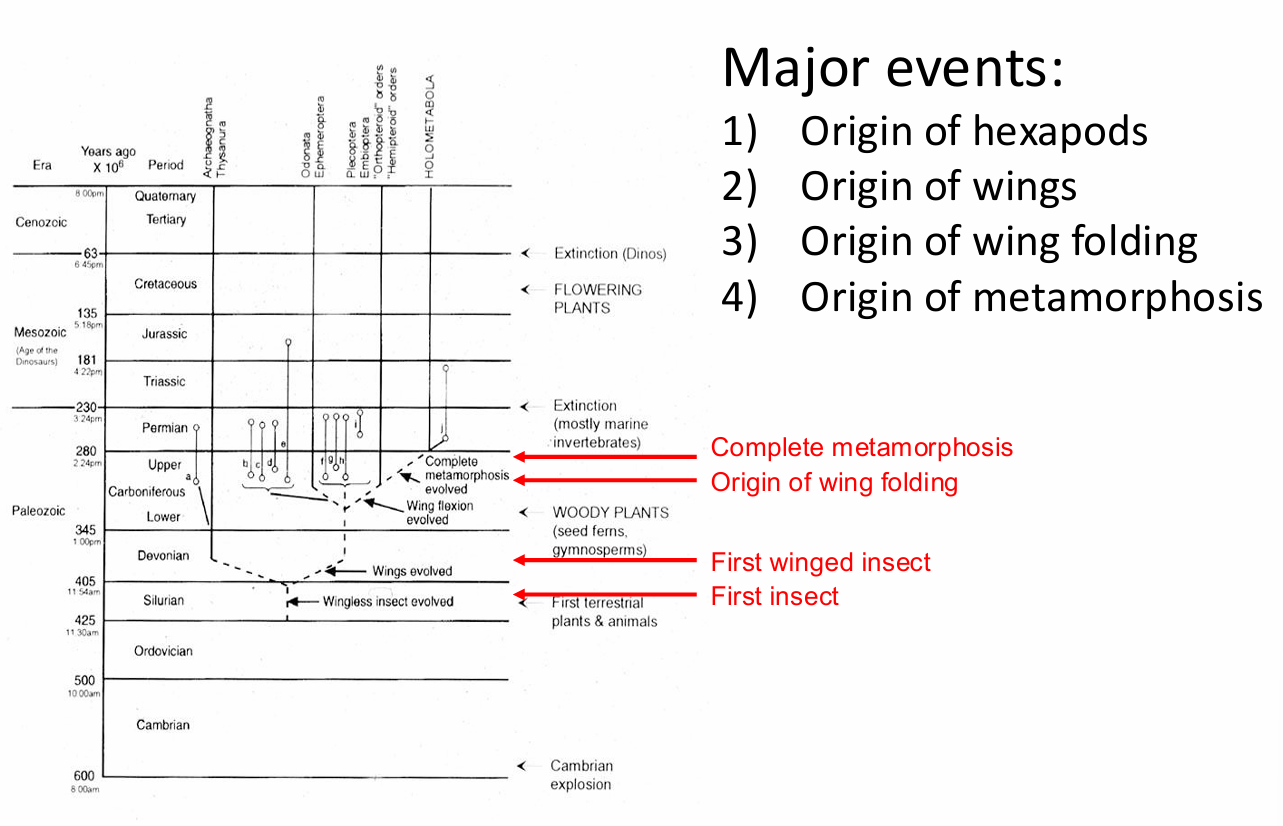
insect evolution timeline
origin of hexapods (first insect) —> origin of wings (evolved independently) —> origin of wing folding —> origin of metamorphosis
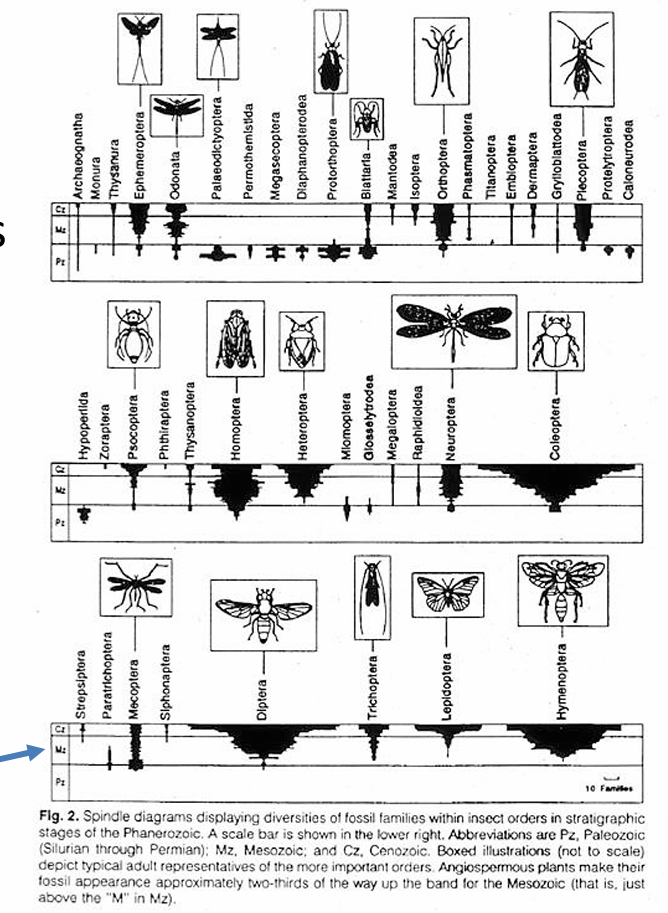
why are insects successful?
coevolutionary relationship with flowering plants- origin of flowering plants led to a major radiation among insects because major food source on land- created big diverse groups
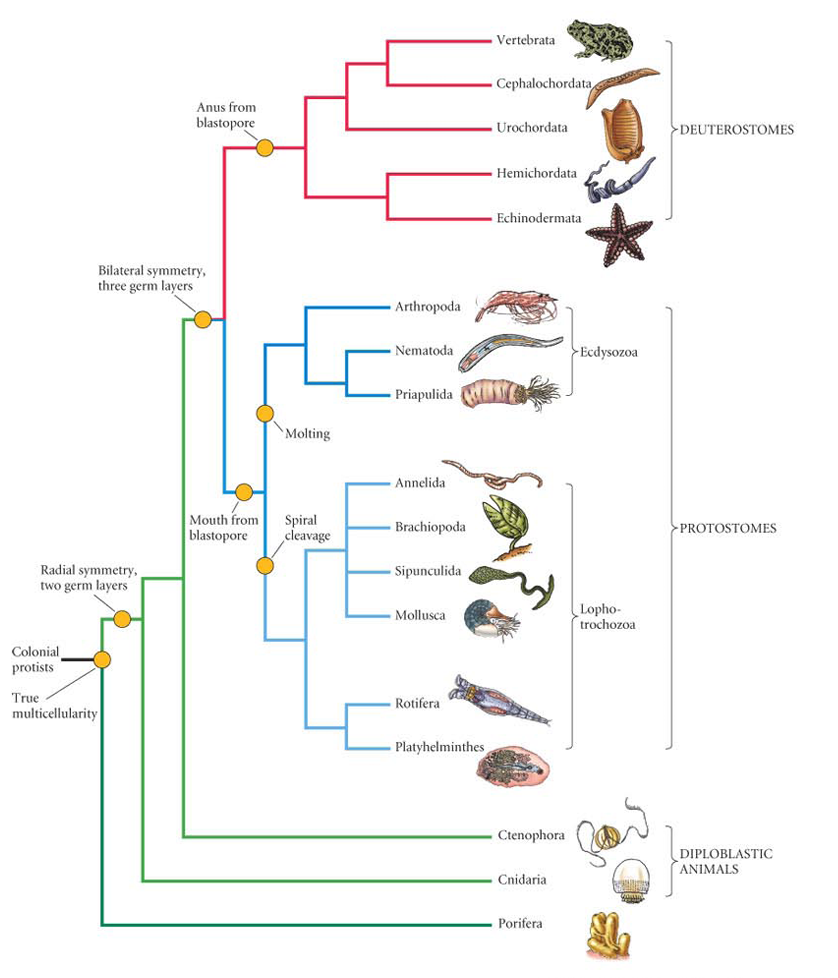
describe deuterostomes
blastophore: anus
bilateral symmetry (as larvae), secondarily radial symmetry (as adult)
Echinodermata
phylum including starfish and sea urchins
endoskeleton and epidermis
synapomorphy: water vascular system and tube feet
Chordata
phylum including Urochordata, cephalochordate, and craniata
synapomorphy:
notochord- structure located between the gut and nerve cord in the embryo and functions as a support and locomotion in free living forms
dorsal hollow nerve cord eventually evolved into the spinal cord
pharyngeal slits for filter feeding
urochordata
tunicates
only animals able to synthesize cellulose
potentially useful chemical compounds include didemnins and aplidine- anti cancer drug properties
what does the amphioxus genome tell us?
divergence occurred 520 mya
gene loss has not occurred in amphioxus but gene loss is common in craniata and Urochordata
Craniata
deuterostomes with heads where all the sense organs are in the head protected by cartilage/bone
vertebrata
rigid internal skeleton with vertebral column enclosing the spinal cord
internal organs are suspended in a coelom
well-developed circulatory system
what is the problem with life on land
the exchange of O2 and CO2 in breathing- hug water loss
need to support weight to stand and move to get food
internalization of breathing structure
preadaptation to life on land to prevent water loss during respiration
gills on the inside (sharks) not on external like axolotl
e.g. ray finned fishes have internal gills with a large lung surface area to obey Fick’s law
original function of the lung
buoyancy in water
swim bladder in ray-finned fishes
physotomous vs. physoclistous
physotomous: the swim bladder has a direct connection to gut (inflates + deflates)
physoclistous: veins and arteries control the swim bladder by diffusion
importance of lungfish
can breathe both air and water
vascularized swim bladder that is homologous to the tetrapod lung
largest vertebrate genome
paedomorphic
paedomorphic
retention of juvenile traits as adults
ossification
synthesis of bone from cartilage
calcium- needed for the synapses in the nervous system
bones- need rigidity to support weight on land and to store calcium to be used for nervous system responses
storage hypothesis that bones developed from tissues that evolved to store minerals- greater structural integrity of bone = byproduct of storage
articulation of appendages
mobility for tetrapod
coelacanth- articulated fin
lobe fin vs. ray fin
ray finned fish: shoulder girdle fused to cranium- stiff
lobe-finned fish: shoulder girdle fused to cranium, narrow base of pectoral fin allows for rotation along its long axis= increases swimming efficency
girdle eventually detached from cranium, pelvis enlarged and attached to spine with ligaments and muscles to form 4 appendages connected to 1 spine (e.g. tiktaark- foot like structure and protoneck and semi-aquatic)
preadaptations to life on land
internalization of breathing structures (gills)- protection of delicate organ
ossification of skeleton- jaw rigidity
jointed appendages- mobility
amphibians
aquatic larval stage
earliest vertebrates released eggs into the water, so they don’t dry out
advantages of an egg
protects embryo
provides all the nutrients
homeostasis
terrestrial eggs
inner aquatic environment
need O2 and CO2 through diffusion
need to preserve water but wax and oils on top of the skin
amniotes
mammals, turtles, sphenodon, lizards, crocodilians, and birds
young in amniotic egg that contains everything they need to mature but O2
structure of amniotic egg
amniotic membrane to protect the embryo
allantois- allows for transfer of waste product out and other nutrition into the egg
chorion- outer membrane underneath the shell
how does a chicken egg develop?
initial weight: 60 grams
final weight: 51 grams (water loss)
air sac inside egg begins small but enlarges as embryo grows larger- space from the water loss allows more oxygen to enter egg corresponding to the higher oxygen needs of the growing embryo- more gas exchange
amniote reproductive strategies
oviparity- lay eggs (i.e. fish, some sharks, amphibians, reptiles, bird, monotremes)
oviviviparity- hold eggs in body but give live birth- embryo develops from YOLK
viviparity- live birth- embryo develops and is nourished in the mother from PLACENTA
divergence in animalia after tetropods
amniote egg, glandular skin, water-conserving kidney
aglandular skin
skin of terrestrial animals = aglandular
fish epidermis is exterior layer
mammal epidermis is covered by waxy/oily layer
mammals
monotremes (i.e. echidnas, platypus)
marsupials (i.e. kangaroo, Tasmanian devil)
eutherians (i.e.beluga whale, naked mole rat)- placental animals
placenta
union of embryonic and maternal tissue
only organ that develops as an adult and has an end time
viviparous sharks (sharks can also be oviparous or ovoviviparous too)
histotroph- uterine milk
offspring nourishment from placenta
transition from histotroph to placenta
uterus function changes to nutrient-producing/transporting organ:
enhanced secretory functions
protection-enlarged to protect the embryo
physiological homeostasis for embryo (respiration, waste disposal, osmoregulation)
strepsirrhines vs haplorrhines
strepsirrhines: wet nose
haplorrhines: dry nose
what is Hominidae
superfamily for apes and humans
how do we determine relatability in Hominidae?
diet
i.e. strepsirrhines = omnivores, tarsiers = insectivorous
Locomotion
i.e. strepsirrhines = arboreal (live in trees)
When diverged?
biogeography?
phylogeny- not clear where they first evolved
Gondwana breakup
broke up supercontinent into Africa, S. America, Antarctica, Australia, Madagascar and India
when did homo sapiens diverge
500 mya from chimpanzees
bipedalism
required morphological change from 4 legs (tetrapod) to 2 legs to use for walking
frees up upper body for more mobility
complicated aspects of biogeographic history of primates
oldest primates seem to be from Asia
migration from Asia to Africa and N. America
N. America had primates until 40 mya
S. American primates rafted from Africa 40 mya
skeletal modifications for bipedalism
skull size
phalanges (foot structure)
humans: straight toe structure, parallel non-grasping toes
apes: curved toe structure, divergent grasping toes
pelvis
humans: ball joint of hip directly above the outside of the knee to provide a great angle between femur and the top of the knee for running/walking on 2 legs
apes: ball joint directly above the inside of the knee
Australopithecus afarensis
Lucy- bipedal with small brain
identified bipedalism by shape of pelvis
lived 4-2.7 mya
inhabited northern rift valley of east Africa
species in Hominidae that originated in Africa
gorillas + chimps (current distribution)
Australopithecus (fossils)
homo habilis (fossils)
homo erectus (fossils)
homo sapiens (fossils)
what is the geographical boundary between chimps/gorillas and humans in Africa when they divereged?
East African Rift Valley
west of rift valley = rainforest with chimps/gorillas
east of rift valley = savanna with humans
Australopithecus anamensis
bipedal (determined by looking at pelvis structure)
small brain
about 4.2 mya
Homo habilis
earliest known member of genus Homo
differentiated based on larger brain size and reduced molars and premolars
brain = 30% larger than A. africanus
2.2-1.6 mya
evidence of tool use
Homo ergaster
close relative of modern humans
1.8-1.2 mya
higher vaulting of skull than previous species
lacks sagittal crest and flaring zygomatic arch of more robust forms
Homo erectus
1.8-400,000 years ago
larger brain (larger than 900 cc)
evolved in east Africa 1.8 mya
moved out of Africa into Asia/Europe
flaked tools included spears
fire and cooking
Homo neaderthalensis
150,000-30,000 years ago
Europe and ASia
short, robust stature
Denisovans
interbred with neanderthals in Asia where their geography overlapped
Central and SE Asia
Homo sapiens
evolved in Africa
oldens H. sapiens fossil is 195,000 years old
cranial capacity of homo sapiens < neanderthals generally
what is a method used to track geneology
mitochondrial DNA sequences- passes maternally through the egg
what is the difference between a chimpanzee and a human?
the timing of gene expression (heterochrony)
human development- greater resemblance to juvenile than adult chimpanzees
humans and chimps have incredibly similar DNA but when, where, and how long their genes are expressed results in the differences of the two species
i.e. humans extend the period of brain growth longer than chimps, but chimps mature faster
continual learning
why are plants essential for all life on Earth?
source of all fixed carbon
source of oxygen- supports aerobic life
source of ozone layer- allowed for evolution of terrestrial life by reflecting harmful, mutative radiation away from Earth’s surface
plant characteristics
autotrophs- primary producers
stationary
chloroplasts- photosynthesis
hold pigment (chlorophyll)
synapomorphy: alteration of generations
how do plant groups differ?
combinations of pigments
all photoautotrophs have chlorophylls (a,b,c,d, or f, or combination)
i.e. land plants and green algae have chlorophyll a and b
what is PAR?
photosynthetically active radiation- small portion of all radiation is visible to humans
cyanobacteria
stromatolites
chlorophyll f or d
dinoflagellates
shape reinforced by internal cellulose plates
2 flagella
mass bloom cause red tide in ocean
brown algae
chlorophyll c (and carotenoids)
kelp- group of crown algae with the same pigments
diatoms
chlorophyll c (and carotenoids)
unicellular algae
2 part glass like wall made of hydrated silica
major component of phytoplankton (primary producer in aqautic ecosystems)
highly diverse in shape