Chapter 8 Medical Terminology
 Call Kai
 Learn
Learn Practice Test
 Spaced Repetition
 Match
Match Flashcards
 Knowt Play
1/130

There's no tags or description
Looks like no tags are added yet.
Name | Mastery | Learn | Test | Matching | Spaced | Call with Kai |
|---|
No analytics yet
Send a link to your students to track their progress
131 Terms
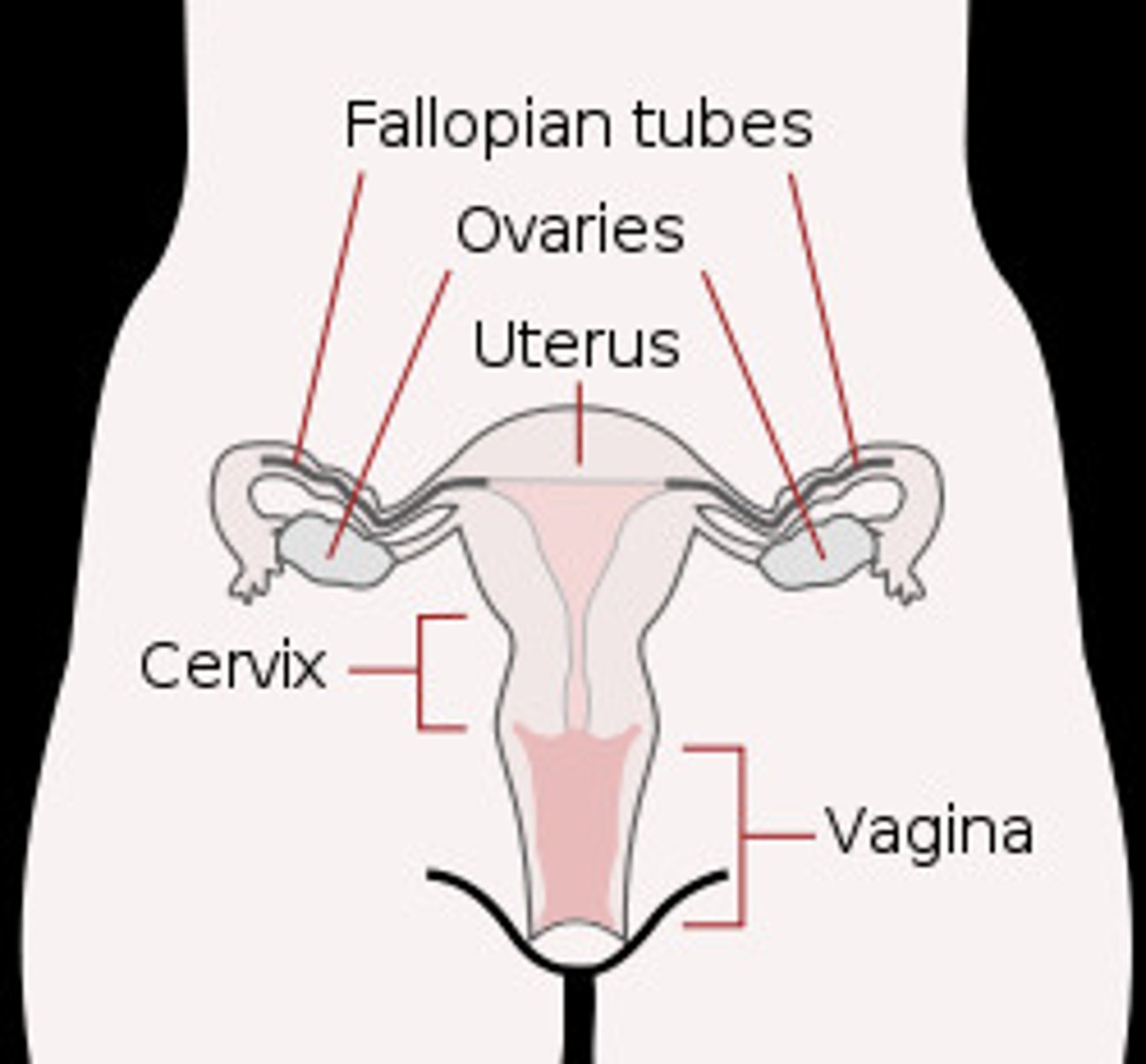
Components of the Female Reproductive System:
Ovaries, fallopian tubes, uterus, cervix, vagina
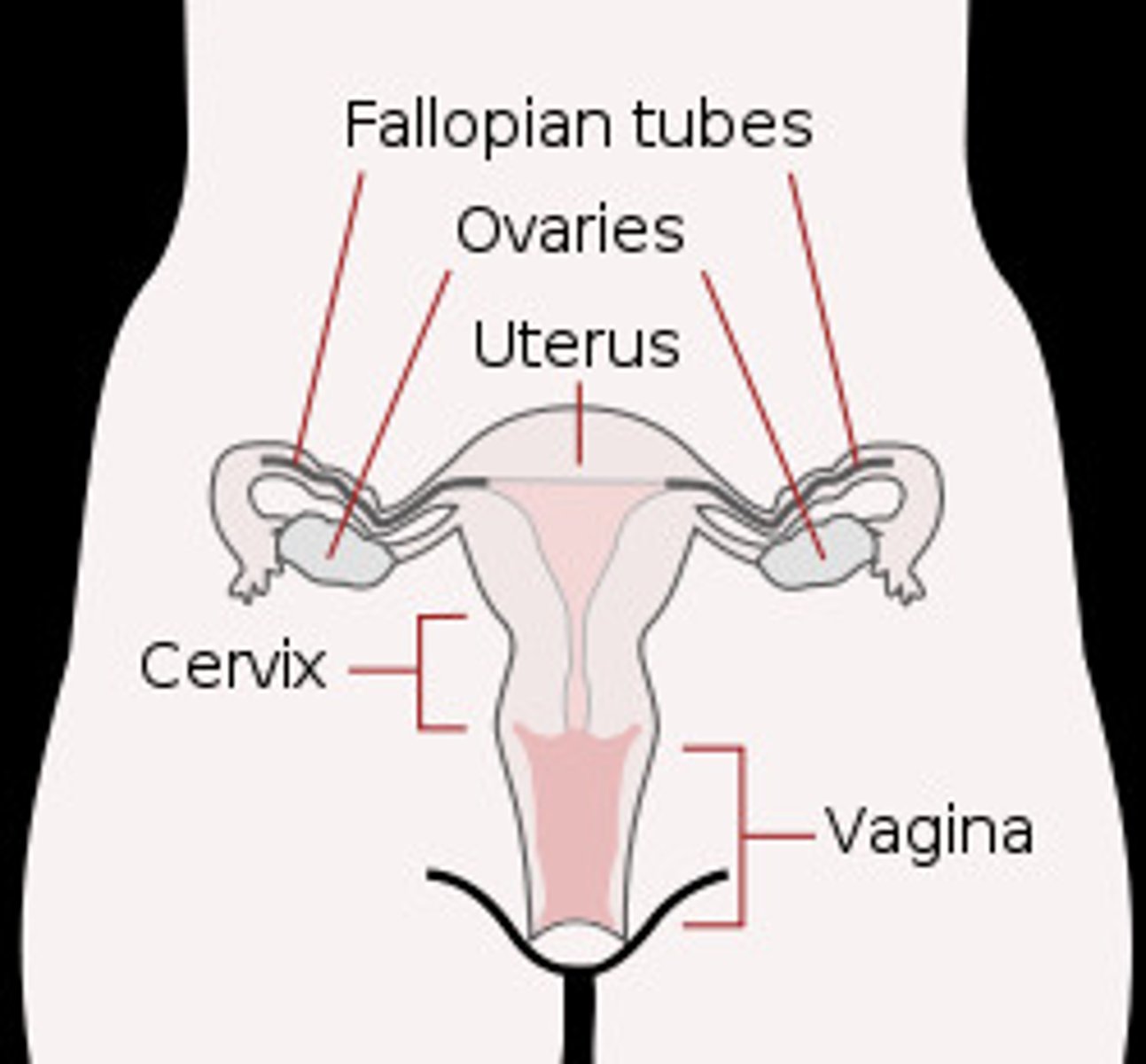
Ovaries
female gonads, produce the oocytes and some reproductive hormones
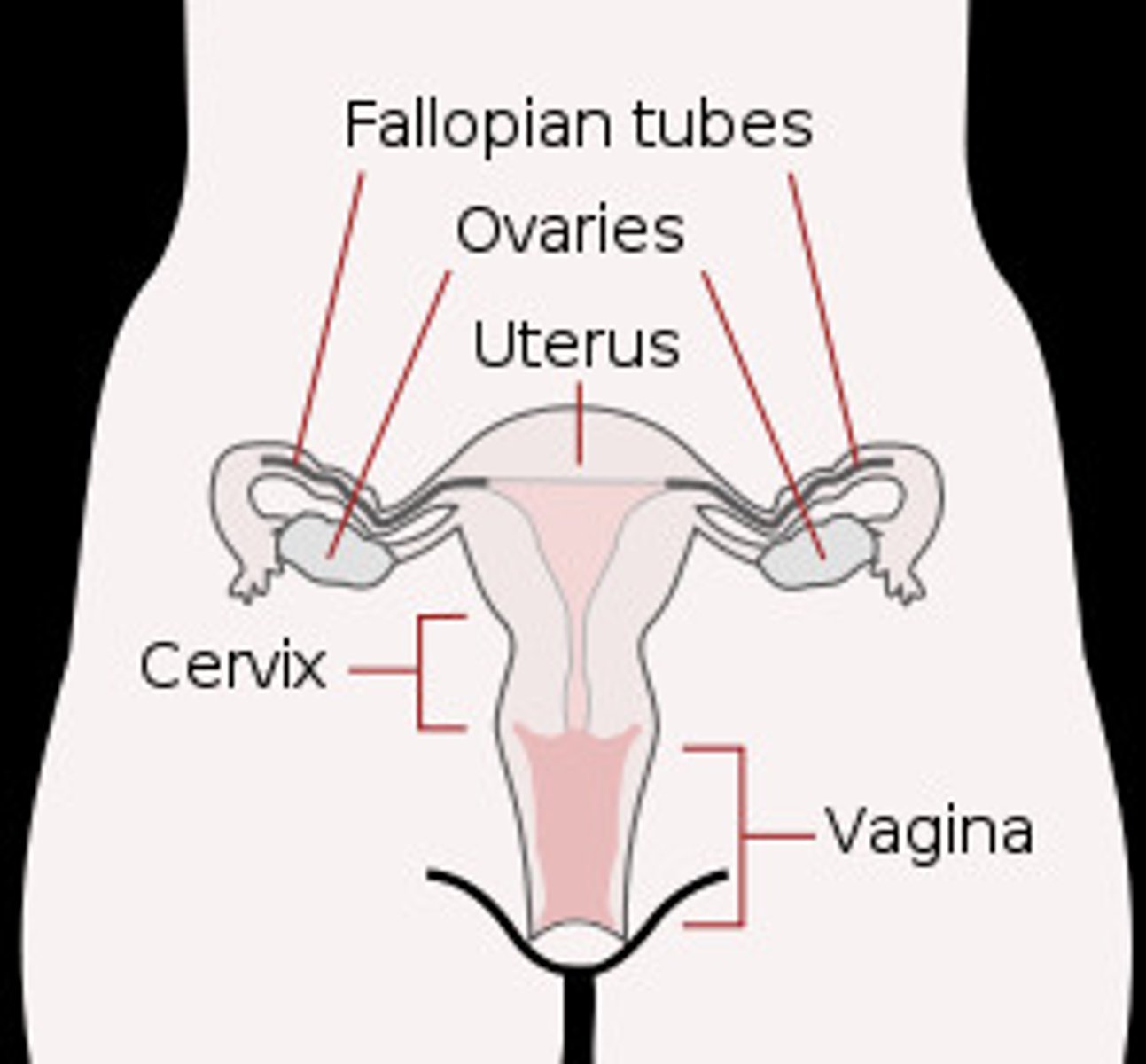
Fallopian tubes
a "tunnel" for the ova from the ovaries to the uterus
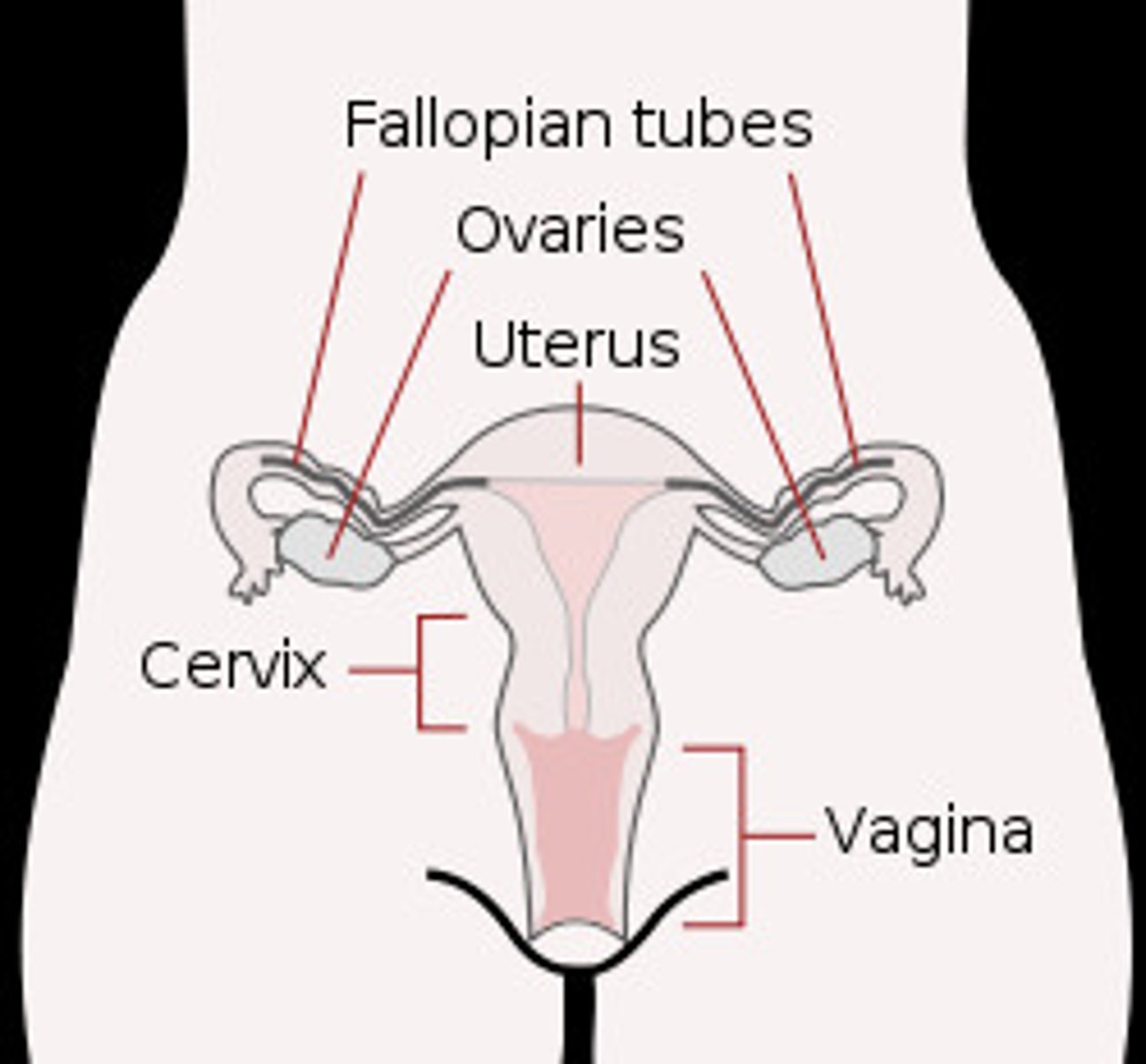
Uterus
Holds and nurtures the developing fetus
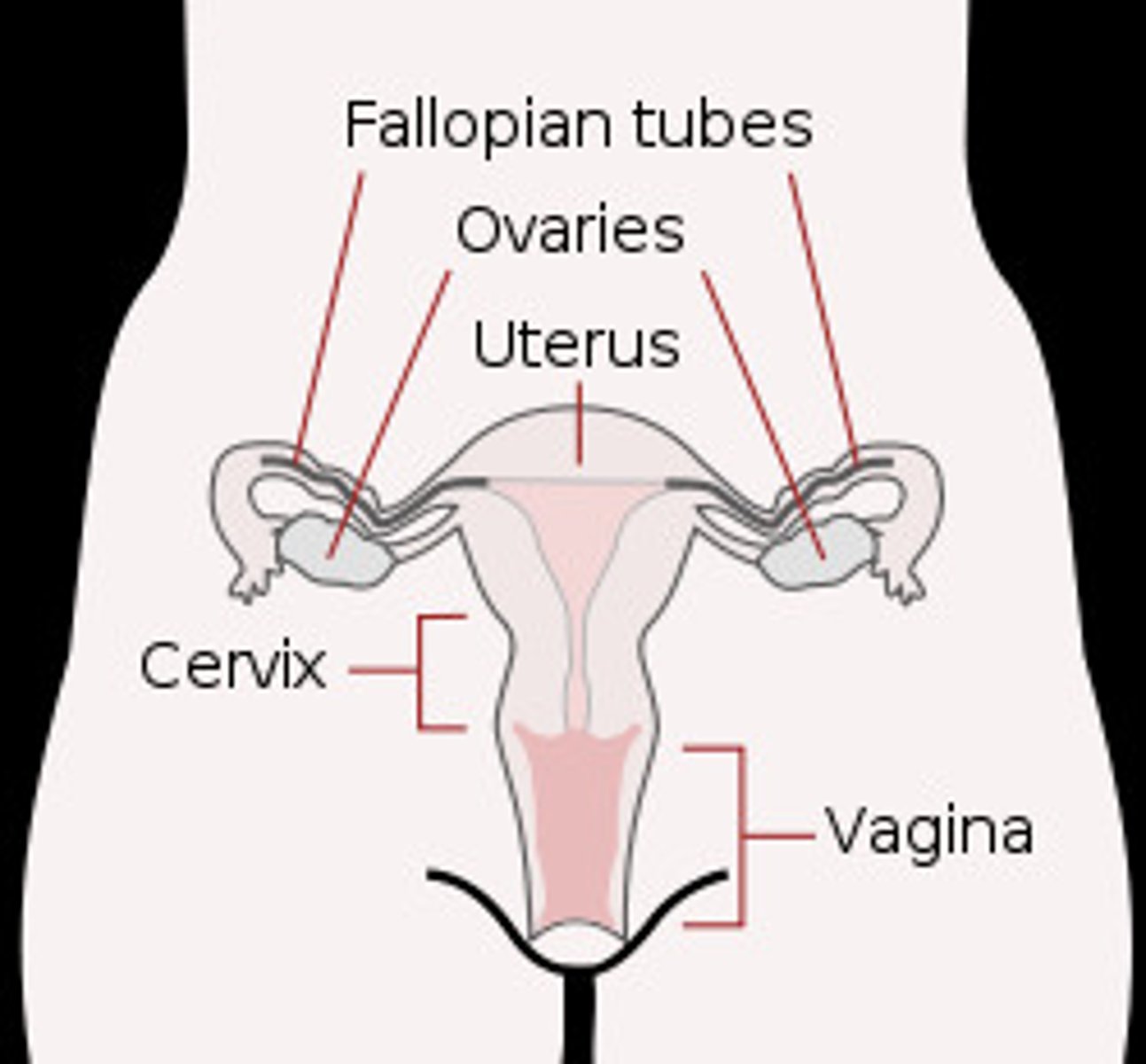
Cervix
widens to allow a baby to pass through during childbirth
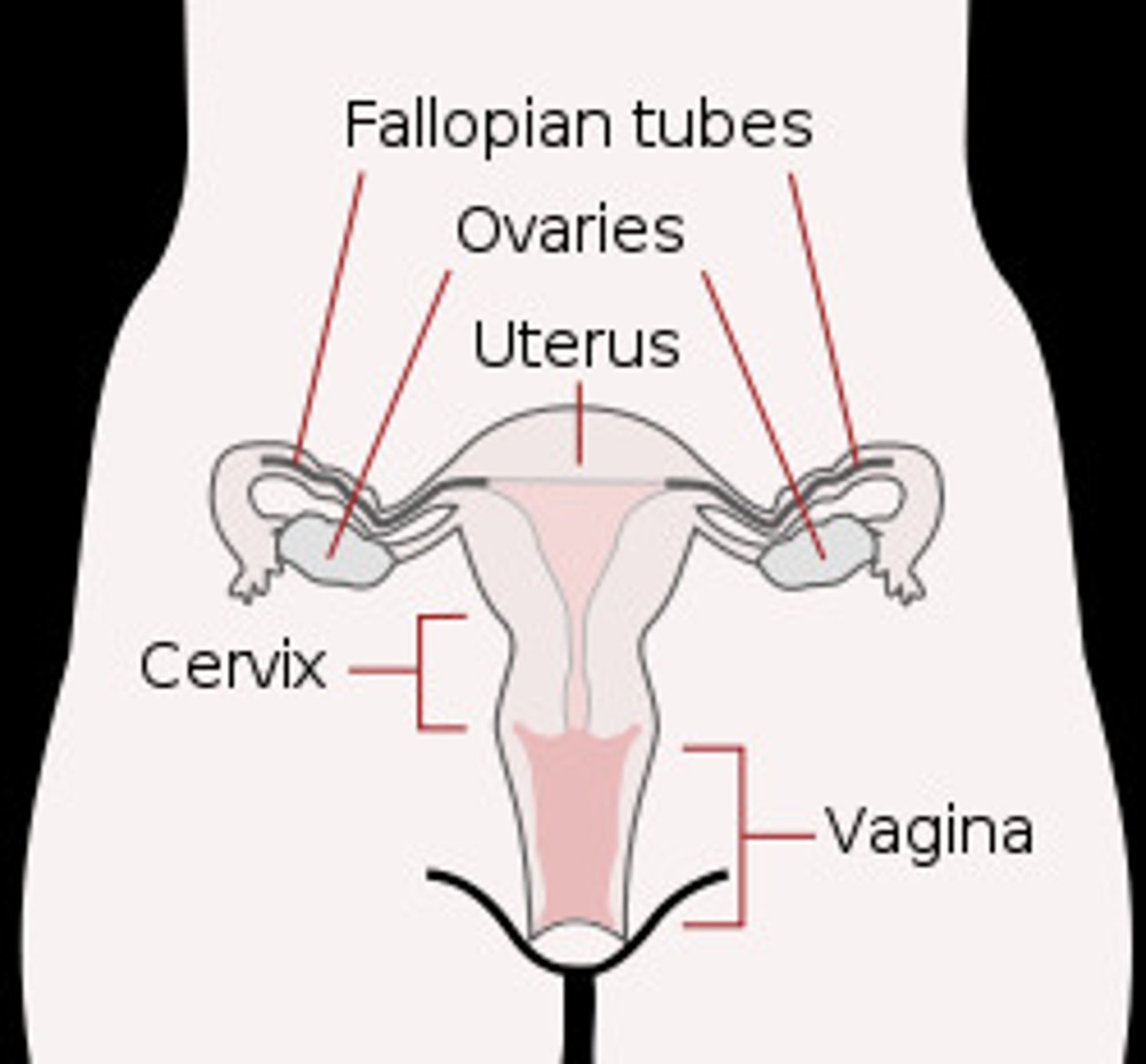
Vagina
connects the cervix to the external environment; important for menstruation, intercourse, and birth
Gynecology
Medical specialty that treats diseases of female reproductive organs
Colposcopy
procedure used to closely examine the cervix, vagina
Hysteroscopy
procedure used to examine and treat the inside of the uterus
Laparoscopy
Surgical procedure used to examine and treat organs in the abdomen or pelvis using a camera-equipped tube called a laparoscope
Endometrial biopsies
check for cancer, evaluate fertility, diagnose abnormal bleeding
Papanicolaou smear
for detecting cervical cancer
Menorrhea
Heavy bleeding during menstruation
Premenstrual Syndrome (PMS)
bloating, headaches, mood swings
Polycystic Ovary Syndrome (PCOS)
cysts on ovaries that cause infertility
What is PCOS caused by?
hormonal disturbance
Ectopic pregnancy
fetus develops outside the uterus
Endometriosis
endometrial tissue grows outside the uterus, diagnosed via laparoscopy
What can endometriosis lead to?
severe pain, scarring, infertility
-rrhea
flow or discharge
-rrhaphy
suturing
Hormone replacement therapy (HRT)
Treatment with hormones when the body stops making enough,
usually in menopause
Hysterectomy
Removal of the uterus
Colpoplasty
Vaginal reconstruction or repair
Oophoropexy
Fixation of ovaries prone to twisting
Tubal Ligation
Blocking/severing of the fallopian tubes, also known as getting one's tubes tied
Salpingectomy
Removal of uterine tube(s)
Salpingostomy
Create a new opening into the uterine tube
Components of the Male Reproductive System
Testes, Epididymis, Scrotum, Vas deferens (sperm duct), Prostate, Penis, Foreskin, Glans penis
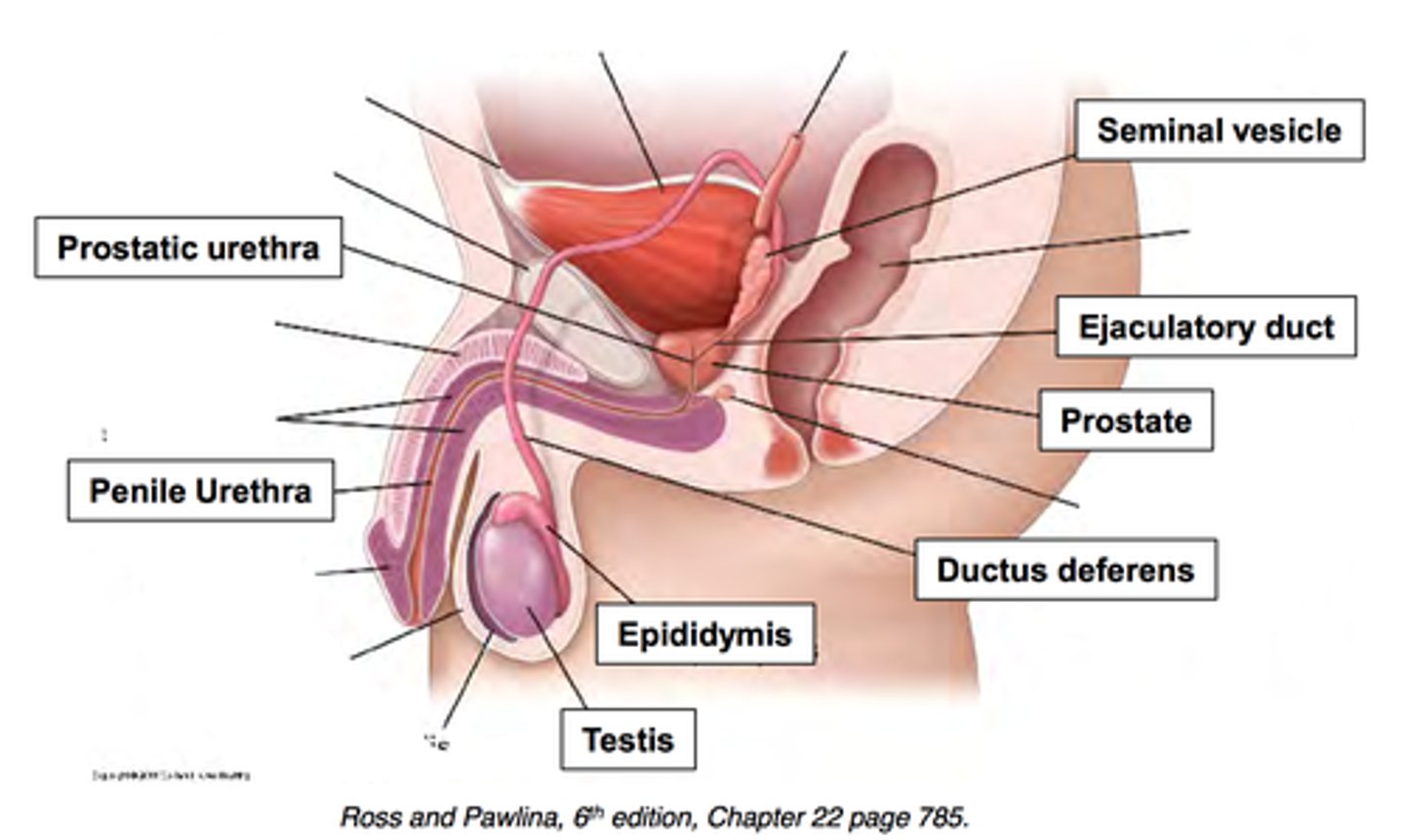
Testes
Spermatogenesis
Epididymis
Sperm maturation
Scrotum
Skin sac containing testes and epididymis
Vas deferens (sperm duct)
tube through which sperm flows to the urethra
Prostate
Contributes to semen and aids in ejaculation
Penis
intromittent organ, delivers sperm
Foreskin
AKA prepuce, skin fold that covers the peins
Glans penis
tip of the penis
Physical Assessment of the Male Reproductive System
Inspection of external genitalia
Palpation for inguinal hernias
Digital rectal examination (DRE) (A.K.A prostate exam) to assess prostate and rectrum
Common Lab Tests for the Male Reproductive System
Prostate-specific antigen test, prostate biopsy, sperm count
Prostate-specific antigen (PSA) test
Blood test for prostate cancer
Prostate biopsy
remove tissue from the prostate for testing for prostate cancer
Urology
branch of medicine specializing in the male and female urinary tract
Cryptorchidism
failure of one or both testes to descend into scrotum
Orchiopathy
any disease of the testes
Aspermia
absence of living sperm
4 common problem affecting the testes
Hydrocele, spermatocele, varicocele, testicular torsion
Hydrocele
fluid around testes
Spermatocele
abnormal mass on epididymis that contains sperm
Varicocele
abnormal dilated veins above the testes
Testicular torsion
painful twisting of the testes
Orchiectomy
Excision of a testis, often intervention for testicular cancer
Circumcision
surgical removal of the foreskin of the penis
Vasectomy
Surgical cutting/sealing of the vas deferens; permanent method of male sterilization
Transurethral Resection Prostatectomy
a surgical procedure performed through the urethra to remove small pieces of an enlarged prostate
Gonads
ovaries and testes, produce gametes (ovum and spermatozoon)
Fertiliztion
union of gametes repoduces zygote
Reproduction steps
1. After ovulation, fimbriae take up an ovum from
the ovaries, and sperm enters the fallopian
tube
2. Fertilization in the fallopian tubes
3. Zygote formation and rapid cell division
4. Implantation of blastocyst into endometrium
5. Development of embryo
1. Amniotic fluid for protection
2. Placenta for nutrients and waste removal
3. Umbilical cord connects fetus to placenta
6. Growth, development, and birth
Obstetrics
a branch of medicine that deals with birth and pregnancy
Parturition
childbirth
Gravid
pregnant
gravida
number of pregnancies
para
number of pregnancies reaching viable gestational age
Amniorrhexis
rupture of the amnion (water breaking)
4 stages of labor
cervical dilation, expulsion, placental, postpartum
Cervical dilation
Enlargement of the uterine cervix during labor
Expulsion
Expulsion of the infant out of the uterus and down the birth canal
Placental
Expulsion of the placenta
Postpartum
The hour or two after delivery
Diagnostic tests during pregnancy
measurement of human chorionic gonadotropin (HCG) tests for pregnancy
ultrasound/sonography
Lab Tests during pregnancy
Amniocentesis and Chorionic villus sampling (CVS) to screen for fetus abnormalities
Preeclampsia/eclampsia
acute high blood pressure in pregnant women, potentially
leading to seizing
Extrauterine/ectopic pregnancy
pregnancy outside of the usual place
Abruptio placentae
premature separation of placenta from uterine wall
Placenta previa
abnormal placental implantation in uterus covers the cervix
Stillbirth
death of a fetus before or during delivery
Dystocia
abnormal/difficult
oophor(o)
ovaries
ovari(o)
ovaries
salping(o)
fallopian tubes
hyster(o)
uterus
uter(o)
uterus
colp(o)
vagina
vagin(o)
vagina
cervic(o)
uterine cervix
volv(o)
vulva
men(o)
month
lapar(o)
abdominal wall
o(o)
egg, ovum
top(o)
place or position
metr(o)
uterine tissue (or measure)
-tropin
that which stimulates
-an
belonging or pertaining to
-ile
belonging or pertaining to
orirch(o)
testes
orchid(o)
testes
test(o)
testes
testicul(o)
testes
pen(o)
penis
prostat(o)
prostate
scrot(o)
scrotum