Osteology Quiz 3
 Call Kai
 Learn
Learn Practice Test
 Spaced Repetition
 Match
Match Flashcards
 Knowt Play
1/77

There's no tags or description
Looks like no tags are added yet.
Name | Mastery | Learn | Test | Matching | Spaced | Call with Kai |
|---|
No analytics yet
Send a link to your students to track their progress
78 Terms
scapula and clavicle
what bones make up the shoulder girdle
humerus, ulna, radius
what bones make up the arm
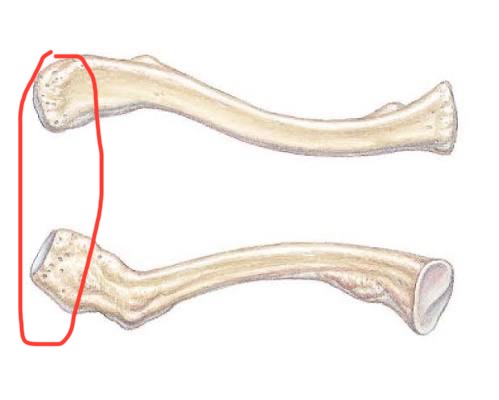
acromial extremity
Clavicle, lateral end
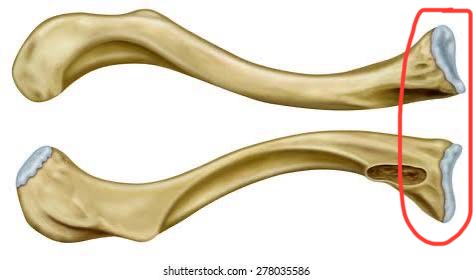
sternal extremity
clavicle, medial end
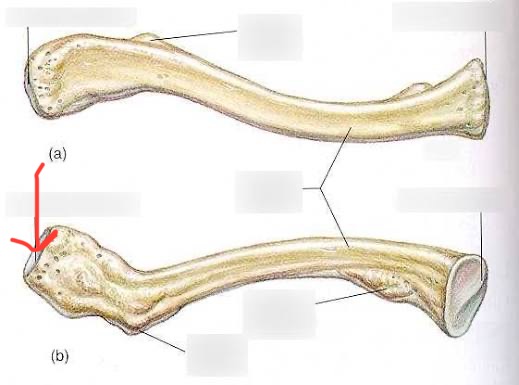
acromial facet
clavicle, lateral end, meets with scapula
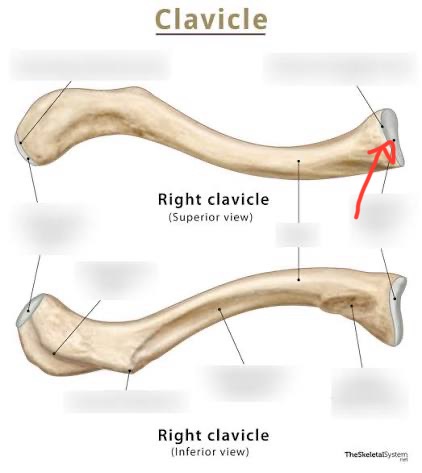
articular surface for manubrium
medial end, meets with sternum
conoid tubercle
inferior, lil bump towards acromial end
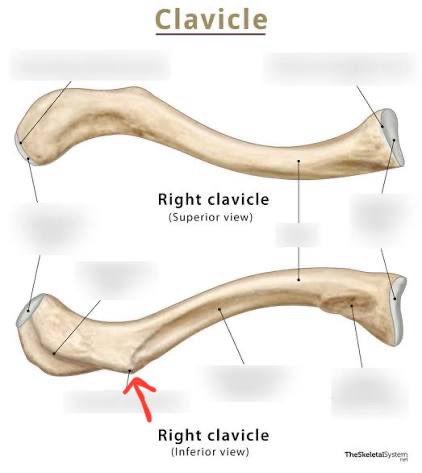
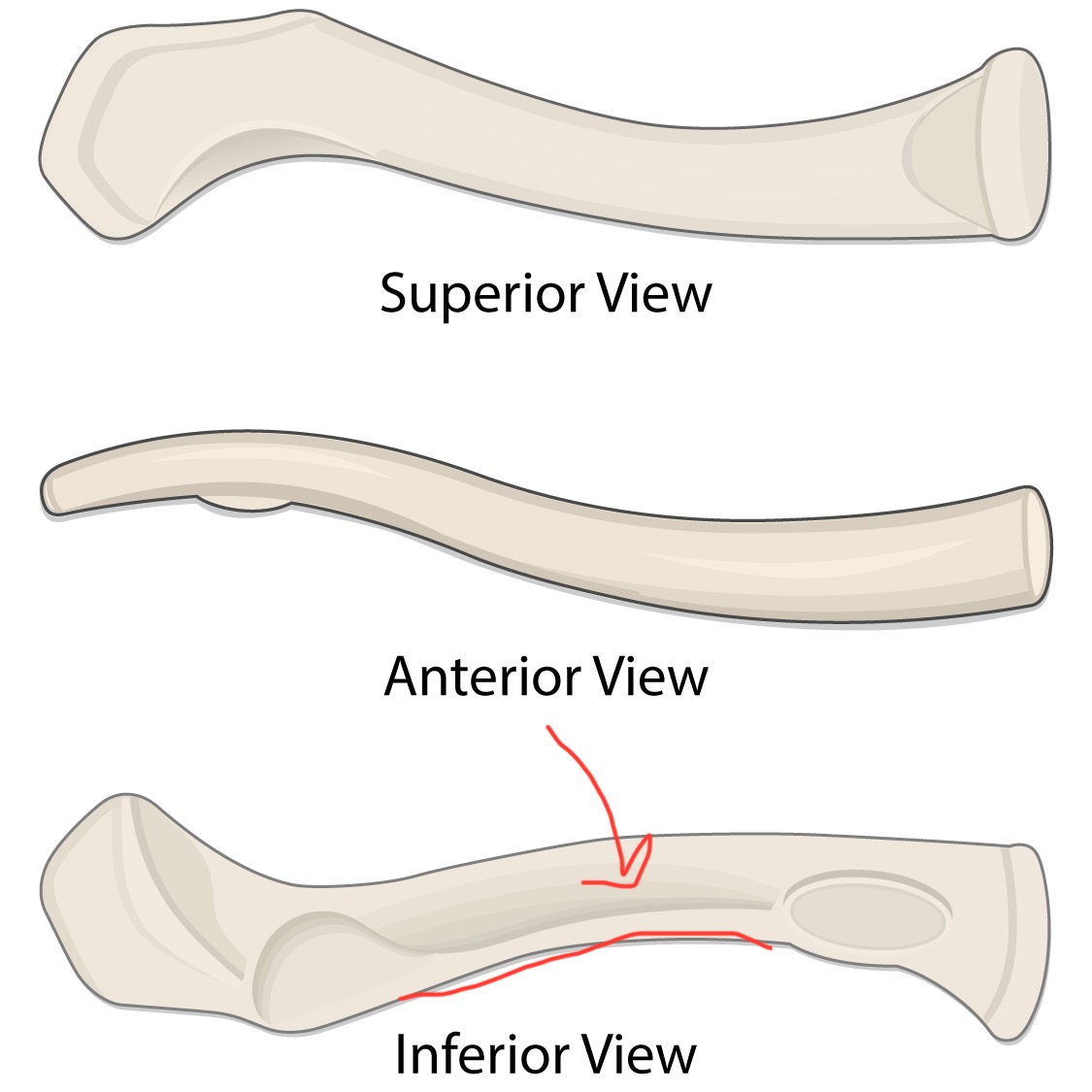
subclavian sulcus
clavicle, groove on inferior midshaft
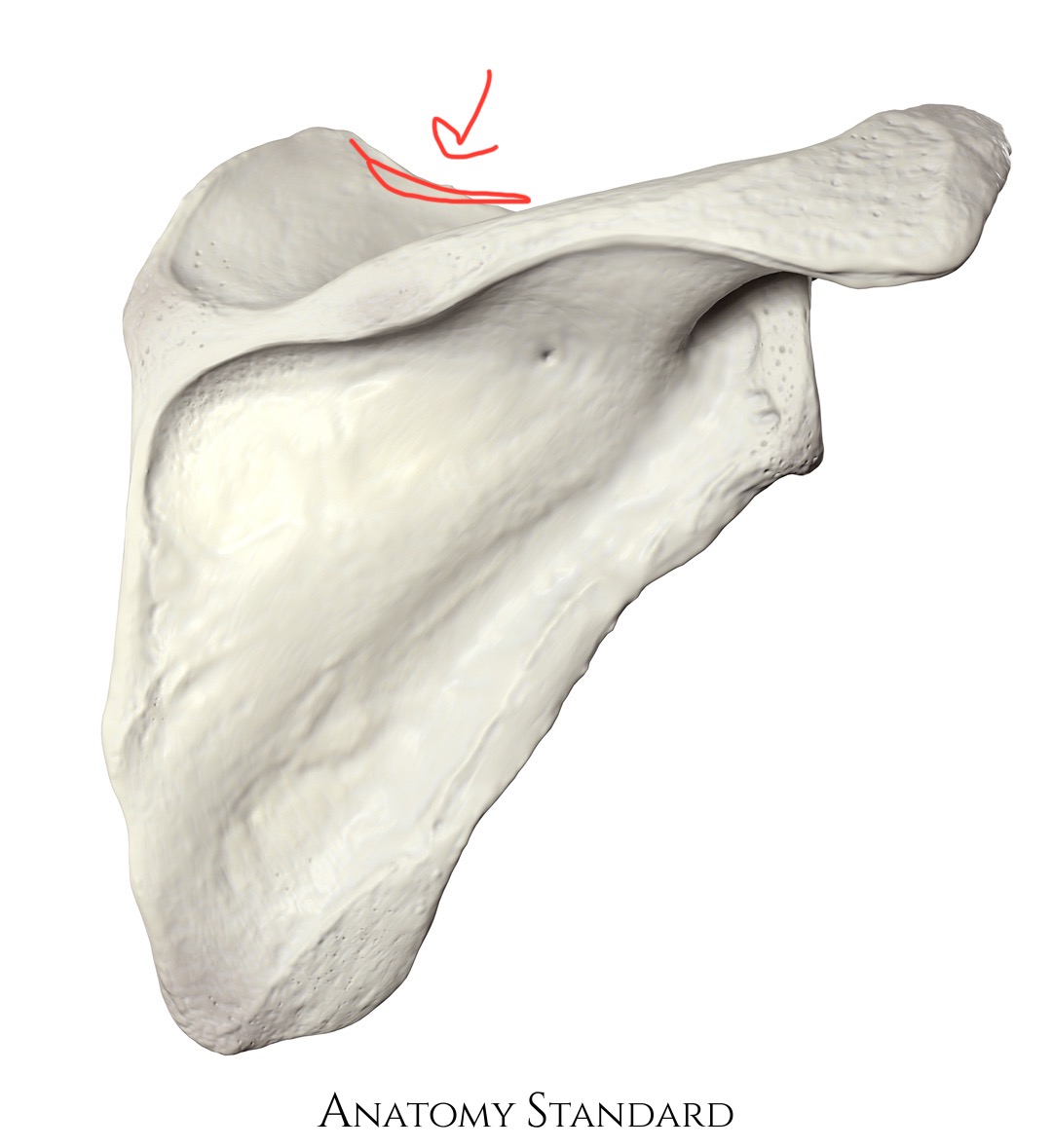
superior border
scapula, top edge
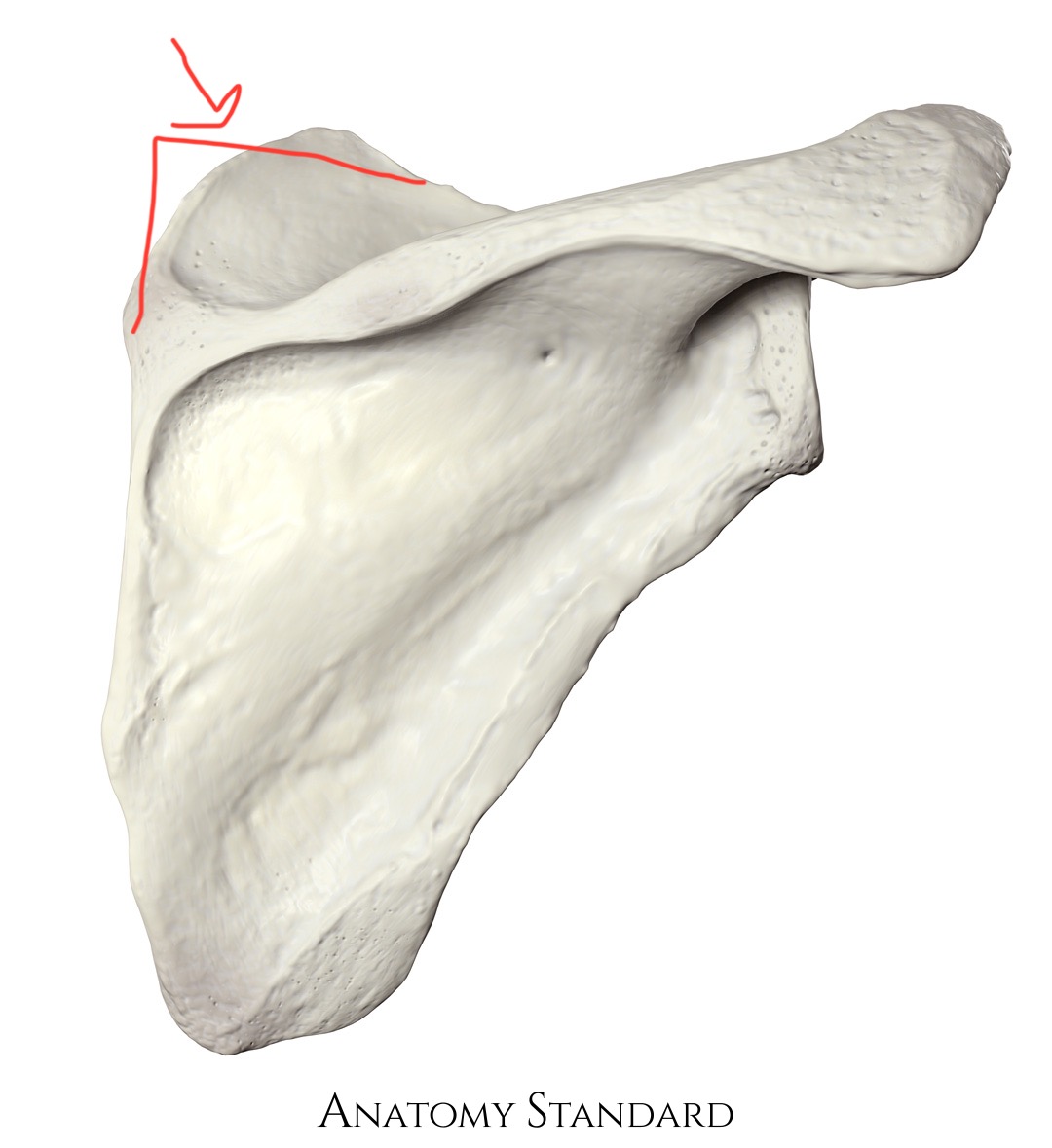
superior angle
scapula, upper triangle point, closer to spine
medial border
scapula, longest, straightest, thinnest border
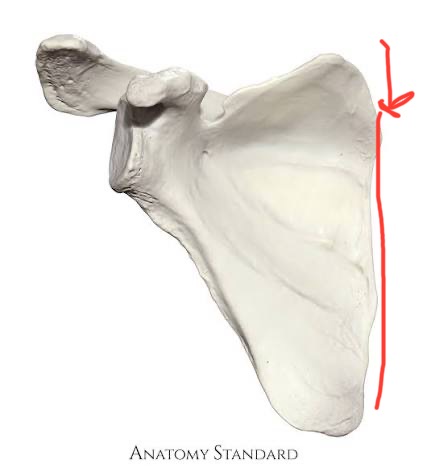
lateral border
scapula, brazil/lagos
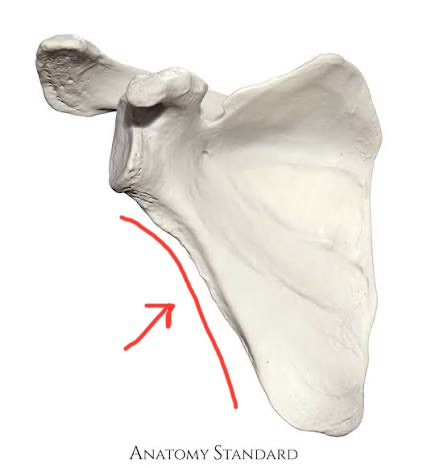
inferior angle
scapula, argentina/south africa
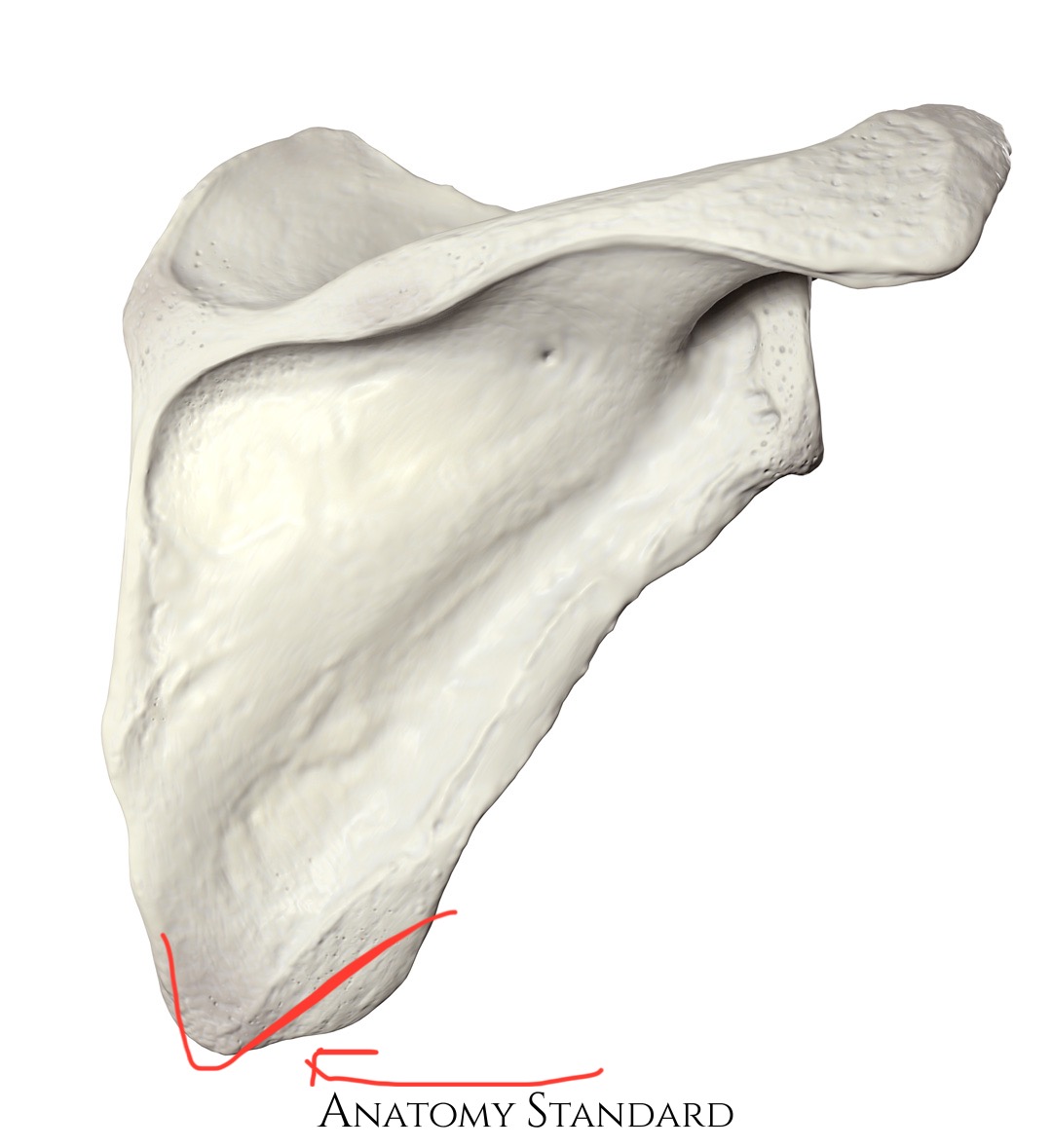
acromion
scapula, juts out towards shoulder
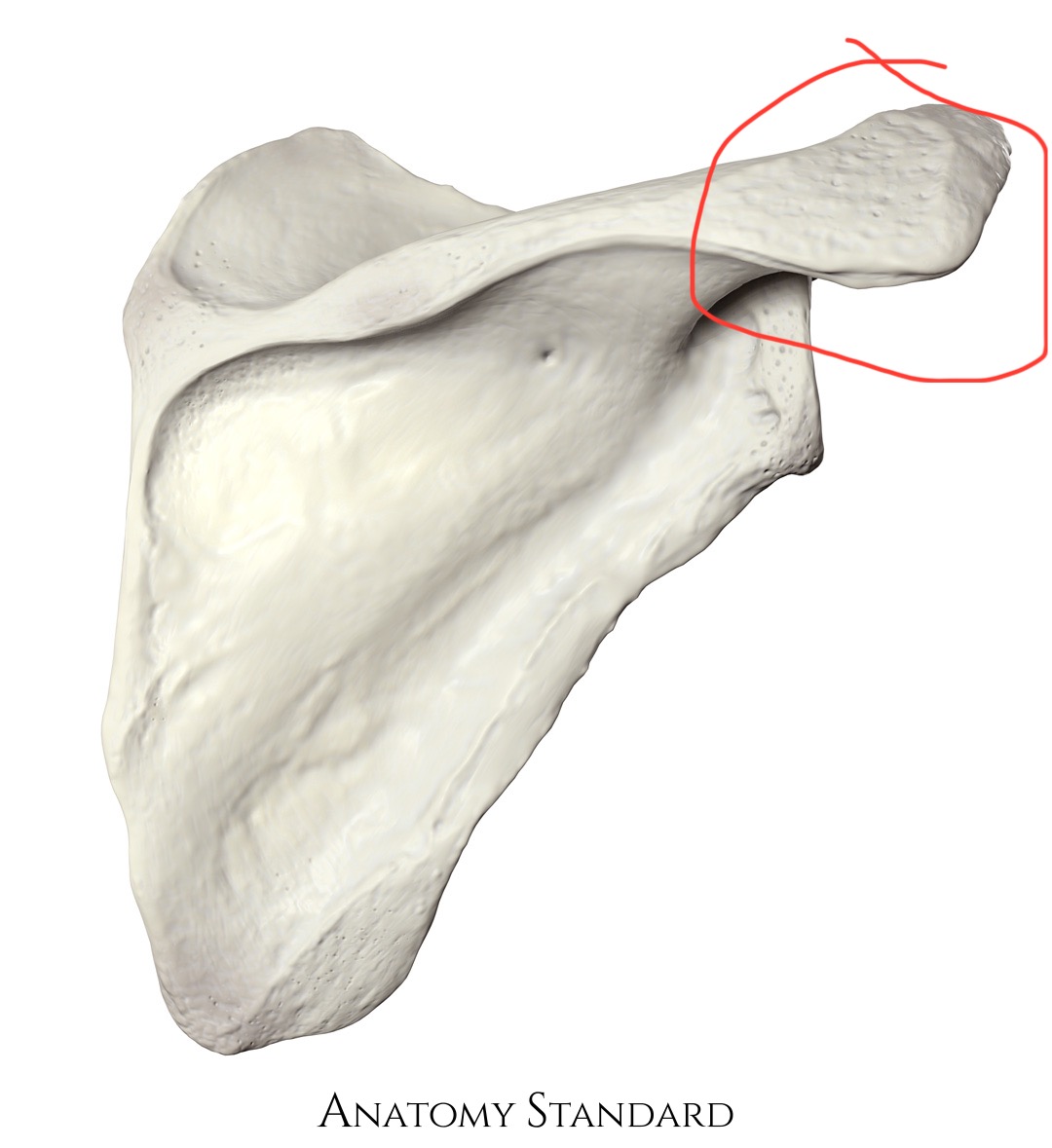
clavicular facet
scapula, located on acromion, anteromedial corner
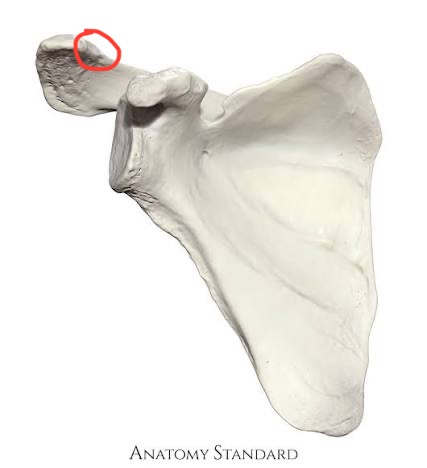
coracoid process
scapula, fingerlike projection behind acromion
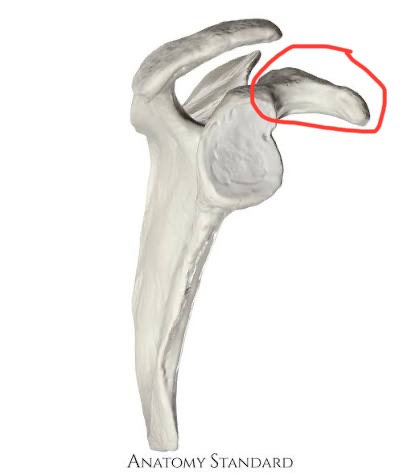
scapular notch
scapula, below coranoid process
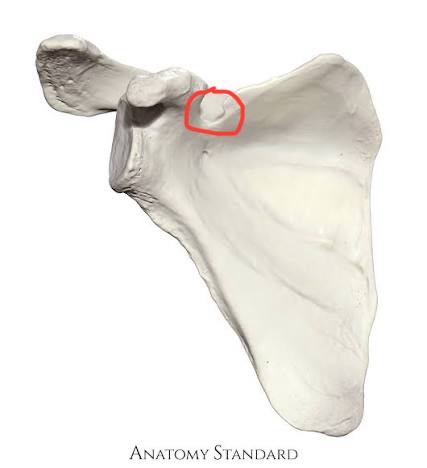
glenoid cavity
scapula, receives head of humerus
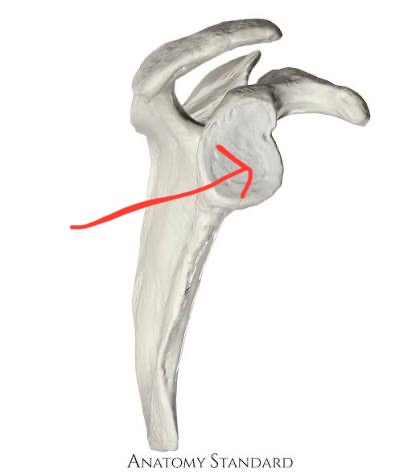
supraglenoid tubercle
scapula, top of glenoid fossa
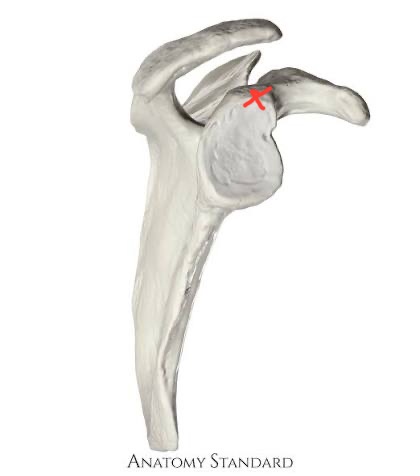
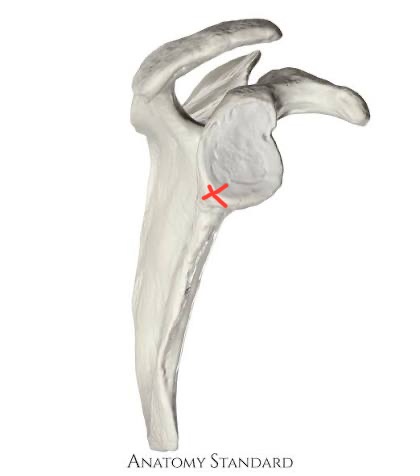
infraglenoid tubercle
scapula, bottom of glenoid fossa
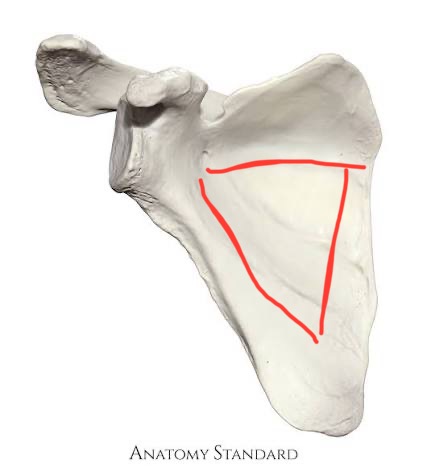
subscapular fossa
scapula, shallow concavity on inside
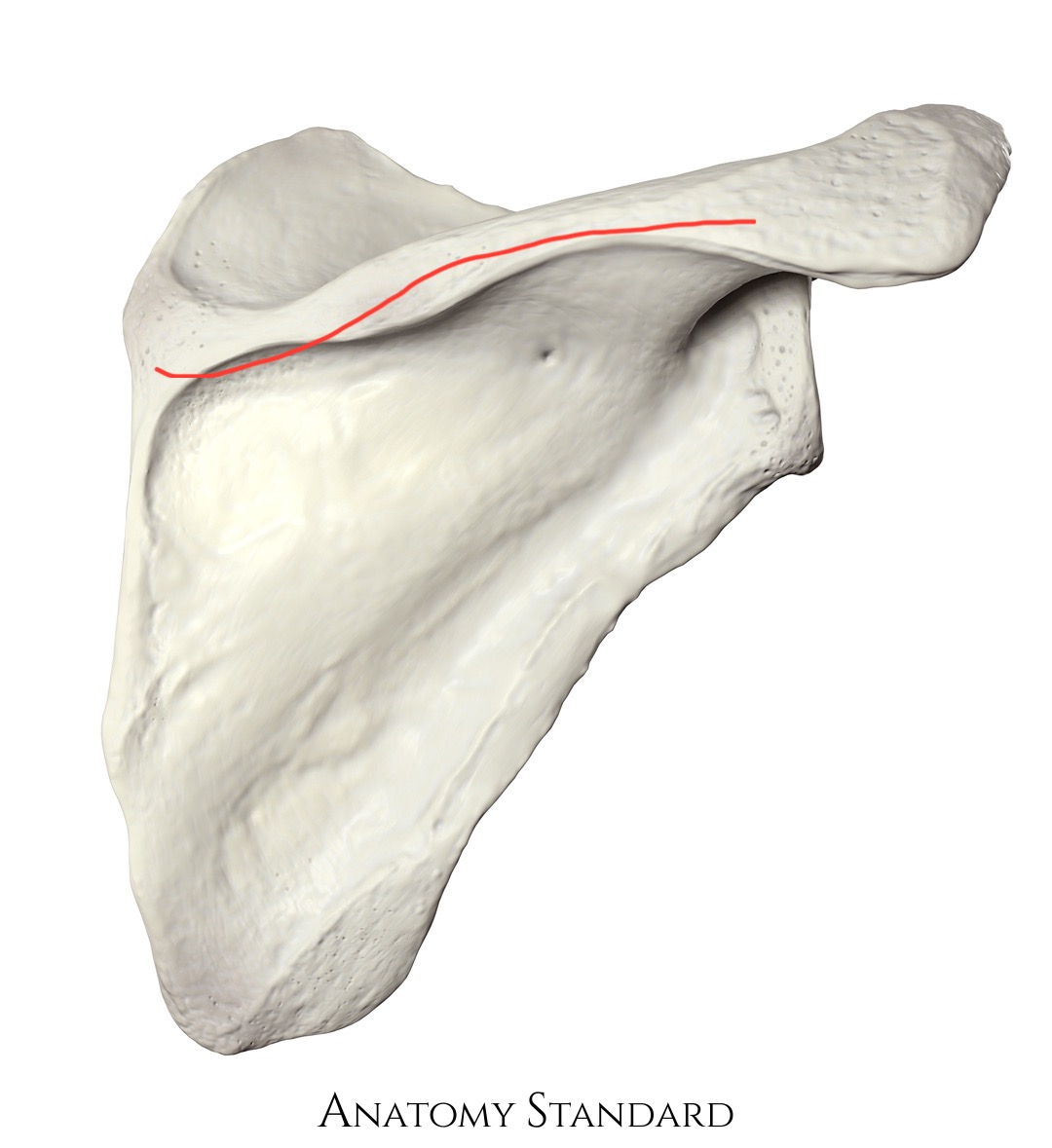
scapular spine
scapula, mountain that leads to acromion
supraspinous fossa
scapula, valley above scapular spine
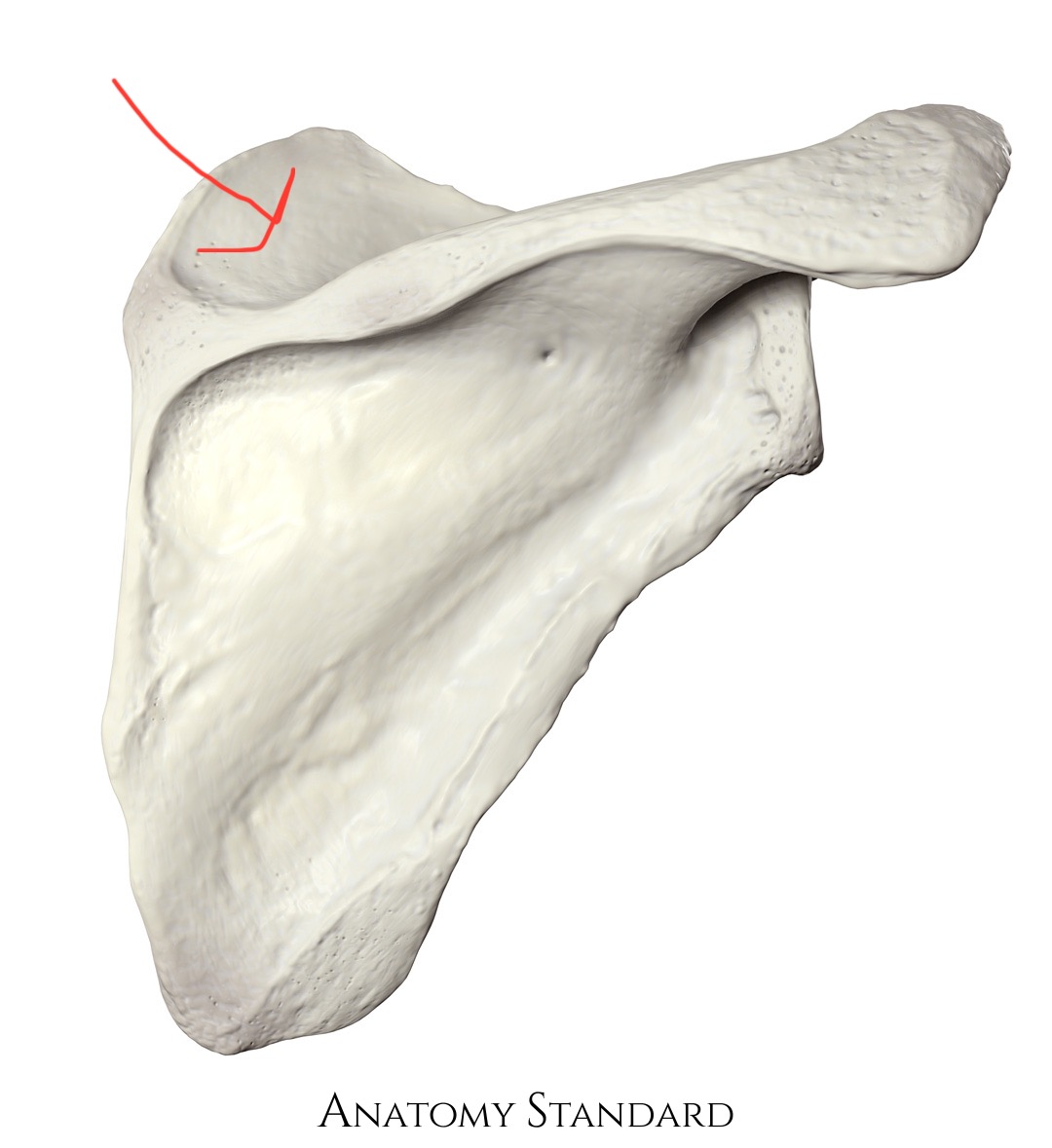
infraspinous fossa
scapula, valley below scapular spine
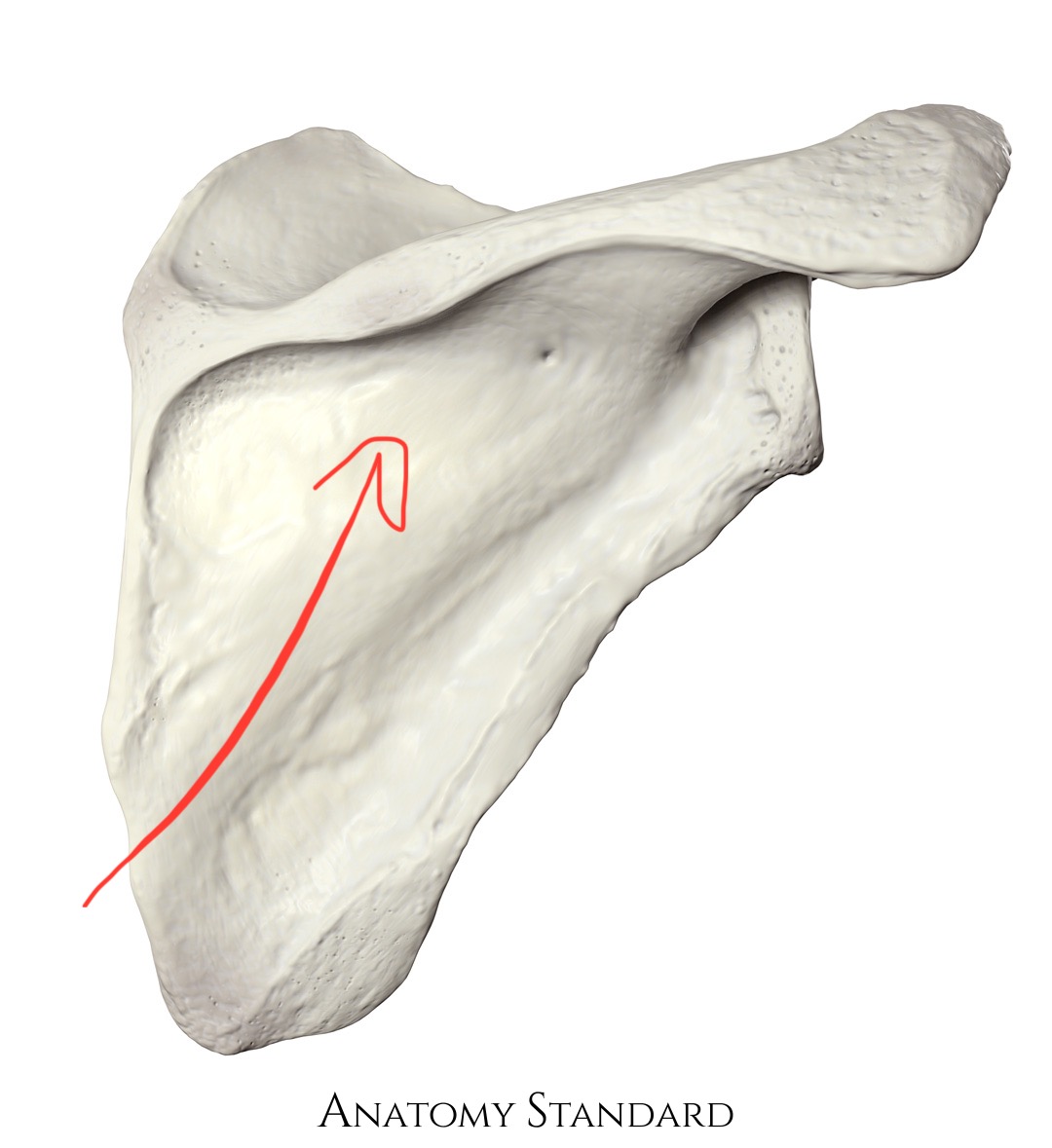
humeral head
humerus, proximal, articulates with glenoid fossa of scapula
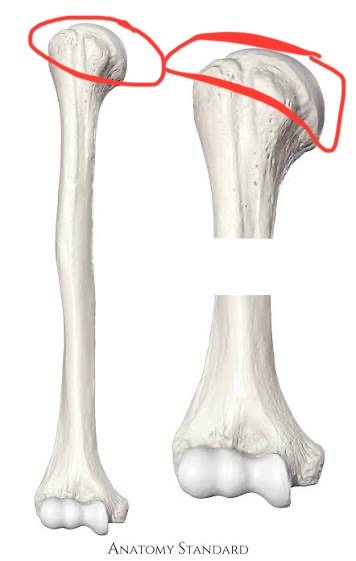
greater tubercle
humerus, larger bump on head, more lateral pointing
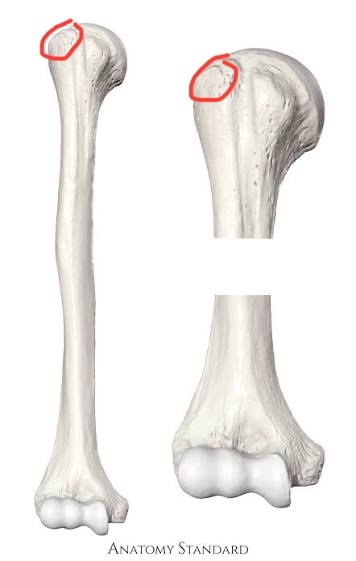
lesser tubercle
humerus, smaller bump on head
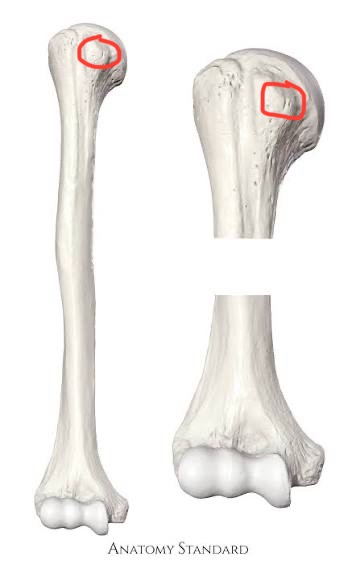
intertubercular groove
humerus, extends down shaft, begins between tubercles
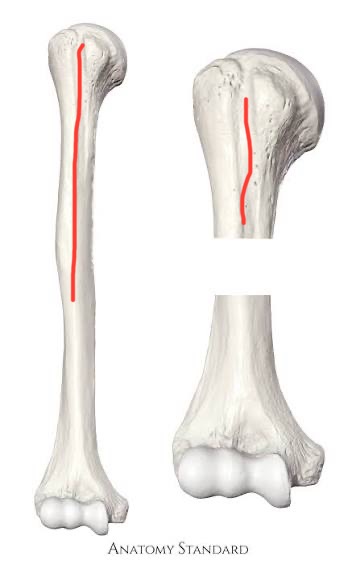
humeral shaft
humerus, longest part of humerus
deltoid tuberosity
humerus, lateral, roughened surface
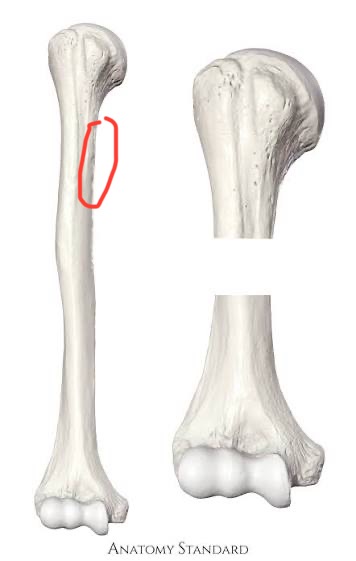
nutrient foramen (h)
humerus, dent/hole mid shaft
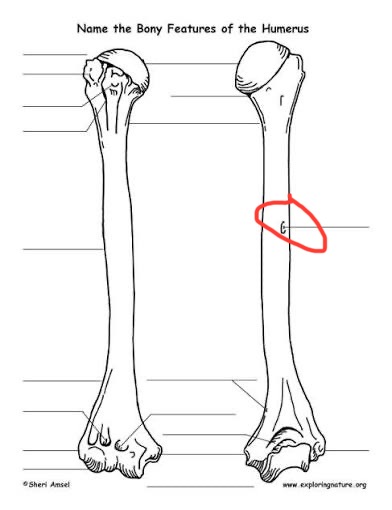
olecranon fossa
humerus, big hole on the bottom backside
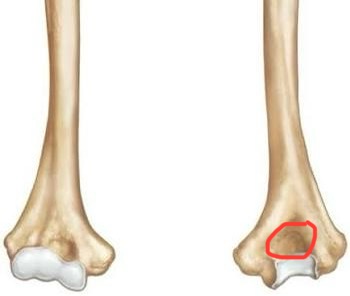
coronoid fossa
humerus, smaller dent of the bottom front
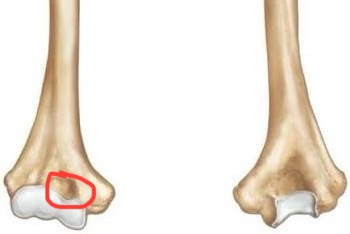
radial fossa
humerus, much smaller dent away from curve, next to coronoid fossa
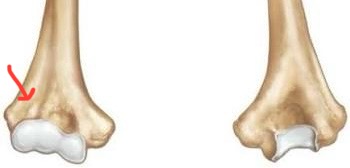
capitulum
humerus, round bump closer to radial fossa
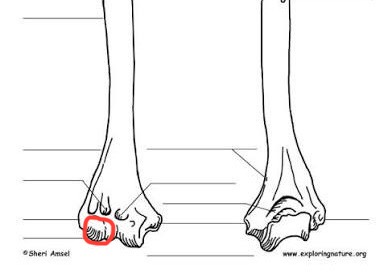
trochlea
humerus, next bump over from capitulum
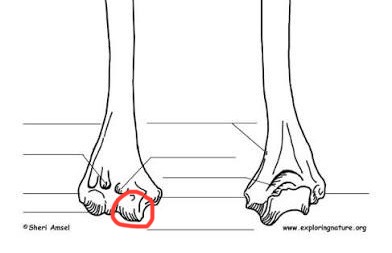
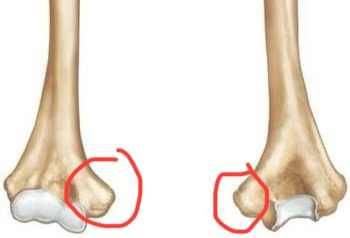
lateral epicondyle
humerus, noncurved edge bump
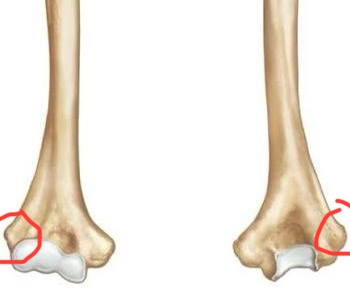
medial epicondyle
humerus, curved edge bump
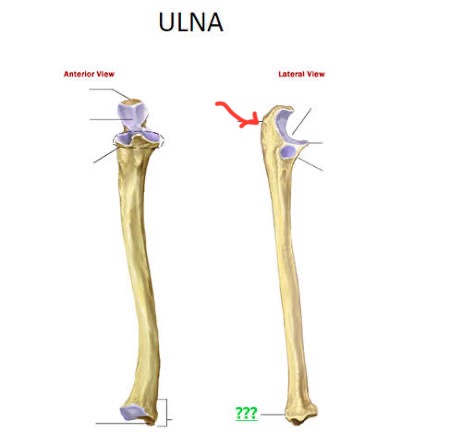
olecranon
ulna, most proximal part, big and blunt
coronoid process
ulna, beak shaped, bottom of “C” of olecranon
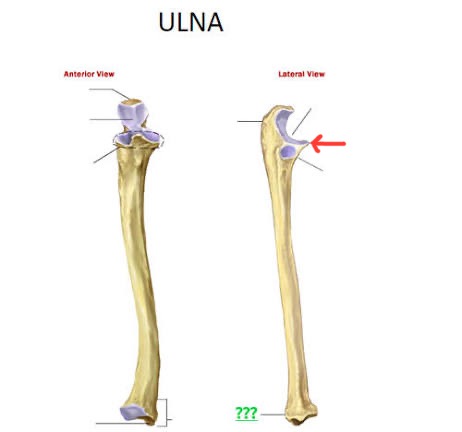
trochlear notch
ulna, mid “C” of olecranon
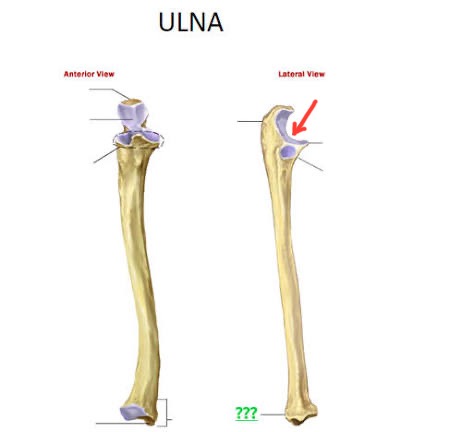
ulnar tuberosity
ulna, dents below open mouth of “C” on shaft
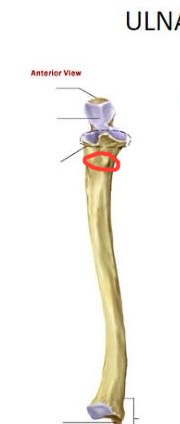
radial notch
ulna, lil dent on edge of “C”
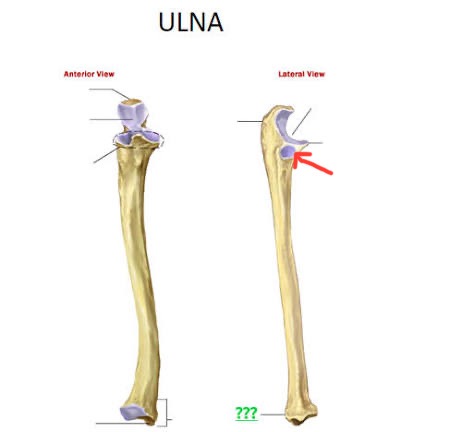
ulnar shaft
ulna, longest part of ulna
anterior border (u)
ulna, border formed by ulnar tuberosity

posterior border (u)
ulna, border in line with styloid process

interosseous border (u)
ulna, well defined spine/groove that starts near supinator crest and runs down shaft

nutrient foramen (u)
ulna, holes below ulnar tuberosity

supinator crest
ulna, groove to the side of radial notch

ulnar head
ulna, bottom of ulna with border

ulnar styloid process
ulna, lil pokey bit on the bottom, toward hands

articular circumference
ulna, rounded bottom on ulna

radial head
radius, round structure on proximal end

radial neck
radius, short segment between head and tuberosity

radial tuberosity
radius, bump on the edge

radial shaft
radius, longest portion of radius
interosseous border ®
radius, spine/groove that runs down shaft to ulnar notch
anterior border ®
radius, border in line with underside of radial tuberosity

posterior border ®
radius, border in line with dorsal tubercle

nutrient foramen ®
radius, hole on midshaft

ulnar notch
radius, small dent on distal end where ulna articulates

radial styloid process
radius, sharp projection on lateral side of distal radius

dorsal tubercle
radius, bump above styloid process

carpal articular surface
radius, bottom of distal end

taphonomy
study of everything that happens to an organism between their time of death and time of discovery
forensics, archaeology, paleoanthropology
applications of taphonomy
deposition, dispersion, and modification of human remains
taphonomy helps reconstructs circumstances around
forensic taphonomy
study of postmortem processes that affect the state of preservation and recovery of remains
postmortem interval estimation
what is forensic taphonomy useful for
abiotic and biotic
factors of taphonomy
abiotic factors
result in weathering
sun exposure, humidity, temperature
examples of abiotic factors
bioturbation, erosion, fluvial processes
movement of bones causes
staining and root etching
other types of earth weathering
insects, rodents, carnivores, vultures, crocodiles
examples of scavengers
equifinality
the creation of similar products by different processes
intentional (cremation) or unintentional
burning can be
mortuary behavior
adorning an individual’s remains is an example of